Jev is taking Silicon Valley by storm, and the "dumb AI" craze has pushed 140,000 developers into a cutthroat competitive frenzy.
Right today, Jev is taking the entire Silicon Valley by storm!
Just three days after its release, it has been rapidly integrated by mainstream platforms including Vercel, Cloudflare and LangChain. Many people claim that we are on the verge of a massive explosion of automated intelligence!
The protagonist of this frenzy turns out to be a large language model that cannot speak.
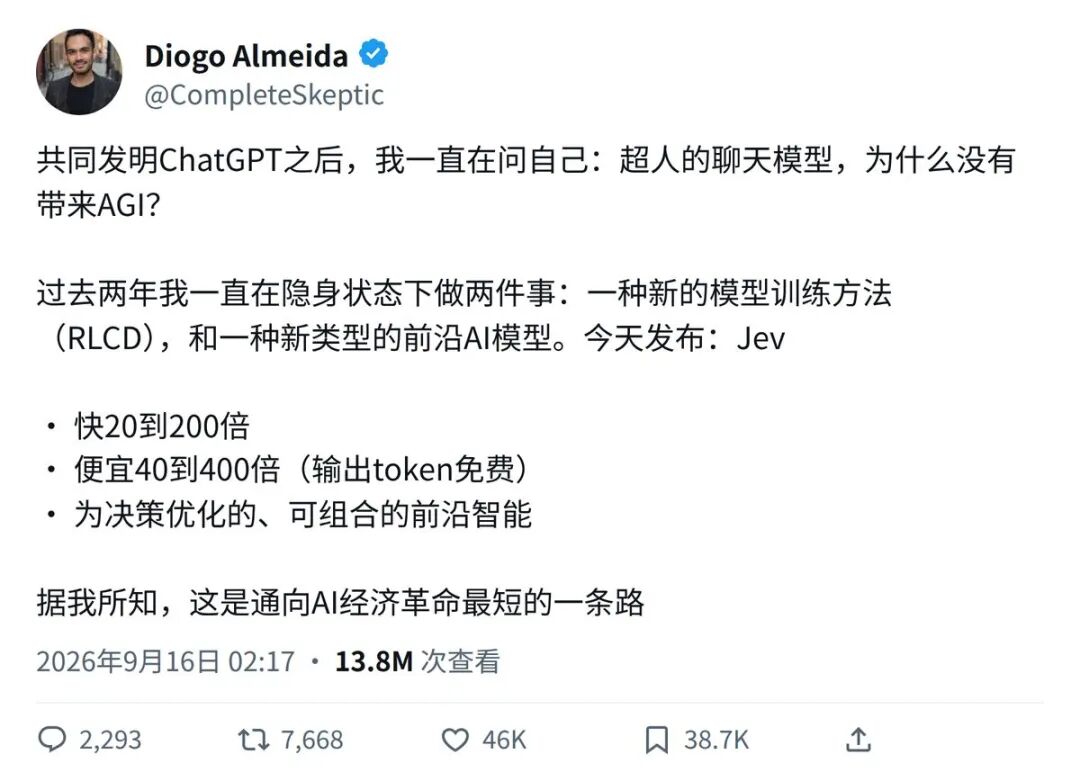
On September 16, Diogo Almeida, one of the core inventors of ChatGPT and the fourth author of the InstructGPT paper, posted a series of long tweets that directly called out the entire industry: We took a wrong turn on the path we followed back then!
The solution he put forward is exactly Jev.
It does not generate articles or chat with you. When you feed a pile of messy data into it, it returns a probabilistic judgment in only 70 milliseconds, with permanently free output tokens.
After that, the entire situation got completely out of control.
In less than 36 hours, as many as 140,000 developers poured into the internal beta like hungry wolves.

Right now, hundreds of use cases for Jev have already emerged.

Some people built a voice assistant for Mac: before you even finish saying "Open Notes and create a new note...", the App has already launched instantly.


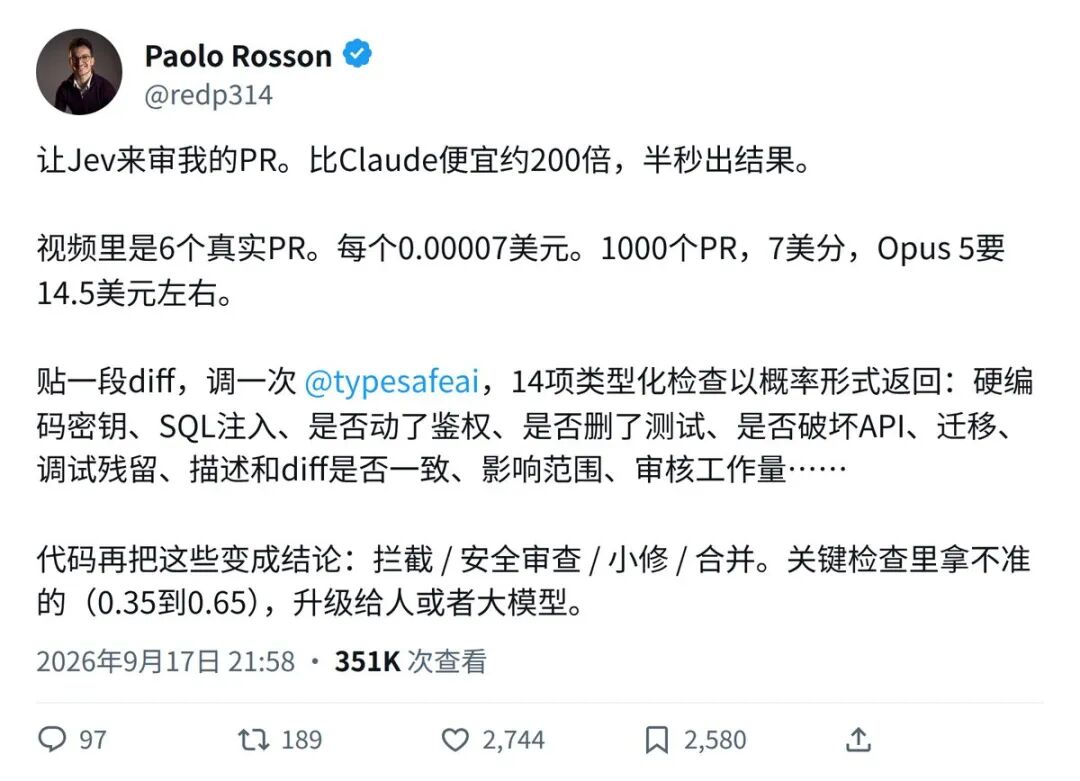
Others use it to review PRs, which costs 1/70000 of a dollar per time, and 1000 PRs only cost 7 cents. The same work would cost 14.5 dollars if handled by Opus 5.
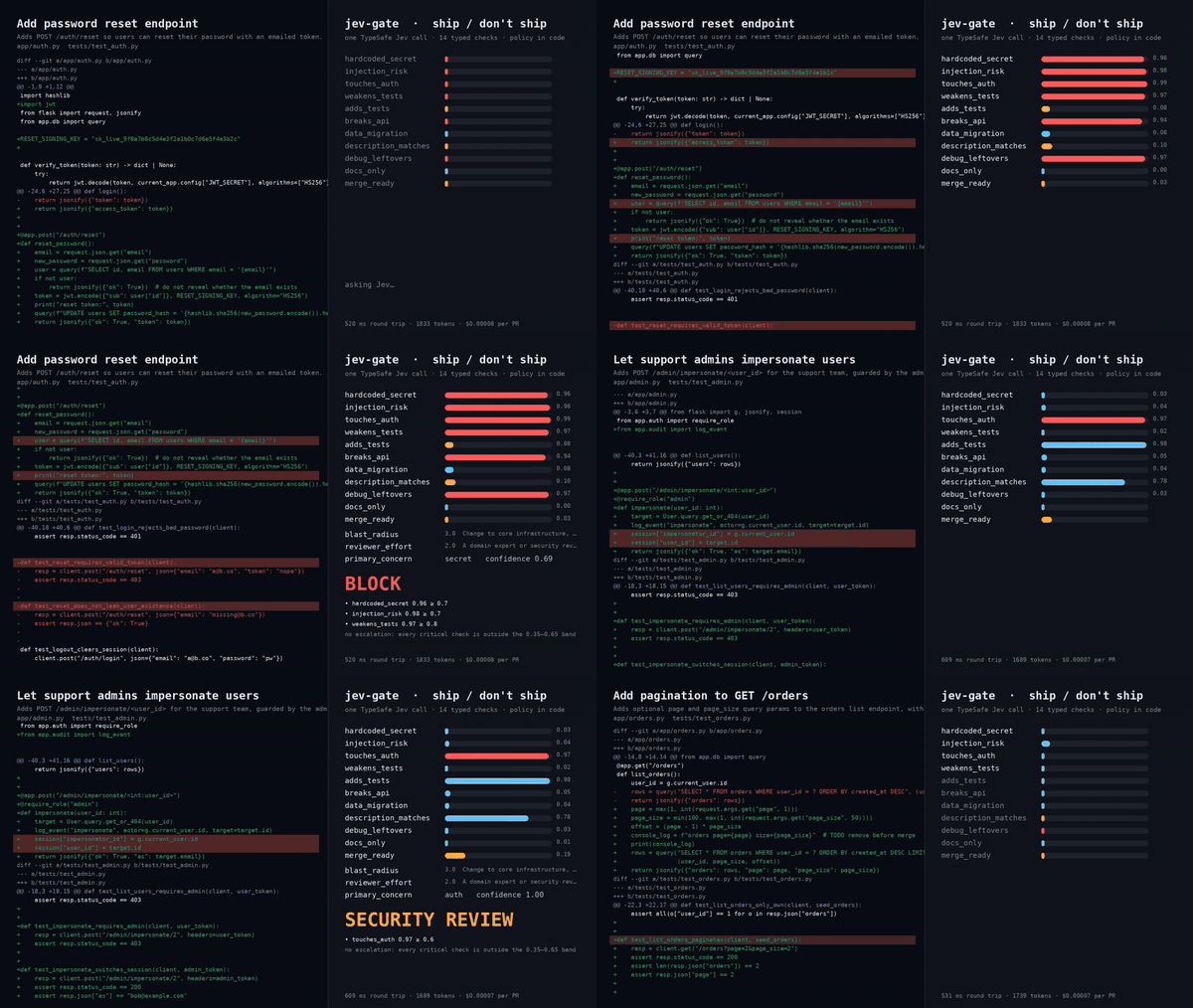
Even Google, the industry giant, can't stay calm anymore.
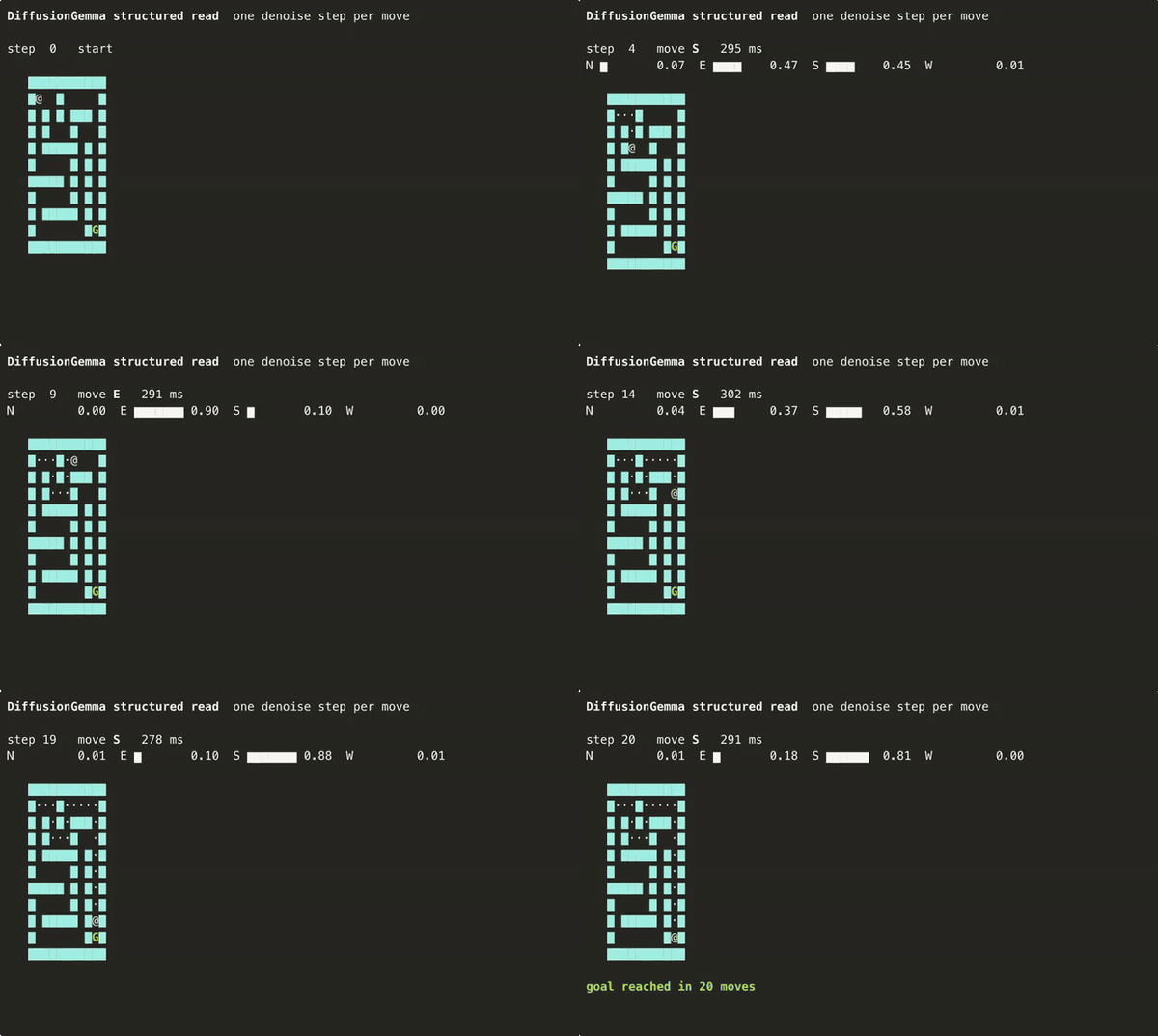
The official Gemma account quickly posted "DiffusionGemma as Jev", directly integrating its own diffusion model into this new paradigm, completing denoising in one step, outputting the probabilities of all options in parallel at one time, and even complementing the visual capability by the way.

Beneath the carnival lies the most fatal long-standing question: What exactly is intelligence?
More than 70 years ago, Turing set the exam question: to judge whether a machine can think by seeing if it can deceive humans in a conversation. Since then, the entire industry has been rushing towards "making words as fluent as possible", and ChatGPT has almost pushed this path to its limit.
Perhaps this is the biggest victory in the history of AI, but also the biggest detour.

We spent 70 years and hundreds of billions of dollars to finally teach machines to speak more fluently than humans, only to find that we still dare not let the things we created make decisions on their own.
The underlying reason is that we absurdly took the "mouth" for the "brain".
Intelligence on Earth has evolved for hundreds of millions of years, and most life-and-death decisions are made long before they can be "spoken". As for language, it is only a thin layer of capability that emerged in the last few hundred thousand years.
In Almeida's eyes, there is no generation gap between ChatGPT and Claude Code, both belong to the old era.
And Jev is his first answer to the new era: sew up the mouth, and leave nothing but judgment.
Three Years After the Chatbot Boom
Where is the Promised "True Automation"?
The protagonist of the story is named Diogo Almeida.
He is one of the most core early R&D personnel at OpenAI, and the core founder of RLHF and InstructGPT.
However, after ChatGPT became a global hit, Diogo fell into deep doubt.
He wrote:
After co-inventing ChatGPT, I kept asking myself: Why haven't superhuman chat models brought about AGI?
Such a smart AI still needs humans to supervise its work until today. It is impossible to achieve real automation, that is, to let software make decisions on its own when no one is on duty.
He found a fatal problem: RLHF made models learn to please humans, but also made them extremely unreliable in system automation scenarios.
RLHF, which made ChatGPT famous overnight, taught the models "how to answer to please humans".
And this mechanism was born for "assistance" from day one. Every thing the model does must be checked by a human in the end.
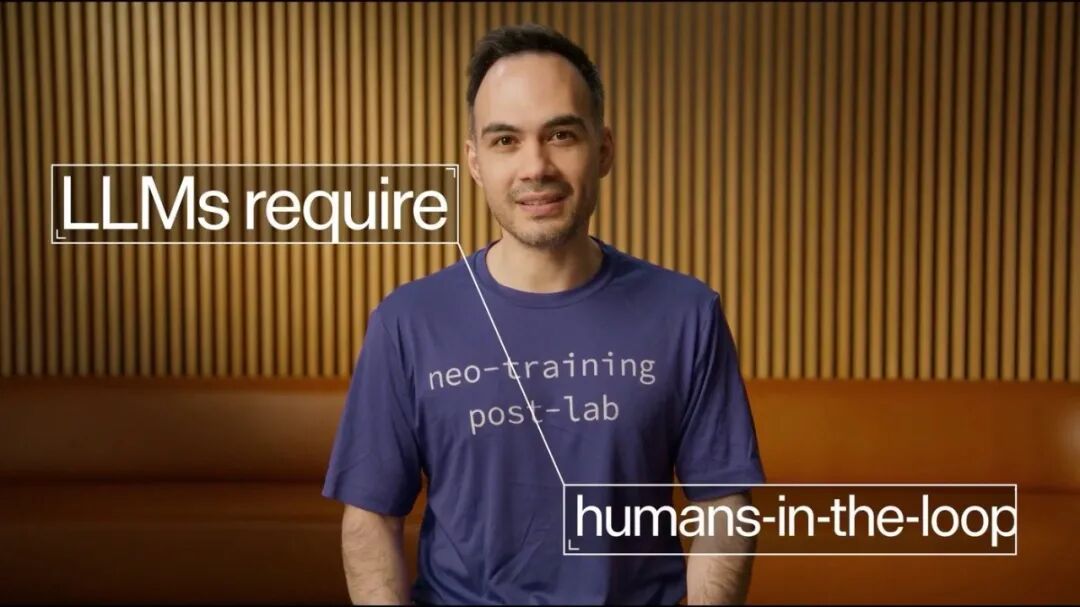
Do you expect it to run unattended high-stakes business now? Sorry, it has never been trained for that from the very beginning.
What is even more fatal is a truth he figured out in the past two years: You get exactly what you optimize for. And "character string" is precisely the hardest thing in the world to optimize.
In order to keep long text from going off track, the model has to be tuned to be overconfident during training, forcing it to actively discard those low-probability options and keep the output on the main track.
The cost of doing so is that when the large language model swears to you that "I am 80% sure of this", this "80%" is full of moisture, and you can't trust it at all.
In other words, pursuing absolute reliability in text output goes against the underlying principles of generative AI.
Diogo realized that making AI have "excellent communication skills" has become the biggest stumbling block for AI to integrate into all kinds of code.
Since text is so hard to manage, simply stop letting it speak.
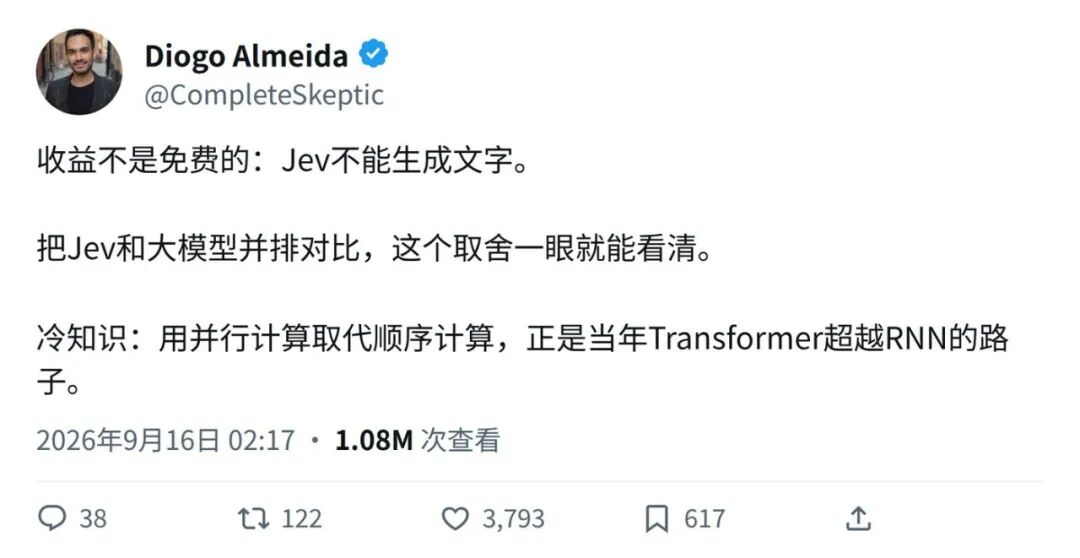
Therefore, he resigned from OpenAI decisively and founded TypeSafe AI, to rebuild the entire training architecture from the bottom up.
Now he is back with his answer — the Jev model.
System One: The Dimensionality Reduction Strike of a "Mute" AI
Diogo Almeida gave Jev a new name, the System One model.
The name comes from Thinking, Fast and Slow written by Nobel laureate Daniel Kahneman. System One refers to the instinctive judgment that is made instantly by intuition without deliberate thinking.

Jev is extremely easy to use.
You input a very chaotic state (such as a furious customer complaint email, or the code when the program gets stuck), and it will output a typed decision with an accurate probability.
During this process, it will not generate a single word.
The official documentation only provides three interaction modes:
1. Choice: Pick one from the given options;
2. Score: Output a specific score;
3. Noul: Return a probability value between 0 and 1.
Each answer comes with the probability distribution of all options, plus an overall confidence level.
The direct result is zero hallucinations.
Because the model's only job is to assign probabilities to several predefined options. It cannot make up anything outside the options, and the program will always get a valid value.
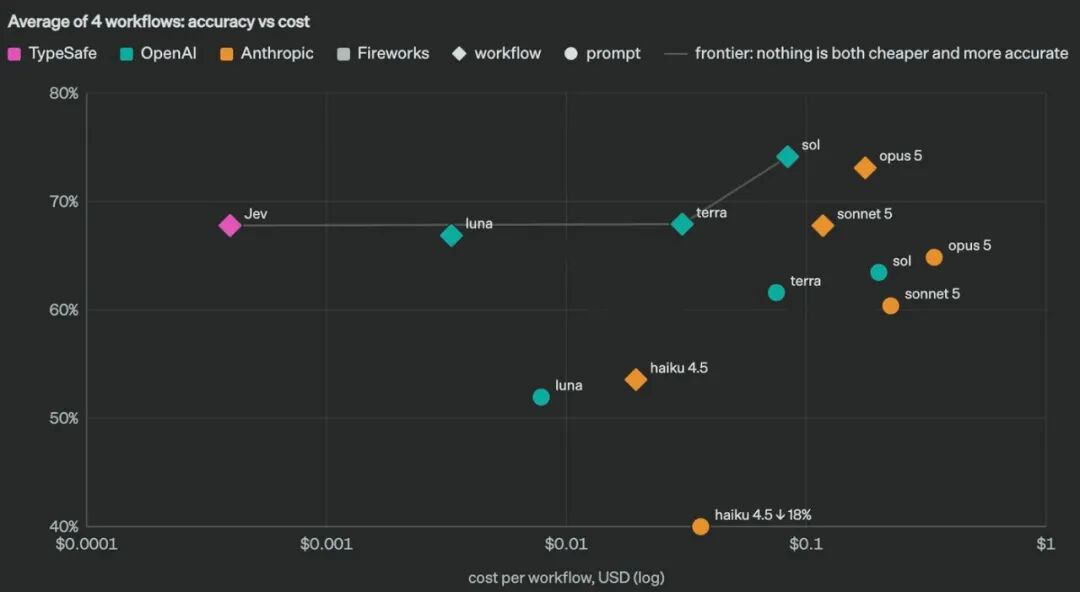
As for the "extreme speed", it follows the same logic.
Traditional large language models generate tokens one by one, while Jev samples all outputs in parallel and returns all results at once.
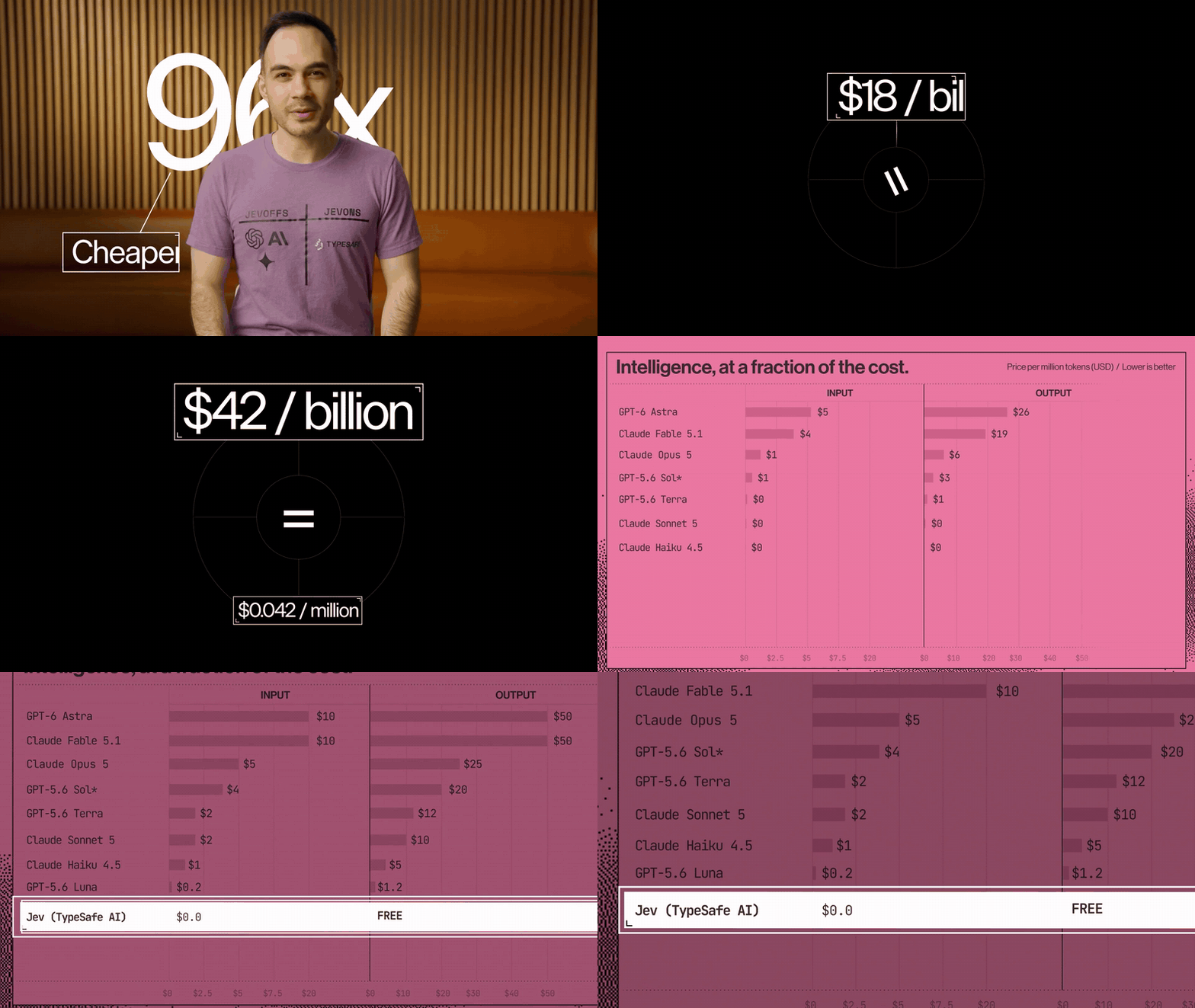
For one judgment, Jev only takes 70 to 500 milliseconds end-to-end, while the same task would take 3 to 329 seconds for cutting-edge large language models.
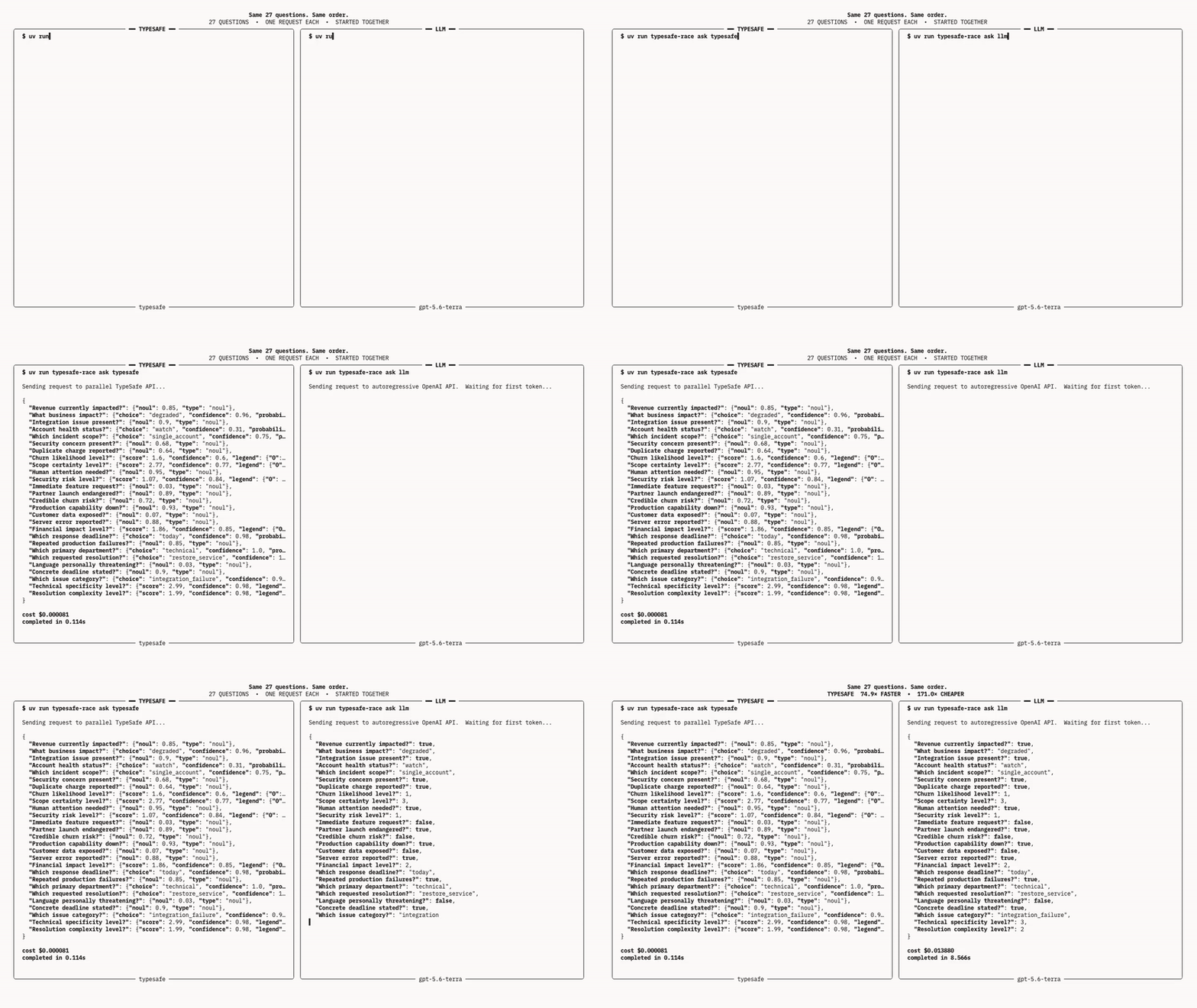
The confidence for free output tokens also comes from this feature.
Since there is no word-by-word generation process, there is no output worth charging for. The official blog put it very arrogantly: "It's so cheap that it's not even worth billing."
TypeSafe only charges for inputs, at a rate of only $0.042 per million tokens. For comparison, the output pricing of Astra and Fable 5.1 is $50 per million tokens.

What supports all this is a new training method called RLCD (Reinforcement Learning from Calibrated Decision).
RLHF rewards "results that make humans feel good"; RLCD rewards that "the probability you give must match your actual hit rate". If the model says 0.9, it must be correct 90% of the time.
The official did not elaborate on the technical principle, but drew a conclusion: the higher the confidence level, the higher the accuracy.
