AI sports hardware company secures hundreds of millions of yuan in Series B financing, reconstructing the autonomous tennis training experience with sports large model | Hardkr Exclusive
Author | Nan Huang
Editor | Silai Yuan
36Kr learned that AI sports hardware company Pongbot recently completed a Series B financing of hundreds of millions of yuan, led by Shanghai State Investment Pilot Fund, followed by Yuanhe Puhua, Pudong Venture Capital and other institutions, with long-term shareholder BlueRun Ventures continuing to increase its investment. Gaohe Capital served as the exclusive financial advisor.
Prior to this, the company had successively completed three rounds of Series A financing, with leading institutions including Shenqi Capital, Matrix Partners China, BlueRun Ventures, Jinqiu Fund, China Growth Capital and Ceyuan Ventures participating collectively.
The raised funds will be mainly invested in the R&D of AI sports large model, motion vision and training decision-making technology, expand the global market, improve overseas channels and localized brand operation, launch new products for more sports categories, and expand the reuse boundary of the technology platform. The company's long-term goal is to popularize professional sports training services, so that ordinary users can also get professional-level training experience.
Pongbot first entered the market with table tennis scenarios, and gradually established the integrated "hand, eye and brain" capabilities covering serving execution, visual perception, motion analysis and training decision-making. It took the lead in deploying its self-developed sports large model to the intelligent serving machine hardware products in the industry, and reused this set of technical capabilities to other sports categories such as tennis.
The company's first intelligent tennis serving robot PACE series was launched on Kickstarter in October 2024, with crowdfunding amount exceeding 2.7 million US dollars. In May 2026, it launched the Aura all-in-one AI coach robot, whose crowdfunding amount exceeded 1 million US dollars within 5 hours after release, with the total accumulated amount exceeding 4 million US dollars.
At present, Pongbot has more than 300,000 global users, the total number of accumulated serves of its devices exceeds 2 billion times, and it has accumulated more than 1 million sets of ball path data. The Australian Open officially announced on September 28 that Pongbot has become the official partner of the Australian Open and the official serving robot partner, and also serves as the official serving robot supplier of the Australian National Tennis Academy.
With the core products and commercialization paths gradually verified, Pongbot has moved from the early stage of product and category expansion to the long-term stage of platform capability building.
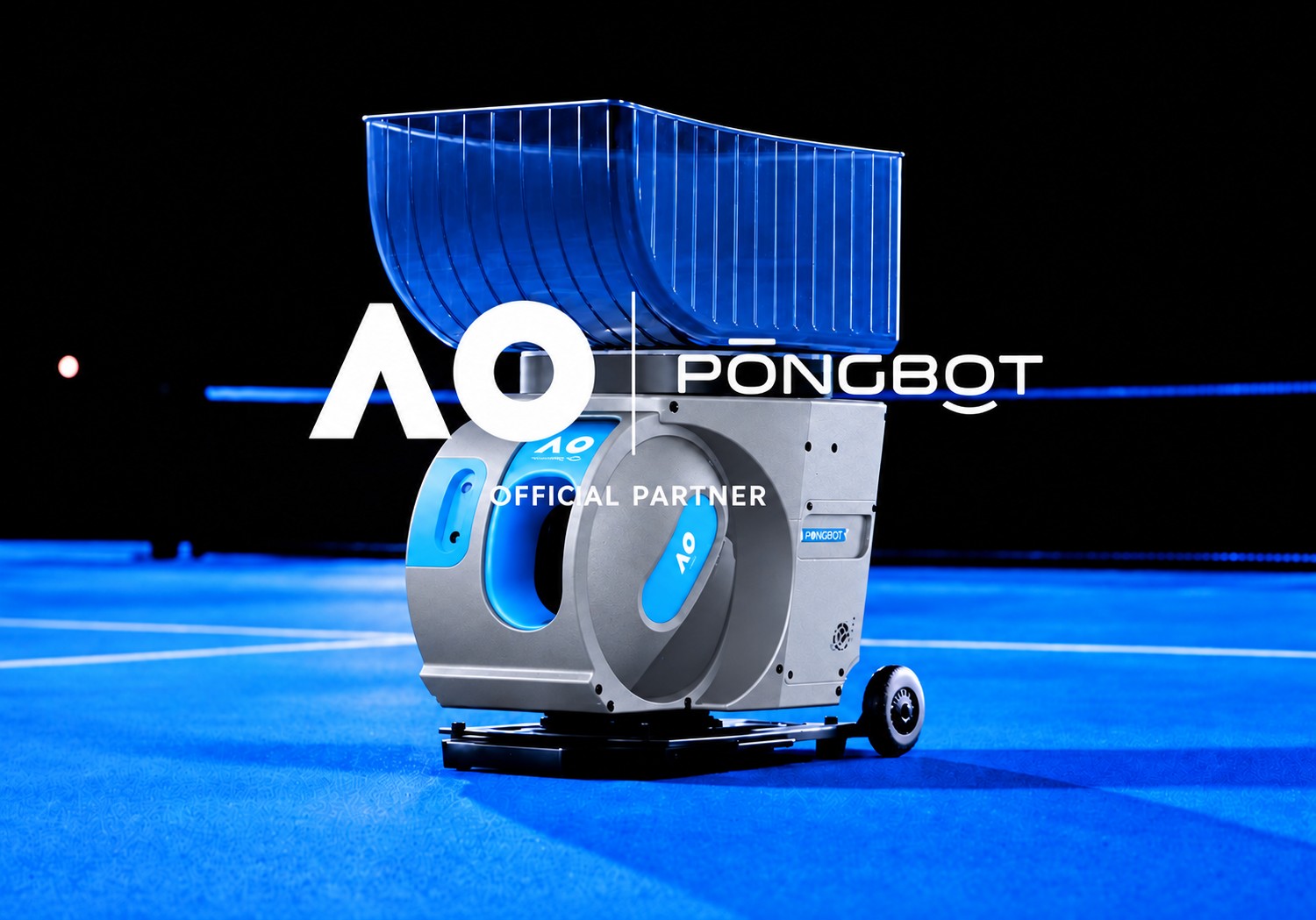
Pongbot becomes the official partner of the Australian Open (Source/Enterprise)
There has long been a structural contradiction ignored by technology in the field of sports training.
Data from the International Tennis Federation in 2024 shows that the number of global tennis participants has reached 106 million. Among them, the ratio of active tennis users to coaches in the United States is as high as 800:1, and the supply of professional coaches is seriously insufficient. In China, the tennis consumer market continues to heat up, and its popularity and public demand are rising simultaneously, but private courses that cost hundreds of yuan per hour block most beginners out of the door.
At the same time, high-quality coaches are often difficult to book, their time is hard to match, and their teaching styles may not suit users. Even if a private lesson is arranged every week, during the independent practice period, whether it is ball bouncing, empty swing, serving machine training or wall practice, users still lack real-time observation and technical guidance. What the public really needs is not a machine sparring opponent, but solutions to the shortage of coaches, sparring partners and efficient independent training methods.
However, most of the serving equipment on the market still stays at the stage of mechanical ball output: no rhythm, no rotation, no guidance. Some products have visual perception capabilities, but they only provide users with data analysis reports on speed, landing point and other indicators afterwards, which hardly has training value.
"In the training scenario, the ability improvement brought by practice is the core demand of users." Zhang Haibo, founder and CEO of Pongbot, told 36Kr, "Everyone hopes to have an 'AI coach' that is available whenever needed. It does not need to feed balls all the time, but can continuously observe and give real-time guidance."
This is exactly the segment that Pongbot is targeting, turning professional sports training capabilities from a privilege for the few into an accessible daily tool for the public.
To understand Pongbot's product logic, we need to return to the essence of sports training. In the past, traditional serving machines only completed the action of "serving the ball", but did not realize the closed loop of "teaching". A good coach needs to have three capabilities at the same time: feeding accurate ball paths with hands, observing the students' movement positions and movements with eyes, and judging problems and giving real-time feedback with brain.
Pongbot breaks down this set of capabilities into an integrated "hand-eye-brain" architecture.
The "hand" corresponds to the serving and ball supply system, and the stable and controllable serving capability is the physical basis for realizing intelligent guidance. Relying on this execution unit, Pongbot can continuously precipitate massive ball path samples and user training behavior data, then gradually add the capabilities of "eye" and "brain" for continuous iteration.
The "eye" is a high-speed visual perception module that captures real-time data of practice scenarios such as swing posture, hitting speed and landing point.
The "brain" is the sports large model proposed by Pongbot, which analyzes and judges the collected multi-dimensional information, and outputs professional guidance such as movement error correction and training plan optimization.
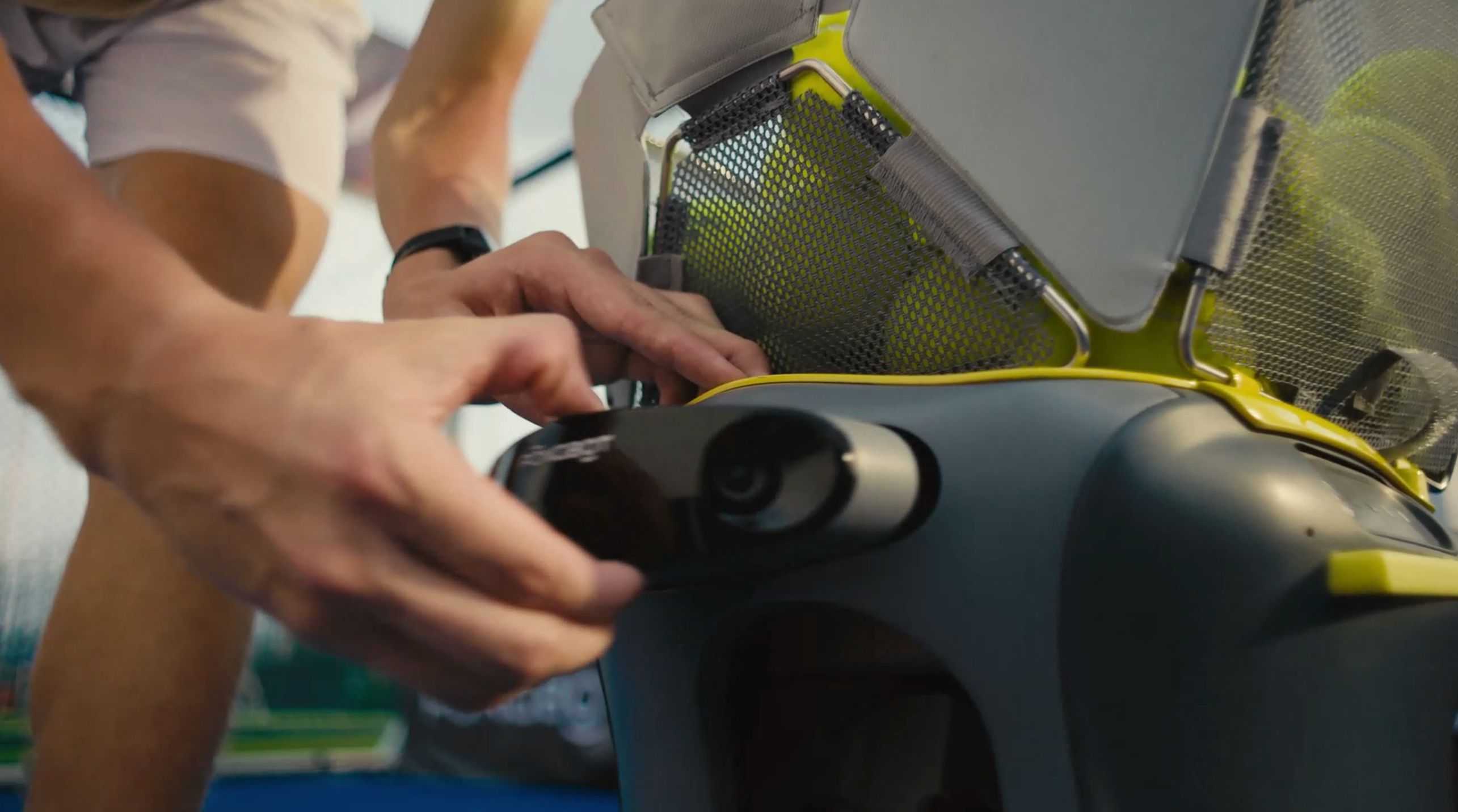
Pongbot's integrated "hand-eye-brain" architecture (Source/Enterprise)
"Users do not need to perceive how large the model behind it is, they only need to feel that it can understand me and know how to help me practice next step." Zhang Haibo told 36Kr, "The 'sports large model' we mentioned is not simply connecting the general model to the serving machine, but a model with integrated 'perception-decision-execution' capability. Based on the general multi-modal capability, it combines the robot to pull the large model from the virtual world into the physical world, and truly participates in physical training."
The core capability of this system is to convert users' natural language expressions into executable training plans. When a user puts forward the demand of "I want to improve the stability of my backhand", the system needs to give suggestions combined with the actual performance, and then gradually convert it into specific training arrangements, such as what kind of ball to serve, what rhythm to use, what movement problems of the user to pay attention to, and what training intensity to set.
In terms of technical route, Pongbot chooses the end-cloud collaborative architecture. The end side undertakes low-latency perception and lightweight judgment to ensure the response speed of real-time feedback. The cloud side combines multi-modal information, ball path data and coach knowledge to complete more complex analysis. The verified capabilities are then sunk to the terminal through methods such as training and distillation.
"The long-term direction is to move from 'understanding sports' to 'participating in training'." Zhang Haibo said. This means that the model should not only be able to analyze whether the movement is right or wrong, but also understand the training logic: when to increase the difficulty, when to consolidate the foundation, and what kind of ball path combination can solve a specific technical weakness in a targeted manner. It also needs to plan a continuous training plan combined with continuous training performance, and link the serving equipment to arrange targeted practice.
From the stable output of "hand", to the real-time capture of "eye", and then to the instant decision-making of "brain", the collaboration of the three modules makes Pongbot's product no longer a simple serving machine, but an AI Coach with a complete closed loop of perception-decision-execution.
"We are not trying to replace professional coaches, but to extend professional guidance to more daily training scenarios, so that users can have direction and feedback when practicing alone." Zhang Haibo said.
At present, Pongbot's platform has accumulated 1 million sets of table tennis ball paths and more than 200,000 sets of tennis ball paths. Aura is equipped with a detachable 120fps dual-camera vision module Spotter, which has 10Tops end-side computing power. After Aura is launched on the market, it can collect more than 5 million hours of effective high-quality sports interaction data every year.
"We have the most valuable precisely labeled data in the sports field, which is closed-loop data with causal chains: discovering problems, giving guidance, executing error correction, and verifying effects. These data can never be obtained from public internet datasets." Zhang Haibo pointed out, "The accumulation of data volume is only the first step. What is really valuable is to associate 'the problems seen, the guidance given, and the subsequent changes'."
Zhang Haibo told 36Kr that this type of data can not only help AI understand humans more accurately, but also provide a learning basis for future sports robots. It forms a barrier that competitors cannot replicate in the short term: the complete cycle of "collection-labeling-training-verification-iteration", superimposed on the link between sports scenarios, equipment execution, professional judgment and effect feedback, forms the causal correlation between multi-dimensional data.
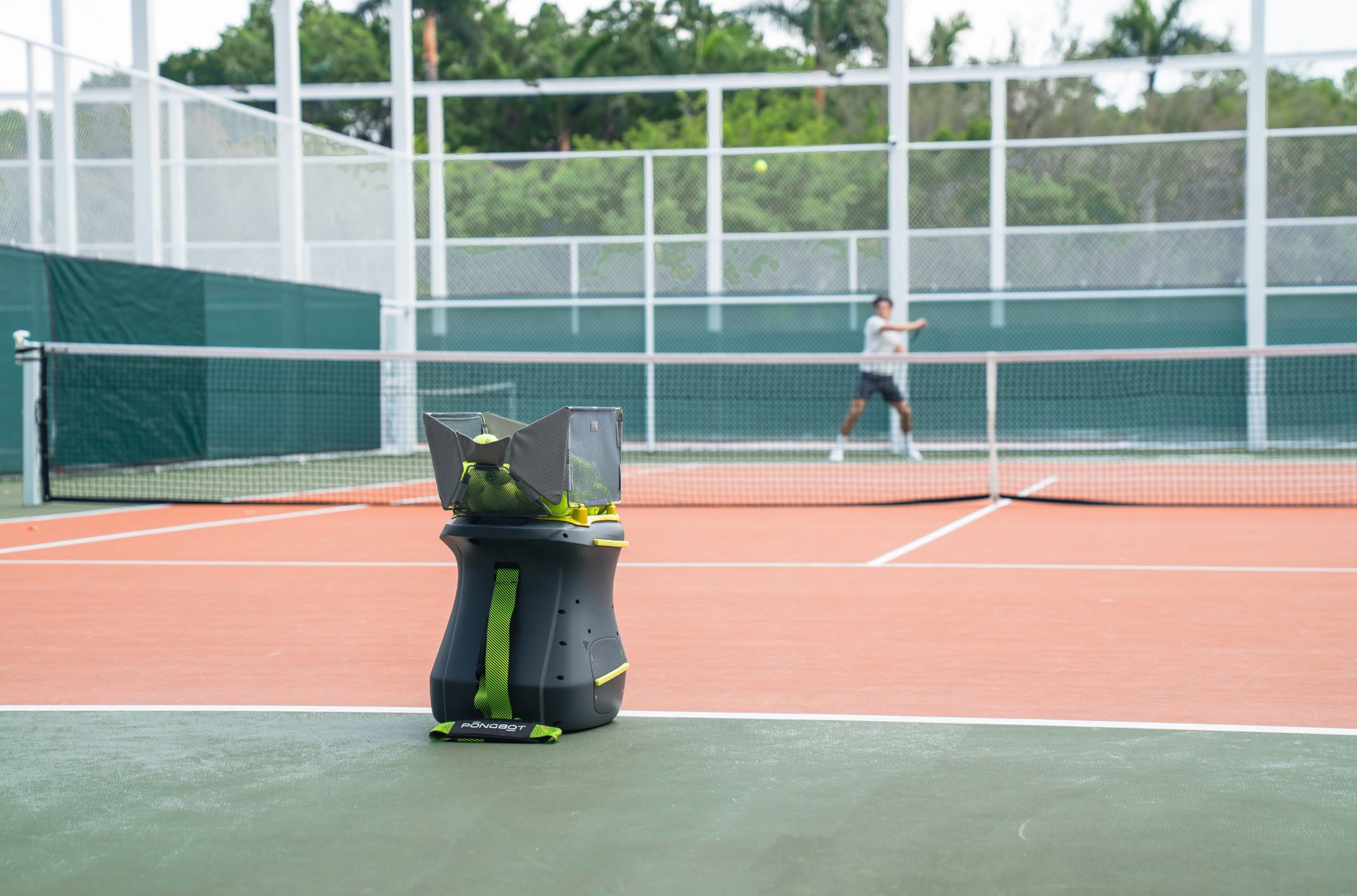
Aura all-in-one AI coach robot (Source/Enterprise)
The core value of AI sports hardware is not to make the serving machine more complex, but to make sports training move from relying on scarce professional coach resources to standardized and scalable intelligent services.
At present, the AI sports training field has entered a key window period for commercial implementation. The latest data from Research and Markets shows that the global AI personal trainer market size will grow from 1.572 billion US dollars in 2025 to 2.025 billion US dollars in 2026, with a compound annual growth rate of 28.9%. Targetedly solving inherent pain points such as insufficient supply of professional coaches, limited training scenarios, and low efficiency of independent training, current hardware equipment that realizes personalized training feedback relying on AI is still in a rapid growth period, and is expected to usher in an inflection point of large-scale implementation in 2028.
"In the past, the penetration rate of various serving machines among professional users and sports enthusiasts was less than 10%. But now, with the integration of digital and AI technologies, plus China's mature supply chain capabilities, the incremental space has been completely opened up." Zhang Haibo said.
With the integrated "hand-eye-brain" architecture as the base, Pongbot enables the sports large model to move from "understanding sports" to "participating in training", and AI Coach completes the closed loop from motion recognition to training plan generation, then builds algorithm barriers with continuously accumulated multi-modal data. From professional competitions to mass sports, from a single category to a multi-sport platform, Pongbot is trying to verify the complete closed loop from technology to product to commercialization.
According to the plan, Pongbot will take the self-developed sports large model as the core base, continuously upgrade the sports analysis and interactive experience of AI Coach, expand horizontally to projects such as pickleball, padel, badminton and baseball, promote the evolution of products from a single intelligent training device to a more complete intelligent sports system, and gradually build a global AI sports technology platform covering multiple sports categories with software and hardware collaboration. At the same time, it will further accelerate the construction and implementation of global market channels.
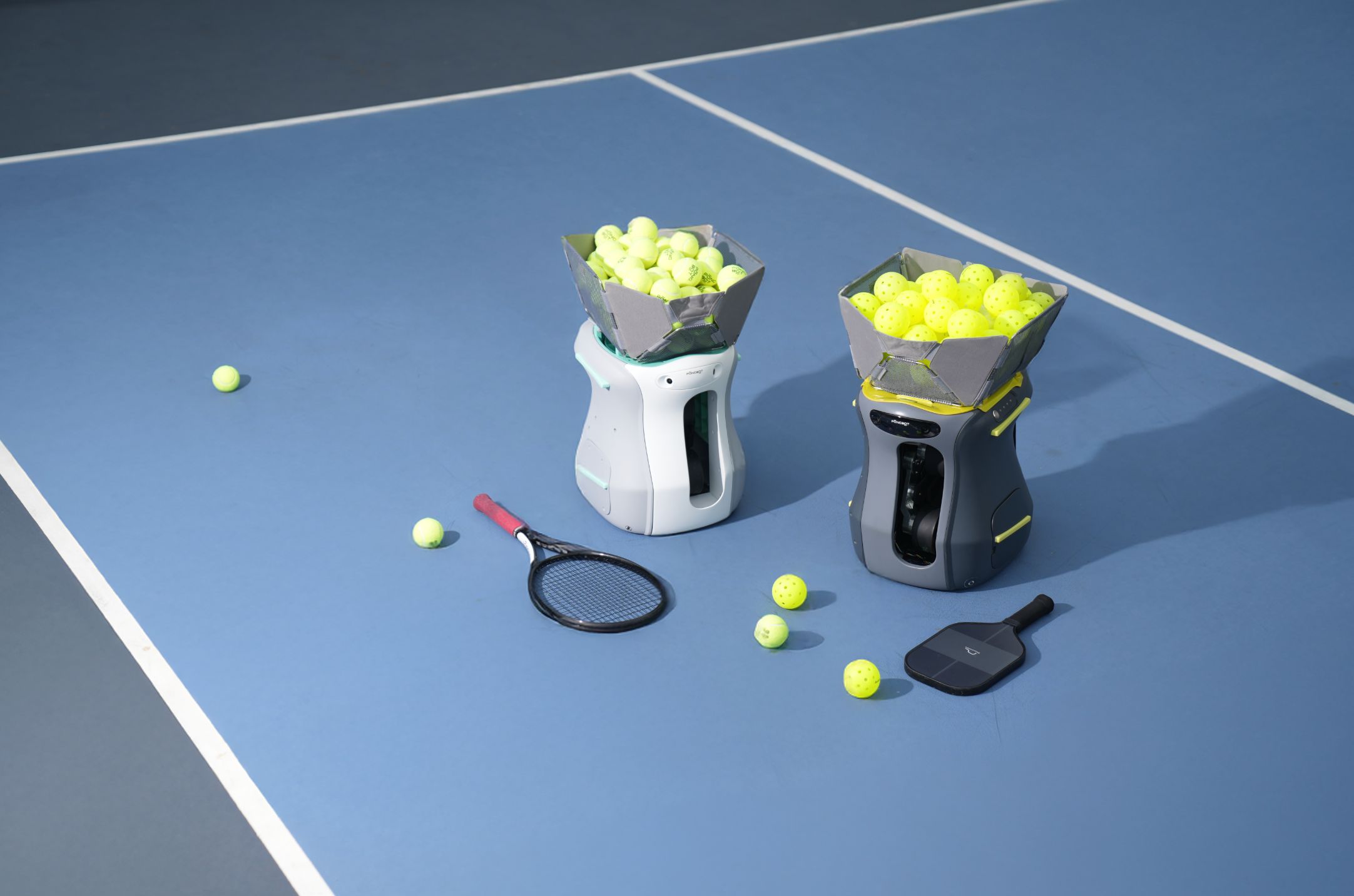
AI sports technology platform covering multiple sports categories with software and hardware collaboration (Source/Enterprise)
The following is an excerpt of the interview between 36Kr and Zhang Haibo, founder and CEO of Pongbot (slightly edited):
36Kr: Pongbot Aura has delivered impressive performance in overseas crowdfunding and sales. For the newly launched AI Coach function, what kind of intelligent experience can it bring to users in actual training at present? What is its capability boundary?
Zhang Haibo: We hope to further change the experience from "someone accompanies you to play ball" to "someone helps you practice well".
The biggest breakthrough of Aura's AI Coach is real-time performance. The most basic capability of a coach is real-time response. After the user hits a ball, we hope to give the most timely feedback. In the sports scenario, the rhythm of playing is very fast, so this is a huge technical challenge.
Pongbot currently focuses on two dimensions: hitting movement and completion. The system will identify problems in the user's movements, give short and actionable prompts to help users find deviations that are not easy to detect, such as the timing of backswing, the position of the hitting point, and whether the center of gravity transfer is in place. Compared with stacking professional indicators, we pay more attention to whether users can understand what needs to be adjusted for this ball and what to pay attention to for the next ball.
In addition, our coaching capabilities are still evolving. We will understand the individual level and training goals, combine continuous training performance to identify long-term technical weaknesses, not a single mistake, but the common weaknesses across multiple trainings and scenarios, then generate suitable ball paths for users, link the serving equipment to arrange targeted practice. For example, the robot will serve ball paths suitable for the user's level just like a coach on site, combined with intelligent coaching capabilities to maximize the user's training efficiency.
We are not trying to replace professional coaches, but to extend professional guidance to more daily training scenarios, so that users can have direction and feedback when practicing alone.
36Kr: The continuous evolution of the sports large model is inseparable from data. What is the actual progress of Pongbot on the data flywheel at present? What problems need to be solved from "data accumulation" to "verifiable closed loop"?
Zhang Haibo: The accumulation over the past few years has allowed us to grasp an extremely rare underlying asset: the platform has precipitated 1 million sets of table tennis ball paths and more than 200,000 sets of tennis ball paths. With the launch of Aura equipped with 120fps dual cameras and 10Tops end-side computing power, it is expected to generate more than 5 million hours of high-quality sports interaction data every year.
But the amount of data itself does not equal data availability. At the engineering level, we have built the basic link of "video pre-labeling + manual review by professional coaches" to solve the problem from "having data" to "data being usable".
The first thing to do is to convert the tacit experience of coaches into precisely labeled data. The judgment of sports posture is not like image and text recognition. Different coaches may have completely different understandings of "backswing is too late". Through the review mechanism of the top coach team, we convert vague experience into high-precision standards.
More critically, we build closed-loop data with "causal chains". Pongbot's advantage lies in its hardware terminals: we not only record where the user plays poorly, but also record what suggestions the AI gives, what serving strategies the device adjusts, and the improvement range of the user's subsequent hitting posture. Only with data labeled with causal relationships can the model learn "what kind of guidance is really effective".
The threshold of this matter has never been "data volume" itself, but whether it can obtain "real training data with causal chains" stably for a long time. Pongbot has hardware terminals, physical training scenarios and sports large model base at the same time, which will promote us to form an efficient driving force for model iteration.