DLSS 5 is so resource-intensive that it completely overwhelms graphics cards, but NVIDIA considers this extremely important.
Who still remembers that in May, Jensen Huang came to Beijing and was hit by two unexpected experiences within just one day. One was the traditional old Beijing fermented mung bean juice, and the other was the over-the-top beauty filter applied by a random aunt on the street.

Online image
Soon this picture went viral among the gamer community. Many players used it to tease the demo effect of DLSS 5 at that time, describing it as "extreme skin smoothing", "plastic surgery effect" and "heavy AI aesthetic".
DLSS (also jokingly called "Popeye" by Chinese players) can be initially understood as a set of game graphics technologies launched by NVIDIA. Previous generations of DLSS mainly helped games improve resolution and frame rate, while DLSS 5 is a further upgrade that uses AI to render light, shadow, texture and scenes in game images to achieve an effect close to real life.
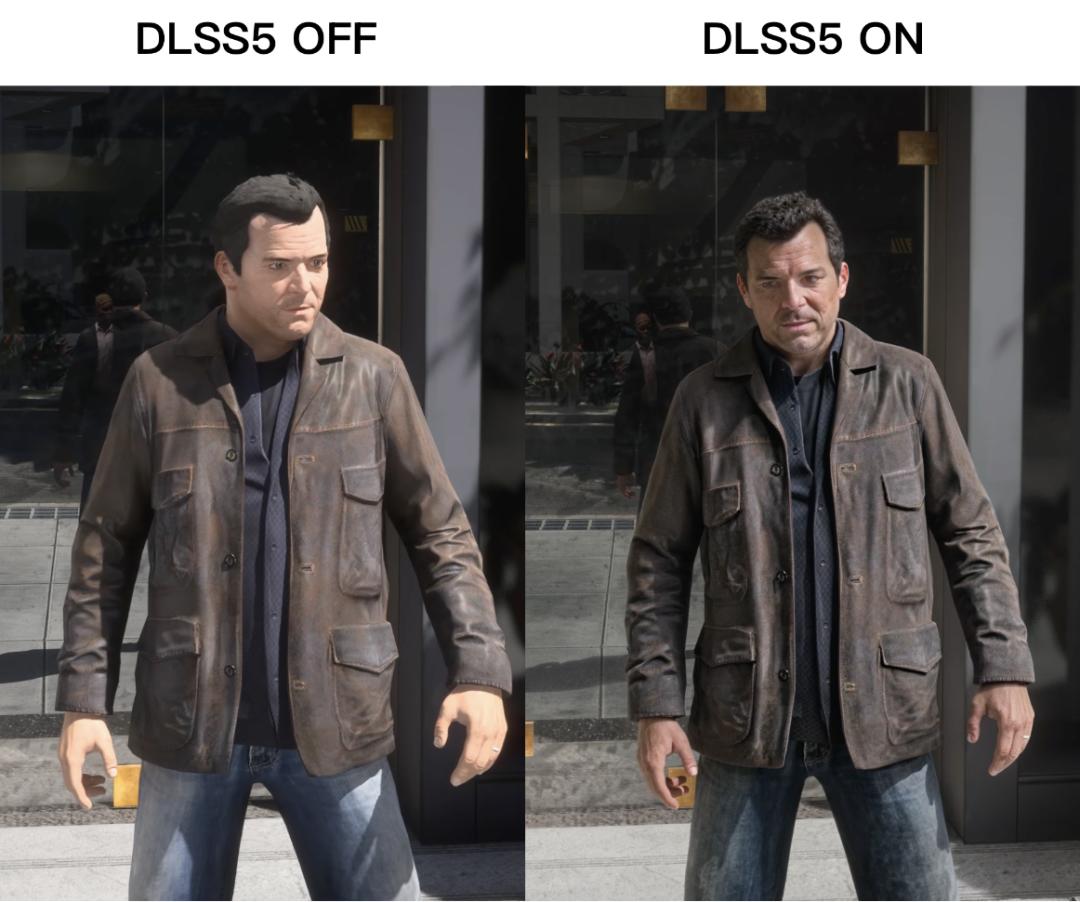
Skin, light, shadow and texture re-rendered by AI | Digital Dreams
On September 3, DLSS 5 was officially launched alongside *NBA 2K27*. At present, the official NVIDIA version only supports RTX 50 series graphics cards, but the player community has already modded the runtime library to make it compatible with 30 and 40 series NVIDIA GPUs.
Apart from the continuous discussions in gamer circles, I have noticed the significance of this technology that goes far beyond games themselves.
It looks great, but why is the frame rate dropping?
There are a large number of games on the market with excellent gameplay, but their graphics are so unappealing that they drive players away.
For example, *Project Zomboid* that I have been playing recently has characters, houses and streets all crowded in an oblique top-down perspective, with flat light and shadow and no sense of stereoscopy at all.

Source: youtuber @Pukis
But after turning on DLSS 5, the entire atmosphere of the screen changed. Shadows appeared at the corners of the walls, reflections showed on the car bodies, and characters no longer looked like they were pasted directly on the ground. The originally slightly thin picture gained a layer of gloomy light perception, looking more like a real abandoned doomsday small town.

After turning on DLSS 5, I realized that I do care about the graphics of this game! | Pukis
This is exactly the meaning of this type of graphics technology: it enhances the sense of space and realism of 3A games that already have great visuals, and also provides more three-dimensional image processing for games that do not focus on graphics performance.
There are many modding tools in the player community. For example, if players are not satisfied with the image processed by DLSS 5 once, they can stack another layer of processing on it. After running DLSS 5 for three layers, the skin and ground in the game screen start to get an oily sheen, the character outlines gradually deform, and the hair and shadows keep flickering when the screen moves. Once the picture is in motion, the corners of the table will show a curved effect similar to over-edited photos.
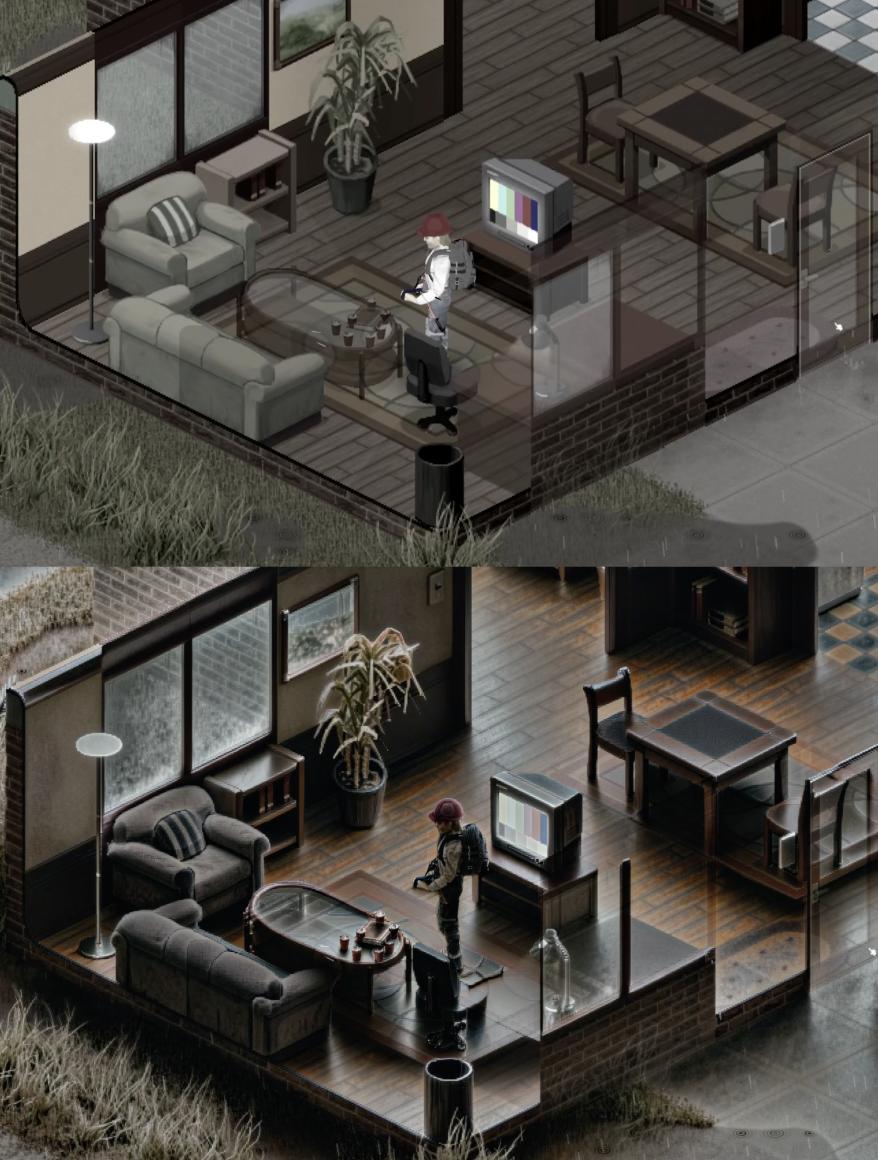
Top: Screen without DLSS5 enabled; Bottom: Screen after 4 layers of processing | Self-shot by the author
My graphics card is RTX 4070 Ti Super, which sells for around 6000 RMB on the market and counts as a mid-to-high-end GPU. Significant frame drop occurred during the use of DLSS 5 — which indicates that DLSS 5 is fully capable of pushing my graphics card to its performance limit.

Without optimization, the frame rate drops sharply after DLSS5 is turned on | Source: Self-made by the author
DLSS 5 raises the next question for game graphics technology: shifting from "whether the game runs smoothly" to "whether the picture can look even better".
Previous generations of DLSS helped the graphics card "save effort". "Super Resolution" allows the game to render at a lower resolution, then AI refers to the current frame and the information left by several previous frames to upscale it to a higher resolution; "Frame Generation" calculates new transition frames between two normally rendered images. Both technologies solve the contradiction between clarity, frame rate and limited computing power.
But DLSS 5 is obviously a severe test for computing power.

DLSS 5 recreates the Haubao beauty filter effect | reelsgames18
How does it re-render the light and shadow of the picture? Take the ear of a game character as an example. In real life, when strong light shines from behind a person, part of the light will penetrate into the skin and scatter inside, making the edge of the ear show a slight warm red hue.
Traditional games can also achieve this effect, but the art team needs to build the skin texture in advance, the technical staff writes the light receiving rules, and then the renderer calculates frame by frame.
However, DLSS 5 (NVIDIA calls the core of this algorithm "3D Guided Neural Rendering") uses the physical laws learned during training to predict how the light transmission, brightness and darkness will appear when a beam of light hits the ear of a game character.
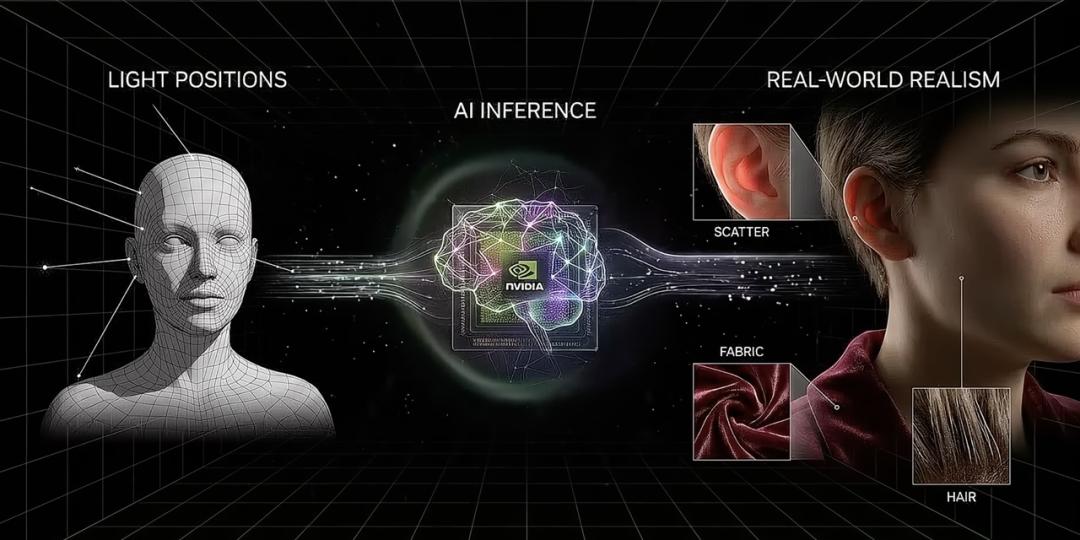
Source: TheAIGRID
A prerequisite problem to be solved is that the algorithm must understand the skin, hair, cloth, plants and other elements in the game, and then generate more natural reflections, realistic character skin textures and layered environments based on physical laws.
What consumes more computing power is that when users generate images with AI, they are willing to wait for more than ten seconds. But when playing games, there is no time to wait.
A game that needs to maintain 60 frames per second only has about 16.7 milliseconds for each frame.
To compress the processing time to the extreme, the game engine needs to finish the basic rendering work first, and then hand it over to DLSS 5 to complete the "realistic effect" work.

3D Guided Neural Rendering Technology | NVIDIA
Then NVIDIA compresses the multi-round calculations that are usually required for the model to generate images into one generation step (for which it designed a "single-step pixel space diffusion model").
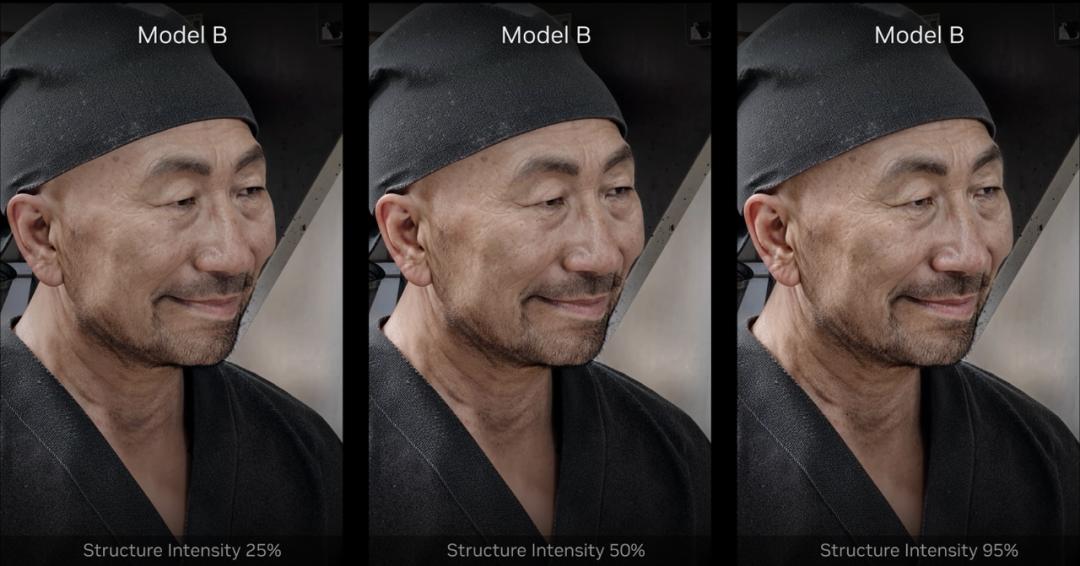
Performance of the same model under different generation intensities | NVIDIA
To avoid inconsistencies in the generation results — such as the continuous picture suddenly becoming too bright or too dark, or even deforming, the previous step of the game engine will deliver the "motion vector" composed of elements like the moving direction, distance and trajectory of a hand to DLSS 5 together.
A 4K 60fps image has nearly 8.3 million pixels per frame, which is equivalent to processing nearly 500 million pixels per second. After rendering, the image is sent to DLSS 5 for neural network processing, and all the work must be completed within 16.7 milliseconds per frame. Even with compression, the graphics card's computing power will still take a huge hit.
The actual test conducted by PC Gamer quickly calculated this cost. In *NBA 2K27*, when RTX 5080 runs at 4K native resolution, the average frame rate was originally 183fps; after turning on DLSS 5, it dropped to only 49fps, a decrease of 73%.
Roughly converted, 183fps means about 5.5 milliseconds per frame, while 49fps means about 20.4 milliseconds per frame. Therefore, after enabling DLSS 5, the entire rendering process takes nearly 15 milliseconds more per frame on average, which is almost as long as the time required to render the entire 60fps image.
Players are facing the dilemma that their hardware cannot keep up with new technologies. NVIDIA will also need to work hard to balance the two in the future. However, the neural rendering method demonstrated by DLSS 5 is very likely to realize real-time and controllable generative rendering. This method may have many uses and change many industries.
NVIDIA's ambition: to make the digital world close to reality
In the past, the way game engines build 3D worlds is that developers write the rules first, and then hand them over to the graphics card for rendering. Generative AI takes a different path: it needs to judge "what should this thing look like in the real world?"
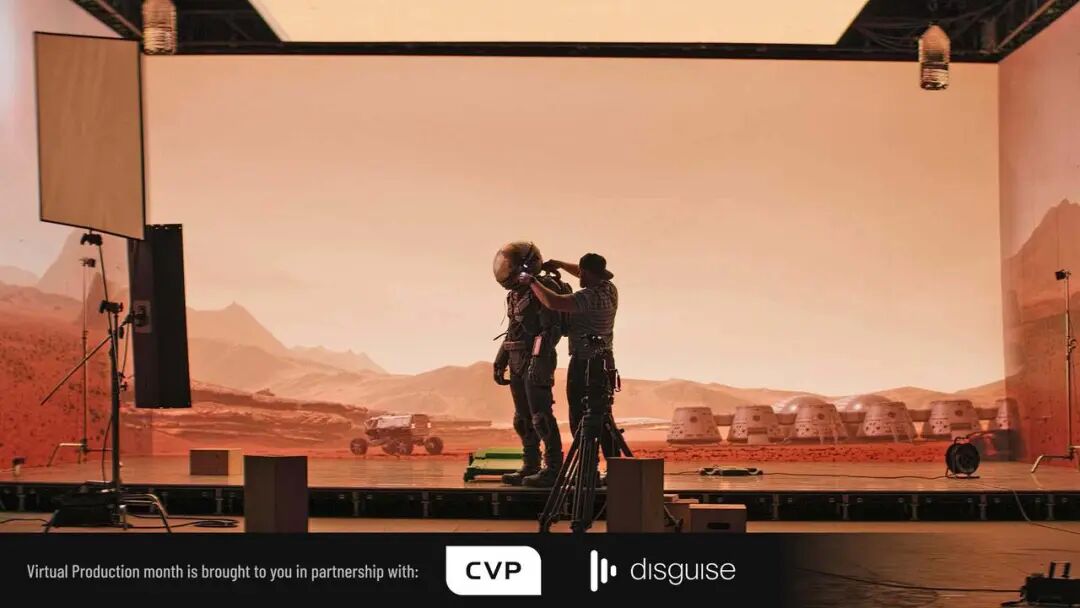
Shooting some scenes in a virtual film studio | disguise
The virtual film studio in the film industry is an intuitive use case. Many films now directly project virtual scenes on huge LED screens, with actors shooting in front of the screens, and directors can also adjust the camera position and lighting on site. But for complex materials such as skin, smoke, glass and metal to be realistic enough, post-rendering is still required. If DLSS 5-like technologies are introduced into the film studio, the images the director sees in the virtual studio will be much closer to what we see in the cinema. Architectural design and industrial simulation also have similar demands.
NVIDIA itself is also integrating neural rendering into a bigger story beyond games. At SIGGRAPH 2026, it put 3D Guided Neural Rendering (real-time rendering of images, especially light, shadow, texture and appearance that were difficult to handle well in the past), world model (digital world generation based on physical laws) and real-time simulation (simulating motion and interaction that conform to physical rules) in the same keynote speech, and listed games, films, robotics and factory digital twins as fields that demand virtual worlds.
Therefore, DLSS 5 and games are the first landing scenarios for NVIDIA at present, but the goal of real-time generation is far from only serving players. The broader significance lies in how we create a digital world that looks realistic enough.
This article is from the WeChat official account "Guokr" (ID: Guokr42), written by Gaoji Dongwu, and republished with authorization from 36Kr.