PanelAI plans to raise 3-5 million yuan in its angel round of financing, and the financing has not been completed yet.
Qidong Technology Solves Enterprise AI Implementation Pain Points Through Computing Power Scheduling, Seeks Financing
Enterprise AI Has Moved From "Usable" To "Practical Implementation", With Infrastructure Becoming a New Bottleneck
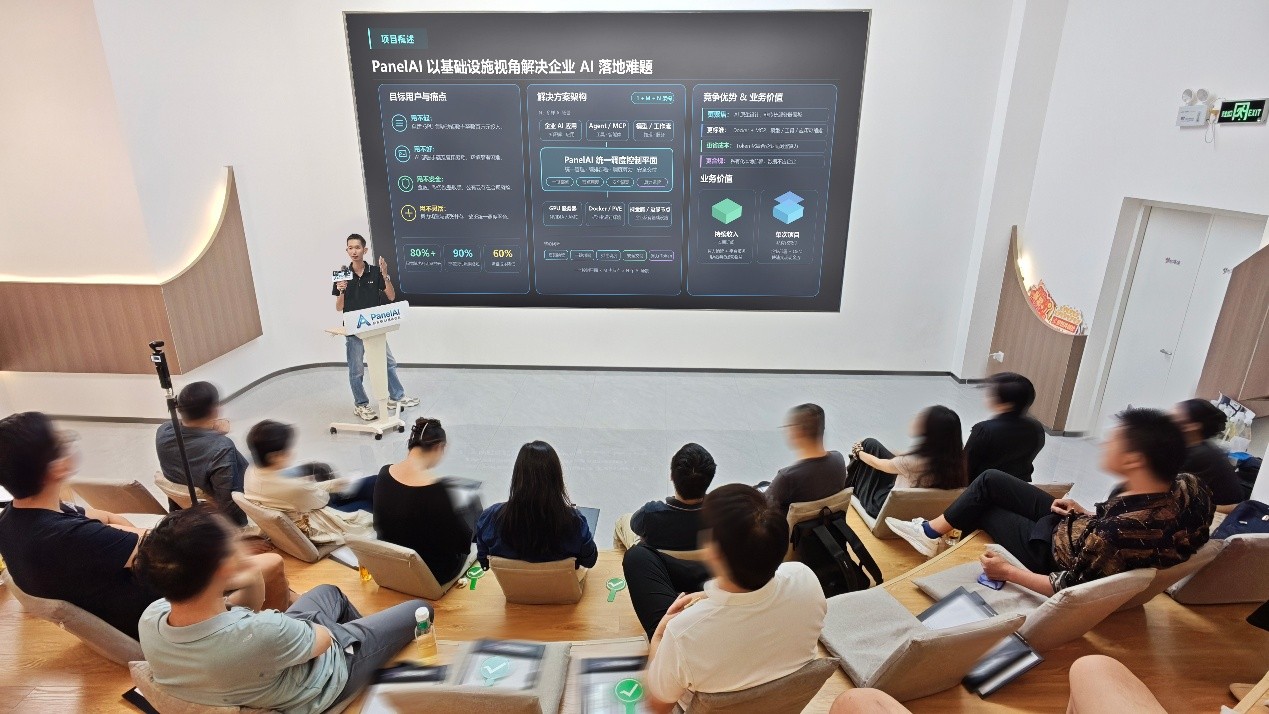
As large model applications move from the experimental phase to production environments, enterprises' demand for intelligent computing power and AI infrastructure continues to grow. Relevant research released by the China Academy of Information and Communications Technology shows that intelligent computing power services are evolving from single-point resource supply to full-stack collaboration, and resource pooling and heterogeneous computing power scheduling have become important technical directions to improve the efficiency of computing power utilization.
When enterprises actually promote the implementation of AI services, they often face several types of common challenges. First, the complex deployment process and cumbersome environment configuration lead to high technical thresholds; second, there is no unified entry for multi-node management, GPU computing resources are scattered, making it difficult to achieve efficient cross-department scheduling and sharing, which easily leads to idle resources and cost waste. In addition, it is difficult to balance permission management and data security, and the continuous operation and maintenance of the full life cycle of AI applications also lacks standardized support, which further increases the management cost of enterprise AI implementation.
In response to the above common pain points in the industry, policy authorities are also continuously promoting the interconnection and intercommunication of computing resources. In 2025, the Ministry of Industry and Information Technology issued the *Computing Power Interconnection and Intercommunication Action Plan*, proposing to promote cross-subject, cross-architecture, and cross-region scheduling of computing supply and demand, and advance computing-network cloud scheduling, computing resource management, and cloud-based orchestration and deployment of computing applications. The product direction of PanelAI is highly aligned with this trend, focusing on AI application deployment, computing power management and resource scheduling in internal enterprise and multi-node environments.
PanelAI Extends From Deployment Tool to AI Infrastructure Management Platform
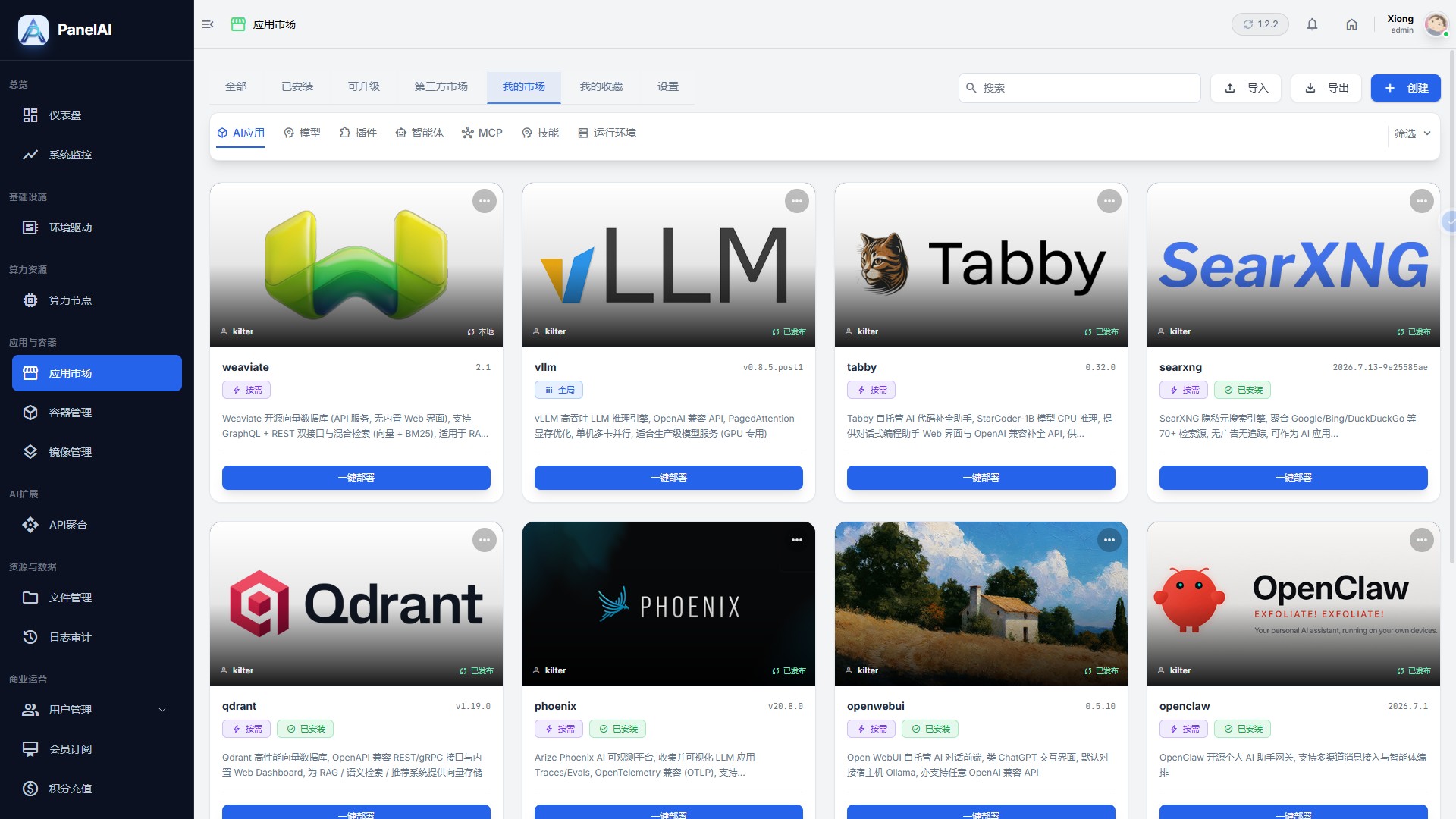
PanelAI, launched by Haikou Qidong Technology Co., Ltd., is positioned as an AI infrastructure management platform, which corely solves the problems of enterprise AI application deployment, computing power management and multi-node management.
In terms of technical architecture, PanelAI is based on Docker containerization technology, and uses Go language to build the core scheduling engine. In the deployment phase, the platform provides a visual wizard, supports automatic container restart, application update and multi-node deployment, and simplifies the launch process of traditional AI applications. In the computing power management phase, the platform supports centralized management of heterogeneous computing power such as GPU and CPU, and has completed the management verification in multi-node scenarios.
In the enterprise governance phase, the platform provides multi-tenant isolation, fine-grained permission control and identity authentication mechanisms, and supports enterprise private deployment, so that AI applications, models and business data can run in the enterprise's own infrastructure, and meet the internal security governance needs of enterprises through permission control and identity authentication mechanisms, which is applicable to application scenarios with high data security requirements such as finance, healthcare and government affairs.
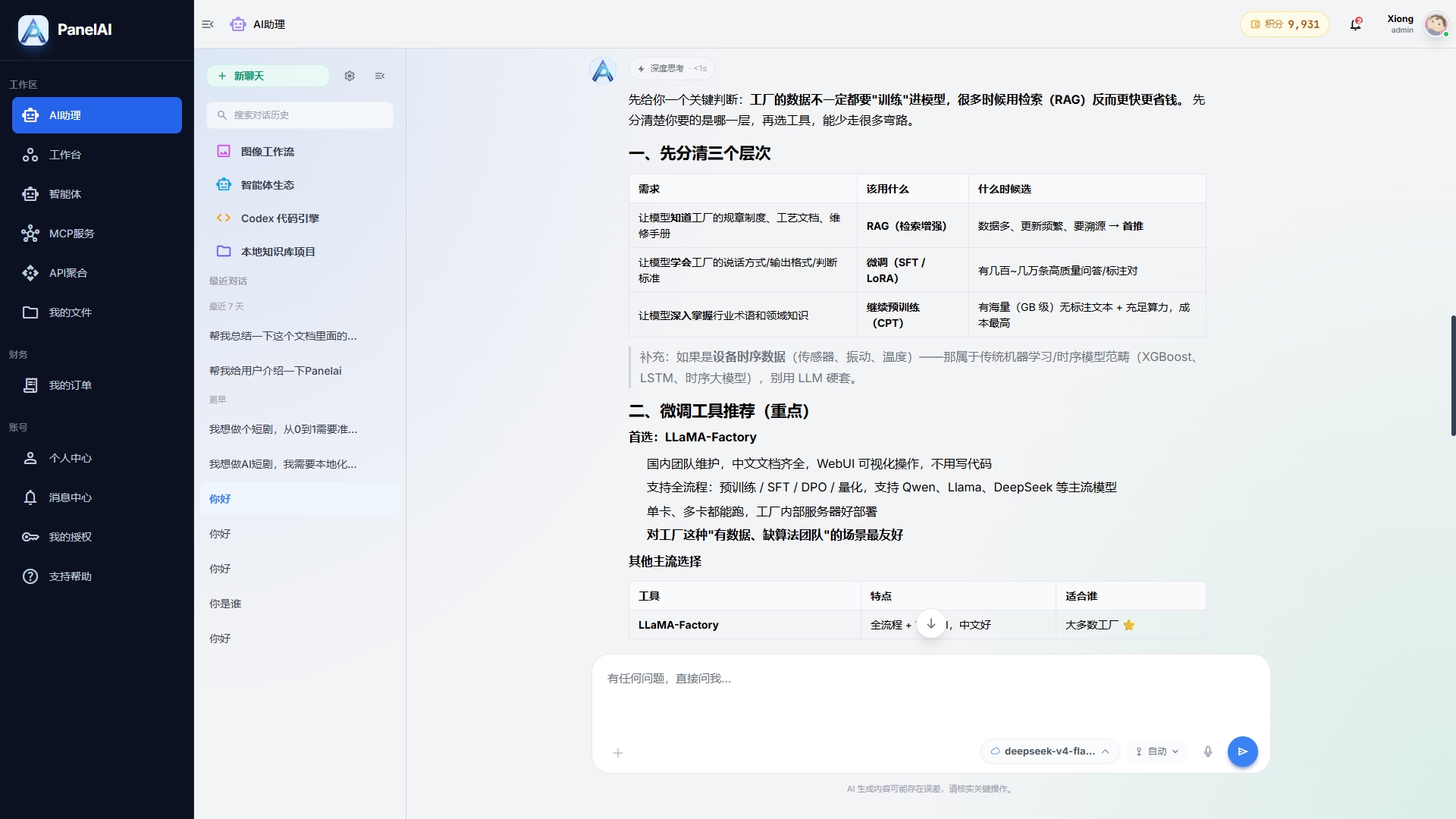
In terms of ecological adaptation, PanelAI natively supports the MCP protocol and is compatible with the OpenAI standard interface. Compared with the conventional operation and maintenance panels that are mainly oriented to traditional Web service deployment, the management objects of PanelAI are further extended to AI applications, models and computing nodes, enabling existing enterprise AI applications such as knowledge bases, intelligent customer service and office assistants to be deployed and managed through a unified interface.
Starting from License and Private Deployment, Qidong Technology Seeks Angel Round Financing
In terms of commercialization, PanelAI currently takes software License authorization and private deployment as its core revenue sources, providing localized delivery services for industry customers in sectors with high data security requirements such as finance, government affairs and healthcare. In the future, the platform plans to further explore the metering, scheduling and service-oriented operation mode of computing resources.
In terms of market verification, Qidong Technology has previously operated the open-source product AIStarter, providing desktop-level AI deployment tools for developers, and has accumulated a certain user base and technical reputation. As the core product for enterprise-level customers, PanelAI has now completed the launch of the Beta version, and is promoting enterprise product verification and commercial implementation.
In terms of the team, Liang Bishan of Qidong Technology is responsible for strategic business and ecological cooperation, Chen Zhixiong is responsible for product planning and market construction, and Chen Zhidong is responsible for the technical architecture and core R&D of PanelAI. The team members cover functions such as product, R&D, design, operation and delivery.
In terms of intellectual property rights, PanelAI has completed the registration of relevant software copyrights, the core trademarks are being registered, and relevant domain name filings have been completed.
At the current stage, Qidong Technology plans to raise 3 million to 5 million yuan in angel round financing, and intends to transfer 10% to 15% of the equity. The raised funds will be mainly used for control plane iteration, expansion of node management capabilities, expansion of enterprise benchmark customers and construction of the delivery system. As enterprise AI applications enter the large-scale implementation phase, PanelAI will further improve its capabilities in AI application deployment, computing power management and enterprise-level governance.