Why is Yangzhou the "No.1 Intelligent Computing City in Jiangsu"?
Electricity consumption is regarded as the "vane" and "barometer" of economic development.
In the past summer, the total power load of Yangzhou's power grid exceeded 7.56 million kilowatts for the first time, hitting a record high.
Apart from traditional residential, industrial and commercial users, a new force has emerged in the surging electricity consumption curve of Yangzhou this time.
In the big data industrial park located in Yizheng, countless computing power cabinets are operating at high speed day and night. Their electricity consumption in the first half of the year soared to 963 million kWh, a year-on-year surge of 162.40%.
While the power consumption of computing power cabinets is skyrocketing, the computing power scale of Yangzhou is also expanding.
Statistics show that the total computing power scale of Yangzhou reaches 73,000P, of which the intelligent computing scale reaches 62,000P, ranking first in Jiangsu Province and in the first echelon across China.
Why has this thousand-year-old canal ancient city become "the No.1 Intelligent Computing City in Jiangsu"?
How will its computing power advantages help Yangzhou march towards a "trillion-yuan GDP city"?
"The No.1 Intelligent Computing City in Jiangsu"
Stepping into the Yizheng Big Data Industrial Park of Yangzhou, clusters of modern machine buildings are arranged in a well-proportioned manner.
Inside the machine rooms, the indicator lights of rows of cabinets keep flashing, and countless servers complete massive operations nonstop around the clock.
Staff told Zhengjieju that the park has gathered five 10-billion-level computing power clusters of Tencent, China Telecom, China Mobile, China Unicom and China Cloud Harbour, with a total investment of over 60 billion yuan. It is the largest data center cluster in East China.
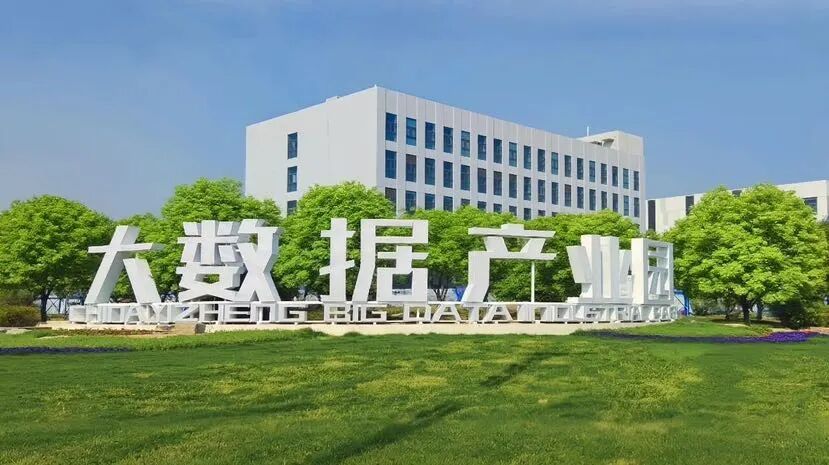
Yangzhou Big Data Industrial Park
The scale of the big data industrial park is a microcosm of Yangzhou's computing power strength.
The total computing power scale of Yangzhou reaches 73,000P, with the intelligent computing scale hitting 62,000P, ranking first in Jiangsu Province and in the first national echelon.
One out of every three units of intelligent computing power in Jiangsu is held by Yangzhou.
As one of the three provincial-level computing power support zones in Jiangsu, Yangzhou has built an independent, controllable and diversified heterogeneous public intelligent computing resource pool, with an elastic computing power scheduling capacity of 600P.
Based on its geographical advantages, Yangzhou has innovatively built the "Canal City Computing Power Platform", which has connected the computing power resource pools of 24 cities along the Grand Canal, becoming the first regional platform in China that has completed docking and interconnection with the national integrated computing power platform.
Global data centers are accelerating into the gigawatt era. Yangzhou has followed the trend and launched the construction of the first gigawatt-level intelligent computing cluster among all prefecture-level cities in China, taking the lead in seizing the new high ground of the computing power industry.
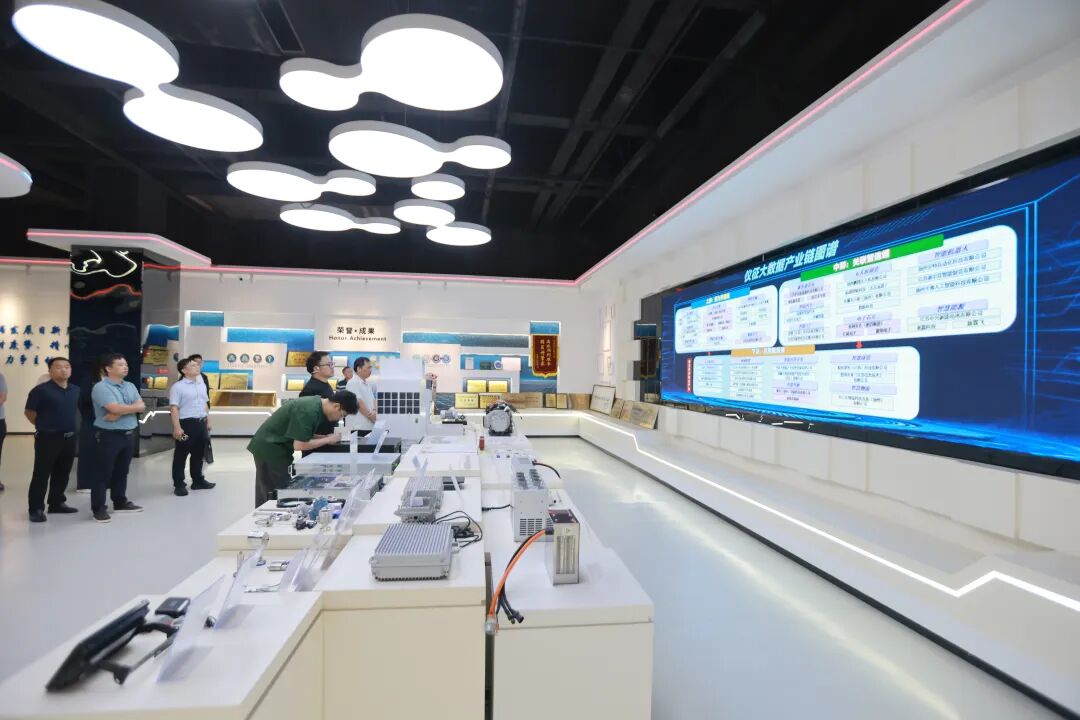
Planning Exhibition and Achievement Service Area of the Big Data Industrial Park
How did Yangzhou grow from the "No.1 Intelligent Computing City in Jiangsu" to a core computing power hub node in the Yangtze River Delta?
Back in 2018, when ChatGPT had not yet come out and most cities had no concept of "computing power", Yangzhou had already made advance layouts for the construction of big data and computing power infrastructure.
In that year, the big data industrial park completed the land expropriation for its first phase, and introduced the China Telecom Jiangbei Data Center as the first enterprise to settle in the park.
After that, Tencent Yizheng Dongsheng Cloud Computing Data Center with a total investment of 10 billion yuan was settled here.
At the end of 2022, the boom of general large models rose, and the demand for intelligent computing power grew rapidly.
Yangzhou seized the opportunity and took the initiative to promote the upgrading of data centers from "storage" to "computing".
In 2023, Tencent added new investment, and the "Hunyuan Large Model" was settled in the big data industrial park.
ByteDance laid out its core computing power node in East China, while China Mobile and China Unicom successively upgraded their intelligent computing capabilities.
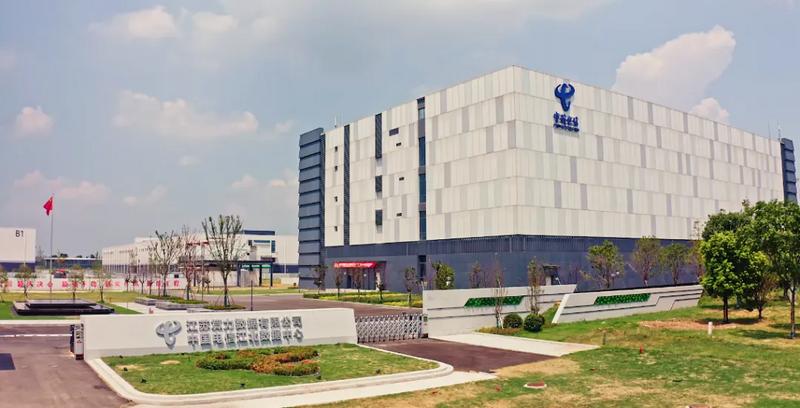
China Telecom Jiangbei Data Center
It took Yangzhou only three years to complete the key leap from "storing data" to "processing data", and from a data warehouse to a computing power hub.
Apart from its forward-looking strategic vision, Yangzhou also has the realistic endowments to develop large-scale computing power clusters.
Located in the geometric hinterland of the Yangtze River Delta, Yangzhou can not only access the computing power demands from Shanghai, Nanjing, Suzhou and other nearby cities, but also have relatively sufficient development space.
Compared with some areas in southern Jiangsu, Yangzhou has more flexible advantages in land, electricity, machine room construction and comprehensive operation costs.
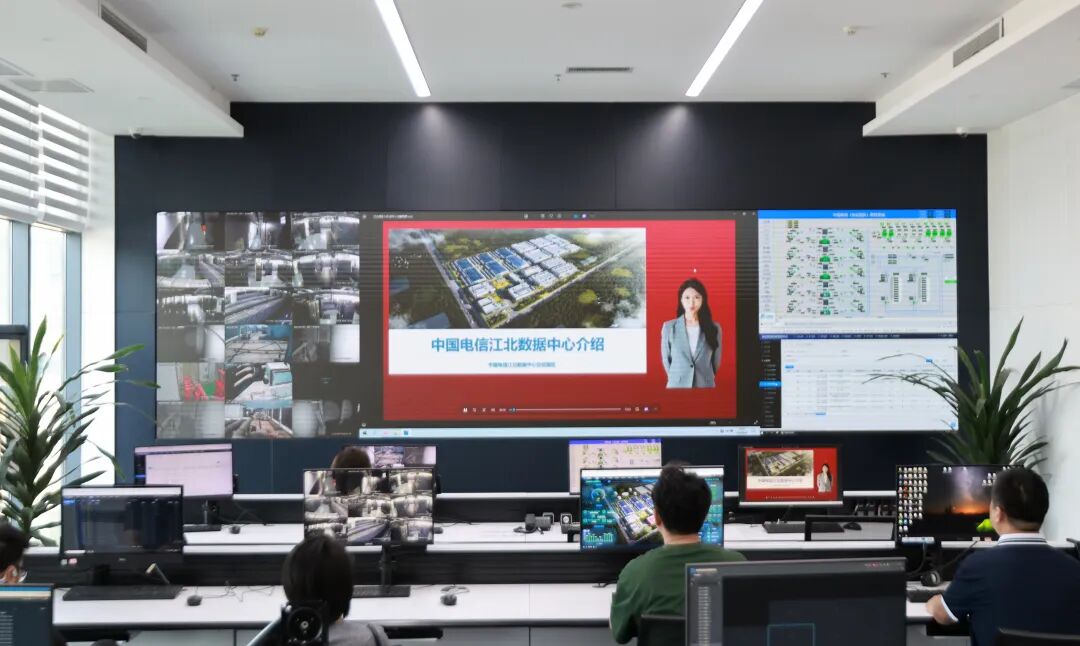
Introduction display and digital twin monitoring interface of China Telecom Jiangbei Data Center
More critically, Yangzhou did not simply treat computing power as a project for investment attraction, but regarded it as the infrastructure for industrial development.
Over the past 7 years, Yangzhou has continued to invest and iterate, and step by step built a computing power base with leading scale and smooth scheduling with the strategic determination of long-termism.
Completing the AI Industrial Layout
At present, AI has become the core track that all major cities are competing to lay out.
The artificial intelligence industrial chain can be roughly divided into three links: underlying computing power, technology development and application implementation.
Within Jiangsu Province, Nanjing is rich in university and scientific research resources with prominent talent advantages; Suzhou and Wuxi have a solid manufacturing foundation that can provide a large number of industrial scenarios.
Compared with these cities, Yangzhou does not have advantages in university resources and local high-end talent reserve.
With the firmly built computing power base, Yangzhou has cultivated its own comparative advantages.
To amplify its computing power advantages, Yangzhou has taken two key measures.
First, it has built the Canal City Computing Power Platform with high standards, gathering 24 computing power resource pools with an access computing power scale of over 10000 PFLOPS, more than 5000 registered users, and the transaction volume of computing power matching has exceeded 50 million yuan.
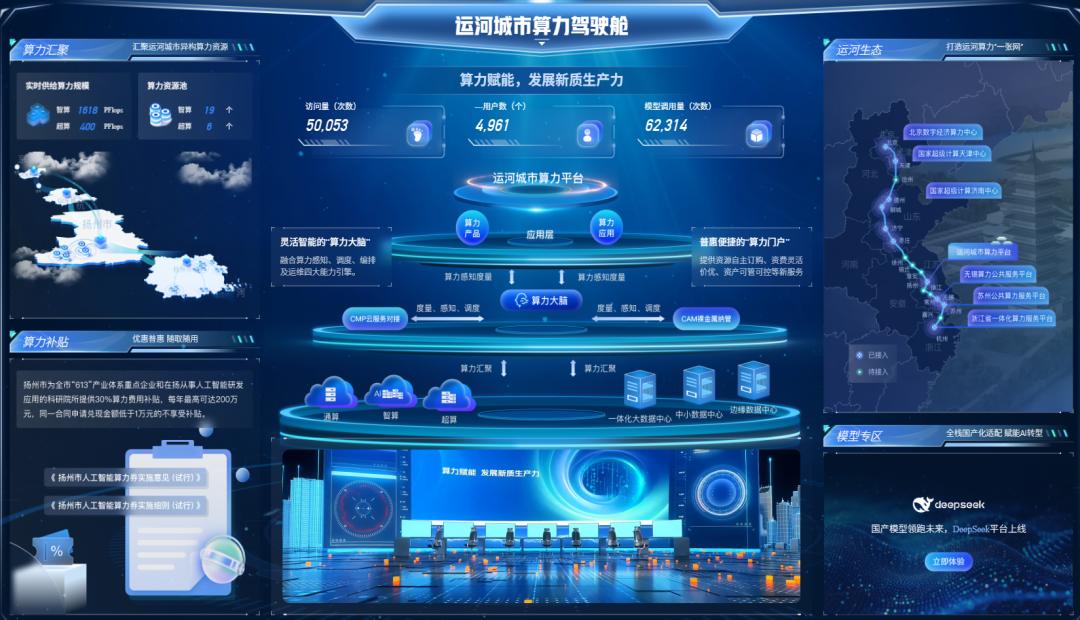
Yangzhou Canal City Computing Power Platform
Second, it took the lead in launching computing power coupons and Token coupons in the province, to subsidize enterprises for using intelligent computing power and Tokens.
This has shifted the supply of computing power from "available for use" to "easy and low-cost to use", greatly reducing the cost for market entities to apply artificial intelligence technologies.
Yangzhou is well aware that the first place in computing power scale does not mean the first place in AI industry.
Computing power alone is not enough, the AI industrial map needs to be completed piece by piece.
Yangzhou has innovatively built a "five-party collaborative" promotion mechanism of "overall administrative planning - public institution support - state-owned enterprise operation - industry self-discipline - fund guidance", with the data bureau responsible for overall coordination, research institutions providing support, state-owned enterprise platforms organizing operation, associations connecting enterprises, and industrial funds providing capital support.
By breaking down departmental barriers and resource silos, Yangzhou has provided strong support for the improvement of its AI industrial map with city-level organizational capabilities.
In the front-end manufacturing link, Yangzhou has realized independent local supporting for some equipment ——
Kunqing Computer produces 100,000 servers annually, which adopt new energy-saving chips with 15% lower power consumption than the industry average, and its AI server shipment ranks among the top in China;
Yangjie Technology supplies a series of power semiconductor products including SiC, MOSFET, small signal devices, rectifier devices and protection devices for AI data center scenarios;
The reverse planetary roller screw independently developed by Changban Robotics has been put into production with an annual output of 30,000 sets, filling the gap of core component localization for domestic humanoid robots;
……
In the back-end application link, Yangzhou has introduced leading enterprises such as Tencent, Alibaba and 360 Group, leveraging the technology, platform and brand influence of large enterprises to drive the agglomeration of upstream and downstream enterprises.
Large enterprises act as the ballast stone, while small entrepreneurs bring continuous vitality.
AI has lowered the threshold for entrepreneurship, and the "one-person company" OPC has become a new trend of entrepreneurship.
Yangzhou has accordingly launched the first batch of 24 OPC ecological communities, building a "10-minute office and living circle" to provide entrepreneurs with computing power, tools, data, scenarios and financing services.
The digital intelligent OPC ecological community located in Yangzhou Data Industrial Park has registered 8 enterprises so far, and plans to gather more than 200 OPCs and attract over 1000 entrepreneurial talents in the next three years.
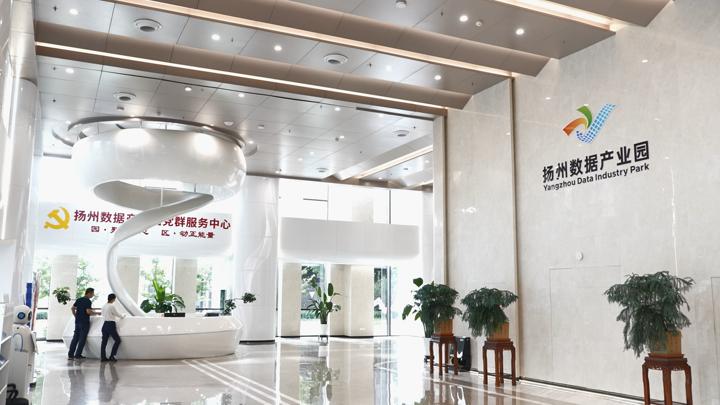
Digital Intelligent OPC Ecological Community of Yangzhou Data Industrial Park
Yangzhou took the lead in compiling the "Artificial Intelligence Industrial Map" in the province, initially building a full-chain ecology of "infrastructure layer - technology layer - application layer", gathering 273 upstream and downstream enterprises in the industrial chain (including 166 core artificial intelligence enterprises), covering 6 listed enterprises, 33 specialized, refined and innovative "little giant" enterprises, 128 high-tech enterprises and 4 potential unicorn enterprises.
Relying on its computing power advantages, Yangzhou is gradually completing its AI industrial map through policy support, platform construction and ecological cultivation.
The foundation has been firmly laid, and the industry is growing vigorously.
Transforming Computing Power into Productivity
No matter how well the computing power infrastructure is built, it will be a "power hog" if it cannot be transformed into productivity.
No matter how cool AI technology is, it will be a castle in the air if it cannot be implemented in real scenarios.
The ultimate value of computing power and AI lies in empowering thousands of industries and serving the high-quality development of the real economy.
Yangzhou's approach is to use scenarios to drive technology, and use industrial demands to promote applications, gradually forming a closed loop of "scenario release - enterprise implementation - scenario iteration - industrial agglomeration".
In May 2026, Yangzhou released the first batch of 165 innovative scenario lists of the year, and simultaneously launched 37 high-quality implementation cases, opening up the real industrial demands of the city to attract enterprises to implement their technologies, polishing products in practical applications, and in turn driving the continuous agglomeration and growth of industries.
Known as "China's Capital of Plush Toy Gifts", Yangzhou has long enjoyed the reputation that "the world's plush toys are in China, and China's plush toys are in Yangzhou".
The number of plush toy related enterprises in Yangzhou accounts for nearly 60% of the total in Jiangsu Province, selling 20 million plush toys through e-commerce channels every year, with an annual sales volume of about 15 billion yuan.
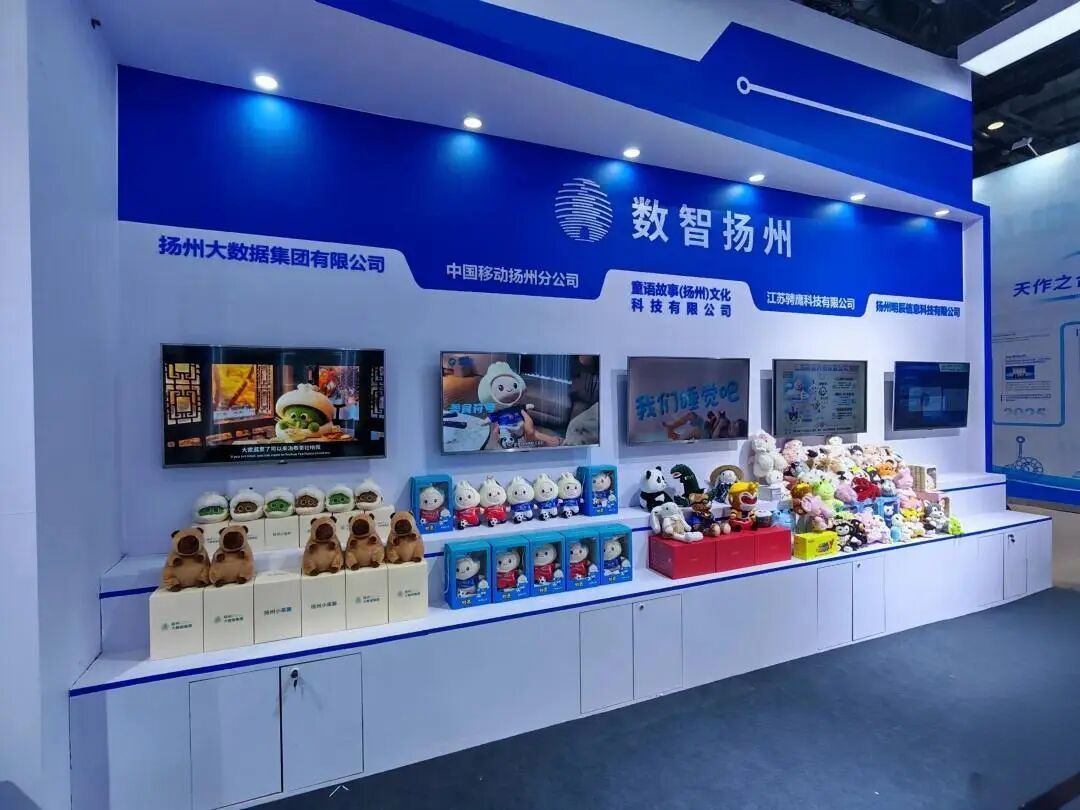
Yangzhou AI Plush Toys
In the past, plush toys relied more on appearance design and mass production.
Nowadays, large models, IP culture and intelligent hardware are opening up new imagination space for this traditional industry.
Yangzhou gives full play to its advantages in computing power resources, sets up a special zone for AI model training for the plush toy industry, and provides support for developing large model products applied in the AI plush toy field, calling Tokens for training and reasoning, building high-quality data sets and trusted data spaces, etc.
More and more Yangzhou toy enterprises begin to use AI to assist IP creation, shorten the design cycle, add intelligent interactive functions to increase added value, optimize production processes to improve efficiency, and promote the intelligent quality upgrading of traditional industries.
The plush toys "Xiaodoubao" and "Xiaozhutun" developed by Yangzhou Big Data Group implant local cultural tourism content into the AI knowledge base, which can not only talk, sing and tell stories, but also introduce Yangzhou delicacies.
The AI plush toys such as Monkey King and Soft Rabbit launched by Tongyu Story (Yangzhou) Culture Technology Co., Ltd. are specially designed for children, relying on the Alibaba Cloud Qwen large model to take into account early childhood education and warm companionship.
With AI empowering traditional industries, "small toys" can also leverage a huge market.
Yangzhou is China's capital of Guzheng and Guqin industry, with more than 280 related enterprises, producing 650,000 Guzheng and 65,000 Guqin every year, occupying half of the national market.
The intelligent piano practice machine TX product developed by Lehe Data Information Technology Jiangsu Co., Ltd. deeply integrates AI technology into musical instrument manufacturing and music education, which can collect piano practice data in real time, realize AI evaluation and data analysis after performance, and support remote supervision of learning and intelligent assessment.