When AI starts to "go into space", is a new cycle of commercial aerospace coming?
Commercial aerospace is entering a new phase. As the threshold for accessing space gradually lowers, the industry's focus is shifting: rather than merely discussing whether rockets can fly and satellites can reach their orbits, people are increasingly concerned about what new industrial capabilities space can support. Beyond communications, computing, energy, semiconductors, and even on-orbit services are being integrated into the same industrial landscape, and the boundaries of commercial aerospace are extending outward accordingly.
Xie Hongjun (CEIBS DBA 2022), Chairman and General Manager of Interstellar Sky Computing, has long been on the front line of commercial aerospace. In his view, the next phase that truly deserves attention is the process of commercial aerospace evolving from "entering space" to "operating space". Amid this transformation, space-based computing power that has emerged alongside the rapid development of artificial intelligence is very likely to become a key breakthrough point.
Make "access to space" affordable first
To understand commercial aerospace, one cannot avoid the most practical issue: cost. No matter whether you plan to carry out communications, computing, deep space exploration or resource development in space in the future, the first step is to send payloads from Earth into space. Rockets have always been the most fundamental part of commercial aerospace, and the key to whether costs can be reduced.
The reason why reusable rockets have drawn widespread attention is actually quite straightforward. In the past, most rockets completed their missions after a single launch. From a commercial perspective, they were equivalent to very expensive disposable products. If rockets can be reused multiple times, their manufacturing costs can be spread across more missions. As the number of launches increases, it becomes easier to achieve scale in production, operation and the supply chain.
According to observations from the domestic industry, the current cost of sending one kilogram of payload to the target orbit with a disposable rocket is approximately between 50,000 and 100,000 RMB. As reusable technology matures gradually, my personal assessment is that in the next three years, a cost of 10,000 to 20,000 RMB per kilogram will likely become a relatively common level. If two-stage reusability can be further realized later, the cost per kilogram is expected to drop to several thousand RMB in about five years.
This change affects far more than just the costs of rocket companies. Many past space projects were not impossible to implement technically, but unviable from an economic standpoint. The cost of sending one kilogram of payload into space directly determines how large a satellite can be, how much equipment it can carry, and whether many business models that were previously only in the conceptual stage have the opportunity to be put into practice.
If transportation costs continue to decline, more and more payloads can be sent into space. In the past, people might only be able to consider lightweight satellites with relatively single functions, but in the future, more computing, energy and communications equipment can be deployed. Only then can we discuss larger-scale space infrastructure down the line.
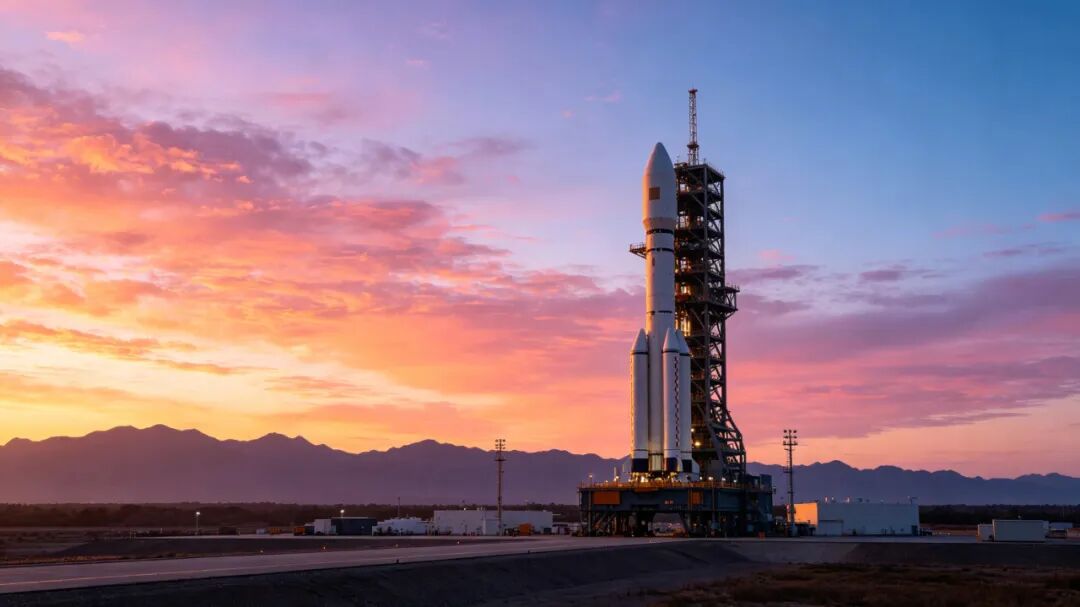
Of course, there is no single exclusive technical route for reusable rockets themselves. Rockets can return to the original launch site, or land on offshore platforms near their flight routes. The considerations behind the two solutions are different.
If a rocket is to return to the launch site, its first stage needs to reserve more fuel for the return trip, fuel that could otherwise be used to increase payload capacity. Offshore recovery covers a shorter distance, which can save a certain amount of fuel, but requires additional offshore recovery platforms and related support systems. Large rockets can also adopt other capture methods to reduce the weight brought by landing legs, but this solution is not suitable for all rockets.
Therefore, when it comes to rocket development, it is difficult to say which route is the best without considering specific missions. The size of the rocket, the weight of the payload, the target orbit, the recovery location, as well as the enterprise's own technical accumulation and cost structure, will all affect the final choice. In engineering, we are often not looking for a theoretically optimal solution, but the most suitable one within a series of constraints.
The same logic applies to business models. A straightforward analogy is that large rockets are more like "buses", which can carry many satellites at once, allowing all users to share the launch cost. Small rockets are more like "private cars", more suitable for network replenishment, emergency launches, or missions with special orbital requirements.
The advantage of the "bus" is its low cost, but it requires ride-sharing, waiting for a suitable launch window. After entering orbit and the satellite separates from the rocket, the satellite often needs to complete a period of orbital adjustment on its own. The "private car" may have a higher single launch cost, but can be arranged according to the customer's schedule and destination. The former sells scale, while the latter sells efficiency and certainty, and both types of demand will exist for a long time.
Therefore, the current competition in commercial aerospace is not only about who has the more advanced-sounding technology. More importantly, it is about whether we can find technical solutions that truly match market demand, and continuously make launches more reliable, more frequent and more affordable. Only when "access to space" is no longer so expensive, can the subsequent applications truly be unlocked.
AI is redefining commercial aerospace
In the past, when people thought of commercial aerospace, the first application that came to mind was communications. Low-orbit satellite communications have proven that commercial aerospace can truly enter the lives of ordinary people, rather than only serving scientific research and special missions.
The situation in China is not exactly the same as that overseas. Ground communication infrastructures such as 5G in China are already relatively well-developed, so low-orbit communications in China cannot simply replicate the development path of overseas markets. However, in scenarios such as open seas, deserts, high mountains, aviation, and emergency disaster relief, where ground base stations cannot achieve full coverage, low-orbit communications still have practical demand.
Looking ahead, satellite communications and ground communications do not necessarily have to replace each other. The industry tends to believe that the two will gradually integrate. Ground networks serve densely populated areas, while satellites fill in the gaps that were previously difficult to cover. End users will only experience a more continuous network, without deliberately distinguishing whether the signal comes from the ground or space.
In addition to communications, the space-based computing power sector is also worth paying attention to.
Why place computing power in space? The most direct reason is that AI is rapidly increasing the demand for computing power and energy. A large ground-based computing center requires not only chips and servers, but also land, power supply and heat dissipation systems. The demand for computing power is growing rapidly, but the construction of energy, power grids and infrastructure all follows their own cycles, and the contradiction between the two will become increasingly prominent.
Space offers an alternative possibility. On the one hand, satellites can directly use solar energy. On the other hand, a large amount of data is originally generated in space, such as remote sensing and meteorological data. If all raw data is first transmitted back to the ground and then sent to the data center for processing, extra transmission links and time will be added in the process.
If part of the data can be processed directly on orbit, and only the truly valuable results are finally transmitted back to the ground, the efficiency can be much higher. This approach is especially valuable in scenarios with high time sensitivity.
Therefore, space-based computing power does not mean simply moving ground data centers to satellites as they are. More importantly, we need to rethink one thing: where data is generated, and where the most appropriate place to deploy computing is.
Whether a business model is viable ultimately depends on cost. According to our own calculations, under the current cost level of transportation capacity, satellites and chips, the construction and operation cost of a computing cluster of the same scale in space is still several times higher than that on the ground.
However, it is worth noting that this gap is no longer several orders of magnitude. As long as the costs of rockets, satellites and chips continue to decline, space-based computing power will gradually enter a stage where its commercial viability can be seriously evaluated.
Rocket reusability will reduce transportation costs, and mass manufacturing of satellites will also lower the price of each individual satellite. Based on my personal judgment, in about the next three years, the construction cost of space-based computing centers and ground computing centers will gradually become close in some specific scenarios.
When the construction costs of the two are relatively close, the importance of energy costs will become prominent. Ground data centers require continuous power supply, while space can make use of solar energy. From the perspective of the entire life cycle, the cost-benefit calculation of space-based computing power will be very different from what it is today.
However, this does not mean that all computing tasks should be moved to space. A more realistic scenario in the future may be the long-term coexistence of ground-based and space-based computing power.
For example, general large model training requires continuous input of massive amounts of data, and the network, storage and computing power conditions on the ground are more mature, so this type of task is still more suitable to be carried out on the ground. But some vertical fields are different. Meteorology is a very typical example: a large amount of its data is originally collected by satellites, and if the model and computing power are also deployed in space, intermediate data transmission can be reduced.
In the future, when we decide how to execute a computing task, besides looking at how much computing power it requires, we also need to consider where the data comes from, how soon the results are needed, and where the most cost-effective place to run the calculation is.
From this perspective, the change that AI brings to commercial aerospace is not just an additional application. In the past, people were mostly focused on finding ways to send payloads into space, but now another type of demand has emerged: the problems of communications, computing and energy on the ground are also pushing people to find solutions in space.
The real competition lies in building space-based infrastructure
However, sending a few servers or a handful of satellites into space cannot be regarded as real space-based infrastructure. Infrastructure means it can operate for a long time, be maintained and upgraded, and be supported by a complete industrial system.
The first problem that space-based computing power has to face is heat dissipation. Ground chips can use air cooling, liquid cooling and other methods to dissipate heat, but space is a vacuum environment with no air convection. The heat generated by chips needs to be first conducted to the radiation panels, and then released through radiation.
The principle is not complicated, but what is truly difficult is the engineering implementation. High-performance chips generate a huge amount of heat, while the amount of heat that a unit area of radiation panel can dissipate is limited. The greater the computing power, the larger the required radiation area, which will directly affect the structural design and deployment mode of satellites, and even how the rocket performs the launch.
Therefore, heat dissipation is not an unsolvable problem, but the industry needs to gradually build up the corresponding engineering capabilities.
The same applies to chips. Many people naturally assume that we can directly send the mature computing cards used on the ground into space, but the reality is not that simple. The temperature, radiation and high-energy particle environment in space are very different from those on the ground, which will affect the stability of chips, and even damage the devices in severe cases.
This means that chips truly suitable for space-based computing power should not only be evaluated based on their own performance. From design, tape-out, packaging, testing to final verification together with the satellite, all links need to be adapted to the space environment. Therefore, space-based computing power is not only the business of aerospace companies, but will also drive the development of the semiconductor industry.
Energy is another key sector. If space-based computing power is scaled up in the future, the required power will increase rapidly. Solar energy is the most direct choice at this stage, but what kind of photovoltaic material has higher efficiency, lighter weight, lower cost, and can withstand the space environment, requires joint efforts from energy and material enterprises to solve.
This is also the interesting part of commercial aerospace. At first glance, it seems to be all about rockets and satellites, but as it develops further, you will find that it will pull in industries such as semiconductors, energy, materials, and robotics.
There is also an unavoidable issue: maintenance. If a satellite today suffers a serious malfunction, in most cases it can only be decommissioned, and a new one is launched to replace it. This approach is acceptable when the number of satellites is small. But if large-scale computing centers really appear in orbit in the future, we obviously cannot keep relying on the "replace when broken" model.
Therefore, in-orbit maintenance may become a noteworthy direction in the next decade. Unmanned spacecraft, robotic arms and robots can perform equipment maintenance in orbit. Going further ahead, we may even replace cabinets, racks and even chips, just like how we maintain ground data centers today.
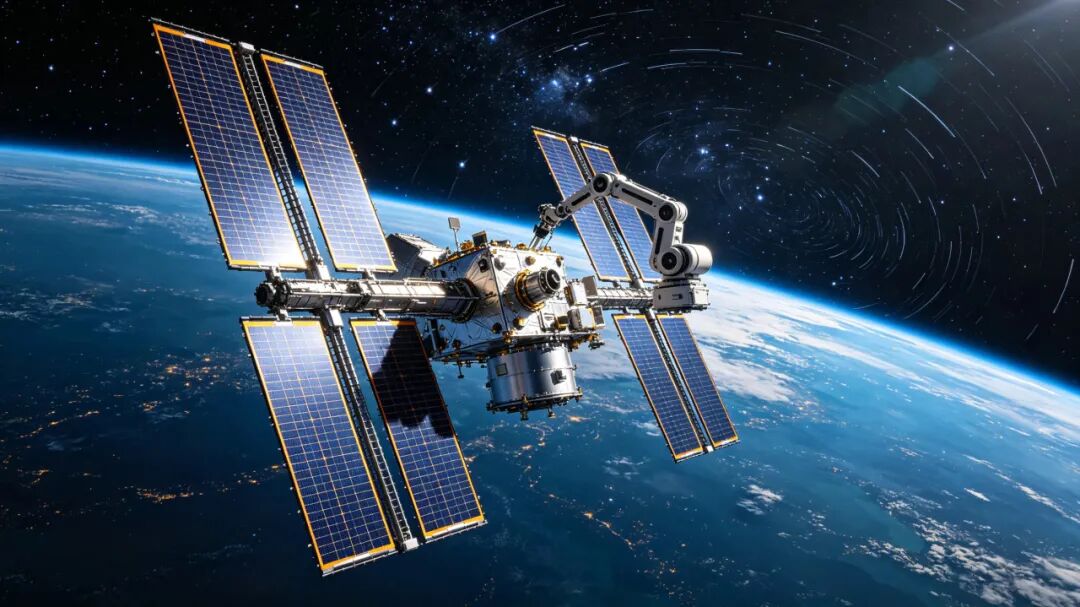
Once in-orbit maintenance capabilities are established, new business opportunities will emerge, including space robotics, on-orbit services, equipment recovery and upgrading. The industrial boundary of space-based infrastructure will continue to expand accordingly.
There is another often overlooked resource: frequency bands and orbital slots. Satellites need to use frequency bands to communicate with the ground, and different satellites must avoid interfering with each other. Some orbital slots are inherently scarce, and need to be coordinated in accordance with international rules.
This means that the competition in commercial aerospace is not only about who can build more rockets and satellites. It is equally important to lay out basic resources, supply chains and long-term operation capabilities at an earlier stage. As the industry evolves, the competition will increasingly be a competition of a complete set of system capabilities.
Looking further into the future, low-orbit communications and space-based computing power may only be the starting point. Deep space exploration, lunar bases and space resource development may also gradually evolve from scientific research topics to industrial issues.
The human moon landing in the past had a strong background of that era. Today, when people revisit the topic of the moon, their focus is no longer exactly the same. In addition to scientific research and exploration, people have also begun to seriously consider long-term bases, deep space missions and resource utilization.
Therefore, looking at commercial aerospace today, rockets are more like the entry point to the space economy. After transportation costs are reduced, supporting systems for communications, energy, computing, maintenance and resource guarantee are also needed on top of it.
All of these combined constitute the real space-based infrastructure in the future.
This goal will not be achieved quickly. Transportation costs need to continue to decline, industries such as chips, energy and robotics also need to gradually adapt to the space environment, and many engineering problems still take time to solve.
Therefore, when I look at this industry, I will not be overly optimistic just because of a single technological breakthrough, nor will I lose patience just because many business models are not yet mature today.
Costs still need to be further reduced, and work still needs to move forward. More importantly, we need to be prepared for long-term sustained efforts.
If I use one sentence to summarize my judgment on the future, it is: Riding the tide of artificial intelligence development, we need to redefine commercial aerospace and embrace the paradigm shift of commercial aerospace.
This article is from the WeChat Official Account "China Europe International Business School" (ID: CEIBS6688), written by Xie Hongjun, and authorized for