What did the Jurassic forests sound like? Scientists have recreated the soundscape, and also discovered a species of insect capable of emitting ultrasonic waves.
You may already know that dinosaurs did not roar as deafeningly as depicted in movies, but instead likely produced low rumbles or "gurgling" sounds...
Yet no one can say for sure. After all, the vocal organs of dinosaurs, such as the lungs, larynx and mouth, are highly prone to decay after death, which means scientists do not have sufficient fossil evidence to draw rigorous scientific inferences.
The insects that wandered through the Jurassic forests alongside dinosaurs are a different story. Many insects produce sounds by rubbing their wings together, and their wings are mainly composed of chitin, which does not decay easily, so they are far more likely to be preserved as fossils. As a result, some scientists wondered if they could reconstruct the calls of Jurassic insects by studying the morphology of their fossils?
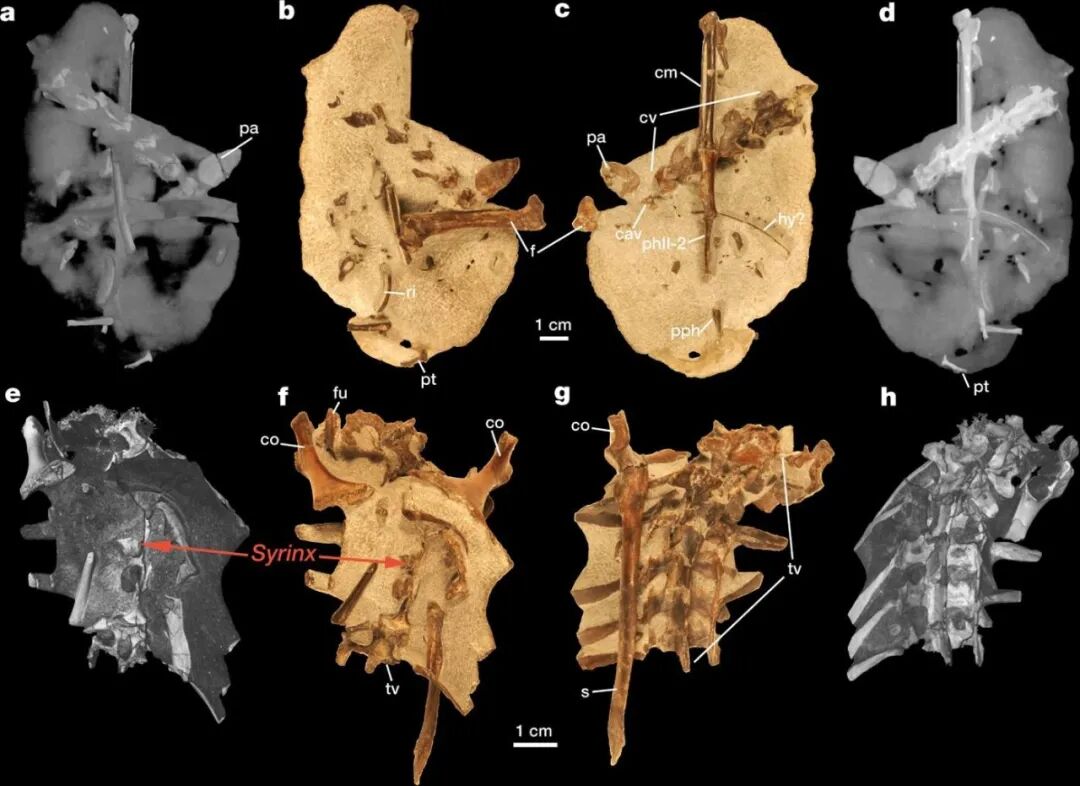
There are also cases where fossilized vocal soft tissues have been discovered. The fossil in the image is an anseriform waterfowl from the Late Cretaceous, with Syrinx being its vocal organ. This waterbird most likely produced sounds similar to those of ducks or geese | Nature
More than a decade ago, when Gu Junjie, an entomology professor at Sichuan Agricultural University, received a batch of insect fossil specimens, he came up with exactly this idea.
The batch contained a total of 20 specimens, unearthed from Daohugou Village in Inner Mongolia, dating back to around the Middle Jurassic period. These 20 insects belong to 9 extinct species under the suborder Ensifera, and are the ancestors of modern crickets and katydids. As entomology researchers, Gu Junjie and his colleagues immediately noticed a detail: The stridulatory structures for sound production of these specimens are preserved remarkably intact.
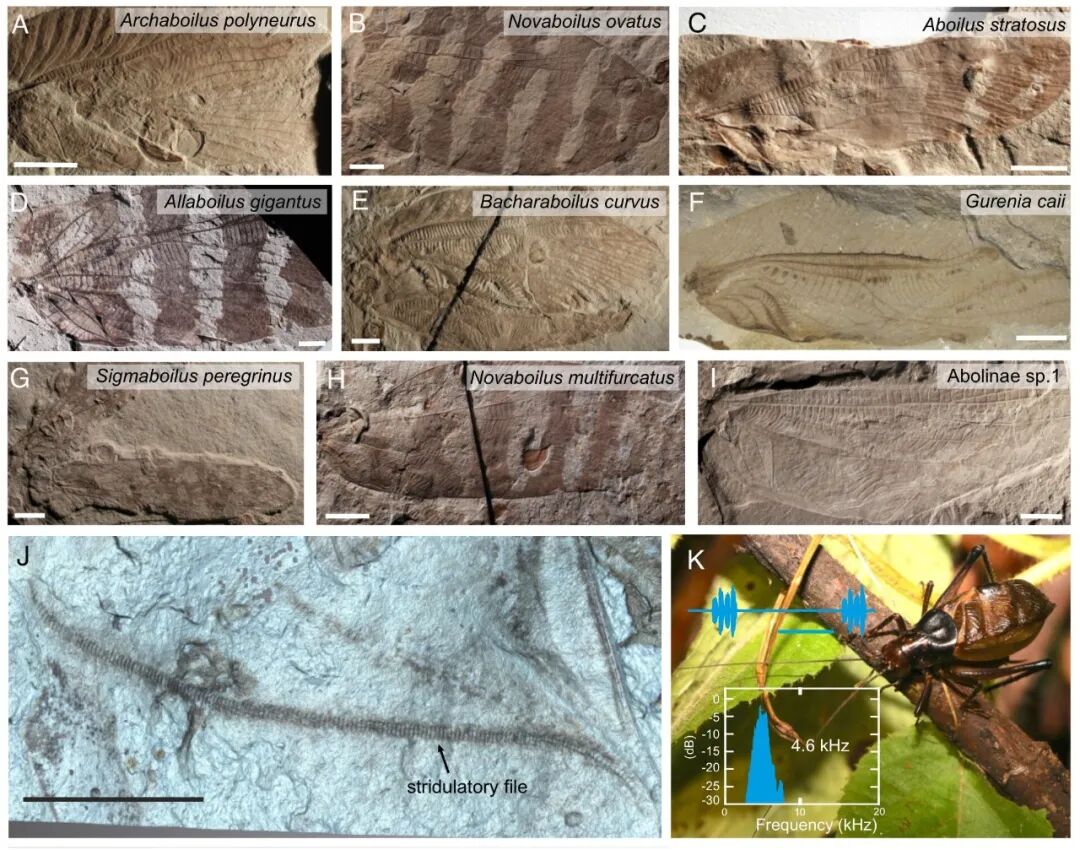
A to I are the fossils of the 9 insect species in this study respectively | Reference [1]
To make the 165-million-year-old insect fossils "vocal" again, they first studied the existing close relatives of these insects.
Most insects of the Ensifera suborder produce sounds by rubbing their wings. Take crickets as an example: one of their forewings has a comb-like stridulatory file, while the other forewing has a hard scraper. When the wings open and close, the scraper slides across the protruding "teeth" on the stridulatory file to produce sound, which is then further amplified by the wing structure, eventually forming the familiar chirping we know.
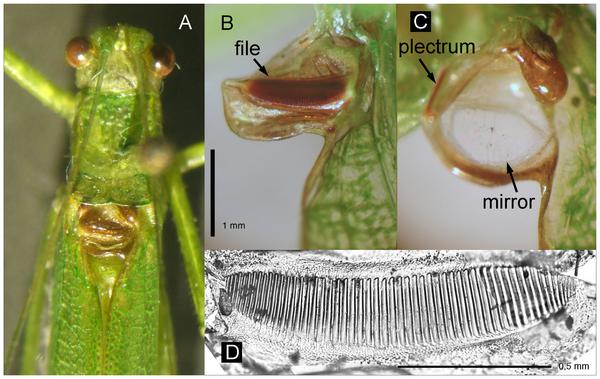
The file refers to the stridulatory file, plectrum is the scraper, and mirror is the resonant membrane on the wing | PLOS
This time, the researchers placed the chirping insects under high-speed cameras and laser Doppler vibrometers, trying to figure out the relationship between their sound-producing structures and their calls — for example, how the number of teeth on the stridulatory file or the shape of the wings affects the sound.
They fed all the patterns they found into machine learning to develop a model.
With the model, the researchers input the 2D images of this batch of fossils. The model could refer to the existing close relatives of these insects, and deduce their most probable calls by comparing the wing morphologies. Finally, the researchers published this study along with the generated "Jurassic original sounds" in the August issue of *Proceedings of the National Academy of Sciences*.
The audio contains calls from 10 insect species in total. The first one was synthesized by Gu Junjie's team in 2012, and the remaining 9 are the brand-new "original soundtrack" produced in this study.
You might feel a little disappointed with these sounds. Even though they come from prehistoric times, they do not sound like a groundbreaking, unprecedented experience at all. You may also think this article is a bit of a "clickbait", since insects are only a small part of the Jurassic forest soundscape.
Nevertheless, this study is of great significance: it is the first attempt to reconstruct the sounds of Jurassic forests using fossil materials and scientific methods, and it represents the limit that scientists can achieve in this relevant field.
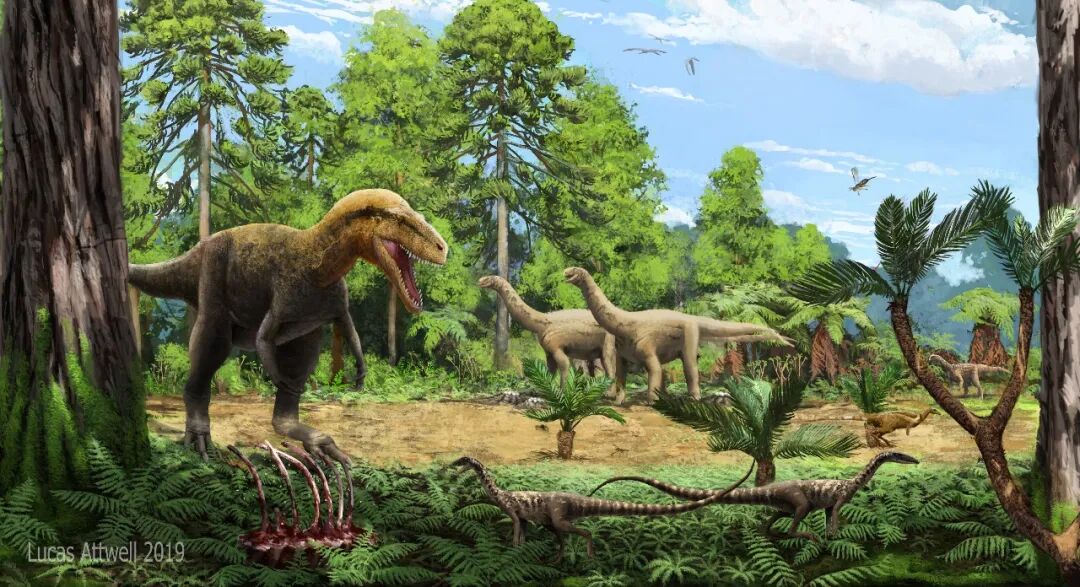
Painting depicting a Jurassic forest scene | Wikipedia by Lucas Attwell
More importantly, the scientists also made an unexpected discovery along the way.
At the end of the audio, there is an insect species named Sigmaboilus peregrinus whose call sounds rather unusual. This is because the frequency of the sound it produces exceeds the 20kHz upper limit of human hearing, which means it can emit ultrasonic waves. This overturns a common previous perception.
Prior to this, the scientific community generally believed that some insects developed ultrasonic capabilities in response to the emergence of bats. On the one hand, if insects can hear ultrasonic waves, they can escape before bats arrive; on the other hand, their own ability to emit ultrasonic waves can also interfere with the echolocation of bats.
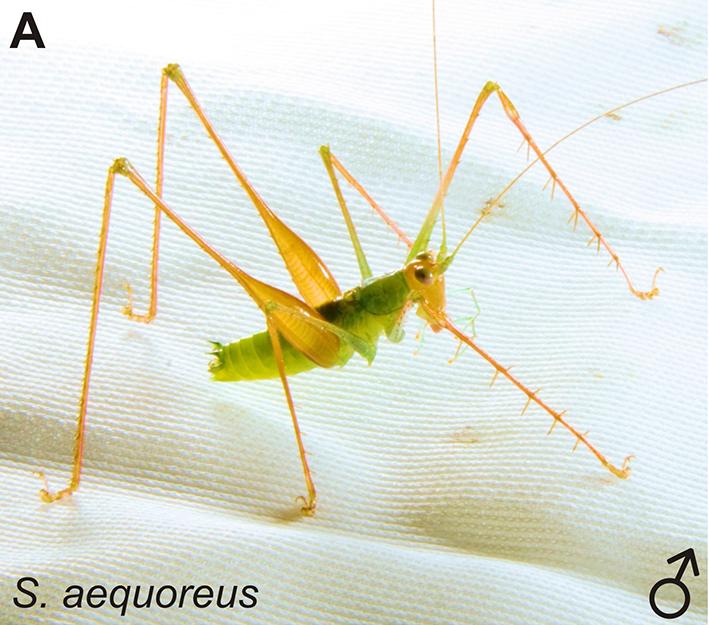
This South American katydid can produce calls at frequencies up to 150kHz, which is one of the highest known ultrasonic frequencies among animals | Wikipedia
However, during the Jurassic period when Sigmaboilus peregrinus lived, bats had not yet emerged. So why did this insect develop ultrasonic capabilities?
Predator-prey relationships are a major driving force for the evolution of animal communication systems. Therefore, some scholars believe that Jurassic insects evolved ultrasonic capabilities possibly to avoid early mammals and other predators.
Gu Junjie put forward another hypothesis: he thinks some insects chose ultrasonic frequencies probably because they wanted to have their own "exclusive frequency modulation channel".
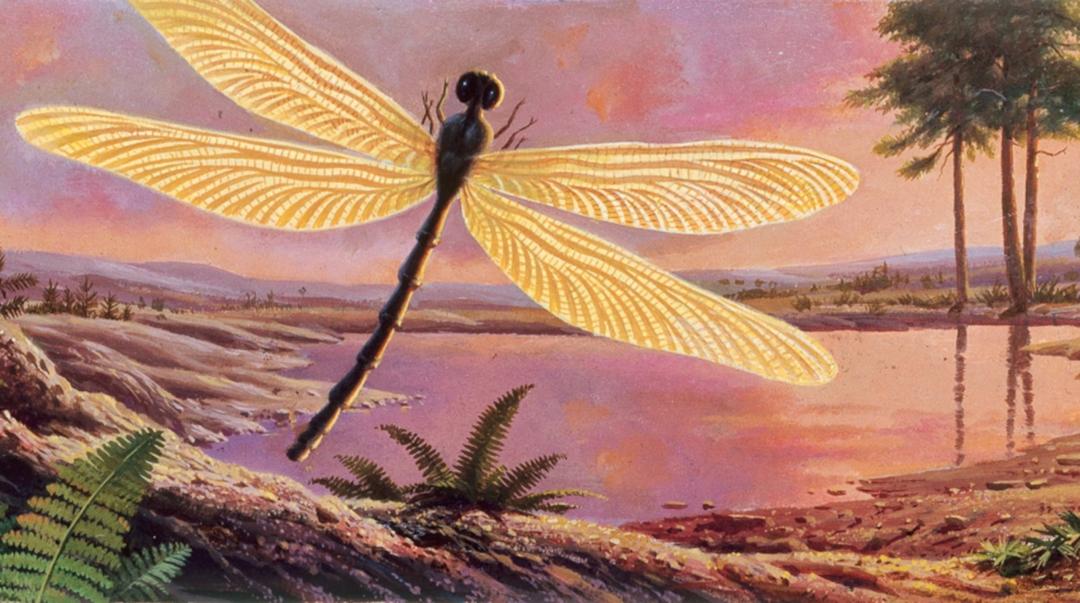
Jurassic forests were dominated by dinosaurs and gymnosperms, while mammals and insects were quietly evolving in the shadows | The Internet
"There were many insects in the Jurassic forest 165 million years ago. If all insects chirped at similar frequencies, the result would be total chaos: sounds would mix together, and no one could hear each other clearly," Gu Junjie explained. "If different species occupy different sound frequencies, communication will be much more efficient."
In the near future, the "Jurassic original sounds" from this study will be actually applied to the film and television industry. The production team of the Netflix documentary *Dinosaur Age* revealed that they plan to add the calls of these 9 insects to the background sound of subsequent episodes.
Still from *Dinosaur Age* | The Internet
Tiny as this detail is, it will bring a qualitative leap to the authenticity of the documentary.
References:
[1]https://www.pnas.org/doi/10.1073/pnas.2615107123
[2]https://www.nytimes.com/2026/09/03/science/what-did-jurassic-forests-sound-like-like-this.html
This article is from the WeChat official account "Bringing Science Home" (ID: steamforkids), written by Liu Liuqi, and republished by 36Kr with authorization.