Has the iPhone's market niche been snatched by the Doubao Phone?
On September 16, the Nubia NaviX Ultra was officially unveiled, commonly known as the second-generation Doubao Phone.
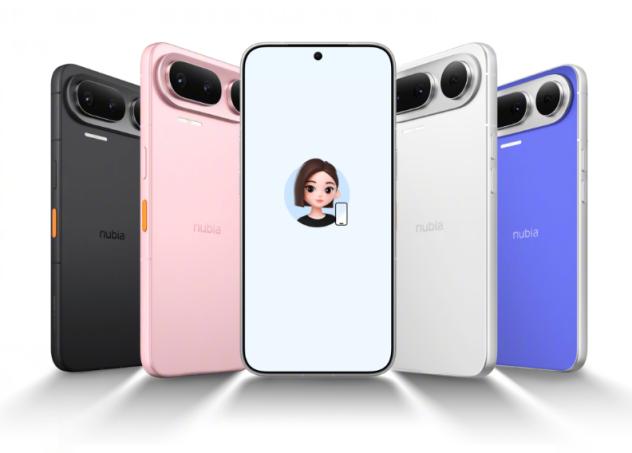
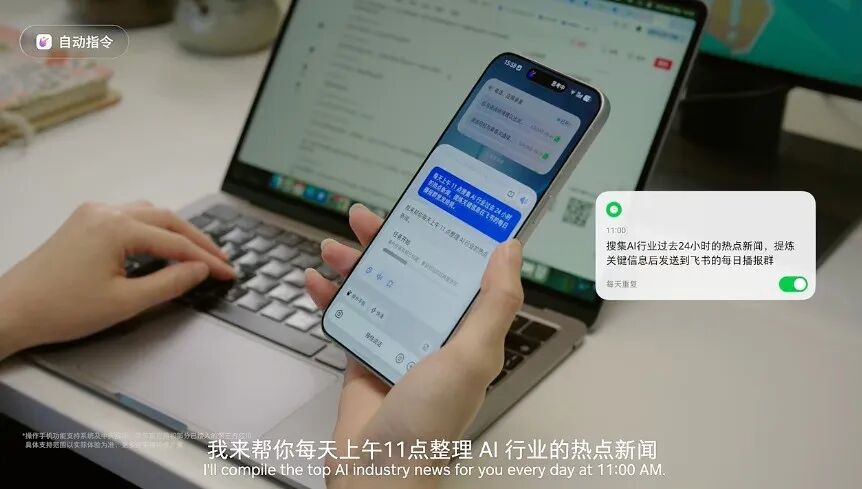
This phone has the consumer version of Doubao Phone Assistant built-in. The side AI key integrates fingerprint recognition: press it to directly put Doubao into working state, and you can also call it out at any time by saying "Doubao Doubao".
From opening the Doubao App to directly waking up the Doubao Phone Assistant, what is reduced is the distance between the Agent and the task.
The essence of Agent is the task entry. The ultimate goal is that users only need to express their needs, and the Agent can deliver the results.
Just two days ago, the new generation Siri AI was finally launched, and Apple finally handed in its answer for mobile Agent; however, no matter how well the iPhone sells, this set of capabilities is not yet available in the Chinese mainland market.
Doubao Phone Assistant took a step ahead at this position.
The 12GB+512GB version of Nubia NaviX Ultra is priced at 5999 yuan, starting from 5499 yuan after national subsidies. After the spot sale started, Nubia quickly announced the first-sale report: sales exceeded 100 million yuan in one second.
Agent as the Entry
At the launch event on September 16, Ni Fei, President of Nubia, demonstrated a "special" case: a blind user lifted the phone and pointed the camera at the beautiful scenery in front of him. Doubao identified the surrounding environment, objects and information for him, and then told him the results through voice.
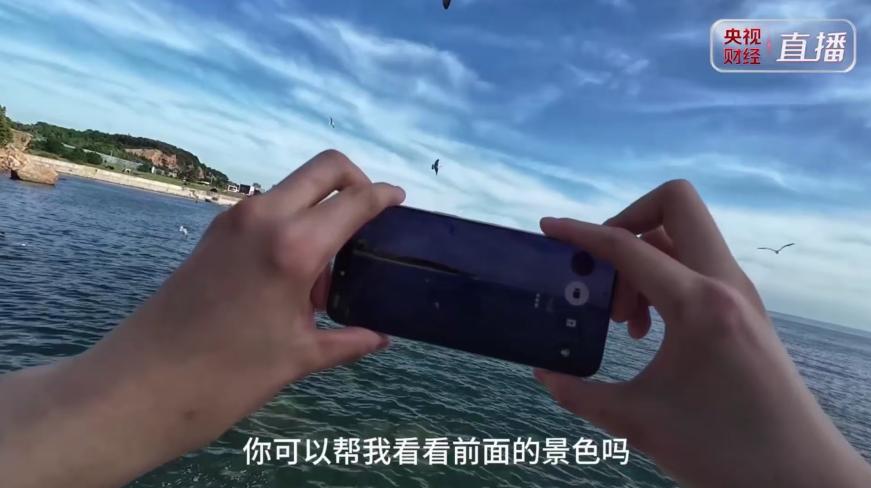
For ordinary users, this may only be a visual question and answer, but for a blind person, the mobile phone camera suddenly becomes a pair of "eyes" that can be woken up at any time.
This is not entirely a new capability. Doubao was originally able to view images, recognize objects, and understand the content in the lens. What has really changed is that in Doubao Phone Assistant, these capabilities no longer require you to first open an App, find the function, and then send the picture to the AI.
When the need arises, the AI is right in your hand.
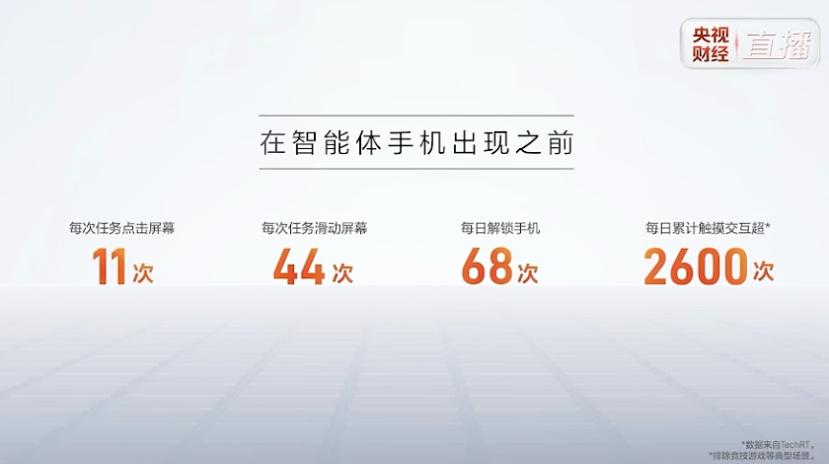
Nubia presented a set of data at the launch event: before the emergence of intelligent agent phones, a single mobile task required an average of 11 clicks and 44 swipes, and a person unlocked the phone 68 times a day, touching the screen more than 2600 times in total.
AI functions in mobile phones are not rare: image editing, summarization, translation, and search can be done on almost every mobile phone, but most of these capabilities are still separate tools that require users to find the entry by themselves.
AI agent phones hope to go one step further, minimizing the act of "finding the entry". Users only need to express their needs, and the Agent will help you get the rest done.
The first obvious change of the second-generation Doubao Phone is that it makes Doubao Phone Assistant easy to use and available at any time.
The AI key on the side of the phone integrates fingerprint recognition. After identity verification, there is no need for secondary unlocking, and you can directly call up Doubao Phone Assistant; when it is inconvenient to press the key, you can also wake it up by saying "Doubao Doubao".
The voice function is also connected to the Seed full-duplex model, which supports continuous communication and mid-interruption, and is optimized for far-field scenarios, dialects, and noisy environments such as subways and streets, making it applicable to almost all occasions and environments.
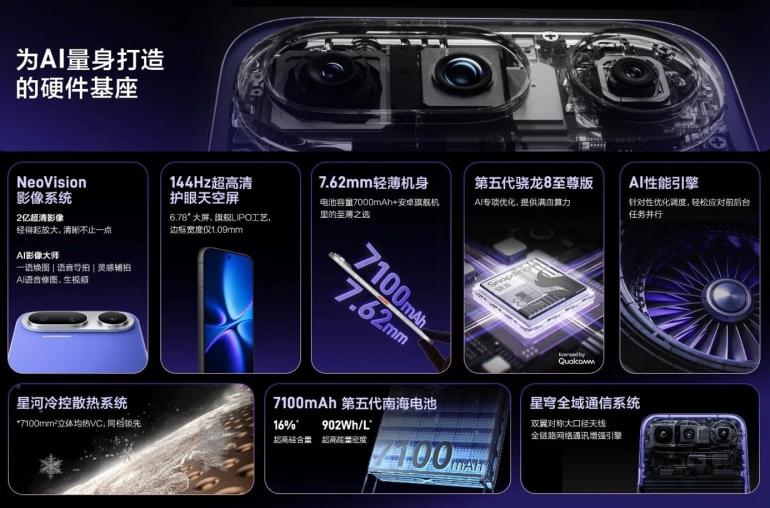
To ensure that Doubao Phone Assistant can take on tasks at any time, the NaviX Ultra packs a 7100mAh battery into a 7.62mm-thin body, and is specially equipped with the Star Dome Global Communication System and full-link network communication enhancement.
At the same time, flagship configurations including the 5th generation Snapdragon 8 Elite, 512GB as the base storage, and a 200-megapixel main camera also ensure that it is first and foremost a mobile phone that can be used as a daily primary device for a long time.
But being available on demand is only the first step. An Agent that can get things done also needs to know what you are doing.
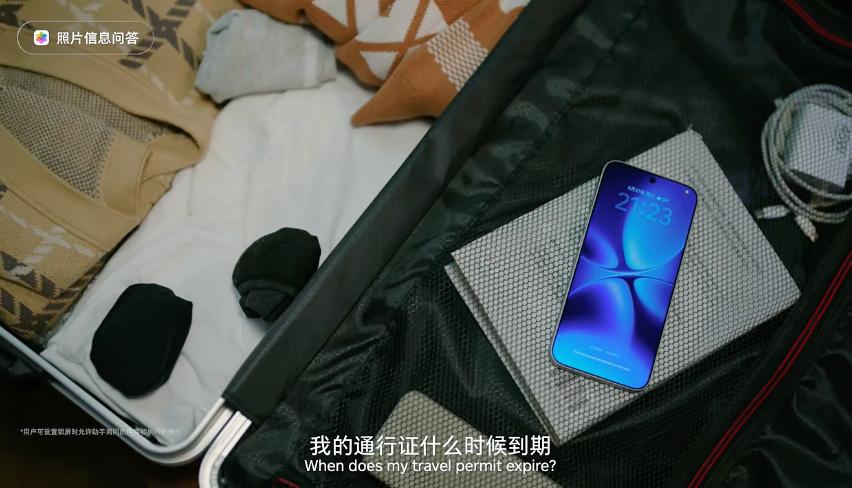
Doubao Phone Assistant starts to feed more context in the mobile phone to the AI. You can directly ask questions about the content on the current screen without taking a screenshot, copying, and then going to the Doubao App. After user authorization, local information such as albums, SMS, and notes can also be retrieved directly; when you see something worth keeping, just say "note this down" or make a gesture to save the current screen to personal memory for later retrieval.
The recording function is connected to Feishu Minutes, which can directly complete transcription after the meeting, distinguish speakers, make summaries and translations, and users can continue to ask what was discussed in this meeting.
These capabilities may not be particularly special when taken apart, but when they are integrated into the same context, users do not need to repeatedly tell the AI what they have done before and what they are doing now. The more the Agent knows, the fewer intermediate steps people need to complete themselves.
One step further, it is about whether the Agent can actually get things done for users.
Nubia disclosed at the launch event that the current end-to-end task success rate of Doubao Phone Assistant has exceeded 80%. When a complex requirement is assigned to it, the model will judge the execution method by itself, break down the steps, and continue to adjust when changes occur during execution. The launch event even demonstrated long-link tasks of "hundreds of steps and up to tens of minutes", new instructions can be inserted at any time during the process, and the task will not stop even after the screen is locked.
Tasks can run and queue in the background, users do not need to keep staring at the phone to see which step it has reached, and they can continue to add conditions halfway to insert new urgent tasks; when the user takes over temporarily, the AI will pause and continue after exiting.
In ByteDance's own ecosystem, services such as Feishu and Qishui Music can already be directly invoked by Doubao Phone Assistant.
Outside ByteDance, the third parties that have been clearly connected so far include Caocao Mobility and map services. Doubao said it has opened developer access and will continue to expand its service ecosystem in the future.
The most impressive GUI capability of the M153 last year is still retained in Beta form. For services that do not have a direct interface but allow GUI automation, Doubao can still understand the screen, simulate human clicks and swipes, and operate in the App on behalf of users.
However, the second generation adds boundaries to this "hand". Doubao Phone Assistant has simultaneously launched the SAEP (Screen Automated Operation Protocol). Third-party Apps can decide for themselves whether to allow automatic AI operation, and can further restrict specific permissions such as screenshot, simulated input, and content modification.
SAEP currently has a 30-day public notice period. Third-party Apps that do not explicitly agree during this period will not be operated by the GUI agent by default; after the public notice period, Apps that explicitly refuse will still not be operated, while Apps that do not state their position will be gradually opened according to the application risk level.
If third parties are willing to cooperate more deeply, they can also directly open their capabilities to the Agent through A2A, MCP or official interfaces.
Of course, the second-generation Doubao Phone is not perfect yet, the access of external third-party services is still limited, and external e-commerce platforms such as Taobao and JD.com cannot currently complete operations directly. But compared with last year's engineering prototype, the second generation has turned this Agent experience into a mass-produced mobile phone officially sold to ordinary consumers, and Nubia directly calls it "the world's first AI agent phone".
From directly waking up Doubao Phone Assistant to understanding the user's context, and then invoking its own services and more and more third-party Apps, the second-generation Doubao Phone is gradually expanding the scope of tasks that the Agent can undertake.
First make the AI always available, then make it understand you better and better, and finally make it actually get things done.
Putting a Physical Body on Doubao
When the Nubia M153 went on sale last December, ByteDance first put a real "reaching" body on Doubao. It can open Apps by itself, recognize pages, click buttons, and operate the mobile phone like a human.
From the very beginning, the Doubao team emphasized that they had no plans to develop mobile phones, but to cooperate with mobile phone manufacturers at the operating system level. The M153 itself is positioned as a technology-preview engineering prototype, which is mainly used to verify whether Doubao can really enter the system layer as a mobile assistant.
However, this engineering prototype received good feedback, and the market response far exceeded expectations. Yicai News later disclosed that the first batch of stock was about 30,000 units, which was sold out in less than 24 hours after the sale started; its initial price was 3499 yuan, and a premium of several thousand yuan soon appeared in the second-hand market.
This is a very bold attempt. Its form is ahead of its time, and it even crosses the App logic that the mobile Internet has used for more than ten years, trying to directly reach the Agent era and complete user requirements directly.
Therefore, it has also encountered many practical barriers.
The experience of the first generation has become the foundation for the second generation to move forward. At least it left two answers: first, users are really willing to try a mobile phone with deep AI participation in operation; second, when the Agent starts to handle things for people, the mobile phone is no longer just a carrier for AI, but a place where AI interacts with the entire mobile Internet.
After the M153 was sold out, the next-generation mobile phone — the current Nubia NaviX Ultra — quickly entered the preparation stage. In July this year, the second-generation Doubao Phone had been prepared for supply at a volume of about 200,000 units. In September, the consumer version of Doubao Phone Assistant was released.
Public data shows that as of 13:30 on September 15, the number of reservations for the NaviX Ultra on JD.com reached 373,000; Nubia's first-sale report said that sales of the NaviX Ultra exceeded 100 million yuan in one second after the sale started.
From 30,000 engineering prototypes to mass-produced flagships for ordinary consumers, Doubao has truly begun to live deep inside mobile phones.
AI cannot live in an App forever, it needs to be closer to people. Mobile phones are particularly critical, because they are still the most important and highest-frequency computing terminals for the public today.
At ByteDance's all-hands meeting in February 2025, Liang Rubo set three directions for the AI business: pursue the upper limit of intelligence, explore new interactions, and strengthen scale effects. At that time, the Ola Friend headset had just been released for a few months, and Liang Rubo specially emphasized that the headset was "only a preliminary attempt".
From the core team of Smartisan Mobile joining ByteDance, to the acquisition of PICO, the launch of Ola Friend, and then the two generations of Doubao Phones and in-vehicle AI, ByteDance has actually been exploring around hardware entrances for many years. At the same time as the NaviX Ultra was released, Nubia also launched the LiveClip 2 open-ear clip headset, which can be linked with the mobile phone to wake up the AI assistant directly by tapping the headset.
Different hardware corresponds to different use distances and specific scenarios: the headset stays by the ear all the time, the mobile phone is held in the hand, and the car brings AI into another high-frequency space. Different terminals are actually constantly shortening the distance between the Agent and the scene where the need arises.
And hardware entrances and even operating systems themselves are a kind of advantage.
Apple is the best reference. In the past few years, Apple Intelligence has been delayed many times, and Siri has missed its release dates repeatedly. Many capabilities drawn on the launch conference have been delayed for a long time, which has disappointed users again and again, but Apple has never lost its ticket to the AI era. The iPhone and iOS, Mac and macOS, the most core hardware entrances and operating systems on the mobile side and desktop side are all controlled by Apple itself. As long as these two aces are still in hand, Apple will always have the opportunity to push new AI capabilities directly to users.
This position is particularly important for Agents — a large number of tasks start here. Whoever controls the system is closer to the user's screen, accounts, permissions and application distribution; whoever controls the hardware is closer to the real world.
ByteDance is constantly bringing Doubao closer to the scenarios where tasks happen.
On September 15, the day before the second-generation Doubao Phone was released, ByteDance held the "Feishu Future Infinite Conference & Doubao Work Launch Conference" and issued a "work badge" for the Agent. Feishu released version 8.0, the entire product began to be re-adapted for Agent, and Doubao Work is natively integrated into Feishu, both sharing the same account system; the newly released Doubao Work Partner even has its own identity, permissions and memory, and can directly join group chats to work with people.
Mobile phones let Doubao enter users' daily operations, and Feishu pushes it into documents, meetings, messages and enterprise systems. It can be said that wherever there is demand, ByteDance brings Doubao there.
In the past, ByteDance relied on recommendation algorithms to undertake "the next piece of content". The recommendation algorithm is responsible for guessing what users want at the moment, and products such as Toutiao, Douyin, Fanqie, and Hongguo are responsible for delivering the corresponding content to users.
In the Agent era, this logic begins to extend from content to tasks. Now, it wants to rely on Doubao to undertake users' "next action".
From the content ecosystem to the task entry, ByteDance is embedding itself into more links of users' digital lives.