Now that Apple has joined the competition, how long can domestic foldable screen brands still stay on top?
This Apple fall launch event in early September has been anticipated by the public for seven years.
When new CEO John Ternus took the foldable smartphone called iPhone Duo onto the stage in Cupertino, Apple finally delivered its first answer in this product category. The starting price is 15,999 yuan, and the top-tier configuration costs 26,499 yuan. When unfolded, it features a 7.6-inch inner screen, and when folded, it is close to the size of a passport. This is the most expensive iPhone in Apple's history. It did not test the market with "cost-effectiveness", but laid its "ultra-premium" positioning for foldable screens on the table.
But before that, Chinese manufacturers had almost covered all conceivable forms of foldable screens.
Huawei secured the high-end market above 10,000 yuan with the tri-fold design of Mate XT 2 and the wide fold of the Pura X series; Xiaomi tried to take a further step in its premiumization process with the "mid-fold" form of 18 Fold; vivo and OPPO focused more on the daily experience of foldable screens, with one dedicated to exclusive systems and large-screen efficiency, and the other sparing no effort to eliminate creases in hinge technology. In other words, on the track of foldable screens, Chinese manufacturers have been running for several laps, and Apple has just stood at the starting line.
So what does Apple's entry at this moment mean? Has the foldable screen category really reached the point where it shifts from niche early adoption to mass mainstream use?
First-mover advantage does not equal final victory
Counting from the Samsung Galaxy Fold launched in 2019, the foldable screen track has been running for seven years. However, only Huawei and Samsung have taken it as the core grasp of brand premiumization. Apple's entry is not so much a dimensionality reduction blow as a "legitimization" of the market.
On September 7, Counterpoint Research released the latest forecast for the global foldable smartphone market: by the end of 2026, the cumulative global shipment of foldable smartphones will exceed 100 million units. Samsung's market share will drop from 40% in 2025 to 38%, Apple is expected to take 25% of the share in its first year of entry, and Huawei will remain at around 22%.
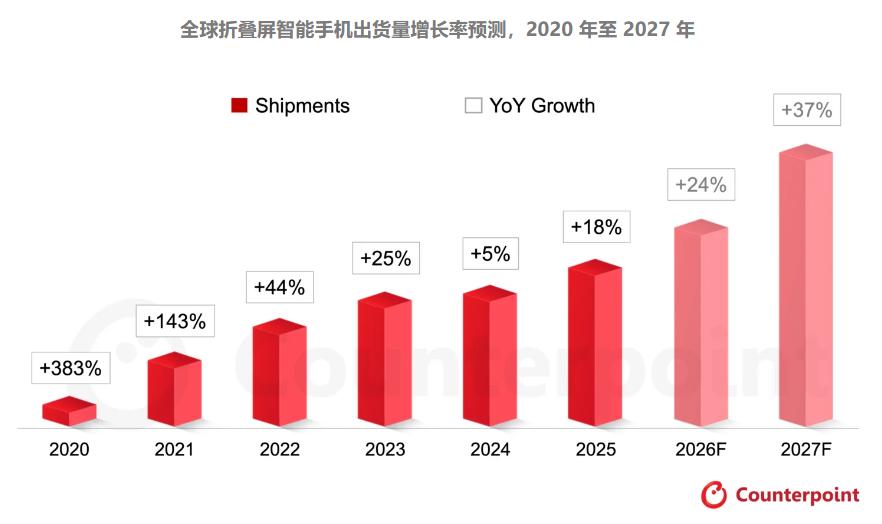
The three companies together account for more than 80% of the market, which means that foldable screens are no longer a category that "anyone can try". It is becoming a track that only manufacturers with strong premium brand power and deep supply chain integration capabilities can afford to participate in. Apple's entry at this time officially confirms that foldable screens are a premium category worthy of in-depth cultivation.
In this category, the advantage of Chinese manufacturers does not lie in "who did it first", but in the depth of the product matrix and the accuracy of scenario positioning.
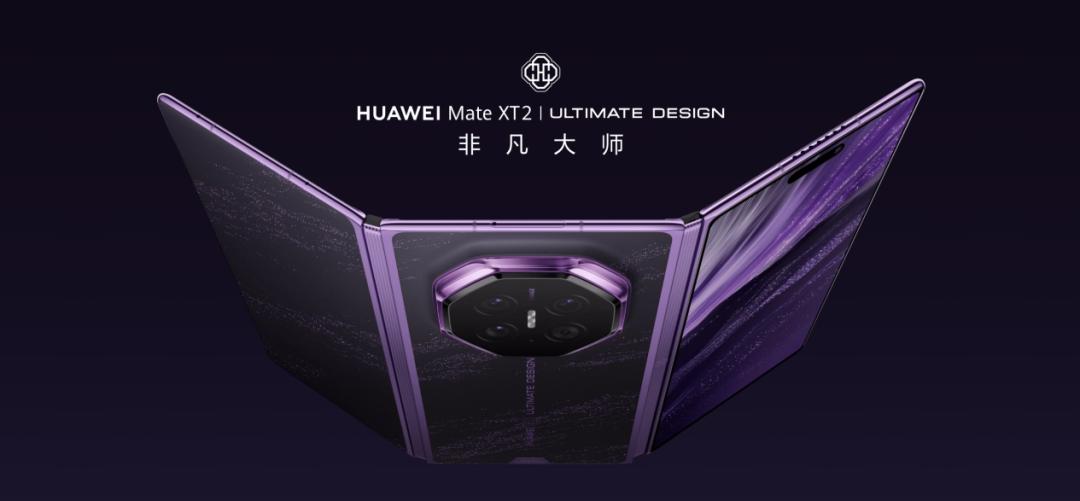
For example, Huawei released the Mate XT 2 Ultimate Master tri-fold phone in September 2026, equipped with the Kirin 9050 Pro chip, starting at 19,999 yuan, directly competing head-to-head with Apple.
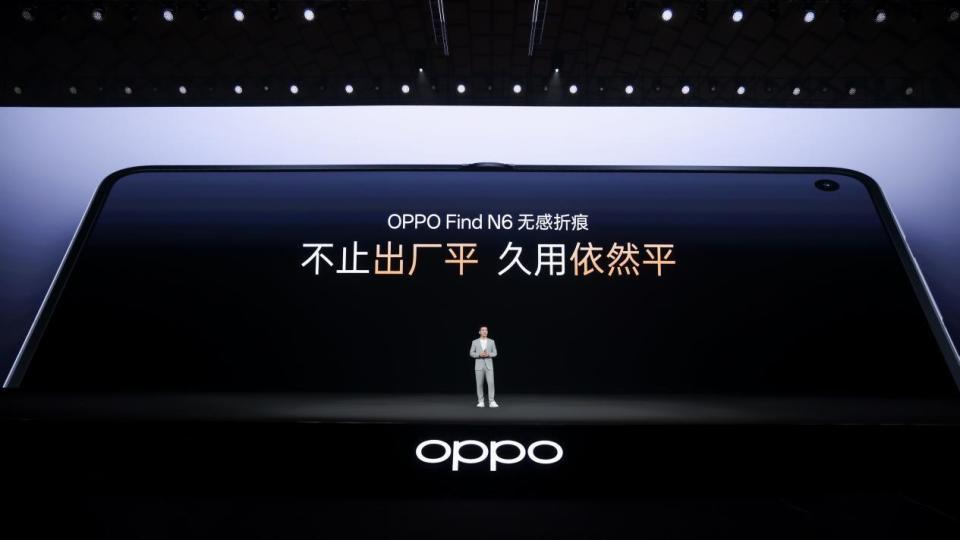
Xiaomi filled the market gap of "mid-fold" with the 18 Fold, with a starting price of 10,999 yuan, paired with the self-developed Xuanjie O3 chip and domestic Changxin LPDDR6 memory; OPPO Find N6 spared no effort to optimize creases in hinge technology, becoming the world's first foldable flagship to pass the TÜV Rheinland "No Perceivable Crease - Remains Smooth After 600,000 Continuous Folds" certification; vivo X Fold6 focuses on "large screen + AI productivity", equipped with the OriginOS 6 Fold system specially customized for large foldable screens and the Blue Crystal x Dimensity 9500 Super Edition flagship chip.
It can be seen that every brand uses differentiated positioning to hold their respective price segments and scenarios. The accumulation of Chinese manufacturers in foldable screens is not just a matter of "running a few steps earlier", but has formed their own technical paths in dimensions such as hinges, system adaptation, and AI interaction.
The shelf life of first-mover advantage depends on whether Chinese manufacturers can turn "being the first to make it" into "making it indispensable for users".
A set of data is worth noting: IDC data shows that in the first quarter of 2026, OPPO's share in the domestic foldable screen market increased slightly from 4.9% in the same period of the previous year to 6%, ranking third. Although the Find N6 became the best-selling new foldable product of the quarter, the increase in share was limited.
In contrast, Honor's share in the domestic foldable screen market doubled from 9.1% to 21% in the same period, making it the only brand on the list that achieved doubled growth. The Honor Magic V6 drove growth with a 7150mAh battery and a lightweight body close to that of a bar phone, with single-model sales of nearly 200,000 units in the first quarter.
This shows that in the foldable screen category, "being the first to move" does not constitute an absolute barrier. As long as latecomers find a breakthrough in product definition, their market share can double rapidly.
Ultimately, how long the first-mover advantage of Chinese manufacturers can last does not depend on when Apple enters the market, but on whether they can keep users in their own ecosystems before Apple makes foldable screens "good enough to use".
The advancing foldable screen
Every industry at a certain stage will compete around a core issue. In the early days of new energy vehicles, the competition focused on range and charging speed. In the era of the iPhone 4, smartphones competed for touch interaction and application ecosystems. At present, foldable screens are also at such a turning point.
If the competition theme of foldable screens in the previous seven years was "making the product work", then starting from 2026, the competition theme may become "making the product useful". The first signal of this change lies in creases.
Creases were once the earliest criticized point of foldable screens, and the reason why many people were reluctant to buy them. But in the past two years, manufacturers have put far more effort into this issue than the outside world has seen.
For example, the OPPO Find N6 uses the second-generation titanium alloy Vault hinge and Vault Memory Glass, which reduces the hinge surface fluctuation from 0.18mm to 0.1mm, increases the bending resistance by 338%, and achieves 99.9% shape self-recovery after bending, just like a memory foam pillow.
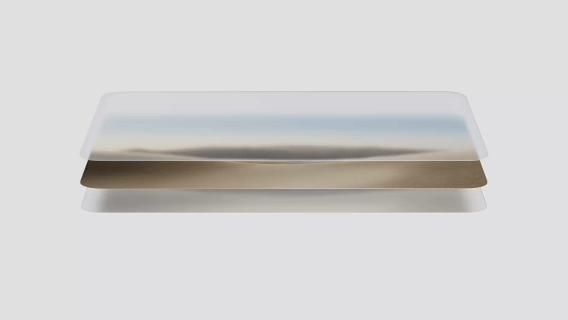
The hinge of Apple's iPhone Duo is composed of more than 100 components, using multi-layer coating and custom adhesive to allow each layer of structure to move independently during folding to reduce panel deformation.
Although creases have not been completely eliminated, they have changed from a "one-vote veto item" for consumers when purchasing phones to an "acceptable engineering compromise".
When the basic problems at the hardware level are gradually solved, manufacturers can better focus on polishing software and user experience, which makes room for AI to become the new value anchor of foldable screens.
Hua Tao, Vice President of vivo, once mentioned at a launch event: despite the continuous improvement of foldable screen hardware, the inner screen usage rate of many users is still less than 30%. This precisely shows that the hardware capability of large screens has been in place in advance, but the matching software ecosystem and AI interaction capabilities are far from keeping up.
Fortunately, many manufacturers have unanimously shifted the value proposition of foldable screens from hardware parameters to AI task carrying capacity. Take the vivo X Fold6 as an example, it is equipped with the industry's first OriginOS 6 Fold operating system specially customized for large foldable screens, supporting "Atomic Workbench" that enables five different uses on one screen; the Blue Crystal x Dimensity 9500 chip it carries not only delivers high performance and low power consumption, but also supports end-side AI experiences such as AI File Manager and AI Meeting Assistant.
Apple's Apple Pencil entering the iPhone ecosystem for the first time also sends the same signal: the value anchor of foldable screens is shifting from hardware parameters to "how many AI tasks can run at the same time" and "how many light office scenarios can it replace".

The diversification of forms is the third signal that the category is maturing, rather than a manifestation of market chaos.
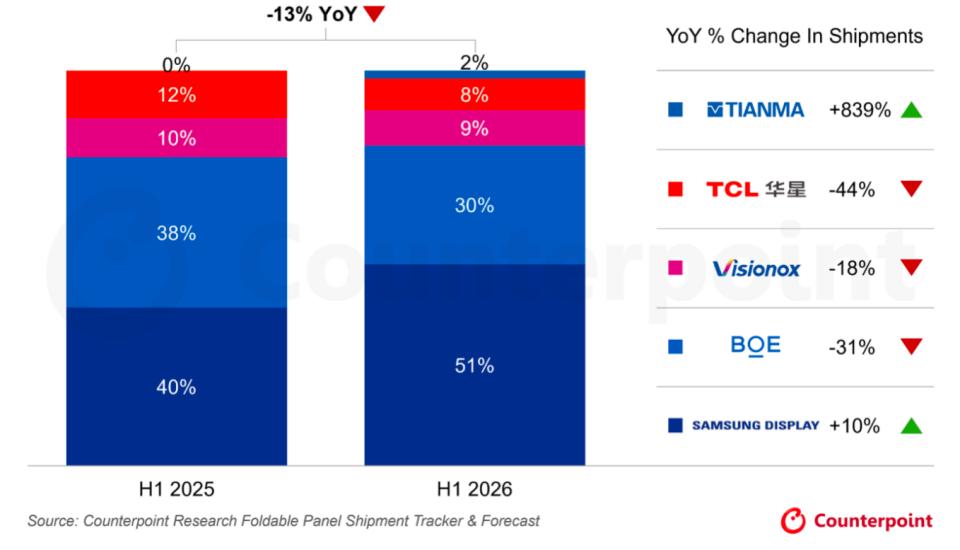
Vertical fold, horizontal fold, tri-fold, wide fold... The forms of foldable screens in 2026 are richer than ever. The latest Counterpoint Research report shows that global foldable panel shipments in the first half of 2026 fell 13% year-on-year. At the same time, the internal structure is also undergoing drastic adjustments: large fold panel shipments increased 35% year-on-year, with the share jumping from 50% to 78%; flip panel shipments plummeted 62%, with the share dropping to 21%. Form differentiation shows that manufacturers no longer follow trends blindly, but make trade-offs based on real user scenarios.
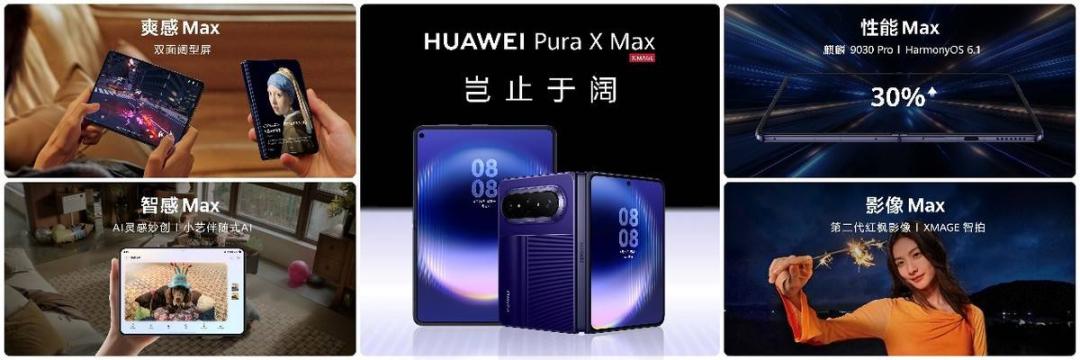
For example, Huawei has taken a differentiated path with the "wide fold" form of the Pura X series. The cumulative shipments of this series have exceeded 2.9 million units, of which the Pura X Max has shipped more than 1.2 million units in just four months after its launch. Unlike the tri-fold and Mate series which are more popular among middle-aged business men, the main users of the Huawei Pura series are women, because its 4:3 aspect ratio is perfect for taking photos, displaying two more Xiaohongshu notes per screen, and the text width when reading e-books is almost the same as that of a paperback book.
The "mid-fold" path of the Xiaomi 18 Fold is different. With a 219g body and a 7.58-inch inner screen close to the A4 paper aspect ratio, it targets users who think traditional large folds are too heavy and do not want to compromise on performance and battery life on small folds. The mid-fold allows users to retain a truly usable inner screen while feeling like they are using a regular bar phone as their daily main device.
It can be seen that behind the foldable screens of different forms, there are corresponding different usage scenarios and user portraits. A category that only has one "correct form" is actually unhealthy.
Creases have taken a back seat, AI is taking over, and form differentiation is accelerating. When "whether it can fold" is no longer a problem, then "what is the use of folding" becomes a new proposition that all manufacturers must answer.
The "coming-of-age ceremony" of foldable screens is not over yet
If you only look at the excitement of each launch event, foldable screens seem to have ushered in their highlight moment. But if you shift your attention from the stage to real market data, the situation is much more complicated.
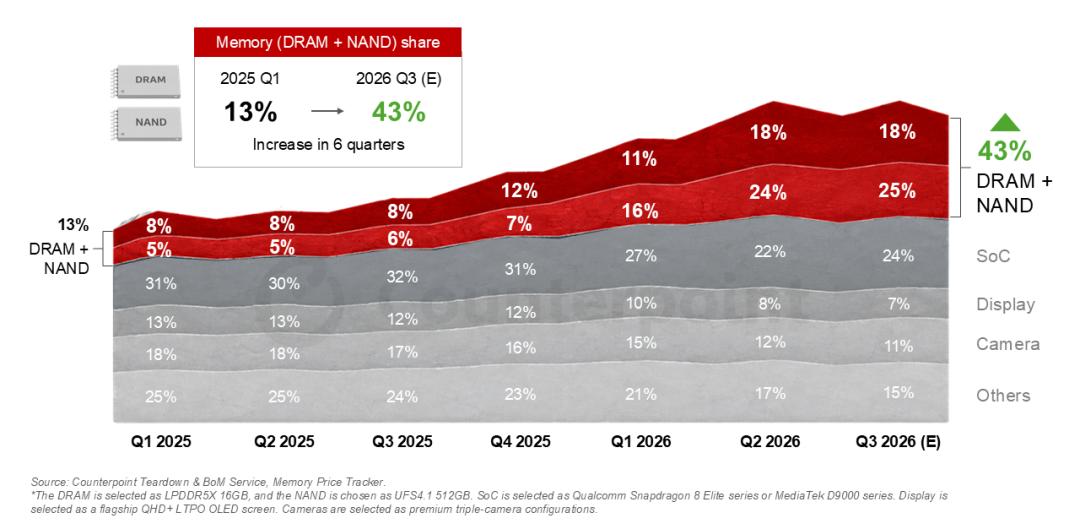
Behind the 10,000-yuan price point is the cost transmission of the entire industrial chain, rather than manufacturers "cutting leeks". The price increase of memory chips is the core reason for the general rise in foldable screen prices in 2026.
Counterpoint's report shows that the memory price of smartphones increased by more than 80% quarter-on-quarter in the second quarter of 2026. Among flagship phones with a wholesale price above $800, DRAM has surpassed SoC to become the most expensive single component in flagship smartphones.
At the same time, the upgrade of foldable screen materials such as displays, hinges, and rotating shafts, as well as the simultaneous price increase of 3nm/2nm flagship processors, have jointly pushed up prices. However, the foldable screen itself has a high price base, and consumers are less sensitive to price increases than mid-to-low-end models, which in turn gives manufacturers a relatively relaxed window for technology investment.
When cost pressure cannot be digested by price cuts, the only choice for manufacturers is to make the product "worth the price" — which in the long run is not necessarily a bad thing for the technological evolution of the category.
Cost determines that foldable screens "cannot be cheap", but what really determines how far this category can go is how many units it can actually sell. At present, the penetration rate of foldable screens is still only single-digit, which is both a reality and a huge space for growth.
TrendForce data shows that the global shipment of foldable screens in 2025 was about 19.8 million units, with a penetration rate of only 1.6%, basically the same as in 2024. The latest Counterpoint Research forecast shows that in 2026, foldable phones will only account for about 2% of the overall smartphone market.
A category with a penetration rate still at single digits has already attracted almost all leading phone manufacturers to bet on it, which not only shows that the foldable screen segment is extremely attractive, but also means that its ceiling is far from being reached.
It should also be noted that the influx of manufacturers not only brings competition, but also a positive cycle of the industrial chain.
According to a report by the New Express, Apple's entry this time has brought an expected increment of millions of units. Upstream panel manufacturers and structural component manufacturers are