Robot, go to the pig farm and knock the pigs down.
Neixiang, Henan, the top county of pig farming industry in China, this mountainous area located on the western edge of the Nanyang Basin, is raising pigs for the whole country. The number of market pigs sold here every year accounts for about one-tenth of the national total.
On pig farms in Henan, dozens of high-rise buildings can often be seen standing in clusters, which is completely different from the rural pigsties we imagined. It would not be surprising if some people take this place for an industrial park or a data center. One day in 2026, an unusual job fair was being held in a six-story high-rise pig farm building.
The position the pig farm wanted to recruit for this time was called the Weak Pig Disposal Specialist.
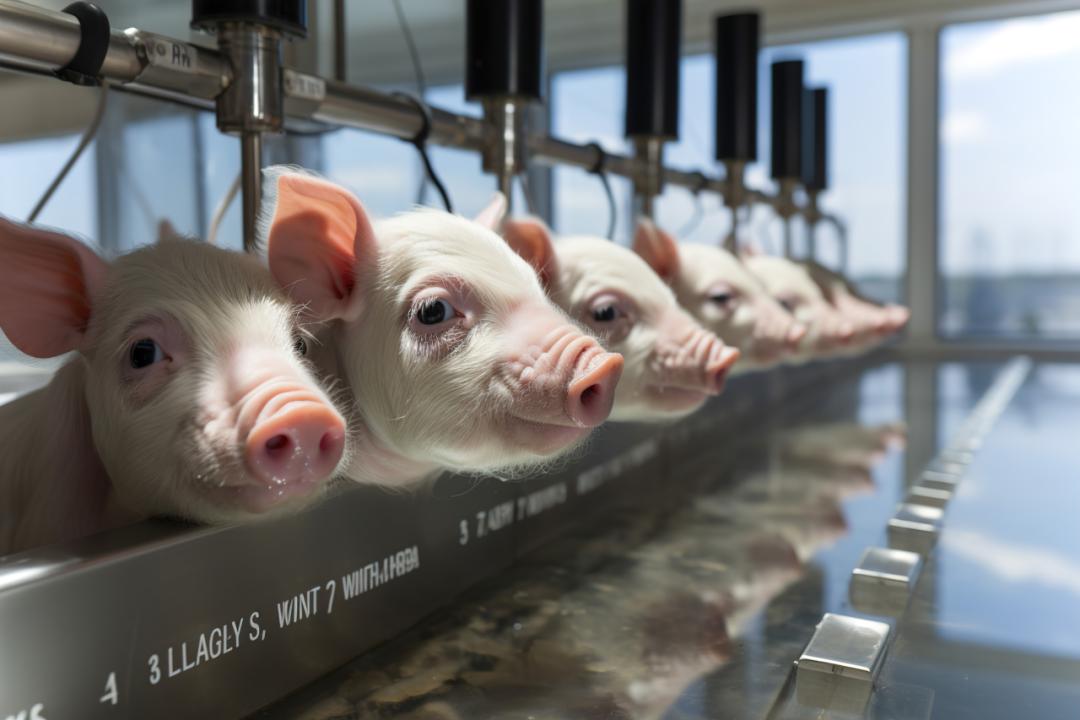
A sow gives birth to 13 to 18 piglets per litter, but only has about 14 teats. There are always some piglets that cannot get enough milk, plus the weak piglets that are crushed and injured or cannot recover from diarrhea. Most of these animals have no value for continued breeding. In accordance with biosafety protocols, they must be removed, euthanized and subjected to harmless treatment as soon as possible, otherwise the "all-in, all-out" rhythm of the entire pig building will be affected.
But this recruitment is not the familiar process of hiring human workers, because the position to be filled is for a robot.
Is another human job about to be taken over by robots?
Shortage of Available Labor
According to industry data, being crushed to death in the farrowing house is the top cause of piglet elimination, accounting for about 35%, of which 80% of the crushed deaths occur within 3 days of age. In high-yield sow herds, the proportion of weak piglets with a birth weight of less than 800 grams is as high as 15% to 20%. These pigs that cannot generate economic benefits will eventually be euthanized.
This task has always been done by senior employees of the farrowing house team. As the senior employees gradually retire and leave their posts, new recruits never stay long in this position, and 4 people can be replaced in 3 years.
Feng Yi (pseudonym), a 27-year-old second-generation pig farmer from Fujian, has been working in this position for 3 years. Every week, he has to personally send some pigs to be culled for harmless treatment. Over time, he repeatedly dreamed of a sow he had taken care of for three weeks, which had double eyelids, big round eyes, and asked him with tears in her eyes in the dream why he treated her like this.
Why does Feng Yi empathize with a pig? It is directly related to the way most current pig farms euthanize pigs.
Euthanasia drugs cost dozens or even hundreds of yuan per pig, and the initial investment in mechanical equipment often amounts to tens of thousands of yuan, including the cost of special equipment and the labor cost for anesthesia drug management. Another method is to use inert gas to suffocate the animals, but gases such as nitrogen, argon, and helium are also quite expensive, and their prices sometimes fluctuate every day.
Therefore, disposal methods with almost zero cost, such as throwing the pigs hard on the ground, smashing the pigs against the railings, hitting them with iron rods, and kicking them with steel-toe shoes, have been used by pig farms all over the world for decades.
All employees know that this approach is reasonable, and quick disposal is a kind of mercy to the weak piglets, because if no one handles them, the pigs that need to be disposed of will die without food and water, and the best solution is to euthanize them. It is also necessary for the pig farm to ensure the survival rate of all other pigs.
"The softer-hearted a person is, the more painful the pigs will be." Feng Yi said this rationally. However, human body and emotion cannot be completely dominated by rationality.
This active participation in killing behavior can induce psychological trauma in many people: Perpetration-Induced Traumatic Stress (PITS). Studies have shown that the incidence of depression and anxiety among front-line practitioners engaged in livestock and poultry breeding for a long time is significantly higher than that of the general population, and the possible prevalence of depression among pig farmers is as high as 47%.
Feng Yi found that he couldn't help overeating, often eating plain noodles until he was stuffed, until he felt nauseous before going to work. When he walked out of the pig farm, he would feel scared even hearing the honking of cars, and he had had pig-related nightmares for three years.
In 2025, he posted on the Internet, telling his story of being diagnosed with PITS because of killing animals, calling for attention to animal welfare on pig farms and the mental health of pig farm employees, and proposing that robots should be used to perform the animal disposal work.
The post became popular immediately, but public opinion was highly divided.
Some people sympathized with the employees and the dying pigs, thinking that this position should be changed and handed over to machines. Others called him a "bleeding-heart liberal", saying that increasing the cost of pig farms just to make pigs die more comfortably would ultimately be paid by consumers. China's breeding industry is not at that stage yet, and animal welfare can only be discussed after people are fed, and such opposing voices also received a lot of support.
No matter what the outside world thinks, pig farms have to make changes, because it is getting harder and harder to find people who are willing to do this job.
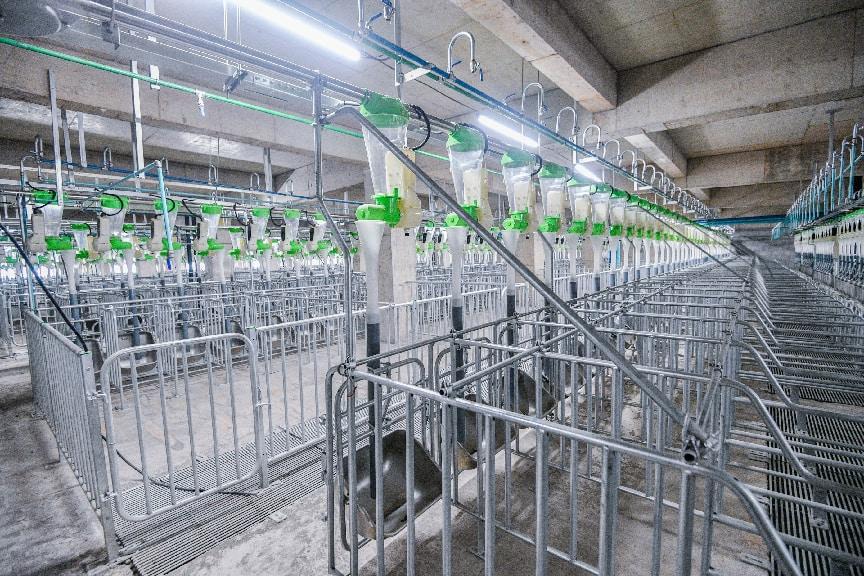
In recent years, as pig farms have become more and more modern, pig farming has also become a professional industry. Many young people with high education backgrounds are willing to enter this industry. For some positions, applicants include overseas returnees and former employees of large tech companies. People have higher awareness of career development prospects and health risks, and will inevitably have concerns about work such as animal disposal. In the past, some pig farms would specifically recruit couples, who could take care of each other in a high-pressure environment. However, among the qualified couples in the local area, only a few are still willing to work on pig farms.
Due to the shortage of manpower, they had to try to use robots for this job.
Searching for Solutions
Letting a machine perform killing sounds like a science fiction plot. But its appearance did not arouse strong opposition, because the current pig farms are not low in technological level.
Pig farms are completing their technological transformation at a speed visible to the naked eye. Taking Muyuan, a leading enterprise, as an example, it has cooperated with Alibaba Cloud to build a "Pig Farming Large Model", with AI veterinarians on duty around the clock to predict epidemics in advance. In the Muyuan complex in Ruzhou, Henan, a total of 13,500 intelligent devices have been installed in 12 high-rise pig houses, and breeders sitting in front of the smart large screen can manage millions of pigs. In 2024, Wens invested 870 million yuan in R&D expenses to develop an intelligent inspection robot that can identify 23 abnormal behaviors of pigs.
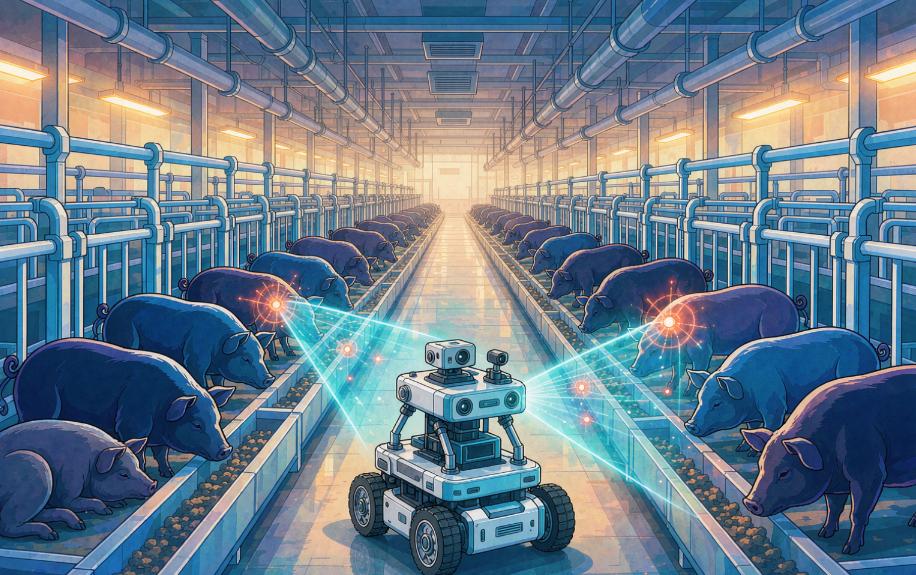
In accordance with the "Digital Livestock Action Plan (2025-2027)" issued by the Ministry of Agriculture and Rural Affairs, 100% coverage of monitoring equipment in national-level standardized livestock and poultry demonstration farms will be achieved by the end of 2026. This goal is being promoted in an orderly manner. Nowadays, people are already used to the 7×24-hour inspection robots shuttling in high-rise pig buildings. It seems that there is no problem to let the robots take over the work of disposing of weak pigs as well.
But once the practice was carried out, problems emerged immediately.
After the bidding information was sent out, the pig farm soon found that no embodied intelligence enterprise had developed such a "disposer" for weak pigs.
Domestic robotics companies are not absent from the breeding industry. On the contrary, B-end enterprises, as potential employers, have the willingness to carry out intelligent upgrades and stronger payment capabilities, which can enable the implementation of embodied intelligence products and recover R&D costs. Therefore, the B-end market has become a place where embodied intelligence companies compete to enter, and pig farms are no exception.
Many pig farming enterprises in Henan have introduced AI inspection robots, which can identify pigs that are lying motionless or have abnormal feeding behaviors in the pig houses. But the work of euthanizing pigs has not been handed over to machines for a long time.
Some technology companies are worried that this will affect their brand image. After all, developing equipment for killing animals requires investment in engineers and R&D resources, and this scenario is not suitable for public promotion, so the return on investment is not high.
Other enterprises think that the technical challenges are too difficult to overcome. Large-scale pig farms have strict management and control: personnel entering the farm need to be quarantined, take a shower, change clothes, and do sampling tests, and all items need to be fumigated and disinfected. Then, will ammonia, disinfectant, and high-pressure flushing corrode the robots? What protection level should the body hardware of the robot reach?
In addition to the lack of ready-made hardware standards, the operation specifications are all based on human experience. For example, for piglets with too low birth weight, adult sick and disabled pigs that cannot be cured, and eliminated breeding boars, what conditions must be met to require disposal, what disposal method to choose, and what range the force control accuracy should be controlled within, all of these used to be judged manually.
If all these rules are written into a quantitative rule library and let the machine check and execute fully automatically, misoperations may occur and affect the revenue of the pig farm. If the manual review link is retained, people will be directly involved in the decision of killing animals, and the significance of introducing robots will be lost.
The most fundamental problem lies in cost. The bare unit of a general humanoid robot costs about 150,000 to 300,000 yuan, while the annual salary of a hired farm worker is only 40,000 to 60,000 yuan, which is not cost-effective at all. But if humanoid robots are not used, the pig house environment has to be modified to match the wheeled chassis of industrial robots, or mechanical arms need to be installed, which will also bring extra costs.
After a series of investigations, the pig farm did not find a ready-made technology supplier. Later, someone gave the enterprise a clue that Dreame had just launched its smart agriculture sector "Dreame Agriculture", which might be able to develop such an animal disposal robot for the pig farm. But before the pig farm could contact them, the news of Dreame's business contraction came out.
This recruitment for robots was temporarily suspended.
Will Robots Dream of Electronic Pigs One Day in the Future?
Suppose there is really such a dedicated robot that has passed all the assessments of the pig farm and become a disposal specialist. Can it free people from the trauma of killing lives? Will the robot dream of the pig it disposed of during the day?
After work, the robot quietly returns to the charging pile. The memory it has accumulated all day, including the age, weight, body temperature, and pen position of the pig before it was disposed of... will not turn into dreams, but will be uploaded to the cloud platform and become data that the pig farm AI can learn from. When these data accumulate to a certain amount, AI can extract knowledge that no one could answer before: Which sows' offspring are the weak piglets concentrated in? Is it a nutritional problem or a genetic problem? Which rows of gestation crates have the most crush injuries? Is it a problem with the pen design?
Letting a person dispose of pigs will leave an indelible trauma; letting a machine perform killing will turn death into data, and the data will reduce the number of deaths. As the system is continuously optimized, the number of pigs that need to be euthanized may be reduced.
From this perspective, pig farms are quite suitable for robots to settle in.
Nowadays, when discussing topics such as animal welfare and occupational mental harm, the whole society has divergent views and it is very difficult to reach a consensus. Legislators say that the conditions for the animal protection law are not yet mature, practitioners say that they cannot afford the cost of euthanasia, consumers want to eat cheap meat but cannot stand animal abuse, and weak piglets are being born every day on pig farms.
The public opinion and game of multiple parties have delayed the solution of this problem, and those human workers who dispose of animals have endured long-term mental stress. Perhaps the key to breaking the deadlock does not need to wait for a consensus in the public opinion field, and technological progress can completely resolve this complex ethical dilemma.
The arrival of this day requires pig farms and robot manufacturers to complete a real cooperation first.
This article is from the WeChat official account "Neural Byte" (ID: unity007), written by Zanghu, and authorized for release by 36Kr.