1,300 cards challenge 100,000 cards, the former OpenAI vice president takes action, and the hard-core problem defeats GPT-6 Astra
With only 1,300 H200 GPUs, it outperformed GPT-6 Astra on a hardcore scientific benchmark.
Recently, Liam Fedus, former Vice President of Research at OpenAI, posted on X to unveil the first model of Periodic Labs: Periodic Neon.
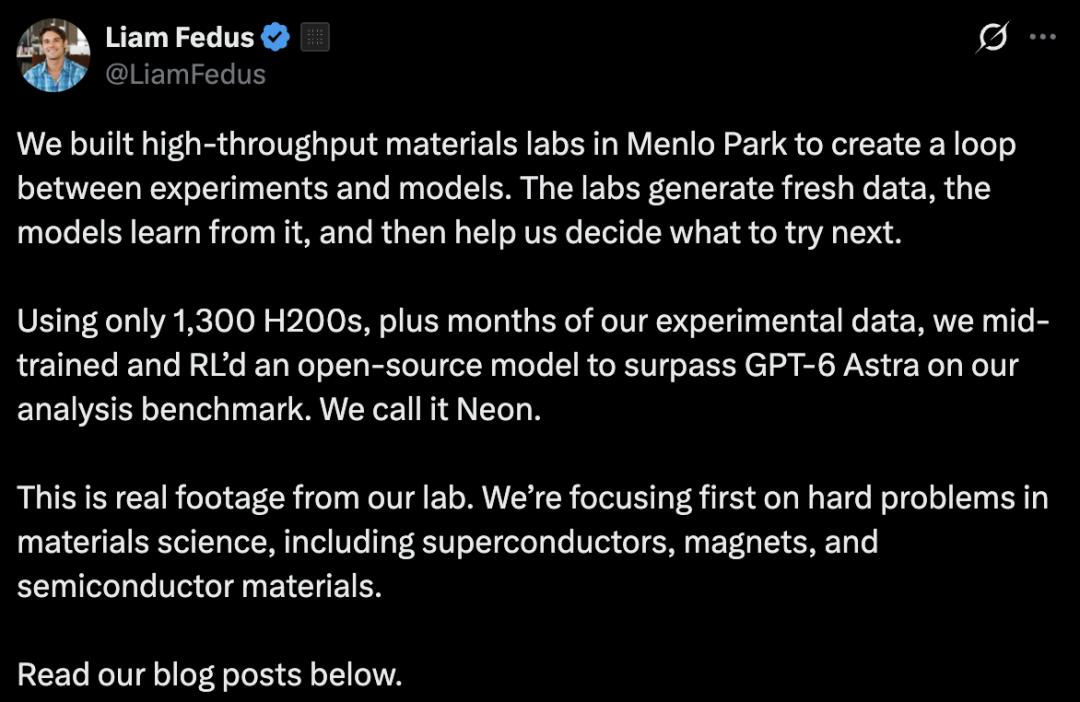
The most eye-catching line in the post is:
With only 1,300 H200 GPUs and several months of experimental data, Neon surpassed GPT-6 Astra on their proprietary analytical benchmark.
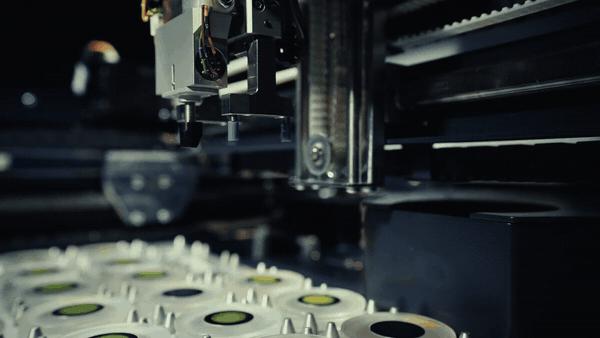
Live shot of Periodic's high-field materials lab in Menlo Park, where a robotic arm is operating above the samples.
In the picture above, rows of sample trays hold newly synthesized candidate materials that will be sent to an X-ray diffractometer to capture their "fingerprints", which are then converted into the profiles for Neon to process.
The lab runs 24/7 nonstop for synthesis, measurement and data feeding.
Fedus said their first batch of tough challenges to tackle are the hard nuts in superconductors, magnets and semiconductor materials.
As a professional with a background in building large models, why did he turn to materials research?
Fedus was once one of the core creators of ChatGPT, in charge of post-training at OpenAI, and knows best what drives model performance improvement.
When he founded Periodic last year, he made his point clear:
There are only about 10 trillion tokens of text on the internet in total, and the most advanced frontier models have almost exhausted all of them. For AI to move further, it needs new data that does not exist on the internet.
Where to find such data? In the lab.
Therefore, he recruited Ekin Dogus Cubuk, former head of chemical and physical research at Google DeepMind, to build their own lab and generate proprietary data from day one, with only one goal: to create an AI scientist.
A year later, the first result came out.
Neon has about 1 trillion parameters. On a set of highly challenging X-ray Diffraction (XRD) analysis tests, it achieved a success rate of 55.3%, leaving both GPT-6 Astra and Claude Fable 5.1 far behind.
In terms of parameter scale, according to industry rumors, Astra's total parameter volume is on the order of trillions, while Neon only has 1 trillion parameters;
In terms of computing power, according to Jensen Huang's public statement, Astra is backed by more than 100,000 Grace Blackwell chips; the peak scale of Neon's final training only uses 1,300 H200 GPUs.
This stark contrast quickly sparked heated discussions in the industry.
Jeff Dean immediately left a message to congratulate Fedus under his post.
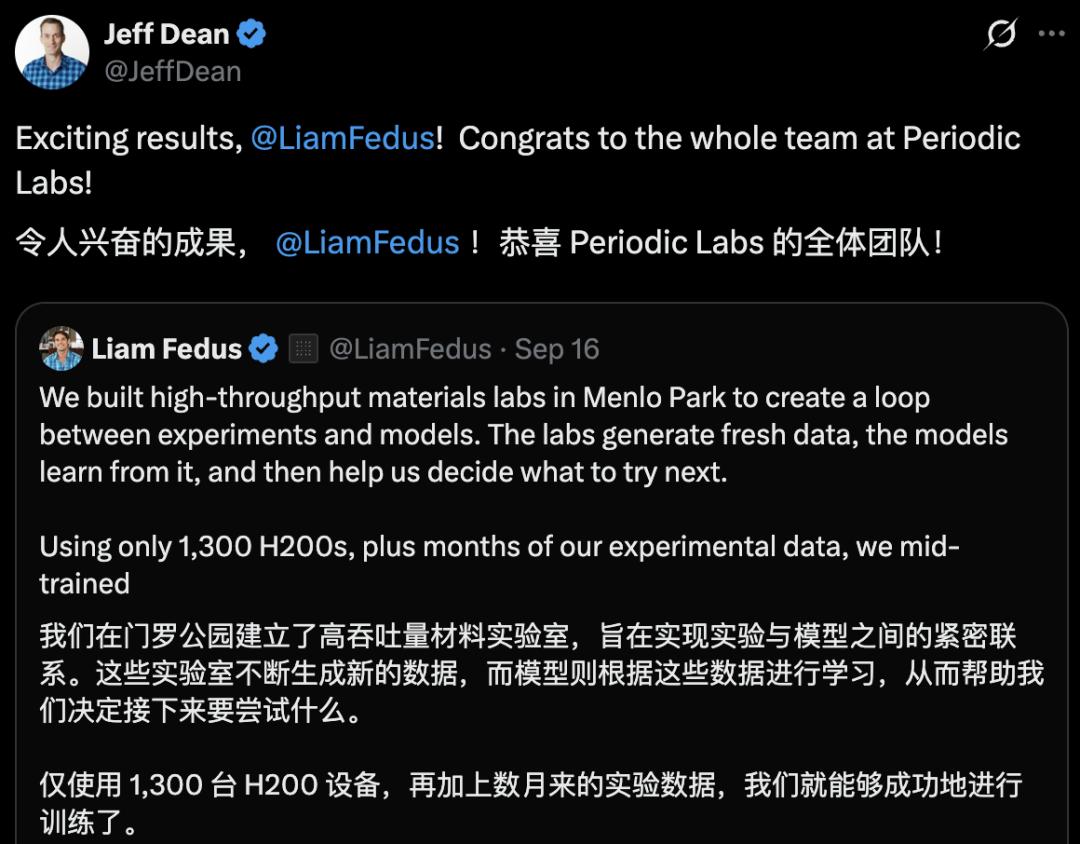
Behind the figure of 1,300 versus 100,000 lies another path to keep AI evolving stronger.
Raising the success rate from 2.7% to 55.3% on a single test set
The problem Neon solves is called X-ray Diffraction Analysis, referred to as XRD.
What is X-ray diffraction?
To make an analogy: when a beam of X-rays hits a crystal, bright diffraction peaks will appear at several fixed angles. Different materials have bright peaks at different positions, just like human fingerprints.
To confirm whether the synthesized product is a superconductor, magnetic material or semiconductor, the first step is to check if this "fingerprint" matches the expected pattern.
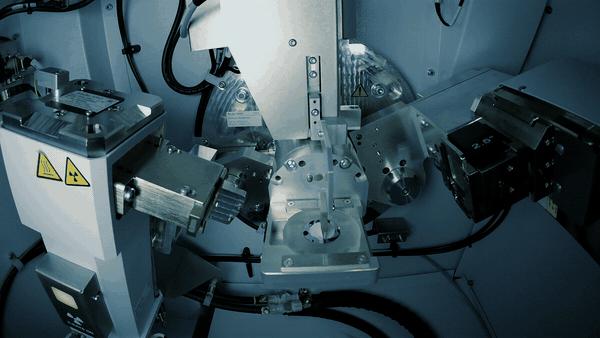
The X-ray diffractometer in Periodic Lab. The XRD data Neon learns from is generated by such instruments.
The trouble is that samples synthesized in labs are often extremely impure, with multiple substances overlapping together, just like hundreds of people's fingerprints are messily printed on the same piece of paper.
To identify all components in the sample, materials scientists usually need to open software, browse databases, and compare research papers, which takes a very long time.
Periodic selected 134 such extremely difficult problems that "even experts find challenging" to form the benchmark test set FrontierXRD.
Neon's 55.3% success rate is the score it got on these 134 questions.
All models use the scientific tool environment built by Periodic itself, Periodic Harness.
Compared with the solution based on Claude Code equipped with standard XRD tools, when the cost per question is roughly the same, the success rate of Periodic Harness is 3.8 times that of the latter.
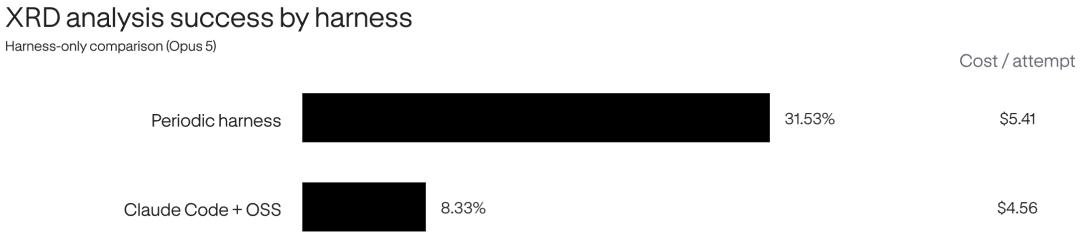
For AI to conduct scientific research, half depends on its reasoning capability, and the other half depends on the tools it has access to.
To prevent the model from "memorizing answers by rote", the team also prepared another 198 questions, whose chemical systems involved were deliberately excluded from the training data. Neon still outperforms many other frontier models.
However, the official also admitted that this test set is easier than FrontierXRD.
In terms of cost, Neon is also more cost-effective.
Under the highest configuration, Neon achieves a 55.3% success rate, with a cost of about more than 4 US dollars per question; GPT-6 Astra costs about more than 7 US dollars per question, but its performance is worse than Neon; Claude Fable 5.1 has a similar cost to Astra, with a success rate of only about 40%.
The internet is about to be fully consumed by AI, and they want to build a "never-drying data well"
Apart from benchmark performance, what Periodic really wants to show the public is its high-throughput materials laboratory built in Menlo Park.
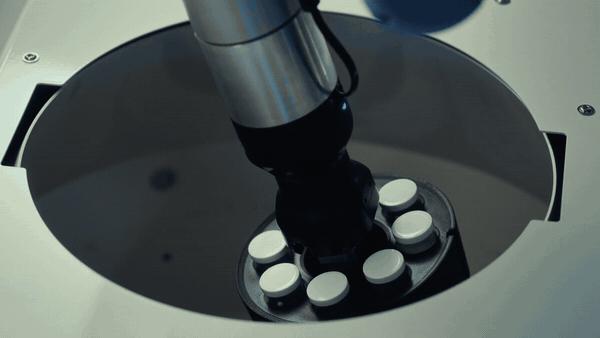
Live shot of Periodic Lab: a robotic arm picks up a sample and sends it into the equipment.
From the first batch of initial experiments to today's 24/7 continuous operation, Periodic has broken down materials discovery into a cycle:
First, guess what material to make based on predictions of material stability and properties;
Then predict how to synthesize it;
Finally, figure out what has actually been produced and whether its properties meet expectations. After getting the results, revise the hypothesis and start a new round.
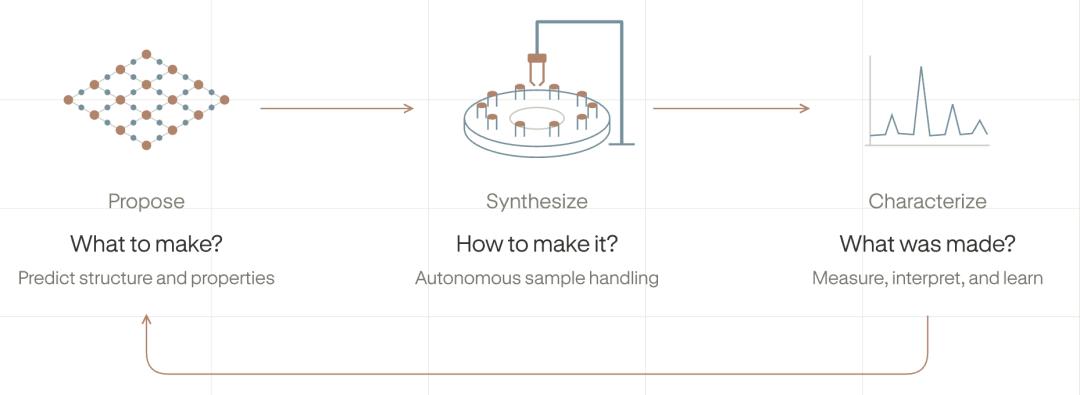
Periodic's materials discovery cycle: three interconnected phases of what to make, how to make it, and what has been produced.
Every time the cycle runs, the lab produces a batch of fresh, proprietary data with physical feedback. These data are the raw materials for Neon.
Periodic's mid-training corpus mixes academic literature, code and experimental data, and its scale currently doubles every month.
They also found that injecting scientific knowledge through mid-training first can achieve better RL performance in the subsequent phase.
Moreover, when experiments are running, GPUs do not need to wait idly. The model can continue to analyze existing experimental data and improve its predictions.
The title of Periodic's research blog is "Nature Is Our Learning Environment".
It targets an unavoidable hurdle in the AI industry:
In the past few years, the Scaling Law has been supported by the continuous accumulation of internet data. However, the text on the internet has almost been fully consumed by frontier models.
In the next stage, whoever has an environment that can continuously generate new data will have an extra path to continue scaling.
The internet is a data mine that gets depleted as you exploit it, while the lab is a well that can produce water endlessly.
Nature does not provide standard answers, so Periodic invited an AI referee
Moving RL into the physical world is far more difficult than in the digital world.
RL in the digital world has enabled agents to write almost all codes and solve long-standing mathematical conjectures. The secret is to deploy a large number of agents to work on fast, auto-scoring tasks.
In the physical world, all three prerequisites are blocked:
Agents cannot be added at will. Running one more experiment means extra costs on power, equipment and engineering; a single experiment may take several days; the results are often ambiguous.
The last point is the most critical. Periodic put it very incisively in its research blog: science can be falsified, but it is not easy to be verified.
For a single XRD profile, it is impossible to judge whether the analysis is successful at low cost only by checking if the fitting matches. Experts are required to judge whether each phase has profile support and is chemically reasonable.
Periodic's solution is to "distill" expert judgments into a referee.
They invited materials experts to label thousands of XRD profiles, and then used these labels to calibrate an LLM referee group composed of Opus 5 and GPT-5.6 Sol. Three sets of figures are very illustrative:
The consistency rate between different experts is 77.2%;
The consistency rate between the LLM referee and a single expert is 74.6%;
The consistency rate between the LLM referee and the consensus of experts is 84%.
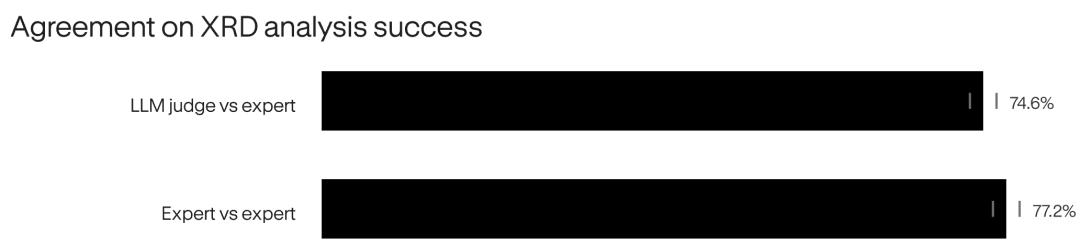
This means that the reliability of this AI referee is close to the level of consistency between human experts.
Converting the "unclear and ambiguous" judgment into a trainable reward is one of Neon's core hardcore technical strengths.
1,300 versus 100,000: how did they achieve such high chip efficiency
The 1,300 H200 GPUs refer to the peak number of chips used when Neon's mid-training and reinforcement learning phases are running simultaneously during its final training.
While the more than 100,000 Blackwell chips for Astra correspond to the large-scale training of a frontier general-purpose model.
Therefore, 1,300 versus 100,000 cannot be directly converted into an efficiency multiple, but it at least proves that Periodic has made the most of these 1,300 GPUs.
Reinforcement learning for scientific tasks has a special quirk: when the model works on a question, it needs to think, look up information and run tools at the same time, which may take more than an hour; but updating the model with the result of this question only takes a few minutes.
Periodic's solution is to separate the problem-solving process from the learning process, with each process using its own dedicated GPUs, no waiting for each other.
Here is a real story of their failure in the early stage.
In their earliest RL cycle, training, inference and the code written by the model were all crowded together without any isolation.
Until one time, the code written by the model applied for 80GB of memory, and the entire task crashed immediately.
Then they developed their own sandbox called pbox.
It directly calls the idle CPUs on the GPU nodes where the RL tasks are located to run scientific tools, and all data never leaves the cluster.
Compared with a hosted sandbox service they tested before, the data transmission speed is 4.5 times faster, and the throughput is 3.3 times that of the latter.
The idle computing power during training is allocated to scientific computing tasks such as physical simulation, so the utilization rate of the entire cluster remains above 95% all year round.
Periodic's idea is easy to understand: since they cannot compete with tech giants in total computing power, they strive to maximize the amount of scientific output per GPU hour.
The flywheel is still the same, but the fuel has been changed
Neon has been deployed in Periodic's lab to analyze real experiments and help the team find better superconductors and magnets.
What is the missing step?
Back to the three-phase cycle mentioned earlier, what Neon has proven this time is only the last phase: understanding what the lab has actually produced.
As for letting AI command the entire scientific research project, designing synthesis paths and deciding which experiments to run in the next round, the official statement of Periodic is that they are expanding this method to these directions.
Fedus's wording is also very cautious: the model currently "helps us make decisions", not replaces scientists to make final calls.
To be precise: the flywheel between experiments, data and training has already started running, but to achieve full autonomous closed loop, there are still two unopened links: deciding what material to make, and how to synthesize it.
Periodic also does not deny the value of computing power.
The official said that expanding the training computing power to the same scale as today's frontier models can unlock stronger scientific capabilities. They also mentioned that a stronger open-weight model can be used as the base model in the future.
GPUs are still important, but GPUs alone are no longer enough.
Looking back at Fedus's resume: in the contributor list of the GPT-4 technical report, his responsibility is the head of the "data flywheel".
Three years later, he moved this flywheel from internet text to the real physical laboratory.
The