The second clash between the Doubao smartphone and the walled gardens of super apps
On the afternoon of September 16, the nubia NaviX Ultra officially went on sale. This product, known in the industry as "Doubao Phone Gen 2", entered the already crowded flagship phone battlefield with a starting price of 5999 yuan. Just two days ago, the consumer version of the Doubao Phone Assistant was officially released first, alongside the launch of the Screen Automated Execution Protocol, or SAEP.
Nine months ago, the first-generation Doubao Phone emerged as an engineering prototype, shocking the industry with its capability to directly read the screen via AI and simulate clicks to operate various apps, but it was soon collectively "blacklisted" by WeChat, Taobao, and banking apps, forcing its core functions to be taken offline.
Nine months later, the second-generation phone is making a comeback. Its technical route has shifted from "breaking in uninvited" to "knocking to request access", but the core proposition remains unchanged: when an AI Agent tries to act as the intermediate layer between users and all apps, who grants the access entry? Who cedes data? Who sets the rules?
01 The Forced Advance and Setback of the First Generation
Last December, the nubia M153 engineering prototype equipped with the technical preview version of Doubao Phone Assistant was put on small-batch sale at 3499 yuan, with 30,000 units sold out on the same day. The highest resale price on Xianyu was once driven up to 36,000 yuan, a premium of more than ten times.
The most striking feature of this product is its adoption of the GUI Agent solution, which essentially enables AI to "see" and understand the mobile phone screen like a real human, identify text, buttons and images on the interface, and then complete operations by simulating clicks and swipes.
For example, users only need to say "Help me find the cheapest pair of a certain shoe across all platforms", and Doubao will automatically open Taobao, JD, and Pinduoduo, enter the product pages one by one to compare prices, claim coupons, and finally add the cheapest one to the shopping cart, leaving only the payment step for the user to confirm.
Planning trips, ordering food delivery, checking logistics information, sending messages — theoretically, AI can perform all operations that humans can do on mobile phones.
This experience was disruptive at the time. But the carnival lasted for less than a week. WeChat popped up a notification of "abnormal login environment", and Taobao, Alipay, and multiple banking apps successively triggered risk control verification, making normal login impossible. Within a few days, national-level apps collectively "blacklisted" the Doubao Phone Assistant, and the originally highlighted WeChat operation function was also forced to be fully taken offline.
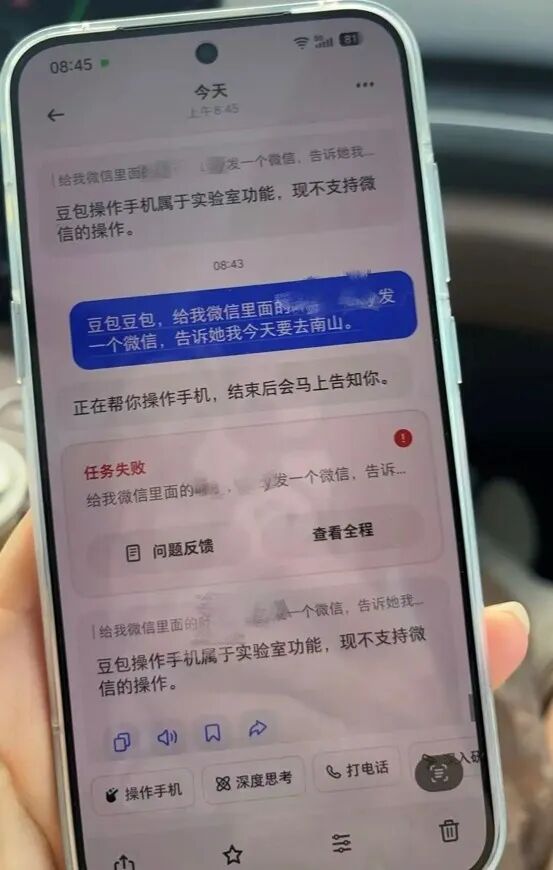
* Source from the Internet
Ma Huateng made a clear statement at the 2025 annual staff meeting: Tencent "has always been unequivocally opposed to using black-market plug-in methods to record users' mobile phone and computer screens and transmit the data to the cloud, as this is extremely unsafe and irresponsible."
The core contradiction lies in the fact that the first-generation Doubao Phone invoked Android's INJECT_EVENTS system-level permission. This permission usually requires the system private key signature of mobile phone manufacturers to obtain. Apps that get this permission are no longer regarded as third-party software by the system, but part of the operating system itself.
Put plainly, this "god's-eye view" operation method touched the core interests of super apps — without their consent, the AI can read their interfaces, operate their functions, and bypass their traffic distribution mechanisms.
WeChat's social relationship chains, Taobao's transaction data, and Meituan's local life services are all moats that these companies rely on for survival. How could they allow an external AI to enter and exit at will?
According to statistics from industry media, 8 out of 23 mainstream apps at that time took restrictive measures against the Doubao Phone Assistant. The 30,000-unit sellout boom quickly cooled down, and the second-hand price dropped from the highest 36,000 yuan to the range of 4,000 to 4,500 yuan.
The first-generation product verified a cruel reality in the most radical way: the ecological walls of the mobile Internet are stronger than imagined, and the price of forced entry is being collectively locked out.
02 From "Breaking in Uninvited" to "Knocking to Request Access"
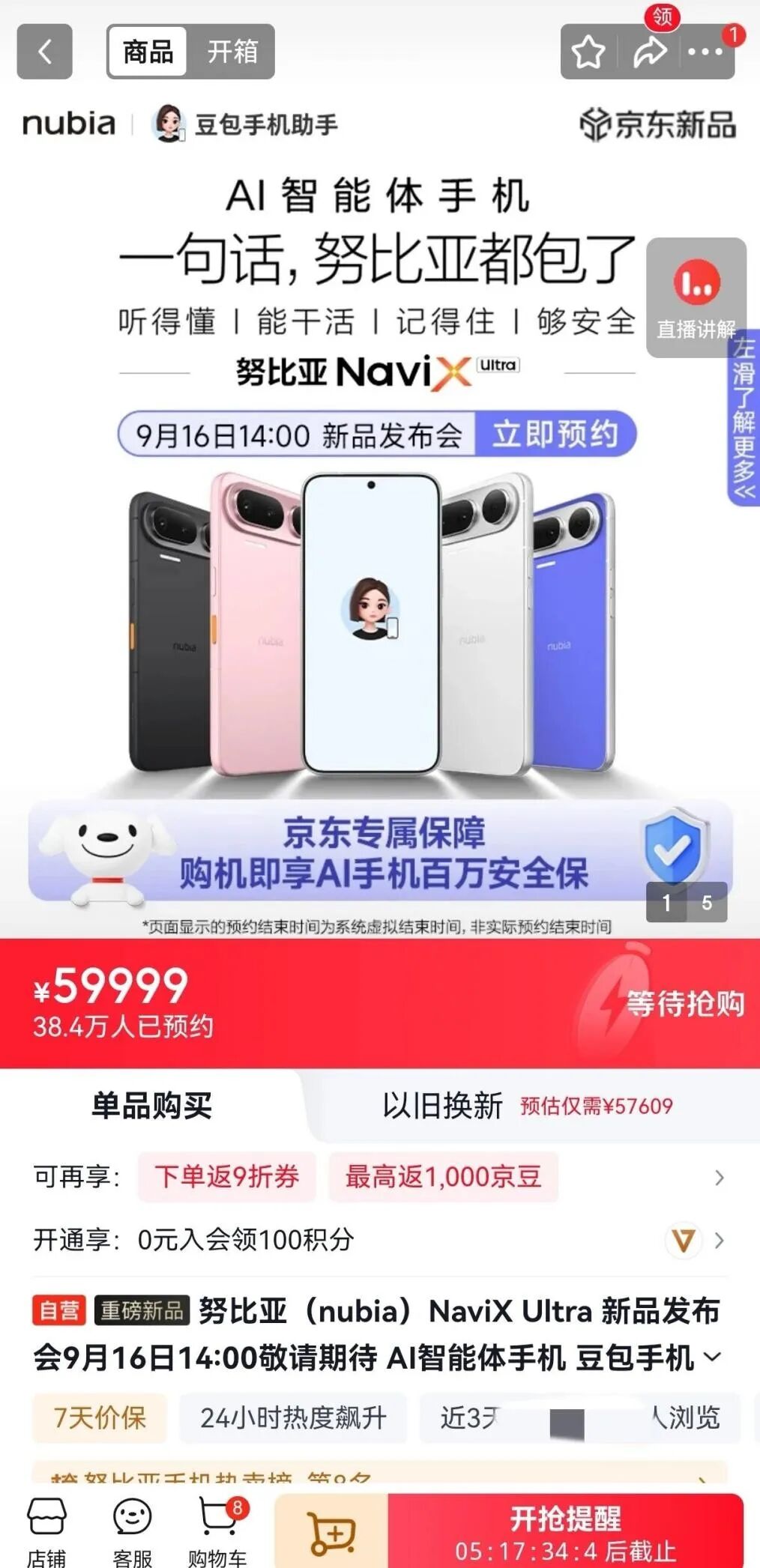
The recently launched second-generation Doubao Phone has been updated at the hardware level, integrating an independent AI button with fingerprint identification. After pressing the AI button to complete identity verification, users can call the assistant to perform tasks without secondary unlocking.
* Source from JD screenshot
But the most core change of the second-generation product is not a hardware upgrade, but a thorough shift in its technical route.
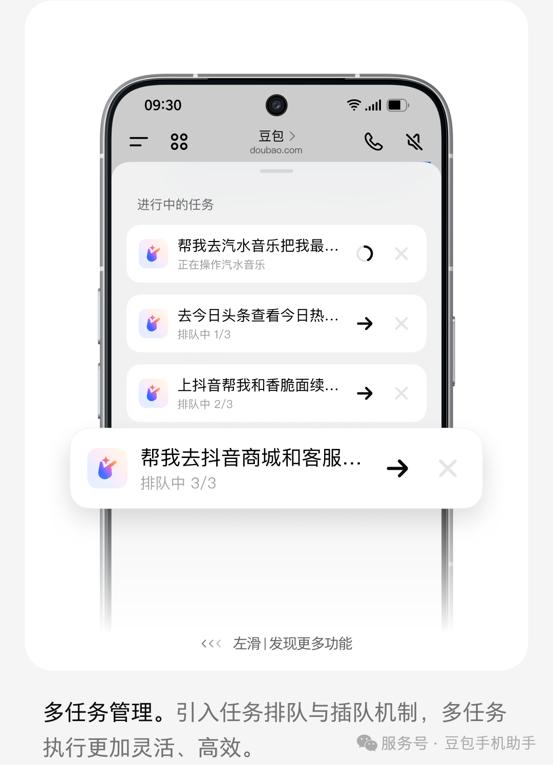
If the first generation is described as the AI "pushing the door directly to do things", the second generation is the AI "knocking first, and can only do what the app agrees to open up". Specifically, the second-generation Doubao Phone abandoned the technical route dominated by GUI screen reading and simulated clicks, and turned to protocol-driven methods such as MCP (Model Context Protocol) and A2A (Agent-to-Agent).
In simple terms, A2A enables direct collaboration between different agents; MCP is equivalent to installing a unified socket for AI. Apps can choose to open part or all of their capabilities according to the standard, so that the AI assistant can directly communicate with the app through the protocol to obtain information and call services, without the need to "peek" at the screen anymore.
The SAEP (Screen Automated Execution Protocol) released by Doubao on September 14 institutionalized this line of thinking. According to this protocol, third-party apps can independently declare their operation boundaries: they can either reject all screen automation, or only restrict specific operations such as content publishing, deletion, check-in and lucky draw; the rejection takes effect immediately, and the rejected apps will be added to the non-operable list right away.
Doubao also set a 30-day rule publicity period: during the publicity period, automated operations will only be performed on system pre-installed apps, ByteDance's apps, and third-party apps that have explicitly agreed to access, while other apps are not operated by default. After the publicity period expires, apps that do not explicitly reject will be gradually opened up according to their risk levels.
* Source from Doubao Phone official WeChat account
This is a meaningful strategic retreat and a pragmatic tactical adjustment.
From a technical perspective, the protocol route has obvious advantages: Direct connection via official interfaces brings faster response speed and higher stability, completely avoids plug-in disputes and risk control interception, and does not fail due to app interface updates. According to ZTE staff's introduction at the WAIC site, dozens of apps under the ByteDance system already support the new protocol method, and the measured response speed is significantly improved compared with the GUI solution.
But the cost is equally clear: Doubao can only call what external apps open up; the launch of new functions requires negotiation and adaptation between both parties; recommendation, transaction and user data are still firmly controlled by the platforms.
Current actual test results also confirm this point. Real-machine tests found that operations in apps such as WeChat, Xiaohongshu, Meituan and Taobao via the Doubao Phone Assistant cannot be realized for the time being, and only ByteDance's series of products can be called preferentially.
Also in June this year, WeChat confirmed that it has cooperated with mobile phone manufacturers including Huawei, Xiaomi, Honor, OPPO and vivo to launch A2A assistant capabilities, allowing the mobile system AI to directly initiate WeChat audio and video calls and send messages. Tencent customer service explicitly stated that this is based on the A2A collaboration mechanism, where the mobile manufacturer's AI assistant sends instructions to WeChat, and WeChat is responsible for executing and returning the results.
Note that ByteDance and nubia are not included in this cooperation list.
The logic of super apps is very clear: AI can help me serve users, but cannot bypass me to take over users. WeChat opens up A2A to mobile phone manufacturers because manufacturers like Huawei and Xiaomi develop operating systems, not Internet services, so they do not constitute direct competition; but ByteDance is different, it is itself a super app giant, with Douyin, Doubao, e-commerce, and Hongguo Short Video, making it a core competitor of Tencent.
Therefore, the real test facing the second-generation Doubao Phone has never been technology, but negotiation — how many competitors can it persuade to open up their own ecosystems?
03 Competing for the Ticket to the Next-Generation Operating System
On the surface, this is a matter of success or failure for a single mobile phone product; at a deeper level, it is a war over the right to the next-generation user and traffic entry.
Over the past decade, the competition in the mobile phone industry has essentially been the competition of operating systems and ecosystems. Apple used iOS to build the most closed and most profitable walled garden, Huawei used HarmonyOS to build a full-scenario smart ecosystem, and Xiaomi used HyperOS to connect the full link of vehicles, homes and mobile devices.
Every manufacturer is striving to keep users in their own ecosystem, because the ecosystem is the moat — the higher the cost of switching devices, the stronger the user stickiness.
But AI is changing the rules of the game.
When AI assistants become the main way for users to interact with mobile phones, when you no longer need to open apps one by one, but directly give instructions in natural language to let AI complete tasks across apps, the traditional app entry will be weakened. Whoever masters this AI scheduling layer will master the next-generation traffic distribution right.
Tencent, Alibaba and other companies are accelerating the independent development of Agents. WeChat is testing "Xiaowei", and Alipay has launched "Abao". Essentially, these are defensive layouts to prevent external AI agents from hollowing out their core entries.
This is exactly where ByteDance's real ambition lies. It does not make mobile phone hardware, nor does it rebuild the operating system; it aims to build the "AI operation layer" on top of Android. If the Doubao Assistant can become the default system-level AI for users, it will have the opportunity to stand in front of all apps and become the first entry for user intentions.
Counterpoint Research predicts that smartphones with GenAI functions will account for 45% of global shipments in 2026, up from 36% in 2025. IDC goes further to predict that AI phones will account for 53% of the Chinese market this year, with shipments of about 147 million units. The industry generally regards 2026 as the "first year of agent phones".
The market is expanding, and the competition for entry has only just begun.
* Source from Apple official website
Apple just held its autumn launch event. New CEO Tim Cook positioned the iPhone as a "smart personal hub", with Apple Intelligence deeply integrated into iOS 27, and the new version of Siri has been updated and launched recently; according to Tianyancha, vivo recently released OriginOS 7, with four major Blueheart AI models fully upgraded; Huawei HarmonyOS 7's Xiaoyi has evolved into a system-level agent that can call more than 2,000 HarmonyOS agents and over 2,100 system capabilities; Xiaomi's Miclaw is in closed beta testing, capable of scheduling more than 1 billion Mijia IoT devices; Honor's YOYO agent claims to cover more than 3,000 scenarios across daily life...
The routes of the above manufacturers do not have absolute advantages or disadvantages, but they all face the same ultimate question: When AI takes over the execution power, who will draw the boundaries?
The first-generation Doubao Phone tried to bypass the boundaries with technology, only to be collectively blocked by the ecosystem; the second generation tried to negotiate the boundaries through protocols, but the initiative is in the hands of super apps. The balance between the two is the answer that the entire industry is exploring.
From this perspective, the significance of Doubao launching the SAEP protocol goes far beyond solving its own compliance problems. It is trying to establish a set of game rules for the entire industry: what AI can do, what AI cannot do, who has the right to decide, and who is responsible when problems arise.
If this set of rules can be widely accepted by the industry, ByteDance will not only be a participant, but also a standard setter.
This article is from the WeChat official account "Qingcheng Finance", written by Qing Feng, and authorized for release by 36Kr.