The efficiency brought by AI may ruin the next generation of professional talents.
Shen Translation is a translation team under 36Kr, focusing on technology, business, workplace, daily life and other fields, with a focus on introducing new technologies, new perspectives and new trends from overseas.
Editor's Note: While AI has greatly improved work efficiency, it is quietly taking away entry-level positions where new practitioners accumulate practical experience. Historical lessons from the aviation industry warn us that total reliance on automation will lead to the degradation of human skills. Adding manual intervention links may seem to sacrifice efficiency in the short term, but in fact it reserves professional judgment for the future, ensuring that there are people who can take full charge when a crisis hits. This article is translated and compiled, hoping to bring you inspiration.
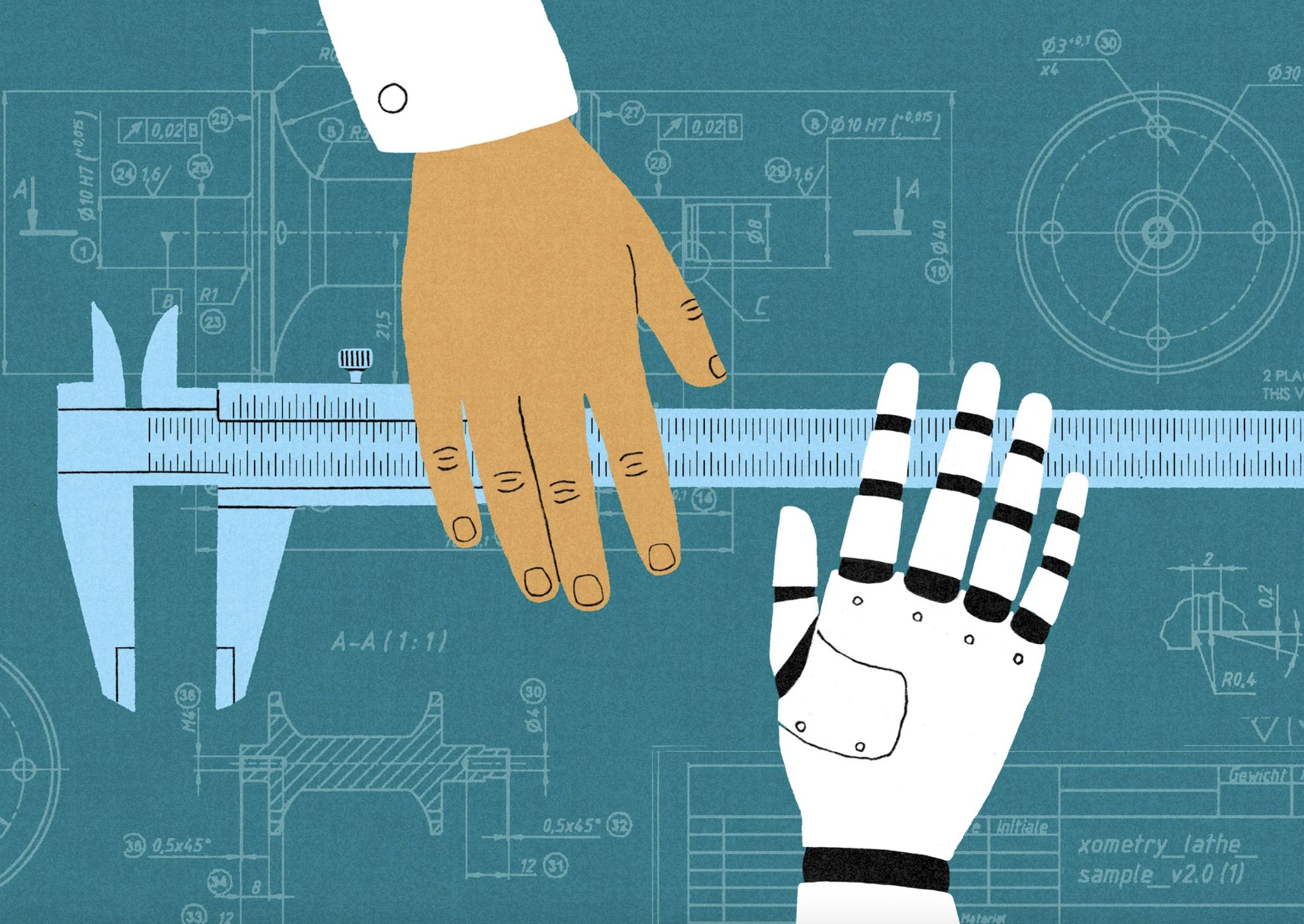
Image Source: JAMES STEINBERG
More than a decade ago, I led the design of a pioneering fully digital control system for a nuclear power plant in the United States. Judging from the parameters on paper, this system is almost perfect: modeled after modern civil airliners, the system can run autonomously, and operators only need to monitor it with almost no manual intervention. But at that time, we made a decision that seemed very regressive to those who pursued efficiency: we deliberately retained several manual operation steps in the processes that the system could have fully completed automatically.
Our intention was to solve a practical problem — if operators are only responsible for monitoring the automated system, over time, they will no longer be real operators in the true sense. Their practical operation skills will gradually become rusty, and their understanding of the actual operating state of the equipment will also become blurred. One day, the automated system will return control to humans, and this is often the most dangerous moment: automation will exit the autonomous mode only when it encounters confusion or malfunctions. But the person sitting at the console at this time has not actually operated this set of equipment for many years. Setting manual steps is to allow operators to maintain their practical operation capabilities. This design is achieved by deliberately sacrificing part of the operating efficiency.
This nuclear power plant was never ultimately built. Affected by the political and economic factors of the U.S. nuclear power industry, the project was put on hold, which had nothing to do with the engineering design itself. But this design concept has been preserved. Nowadays, the boards of directors of major enterprises are debating where human professional experience will go after all the work that was originally used to precipitate professional capabilities is handed over to AI. And I believe that this concept can just provide extremely valuable thinking for this issue.
AI is breaking the career growth ladder for engineers
The relevant data can no longer be ignored. A working paper from Harvard University surveyed more than 280,000 enterprises in the United States, covering a total of 65 million workers. The study found that within six quarters after enterprises introduced generative AI, employment in junior positions declined, while the employment scale of senior positions continued to grow.
An analysis conducted by Stanford University based on ADP payroll records also reached the same conclusion. Among the occupations most affected by AI, the positions of young practitioners have been reduced, while experienced senior employees have retained their jobs. Stanford's research shows that job losses are concentrated in fields where AI directly replaces human tasks; in positions where AI only serves as a tool to assist humans, the employment of junior practitioners remains stable or even rises.
Of course, the academic community still has disputes about the causal relationship behind this, which must be stated objectively. Researchers at the Federal Reserve Bank of New York believe that the high unemployment rate of young graduates is largely due to telecommuting: enterprises are unwilling to remotely train and guide inexperienced new employees. But there are commonalities between the two explanations. Whether AI takes over the basic work that new employees use to accumulate experience, or the remote mode cuts off the channels for mentoring and passing on experience from seniors to juniors, the essence is that a key mechanism is destroyed — the apprenticeship growth path that transfers professional capabilities from "senior practitioners" to "newcomers". In both cases, "entry-level positions" have quietly become positions that "require three years of work experience".
Looking beyond the surface, the problem is actually very simple: no one can skip the junior stage and directly grow into a senior engineer. Professional capabilities cannot be obtained by downloading. They come from repeated failed constructions, debugging that falls into dead ends, and those confusing moments when you wonder "why this works unexpectedly". But now powerful AI will help newcomers avoid all these trainings. Once newcomers lack enough such practical experience, there will be a group of practitioners who can only supervise AI models but have no intuitive judgment — they cannot see that the seemingly confident output of the model has actually produced catastrophic errors.
Most comments only stay at the level of problem diagnosis, or introduce policies to simply treat the loss of junior positions as an economic issue. But this is also a difficult problem in the field of engineering and technology, and industries with extremely high safety requirements have spent decades exploring solutions.
The Automation Paradox: Lessons from the Aviation Industry
My career started at the front line of automation technology. My first job after graduation was to verify the software of the digital jet engine controller. This equipment can judge how the fighter engine should respond to various working conditions faster than pilots. As early as the late 1980s, the core contradiction had already emerged. Machines outperform humans in conventional scenarios, but when encountering unexpected situations that have never been preset for machines, humans can only rely on to avoid disasters. This is the automation paradox: as automation capabilities become stronger and stronger, human operators have fewer and fewer opportunities for practical operation practice, but once an accident occurs, all tricky situations still have to be handled by humans.
The aviation industry has paid a painful price, witnessing time and time again what consequences the degradation of human skills can lead to. The Air France Flight 447 accident is a typical case. In 2009, this airliner crashed into the Atlantic Ocean. The direct cause was not complicated: the frozen airspeed sensor transmitted wrong data to the autopilot, and the autopilot disconnected according to the design logic, returning control of the aircraft to the crew. What followed was not a hardware failure, but a failure of personnel capabilities. There was still room to save the situation, but the pilots, who had relied on autopilot for flying for years, had lost the ability to identify high-altitude stalls and manually recover from faults. The hardware of the aircraft was not damaged, but automation had quietly eroded the practical operation skills of the pilots.
The response plan of the aviation industry is of great reference significance, which is exactly the same as the idea of our nuclear power plant project back then. Instead of abolishing autopilot, the industry actively re-integrated manual practical training into the process. In 2017, the U.S. Federal Aviation Administration (FAA) issued the "Operator Safety Alert 17007", which clearly stated that "manual flying is the foundation of other flying skills", and officially identified skill degradation as an independent safety hazard. Some airlines have revised their operating specifications, allowing and encouraging pilots to manually complete the takeoff climb and initial descent phases when weather conditions are good. Even though this will sacrifice a small part of fuel efficiency, they also want to preserve the original flying skills of the crew.
This trade-off is the key. A system that pursues extreme optimization but produces operators with insufficient capabilities is not real optimization at all. It just transfers the risk of failure to places invisible on the reports.
"Manual Checkpoints" to Guard Practical Operation Capabilities
Combining the lessons of the aviation industry and the design ideas of the nuclear power industry, we can get a design pattern adapted to the AI-assisted workflow — deliberately setting up manual checkpoints.
Manual checkpoints refer to specific nodes in the work process where humans must take over the operation. The purpose of setting them is not to pursue the fastest completion of tasks, nor just to serve as a safety interlock. The core purpose is to exercise and preserve those perishable professional skills. Its key feature is active artificial design: the organization pre-determines which core capabilities must remain in humans — these capabilities are what we rely on in times of crisis; then it actively creates moderate "friction" in the process to keep people's skills from getting rusty.
For example, a software team that uses AI extensively to write code can set manual checkpoints on the debugging ability that must not be lost. When a defect occurs in a core module, the designated engineer (preferably a junior engineer) must first turn off the AI assistant, independently reproduce the fault, locate the root cause, and write an automated test case that can reproduce this bug. Only after the engineer completes the complete fault diagnosis can they turn on the AI, let the AI give a repair plan, provide alternative ideas, and scan the codebase for similar vulnerabilities. Then the engineer compares his own judgment with the AI output. When the conclusions of humans and AI are inconsistent, this design plays its value, exposing the contradictions in the peaceful daily life, not at the moment when a critical fault breaks out.
This idea completely reshapes the positioning of junior engineers. Nowadays, people are used to letting AI take over entry-level work, thinking that it is faster and lower in cost. But some basic work is not redundant overhead that needs to be cut. It is the training carrier for senior talents in the future, and should be protected like critical infrastructure. Doing so may reduce efficiency this quarter, but if you abandon it, it is equivalent to overdrawing the technical strength ten years later.
Why Enterprises Must Insist on Training Junior Engineers
This solution cannot be zero-cost. Avoiding the cost issue means ignoring the reality faced by managers who make budgets. Deliberately setting manual checkpoints will definitely be less efficient in the short term than letting automation handle everything. Letting new employees complete the basic process of accumulating experience requires paying costs now, but what you get in return is the future capability reserve.
However, in a market environment where managers are generally assessed by quarterly performance, this concept is difficult to implement. If the executive team retains "non-essential" manpower that AI could have replaced, before the benefits are realized, it will be questioned by the board of directors. Only entities that are not constrained by short-term performance pressure can calculate this account clearly. Controlling founders, private enterprises, institutions with a long-term perspective, or regulatory authorities — just like how pilots are now forced to take regular practical operation assessments, to force practitioners to regularly demonstrate their professional skills.
This means that the organizations that are most well-positioned to retain their own reserve of professional talents are those that are willing to sacrifice short-term profits in exchange for long-term capabilities; other institutions need external forces to push for changes.
All in all, the core concept can be summed up in one sentence: Deliberately retaining part of the "inefficiency" is not a waste. In safety-critical engineering fields, we have always regarded it as an insurance policy and actively paid the price for it. When AI takes over the work that tempers professional capabilities, the wise approach is not to resist automation, but to design processes to retain opportunities for humans to operate practically. In this way, when automation eventually malfunctions, there will still be people at the console who know how to take control of the situation.
Translator: Teresa