Having secured six consecutive rounds of financing, he aims to build "the Anthropic of the industrial sector".
At Mercedes-Benz workshops in Europe, a batch of manufacturing equipment design solutions are developed by a Chinese AI company, whose custom-designed equipment is also running in Tesla's Gigafactories across North America.
This AI company is Sequator Tech, with the goal of becoming the "Anthropic of the industrial world" — Anthropic has taught AI to write code, while Sequator Tech is dedicated to teaching AI to build machines. Its name may sound unfamiliar, but it has already completed six rounds of financing with a total sum exceeding 300 million yuan, and just closed a Series B round of more than 100 million yuan in the first half of this year.
As is widely known, Anthropic's Claude generates software code from a single line of requirement, while Sequator Tech's "Zexing AI" directly produces a full set of industrial design solutions based on given demands. A solution that used to take engineers dozens of hours to finish can be generated into a usable version by "Zexing AI" in only a few minutes.
It is reported that the latest Series B round of financing has new investors including Shenzhen Industrial Investment, Guangfa Xinde, as well as continuous capital increase from existing shareholder Yonghua Investment. Looking back at Sequator Tech's shareholder list, there are financial investment institutions such as Shinewing Capital, Gaorong Venture Capital, Amiba Capital, and industrial capital players including ByteDance, Lenovo Capital, Semiconductor Source Capital — a typical dual-drive combination of "financial + industrial" resources.
But what really makes investors put in real money is not an empty AI concept, but the solid business performance. Since its commercialization in 2022, Sequator Tech's annual average revenue growth rate has remained above 80%, and its total contract value this year is expected to approach 200 million yuan, almost doubling that of last year.
Looking at Sequator Tech's customer list, there are leading state-owned central enterprises such as Dongfeng, CRRC and COMAC, as well as many well-known foreign-funded enterprises and hundreds of integrators and design companies, with the total number of customers reaching nearly 1000.
Behind these industrial customers is a huge and under-noticed group — 9 million industrial engineers worldwide. What Sequator Tech is targeting is their annual design output worth trillions of yuan.
AI Transforms Hardware Engineering, The Trillion-yuan Track Usher in Explosive Growth
What Sequator Tech is building is not just a "smarter CAD tool", but an "AI industrial agent". The difference between the two is just like Anthropic's Claude and a common code editor — the former sells "intelligence", while the latter sells "tools".
In Sequator Tech's product logic, customers are paying not so much for the software license, as for the "ready-to-use" output. Similar to the mainstream large model's token-based pricing model, the company's software and services are priced by the number of generated solutions and drawings, and customers pay directly for the final results.
This means that the traditional tool market of industrial R&D and design software such as CAD and CAE is not Sequator Tech's target. What it aims at is the hardware engineering output of about 9 million industrial engineers worldwide behind these tools, with an annual scale of over 3.6 trillion yuan. In China alone, there are more than 2 million industrial engineers, and the output value of hardware engineering is at least 500 billion yuan.
Hardware engineering refers to the process of turning industrial products from ideas into physical objects, covering the whole workflow from industrial design, simulation, process planning to manufacturing. If writing code is telling the computer "how to think and how to do", then hardware engineering is telling the factory "what a machine should look like and how to manufacture it".
At present, the penetration rate of AI in China's hardware engineering is less than 1%, and the market serving the industrial design segment is less than 5 billion yuan. Once the penetration rate rises to 10%, the market ceiling will reach 50 billion yuan — several times that of the traditional CAD market. If process planning and manufacturing simulation are further integrated, the market space will double to the 100-billion-yuan level.
There is no doubt that Sequator Tech is standing at the starting point of this penetration curve, and a revolution of AI transforming traditional hardware engineering is slowly unfolding.
Led by a Tongji PhD, Aiming to Be the "Anthropic of the Industrial World"
The leader behind Sequator Tech is an alumnus of Tongji University.
Wu Yongrong, PhD of Tongji University, majors in advanced manufacturing — a hardcore discipline that crosses artificial intelligence and mechanical engineering. At the final stage of his PhD study, he went to General Motors' Detroit Global R&D Center in the United States as a visiting scholar for two years. During that period, he spent almost all his time in the factory, witnessing the most advanced automated production lines in the world.
It was right there that he had a lingering question: most of the production and manufacturing work in the workshop has been taken over by industrial robots, but design engineers in the office are still using CAD tools to manually model point by point and line by line, which is low in efficiency and far from interesting.
Wu Yongrong's intuition told him that AI could be used to transform traditional CAD tools. But at that time, AI technology was not mature enough, and industrial data in the United States was scarce, so the idea could only stay at the theoretical stage.
After returning to China in 2016, Wu Yongrong joined NIO Auto, in charge of AI application in factories. He witnessed manufacturing engineers and design engineers arguing endlessly over problems in the manufacturing process, and finally had to issue a "design change" notice to redo the solution. "If the manufacturability is considered at the very beginning of design, repeated revisions can be avoided. The existing tools cannot achieve this, but AI can." This idea became the original starting point of Sequator Tech.
After leaving NIO Auto, Wu Yongrong founded Sequator Tech in 2020, putting the concept of using AI to generate industrial design into practice. In the same year, the company secured tens of millions of yuan in angel round investment jointly from Shinewing Capital, Gaorong Capital and Lenovo Capital.
"At the beginning, we just wanted to use AI to free design engineers from manual drawing. But the deeper we went into the industrial scenario, the more we found that industrial design is the source of all data in hardware engineering, which affects the whole system with one single move. Later, the team made up their mind to build the data structure and model architecture from the perspective of the whole hardware engineering, to meet the requirements of industrial B-end customers." Wu Yongrong said frankly.
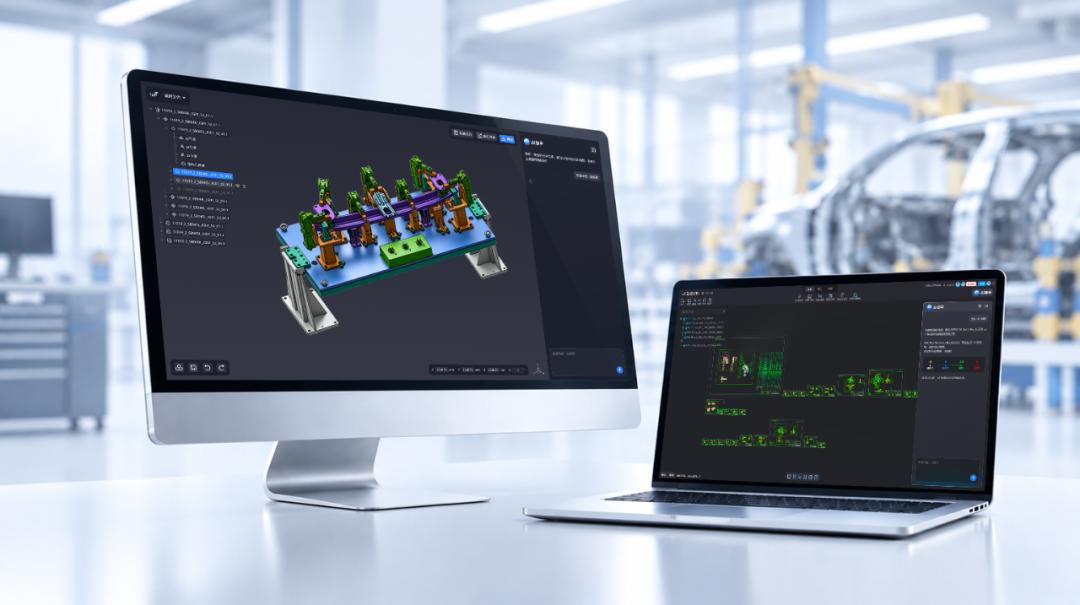
In the first few years, Sequator Tech completed its commercial landing entirely with self-developed AI models and products. "At that time, generative AI industrial design was a brand new track across the world, and there were even very few related research papers. We could only explore the way forward by trial and error." Wu Yongrong concluded.
What made the team upgrade its positioning from "building a tool" to "seizing the era opportunity" is a gradually clear discovery — the requirements of industrial design for AI are surprisingly consistent with the requirements of software engineering for AI.
In this regard, Wu Yongrong explained: "Claude focuses on B-end services for software engineering, whose core requirements are accurate results, safety and controllability, and interpretability, which are completely in line with the core demands of industrial customers for hardware design." The reason is very simple: a 0.1mm error in the drawing will lead to scrappage worth hundreds of thousands of yuan, so the result must be accurate; the solution can be directly put into use, so it must be controllable; when a problem occurs, we need to know the cause, so it must be interpretable. The two are perfectly aligned.
Anthropic has the concept of "Constitutional AI": embedding values and safety guidelines natively into the bottom layer of model training like a constitution, so that the output is always constrained by rules. This is also highly consistent with the model logic that Sequator Tech has self-developed for many years. The team is doing the same thing — writing mechanical standards, process constraints and assembly specifications into the bottom layer of the industrial model training one by one.
In other words, what Sequator Tech is doing is exactly using AI to reshape hardware engineering, just as Anthropic has reshaped software engineering.
Teaching AI to Build Machines: What Is More Difficult Than Teaching AI to Write Code?
Code generation has already been realized in software engineering, why has the "Claude moment" not arrived in hardware engineering for such a long time?
To answer this question, Wu Yongrong believes that the difference between the two should be understood first. The core reason why Claude can quickly master software code is that code logic is highly consistent with the text modality for large model training, which belongs to discrete Token logic, and the text discrete Token generation paradigm fits code perfectly.
But industrial hardware design follows a completely different set of logic. It is not just simple dimensional geometric modeling, but also requires multi-dimensional continuous decision-making such as physical performance judgment and processing process adaptation at the same time. It is naturally impossible to discretize all dimensions of data into text-like Tokens, which makes the intelligence difficulty of industrial AI far higher than that of software AI.
In addition, the physical environments they face are also different — software code runs in a standardized virtual environment, with unified rules, high fault tolerance and extremely low trial-and-error cost, so the model is easy to learn and iterate quickly; industrial design faces the real physical world, which must strictly follow the objective engineering constraints such as mechanics, tolerance, assembly and process, with almost no room for fault tolerance. Tiny errors in the drawings will directly lead to processing scrappage, assembly interference, construction delay and even safety hazards.
If a general large model is directly applied, due to its lack of underlying industrial cognition, it is very easy to produce "industrial hallucinations", output seemingly reasonable solutions that cannot be implemented in practice.
Aiming at the shortcomings of general large models, Sequator Tech has self-developed a foundational model for solid geometry and physics. Different from the general model's "guessing structure from pictures", this model starts from the hardware solid modality, masters the underlying logic such as part tolerance, assembly boundary and processing conditions in advance, eliminates invalid designs that violate the laws of physics from the source, and ensures that the output solutions can be directly implemented.
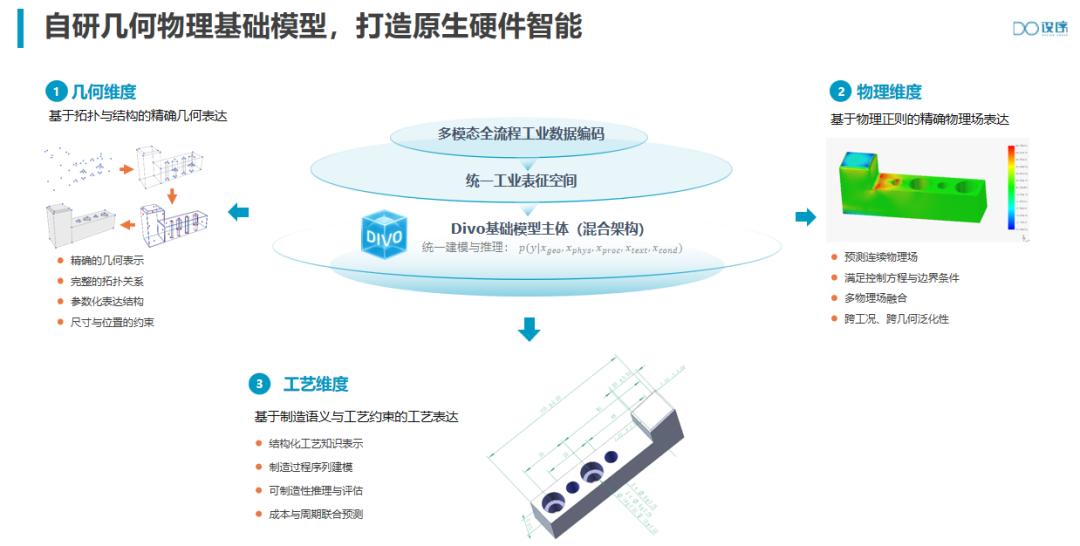
"We hope to generate design solutions that can be directly delivered or even processed and manufactured, instead of letting the model guess after investing a large number of tokens and waiting time." Wu Yongrong said. The company's hardware solid modality has an understanding of manufacturing requirements and physical laws, so engineers only need to put forward demands without having to cover for the model.
To build this exclusive industrial model, the team has established an industrial definition system covering the whole life cycle of products, including core dimensions such as geometric parameters, dimensional tolerance, material properties, processing datum, assembly logic and mechanical standards, and has created a complete engineering "identity file" for each type of parts.
All rules and model logic do not rely on public data, and are fully verified and iterated through real industrial projects, completely solving the hallucination problem of general AI, and forming a mature technology system adapted to high-end manufacturing.
Wu Yongrong said frankly: "This process is extremely time-consuming, and it greatly tests the team's in-depth cognition of industrial scenarios and the underlying know-how of AI technology. It is not only necessary to accurately disassemble all kinds of core dimensions of industrial design, but also to go deep into real projects for repeated verification and optimization, and finally achieve success after arduous efforts."
After years of full-scenario polishing, the company has formed a mature and implementable model and application system. In terms of model architecture construction, Sequator Tech has found a highly suitable industry reference — Anthropic's "Constitutional AI".
"The core logic of our early independent model iteration is highly consistent with the underlying concept of Anthropic's Constitutional AI." Wu Yongrong said, Claude focuses on B-end services for software engineering, whose core requirements are accurate results, safety and controllability, and interpretability, which are completely in line with the core demands of industrial customers for hardware design.
Based on this, Sequator Tech has created an exclusive industrial version of Constitutional AI, which natively embeds engineering criteria such as mechanical standards, process constraints and assembly specifications into the bottom layer of model training, realizing industrial AI design capabilities with low hallucination, high stability and strong controllability.
Tens of Thousands of Drawings Generated Every Day, A Data Flywheel Takes Shape
On top of the model, Sequator Tech has launched real usable products.
Its AI Agent built on "Zexing AI" has covered many automobile enterprises and their equipment integrators, and is gradually extended to wider industrial scenarios such as 3C, energy, aviation and rail transit. According to Wu Yongrong, Sequator Tech currently has nearly 1000 B-end users, generating tens of thousands of 3D models and 2D drawings on the cloud every day.
The real value of these Agents is not only "helping customers draw", but also feeding the model in turn.
As Wu Yongrong introduced, industrial data is generated through usage. One-way data collection is not sustainable, and its authenticity and completeness cannot be verified. Only when the AI Agent really runs in the customer's production process, can it continuously produce industrial data with "ground truth" — geometry, physics and process information, together with objective errors such as real manufacturing deviation and contact micro-deformation, are all precipitated. "After several years of accumulation, we may be the enterprise with the largest amount of industrial ground truth data at present."
The collected data needs to be processed before it can be used for model learning and inference. To this end, Sequator Tech has built a standardized industrial data conversion pipeline, which uniformly cleans, verifies and aligns the modality of industrial ground truth data generated in real design scenarios, further improving the data utilization efficiency.
In this way, a data flywheel is formed — the more the product is used, the more data it gets; the more data it gets, the stronger the model becomes; the stronger the model is, the more general scenarios it can support, and the more customers will use the product. This is a permanent positive cycle of "scenario usage → data accumulation → model cognition upgrading".
The Era of AI Hardware Engineering Is About to Kick Off
This is a once-in-decade opportunity for industry transformation.
Sequator Tech's commercial focus in the next stage is to raise the penetration rate curve of AI in hardware engineering as soon as possible: not only to increase the industry penetration rate, so that more enterprises can use AI for design, but also to improve the intelligent penetration rate for users, so that engineers can transfer more design links to AI.
"We are focusing on two north star indicators: one is the participation rate of AI in design, and the other is the number of industrial designs generated by AI. The former target is to increase to more than 80% within three years, and the latter target is to double or triple every year."
Wu Yongrong's judgment is that once AI's design capability breaks through a certain "singularity" of participation rate, the cost of design will drop exponentially, and the demand will see explosive growth — a reference is what Claude has brought to software engineering.
This path also perfectly aligns with the national strategic direction — the "15th Five-Year Plan" has listed industrial software as the core of scientific and technological self-reliance, and the Ministry of Industry and Information Technology has for the first time included "large model-based part design software" and "structural simulation intelligent software" into the key research and development tackling list. The policy clearly proposes to focus on "AI + design", and promote the integrated innovation of "AI + industrial design" and high-end equipment manufacturing and other related industries.
Working on the front line of AI and industrial industry for a long time, Wu Yongrong always believes that the next generation of AI industrial design software should be defined and built by Chinese enterprises. "China has the world's largest industrial production capacity, the most complete industrial scenarios and the richest industrial data, but the traditional industrial software we use is all defined and provided by Western players. This time, the progress of AI technology has provided a great era opportunity."
If Claude is the classic paradigm of AI software engineering, what Sequator Tech wants to deliver is the Chinese answer to AI hardware engineering.