Hands-on review of the all-new iPhone: Is this the most user-feedback-responsive release Apple has ever launched?
Everyone says a new broom sweeps clean, and this "sweep" has finally reached California...
After Ternus took over, the new iPhone 18 Pro and Pro Max this year have no flaws in heat dissipation, charging, or battery life. With all these improvements combined, Tony even thought he had opened a wish list post for Apple fans.
In the past we kept urging Apple to roll out these features, but now they are taking the initiative to release them even before we ask?
Now both new handsets are in Tony's hands. Today we will go through them one by one to see what exactly Ternus' new moves have delivered.
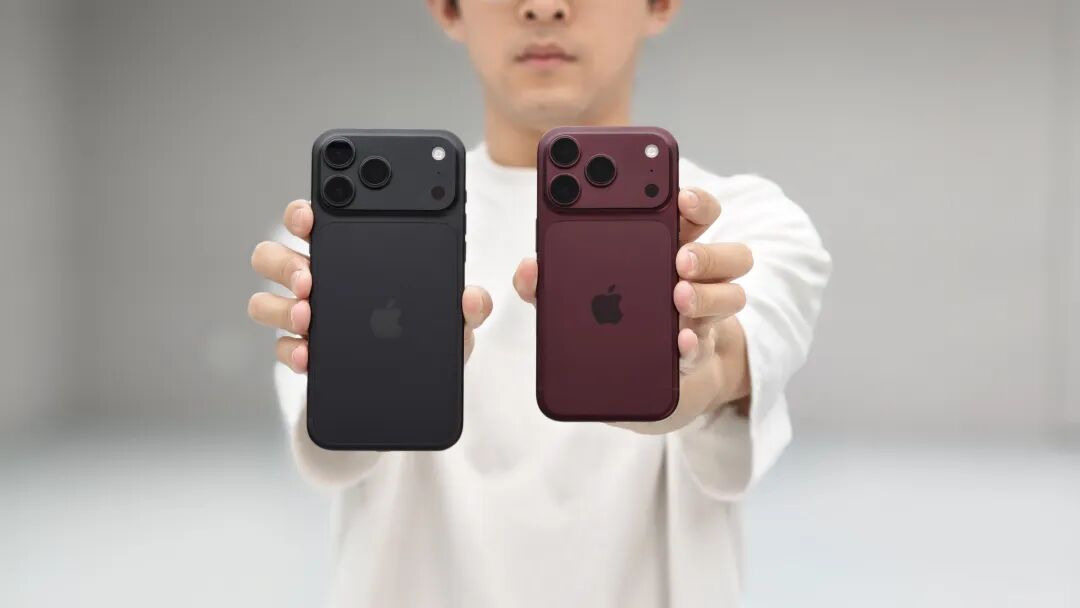
Following our usual practice, let's first show you what the iPhone 18 Pro looks like.
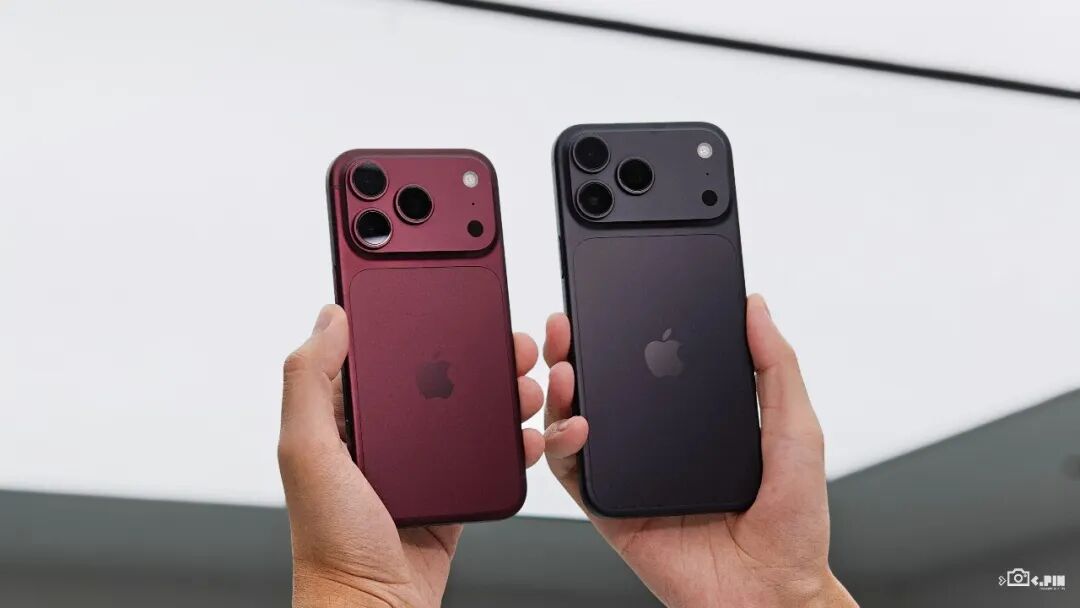
The units we received this time are the black iPhone 18 Pro Max and the burgundy iPhone 18 Pro ——
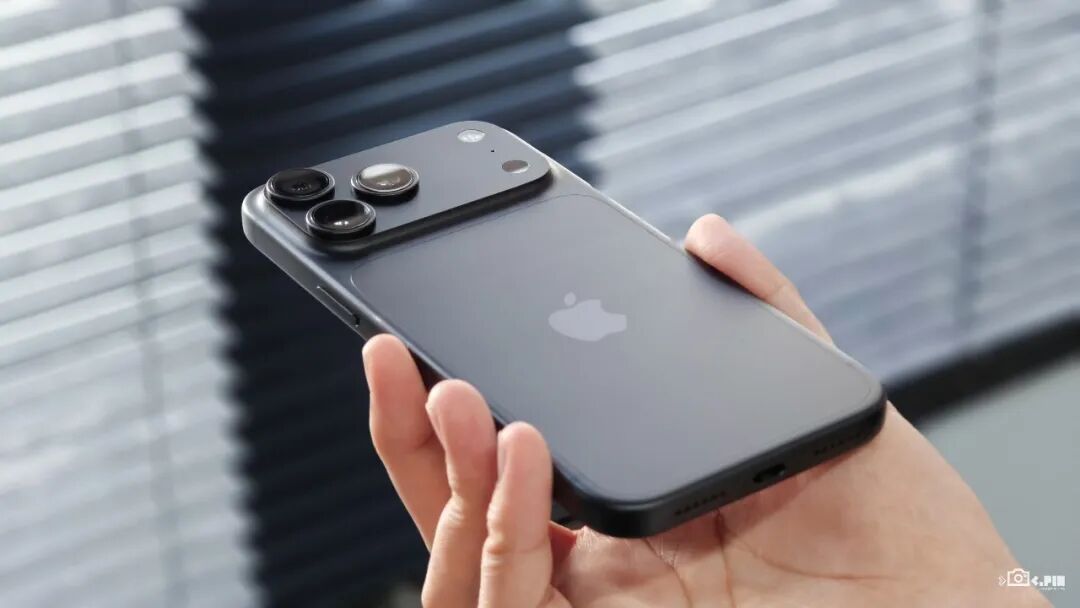
Starting with the black finish, which skipped a generation last year, it is finally making a comeback this year. The new black variant uses aluminum alloy material, adopting a deep, low-key matte style that delivers a solid premium texture.
The burgundy finish on the other unit should look pretty familiar to you, as rival brands have already launched a wave of similar color options (just kidding)...
But to be fair, last year's bright orange finish made it impossible to hide that you had a new phone, while this year's burgundy is much more restrained and far less flashy.
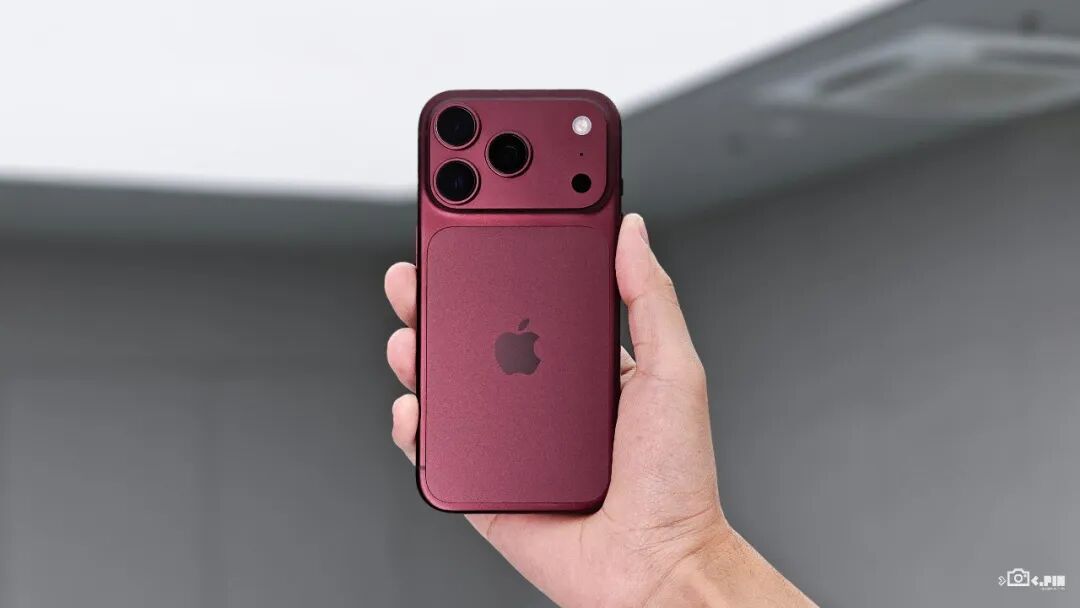
In addition, there is a minor adjustment on the back of this year's phones: the color difference between the aluminum metal frame and the glass back panel is reduced, eliminating the obvious two-tone design that was present on last year's iPhone 17 Pro.
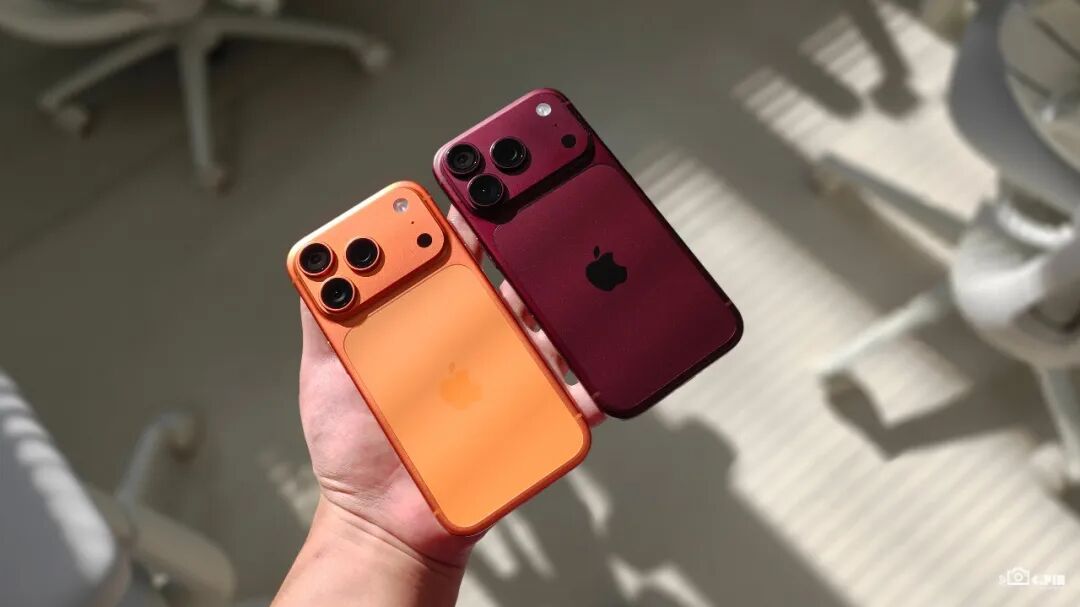
If Tony had to pick his favorite, he would go for the glacier blue finish, which is reminiscent of the far peak blue on the iPhone 13 Pro, and the frosted aluminum alloy body makes the texture even better.
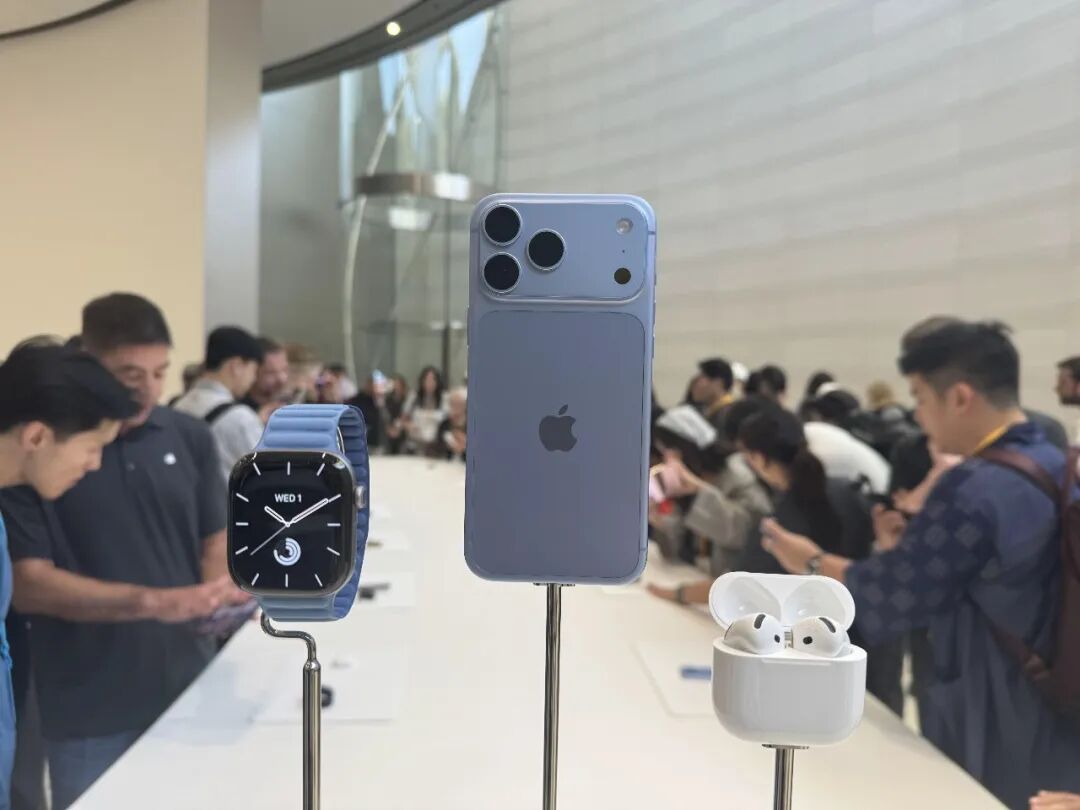
Another tiny change in appearance is that the camera bump of the iPhone 18 Pro sticks out a little more than that of the 17 Pro, reserving space for the new variable aperture this time ——
According to our actual measurement, the camera bump of the iPhone 18 Pro Max is about 0.22 mm higher than that of the iPhone 17 Pro Max. In other words, cases made for the 18 Pro can fit the 17 Pro, but cases made for the 17 Pro may not be compatible with the newer 18 series.
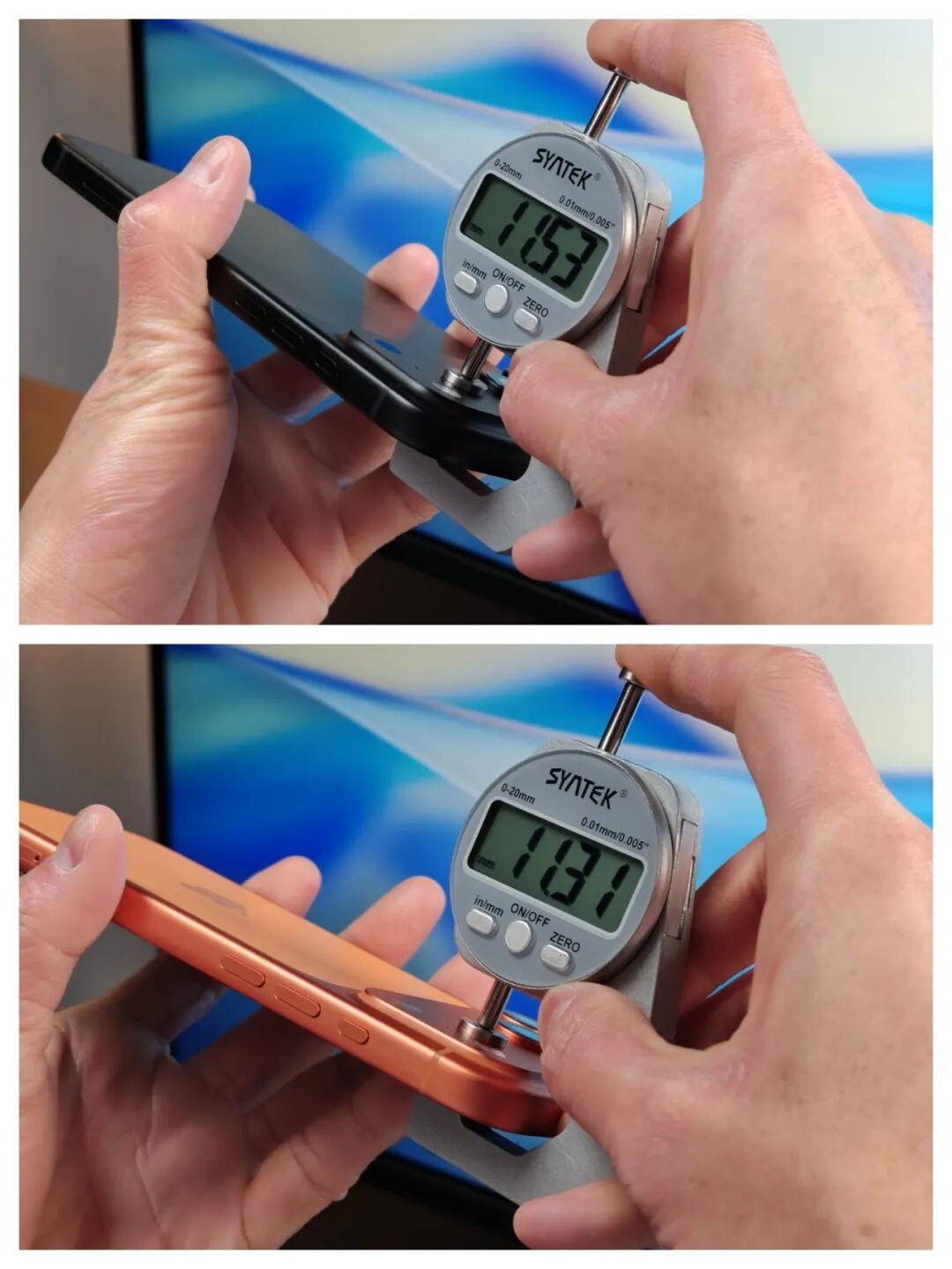
The rest of the appearance is basically the same as before...
Some friends might say: Is that all? You spend over $1400 on a new phone, and no one can tell the difference once you put a case on it???
Hey, I know you are in a hurry, but hold on a second ——
Let's turn the phone to the front and light up the screen. You can see that the Dynamic Island is noticeably slimmer, which is even more obvious when you compare it side by side with the 17 Pro.
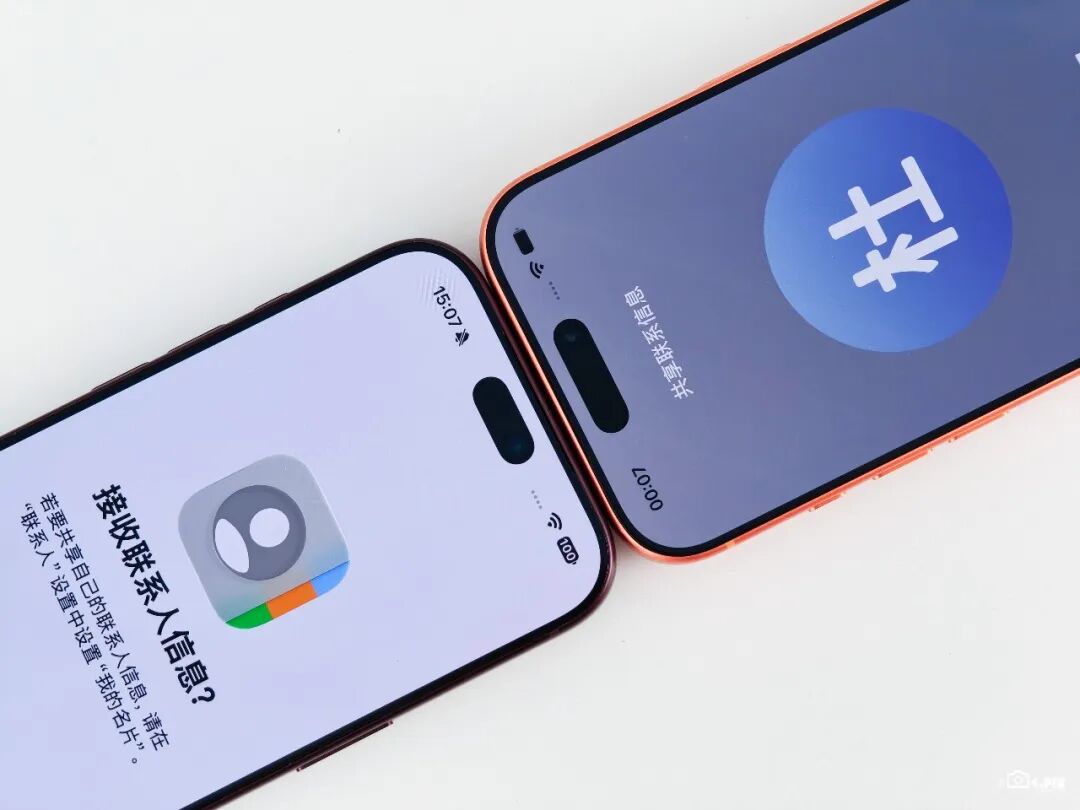
As for how exactly Apple managed to shrink it, whether the dot projector has been placed under the display, Tony will leave this as a suspense for now, please look forward to our follow-up teardown review~
After the Dynamic Island is shrunk this time, there is more space at the top of the screen, allowing up to three live activities to be displayed simultaneously.
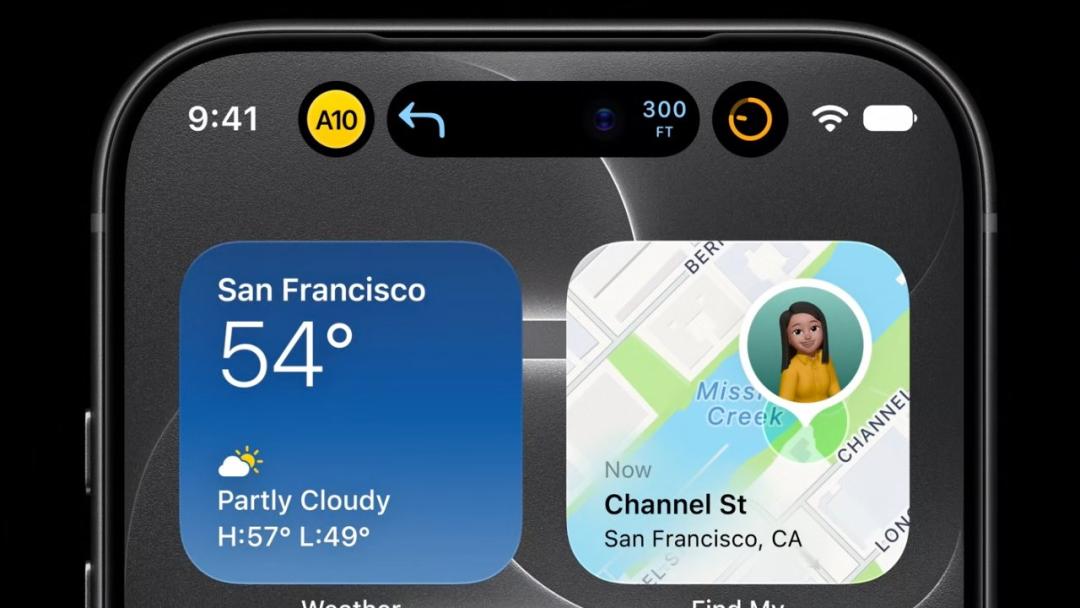
Everyone who bought the new phone can order two more food deliveries to fill up the Dynamic Island, so that others can immediately notice you got a new phone, and it also makes you look very busy (doge).
We also tested the screen brightness casually: when HDR is triggered in a 9% window, the brightness is still around 3000nits, which is on par with the previous generation.
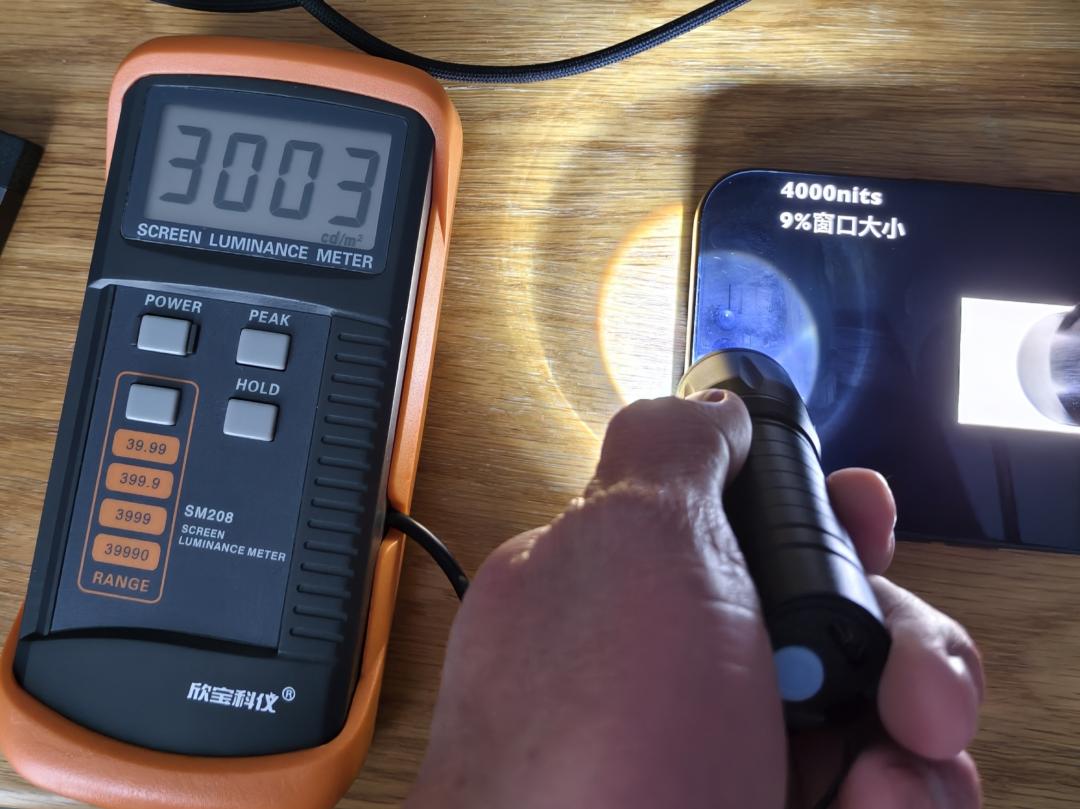
But it doesn't matter, the highlights of this year's model are all hidden inside the body. The unchanged appearance doesn't stop us from checking how many new tricks it has up its sleeve.
Let's first talk about the 2nm A20 Pro chip that everyone cares most about, and see how capable it really is.
We ran two simple rounds of Geekbench 6 and 3D Mark tests to get a general idea of its performance. For the CPU, the iPhone 18 Pro scores 4739 in single-core and 12876 in multi-core, which is about 17% and 21% higher than the 17 Pro respectively.
The scores of the 18 Pro Max are basically the same, there is no obvious performance gap between the two different size models in benchmark tests.
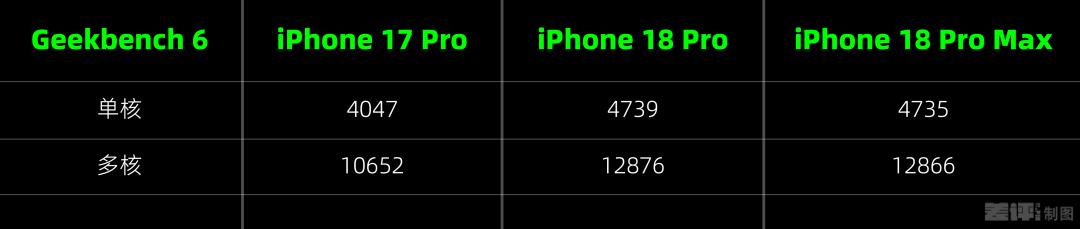
The CPU delivers steady improvements, while the GPU sees a much more significant leap.
This time the GPU core count has been increased from 6 cores on the previous generation to 7 cores, and Apple claims that the graphics performance is up to 40% higher. According to our test results, the scores of 3DMark Steel Nomad Light and Solar Bay Extreme are both about 49% higher than the previous generation.
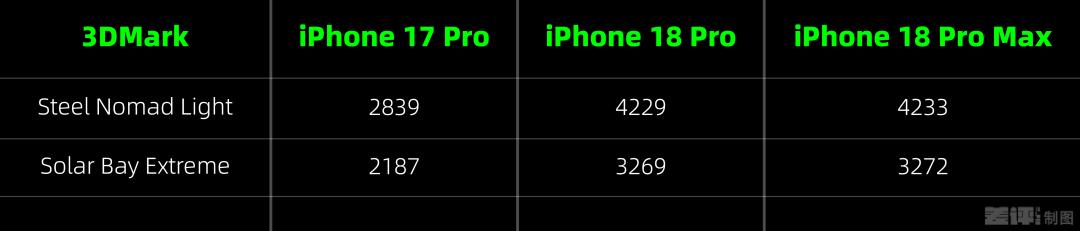
Wow, that's nearly a 50% performance boost. Apple has squeezed out so much performance this time that Tony can barely recognize it...
Apart from CPU and GPU, there is another indicator that most people don't pay much attention to in daily use, the supporting memory bandwidth, which has also seen a huge surge this time.
According to our test with Device Lab, the 17 Pro has a memory bandwidth of 64.22GB/s, while the 18 Pro and 18 Pro Max reach 105.32GB/s and 106.37GB/s respectively, representing an increase of about 64% and 66%.

Simply put, this means the "road" for transporting data to the chip is much wider. For scenarios that require massive data transfer such as gaming and AI operations, the chip can fully exert its full performance potential.
It has to be said that the A20 Pro is really packing a lot of performance this year...
But for smartphone performance, "being powerful is one thing, but being able to maintain that performance sustainably is another". You know, in the past Apple was always a bit stingy with heat dissipation solutions for its own chips. When we teardown the iPhone 16 Pro, we found that such a great processor only relied on a single graphite sheet to conduct heat out, which was totally unreasonable.
So after Apple finally added a VC vapor chamber to the 17 Pro last year, this year Apple is even more aggressive, directly making the heat dissipation area of the vapor chamber three times that of the previous generation, and the sustained performance is up to 40% higher than the previous model.
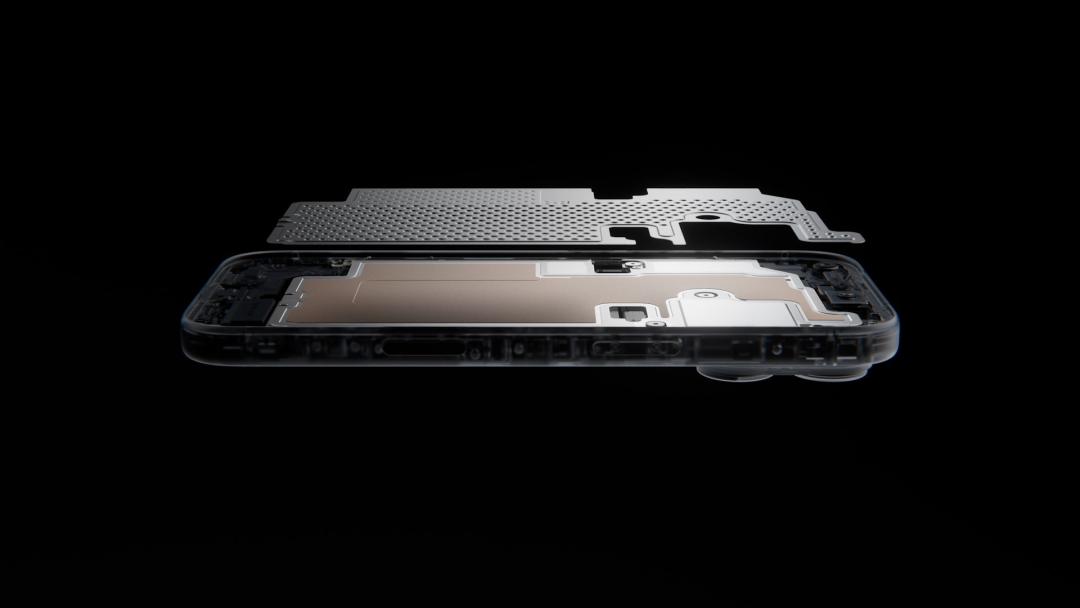
There is no need to hesitate, let's start the test directly with the famous game Honkai: Star Rail ——
To maximally show the sustained performance improvement brought by the upgraded heat dissipation, we specifically selected the two small-screen Pro models from the previous and current generations for testing. After running the game for a full hour, we found that even the iPhone 17 Pro can easily run Honkai: Star Rail at 60fps high graphics settings without obvious sustained frame drops. The average power consumption of the 18 Pro is 5.2W, and the average power consumption of the 17 Pro is 5.3W.
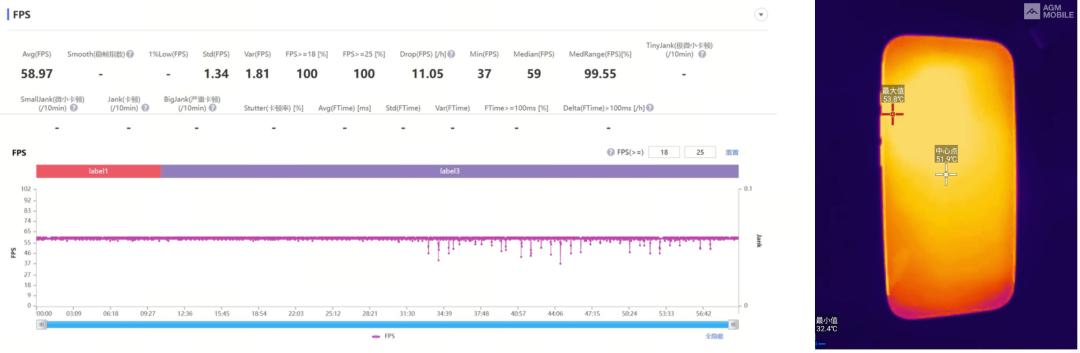
iPhone 18 Pro
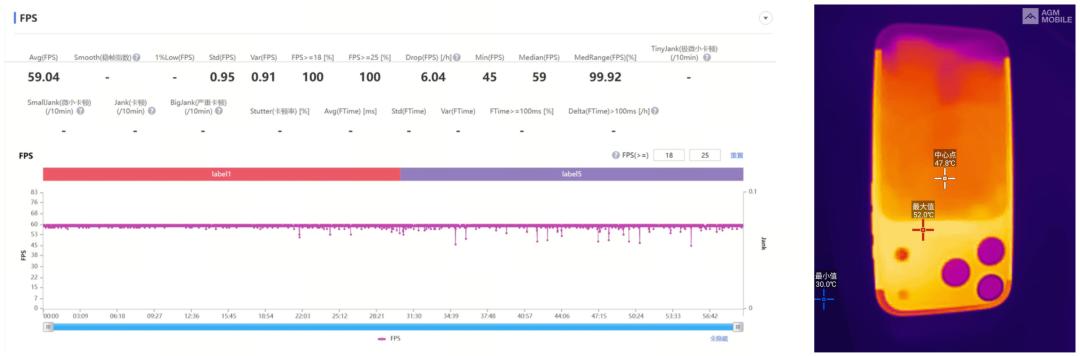
iPhone 17 Pro
The temperature of the iPhone 18 Pro is indeed a little higher in this test, but this is a continuous one-hour gaming test, and there is almost no frame fluctuation, which proves that the vapor chamber inside is working really hard to dissipate heat efficiently.
Let's crank up the test intensity a bit more. So in the second round, we switched Wi-Fi to 5G mobile data, turned off the air conditioner, and ran Honkai: Star Rail at 60fps high graphics settings for half an hour at a room temperature of 30 degrees Celsius. This time the iPhone 17 Pro was completely pushed to its limit: frame rate started fluctuating after just over 3 minutes, and the maximum temperature reached 56 degrees Celsius.
In contrast, the iPhone 18 Pro not only has far more stable frame rates, but also runs a little cooler than the 17 Pro.
