Why are Chinese automakers rising to the challenge of solar vehicles that have already driven European players to bankruptcy?
Summer has just ended, and almost every electric vehicle owner has had such a thought:
The sun is so scorching that the car is baked like an oven. It would be so nice if it could be charged by solar energy.
But anyone who has used a solar water heater will immediately feel something is wrong:
This gadget barely works to heat water. Using it to power a two-ton heavy metal car to move forward probably won't get you very far, right?
But two recent pieces of news made me realize that this matter may need further consideration.
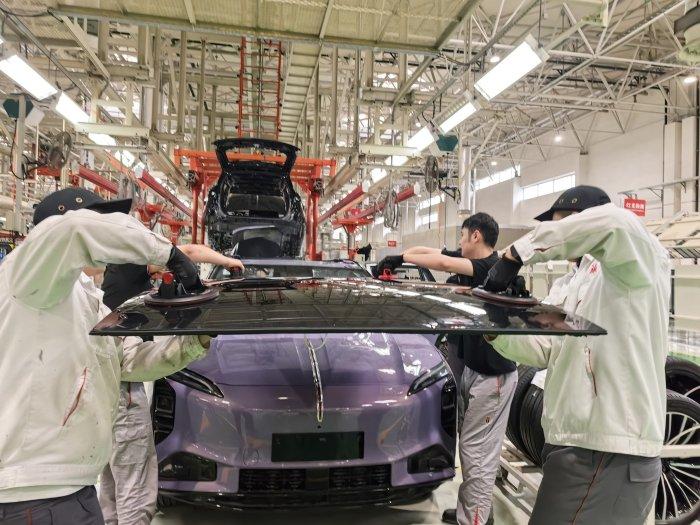
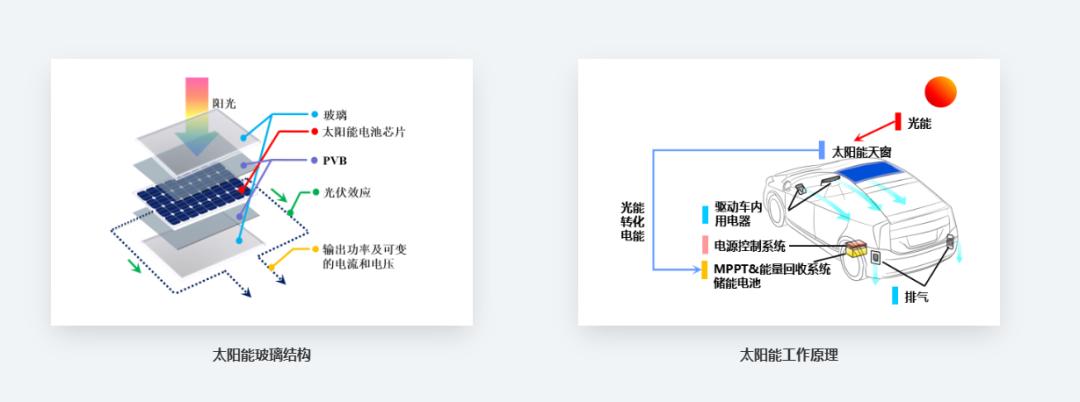
Fuyao, the leading player in the automotive glass sector, has launched a solar sunroof on its official website, stating that it is already capable of mass production.
Around the same time, FAW also unveiled a photovoltaic canopy prototype.
It seems that vehicle-mounted photovoltaic power generation is really coming!
But there are still many questions behind this matter.
Because they are not the first group to try this.
I can say responsibly that this initiative has failed several times already.
There were a number of companies in Europe that were established specifically for this purpose, raised funds, built cars, collected deposits, and then went bankrupt collectively. The most recent case was just over a month ago, at the end of July, when a German company named Sono Motors officially ceased operations.

The biggest difficulty in this matter is probably obvious to you: with such a limited space to deploy solar panels, the generated electricity is far from enough to support normal usage.
If you lay 1.5 square meters of photovoltaic panels on the roof of a car, with a peak power of 150 watts per square meter, and expose it to 3 to 4 hours of effective strong sunlight, you will get roughly 1 kWh of electricity a day. Based on the 15 kWh per 100 km power consumption of electric vehicles, the car can barely run 7 km, which is not even enough for a trip to the grocery store.
So no matter how you think about it, Fuyao and FAW are definitely not aiming for those few extra kilometers of range. Then what are they trying to achieve?
Today we will look into this matter in depth.
01 How European players failed completely
First of all, European companies have invested huge resources in environmental protection technologies over the years, and they have put a lot of effort into developing solar-powered vehicles.
They have a persistent obsession to extend vehicle range purely through photovoltaic power generation.
There is a Dutch company called Lightyear, we can simply refer to it as Guangnian. Its founding team is very experienced, with members coming from the World Solar Challenge.
This event is basically held in the Australian desert, where teams compete to see whose solar car can travel the longest distance. They have won the championship for several consecutive sessions, so they believe they have the determination and ability to solve this problem.
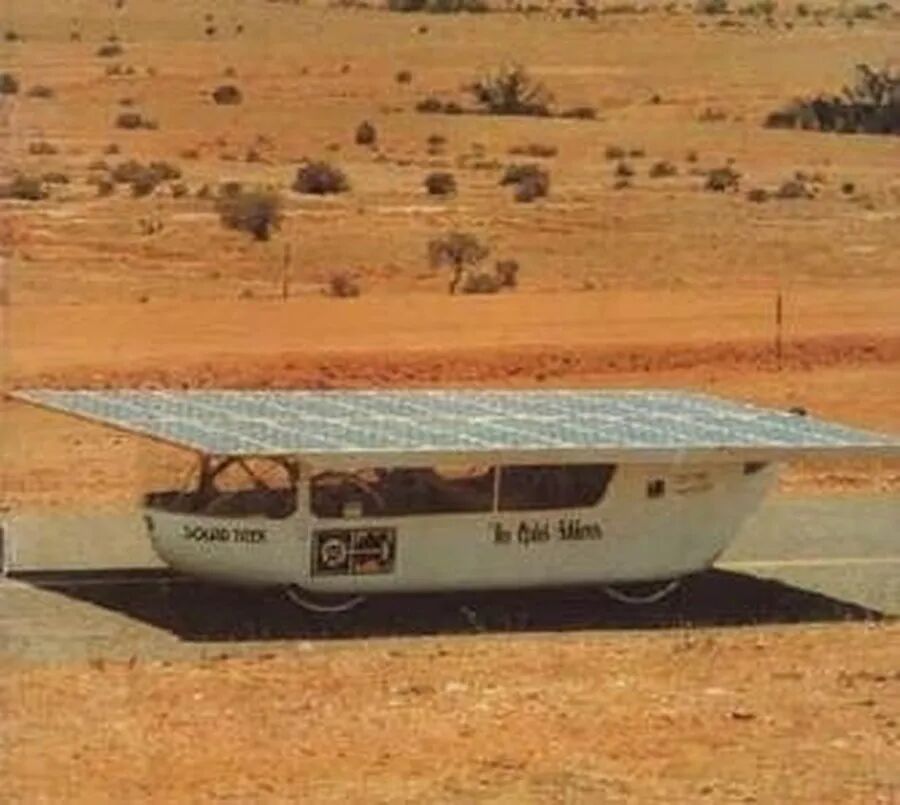
In 1983, Quiet Achiever crossed Australia with about 8 square meters of photovoltaic panels, and solar racing cars became an important technical source for later entrepreneurial teams | Source: IEA
Their solution was very straightforward: since they needed photovoltaic panels, they specially built a car to cover as many panels as possible. They laid panels on every available surface including the roof and hood, reaching a total area of 5 square meters, effectively creating a moving photovoltaic panel.
In order to make each kWh of electricity drive the car further, they designed a drag coefficient lower than that of sports cars, even using custom-made wheel hubs with small built-in in-wheel motors, resulting in a 0-100 km/h acceleration time of 10 seconds.
The final result is that under ideal conditions, the car can run 70 kilometers after a full day of sunlight exposure, which is already at the limit level.
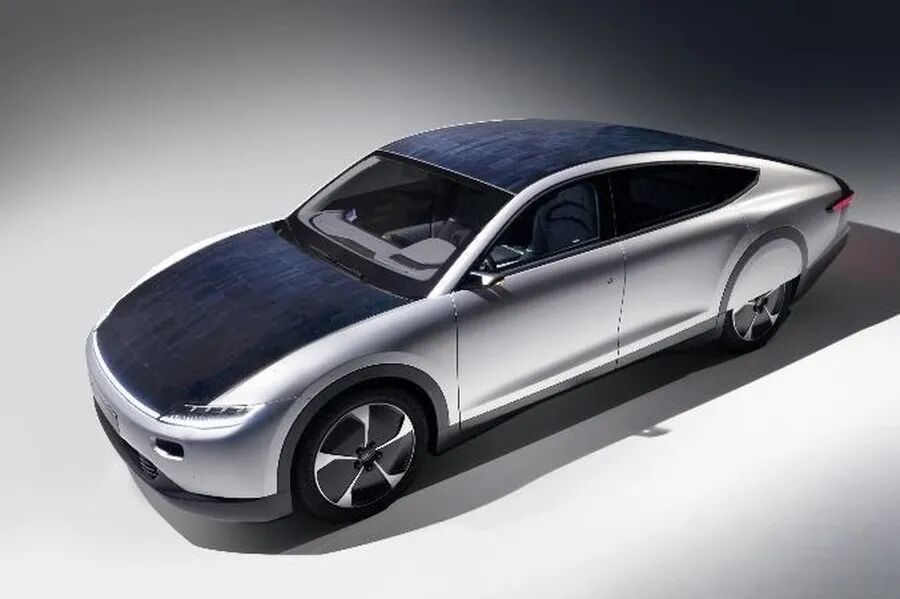
The roof and front hood of Lightyear are almost entirely covered with photovoltaic modules, and the whole vehicle is designed around low wind resistance and expanded light-receiving area | Source: IEA
It must be admitted that they really tried their best, at least in the photovoltaic field, but their efforts stopped there. This car was priced at 250,000 euros each, equivalent to more than 2 million RMB, and they planned, note that it was only a plan, to produce a few hundred units in mass production.
Hearing this, everyone can tell something is wrong.
The end result was that the company burned more than 100 million euros in total. In January 2023, an investor who was about to take over the company withdrew at the last minute, and several related companies went bankrupt immediately. The Dutch court later stated in the investigation documents that the cost of building this car was simply too high.
However, the companies that took the low-cost route did not survive either.
A German company called Sono developed a model named Sion, also under the banner of environmental protection. Tens of thousands of people paid a deposit starting from 500 euros to wait for the car. In February 2023, the company ran out of funds, the Sion project was terminated, 70% of the employees were laid off. The company did not give up, cut the whole vehicle business and switched to pasting photovoltaic panels on buses and trucks, and struggled for another three years before officially ceasing operations on July 31 this year.
The same story repeated itself in many European companies.
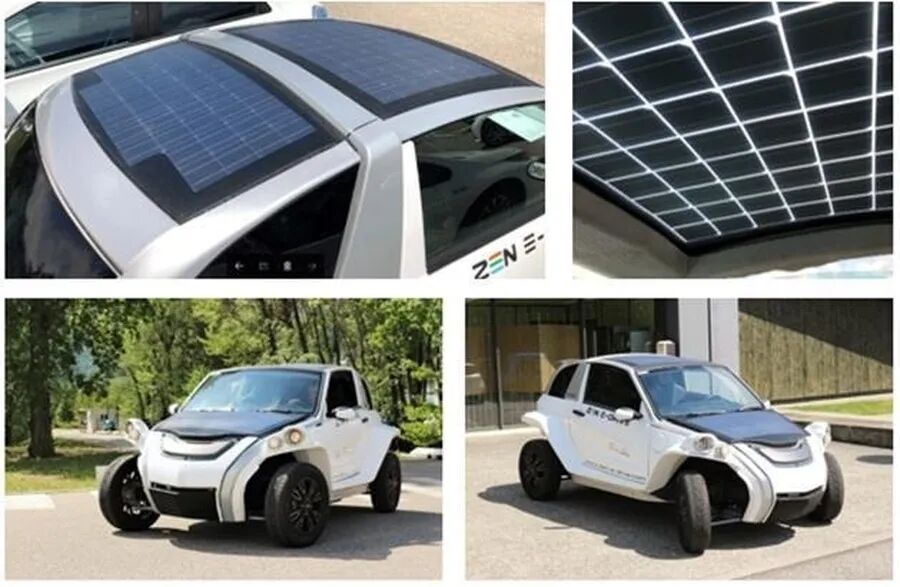
The French C-ZEN prototype car lays photovoltaic panels in zones on the roof and front hood, intuitively showing how the limited body area can be fully utilized | Source: IEA
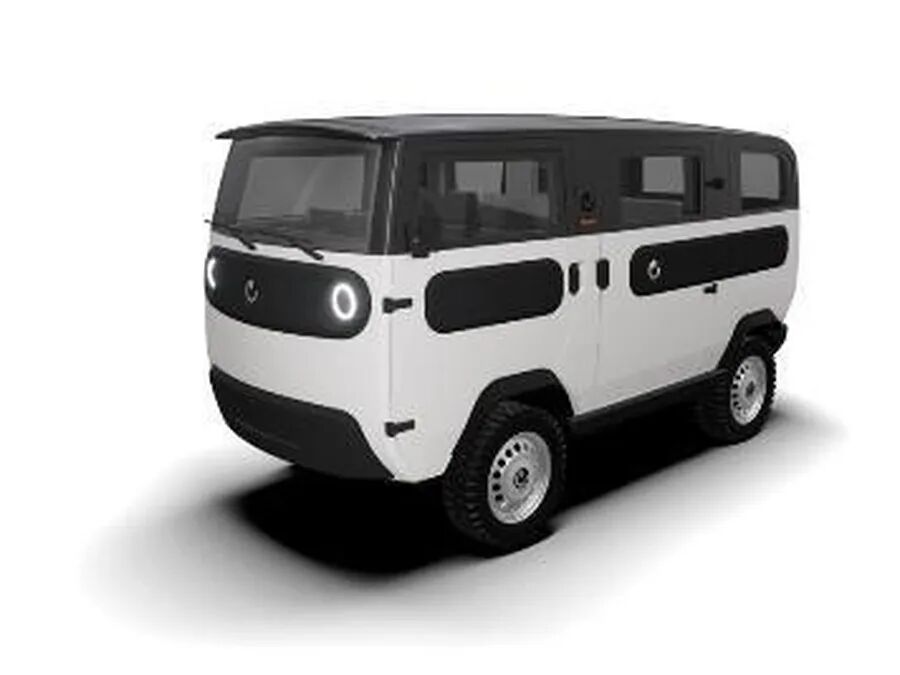
Source: IEA
After these companies went bankrupt, the International Energy Agency conducted a review and summarized three reasons for their failure: Building complete vehicles consumes endless capital, small companies face extremely high risks in mass production, and the money paid by users is completely disproportionate to the benefits they get.
Therefore, if no major changes take place in the world, the conversion efficiency of photovoltaic panels will only improve slowly rather than jump exponentially, the sun will not suddenly become brighter, and the power consumption of vehicles will remain at a similar level, it is indeed unrealistic to expect photovoltaic power generation to completely change the situation of electric vehicles.
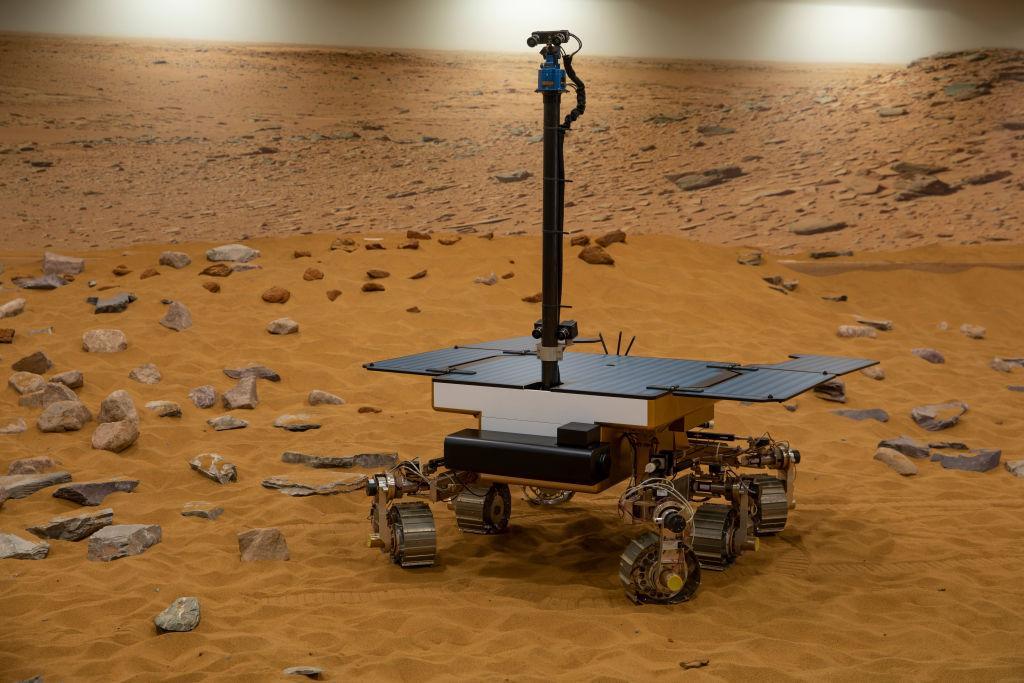
Mars rover, fully powered by photovoltaic
02 Vehicles start consuming power even when parked
But we don't have to give up just yet.
In the current rapidly growing new energy market, one thing has been ignored by many people.
When the car is parked, it is actually consuming power all the time. Smart electric vehicles do not shut down completely. After you park the car, turn off the engine and lock the door, it is still running programs, the cameras keep recording, the communication module stays connected to the network, and the GPS reports its position every once in a while.
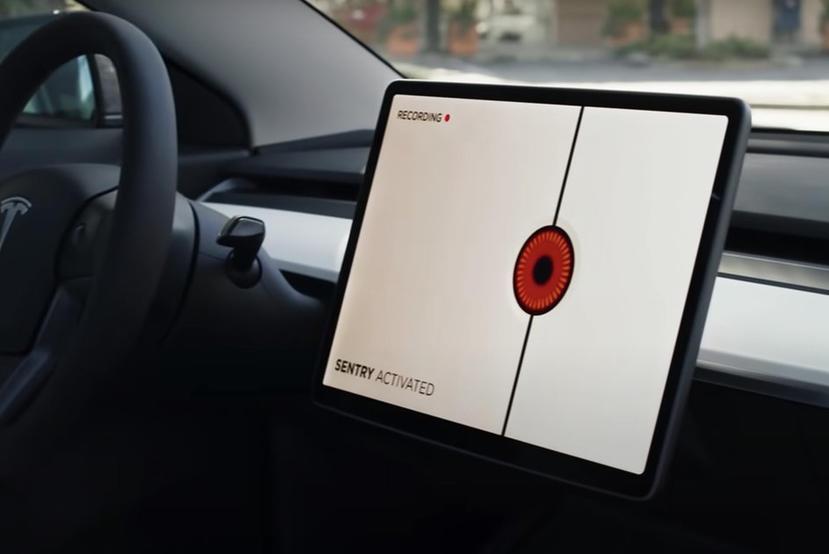
Electric vehicle owners may have noticed that if the sentry mode is turned on overnight, the power level will drop by several percentage points the next morning. Worse still, for those who park their cars at the airport for a long time when going on a business trip, if they are unlucky, the small 12V battery will be completely dead when they come back, and they have to call for rescue.
Someone tested 14 car models one by one. New cars generally consume 1 to 3 kWh of power per day. For early Tesla models whose architecture cannot be completely shut down, the whole vehicle stays active along with the cameras, and can consume 7 to 8 kWh of power per day.
The data reported by FAW's canopy prototype shows that it can generate about 400 kWh of electricity a year, which is 1.1 kWh per day on average. Based on the 1 to 2 kWh daily power consumption of sentry mode, it is definitely not enough to power the car to drive, but it is just right to support all these passive power consumption scenarios.
Moreover, with this amount of power to support these functions, many details of car usage can become more flexible. For example, if the car has been exposed to the sun for half a day and becomes an oven, you could only turn on the air conditioner to cool it down after getting in the car before. But if this 1 kWh of electricity can drive the ventilation system when the car is parked to discharge the hot air first, you won't be hit by a wave of hot air as soon as you get in, and it can also charge the small battery at the same time. These are not big functions, but all of them can be realized with just 1 kWh of electricity.
There is no need to guess what Fuyao and FAW are thinking. All the scenarios Fuyao demonstrated include dashcam operation, GPS anti-theft, ventilation, and connected car services.
FAW named its canopy technology "passive energy replenishment", and the core scenarios it targets are parking air conditioning, on-board refrigerators, and sentry mode.
Both companies are focusing on the same thing: the power consumed by the car when it is parked.
In fact, there is another interesting point behind this matter: China's photovoltaic industry itself is undergoing very important changes. Although it is not enough to make your electric car never need charging, the progress in technology and materials has indeed made vehicle-mounted photovoltaic a reality from another dimension.
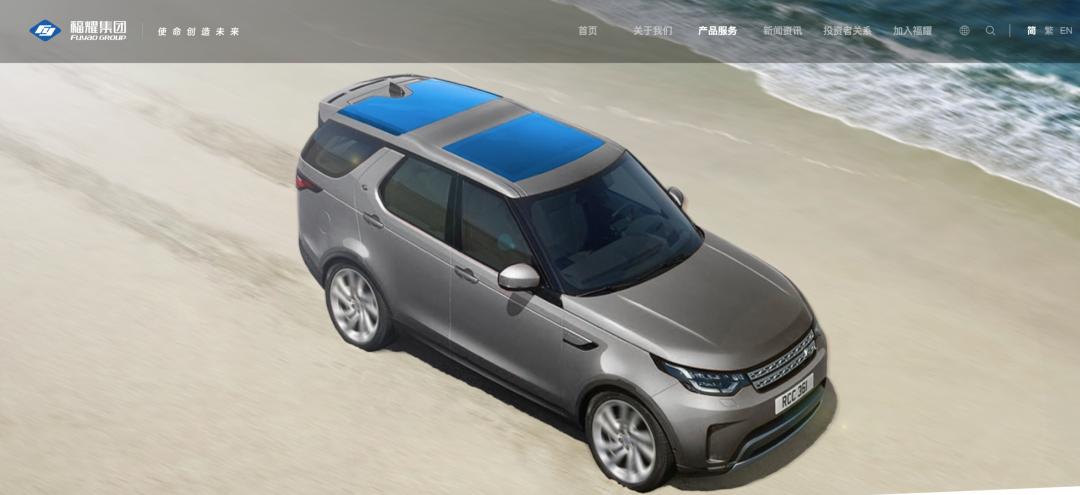
Source: Fuyao
03 Photovoltaic panels are evolving from hard sheets to printable films
Crystalline silicon cells, which are used in the vast majority of photovoltaic panels today, originate from the semiconductor industry. Silicon materials are purified in furnaces at thousands of degrees Celsius, pulled into crystal ingots, and then cut into thin slices like sausages. The resulting products have properties similar to glass: hard, brittle, and cannot be bent.
They are really cheap. The average market price of mainstream modules in the middle of this year is 0.73 yuan per watt, and a 300-watt module costs more than 200 yuan. But there is a problem when installing them on cars: they can only be laid flat on small flat surfaces.
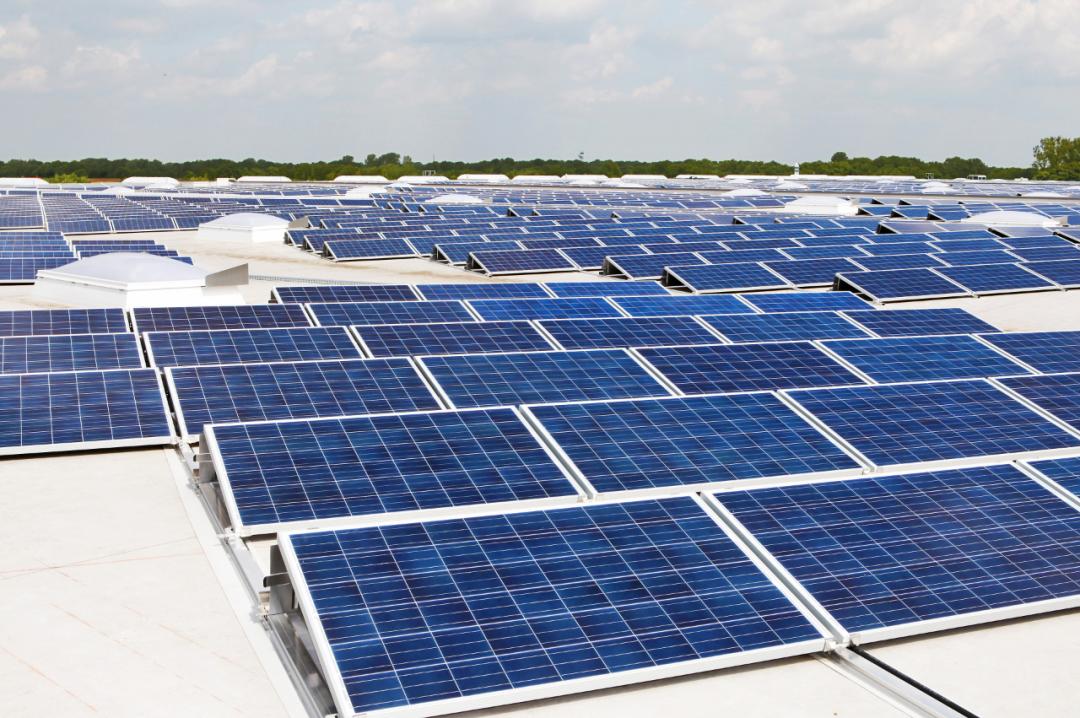
Conventional photovoltaic panels | Source: Wikipedia
If you want to cover the entire curved car body, you need to use some special high-tech solutions. For example, Toyota tried it in 2019, using 0.03mm thick aerospace-grade thin-film cells to cover the roof, hood and tailgate, which can replenish 44.5 km of range per day under ideal conditions.
The effect is indeed good, but those cells are originally designed for satellites, and are too expensive to be used in mass-produced cars. On one hand, crystalline silicon panels are cheap but cannot be bent, on the other hand, aerospace-grade cells can be bent but are extremely expensive. Vehicle-mounted photovoltaic technology got stuck at this stage in the crystalline silicon era.
Perovskite technology, which has gradually matured in recent years, uses a completely different approach: crystalline silicon is made by cutting, while perovskite is made by printing.
It is a type of artificially synthesized crystal material, and its biggest feature is that it can be dissolved. You can mix the raw materials into "ink", and print it layer by layer on glass or plastic film with a coating machine just like printing a newspaper, then