New Species of Sports Earphones: The Race for "The First Entry Point of AI Hardware" on Ears
In late August 2026, a lawsuit was filed in the U.S. District Court for the Northern District of California, naming Oura, a leading player in the smart ring industry, as the defendant.
In this lawsuit, the plaintiff cited a research study to question Oura's sleep stage recognition capability. At that time, the company had sold a total of about 5.5 million rings, and was reportedly preparing for a public listing at an estimated valuation of around 16 billion U.S. dollars. The controversy quickly spread across social platforms, triggering new public discussions on the accuracy of smart wearable devices.
What makes this controversy noteworthy is not only whether a certain indicator of Oura is accurate, but also the long-standing unresolved problem exposed across the entire smart wearable industry: while devices are able to collect an ever-increasing volume of data, they still struggle to accurately answer the two most critical questions — what is happening to the user at the moment, and what should they do next.
Over the past decade, smart watches, bands and rings have continuously added heart rate, blood oxygen, sleep and stress monitoring functions, but in most cases they still operate as a loop system for recording, analyzing and reviewing data. The device collects data first, the mobile phone generates a report afterwards, and the user finally decides how to make adjustments. No matter how many additional data dimensions are added, this relationship is essentially lagging.
What AI hardware is trying to change is exactly this time lag. It not only needs to record the physical conditions, but also understand the user's physical state while they are exercising, and provide feedback the moment risks or efficiency changes occur.
This means that the competition for smart wearables in the AI era is shifting from recording more data to building a real-time closed loop of perception, decision-making and feedback. At this node where the industry is rediscovering new entry points, the ear is being recognized by more people as a position that may have been long underrated in the past.
Founded in 2021, EARWEISS has spent 5 years studying and addressing this issue. The company launched the truly customized AI sports headset Sport Open L in 2026, aiming to transform headsets from audio playback devices into smart terminals that continuously collect human body signals, understand exercise states and provide real-time feedback.
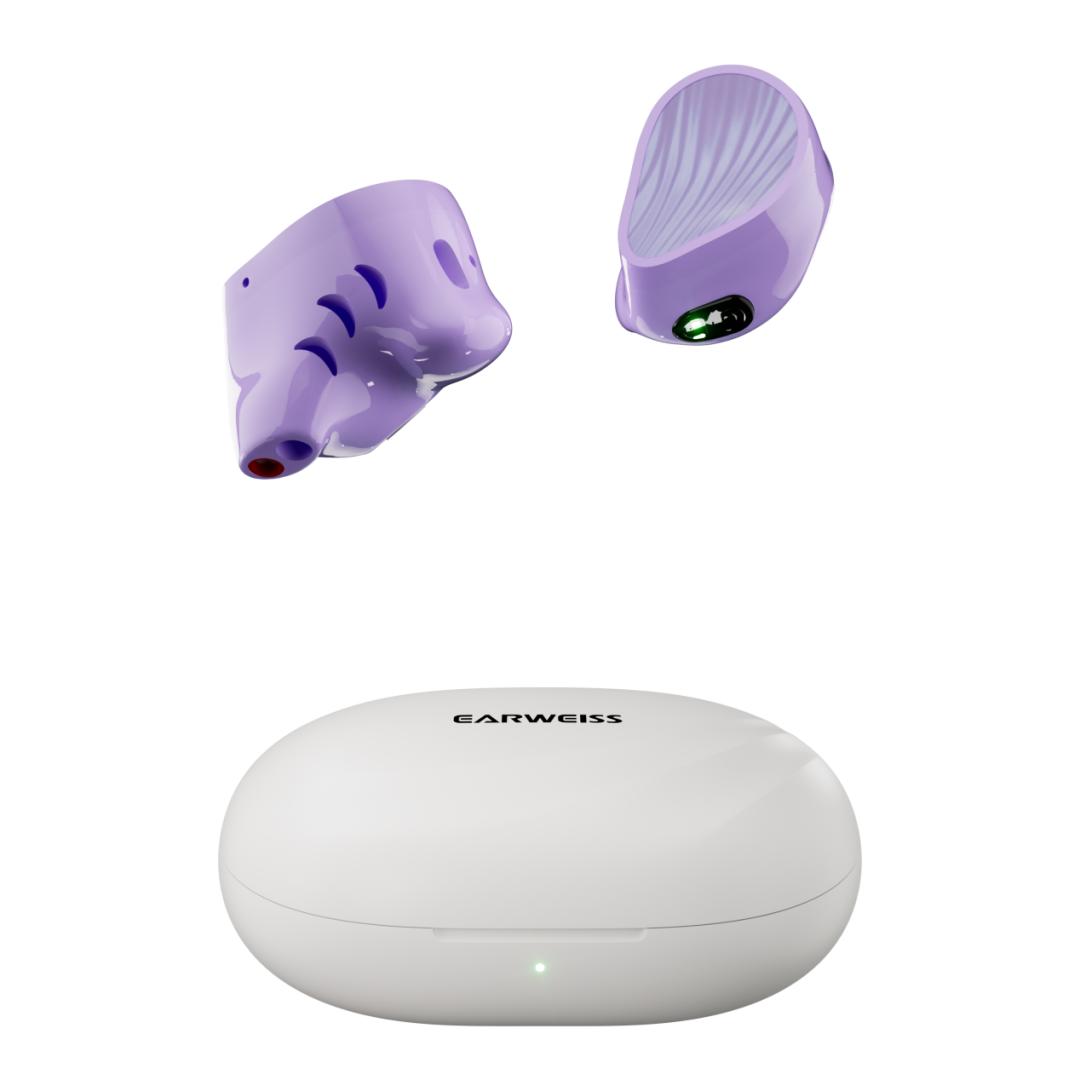
What it points to is far more than a functional upgrade of headset products. Its more essential implication lies in the potential competition for AI hardware entry points in the smart wearable industry: when AI needs to maintain continuous connection with the human body, why may the ear be a better answer than the wrist and fingers? And what advantages can AI sports headsets have to become the first category to successfully run a closed loop in this round of hardware innovation?
1. Why the Ear: AI Hardware Needs a Complete Closed Loop
Smart wearable devices have long been developed around the wrist and fingers, mainly for the sake of ease of use. Watches and rings have low wearing barriers, mature user habits, and can accommodate multiple sensors. However, when the product goal is upgraded from daily recording to real-time judgment during exercise, the limitations of these two positions become prominent.
During strenuous exercise, the wrist swings with the body, and skin pigment, sweat, wearing tightness and vibration at the same frequency generated by exercise may all interfere with the photoplethysmography signal. Although rings are in closer contact with the skin, they also face the problems of frequent hand movements and large differences in peripheral circulation among different users.
The value of the ear first comes from its physiological structure. The ear area is densely distributed with capillaries, with flat skin and little hair, allowing the sensor to fit more closely and capture stronger blood flow signals. At the same time, the movement of the ear is relatively synchronized with the movement of the head, so the sensor can obtain more stable fixing conditions than on the wrist. According to EARWEISS, the PPG signal intensity at the ear can reach about 6 times that at the wrist.
However, stronger signals alone are not enough to support the judgment that the ear is the top entry point for AI hardware. What truly distinguishes headsets from watches and rings is that they have both input and output capabilities.
Watches and rings are mainly responsible for perception tasks, and complex feedback usually still relies on the mobile phone screen; headsets can collect physiological signals and directly deliver analysis results to users through voice at the same time. It is close enough to the human body and occupies the most natural voice channel for human-computer interaction, so it can complete the entire process from collection, understanding, decision-making to feedback on a single device.
This forms the core competitive difference between headsets and other smart wearable devices. On this basis, EARWEISS has built a systematic technical solution specifically for ear monitoring through years of R&D accumulation, greatly improving the perception accuracy and data feedback precision of headsets.
Take the CUSTMONITOR 2.0 multi-dimensional ear monitoring technology equipped on Sport Open L as an example. It fuses data from green light, red light, infrared light PPG and acceleration sensors to identify and cancel out noise generated by movement. According to the verification results issued by Beijing Zhongke Guangxi Science and Technology Research Institute, its dynamic heart rate and blood oxygen monitoring accuracy reach 98.6% and 98.3% respectively.
The significance of these data is that they provide technical proof: the signals obtained by headsets already have the basis to support real-time sports decision-making. For a device that needs to adjust training rhythm or even issue risk warnings during exercise, accurate perception capability directly determines the reliability of the suggestions.
Therefore, the answer to the question of why the ear is the entry point for AI hardware is not just that the signal intensity at the tragus is higher. More importantly, the ear meets three conditions at the same time: stable perception, natural interaction and instant feedback, which gives it the opportunity to enable AI hardware to form a complete closed loop from understanding the body to influencing behavior for the first time.
2. AI Sports Headset, a Potential "Phenomenal Application"
A common dilemma faced by AI hardware in the past few years is that its capabilities seem innovative and extensive, but it lacks rigid scenarios that users must continuously use.
Many products represented by AI glasses can answer questions, take pictures or organize information, but the reason why users need to wear them every day has never been fully addressed.
Sports and health may be a scenario where AI wearable devices are easier to take the lead in landing, because it has three conditions at the same time: high-frequency use, real-time decision-making and clear feedback.
If a person who goes running only sees a heart rate report after the exercise ends to know whether they ran too fast, whether the cadence is reasonable, and whether their body is close to the risk boundary, in a sense, this data monitoring has lost its value.
Essentially, all these issues are highly time-sensitive. Once the current moment is missed, the value of the information will drop rapidly. In extreme cases, timely acquisition and reminder of relevant information can even prevent users from encountering health crises.
AI sports headsets thus gain a product logic that traditional health hardware does not have. It does not only record exercise, but also participates in the exercise process itself.
For example, AI headsets can adjust the exercise pace personalizedly according to the user's heart rate condition, and guide the user to maintain a proper exercise rhythm; when the heart rate leaves the target range, it can remind the user to adjust the speed through voice; when the physical state is close to the risk boundary, it can issue a heart rate warning before the user notices it actively.
EARWEISS summarizes this set of capabilities as "Perception — Understanding — Decision-making — Feedback". Sport Open L continuously collects heart rate, blood oxygen and exercise status through ear sensors, and then CUSTHEALTH ASSISTANT 2.0 invokes corresponding models according to different exercise scenarios to provide instant guidance in the form of voice.
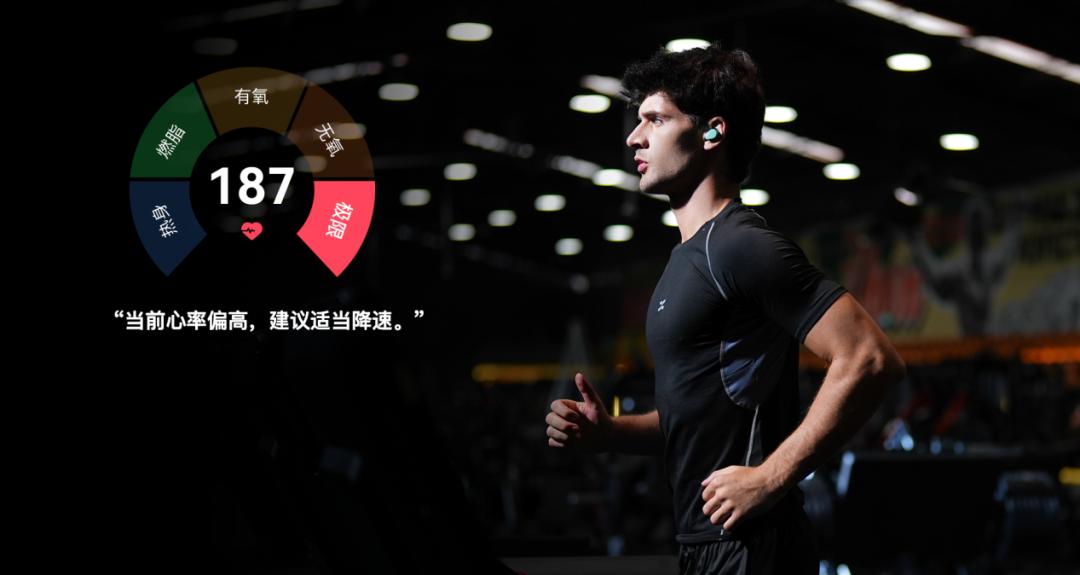
The product can divide the dynamic heart rate state into three ranges: comfortable, controlled and warning. When the indicator crosses the preset boundary, the device can directly remind the user through voice. This enables AI sports headsets to not only improve training efficiency, but also undertake the function of sports risk management, acting like an AI sports safety guardian to supervise and provide real-time feedback throughout the process.
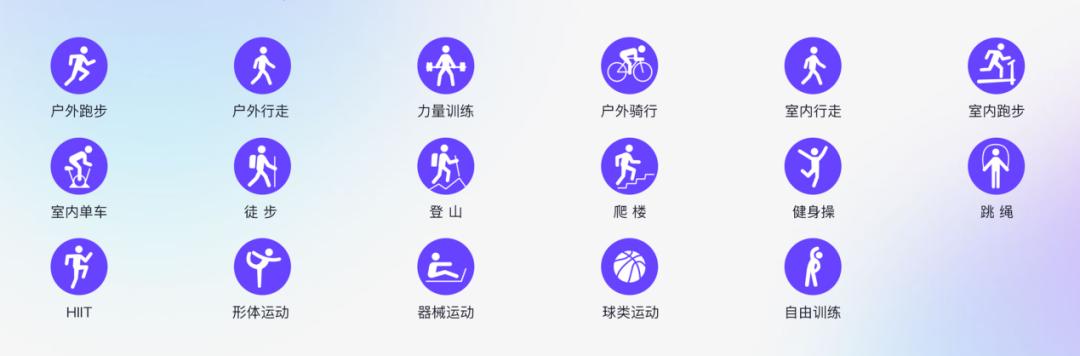
At present, Sport Open L can be maturely applied in 17 types of exercise scenarios such as running, cycling and equipment training, completing the sports health closed loop. However, for an AI hardware to become a phenomenal product, algorithm capability alone is not enough. It must solve three practical problems at the same time: whether the data is reliable, whether the feedback is useful, and whether users are willing to wear it for a long time.
The first two problems determine whether the product is valuable, and the last one determines whether AI can continuously obtain data. In this regard, EARWEISS's solution is to use personalized "truly customized" features to solve the problems.
Under the mechanism of true customization, the headset fits more closely with the user's ear, and the sensor obtains more stable signals; the more comfortable the wearing experience is, the longer the data accumulation cycle of the device will be, and the more accurate the monitoring effect will be. For an AI system that needs to continuously learn the user's physical state, physical adaptation itself is part of the data and algorithm capabilities.
At present, to get a truly customized headset, users still need to go to the store to collect ear molds, complete 3D modeling and customized design, which to a certain extent raises the usage threshold of the product.
But this also reflects EARWEISS's product philosophy. The EARWEISS team believes that with the accelerated penetration of AI applications into daily life, personalized customization will become one of the core trends in the development of AI hardware. In the next few years, the demand for personalized customization of wearable devices such as AR glasses and AI headsets will see rapid growth. With the continuous breakthrough of 3D printing and Industry 4.0 technologies, the "last mile" of personalized customization of AI hardware is expected to be opened up faster, and truly customized headsets will gradually move from the early-adoption choice of a small number of demand-focused users and tech geeks to the broader mainstream consumer market.
Thus, AI sports headsets are likely to open up a path to become a "phenomenal application": it has found a scenario that traditional hardware cannot fully meet, and AI can directly create incremental value. More importantly, users do not need to build new habits to use AI, they only need to wear the headset as they did in the past, and AI can provide real-time value during the use process.
This kind of value is perceivable. It may be a timely reminder to slow down, a cadence adjustment, or a warning issued before risks occur. Compared with general but scenario-ambiguous personal AI assistants, sports is a scenario with clear goals, timely feedback and verifiable effects, so it is easier to build real user demands.
3. The Future Competition for AI Hardware Entry Points
From smart watches and rings to glasses, the competition of technology companies for AI hardware entry points is essentially to find a connection that can accompany users for a long time and continuously obtain contextual information.
But the connection is not the only criterion. A truly valid AI entry point must also obtain credible data, understand the ongoing context, and influence and optimize user behavior in the least intrusive way.
This is where the particularity of the ear lies. It is not only a relatively stable position for physiological signal collection, but also the most natural voice interaction channel for human beings. Sensors are responsible for monitoring the body, algorithms are responsible for understanding the body, and voice sends decisions back to users.
Among global tech giants, OpenAI once had news that its first AI hardware product to be launched would be an AI headset, and Apple was also reported to have plans to add more AI functions to its AirPods series.
Among startups, Plaud recently launched an AI headset that integrates recording, transcription, summarization and task execution into audio devices, targeting the segmented demand of meeting and knowledge management; EARWEISS has chosen a route closer to users' daily life. It is not in a hurry to put a general AI assistant into the headset, but first solves the problems of whether ear physiological signals can be collected accurately, whether exercise states can be understood in real time, and whether the device can be worn stably for a long time.
Behind different routes are different understandings of AI entry points among various companies. If other companies pay more attention to the application scenarios where AI models maintain continuous conversations with users, or further extend the existing terminal ecosystem, what EARWEISS hopes to establish at present is the real-time connection between AI and the human body through the ear.
Truly customized headsets are one of the most imaginative and disruptive innovation paths for smart hardware in recent years, which requires the reshaping of the entire chain of software and hardware R&D, production and manufacturing, and user experience. To this end, the EARWEISS team has spent 5 years and invested over 100 million yuan to build a flexible production line and R&D experimental base. As of August 2026, the company has laid out nearly 180 global patents, including more than 50 invention patents. Therefore, the new experience that EARWEISS can truly bring to the industry is to try to change the relationship between wearable devices and people: headsets can also evolve from players into smart terminals that can drive real-time health decisions.
At this point, the competition dimension of AI hardware has changed. The value of entry points in the future will depend on what kind of continuous data an enterprise can obtain, how deeply it can understand the real context, and to what extent it can convert judgments into reliable actions.
This capability will not be obtained only by stronger models. What really determines the ownership of the entry point is who can establish a real-time connection with real individuals as early as possible, and obtain the qualification to understand people and then influence people. This may be the future that should be envisioned in the final scenario of AI hardware.