Two star robotics companies have arrived at the crossroads of bankruptcy.
The starkly contrasting fates of enterprises in the embodied intelligence track keep unfolding.
On one hand, financing amounts have repeatedly hit new highs. According to data from IT Juzi, as of August 20, 466 financing events have occurred in China's domestic embodied intelligence sector since 2026, with the total disclosed financing amount reaching 1245.1 billion yuan, and the financing volume in the first eight months is about 2.7 times that of the full year of 2025.
On the other hand, a number of robotics enterprises that once boasted star teams, well-known investors and large orders have reached the juncture of bankruptcy liquidation and debt repayment crisis.
According to the National Enterprise Bankruptcy and Restructuring Case Information Network, in early September, the swimming pool robot enterprise Zhi Cheng Power (Suzhou) Technology Co., Ltd. added a new bankruptcy review case, where a creditor applied to the court for its bankruptcy restructuring, and the court has filed the case for review, with the case number being (2026) Su 0591 Po Shen No. 136.
Zhi Cheng Power has almost collected all the typical labels of star hardware startups: its founder once served as CEO of an enterprise in Xiaomi's ecological chain, its core team comes from Microsoft, Xiaomi, DJI and other companies, and its investors include the Clear Water Bay Fund, the Zhixing No.1 Fund and Ecovacs, which were co-founded by Xiang Li. At the beginning of 2025, the company announced that its cumulative sales had approached 100 million yuan.
Meanwhile, DeepBlue Robotics (Shanghai) Co., Ltd. has officially entered the bankruptcy liquidation procedure.
On September 7, the bankruptcy administrator issued the fifth public notice of employee's claims. Including the confirmed part from the previous four batches, the total number of involved employees exceeded 100, and the total scale of employee's claims exceeded 23 million yuan. The bankruptcy liquidation case of this company was ruled to be accepted by the People's Court of Pudong New Area, Shanghai on May 7.
DeepBlue Robotics also has a strong background. Backed by DeepBlue Technology, an AI unicorn valued at tens of billions of yuan, it once launched multiple product lines covering cleaning, disinfection, delivery and other scenarios, announced orders for tens of thousands of robots, and built a manufacturing base with an annual production capacity of more than 20,000 units, once showing a momentum of large-scale expansion.
One company is still waiting for the court's decision on whether to accept the restructuring application, while the other has entered bankruptcy liquidation.
The two companies are not in exactly the same situation, but they together reveal the other side of the robotics startup boom: technology, financing and orders can make enterprises rise to fame rapidly, but what really determines how far an enterprise can go is product delivery and profitability.
01. Invested by funds related to Xiang Li, Ecovacs and other institutions, cumulative sales nearly reached 100 million yuan
Zhi Cheng Power was founded in September 2021, with its headquarters located in Suzhou. Members of its core team once worked in Microsoft, Xiaomi, DJI and other enterprises, with experience covering product R&D, supply chain management, overseas sales and other links.
Founder Hanlai Pu holds a Doctor of Engineering degree in Microelectronics and Solid-State Electronics from Southeast University. He used to be the CEO of Mxiang Network, an enterprise in Xiaomi's ecological chain, and also worked in well-known domestic and foreign scientific research institutions and enterprises such as the National Special Integrated Circuit System Engineering Technology Research Center, Microsoft Asian Engineering Institute, and Haier, with nearly 20 years of experience in scientific research, product and team management in the field of mobile application systems.
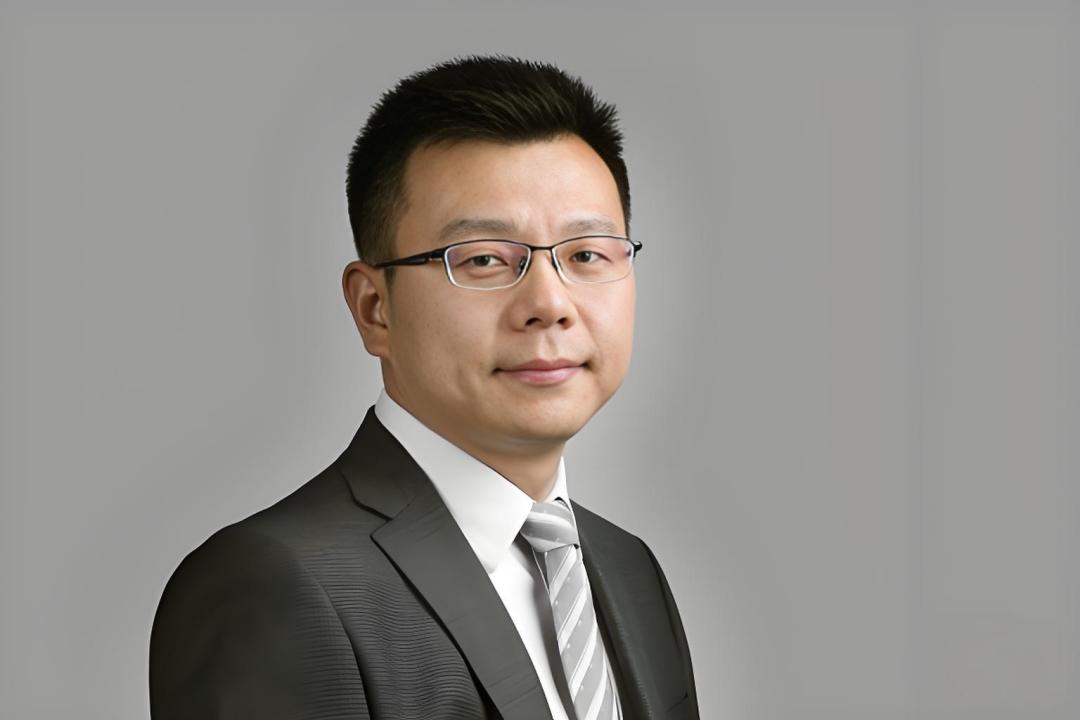
Hanlai Pu, founder of Zhi Cheng Power
With such a team background, Zhi Cheng Power quickly attracted capital attention after its establishment.
In 2021, it received angel round investment from institutions including Sequoia China's Xifeng Fund, and completed the Pre-A round financing with participation from Tsing Capital in 2022. In March 2024, it announced the completion of Series A financing, which was jointly led by Clear Water Bay Fund and Zhixing No.1 Fund founded by Xiang Li, Gao Bingqiang and other figures, with participation from Haofang Venture Capital and the old shareholder Xifeng Changqing. In January 2025, the company announced that it had obtained a strategic investment of tens of millions of yuan from Ecovacs.
While capital kept pouring in, Zhi Cheng Power also rapidly expanded its product lines. In 2022, the company launched the Tank series of swimming pool cleaning robots, and later launched the Valor series in 2024, extending the cleaning scope from the pool bottom to the pool wall and the water line.
At the beginning of 2025, Zhi Cheng Power stated that its product prices ranged from 300 to 1500 US dollars, its cumulative sales were close to 100 million yuan, and it had set up local maintenance service centers in the United States and Europe.
However, sales close to 100 million yuan does not mean that the company has established stable profitability and cash flow.
After entering 2026, a series of judicial and industrial and commercial information gradually revealed the other side of this star company.
02. Debt crisis, team changes and bankruptcy applications broke out intensively
The first abnormal signs appeared in several enforcement cases with small amounts.
Since May 2026, Zhi Cheng Power has been listed as a person subject to enforcement by the People's Court of Suzhou Industrial Park for many times, with the subject matter of involved enforcement cases varying greatly, ranging from hundreds of yuan, thousands of yuan to more than 30,000 yuan.
Multiple enforcement cases were finally judged by the court as terminated enforcement cases, which means that the company currently has no executable property available, has no ability to repay debts, and the enforcement procedure is terminated for this time.
At the same time, Zhi Cheng Power also used two swimming pool robot technology patents for pledge financing.
According to the intellectual property pledge registration information of the China National Intellectual Property Administration, Zhi Cheng Power pledged two core technology patents, "Pool wall obstacle avoidance moving method, device and electronic equipment of swimming pool cleaning robot" and "A swimming pool cleaning robot, control method, electronic equipment and storage medium", to the Suzhou Branch of Nanjing Bank Co., Ltd. and the Suzhou Industrial Park Sub-branch of China Construction Bank Co., Ltd. respectively.
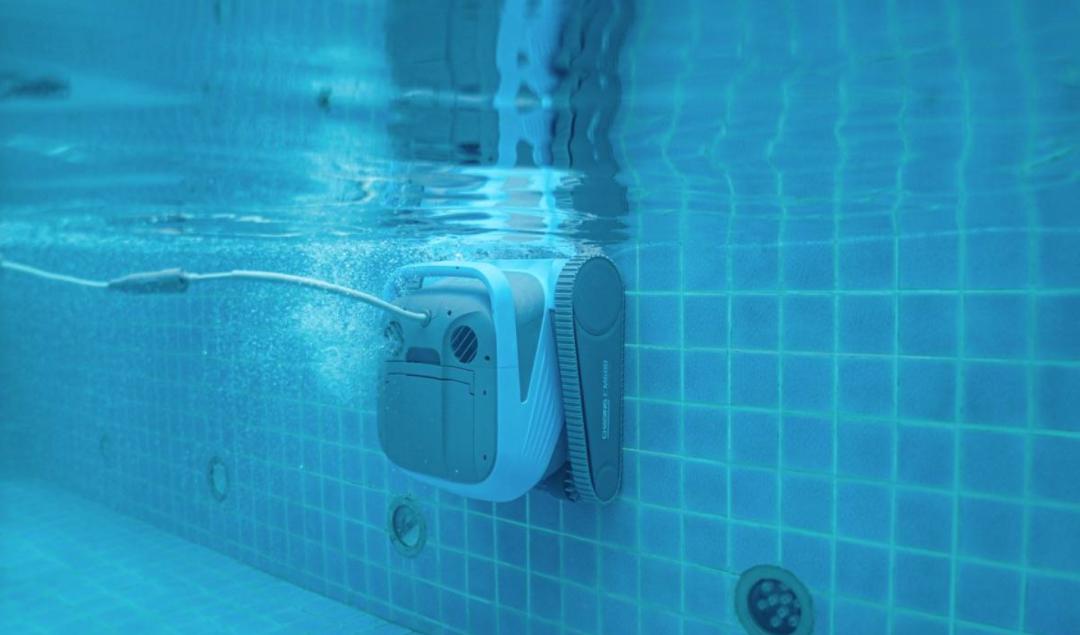
According to Qcc, on August 20, Zhi Cheng Power underwent industrial and commercial changes, where the shareholdings of early shareholders including Hanlai Pu, Beijing Yunshan Zhicheng, K2 Partners V Limited, Crystal Stream, Dongguan Clear Water Bay Phase II Venture Capital decreased; five key executives including Jia Lin, Jia Shuiliang and Bao Qiang withdrew from their positions.
On September 7, Zhi Cheng Power added a new bankruptcy review case, where it was applied for bankruptcy restructuring by creditors and the court has filed the case for review.
But it should be noted that the current industrial and commercial status of Zhi Cheng Power is still "existing and in operation". Only after the court reviews and decides to formally rule to accept the case, will the enterprise truly enter the bankruptcy procedure.
It is thought-provoking that according to the official website of the China National Intellectual Property Administration, on September 11, a utility model patent related to swimming pool cleaning robot of Zhi Cheng Power was granted authorization.
However, there is usually a time lag between patent application and authorization, which can hardly prove that its technology R&D is still in progress or its operating conditions have improved.
03. Incubated by a tens-of-billions valued AI unicorn, once signed orders for tens of thousands of units
Different from Zhi Cheng Power which is still in the bankruptcy review stage, DeepBlue Robotics (Shanghai) Co., Ltd. has officially entered bankruptcy liquidation.
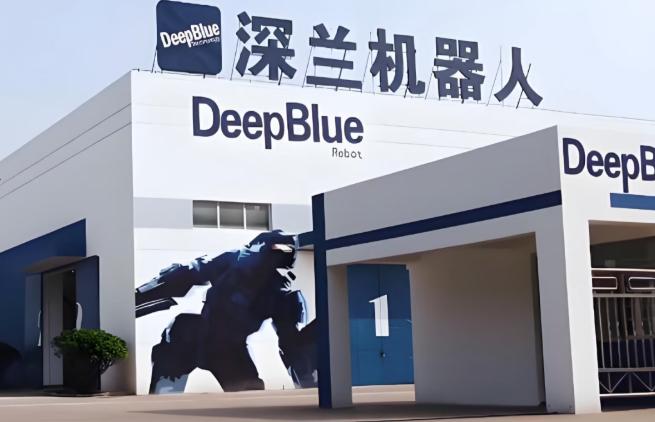
Founded in May 2018, DeepBlue Robotics is an independent robotics subsidiary under DeepBlue Technology, which holds 96% of its shares.
As a former AI unicorn valued at tens of billions of yuan, DeepBlue Technology has successively obtained investments from institutions including Yunfeng Fund, China International Capital Corporation, Greenland Group, China Merger Capital, Pudong Venture Capital Group and other institutions. Relying on the parent company's technical accumulation in the fields of computer vision, autonomous navigation, path planning and human-computer interaction, DeepBlue Robotics quickly launched multiple product lines.
Its products include the "Little Blue Whale" indoor cleaning robot for large-area hard floors, the "Little Rhino" outdoor cleaning robot for parks, campuses and scenic spots, as well as the "Lan Elf" disinfection robot, the "Little Penguin" delivery robot, etc., covering multiple scenarios such as cleaning, disinfection and delivery.
Compared with robotics startups that focus on a single product, DeepBlue Robotics adopted a multi-category and multi-scenario layout from the very beginning, and its commercialization progress once attracted widespread attention.
DeepBlue Robotics once disclosed two high-profile large orders: one is that the "Lan Elf" obtained an order of 25,000 units from a Fortune Global 500 enterprise; the other is that LG planned to purchase tens of thousands of disinfection robots within three years.
To fulfill the orders, DeepBlue Robotics once expanded production capacity on a large scale. The Shangqiu base put into operation in 2023 is its second factory for robotics business. The temporary plant covers an area of nearly 4000 square meters, with three semi-automatic production lines planned in the initial stage, and the annual production capacity was expected to exceed 20,000 units at that time; the subsequent planned 500-mu industrial park plans to build more than 10 production lines, with a target annual output value of about 1 billion yuan.
However, in 2026, some media quoted people familiar with the matter as saying that the relevant orders were not actually executed.
04. Owed salaries to over 100 employees, with the total amount reaching 23 million yuan
The real operating crisis of DeepBlue Robotics was first exposed through unpaid employee salaries.
Since 2023, DeepBlue Robotics (Changzhou) Co., Ltd. has experienced large-scale wage arrears, with a total of 718,300 yuan in wages owed to 30 employees from May to October 2023. The local human resources and social security department issued an administrative decision on handling to it, but the company refused to make corrections after being ordered to do so and refused to perform the administrative handling decision.
In 2024, many employees told the media that they were forced to sign an agreement of "repaying the owed salaries in installments within one year" before leaving their jobs, but DeepBlue Robotics failed to perform the repayment obligation, the wage arrears contradiction was not fundamentally resolved, and the risks continued to ferment.
In 2025, employees filed collective lawsuits, and some of them signed a second repayment agreement under the court's mediation, agreeing to make up the owed salaries in the first half of 2026, but DeepBlue Robotics broke its promise again.
In April of the same year, the parent company DeepBlue Technology obtained several hundred million yuan of Pre-IPO round investment from Pudong Venture Capital Group. Some media reported that this sum of money was once regarded by many employees as the hope to solve the wage arrears problem, but they were disappointed again. In the second half of 2025, employees got no results after applying for compulsory enforcement, and then applied for the company's bankruptcy.
In January 2026, DeepBlue Robotics (Changzhou) added a new bankruptcy review case; in July and August of the same year, the company successively added new judicial records related to bankruptcy liquidation.
On May 7, the People's Court of Pudong New Area, Shanghai issued the civil ruling No. (2026) Hu 0115 Po No. 111, formally accepting the bankruptcy liquidation case of DeepBlue Robotics (Shanghai) Co., Ltd., and appointed Deloitte Huayong Certified Public Accountants (Special General Partnership) as the bankruptcy administrator on May 12; in August, the Changzhou Tianning Court formally accepted the bankruptcy liquidation case of DeepBlue Robotics (Changzhou) Co., Ltd.
From the end of August 2026 to the early September, Deloitte Huayong Certified Public Accountants intensively released five batches of public notices. The first three batches confirmed 97 employee claims with a total amount of over 21.32 million yuan, of which the owed salaries and economic compensation were nearly 19.51 million yuan; the fourth batch added 6 new employees with claims of more than 2.16 million yuan, and 5 objections were received and all reviewed during this period; the fifth batch added 1 new employee, whose individual claim exceeded 410,000 yuan, including more than 340,000 yuan in owed salaries and compensation.
However, it should be distinguished that the one that entered bankruptcy liquidation this time is DeepBlue Robotics, not the parent company of DeepBlue Technology Group.
In July 2026, DeepBlue Technology released a statement saying that the group has not applied for any form of bankruptcy, and its headquarters and main business lines are still in operation.
05. Conclusion: Relying solely on financing cannot sustain a business model that has not yet achieved a closed loop for a long time
Since the beginning of this year, a number of robotics companies at home and abroad have withdrawn from the market: in January, the People's Court of Pudong New Area, Shanghai ruled to accept the bankruptcy liquidation of Longhui Medical, an orthopedic surgical robot enterprise; in February, the American humanoid robot startup Cartwheel Robotics announced the cessation of operations, and later the company was applied for involuntary Chapter 7 bankruptcy by its creditors; in July, shareholders of the American surgical robot enterprise Vicarious Surgical approved the dissolution and liquidation of the company......
These enterprises are distributed in different tracks such as consumer, medical, humanoid and service robots, with different products and endings, but they show some similar characteristics: they once obtained support from well-known capitals, had outstanding team or technical backgrounds, and also released highly concerned products, orders and production capacity plans.
At the same time, R&D and hardware investment has remained high for a long time, large-scale delivery and actual payment collection failed to keep up in time, and enterprises are highly dependent on subsequent financing.
Financing in the embodied intelligence track is still heating up, but there is still a long distance between demos, orders and real revenue and profits.
Financing can extend the time for enterprises to explore, but cannot long support a business closed loop that has not been well validated. Mature commercial products or commercial projects with self-sustaining profitability are the key for enterprises to survive the industry reshuffle.
This article is from the WeChat official account "Robot Outlook", author: Lisi Xu, editor