The matchmaker is re-listed.
Judging by the standards of contemporary matchmakers, the male leads in many classic TV dramas are simply unqualified.
Take the emperor in *Empresses in the Palace* for example. He holds a Beijing hukou, owns multiple properties within the Second Ring Road, and enjoys special subsidies as a member of the Plain Yellow Banner, putting him at the top tier of eligibility. But as you scroll down his profile, you find he is already married with children, has a violent tendency, and keeps dozens of women living in his residence permanently — the system would immediately reject him from the candidate pool.
Song Siming in *Dwelling Narrowness* is a high-quality male in the public sector, but unfortunately his conduct violates the Party's work style and clean governance rules; Hong Shixian in *Home Temptation* seems to have decent fundamentals at first glance, yet his emotional account is constantly changing hands; Gao Qiqiang in *The Knockout* is a typical growth stock, but he carries high compliance risks and belongs to the type of criminal-linked male that could be delisted at any time, far less desirable than Brother Sun.
If matchmakers had joined the production teams earlier, Chinese domestic dramas would have at least 2,000 fewer episodes.
But real-life blind dates have no spoilers: there are no villain-themed background tracks, and no risk alerts pop up on people's foreheads. Everyone hands out what looks like a carefully packaged IPO prospectus, with 30 pages of elaborately written competitive advantages, while the risk disclaimers are all generated by AI tools.
For men, three sets of properties are on the asset side, a high-paying job is the cash flow, and well-educated intellectual parents represent corporate governance. If these three conditions are met, as long as their appearance does not have obvious flaws, they are basically top-tier candidates in the blind date market.

Image source: Internet
Women have a different set of evaluation system. Age determines the depreciation rate of assets, appearance affects market sentiment, education and career represent future cash flow, and family background provides a safety net in extreme situations.
In the past, love was "The moonlight tonight is so beautiful"; now, love is "Watching the moonlight on a date means suffering hardships with a boy" — when love is broken down into age, income, property and family background, and packaged for valuation for people longing for affection, it becomes a business.
At a time of severe gender opposition, the new generation of matchmakers, with the help of short videos, have ushered in a feast of traffic and commercial gains.
The Four Kings
In the short video matchmaker business, there are currently four leading figures, representing four different marriage valuation systems respectively:
The first one is the "Value Investment School", represented by Dachao (Douyin account @Dachao Matchmaker).
Dachao draws on the "moat" theory of Warren Buffett and Charlie Munger, believing that the real moat of a man with investment value is that his original family has sufficient assets, and he himself has no bad habits such as gambling, drinking, whoring or taking drugs.
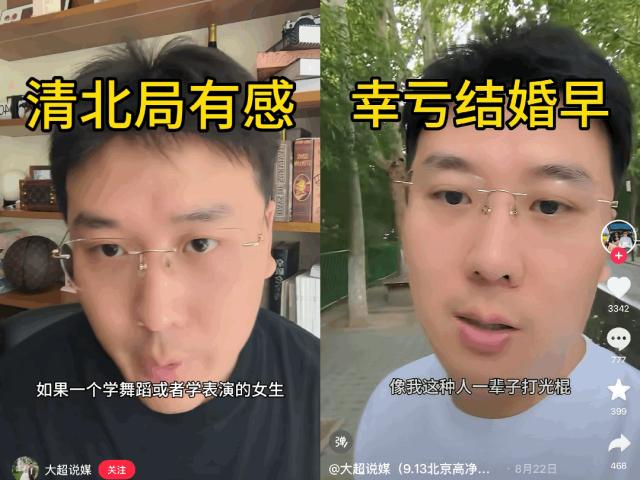
Image source: @Dachao Matchmaker
Even if this kind of person cannot provide the empty emotional value like "the most affectionate man south of the Yangtze River", their advantage lies in solid fundamental research and extremely low risk of problems. The best target is the only child in developed regions who owns a house and a car and has a stable job.
In 2021, Dachao held an "Annual General Meeting of Shareholders" at the Rosewood Beijing — a 50 million-yuan asset exclusive event. Male participants must directly verify their house property, vehicles, deposits and stocks, and only those with total assets reaching 50 million yuan are eligible to attend the meeting. The ticket for men is 6,000 yuan per person, while women can attend for free after passing an interview [1].
If this guy one day feels like writing a book called *The Poor Matchmaker's Bible*, the first sentence of the preface would be: "We try to find men with sustainable competitive advantages at a low price, or even a reasonable price."
The careful calculation of value investment has allowed Dachao to roll his business into a snowball. According to his own account, his team has accumulated about 140,000 members in total. Through blind date events, positioning consulting and one-on-one customized services with a maximum price of 300,000 yuan, the 6-person team has achieved an annual revenue of tens of millions of yuan [2].
Some are good at finding value stocks, while others are good at screening junk stocks — this person is the second leading figure in the blind date circle, Ao Ye (Douyin account @Yue Lao Ao Ye).

Image source: Douyin blogger @Yue Lao Ao Ye
Ao Ye is a veritable member of the "Risk Shorting School". His working principle is as simple as that of Wall Street short-selling institutions: the more someone brags about themselves, the more worthy of investigation they are.
If you claim you can sell a thousand cups of coffee a day, a short-selling institution will really send someone to squat at the door with a small stool and count the receipts. That's how Muddy Waters and Snowlake nailed Luckin Coffee back then.
Ao Ye follows exactly this logic. In his eyes, men and women who show up to introduce themselves are like unaudited prospectuses.
For those who claim to have assets of 9 digits (A9), check their house property certificates first; for those who call themselves class beauties, ask them to send photos without beauty filters privately. Other matchmakers mainly look for common ground between two people, but Ao Ye can always find suspicious points.
People often go live on his channel for mic linking, claiming that they earn a million yuan a year at a young age. Ao Ye usually does not refute them, just says: "Show your personal income tax proof, and if you have it, I will transfer 1,000 yuan to you."
The other party will either suddenly say their income is inconvenient to show, or start complaining that the mobile signal is bad. The 1,000 yuan Ao Ye prepares is as stable as real estate, and almost never gets transferred out.
Through the combination of live streaming and short clip editing, Ao Ye gained more than 500,000 followers in half a year [3]; in addition to fully booked domestic events, he now even holds offline blind date events in Singapore [4].
If he directed a blind date version of *The Big Short*, a set of formulas would definitely be displayed on the screen at the beginning: Real Value = Self-reported Value - Packaging Premium - Hidden Risk.
Compared with Dachao and Ao Ye, Tianshu (Douyin account @Tianshu Positioning) belongs to the "Quantitative Research School".
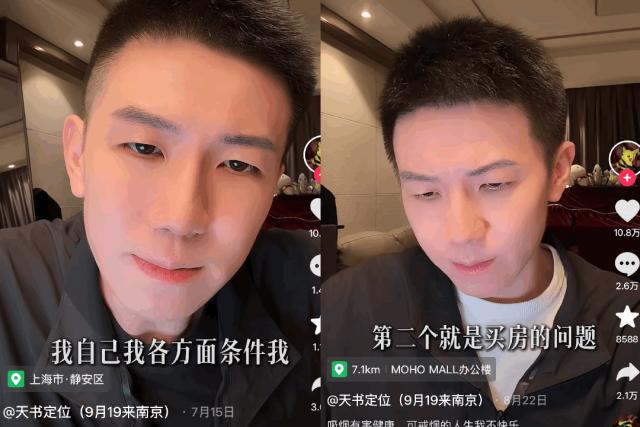
Image source: Douyin blogger @Tianshu Positioning
Earlier, High-Flyer focused on quantitative private equity, splitting stocks into data and letting models find patterns; what Tianshu does is the DeepSeek in the blind date industry — education, income, age and family background are all factors, conditions determine entry into the pool, and scores determine ranking.
If he switched to another track, he could definitely go to High-Flyer to adjust parameters for Liang Wenfeng for several days with this skill.
Others sit in a coffee shop testing each other for two hours to get a rough idea. With Tianshu, once the information is put into the system, a report can be generated in half a minute: Decent fundamentals, average growth potential, 68% match with you, it is recommended to wait and not open a position for now.
As of September 2026, Tianshu has nearly 600,000 followers on Douyin. According to his own disclosure, one hit clip gained nearly 5 million views in one day [5].
The last one to appear is the top figure in the emotional business circle — Ququ Da Nüren, representing the "Leverage Arbitrage School".
Dachao looks at how much assets a man has, while Ququ looks at whether those assets can flow into her own hands.

Image source: Xiaohongshu @Ququ Self-cultivation
Everyone is familiar with the old gameplay of Evergrande: with only 1 yuan in pocket, they dared to leverage a 10-yuan business. Applied to the marriage market, marriage is a lever that amplifies personal fate. In this logic, it does not matter if your own conditions are ordinary. As long as you find a "benefactor man" who is willing to give money and resources, your life valuation may double instantly.
Therefore, a man with a net worth of 100 million yuan who is not willing to spend a penny on you, and a man with only 10 million yuan who is willing to spend money on you and support you at critical moments, the former is just book wealth, while the latter is actual money received.
Of course, leverage can lift you to a higher social class, but it can also crush you to death. Ququ is responsible for teaching you how to find the fulcrum, and whether you can fly to a higher branch or blow up your position on the spot depends on your own ability.
An industry article once estimated that Ququ's account matrix at its peak had about 5 million followers and an annual revenue of 142 million yuan, with monetization methods covering courses, mic linking consulting, product sales and other fields [6].
These four people seem to have very different methods, but in essence, they are trying their best to translate the vague feelings in love and marriage into comparable conditions, risks and returns.
The Internet is iterating rapidly now, and even coding has developed Vibe Coding. If this trend continues, the future blind date market may well evolve directly into "Vibe Wedding".
But for matchmaking agencies, helping people find true love is only part of their business scope, and making money is their primary goal.
Making Money Is the Right Path
In fact, the first batch of matchmaking agencies in China had nothing to do with making money.
In the early 1980s, local Communist Youth League committees, women's federations and streets began to introduce partners for older unmarried young people. At that time, matchmaking services had obvious public welfare attributes. It was not until the late 1980s that commercial matchmaking agencies for profit gradually emerged [7].
The early gameplay was very simple. Customers paid a registration fee, filled in their age, job and family situation, and the matchmaker would pick out a few profiles from the data cabinet and arrange a meeting. In a case in 2003, the introduction fee charged by a matchmaking agency was 260 yuan [8].
At that time, what was sold was local information gap, and matchmakers mainly earned introduction fees.
Later, the Internet moved the data cabinets of matchmaking agencies to servers. A traditional matchmaker could only know hundreds of people, but dating websites could display millions of profiles at the same time.
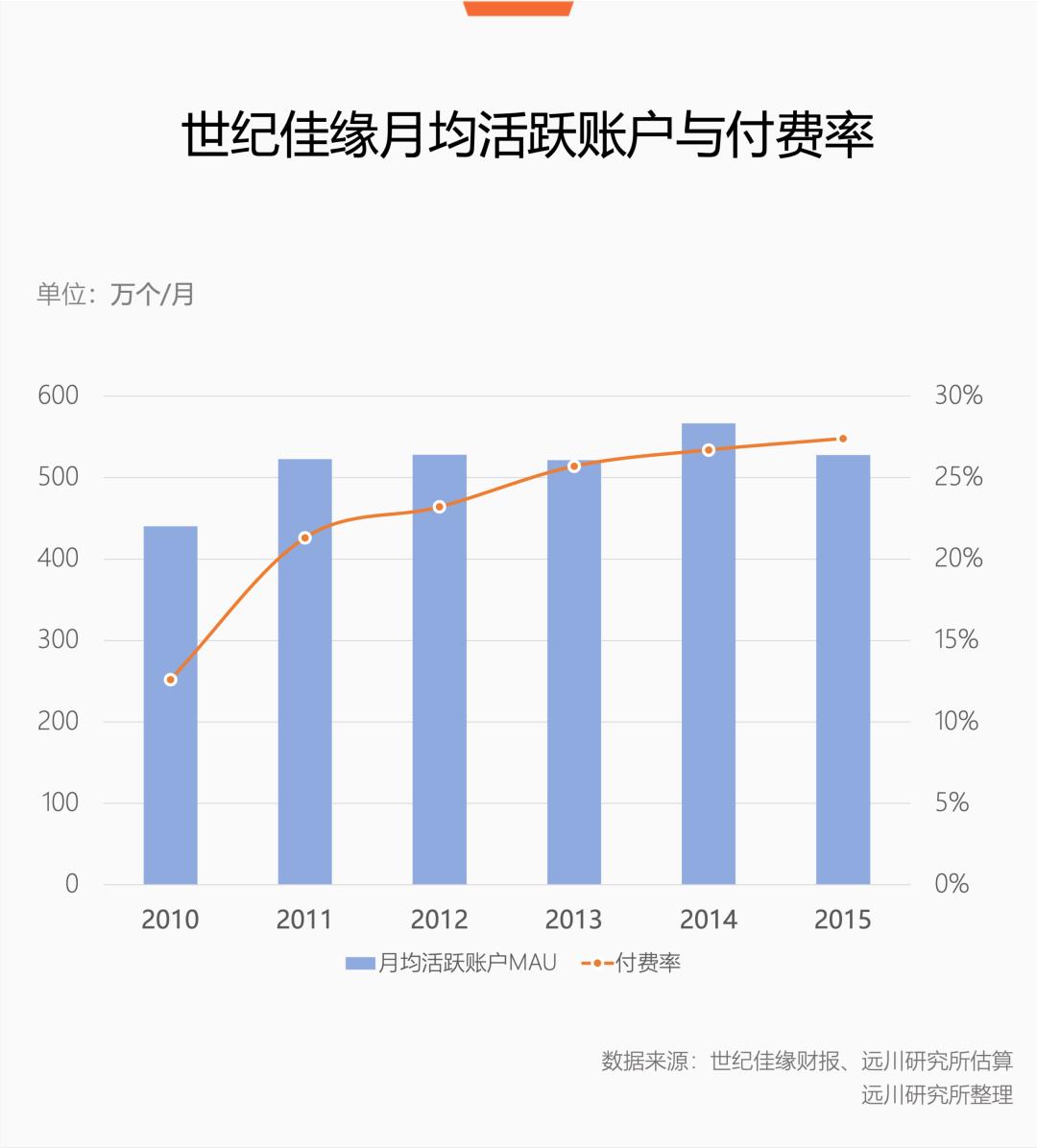
Registration and browsing are usually free, and the real payment barrier is set at the communication link. If users want to view information, reply to messages or get more exposure, they need to buy memberships and value-added services. The average monthly revenue contributed by each online paid user of Jiayuan in 2015 was 23.6 yuan [9].
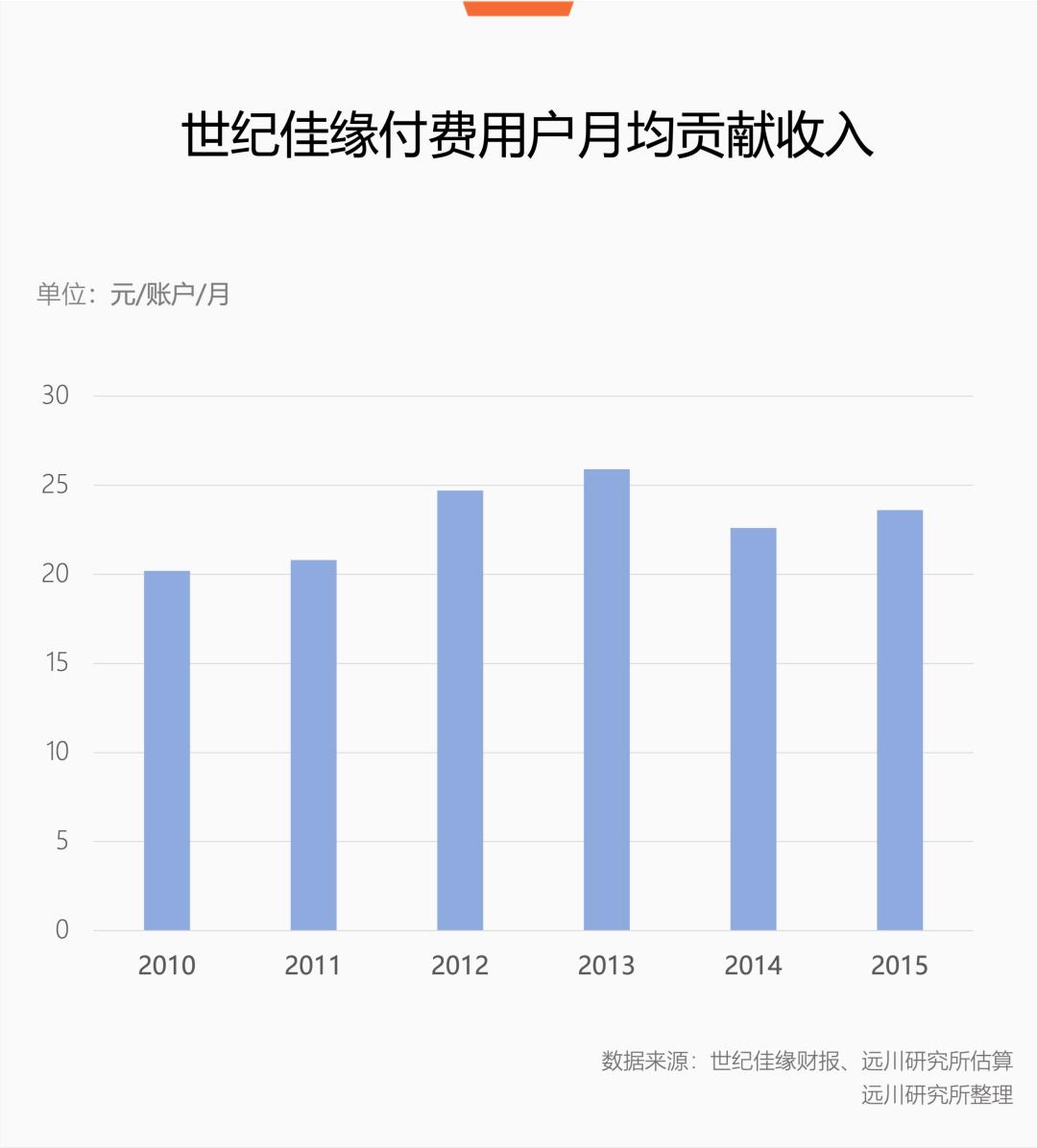
This model has a large scale, but a single user cannot contribute much revenue. The platform soon found a shortcut to increase income: convert online members who pay dozens of yuan per month into offline customers who pay tens of thousands of yuan.
The age, income and mate selection requirements left by users are not only dating information, but also sales leads. One-on-one matchmaker services, private customization and VIP packages soon became products with higher unit prices.
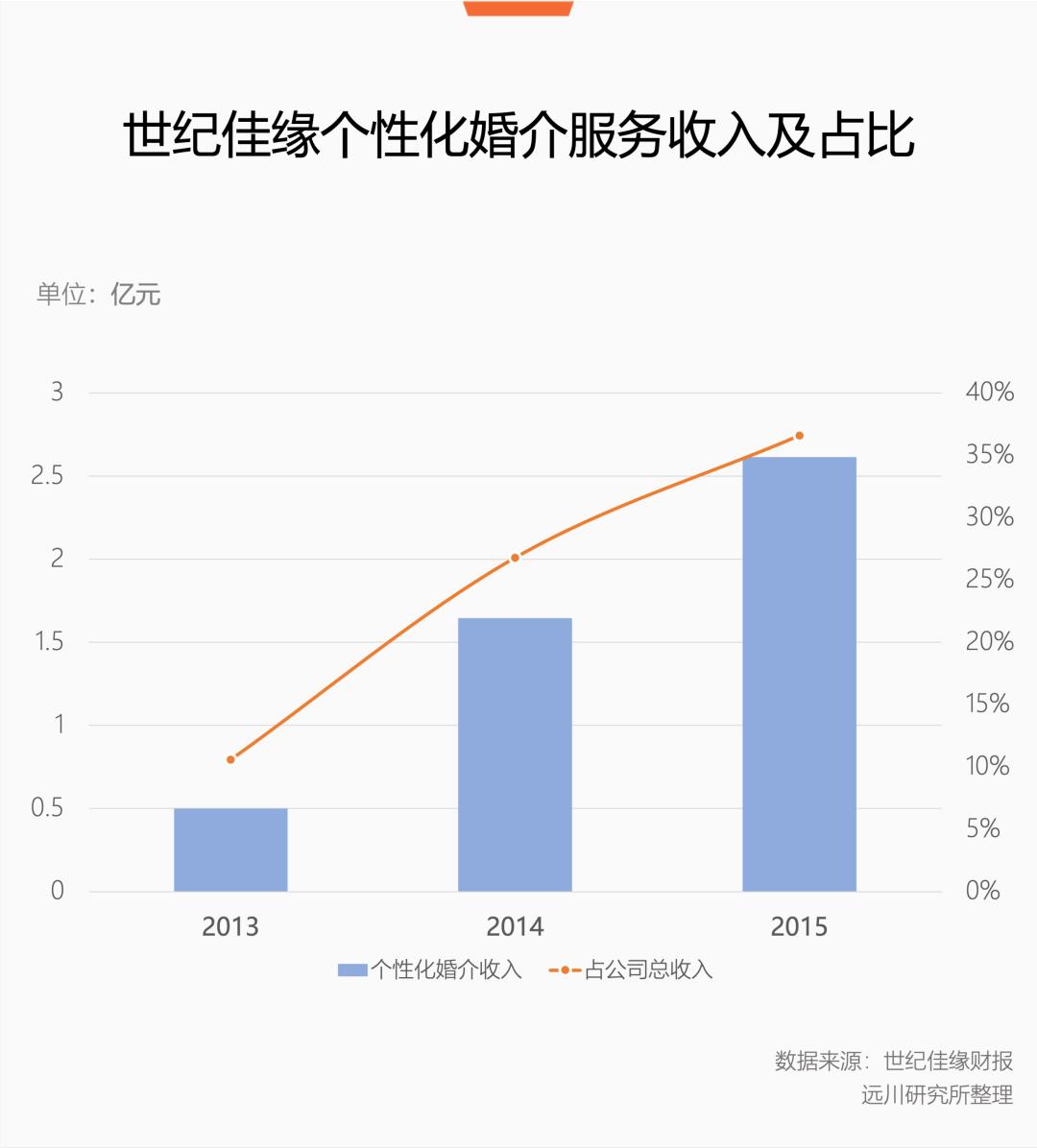
The personalized matchmaking revenue of Jiayuan was 52.5 million yuan in 2013, and rose to 260 million yuan in 2015. Its proportion in total revenue increased from 10.6% to 36.6%, and such services usually collect payment in advance when the contract is signed [9].
In 2015, a consumer bought a 48,800-yuan premium matchmaking service from Zhenai.com, but the two candidates recommended by the matchmaker successively were both considered by her to be obviously unqualified. On average, 25,000 yuan was spent to unlock one candidate, but one did not follow up, and the other's Chinese zodiac sign did not meet the consumer's requirements.
Later, a reporter's investigation found that the nearly 50,000-yuan service was still a mid-range package, and the highest-level package required a service fee of nearly 110,000 yuan [10]. It can be seen that the high price of the premium service is mainly reflected in the price itself.
This incident exposed another problem with platform matchmaking: the screening process is hidden behind the system and matchmakers, and it is difficult for customers to tell whether it is careful selection or just fulfilling the