Tencent and China Literature took stakes in two AIGC sci-fi content labels in the same period, one of which is affiliated to Sichuan Online Media.
In early September, Tencent invested in Chengdu Wukong Cultural Technology Co., Ltd. through its affiliated entity Guangxi Tencent Venture Capital Co., Ltd. Shortly afterwards, the company completed the industrial and commercial change: Guangxi Tencent Venture Capital Co., Ltd. was added as a new shareholder, and the registered capital increased from 10 million RMB to 12.5 million RMB. Calculated based on the capital increase amount, the Tencent-affiliated entity has obtained 20% equity of Wukong Culture this time.
Different from the well-known companies invested by Tencent in the past, Wukong Culture is not a game company, but a state-owned holding cultural and creative enterprise that uses AIGC (Generative Artificial Intelligence) to produce sci-fi films and TV works through the whole process, and positions itself as "the top label of Chinese sci-fi".
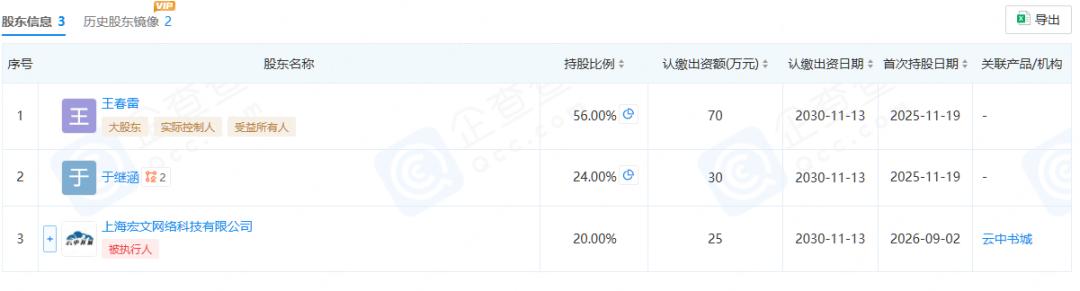
Apart from Wukong, there was another highly similar transaction in the same period: On September 2, 2026, Harbin Qianwei Monkey Culture Co., Ltd. completed the industrial and commercial change, adding a subsidiary under China Literature Group as a new shareholder with a shareholding ratio of about 20%, and Yang Zhan, General Manager of Content Operation and Head of Manhua Drama Business of China Literature Group, took the position of director. Tencent and China Literature placed bets on two AI manhua drama companies in the same month, with almost the same shareholding ratio and director arrangement.
Three Key Details of the Industrial and Commercial Change
First, the equity structure.
After the change, Wukong Culture is jointly held by three corporate legal person shareholders:
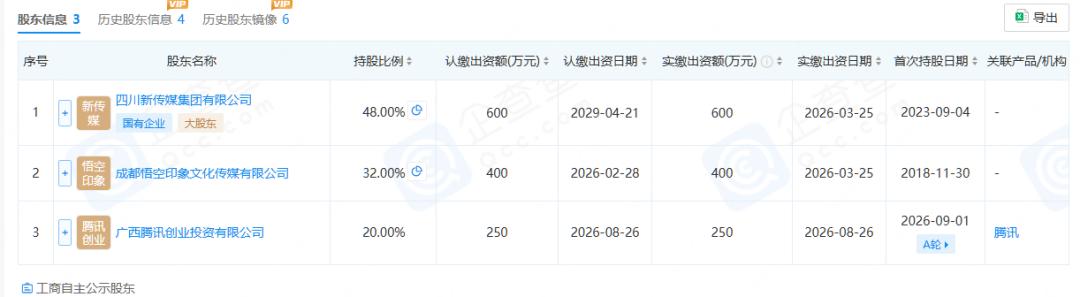
Among them, the largest shareholder Sichuan New Media Group Co., Ltd. is a provincial state-owned cultural media enterprise in Sichuan Province (main leading position at the provincial department level), with a registered capital of 500 million RMB approved by the Provincial Party Committee, 16 enterprises under its umbrella, and holding the listed company Chuanwang Media (stock code 300987). It is also the third mainstream media group listed on A-share market in China after People's Daily Online and Xinhuanet.
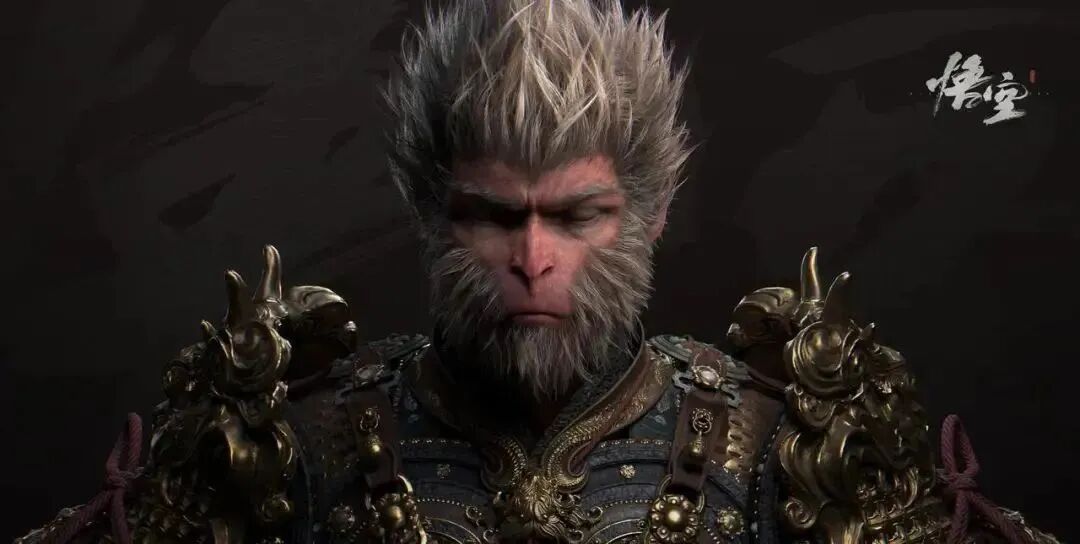
The new shareholder Guangxi Tencent Venture Capital Co., Ltd. was founded in January 2020, with a registered capital of 30 million RMB, which is the investment entity under Tencent. Previously, when Tencent increased its stake in Game Science, the developer of *Black Myth: Wukong*, it also completed the transaction through a similar affiliated entity. This is not the first time Tencent has invested in a project named "Wukong", except that this Wukong is mainly responsible for content production rather than game R&D.
Second, the synchronously changed business scope.
On the same day as the equity change, Wukong Culture added the licensed item of "the second type of value-added telecommunication business" to its business scope. This qualification usually corresponds to businesses such as online data processing and information services. This move is regarded by the industry as a compliance preparation in advance for content distribution and platform-based operation.
Third, the personnel arrangement at the board of directors level.
According to reports from some industry media, in the same period of this change, Wu Shuang, Head of Animation Operation of Tencent Video and Head of Huolong Manhua Drama, took the position of director of Wukong Culture, replacing the former R&D director Yi Jia's director seat. But as of press time, this information has not been confirmed by Tencent or other related entities. If this information is true, it means that this is most likely not a pure financial investment.
So why did Tencent make such an investment?
Why Tencent Made This Investment
To answer this question, we need to start from Wukong Media.
As mentioned above, the largest shareholder of Wukong Culture is Sichuan New Media Group Co., Ltd. In other words, it is a company with a "state-owned" background in the traditional sense.
But its operation mode is totally different from the traditional one: According to the official website of the company, Wukong Culture is the first label in China that applies the whole process of generative artificial intelligence to sci-fi film and television production, builds a full-link AIGC production system from script development, storyboard design to visual generation, realizes the creation mode of "no actors, no cameramen, no shooting sites", and aims to break the high cost and long cycle barriers of traditional sci-fi films and TV works.
In the past two years, the company has indeed launched a series of sci-fi AIGC works.
On July 9, 2024, Wukong Culture launched *Awakening* on Douyin. According to public reports, the play's view count soared from 500,000 to 5 million within half an hour after its launch, the 9 episodes got 697,000 likes in total, and the total view count exceeded 50 million, becoming the first AI short play on the platform that got more than 400,000 likes in a single day. At that time, related reports said that the play used Dream AI to generate storyboard images, the production cycle was shortened by about 50% compared with the traditional process, and the cost was reduced by about 75%.
Later, on April 30, 2025, the company launched *When the Sun Falls*. According to the description on the official website, the project took only more than one month from project approval to launch, with the view count exceeding 20 million.
On September 19, 2025, at the 2025 Galaxy Sci-Fi Conference, Wukong Media signed a strategic cooperation agreement with Sichuan Sci-Fi World Magazine Co., Ltd. Sci-Fi World will open its IP resource library, providing sci-fi creative support, script services and content consultants.
All of this coincides with Tencent's strategic needs.
According to public reports, Tencent Video launched the "AI Creation Season" in 2026, encouraging secondary AI creation of top IPs such as *The Three-Body Problem* and *Sword Snow Stride*. After all, for Tencent, which owns a huge copyright library like China Literature, it is necessary to have a "factory" that can continuously and stably produce content.
Wukong Culture, a content supplier that it has cooperated with before (one of the first release platforms of *The Bookstore at the End of the Universe* in early 2026 was exactly Tencent Video), has naturally become a choice from content cooperation to equity binding.
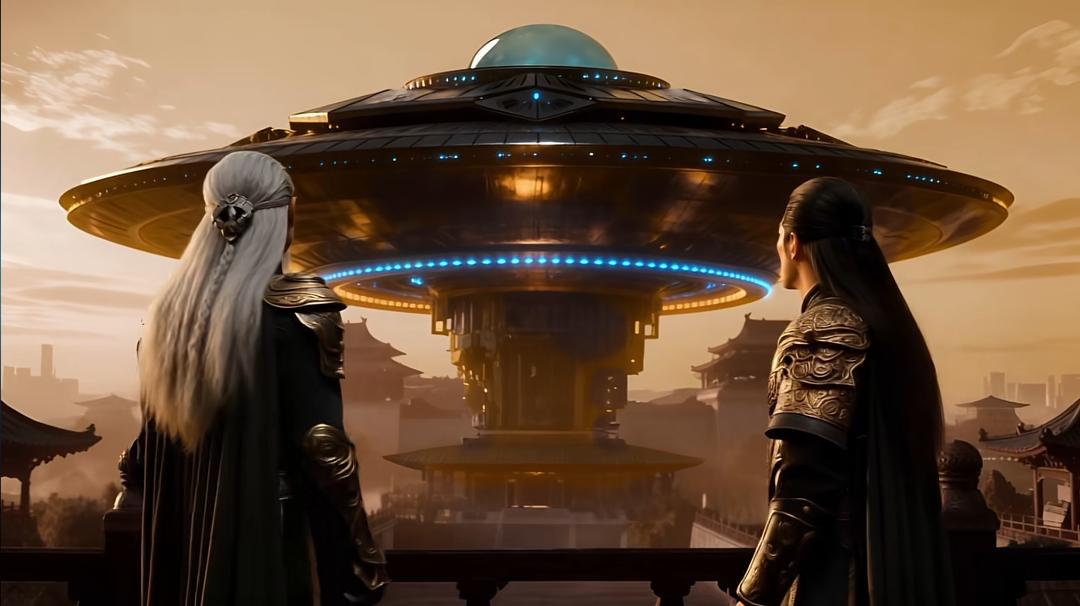
The Bookstore at the End of the Universe
In general, the logic of Tencent's investment in Wukong is very simple. In the past, a sci-fi film and television work required a team of hundreds of people, a cycle of several years, and an investment of hundreds of millions of yuan; now, a company with more than 40 employees using AIGC tools can produce works with tens of millions of views within a few months. The cost structure has changed, the production cycle has changed, and the competitive barrier has shifted from "resource possession" to "efficiency and industrialization capability".
In addition, the competition in the AI short drama track is becoming increasingly fierce. Compared with the past logic of simply purchasing content, it is better to directly purchase production capacity. But it is still unknown whether Wukong and Qianwei Monkey, the two "monkey" companies, can support Tencent's ambition in the AI film and television field. Even in the future, we may see more similar investments.
This article is from the WeChat official account "Entertainment Capital Theory" (ID: yulezibenlun), written by the Yuzijiang Team, and authorized for release by 36Kr.