What signals are released by WeChat's new moves of adding a new audio entry and piloting AI social features?
The AI in WeChat can now help you arrange a meal appointment with your friends.
Recently, the new AI social function piloted by WeChat's built-in agent "Xiaowei" has sparked widespread discussions among internet users. Simply put, after obtaining user authorization, each user's Xiaowei will communicate on their behalf with the other party's Xiaowei, for passing information such as scheduling time and sending greetings, and finally present the result to the user for final confirmation.
The Newrank editorial team conducted a practical test taking meal appointment as an example: our side first informed our own Xiaowei of information such as the invitee and time, then our Xiaowei communicated with the other party's Xiaowei, and generated a confirmation card.
This feature is equivalent to equipping both parties with a "AI secretary" that communicates first, and users only need to respond at key nodes such as authorization and decision-making.
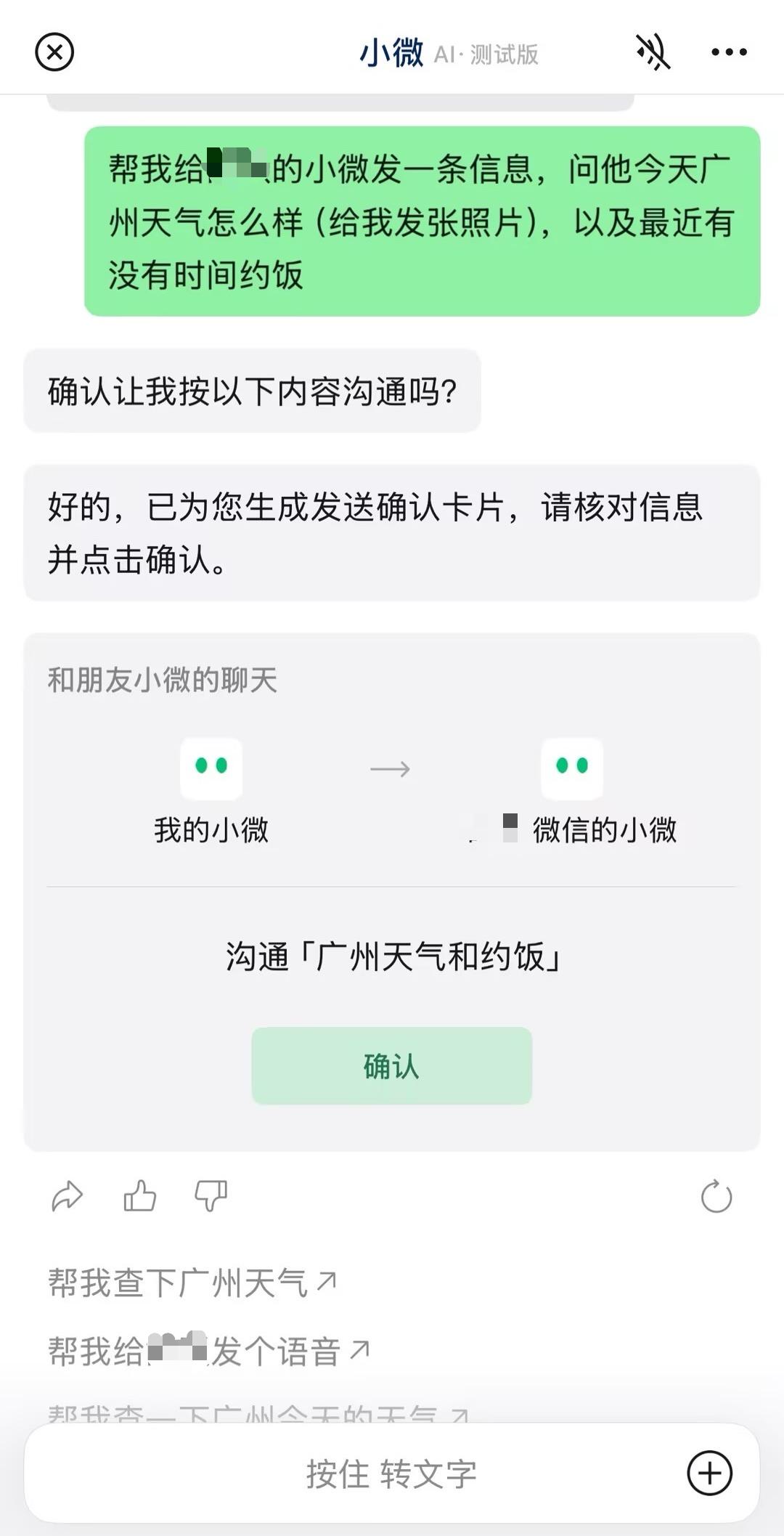
Image source: Newrank Editorial Department
At present, this function is still in a small-scale gray test, and not all users can experience it. It can be seen that WeChat's exploration of AI social is still advancing at a steady pace, and full rollout remains to be seen. However, AI is no longer just accompanying users in chatting, but has begun to participate in interpersonal communication.
In addition to the "Xiaowei AI Social" feature, WeChat has also recently launched the iOS 8.0.78 update, which adds a new audio entry to the official account feed. In addition, details such as file icons, friend remark entries, and unread message positioning have also been adjusted one after another.
Based on this, we reviewed a series of important updates of WeChat recently, highlighting key points for you to see which details are worthy of attention.
From AI social to search and image editing: when Xiaowei enters more scenarios
In this update, the most innovative feature is the "Xiaowei AI Social" mentioned at the beginning.
As WeChat's native AI assistant, Xiaowei launched a small-scale test as early as June this year, with functions such as AI summarizing official account articles, AI helping write/comment on Moments posts.
Xiaowei AI Social further complements the connection between Xiaowei and the daily usage scenarios of WeChat.
According to WeChat's official introduction, Xiaowei AI Social refers to the pre-communication function between AIs in Xiaowei, which is still in small-scale gray test at present.
Specifically, this function allows the Xiaowei of both communicating parties to establish an independent session under authorization. The AI first completes social coordination such as time coordination, information synchronization, and task handover, and then brings the result back to the user for decision-making, aiming to reduce the social coordination cost of users.
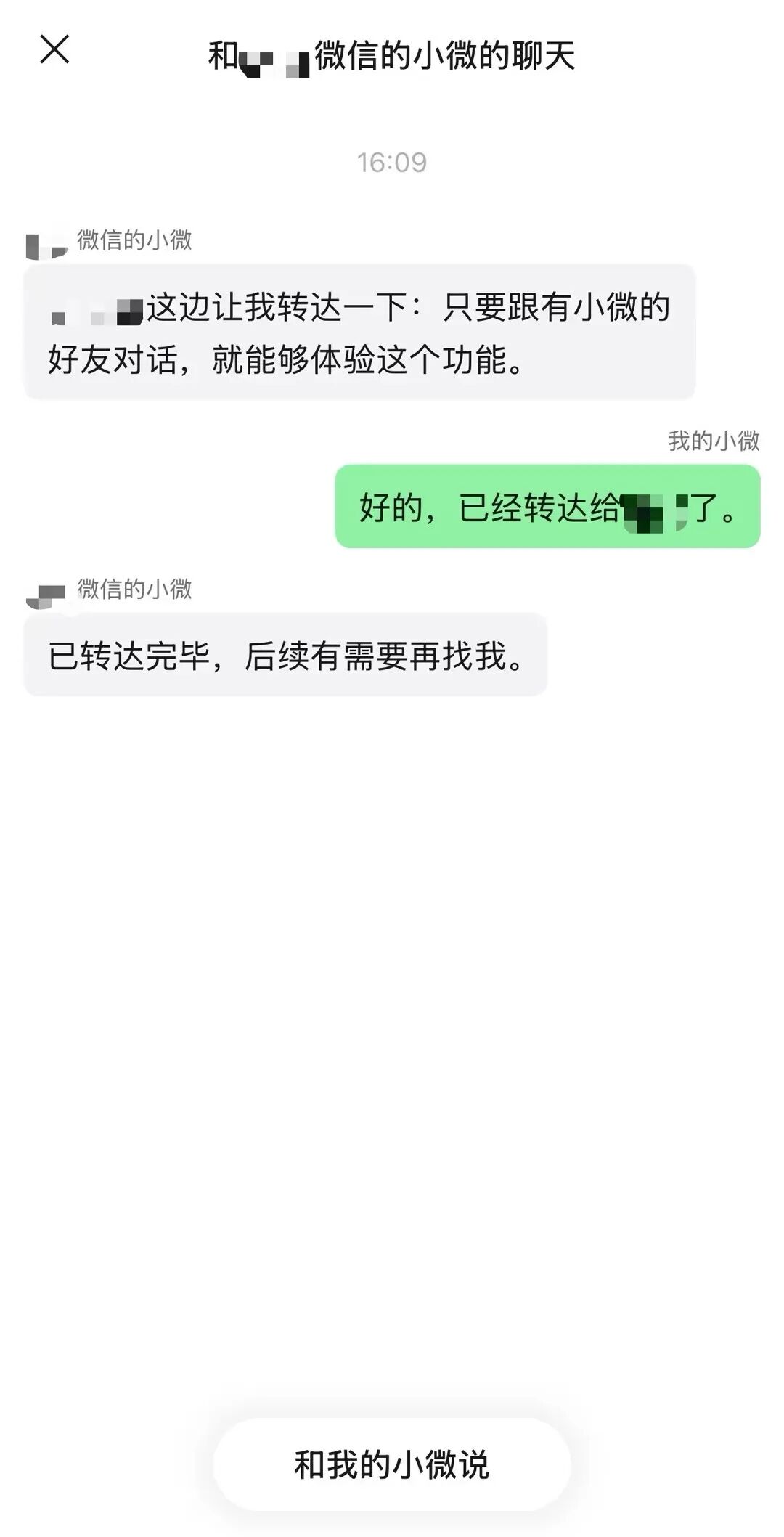
Image source: Newrank Editorial Department
It is worth noting that this function can only be enabled when both parties have obtained the qualification to use Xiaowei.
It should be clarified that this does not allow AI to send WeChat messages on behalf of users, but establishes an independent dialogue between the two Xiaoweis. Relevant communication records are only kept inside Xiaowei and will not appear in the original personal chat windows of both parties.
This means that Xiaowei is gradually transforming from an AI tool serving individuals to a social agent that can connect different users and participate in multi-person collaboration.
Previously, whether it was searching for information, processing images, or invoking mini-programs, Xiaowei mainly faced the one-way "human-to-AI" communication. "Xiaowei AI Social" further builds a "human-AI-AI-human" communication link. AI no longer only answers questions and executes instructions, but begins to represent users to enter an authorized negotiation process.
For WeChat, this means that AI has for the first time penetrated into its most core social scenario, which is also the hardest to standardize.
Low-emotion-density communications such as time coordination and information confirmation can be handed over to AI to improve efficiency. However, when it comes to attitude expression, relationship judgment and emotional response, to what extent AI should speak and when to return the decision-making right to users will become a more important product boundary than technical capabilities.
In addition to piloting AI social, Xiaowei has added two more usage scenarios in this update.
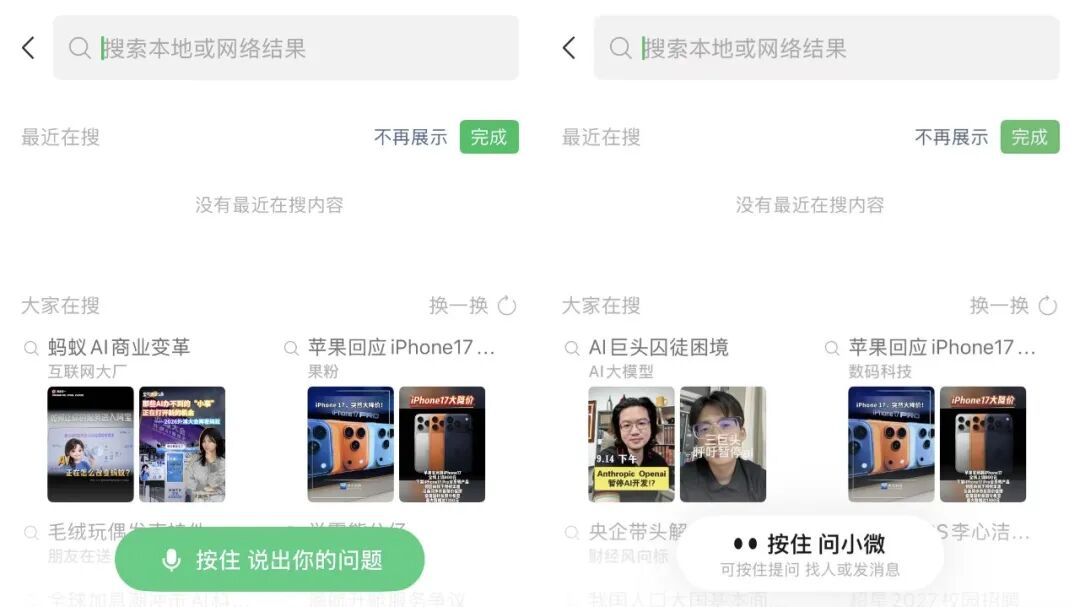
First, the "Hold to speak your question" on the search page has been renamed "Hold to ask Xiaowei", allowing users to hold to ask questions or send messages directly.
This means that when users have search needs, they can directly access AI. Xiaowei will not only help users "find content", but also further understand the question, filter information and give answers.
Before and after the update
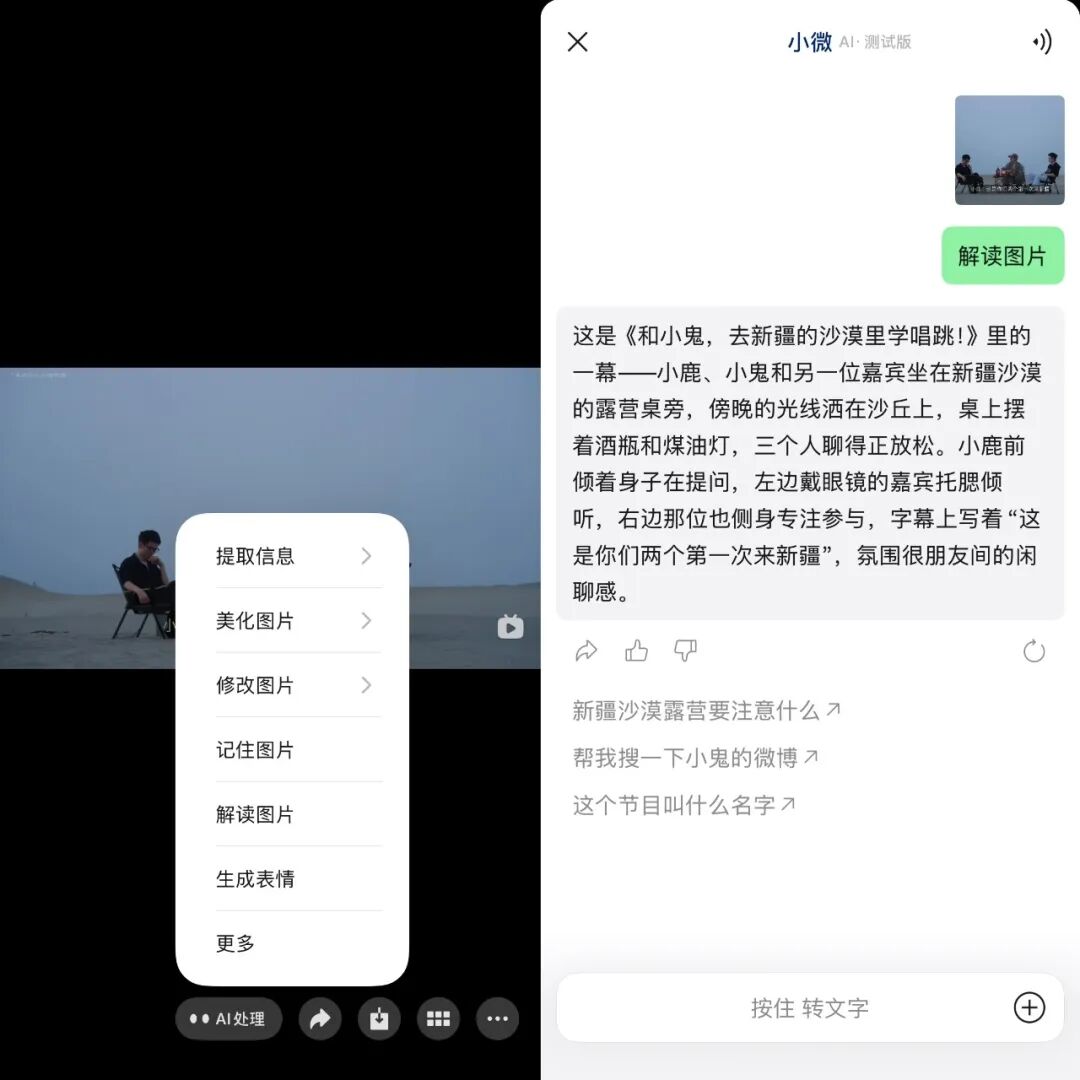
Second, a new "AI Processing" function has been added to images in the chat page.
Among them, three capabilities: extracting information, beautifying images, and modifying images can be completed directly on the current page, while remembering images, interpreting images and generating emojis will jump to Xiaowei for further processing.
Previously, when users received an image and wanted to edit it, they often needed to save the image first and then switch to other applications for processing. Now these operations can be directly embedded in the chat scenario, reducing users' repeated jumps between different applications. The integration of Xiaowei even turns images into information that AI can understand, remember and continue to invoke.
WeChat adds audio feed, official accounts get a new traffic entry
In this update, WeChat has further expanded its audio content layout by adding a headphone icon in the upper right corner of the official account feed.

After users click this icon, WeChat will randomly play published podcasts and audio content from official accounts, and supports common functions such as speed adjustment, comment, like, minimized floating window, and up/down swipe. On the detail page of audio content, users can also click the title to jump to the original article.
This means that WeChat is adding a new content distribution entry in the official account feed, where users can complete "light reading" through audio first, and then go back to the original article to get full information according to their interests. It remains to be seen how much traffic this new entry can bring, but the distance between different content forms in WeChat is being shortened.
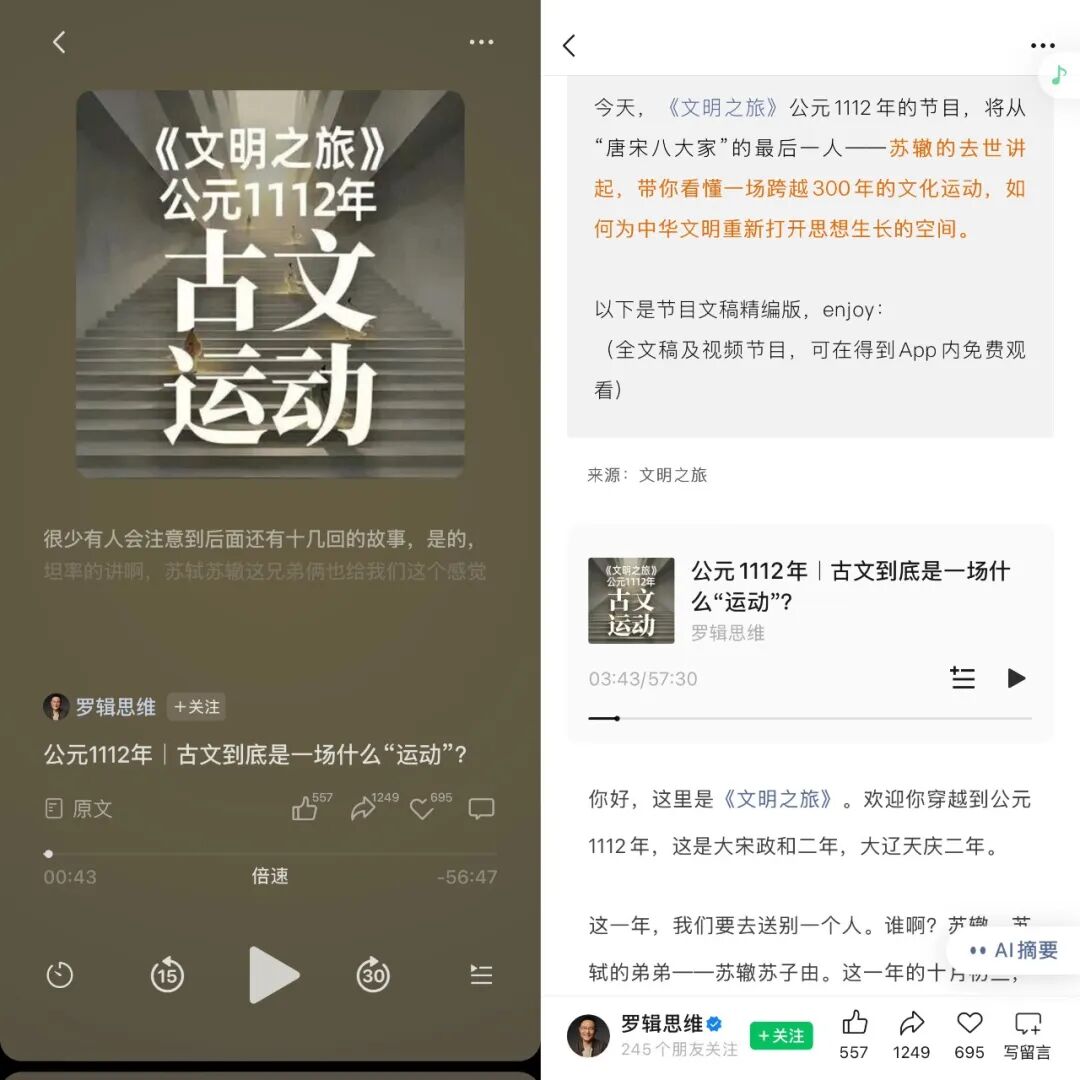
To some extent, this design is somewhat similar to the podcast feed of Ximalaya's dedicated podcast app Xiaoyuzhou.
Xiaoyuzhou continuously recommends single episodes through the feed on its "Recommended" page, allowing users to discover content in the feed without having to know a specific program or actively search for the host first.
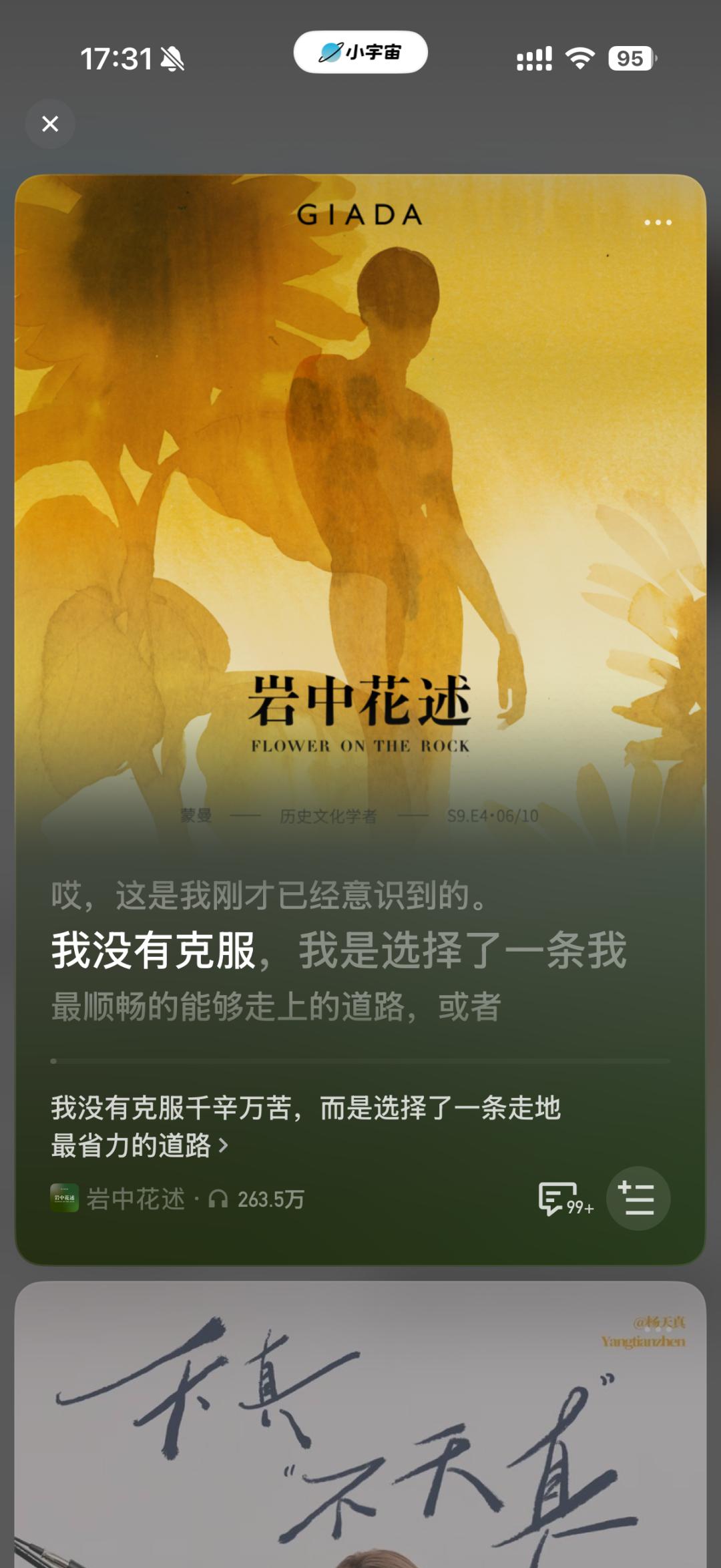
The difference is that Xiaoyuzhou is a vertical application built around podcasts, where program subscription, single episode recommendation and listener interaction form a complete content community. WeChat has years of accumulated graphic content and creator relationships from official accounts. WeChat's audio feed can not only distribute podcasts, but also bring podcast listeners back to the original official account articles through title jumps.
Whether WeChat audio can attract users' attention with the recommended feed still depends on whether the recommendation mechanism is accurate enough, and whether it can build an interactive atmosphere matching audio content. As far as the current situation is concerned, opening up a new entry is only the first step.
File status, friend remark entry, unread message positioning: what other details has WeChat optimized?
In addition to the above features worthy of creators' attention, WeChat has also added many optimizations on functional details in this update:
1. File download status is easier to identify.
In the past, the display icons of undownloaded and downloaded files received by users were the same. But after the update, undownloaded files will show their icons with dashed outlines, and the original style will be restored after downloading.
This is more practical for users who often transfer files in WeChat. When the other party sends several files in a row, users can quickly distinguish which ones have been downloaded first to avoid repeated operations.


Undownloaded vs. downloaded
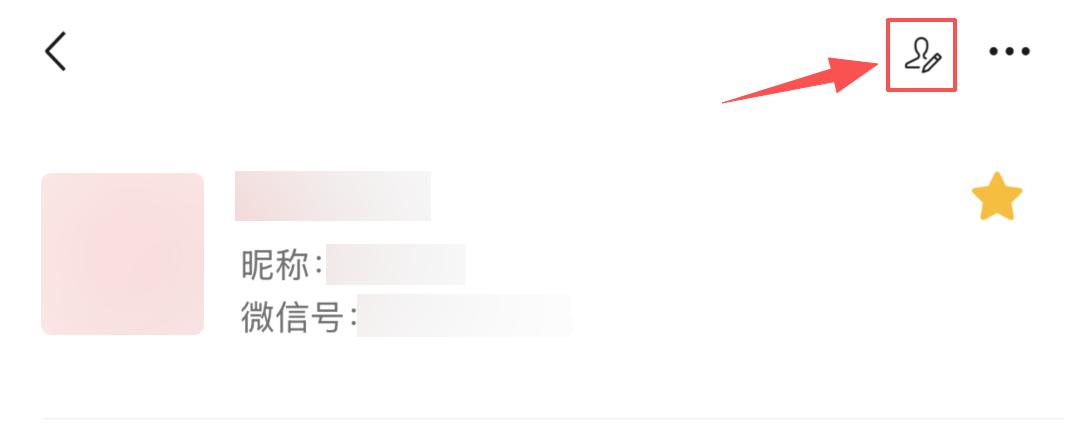
2. Friend remark entry is moved to a more accessible position.
Previously, users needed to click on the avatar first, then enter the "Edit Remark" in the upper right corner to add remarks to WeChat friends, which required at least two steps.
After the update, a quick remark entry is added to the upper right corner of WeChat's friend profile page. Users can click to edit directly, which is a detail optimization of WeChat's operation interface, making user operations more convenient and effortless.
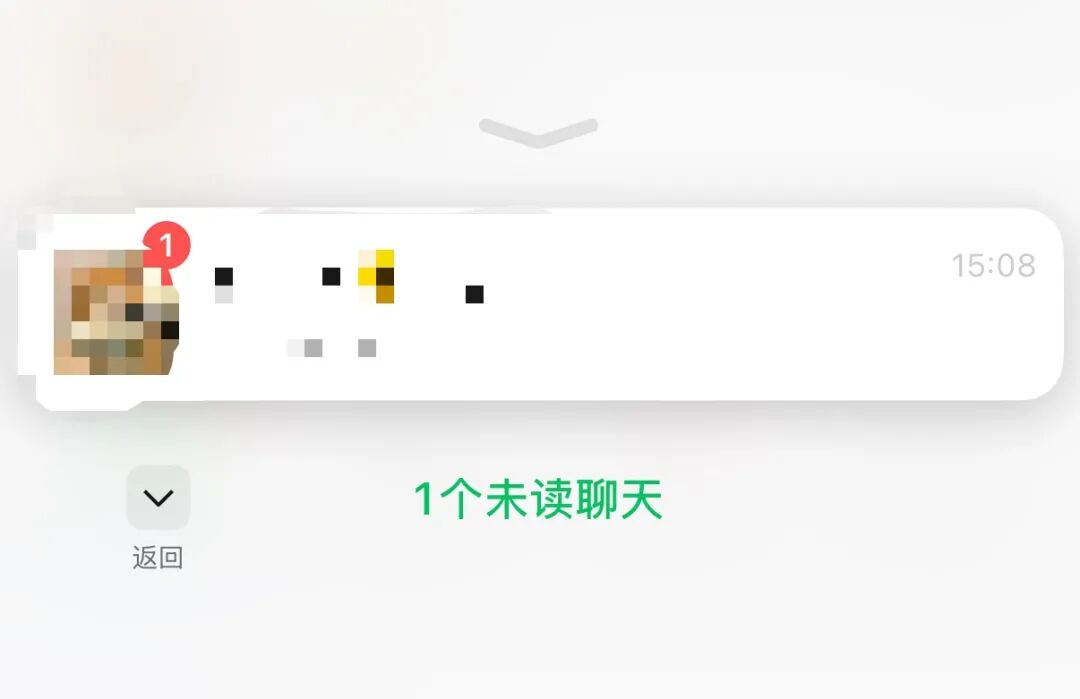
3. Quick positioning of unread messages.
Users can long press the "WeChat" button at the bottom of the application to summarize all current unread chats with one click.
For users with large daily message volume, it is equivalent to generating a "to-reply list", so that users do not need to search one by one in the chat list, and can also reduce the situation of forgetting to reply after reading the messages.
Looking back at this update, we can see WeChat's gradual revision rhythm from shallow to deep.
Functions such as file status, friend remark, and unread message positioning still solve the small details in daily WeChat usage;
The official account audio entry tries to restructure the content distribution path, enabling smoother flow between graphics, podcasts and audio;
The changes of Xiaowei go further: it no longer only exists in an independent dialog box, but gradually enters specific scenarios such as search, chat images and friend communication.
At present, many functions are still in small-scale gray test, and there is still a distance from large-scale popularization. But it is certain that WeChat's AI layout has moved from "chatting" to "getting things done".
When AI gradually connects search, content, services and social interaction, WeChat is also evolving step by step into a product more adapted to the AI era.
This article comes from WeChat official account "Newrank" (ID: newrankcn), author: Xiao Ba hachiko, editor: Yun Feiyang, published with authorization from 36Kr.