The Globalization of a Blue Light Brush: How Bixdo Sells Chinese Domestic Products to Europe
The global expansion of Chinese brands is entering a more challenging stage.
In the past, when brands went overseas, the first problem to solve was "how to be seen". Today, more and more Chinese brands have been able to appear on e-commerce platforms, physical shelves and global exhibitions. The real problem has become: why are consumers willing to buy? And why are they willing to keep using the products?
What Bixdo experienced in Europe is exactly such a test.
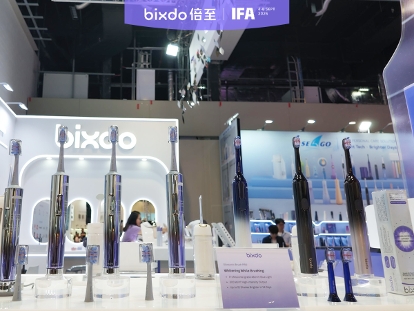
At the YANLAB pop-up site of *Partners in London*, Bixdo blue light toothbrush became the product that was repeatedly inquired about and snapped up; at IFA 2026 in Germany, visitors stopped by it, discussed the actual functions and usage of the product, and even asked for purchase channels.
Behind this is the natural arrival of a Chinese toothbrush after identifying real user demands. It does not try to re-educate the market, but responds to an existing problem: how to complete more convenient teeth whitening care while brushing teeth every day.
When a product no longer needs to repeatedly explain "where I come from", but allows consumers to directly discuss "what it can bring me", the global expansion of Chinese domestic products truly moves from being seen to being needed.
From being noticed to being taken home
Europe is a pragmatic market.
Consumers here pay attention to technology, and value more whether the technology can solve practical problems. Just like the lawn mowing robots that became a hit at this year's IFA exhibition, compared with the complex embodied intelligence concept, they care more about whether these devices can mow the lawn well, and whether they can adapt to weeding operations on large slopes and in complex environments.
This is also what makes IFA unique. In Berlin, exhibition booths are more like effective touchpoints for enterprises to gain insight into and reach the European market. Visitors will pick up the products and ask about their usage details, such as "how many times do I need to brush my teeth after using the blue light toothbrush" and "how to transmit the light source to the tooth surface", to confirm one by one whether the product matches their own needs.
Concepts can attract attention, but only product strength can make people stay. The real verification happens after people take the product home, to see if they are willing to keep using it.
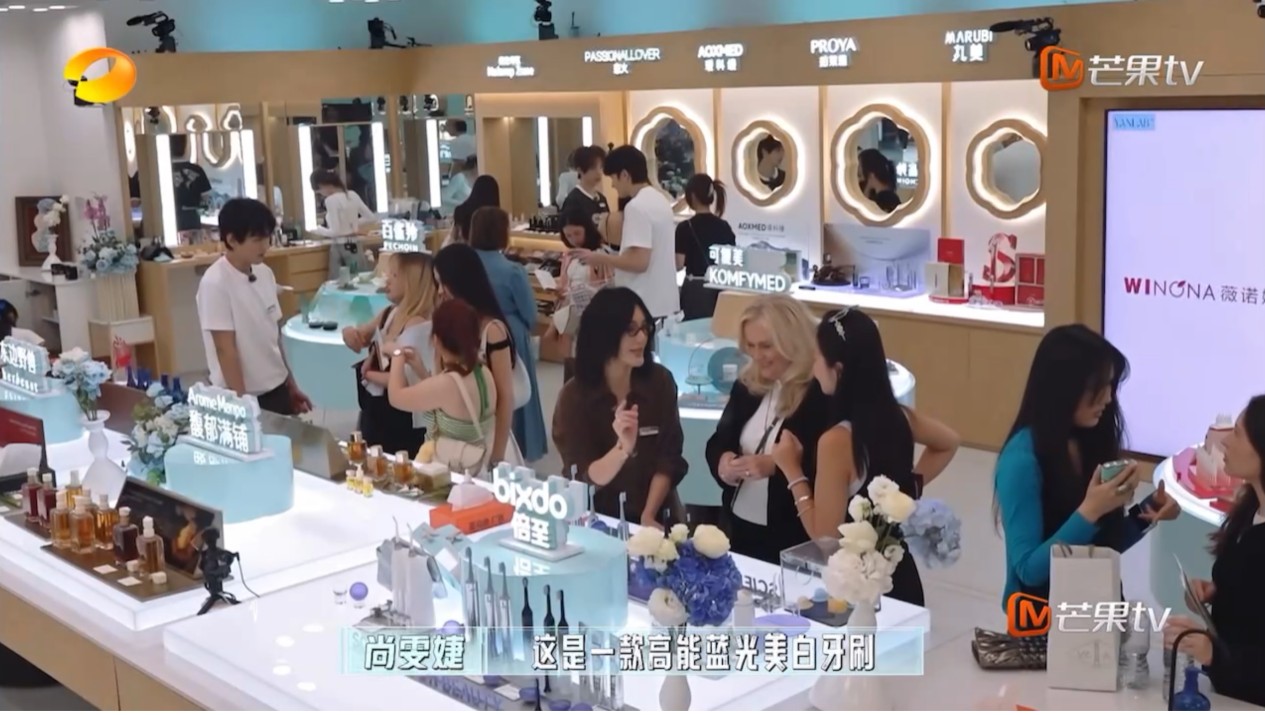
In London, Bixdo blue light toothbrush went through such a complete process. At the YANLAB pop-up store of *Partners in London*, consumers were attracted by the blue light lit up by the brush head. "It's the first time I know that a toothbrush can be combined with blue light. I have never seen a toothbrush like this before, it's really cool!" They kept asking the partner guests how to use the product and what effects it can achieve. When introducing the product, partner Shang Wenjie mentioned that Bixdo applies the 460nm blue light golden band commonly used in professional teeth whitening equipment, and when paired with PAP toothpaste, it can whiten teeth gently.
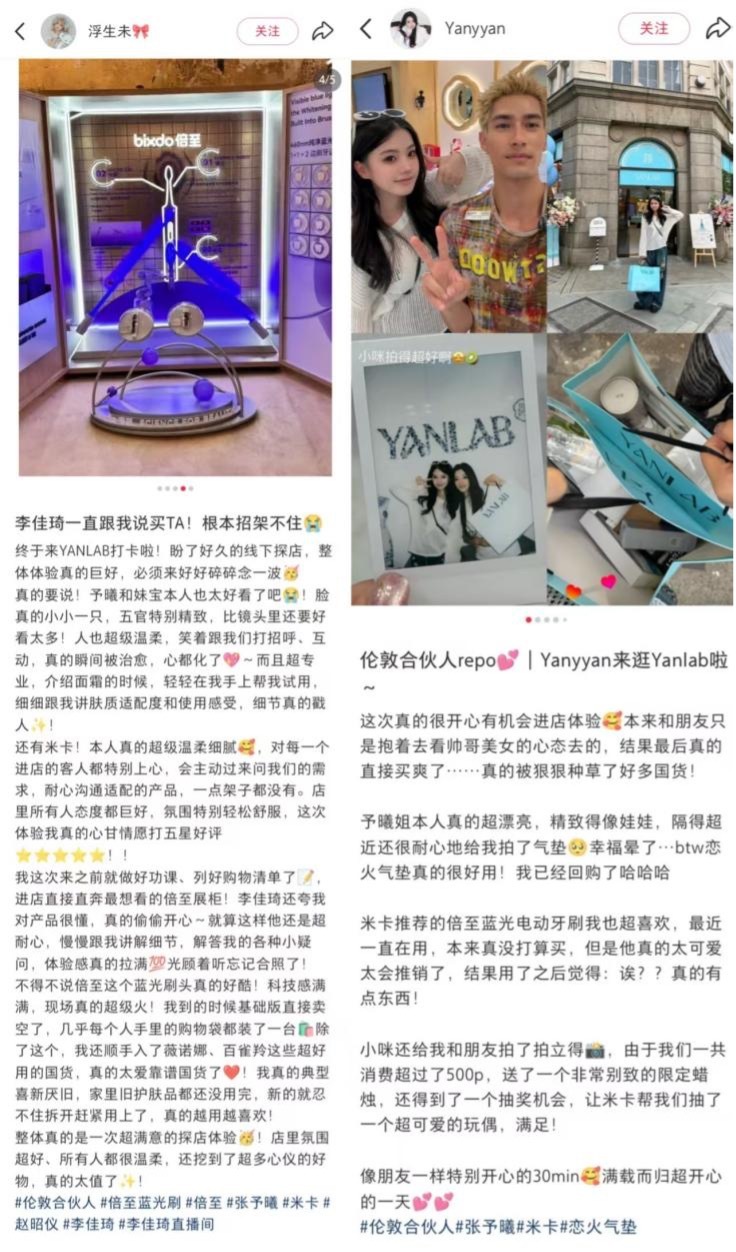
This is also the reason why it can be quickly understood in different cultural contexts. Consumers do not need to learn a set of complex care processes from scratch, they only need to brush their teeth as usual to feel the effect. This direct product experience also extends beyond the event. On-site customers spontaneously shared their trial process on social platforms, expressing their natural affection for the blue light toothbrush. The product has changed from a novelty in the pop-up store to a daily item that consumers are willing to take away and continue to discuss.
A good product speaks for itself, but the premise is that it can stand the test of real scenarios.
Blue light toothbrush: why it has natural global expansion genes
The fact that Bixdo blue light toothbrush can be quickly understood by European consumers is only partly due to its easy operation. More critically, it corresponds to a long-existing demand.
In China, teeth whitening is more regarded as a "plus item" in oral care. Consumers first pay attention to cleaning and oral health, and whitening is usually an advanced demand based on these two foundations.
In European and American markets, teeth whitening has a more direct connection with personal image, social expression and professional communication. Many consumers are willing to spend money on cold light whitening in professional dental institutions, but the high price, time cost and soreness also make more people look for convenient and gentle teeth whitening solutions.
Therefore, teeth whitening is not a demand that needs to be created out of thin air. It has long existed and is still growing. Research data from Bisheng Consulting shows that the market size of China's teeth whitening products reached 55.347 billion yuan in 2025, and the global market size of teeth whitening products reached 130.075 billion yuan. It is expected that by 2032, the global market size of teeth whitening products will reach 178.458 billion yuan.
What Bixdo blue light toothbrush does is to put the whitening technology in professional care scenarios into the daily tooth brushing action, so that cleaning and whitening can be completed at the same time. But this path is not easy. The optical structure, power system, formula coordination and oral comfort need to be realized simultaneously within the limited product space. It took Bixdo three years to turn this idea into a toothbrush that can be used at home.
The first challenge is to make the blue light truly reach the tooth surface without sacrificing the cleaning ability of the brush head.
Bixdo started with the brush filaments. The middle part of the brush head adopts German imported pedex light-guiding brush filaments, which allows blue light to be transmitted to the tooth surface through the brush filaments, achieving 4 times the light energy intensity. Starlight filaments are used at both ends to help clean deep between teeth, and gum-protecting brush filaments with a rounding rate twice higher than the national standard are used on both sides to reduce irritation to the gums while ensuring cleaning power. This structure can increase the bristle planting amount of the brush head by 58%. One brush head has more than 2000 brush filaments, taking into account both blue light transmission and interdental cleaning.
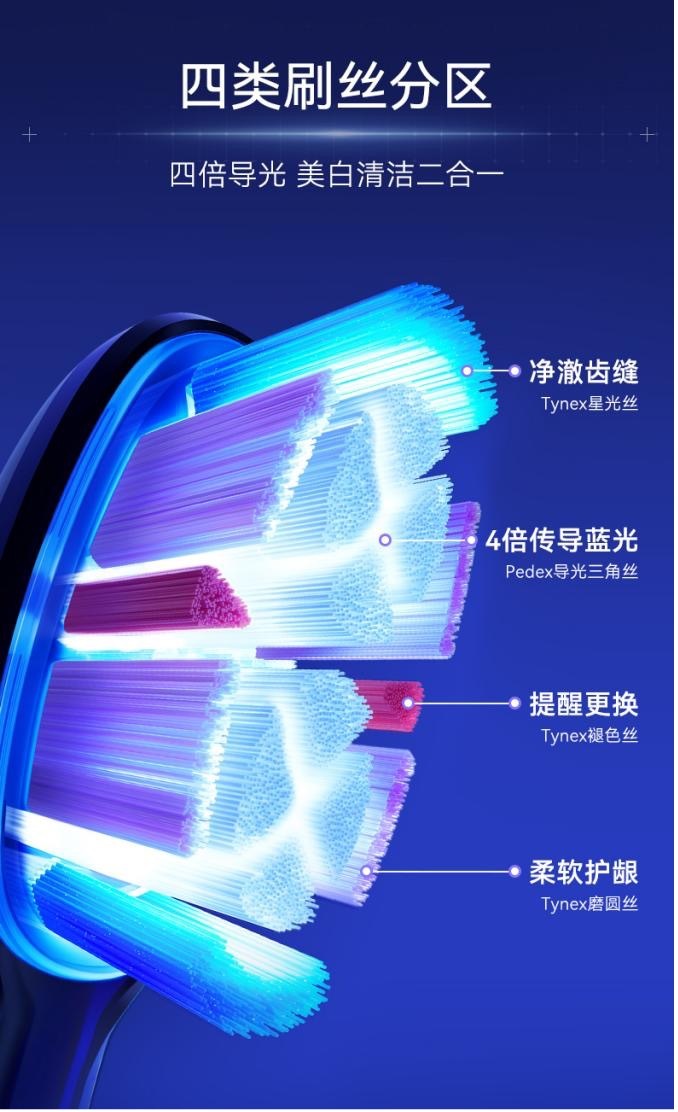
Bixdo also added two clusters of fading brush filaments on the brush head. As the usage time increases, the brush filaments will fade naturally after about three months, reminding users to replace the brush head in time.
After solving the problem of "how the light reaches the tooth surface", we also need to solve the problem of "where the sufficient light energy comes from".
Professional teeth whitening equipment has higher requirements for light energy and power supply stability, which brings the balance between current power, energy loss, heat dissipation and battery life. The traditional magnetic induction power supply method is prone to energy loss, which affects the battery life and usage experience of the toothbrush.
To this end, Bixdo redesigned the energy transmission scheme, using Pin pins as the conductive structure, which stably transmits high-power electric energy to the brush head without increasing the volume of the motor output shaft, providing continuous energy support for the blue light to work. This energy perfusion system has also become one of the patented technologies precipitated by Bixdo (Patent No.: ZL202323130369.8).
In terms of light source selection, Bixdo adopts the 460nm blue light band commonly used in professional teeth whitening equipment, which meets the catalytic demand of whitening active ingredients while reducing photothermal irritation, making it more suitable for long-term oral care.
The selection of matching toothpaste ingredients has also gone through repeated verification. Hospital-level whitening generally uses high-concentration hydrogen peroxide, which has good effect but strong irritation. After repeated tests on stability and human efficacy, the Bixdo team finally chose the milder PAP ingredient, which can achieve whitening effect without damaging the enamel.
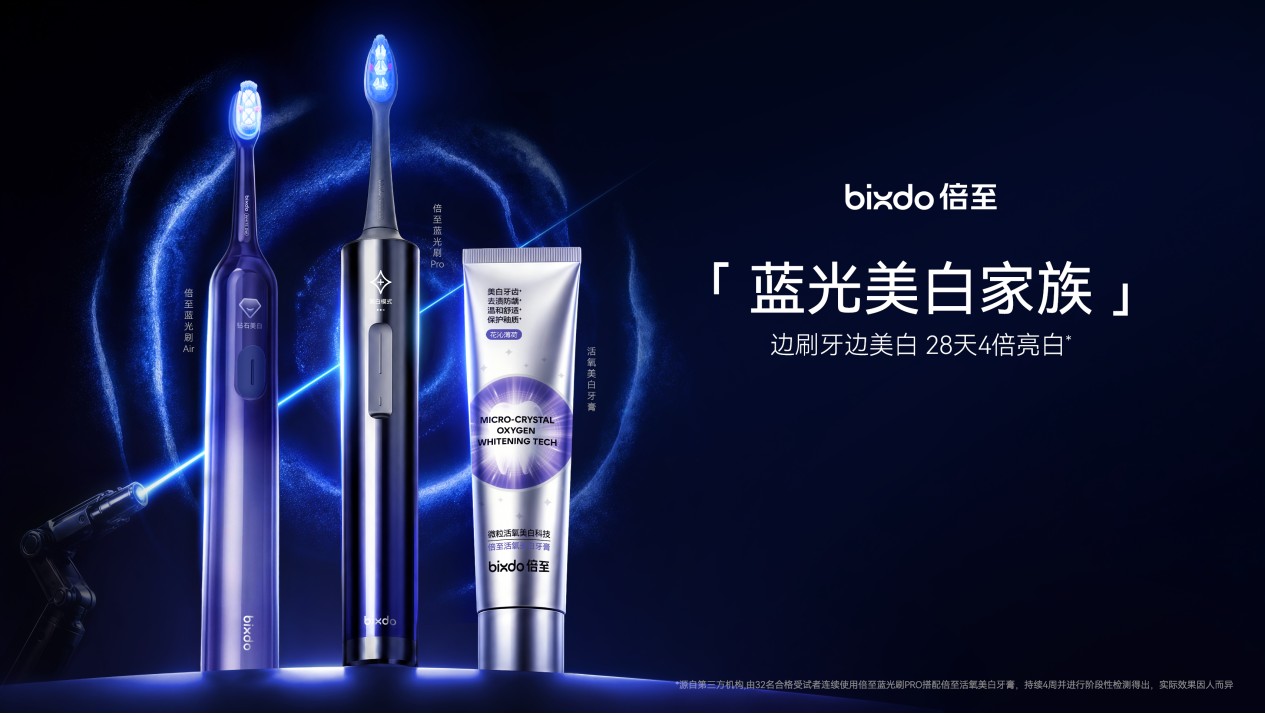
Thus, Bixdo has built a complete technical chain: the light must reach the tooth surface, the energy must be stably supplied, the brush head must complete the cleaning, the formula must work synergistically with the blue light to enhance the effect, the whole process must be comfortable enough, and the product is suitable for long-term care.
The natural global expansion gene of the blue light toothbrush is also hidden in this chain. It does not rely on a certain cultural symbol, nor does it require consumers to first understand complex brand stories. No matter in China or overseas markets, people who pay attention to oral health can quickly understand what problems it solves.
The best global expansion is not to deliberately cater to overseas markets, nor to create a new demand out of nothing.
Instead, the product just happens to be exactly what they have been waiting for.
Back to the "last mile"
The fact that a blue light toothbrush can attract attention in Europe is backed by a Chinese brand's years of accumulated product capabilities, which begin to realize value in another market.
For Bixdo, London and Berlin are new markets, but the method that supports the product to reach here was established as early as its founding in 2018 — driving technological innovation with medical evidence-based practice. Starting from a water flosser, Bixdo has built independent laboratories and factories, invested tens of millions of yuan in R&D, cooperated with authoritative domestic and international oral medicine experts and scientific research institutions, and combined clinical evidence, human efficacy verification and product R&D around the real needs of users.
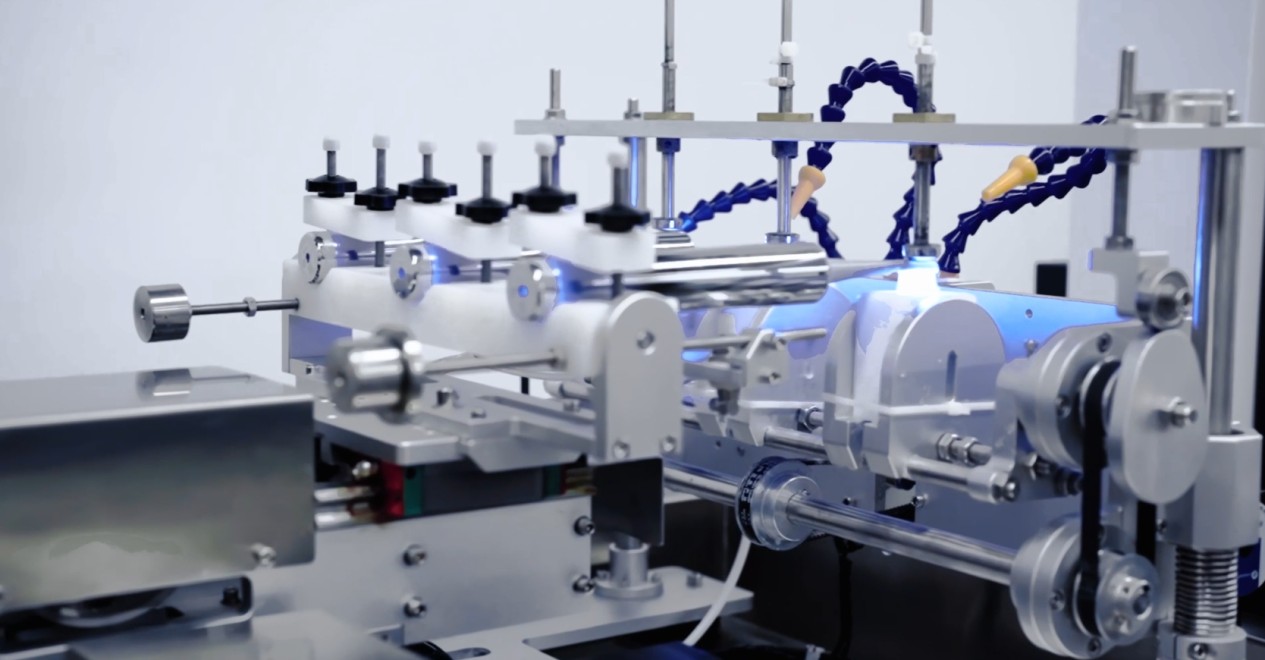
This path is moving slowly, but it has formed clear and continuous technological accumulation. Today, Bixdo has owned 369 authorized patents at home and abroad, its research results have been published in international SCI journals, and it has participated in the formulation of a number of industry standards. The product has also won 35 international design awards including German iF Award and American MUSE Gold Award, and its design aesthetics has also been internationally recognized.
These achievements are finally perceived by consumers through products. Bixdo connects demand insight, technology R&D, product innovation, efficacy verification and user experience, and gradually forms product capabilities for different markets. The combined whitening effect of Bixdo's "460nm blue light + PAP" has been verified by human clinical tests. The 28-day clinical test data of 174 people using Bixdo blue light toothbrush Air shows that the catalytic whitening effect of "blue light + PAP" is 2.3 times higher than that of "blue light off + PAP", and the synergistic effect is proven effective.
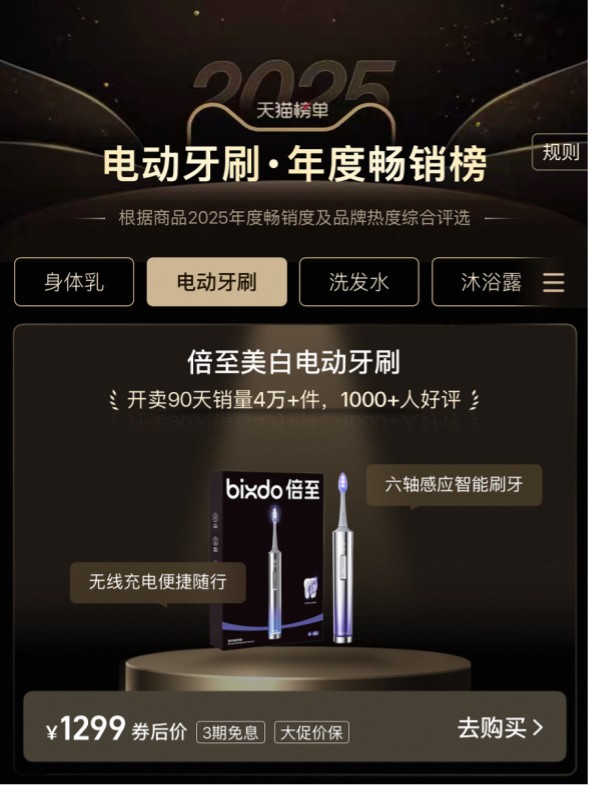
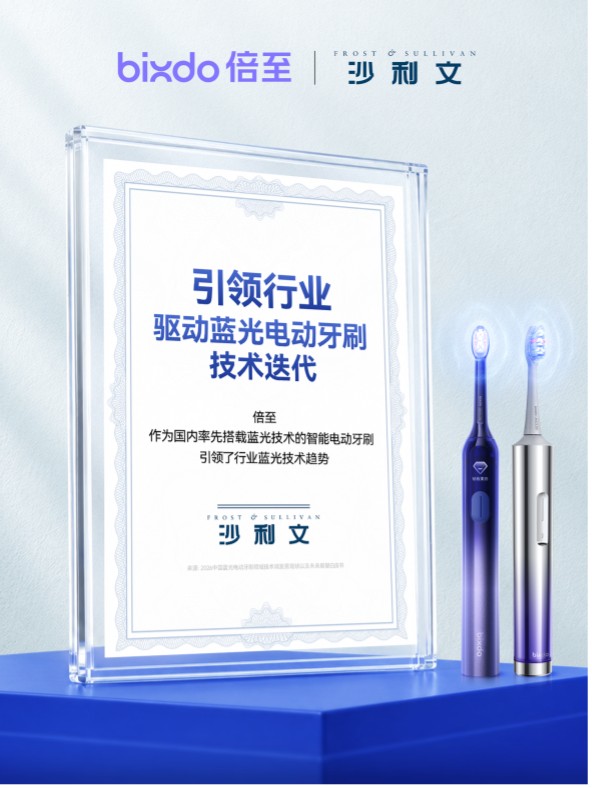
Market feedback also confirms this path. Since its launch, the total sales of Bixdo blue light toothbrush series has exceeded 80,000 units, ranking first in the annual bestseller list of the electric toothbrush category on Tmall. International consulting firm Frost & Sullivan has recognized Bixdo as the "leader of blue light technology trend in the electric toothbrush industry". Now, the brand has deployed more than 330 outlets around the world, and its products have started from China and entered the lives of more overseas consumers.
Identifying demands accurately, making technologies solid, and putting products to the test of efficacy verification and real scenarios — this is Bixdo's innovation path, and also its confidence to go global.
This year, Bixdo extended this gene to scalp care, launching an air cushion light hair growth comb that can "promote hair density while combing hair", and further deployed facial revitalization. Bixdo tries to make optoelectronic technology enter more familiar daily actions, so as to turn its accumulation into beauty care capabilities covering more daily scenarios.
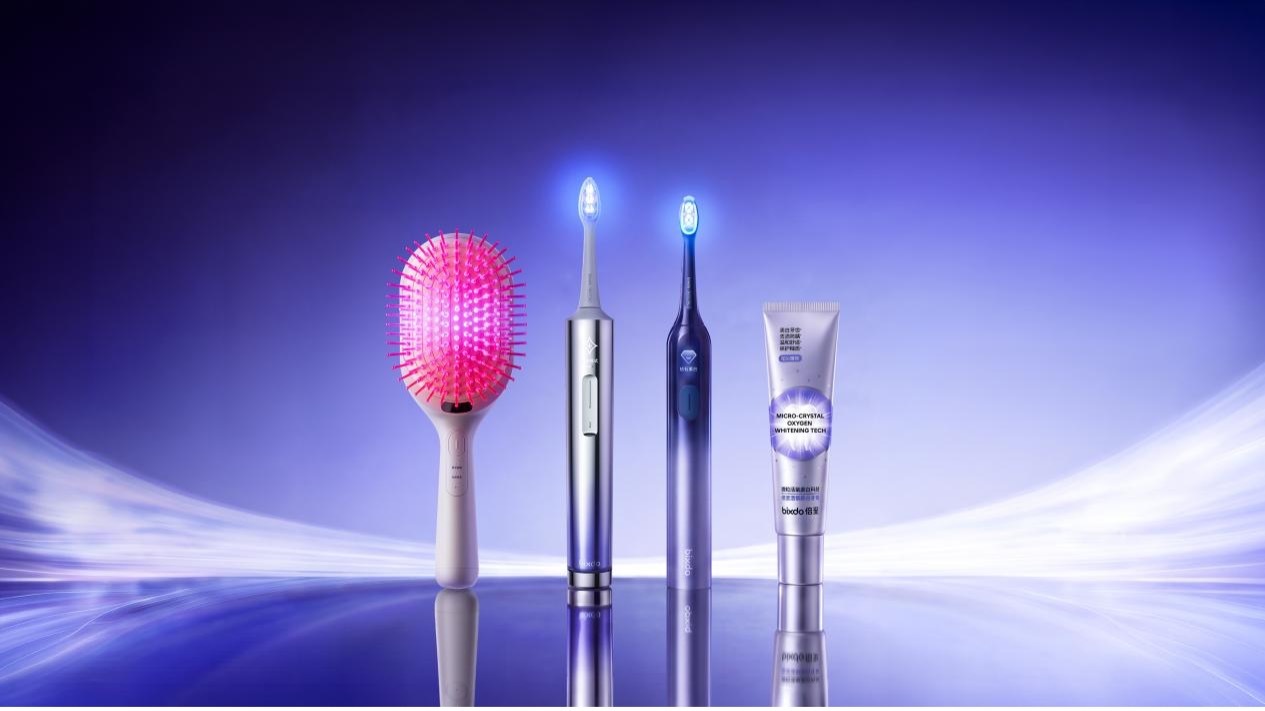
From "made in China" to "made for the whole world", what Bixdo is completing is not only market expansion, but also the leap of a Chinese brand from technological accumulation to global product value.
The personal care market once dominated by international brands is now presenting new Chinese solutions. Bixdo blue light toothbrush entering the bathrooms of European consumers proves that Chinese brands can rely on the product itself to cross regional and cultural differences and build new trust in the global market. Bixdo's performance is also a microcosm of Chinese consumer brands moving from "being seen" to "being needed".
What Bixdo is verifying is not only that Chinese blue light toothbrushes can be sold to Europe, but also that Chinese brands can rely on the product itself to cross regional and cultural differences and become a natural choice in the daily lives of global consumers.
Nothing can better define the "last mile" of domestic product global expansion than a Chinese product that quietly integrates into the daily life of strangers.