Sam Altman's Introspection: 6 Reminders for Ordinary People

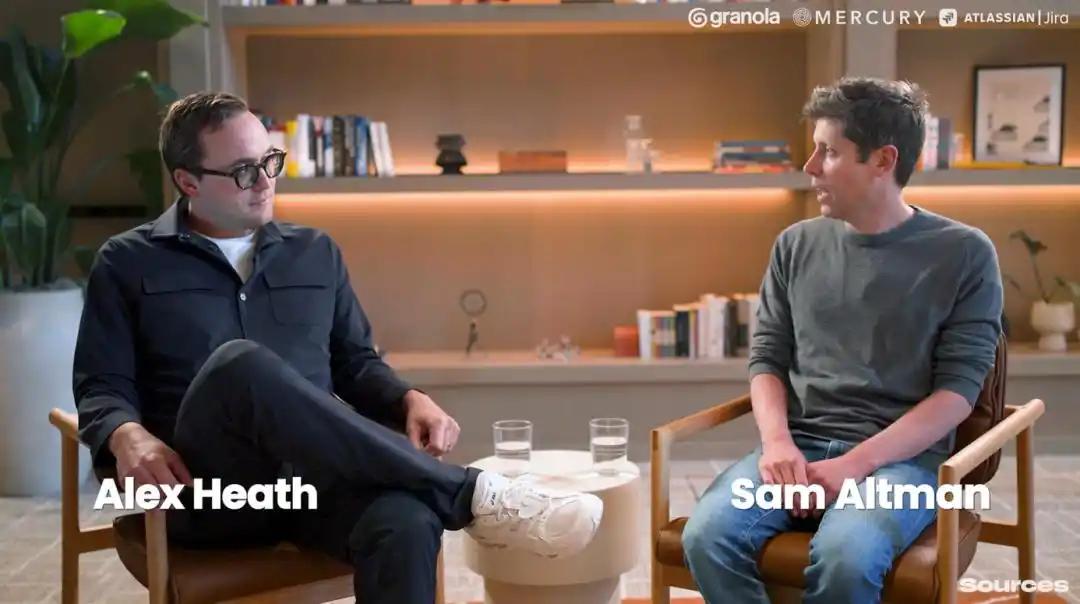
In July and August this year, Sam Altman consecutively participated in two podcast recordings. In these two programs, Altman did not exaggerate the power of current intelligent models, nor depict the prospect of AI technology further integrating into human society in the future. Instead, he conducted sincere introspection on some of his past judgments and decisions.
One of the most notable points is worth attention: Sam Altman no longer believes that AI will quickly replace human work in all fields, even though OpenAI's models are still being iterated continuously, and some people in the industry have given a clear timeline for the actual launch of AGI. Sam Altman has seen the resilience of human society and the inertia of human beings.
This time, we have sorted out all the important statements Sam Altman made in these two podcasts, to show you how this figure who has always been at the forefront of the AI revolution re-examines and re-positions the career he has devoted himself to. Below are 6 reminders for ordinary people:

The speed at which AI replaces human work,
may be much slower than you think
When GPT-4 was launched in 2023, Sam Altman originally thought that AI would soon bring larger-scale disruption to the market, and a large number of businesses would be quickly reshuffled. However, the reality is not like that. The direction of the prediction may still be correct, but there was a misjudgment in the development progress.
Human economy has very strong inertia. Even if AI is already close at hand, people still tend to continue doing their original things, continue to purchase through original channels, and hope to continue using tools they are familiar with.
He is even somewhat grateful for this — to some extent, this is a good thing. It will make this huge transition smoother and slower. This means that even in the face of such amazing technology, people's timelines may not be that radical. AI is one of the most incredible technologies ever invented by human beings, but human society is not in a hurry to confirm its presence.
The current integration state of AI products into human society reminds Altman of smartphones before the advent of iPhone. In fact, as early as around 2003, many technologies that can be used to build smartphones already existed in the world. What the market lacked at that time was the brand-new product concepts that eventually made iPhone what it is. The situation AI products are facing today is similar: all parts of the technology puzzle have been basically assembled, but the assembly solution that completely changes the interaction between humans and technology has not yet arrived, and the AI market has not yet ushered in its own "iPhone moment".
The most direct evidence comes from Sam Altman himself. He admitted that some of his habits in using computers have never changed. After having tools like Codex, he should have completely changed the way he uses computers — he should no longer click around, copy and paste between different applications, no longer browse emails aimlessly, or list to-do lists over and over again and mechanically complete these routine tasks as before. However, he is deeply convinced in his mind that doing these things is working, and is trying to complete work efficiently.
Obviously AI provides a better way for people to finish work faster, and obviously Codex and similar tools can be used more in daily work to deal with various trivial matters such as email replies. But like many people, Sam Altman still uses old methods to handle work. This seems unreasonable. The only explanation is that he, like many people, actually still secretly likes this way of working deep in his heart, and can even get a sense of satisfaction from it.
Why are people still unwilling to hand over enough work to AI at present? In Sam Altman's view, on the one hand, the capability of AI still has obvious unevenness at all levels. It is a superhuman genius in some fields, but like a clumsy toddler in others. Human skills just happen to be highly complementary to this unevenness.
On the other hand, cooperation between people is often built on the trust in a specific real person, and people can get pleasure from this. Altman said that he himself is more willing to deal with real people than to talk to AI in many matters. Including in the entrepreneurship field, people also want to know which real human being can be responsible for decisions, and they do not really want to connect with an AI CEO.
Altman is deeply convinced that human beings will still be attracted by real people. Pure reference information content is more likely to be provided by AI, but for those content that is essentially related to people, the audience will pay more attention to who is speaking, and their interest level will vary greatly depending on whether they like or dislike the speaker. Especially those who grew up before the advent of AI will always be attracted by real people.
Facing the increasingly digital status of work, Sam Altman has begun to yearn for a more tangible and physical life. He likes paper books, dislikes Zoom, and prefers to stay with people in the real world. He believes that people who only want to communicate with computers and do not want to deal with humans are always only a very small part of the population. Therefore, even if superintelligence appears, the world may not become completely different in some fundamental aspects. People will still care about others and want to stay with others.

AI comes to "empower",
not to "replace"
For the future performance of AI, Altman values empowerment more. He firmly believes that AI can provide stable and powerful assistance in many fields that human beings are unwilling to do and not good at. For example, no matter how smart a person is, he cannot finish reading tens of thousands of words and give preliminary opinions within a few minutes or even shorter, but AI can do this very well. AI can fully leverage its strengths and avoid weaknesses to empower human work and life.
A year ago, many people said that software engineers were finished, their career had come to an end. But what actually happened is that the nature of the software engineer role has changed. They no longer write code by hand in the traditional sense, but hand over more of the execution work of programming to AI. In other words, they obviously have not lost the job of programming, but are producing output at a higher level than ever before.
Today, when people ask whether AI will fully replace human work one day, Altman doubts that this scenario will not necessarily happen in reality. Human beings have strong adaptability. Even if epoch-making technologies emerge, human beings often tend to accept all new existences and new methods calmly, slowly and gently.

Do not try to realize every "good idea",
focus on doing only a few great things
Sam Altman admitted that in the past year, he made the company do too many things, and spread its scope too wide. Although those things seemed worth doing, at this critical historical moment, everyone should see that they can only accomplish a few great things, instead of realizing every "good idea".
Therefore, Altman decided to truly bring the focus back to one thing: firmly believe in the value of computing power, and on this basis, build the best and most cost-effective intelligent model, and let the whole world use it to create incredible products.
Altman recalled that in early 2025, his biggest concern was: OpenAI is buying so much computing power, can the company's revenue keep up? Can the market demand keep up? So they thought of many alternative plans at that time. In case revenue growth is slower than expected, they can also carry out other businesses such as consumer applications and media applications to help monetize the computing power they have already purchased. However, when he saw the rapid growth of the computing power market and the clear economic returns of large models, he immediately understood what he should focus on. Converting electricity into useful intelligence is exactly what they should do.
When OpenAI planned to acquire computing power on a large scale, they called cloud vendors, chip foundries, and energy suppliers. Most people's reactions were: "You are completely crazy. We have been in this industry for many years, we have seen too many ups and downs, and we have never seen any business that can grow in a straight line. This is too reckless." This actually reminds Altman of the experience many early startups have when raising funds: most people will reject you, but as long as one or two people nod, it is enough. With the affirmation of these one or two people, the thing you want to do can move forward.

Real opportunities,
are hidden in "non-consensus"
Microsoft was the first to nod to OpenAI. Oracle then also gave clear support on the cloud side. NVIDIA has always been an excellent partner of OpenAI.
In fact, the feeling of not being accepted and recognized by most people is not unfamiliar to Sam Altman. If we trace back to the starting point of OpenAI, when they just started in 2015, many people thought AGI was almost impossible to achieve. Altman and his partners were even criticized by many industry authorities for publicly getting involved in the AGI field.
Later, when they really bet on large language models, it was far from a mainstream option, as long as you really see the high potential return behind it. High value is often hidden in things that are "non-consensus". And truly outstanding entrepreneurs and startup projects are often non-consensus, adopt new methods, have high energy, and are non-standard.
From the perspective of investors, if a startup idea only slightly modifies a thousand existing cases from the past and tries to package it as a brand new thing, it does not have investment value. The same is true for technology R&D: many people will chase the last already successful direction, only a few people will have strong faith in a new idea that has not yet been verified. Sam Altman has obviously always been committed to being the kind of role that can create extremely high value in the market and bring extremely high returns to enterprises and investors.
Regarding the issue that the models he developed by stacking a large amount of computing power are distilled by other manufacturers, Altman's attitude is quite calm. In fact, they themselves will also distill their own models to make more cost-effective models. He believes that open source models will obviously have a place in the world, and there will always be people who want to call and modify them for various reasons. The goal of OpenAI is to achieve the optimal exchange of intelligence and price at any position in the entire market demand matrix — it can not only provide high-quality and high-priced cutting-edge models, but also provide "basic" models that meet basic needs at lower prices.
In terms of profit calculation, Sam Altman believes that since the usage of OpenAI's models will be very large, they do not need to develop a business with an ultra-high profit margin to afford model training. In the future computing power plan, a large part belongs to the reasoning services sold to customers, which will bring huge cash flow. The company only needs to make moderate profits from it, which is enough to support the next generation of models. The scale of the entire market is so large that Altman is very confident in turning the company's business flywheel.
So we can see that Sam Altman and OpenAI now devote most of their energy to computing power and model R&D. In fact, computing power expansion itself is a complex supply chain problem, which requires designing a large number of cooperative relationships and solving financing challenges — how to finance a project that is rapidly becoming one of the most expensive infrastructure projects in history. The problems to be dealt with here start from self-developed chips, extend to the wafer factory supply chain, rack manufacturing, power systems, plus variables in commercial, policy, logistics and energy fields, all problems converge together.
Altman certainly hopes to have more time to work on products. At present, there are also very excellent people in the company in charge of the product line. But for them, the most important thing is still to create models with sufficient intelligence