How hard is it to make the entire iPhone a single piece of glass?
If the smartphone industry has an ultimate romantic form, it is probably the scene that Jony Ive has repeatedly depicted:
An iPhone that looks like a single, seamless piece of glass.
In Ive's vision, the phone is like a complete, quiet slab of black glass. When the screen lights up, the bezels, cutouts and sensors recede behind the content, leaving nothing but images and interactions in your hand.
Over the past decade or more, the iPhone has been steadily moving toward this form. The Home button is gone, the earpiece is tucked into the edge, Touch ID has given way to Face ID, and the notch has shrunk into the Dynamic Island.
As the 20th anniversary of the birth of the iPhone approaches, this idea seems to be on the verge of becoming a reality.
When Apple launched Liquid Glass last year, the design team revealed in an interview with ifanr that they created a large number of real glass samples to study how light refracts, reflects and focuses as it passes through glass. Alan Dye explained the design change as follows:
If we are going to change, the change must be worthwhile. The variability and adaptability of "Liquid Glass" will form the foundation for us to explore future experiences.
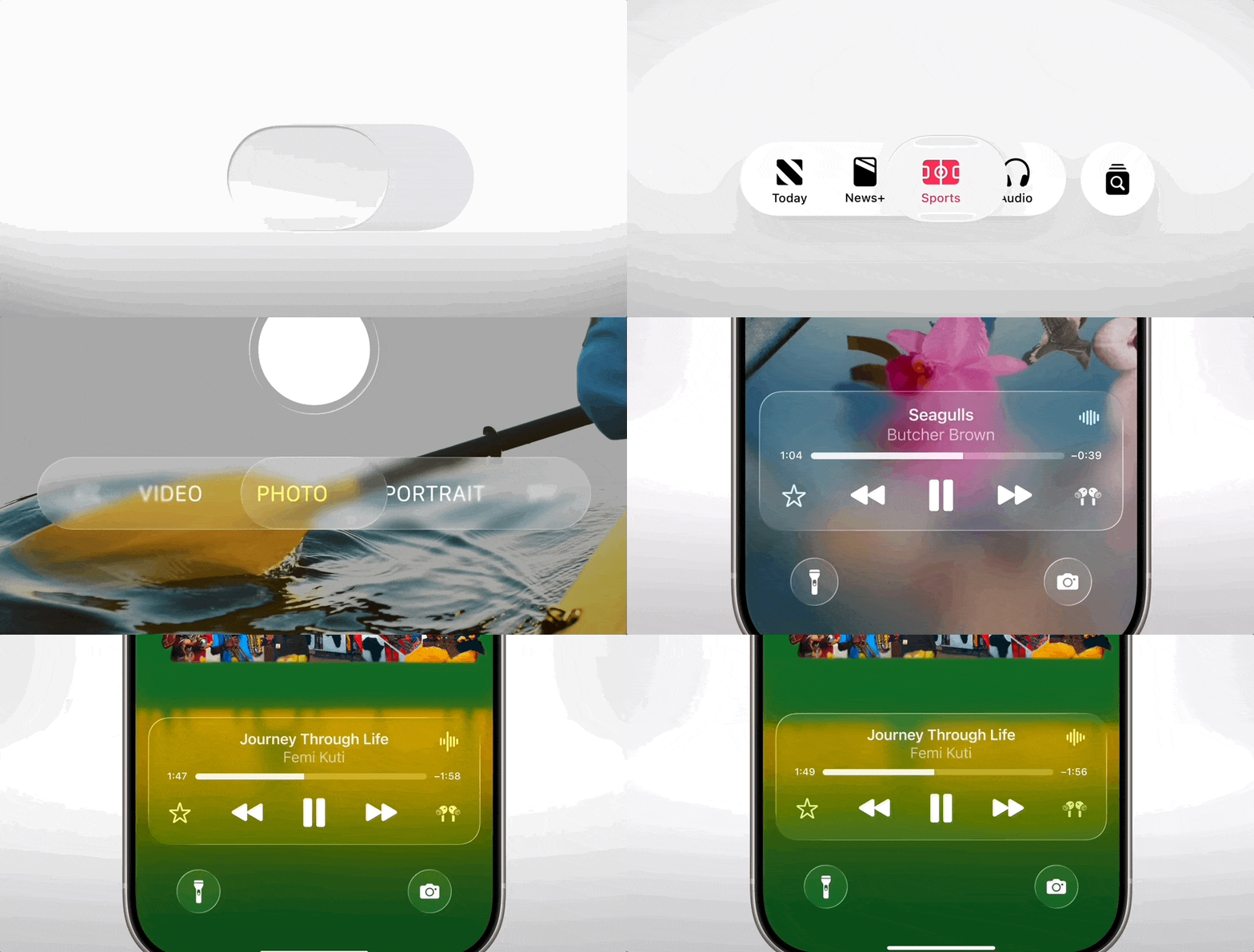
In software, "glass" can defy gravity, stretch and shrink with content, and even bend the light in the physical world. But when it comes to hardware, every refraction requires consideration of thickness, stress, adhesive, yield rate and cost.
In software, "glass" can defy gravity, stretch and shrink with content, and even bend the light in the physical world. But when it comes to hardware, every refraction requires consideration of thickness, stress, adhesive, yield rate and cost.
All-glass design first delivers a sense of seamlessness
ifanr has analyzed that there is a long-standing hidden line in Apple's design philosophy: Seamless.
This sense of wholeness rarely truly comes from a single piece of material. More often, Apple places seams, antennas, buttons and fastening structures in positions that are not easily noticeable.
On the iPhone 6, obvious antenna lines were left on the back to ensure signal performance. The antenna structure still existed on the iPhone 7. Apple reduced its impact on the appearance by reducing the size of plastic injection strips, adjusting their positions and unifying colors.
The seams never disappeared, they just no longer constantly remind users that they are holding a set of assembled parts.
From the Magic Mouse to the Apple Pencil, and then to the HomePod, Apple often invests very high process costs to reduce segmentation and splicing traces on product surfaces.
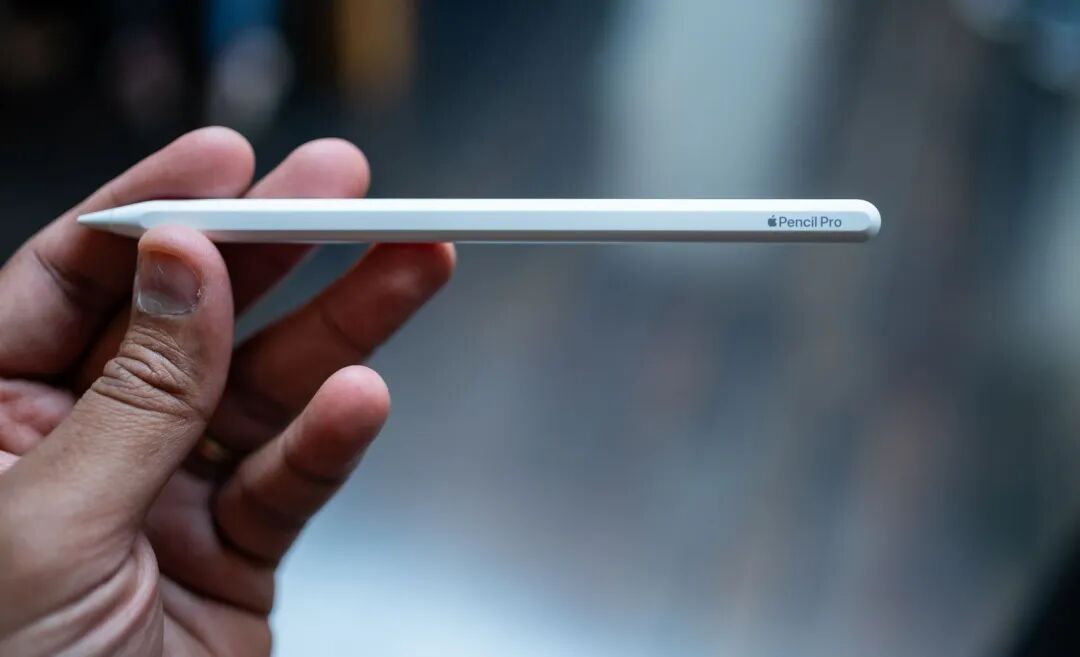
The all-glass iPhone is the culmination of Apple's long-standing design roadmap.
In the most radical solution, Apple tried to eliminate as many exposed metal parts as possible and directly connect multiple glass components together, making it a true "All-Glass" device.
There is also a more realistic design that retains the metal structure, with the curved glass on the front and back continuing to extend to the sides, making it a glass device but not a "fully" glass one.
These past two days, Jefferies analyst Edison Lee claimed that the all-glass solution was canceled due to excessively low yield rates. Mark Guman quickly refuted the news, saying that the 20th anniversary Pro models codenamed V73 and V74 are still advancing as planned. The glass on the front and back will curve toward the sides and meet the metal band at the midline of the body.
Both of them may be correct, but people are confusing the concept of All-Glass. Apple has not abandoned glass, it has only changed the way to realize the "all-glass" design.
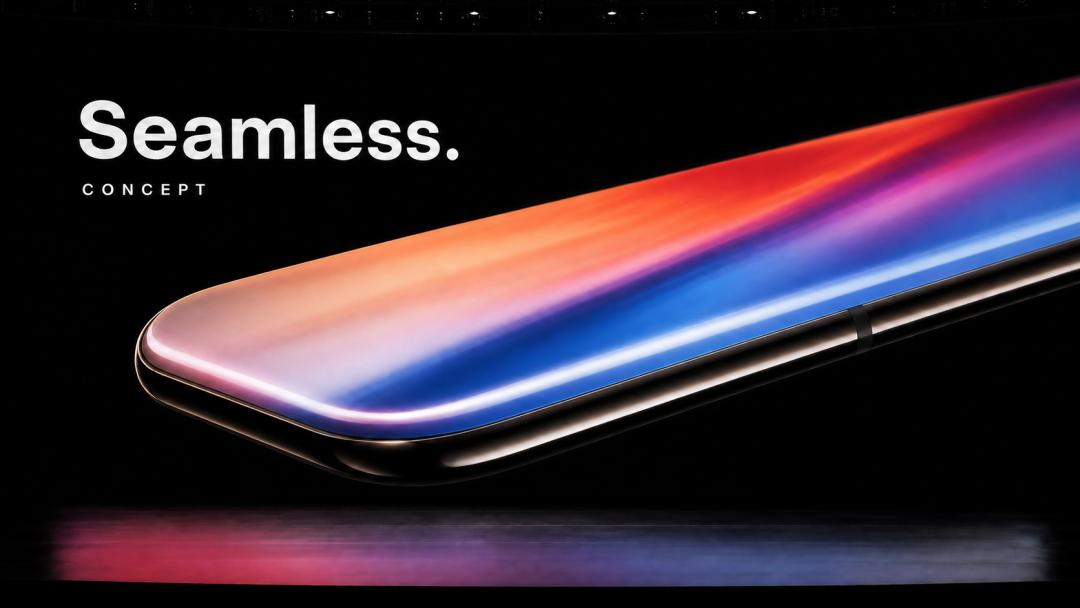
In fact, what was abandoned was a more aggressive early version with a higher glass proportion. Apple could not stably connect glass panels in mass manufacturing, so it returned to the solution with a metal structure.
Even with this relatively conservative solution, making the glass extend to the four sides of the device together with the screen remains extremely difficult.
A cover glass can go through hot bending, molding, grinding and polishing to form a complex 3D contour, while the OLED under the glass is composed of multiple layers of materials.
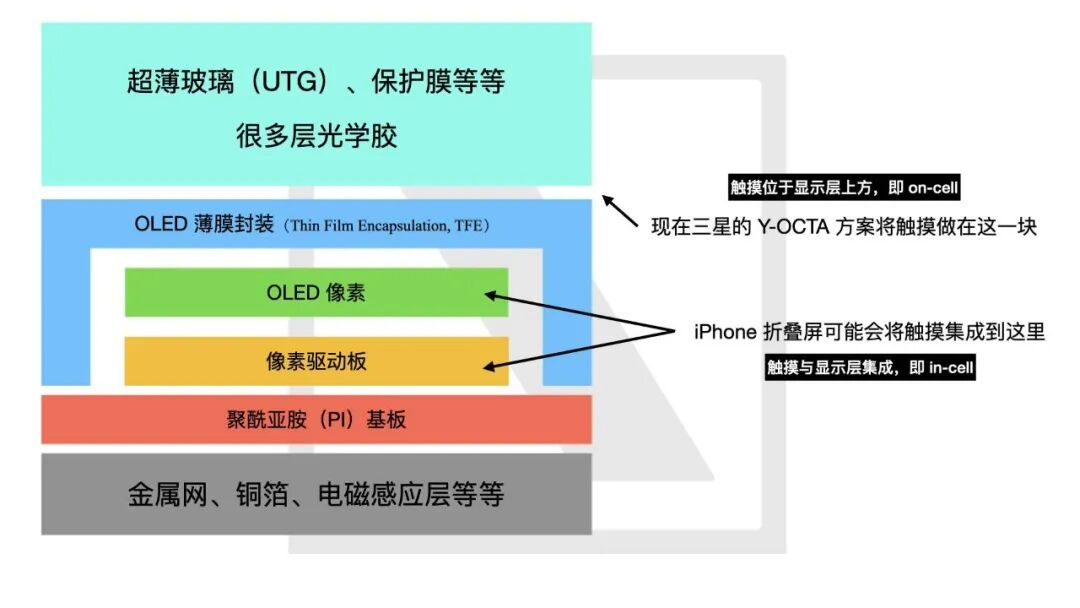
Thin-film transistors are responsible for driving pixels, electrodes transmit current, organic light-emitting materials generate images, and the encapsulation layer blocks water vapor. The outer side needs to be laminated with a touch layer and optical adhesive. Each layer has different elasticity, thickness and coefficient of thermal expansion.
In the middle section of the phone's side, the screen only needs to bend in one direction, similar to pasting a piece of paper onto a cylinder. The real tricky part is the four corners. The material must change curvature both horizontally and vertically at the same time, similar to wrapping a flat piece of paper perfectly around a spherical surface.
The paper will wrinkle, and may even need to be cut. The display panel may suffer from interlayer misalignment, encapsulation cracks and uneven pixels.
One of Apple's patent documents for composite curved displays directly describes this problem. When a planar flexible display is formed into a composite curved surface, compressive stress may cause the material to wrinkle or buckle. Cuts can release stress but leave visible seams. Excessive stretching may rupture the display layer.
The patent proposes solutions such as elastic grids, partitioned structures and special back films.
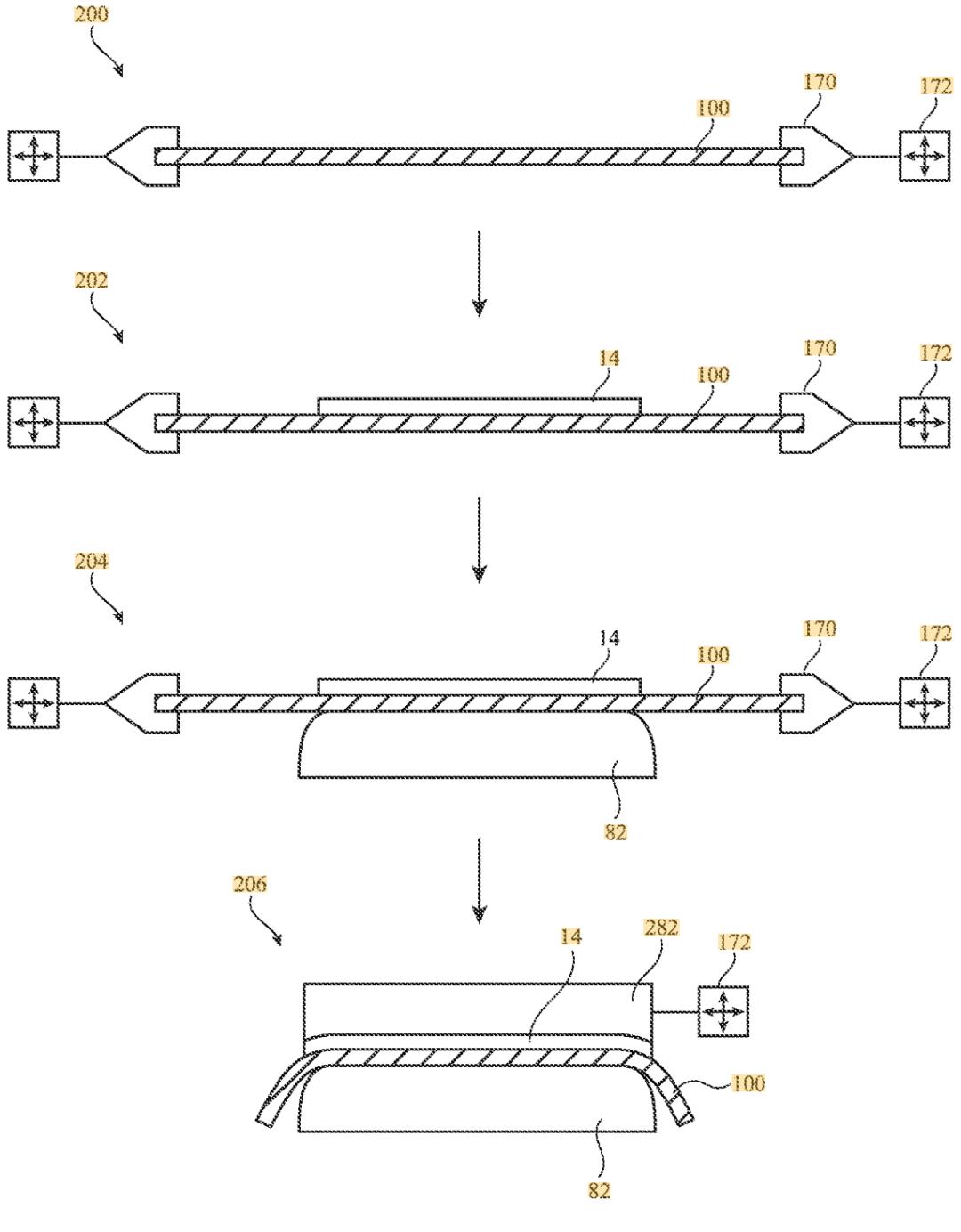
Current news only confirms that the front and back cover glass will extend to the sides, which does not prove that the effective display area of the OLED will also fully cover the four corners.
Apple can also keep the OLED at a relatively gentle curvature, and then use the cover glass, black border control and optical structure to visually extend the edges of the screen. Users will see a borderless screen, but the actual pixels may not be laid all the way to the edge of the glass.
The device adopting more curved glass does not mean that the screen is completely free of cutouts.
Even if the bezels can be hidden by the curved glass, the front camera and Face ID still need to receive external light. Placing them under the screen requires the display panel to have sufficiently good light transmittance.
Pixels, electrodes and wiring will reduce the amount of incoming light, and also cause diffraction, scattering and ghosting. Ordinary front cameras will face blurry images and noise. Infrared face recognition also needs to consider the transmittance of specific wavelength bands and the integrity of the light beam. Both under-display camera research and under-display infrared imaging research address these issues.
Even if the glass-body device can advance as planned, it does not mean that the display solution without any cutouts is already mature.
Seams have always existed, Apple just hides them as much as possible
The more aggressive all-glass version was finally stuck at the glass connection step. This time, this piece of glass needs to undertake appearance, connection and protection functions at the same time.
Glass is very hard, but it lacks the toughness of metal. It can withstand very high compressive loads, but it is extremely sensitive to edge notches, tiny scratches and local tensile stress. The more complex the curved surface is, the more difficult it is to control thickness, curvature and residual stress.
If several pieces of glass are directly spliced into the device body, the seams need to withstand drop tests, torsion tests, thermal cycle tests and waterproof tests. After the screen lights up, there must be no obvious refraction faults, adhesive traces or color changes at the seams.
The bonding material must meet the requirements for strength, transparency and durability. Increasing the connection strength may make the seams more obvious. To hide the seams, the choice of materials and processes will be restricted.
Apple has long studied these issues in a six-sided glass enclosure patent, which discusses connection methods such as glass sizing, adhesives and laser welding. Seams formed by different glass components may affect strength, transparency and display performance, so it is necessary to reduce their presence through refractive index matching and polishing.
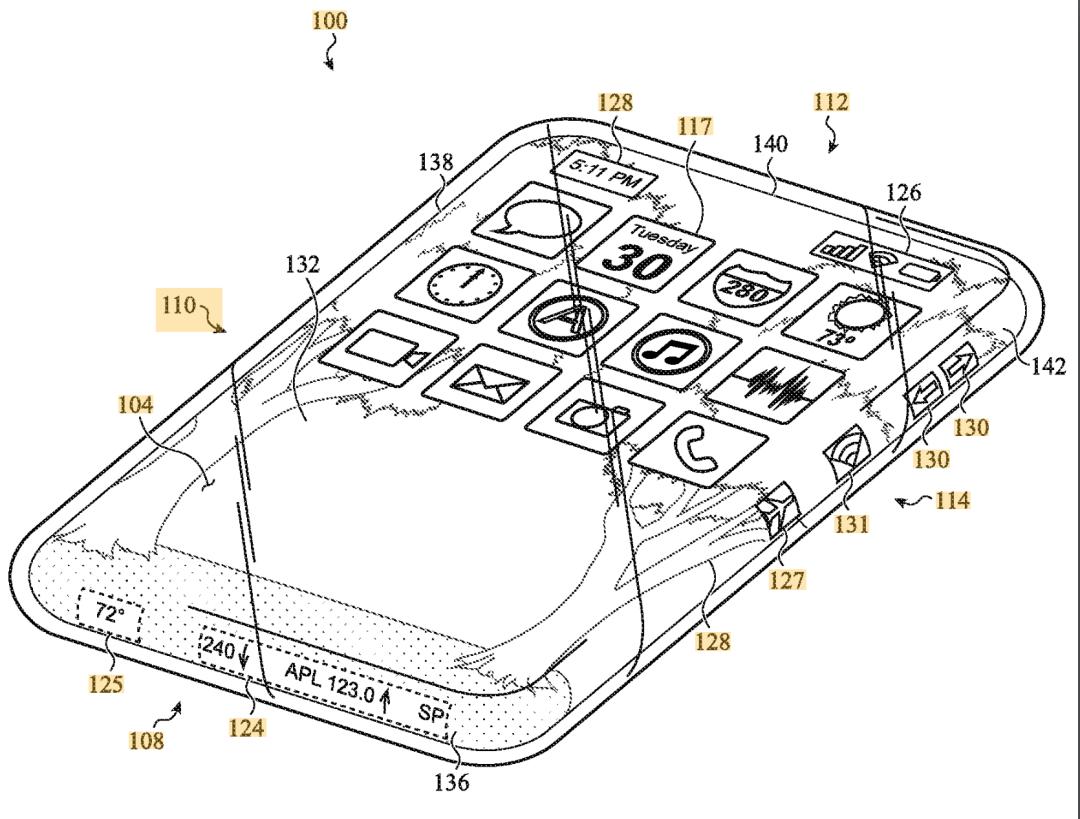
Of course, patents do not prove that a certain product will definitely adopt these processes, but they reflect the problems that need to be addressed for an all-glass device body.
The middle metal band gives Apple more options. It can fix the front and back glass, provide an assembly reference for internal components, and also bear part of the force. Buttons, speakers, antennas, interfaces and the internal midframe can also be fixed on the metal structure.
The metal also undertakes part of the heat dissipation work.
Apple uses a vapor chamber on the iPhone 17 Pro, and then spreads heat to a larger surface area through the forged aluminum unibody to maintain the continuous performance of the chip. Apple's introduction to its heat dissipation structure shows that the metal shell itself is already part of the thermal management system.
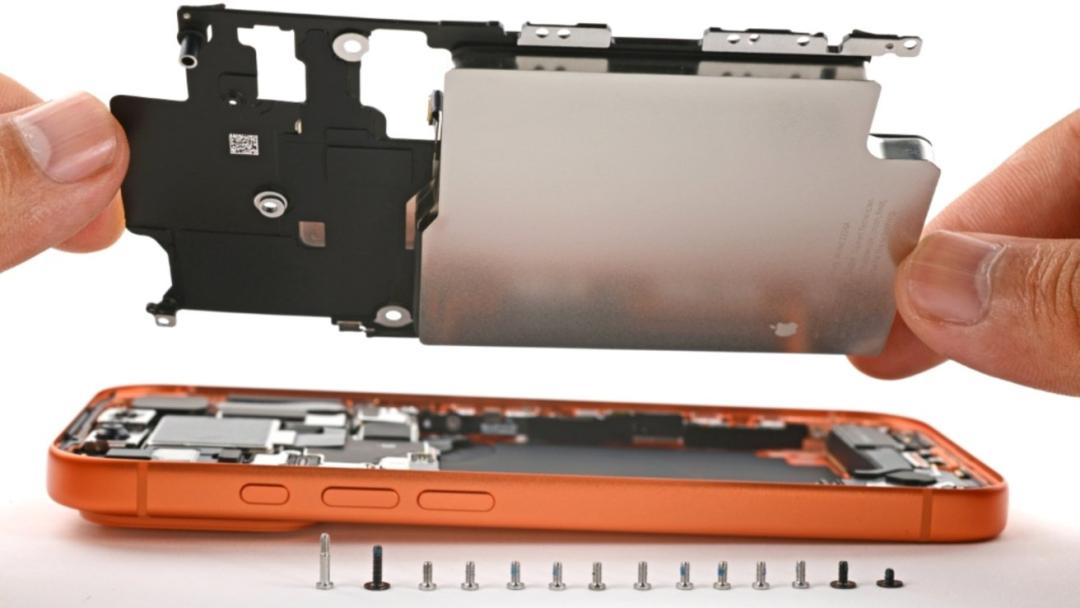
If the external structure is largely replaced by glass with weaker thermal conductivity, heat dissipation will rely more on the internal metal frame, graphite materials and vapor chambers. The phone still needs metal, but it is hidden in the internal space from where users can see it.
This design will also affect repairability. Apple has redesigned the internal structure since the iPhone 14 and iPhone 15, making the back glass a relatively independent repair module. If the front and back glass are more tightly combined with the sides, a partial breakage may require replacing a larger enclosure component.
Apple has often been willing to pay the price in terms of usage and repairability for a complete form in the past, but the all-glass design requires a much higher price.
Cover glass curvature, OLED deformation, optical adhesive thickness, seam refractive index, sensor calibration and full-device sealing all need to meet requirements on the same device. The later bubbles, wrinkles or optical distortions are discovered in the production process, the more components will be scrapped.
The mobile phone industry has already seen multiple products that tried to challenge the concept of "one whole piece of screen".
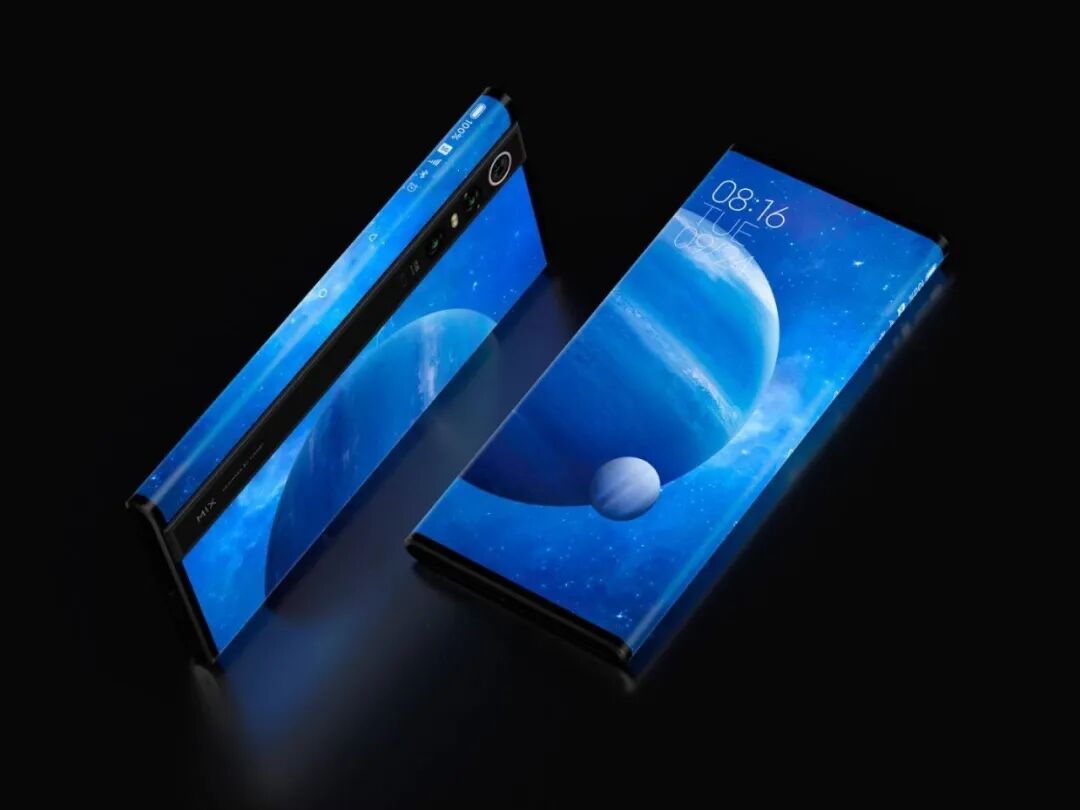
The Xiaomi MIX Alpha extended the display area from the front to both sides and the back, with the official claiming a screen-to-body ratio of 180.6%. But it never entered large-scale sales, and Lei Jun later explained that the mass production challenges were too high.
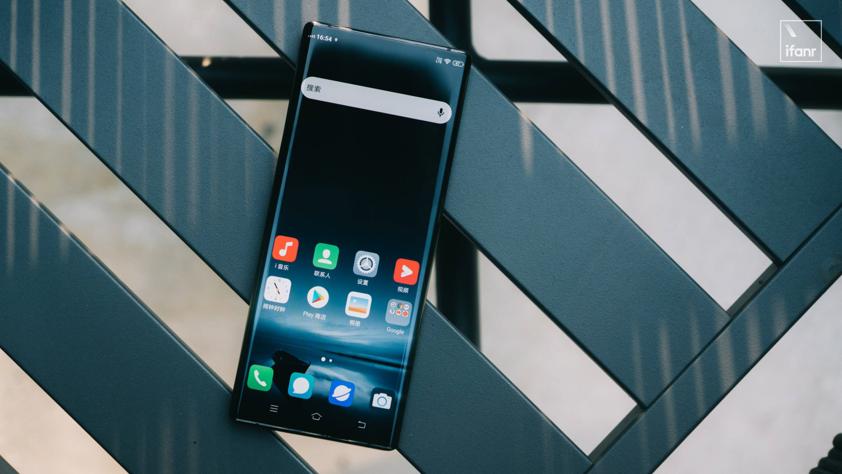
The vivo APEX 2020 uses a 120-degree curved screen to cover the sides, and also tries under-display cameras, virtual pressure-sensitive buttons and a portless body. vivo's introduction of the APEX 2020 demonstrates a number of related technologies, but it has always been a concept product.
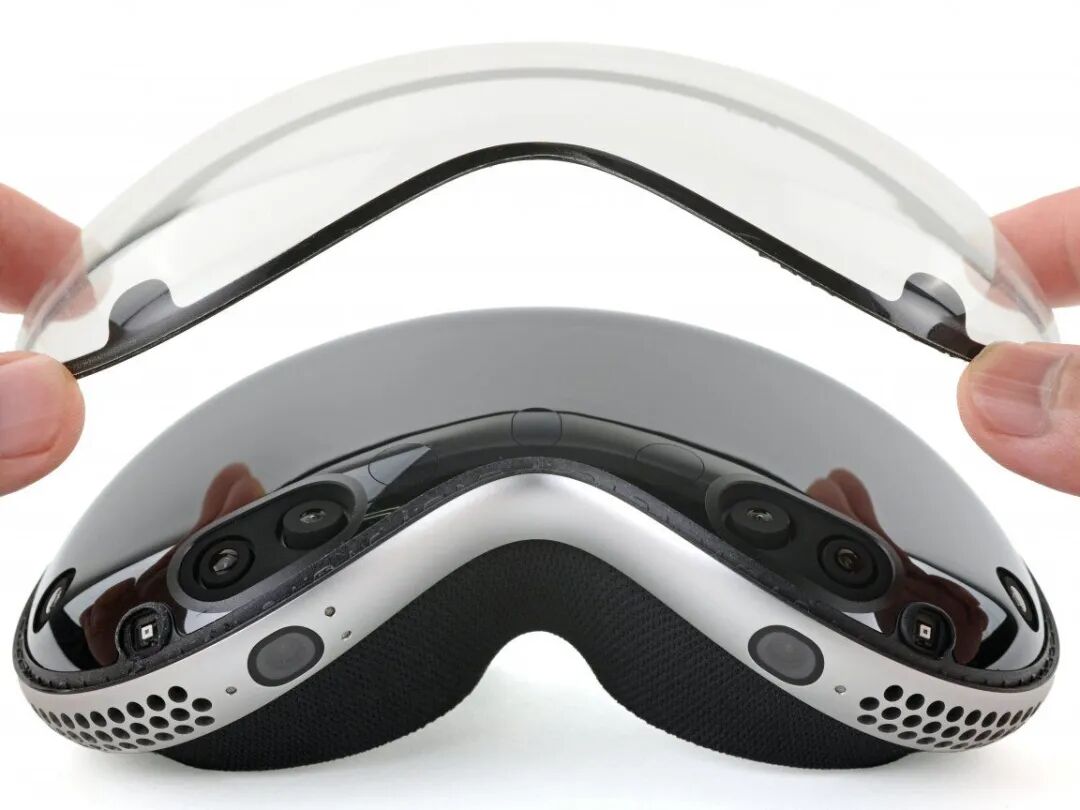
Apple also has rich experience in manufacturing complex 3D glass. The front of Apple Vision Pro uses a whole piece of laminated glass that has undergone 3D forming and polishing. However, the Vision Pro does not need to be put into a pocket every day like a mobile phone, nor does it need to withstand the same frequent touches and drops.
Therefore, the 20th anniversary iPhone needs that metal band, allowing Apple to continue pursuing the complete glass appearance while balancing the requirements of mass production, heat dissipation, repairability and long-term use.
At its 20th anniversary, Apple arrives at a new crossroads
The special significance of 2027 for Apple goes far beyond the 20th anniversary of the birth of the iPhone.
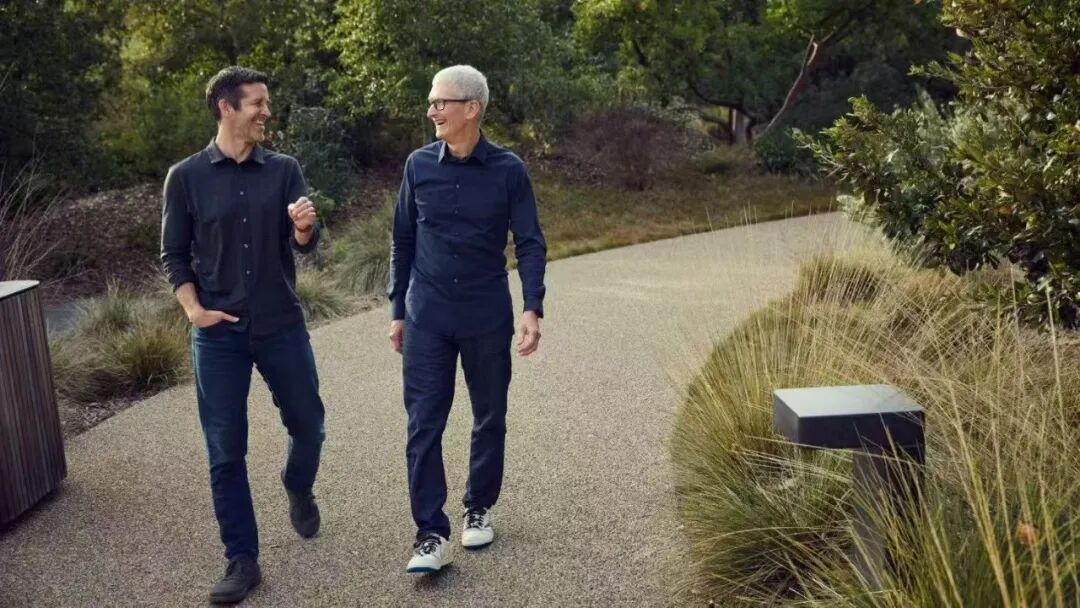
Tim Cook will step down as Apple's CEO in September 2026 and take the position of Executive Chairman. John Ternus, who is in charge of hardware engineering, will take over, and 2027 will be the time for him to independently hand in his first real exam paper. The all-glass iPhone will also become the most anticipated product of Apple's new stage.
At the same time, the external environment Apple is facing is also changing rapidly.
In the past few years, AI has entered mobile phones and computers mainly through software. Users