The first robot owned by the general public could be a "duck"
Recently, the robotics track seems to be full of ups and downs.
The highly anticipated Unitree saw its share price surge by more than 6 times at its highest on the first day of listing, with total market capitalization once exceeding 440 billion yuan; however, it then fell for 5 consecutive trading days, with its share price nearly halved and market value evaporating by more than 200 billion yuan. This rollercoaster market trend has sparked widespread discussions, and the public has once again raised doubts about the implementation and commercialization prospects of humanoid robots.
Just when the robotics industry was hit by a "cold splash", a mini-sized, cute-looking "little duck" went viral on the other side of the ocean, rekindling the embodied intelligence track.
It is called Microduck, priced at 399 US dollars — about 2800 RMB, which is an open-source robot developed and launched by Pollen Robotics under the AI community Hugging Face. Within 6 hours of opening for pre-orders, the order value exceeded 1 million US dollars, and reached more than 2.6 million US dollars 24 hours later. At its peak, one unit was sold every 4 seconds, and the new order backlog extended to 4 months. If you place an order now, you may not receive it even by Christmas.
In the past, the robotics industry has been telling the story of "universality", and the public is also waiting for a "perfect humanoid robot" to emerge. However, in the current consumer market, Microduck (also known as the robotic duck) seems to offer another answer.
Will the C-end market explode earlier than the B-end market?
With the appearance of a duck, a height of 25 cm, waddling when walking, and looking slightly clumsy when trying to get up after falling, why did Microduck suddenly become popular all over the world?
Before the advent of Microduck, the R&D of embodied intelligence for bipedal robots was definitely a "high-threshold track". Whether it is the high-end equipment of Boston Dynamics or the full-size humanoid robot prototypes of various manufacturers, the cost of a single unit is often hundreds of thousands of US dollars, and even the price of robotic dogs is more than 10,000 yuan. Microduck has lowered the price of a walkable and movable robot to the thousand-yuan level, which naturally makes many users willing to try it out.
What attracts them is not only the price, but also that it has built a full-process open-source reinforcement learning pipeline from virtual simulation training to real machine deployment. Simply put, users can train the "virtual duck" to learn a new action in the simulation environment, and then "migrate" the trained behavior to the physical robot to train their own robotic duck.
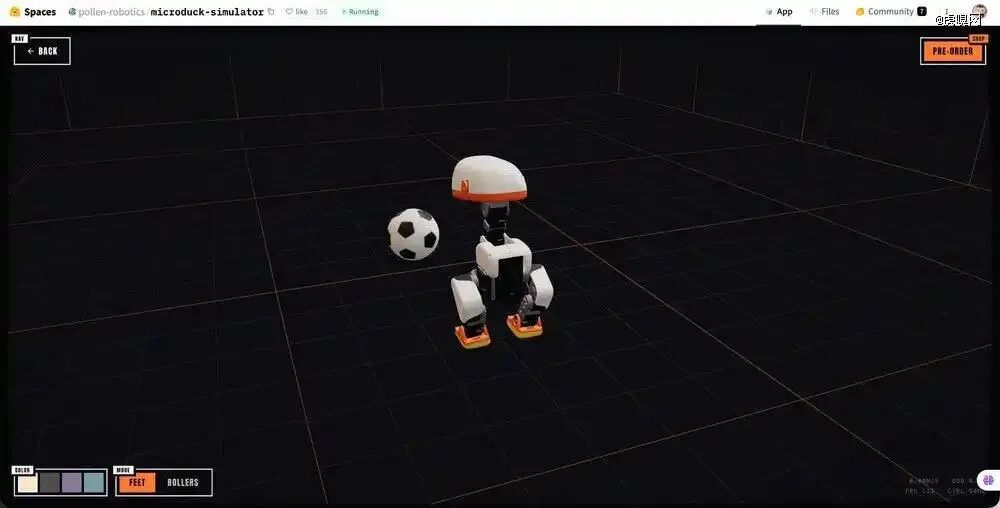
In the past, robots were usually sold to laboratories, enterprises or universities. With the precedent of Microduck, robots may be sold to more developers, geeks and ordinary consumers in the future. The market has also given Microduck enthusiastic feedback. In only 4 days, Microduck received 10,500 orders. On a second-hand platform in China, some purchasing agents have hung up links to sell the robotic duck at a maximum price of 5567 yuan, equivalent to twice the original price.
Behind the popularity of Microduck, the robotics industry is accelerating its entry into the C-end market. A few days before the pre-sale of Microduck, the Qiyuan Q1 and T1 under Sino Composite also opened for pre-order. Both products are small-sized robots. The former is positioned as the world's first personal robot, with a body height of 88 cm and a weight of 15 kg. The latter is also a deformable personal robot, and both are oriented to ordinary families.
Earlier, the ultra-simulated humanoid robot U1 series released by UBtech once sparked heated discussions in the industry, with pre-sale orders exceeding 13,000 units. The U1 series focuses on emotional companionship and personalized interaction scenarios, which is an important attempt by UBtech in the consumer market.
Compared with UBtech U1 series and Qiyuan Q1, T1, the creative value of this viral robotic duck is not only to reduce the price to the range acceptable to ordinary consumers, but also to provide a new idea for obtaining higher-quality and diversified real physical interaction data: when a large number of developers hold standardized and re-developable physical robots, a distributed "AI experiment scenario" of tens of millions of levels can be formed to continuously generate data.
In this way, data acquisition no longer only relies on a few large laboratories or data collection companies.
Mainstream players in the robotics track, such as Unitree, Galaxy Universal, XPeng, UBtech, etc., all focus on the R&D and implementation of large-size humanoid complete machines, aiming to create a general-purpose robot that can be deployed in B-end scenarios such as factories and logistics. But so far, no breakthrough has been made in this path. On the contrary, in the C-end market, various segmented demands are forming real purchasing power and showing unexpected enthusiasm.
Our first robot may not come from players like Unitree
As robots move to the top of cutting-edge technology and enter the public's field of vision, more and more people have an expectation or a question: what will the first robot that is really sold to the public on a large scale look like? Which robotics enterprise will produce it?
Robots such as Lovot and Fuzozo have proved that functions such as companionship, interaction and emotional value can become factors for consumers to pay, and consumers do not necessarily have to wait until robots can work to be willing to buy them. However, product sales have shown that such companion robots are still limited to a small niche. What's more, current companion robots are not so much robots as AI toys.
These AI toys usually install large models into a plush toy to let it learn to chat and interact with users. In essence, they still stay at the level of text and voice input and output.
Microduck has brought substantial breakthroughs. As a bipedal robot, it can walk, get up after falling, and grab small objects, which can realize motion control and physical interaction, and is closer to the robot form understood by the public. It can be said that Microduck has lowered the threshold of a real robot to the range that developers and consumers can afford through small-sized body, mature standard parts, large-scale procurement and standardized hardware design.
In the past two years, the emergence of star-level enterprises such as Unitree has made the robotics industry focus mainly on large-size humanoid robots. However, after Unitree's share price nearly halved after listing, the story of "universality" of humanoid robots has been questioned again, and we seem to be further away from owning a robot that can work. Although Microduck is just a "duck", it lets the outside world see another possibility for robots to enter daily life on a large scale.
And owning a personal robot that belongs to you and can "grow" seems to be a very attractive story.
However, an awkward fact is that this globally popular "duck", from the most core chip to the overall OEM manufacturing, is Made in China, but none of China's robotics enterprises created this "duck" that is expected to open an era of open-source affordable robots.
This means that although the development of the global robotics industry is inseparable from China's increasingly mature robotics manufacturing industry chain, it does not mean that we can successfully define the next generation of intelligent hardware and smoothly usher in another round of innovation in the consumer electronics market.
From the robotic duck, we can see that the open-source ecosystem is becoming a new variable in the robotics industry, and what makes Hugging Face more advantageous than traditional robotics manufacturers is that it already has a large number of developers. According to the 2026 Open Source Ecosystem Report officially released by Hugging Face, the number of platform users has grown to 13 million in 2025, with more than 2 million public models and 500,000 public datasets.
Microduck is just a start. Before the hardware carrier that truly enters the public life appears, there are too many variables in the competition situation.
Is NVIDIA the biggest beneficiary?
On the same day that Microduck opened pre-orders, multiple media reported that NVIDIA has basically reached an agreement to acquire Hugging Face for about 12.9 billion US dollars. If the transaction is completed, it will be one of the largest acquisitions in NVIDIA's history.
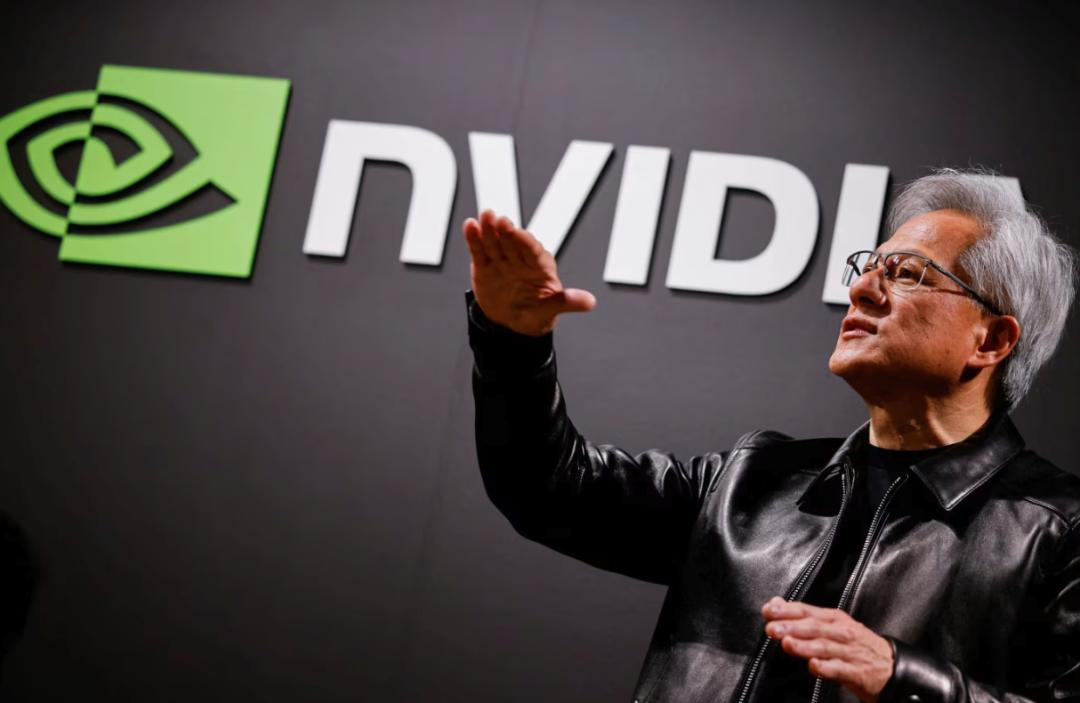
Looking back at the beginning of this year, Jensen Huang said in his CES keynote speech that "the next wave of AI will be AI running in the physical world", which announced that the "ChatGPT moment" of Physical AI has arrived. The acquisition of Hugging Face at this time obviously further releases NVIDIA's great ambition in the field of embodied intelligence.
Specifically, from Isaac Sim to the GR00T foundation model, and then to the Cosmos world model, NVIDIA has been building a full-stack robotics toolchain from simulation to deployment. The addition of Hugging Face will further complement the developer community, lowering the threshold for hardware implementation. The popularity of the robotic duck means that more hardware entering the consumer market, even blockbusters that can change the industry, are expected to be born in NVIDIA's open-source community and the complete closed loop behind it.
In the longer term, this open-source platform gathers a large number of robotics enthusiasts, researchers, geeks and early-adopting consumers, who may also become the core users of NVIDIA in the future.
It can be seen from the layout that NVIDIA's goal in the physical AI era is to build an open ecosystem similar to what "Android" is to smartphones, and become the default development platform in the fields of robotics and autonomous driving. In this way, no matter whether robots continue to follow the general-purpose route or focus on specific scenarios to develop dedicated industrial or consumer products, they may be inseparable from NVIDIA's chips, models and ecosystem.
In other words, no matter how glorious the robotics manufacturers are now, standing collectively under the spotlight, the biggest beneficiary of the robotics boom may still be NVIDIA.
Of course, once a giant establishes its dominance, it often means risks for the industry and other practitioners. Just like NVIDIA's acquisition of Hugging Face, since the platform also hosts models from other companies such as Meta, Google and Mistral, the outside world is wondering whether it can maintain its neutrality if it is owned by NVIDIA.
Similarly, if NVIDIA directly enters the robotics market to make robots, it will form a competitive relationship with robotics manufacturers. With its core advantages such as underlying computing power and self-developed chips, it is also a problem that robotics manufacturers need to guard against whether it will form a dimensionality reduction strike.
Of course, these are all later issues. Whether NVIDIA can successfully become the "Android" in the physical AI era still faces the practical problem of when robots will enter people's daily lives.
It is undeniable that we are still far from a "perfect" humanoid robot. Although the viral robotic duck has brought countless controversies, it allows more people to have the opportunity to personally touch the cutting-edge technological achievements of embodied intelligent robots, rather than just watching from a distance. This is already a big progress.
This article is from the WeChat official account "Silicon Carbon Variable", the author is Shen Lang, and it is published with authorization from 36Kr.