Intel swings the axe: Difficult trade-offs for the tech giant
Affected by rising supply chain costs, Intel's PC-side CPUs have entered a continuous price increase cycle since the end of 2025. The price adjustment of products in the first quarter of 2026 was about 10%; by July, some consumer-grade and server CPUs saw another price adjustment, with the price increase per chip spanning a wide range, covering from tens of dollars to more than a thousand dollars.
According to Taiwan's Electronic Times, supply chain sources revealed that Intel's PC CPUs are expected to raise prices by another 10% on October 5, 2026. At the same time, the small-core product lines with low gross margins may start the End of Life (EOL) process for delisting.
For a long time, Intel has built a wide moat relying on its full-scenario chip layout. Now facing profit pressure, it has chosen a strategic "weight loss surgery": through price increases and streamlining low-margin long-tail businesses such as Small Core, it is streamlining its frontline in exchange for higher per-unit product profits.
Yet every surgery carries risks. When its market positions, R&D branches and upstream and downstream partnerships are hit one after another, Intel needs to answer a question: after slimming down, can it still hold onto its moat?
Reaping dividends while taking drastic measures to survive
While raising chip prices, the price adjustment moves of Intel's PC CPUs and server CPUs are intertwined, but behind them are two completely different market logics, and the corresponding industry impacts and corporate gains and losses are also completely different.
Intel gives priority to the limited production capacity of its own fabs to server CPUs with higher gross margins, but even with resources tilted to this product line, its own server CPUs are still in a state of production capacity shortage. The continuous gap between supply and demand gives server CPUs strong pricing flexibility.
Different from conventional price adjustments, the price increase of server CPUs is not a passive self-rescue move for enterprises, but a dividend release under the high-boom track.
Facing core customers such as cloud vendors and data centers, Intel mostly locks the procurement scale through long-term framework agreements instead of locking prices. In the situation of tight supply of server CPUs, stable delivery has become the primary demand of customers, which gives them a high tolerance for price increases.
The price increase has not curbed the demand for computing power expansion of leading cloud vendors, helping Intel amplify the profits of the high-end computing power sector and matching its strategy of focusing on high-margin businesses, but small and medium-sized customers will reduce procurement due to rising costs. In the long run, continuous shortage coupled with price increases will push customers to develop diversified supply chains, bringing gradual substitution risks.
In contrast, the multiple rounds of price increases of PC CPUs have distinct counter-cyclical characteristics. Faced with the realistic constraints of rising costs and internal production capacity being tilted to servers, Intel did not choose to maintain its scale at low prices, but actively completed profit restoration through price adjustments.
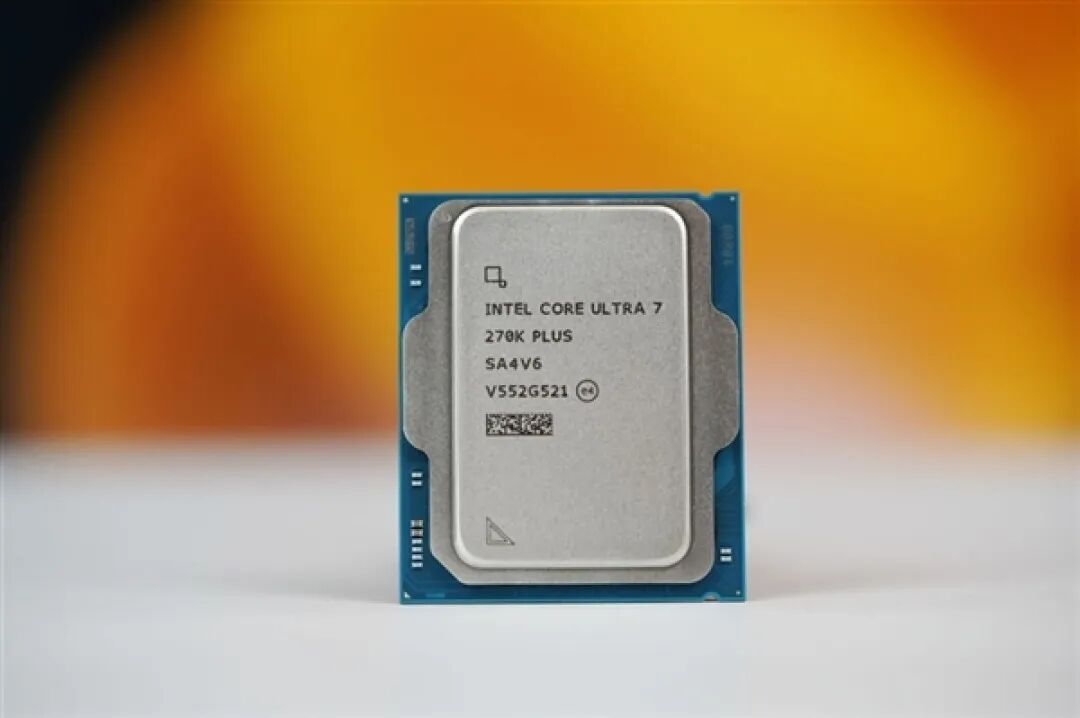
The global PC market is in a weak stock repair cycle, individual users have insufficient motivation to replace their devices, competition in the track is highly involuted, and the terminal market is highly price-sensitive. Intel's multiple rounds of CPU price increases since the end of 2025 have continuously transmitted cost pressure upstream, gradually eroding the profits of OEMs and channels. However, brands still hold a certain amount of existing inventory, and the cost impact has not been fully released.
Restricted by fierce market competition, PC brands cannot fully pass the cost down, and part of the cost can only be digested internally. After the existing low-price inventory is exhausted, the upward pressure on terminal prices will further appear, and consumers' willingness to replace devices may be suppressed, which will in turn increase resistance to the recovery of the PC industry. Commercial orders have relatively stronger resilience and will be relatively less affected.
More critically, this round of price increases coupled with Intel's plan to include some low-margin Small Core product lines in the EOL adjustment has formed a double negative effect.
Intel actively reduces the supply of entry-level, embedded, and industrial-grade related chips, narrowing its own product coverage, which is equivalent to giving up niche markets such as industrial computers and the Internet of Things, opening a rare penetration window for Arm camp vendors represented by Qualcomm and MediaTek.
The combination of price increases and product line contraction puts Intel's strategic trade-offs on the table: it no longer clings to the shipment volume and full-scenario ecological coverage of the PC business, but prioritizes raising profit levels, and tilts limited production capacity and R&D resources to the high-value track of server CPUs.
In the short term, this strategy can quickly optimize the financial statement structure and improve profitability. But the cost lies in the long term: the PC business is Intel's cash cow and the most extensive landing carrier of the x86 ecosystem. As Intel actively shrinks its long-tail product lines, it may gradually give up niche markets such as industrial control and the Internet of Things, weakening the ecological foundation of x86 in edge scenarios.
This slimming and profit-seeking adjustment is gradually eroding Intel's originally solid moat.
Cutting low-margin product lines: leaving market vacancies in industrial control and IoT tracks
In addition to price increases, Intel is conducting a profitability review of its product lines, and the most watched trend in the industrial chain is that some low-margin Small Core products have been exposed by the supply chain to enter the EOL process.
The Small Core product line is represented by the Atom series, focusing on industrial computers, IoT edge nodes and various embedded scenarios. This market is a typical long-cycle track, the life cycle of end products such as industrial automation, smart gateways, and medical equipment generally lasts up to ten years. Manufacturers need chip suppliers to maintain long-term and stable supply, and at the same time chips need to meet the conditions of low power consumption, compact packaging, and adaptation to harsh working conditions, without pursuing extreme computing power.
Customers in such scenarios are highly sensitive to cost, power consumption, and decades-long continuous supply capacity, which also determines that some products in this series are naturally low in gross margins. Under the strategic keynote of Intel's efforts to improve overall profitability, the low-return Small Core product line has been included in the scope of this business slimming assessment.
At the operational level, Intel's consideration of reducing this product line has a clear cost-benefit logic. To continuously supply Small Core, it is necessary to continuously bear the costs of R&D, tape-out, firmware maintenance and market support, while the gross profit of a single product is limited, and resource investment can hardly obtain considerable returns.
In contrast, if low-margin SKUs are reduced, Intel can release supporting R&D resources and mature production line capacity, and tilt resources to high-performance PCs and server CPUs with higher premiums, so as to improve the overall profit structure.
However, from the perspective of R&D resource allocation, reducing low-margin product lines such as Small Core can save R&D expenditure in the short term, but it also means that Intel actively abandons continuous iteration in the direction of low-power and miniaturized chips.
It should be known that the low-power consumption and compact packaging technologies spawned by such scenarios are an unignorable branch of the chip technology system. If this product line is reduced, Intel's R&D pace in the edge embedded field may slow down, the gap with competitors will widen, and the diversity of its technical layout will be damaged.
The other side of business contraction is also the change of market pattern in niche segments. The industry revealed that if Intel reduces the low-margin small-core product lines, what will be affected may not be mainstream PCs, but long-life cycle markets such as industrial computers (IPC), Internet of Things (IoT) and embedded systems.
If some products enter the delisting process, there will be a phased supply gap in the market. Original customers need to re-select chip suppliers, carry out solution selection, software and hardware adaptation and re-certification of the whole machine, which will generate additional time and capital costs.
This market gap brings potential penetration opportunities for Arm vendors such as Qualcomm and MediaTek. The two vendors have deep accumulation in the field of low-power consumption, highly integrated SoCs, and their chip features meet the requirements of IoT and embedded devices for power consumption and package size, and are expected to take over some original Intel customers.
However, the threshold for chip replacement in the industrial market is high, the certification cycle is long, and customers will also evaluate many alternative solutions, so it is not realistic for the Arm camp to quickly seize large-scale market share.
The deeper hidden loss lies in brand reputation, because industrial control and IoT customers attach great importance to the 10-year continuous supply guarantee of chips. Once Intel reduces such long-tail products, it will not only compress its own ecological coverage in the edge computing market, but also shake the trust of industrial customers in its stable supply capacity.
Even if the subsequent computing power pattern changes and Intel intends to return to the industrial control and embedded track, it will have to bear high reconstruction costs if it wants to win back customer trust.
Beyond the moat: the test of the ecosystem
The combined strategy of price increases and product line streamlining has both advantages and disadvantages: Intel tries to rely on this strategy to raise profits, but it needs to bear the risks of customer loss and share pressure in multiple niche tracks.
The price increase of PC chips directly pushes up the cost of the whole machine, and price-sensitive users either turn to the AMD platform with stronger cost performance, or postpone device replacement. According to the latest data released by Mercury Research, in the second quarter of 2026, AMD's share in x86 client CPU shipments exceeded 30% for the first time, reaching 30.3%.
Intel's market share fell below 70% for the first time since 1995, dropping to 69.7%. Compared with the first quarter, AMD increased by 0.7 percentage points; compared with the same period in 2025 (23.9%), the growth reached 6.4 percentage points within one year.
This series of strategic adjustments has also affected Intel's upstream and downstream ecological partners, posing a test to the long-term stable cooperative relationship in the industrial chain.
If some Small Core products start the EOL process, Intel's procurement demand for special packaging materials and small electronic components will decrease accordingly. Upstream supporting vendors are facing shrinking orders and revenue pressure, and need to re-plan production lines and explore new customers, and the long-accumulated supply chain cooperation tacit understanding between the two sides may be damaged.
Intel raising CPU prices, coupled with internal cost considerations, will push it to renegotiate prices with upstream raw material and component suppliers. The cost game between upstream and downstream may intensify, leading to more cooperation frictions.
For downstream partners, Intel's CPU price increase will directly raise the material and production costs of OEMs.
OEMs mainly have two coping methods: pass the cost on to end consumers, or introduce alternative chip suppliers such as AMD. Price increases will suppress the sales of end products, and reducing the proportion of Intel chip procurement will weaken Intel's right to speak in the PC supply chain. No matter which solution is adopted, the cooperation foundation between Intel and PC manufacturers will be affected.
At the same time, large data center operators, out of consideration for controlling capital expenditure, have begun to evaluate more server chip solutions to reduce their dependence on Intel products, which may affect the revenue and market position of Intel's server chip business.
With some Small Core products proposed for delisting, downstream equipment manufacturers need to carry out chip re-selection, software and hardware adaptation and whole machine reliability testing, which increases R&D and procurement expenditures. During the long replacement cycle, downstream manufacturers will build a multi-supplier system to weaken their single dependence on Intel.
In the long run, this will continue to erode Intel's influence in the embedded ecosystem. Because reducing long-tail product lines coupled with continuous price increases essentially means sacrificing market breadth in exchange for per-unit product profits. If customers continue to lose and the trust of upstream and downstream partners weakens, the full-scenario computing moat on which Intel relies for its foothold may continue to be damaged.
This article is from the WeChat Official Account "Silicon Carbon Variable", written by Guan Yanyue, authorized for release by 36Kr.