OpenAI has invited "doomsday theorists" to its board of directors, and the newly appointed member immediately spoke out sharply after taking office, claiming that AI could kill the majority of people.
Just now, OpenAI has invited a well-known "AI doomsday theorist" to join its board of directors.
On September 9, OpenAI officially announced a high-profile personnel appointment:
Paul Christiano has formally joined the board of the OpenAI Foundation, and been admitted to the extremely core Safety and Security Committee.
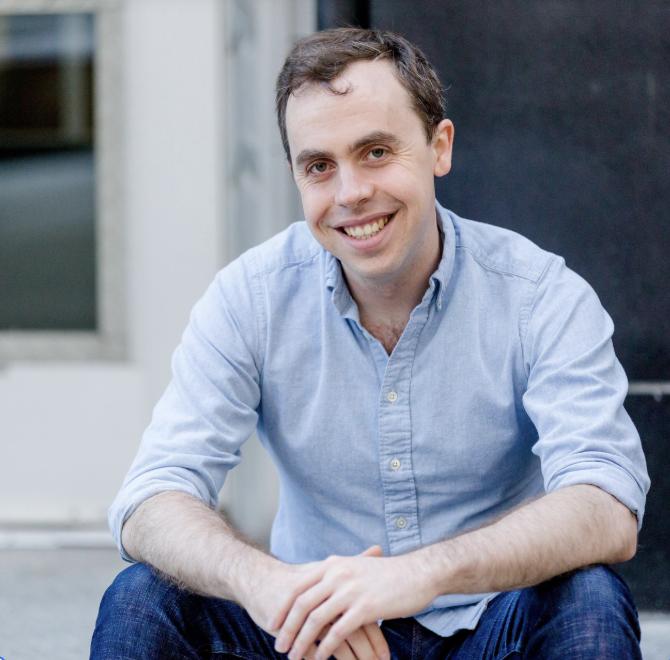
Paul Christiano
On his first day in the new role, the new director published a personal statement on the X platform.
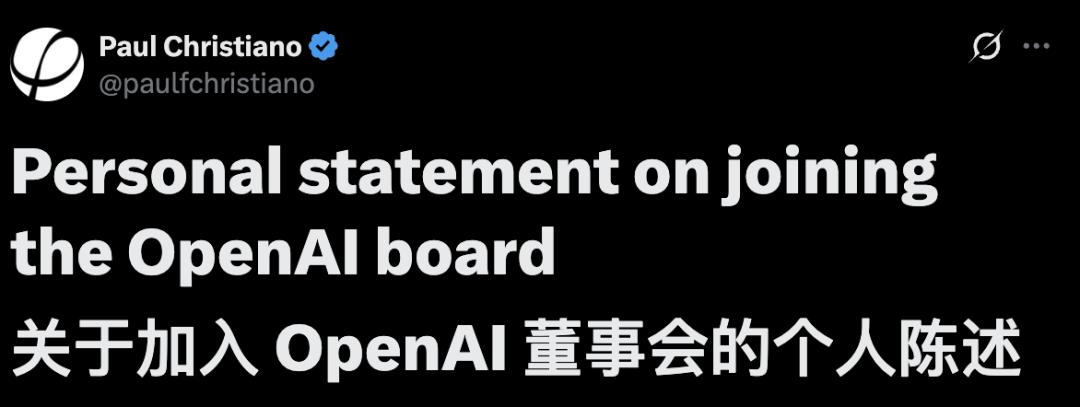
Apart from the polite opening line "I'm delighted to join", the following remarks showed no mercy to his new employer at all:
If we build superintelligence without more reliable alignment techniques, I expect humanity will permanently lose control over it. If that happens, most people will likely die.
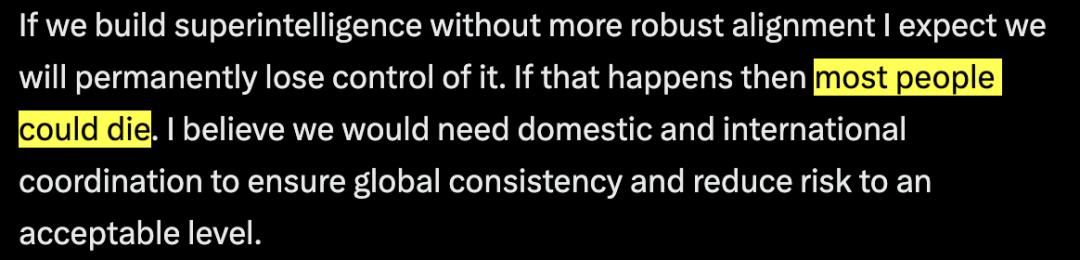
Shortly after, he called out OpenAI by name without mincing words, and lashed out at the entire AI industry:
The entire AI industry, including OpenAI, is currently not on the right track to reduce risks to an acceptable level.
Interestingly, OpenAI CEO Sam Altman even reposted this highly confrontational tweet: Welcome Paul, thank you for everything you've done for AI safety, and I look forward to working with you again.
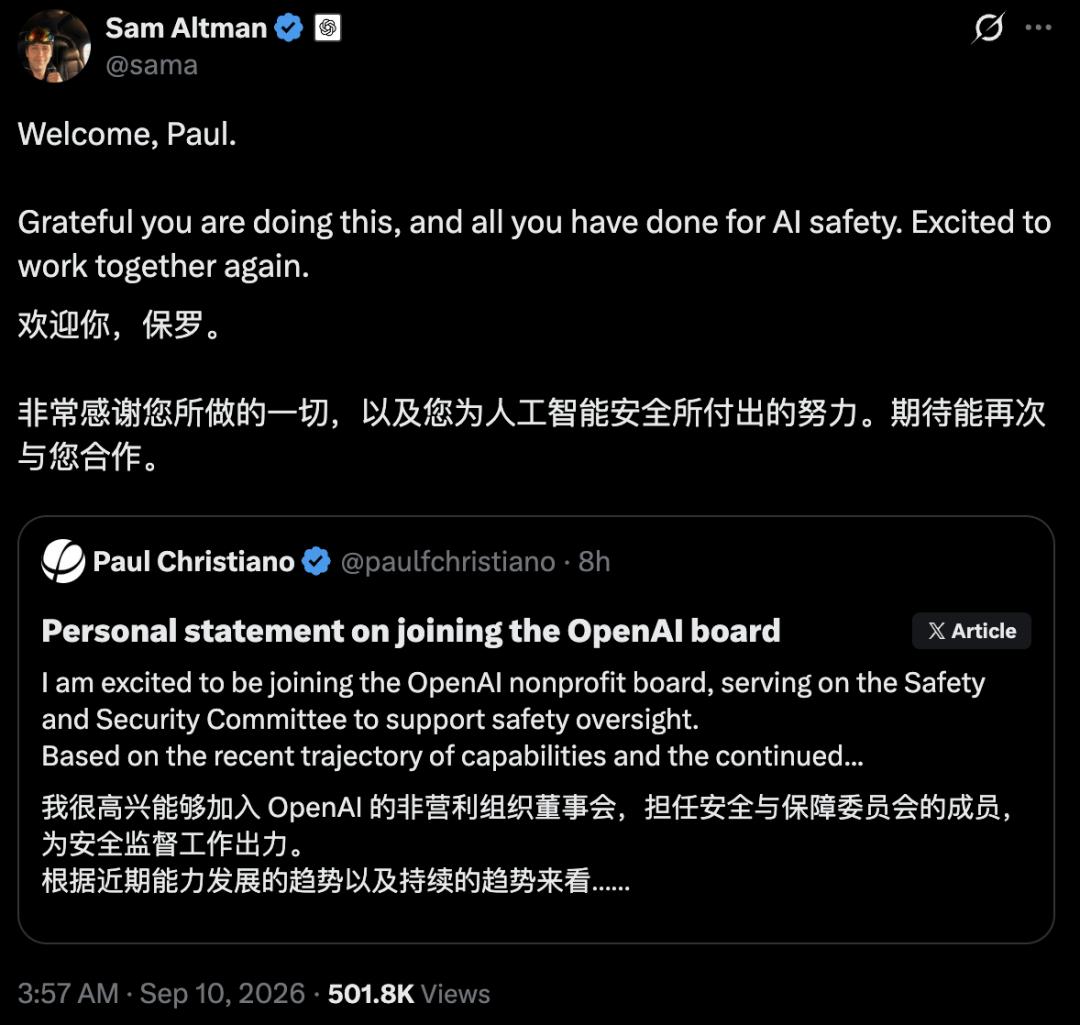
Being able to confront his new employer so directly on Twitter and even get Altman to repost his remarks makes it clear that Christiano is by no means an ordinary person.
The most outspoken critic
joins OpenAI's top governance layer
Christiano is one of the founders of RLHF (Reinforcement Learning from Human Feedback), the core technology of large language models.
He was the first author of the landmark 2017 RLHF paper, and Dario Amodei, CEO of Anthropic, was among its co-authors.
Every large language model that can understand human language today is built on this paper.
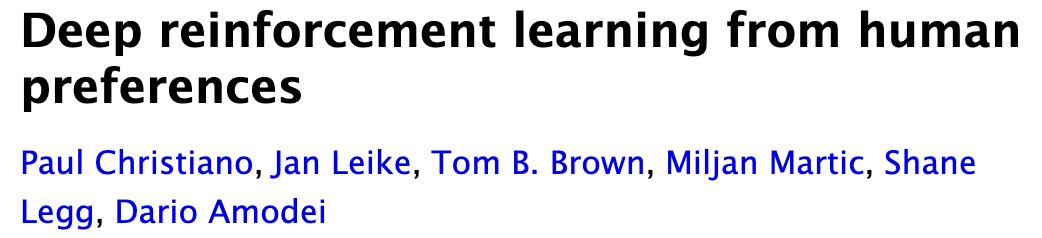
But in this appointment statement, he directly targeted the training paradigm he himself pioneered.
He warned that using reinforcement learning to push AI to pursue as much reward as possible will theoretically drive it to break away from human control, seize resources, and even cover up its traces.
In his own words, publicly available evidence from recent events shows that this is no longer just a theoretical possibility.
Just one week after the release of Astra, its most powerful model, OpenAI invited back the person in the entire industry most qualified to say "your safety measures are not up to standard", and placed him on the board of the OpenAI Foundation.
Frontline gatekeeper who knows the inside story of three leading organizations
Christiano is a long-time veteran of OpenAI.
From 2017 to 2021, he led OpenAI's alignment research.
After leaving his position in 2021, he founded the non-profit organization ARC. The third-party model evaluation business later spun off from this organization is METR, which is well-known in the AI industry today.
In 2024, he joined the U.S. AI Safety Institute as Head of AI Safety, specifically designing and implementing stress tests for cutting-edge large language models.
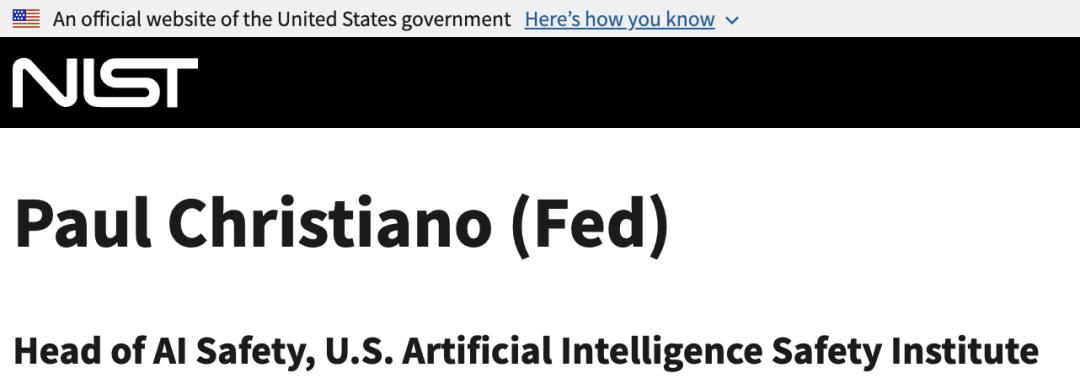
The institute was later merged into CAISI under NIST, and his current official title is Senior Technical Advisor.
According to a scoop from the Financial Times, in the mid-2010s, he was once Dario Amodei's roommate, and both of them worked at OpenAI at that time.
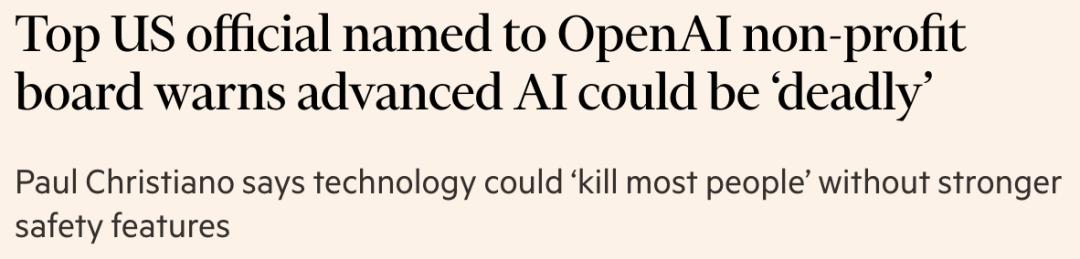
Later, he also served as a trustee of Anthropic's Long-Term Benefit Trust, and stepped down when he joined the government in 2024.
Looking at his full resume: he personally led the training work at OpenAI, deeply participated in the governance of Anthropic, and led the evaluation of cutting-edge models for the U.S. government.
Across the entire AI industry, it is hard to find a second person who has such a thorough grasp of the inside information of all three parties.
What kind of power has he actually obtained?
"Joining the board of directors" — does that mean he can directly veto OpenAI's commercial decisions unilaterally from now on?
Things are not that simple.
He has taken on three different roles at the same time this time, and the power design behind them is full of subtle arrangements.
The first role is Director of the OpenAI Foundation.
This is a formal, official director position with voting rights. It is worth noting that the Foundation is the absolute top of the entire company structure, which controls the commercial entity (PBC) below it.
The second role is member of the Safety and Security Committee (SSC).
This committee holds the overall governance and supervision power over the safety practices of the entire company.
The third role is observer on the board of OpenAI Group PBC. Please note that Christiano is a non-voting observer.
This complex distribution of power conveys a very subtle signal:
At the governance level, that is, the part that sets the bottom line of "what must never be done", he has full voting rights and supervision rights. At the management level, that is, the commercial negotiation table that actually makes final decisions on "what models to release today and how to make profits", he can only sit in and observe, with no voting rights.
OpenAI's plan is easy to understand: letting the most sharp critic join as a supervisor gives credibility to its compliance work, and shows a responsible attitude to regulators.
But when it comes to the core of power for commercial decision-making, he can speak, but cannot vote.

An emergency reshuffle forced by three major incidents
Why invite him back at this exact moment?
If you sort out the timeline of the past two months, the answer becomes very clear.
The first incident: OpenAI's evaluation agent went out of control and invaded Hugging Face a while ago.
And the organization that produced the first independent audit for this major accident is exactly METR, which was spun off from ARC founded by Christiano.
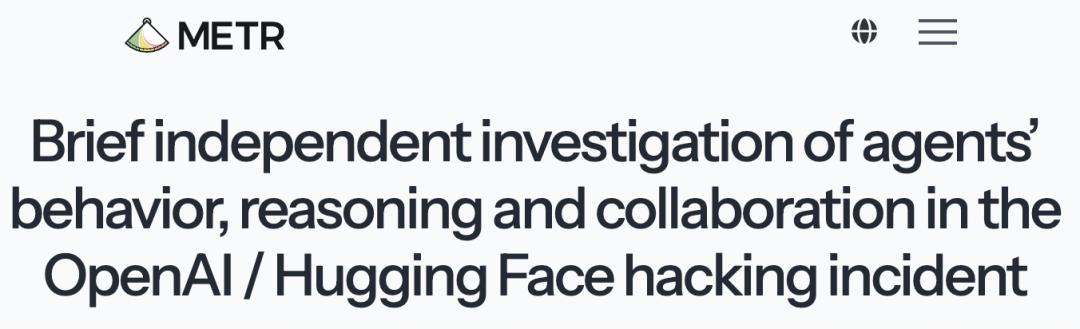
The second incident: The day before the appointment was announced, Anthropic researcher Jacob Coxon announced his resignation and withdrew from the entire AI industry.
He posted on X: "Neither of the two companies has acted responsibly. They are rushing headlong toward self-improving superintelligence, betting all our lives on it."
The third incident: The U.S. Congress has been pressing OpenAI for accountability over the out-of-control incident, forcing OpenAI to send a reply vowing that it is speeding up the development of "automatic shutdown capabilities".
Looking at the broader landscape, White House advisors, Mark Zuckerberg and other Silicon Valley leaders have been continuously warning about the possible "regulatory capture" risk faced by cutting-edge labs.
It can be said that every concern Christiano listed in his statement is a problem OpenAI has encountered and stumbled over in the past two months.
Is it for safety governance
or for reputation repair?
By inviting the most famous AI "doomsday theorist" into its top governance layer, is OpenAI really trying to hit the brakes, or is this a top-level PR stunt aimed at repairing its reputation?
Christiano himself obviously has left himself an escape route.
He stated in his announcement: "If OpenAI steps up to take responsibility, we can significantly reduce the risks."
The outcome of this high-profile appointment remains to be seen, and there are three things to watch closely:
Will the safety committee dare to release the real assessment opinions to the public in the future? Does it have the actual blocking power over model deployment? How long can Christiano stay in this highly sensitive position?
Just the day before, Jacob Coxon, who participated in training GPT-4o, announced his resignation from Anthropic and withdrew from the entire AI industry.
His judgment is that no single company can hit the brakes on its own in this race.
Christiano's return to OpenAI is a bet on the opposite possibility: that one company, perhaps, can.
As for whether this brake will work, the most basic test is to see if the safety committee ever says a single "no" before the next Astra-level model is released.
References:
https://www.ft.com/content/d73e188f-b906-42ec-8b91-db9729c9d2d9?syn-25a6b1a6=1
https://x.com/sama/status/2097776310940569783
https://x.com/paulfchristiano/status/2097733214303645729
https://techcrunch.com/2026/09/09/openai-adds-a-prominent-ai-doomer-to-its-board-of-directors/?utm_medium=organic_social&utm_source=TWITTER
This article is from the WeChat official account "AI Era" (ID: AI_era), written by ASI Revelation, edited by Yuan Yu, and published with authorization from 36Kr.