Apple's new CEO fires his first shot after taking office: the foldable device starting at 15,999 yuan is poised to completely dominate the entire high-end market.
By | Xiao Man
Edited by | Yuan Silai
In the early hours of September 10, Apple held its most special iPhone launch event in recent years.
At the end of August, Tim Cook stepped down as CEO, bringing an end to another glorious era of Apple.
The low-profile hardware engineer John Ternus officially took over the top position, and this marks his first major new product launch event. This internal successor, who has long been in charge of hardware engineering and is familiar with Apple's product system, has launched the most daring iPhone Apple has released in the past few years.
Apple seems to be pushing itself to be more aggressive. For more than a decade, Apple has been accustomed to launching a complete new generation of iPhone series in the fall at one go, covering consumer groups from mass to high-end with products of different sizes and storage specifications.
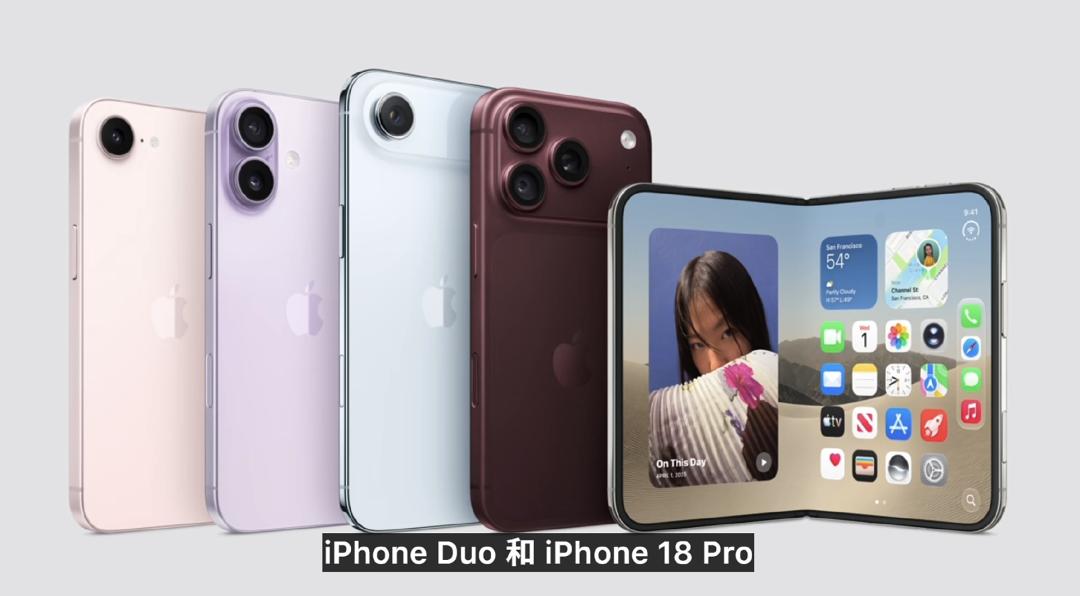
iPhone 18 Pro, iPhone 18 Pro Max, and the foldable iPhone Duo
This year, the release rhythm of Apple's mobile phone products is changing. At this fall launch event, Apple unveiled the iPhone 18 Pro, iPhone 18 Pro Max, and the long-awaited foldable iPhone Duo, with a starting price of 15,999 yuan. The standard iPhone 18 has been postponed to the spring of 2027.
Behind this decision there are obviously cost considerations after the skyrocketing memory prices, as well as changes in Apple's strategy. With limited resources, Apple needs to prioritize the highest-end market. After its revenue exceeded 400 billion US dollars and generated more than 100 billion US dollars in net profit, Apple no longer needs low-end and mid-range products to drive sales. This time, it aims to sweep the very top of the price pyramid.
Apple finally steps into the foldable screen era
Domestic manufacturers are somewhat nervous this time. Three days before Apple's launch event, Huawei released its wing-style tri-fold phone HUAWEI Mate XT 2. On the same day, Xiaomi launched the foldable phone Xiaomi 18 Fold.
They have been waiting and watching for a long time. This Apple launch event is different from the past, as Apple released the foldable phone that it has publicized for a long time.
Since the first generation of foldable phones made its debut in early 2019, the 7-year history of the foldable screen industry has spanned 8 years if calculated from the time when Apple was first exposed to be deploying foldable screen products. The product form of foldable screens has also gone through various explorations, including double-fold, tri-fold, wide-fold, mid-fold and other forms.
Previous thinking of Android manufacturers on foldable screens was to keep the appearance thickness of the bar phone as much as possible, and even make the weight similar to that of bar phones. But changes have taken place this year, many manufacturers changed the aspect ratio of the outer screen before Apple. This time, both Huawei and Xiaomi released wide-fold products similar to tablets.
The market Apple enters is no longer a blank market waiting for it to define. The question it needs to answer is no longer "how to fold a phone". For a foldable iPhone, what should be sacrificed and what should be retained? After redesigning iOS, how can Apple make the two screens after folding truly generate new productivity?
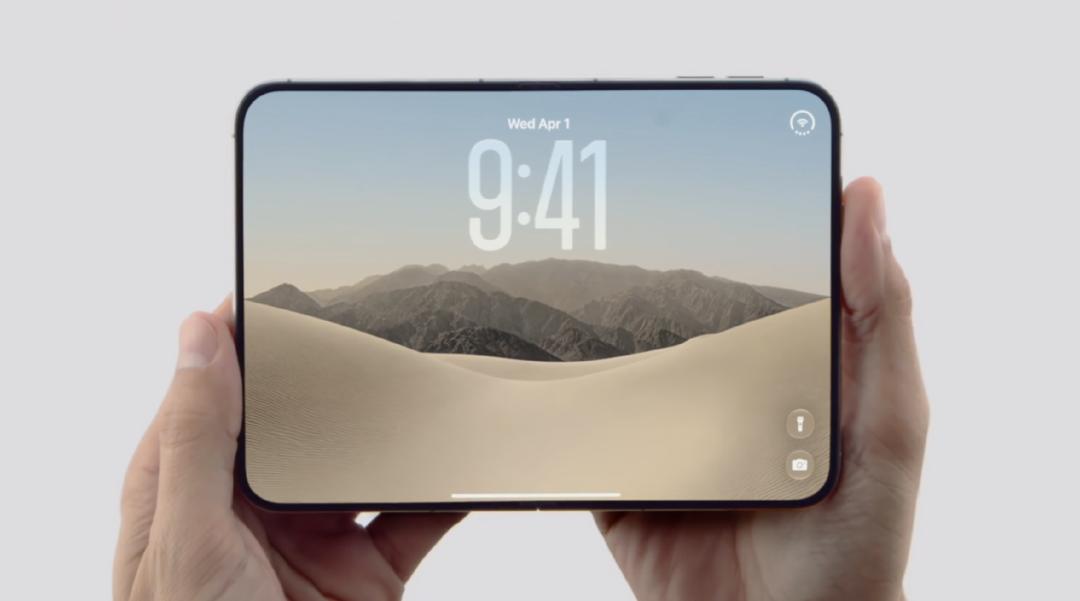
Image from Apple's launch event
This is indeed a fairly balanced product.
iPhone Duo has the largest screen in iPhone history, with the inner screen size reaching 7.6 inches when unfolded, 50% larger than the screen of iPhone 18 Pro Max, and the outer screen is 5.4 inches. Both the inner and outer screens of the phone support 120Hz refresh rate.
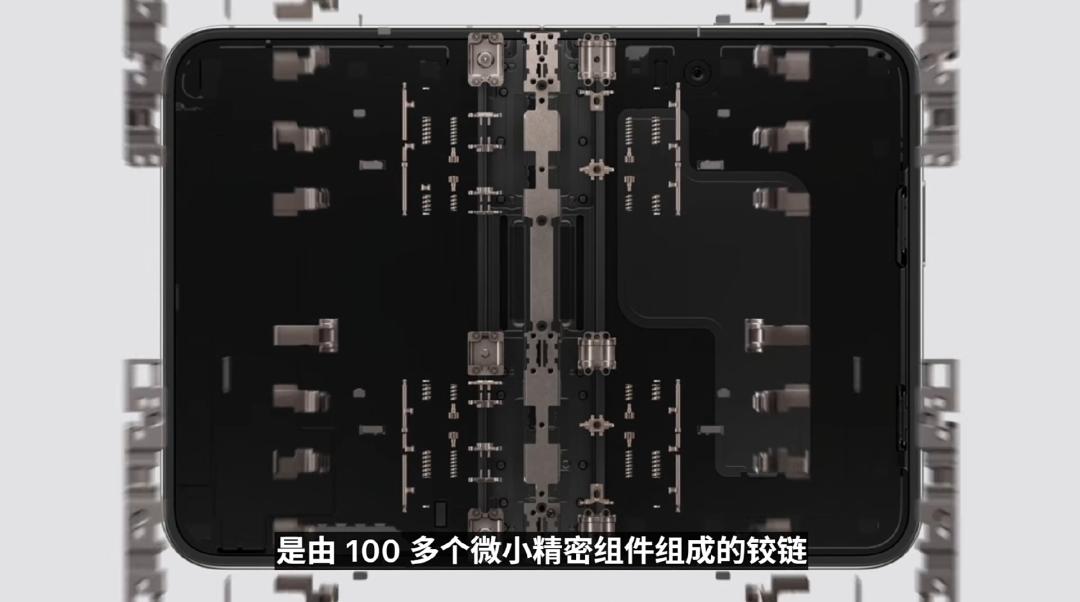
Image from Apple's launch event
To solve the "crease" problem of foldable screens, iPhone Duo uses a customized nano-textured display, a multi-layer lamination structure (high-strength glass on both top and bottom of the OLED panel) and a hinge composed of more than 100 tiny precision parts to reduce the visibility and tactile sensation of the central crease of the foldable screen.
The phone is only 5.2mm thick when unfolded, which is equivalent to the thickness of iPhone Air, but slightly thicker than Huawei's Mate XT 2, which claims to be only 3.5mm thick.
Johny Srouji, Apple's chief hardware officer, said: "iPhone Duo is regarded as the most significant experience innovation since the birth of the iPhone."
To achieve an extremely thin body, Apple made compromises in some hardware designs: iPhone Duo is only equipped with a 48-megapixel main camera plus an ultra-wide-angle dual camera, no periscope telephoto lens, and the front camera is a 12-megapixel under-screen camera; it uses traditional capacitive fingerprint recognition, and re-embeds Touch ID into the side button; it only supports eSIM and other features.
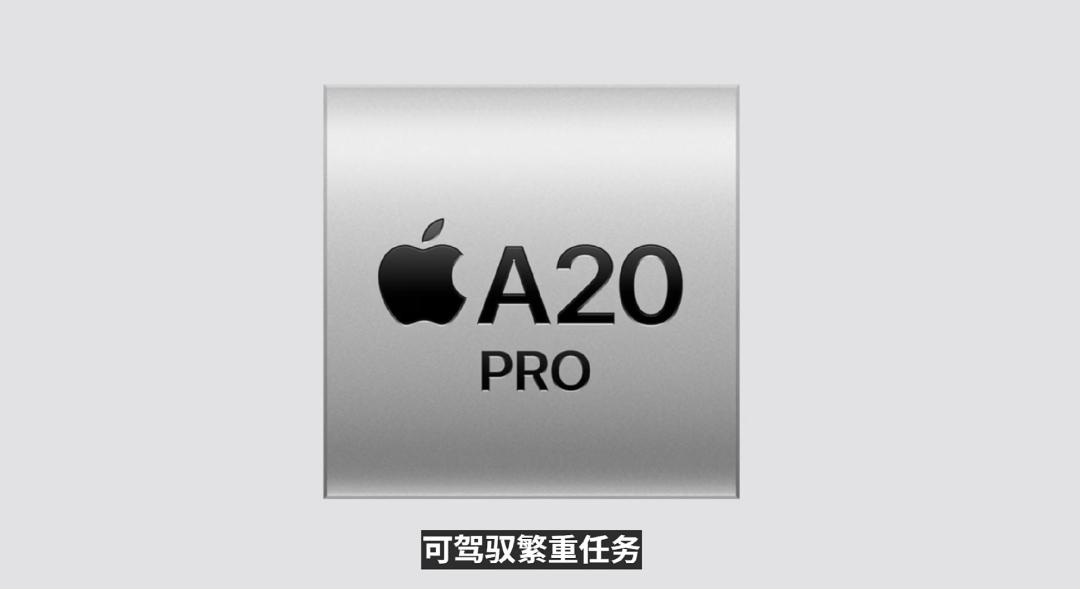
Image from Apple's launch event
In terms of performance configuration, this device is equipped with the A20 Pro processor, paired with the C2 baseband chip. In terms of battery life, with the support of software and hardware, the phone can last up to 24 hours on a full charge when both the inner and outer screens are in use, and can last up to 44 hours for video playback on the outer screen, and can be charged to 50% in 20 minutes.
"Other brands have also developed foldable screen products for many years. Relatively speaking, Apple, which enters this track for the first time, faces greater competitive pressure than in the bar phone market. Apple's advantages in making foldable phones are mainly reflected in the ecosystem and system." Guo Tianxiang, research manager at IDC China, told 36Kr.
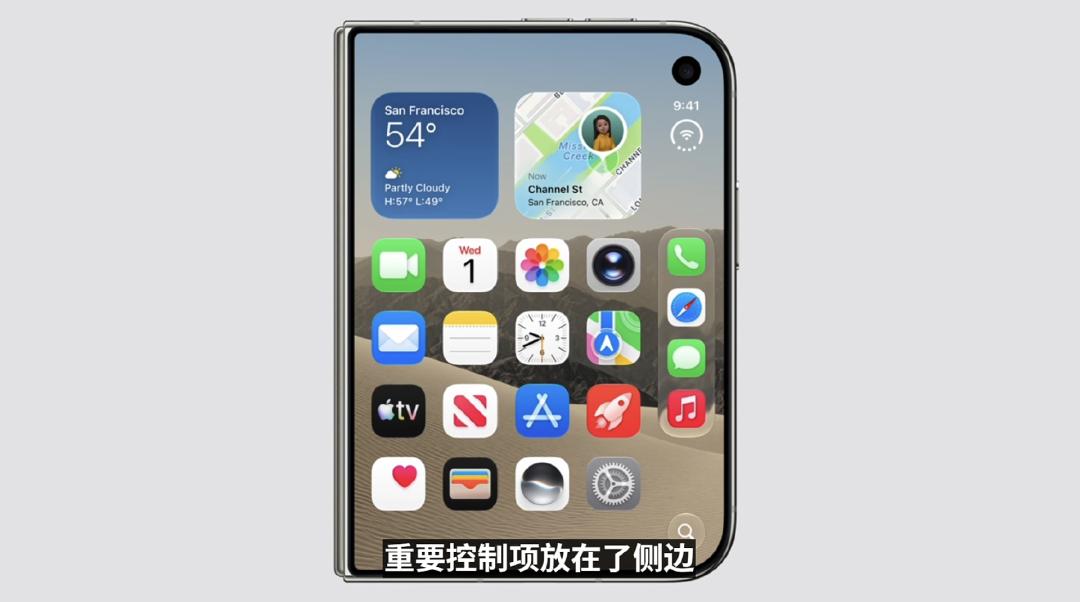
Image from Apple's launch event
At the software level, Apple has prepared a set of interfaces close to the iPad for iPhone Duo. Paired with the reimagined iOS 27, iPhone Duo has redesigned the system UI. To free up more vertical space to display content, Apple adopts a vertical Dock bar for the first time, which is fixed on the right side of the screen.

Image from Apple's launch event
With the support of the large screen, iPhone Duo supports running two Apps at the same time in left and right split screens, supports swapping positions, and can combine two Apps into one group by tapping the dividing line.
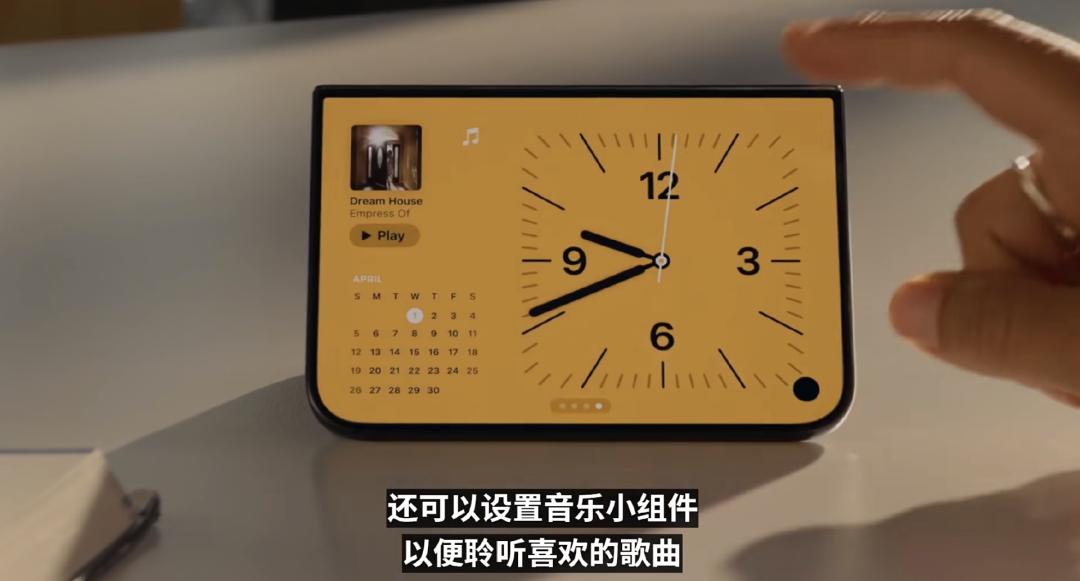
Image from Apple's launch event
For switching between different screens, Apple has made special adjustments to iOS, which can use the sensors on both sides of the body to adjust according to the angle of the device. For example, it supports watching videos in the half-folded standing state, the content will slide away from the hard-to-tap folding position when folded inward, and widgets such as music and weather can be set to display in standby state.
It is worth noting that Apple mentioned that Apple Pencil will be able to be used with iPhone Duo later this year. It is not difficult to see that Apple's first foldable screen will become a new productivity tool for Apple.
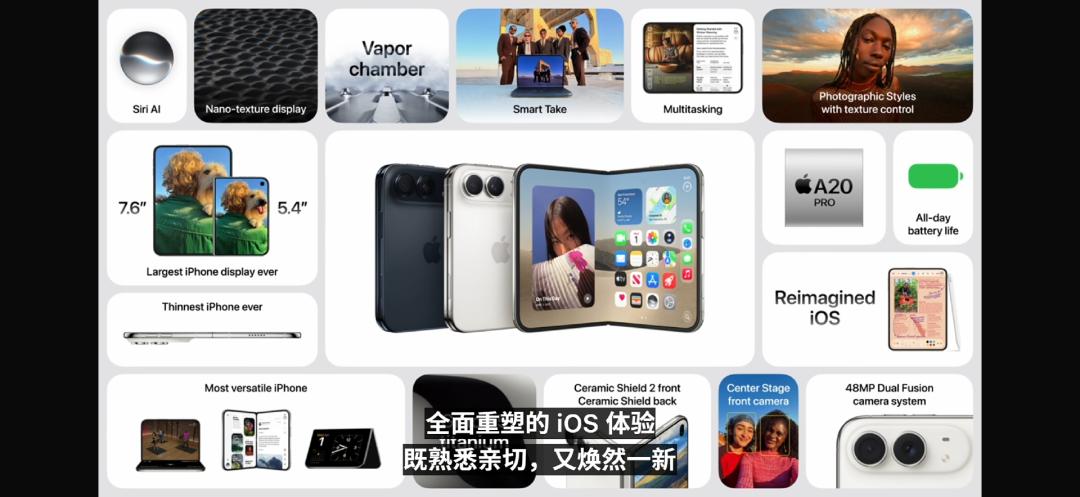
Image from Apple's launch event
Apple is never afraid of being a latecomer. It has long been the leader of the entire market rules. Even if its foldable screen products are several years later than domestic mobile phone manufacturers, it is enough to make them tense up.
"Android's tablet applications and foldable screen applications are largely similar. Android's tablet application ecosystem is not built very well, and for a long time, most of the tablet market share has been eaten by Apple, so developers are more willing to build application ecosystems on iOS." said Lucas, an analyst at Omdia.
For many years in the past, foldable phones have never really entered the mainstream of smartphones. Counterpoint data shows that global foldable phone shipments in 2025 only accounted for about 1.6% of total smartphone shipments.
This time, Apple's entry will be a key turning point. 36Kr learned from the supply chain that Apple will stock 3.5 million units in the fourth quarter of this year and 5 million units in the first quarter of 2027.
According to Counterpoint's forecast, Apple's foldable phones will occupy 28% of the market share in 2026, approaching the leading positions of Samsung and Huawei. IDC predicts that the first-year shipments of Apple's first foldable phone may reach 10 million units.
It is foreseeable that after Apple enters the foldable screen market, it will significantly reshape the global competition pattern. After Apple's launch event, its stock price rose sharply. The whole market is confident that Apple will definitely be the manufacturer that arrives latest but gets the most benefits.
A compromise product under the memory price surge
Compared with the splash caused by the foldable screen, the iPhone 18 series seems a bit unremarkable.
The iPhone 18 series has continued the right-angle frame design that started with the iPhone 12 series for 7 years, and this year only made minor adjustments.
In terms of appearance design, iPhone 18 Pro and iPhone 18 Pro Max basically inherit the design language of the previous generation of products, with 4 color options: deep black, silver, glacier blue and burgundy red. Conventional iterative upgrades have been made to configurations such as the imaging module, battery life and processor.
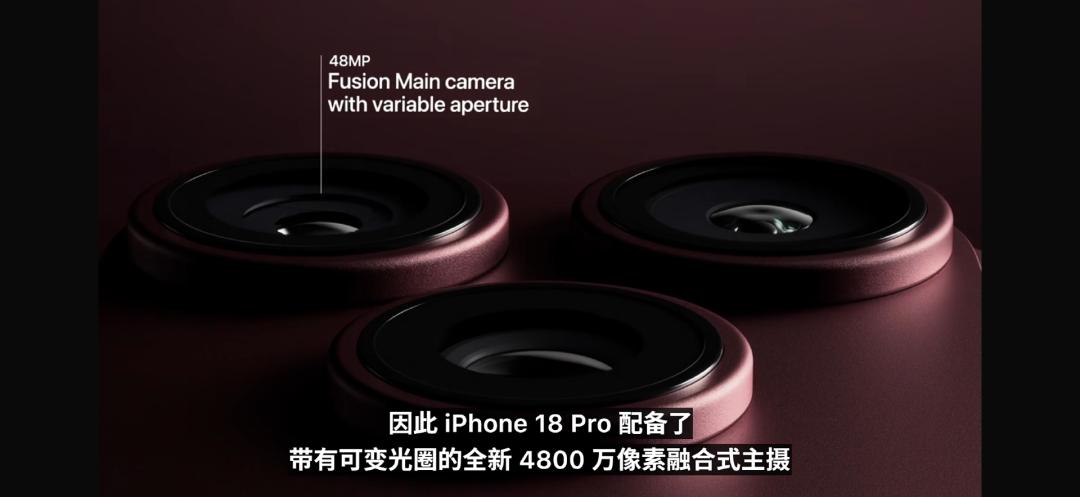
Image from Apple's launch event
The imaging system of the iPhone 18 Pro series is upgraded to a Pro-level fused camera composed of three 48-megapixel lenses, covering main camera, ultra-wide-angle and telephoto, supporting 0.5x, 1x, 2x, 4x, 8x optical zoom options, and 4K 120fps Dolby Vision video. In addition, to solve the problem that it is difficult to distinguish whether photos synthesized in the AI era are real or not, the new phone will support the SynthID standard to identify whether the image is generated or edited by AI.
In terms of battery life, iPhone 18 Pro can last 24 hours on a single charge; iPhone 18 Pro Max can last 30 hours on a single charge.
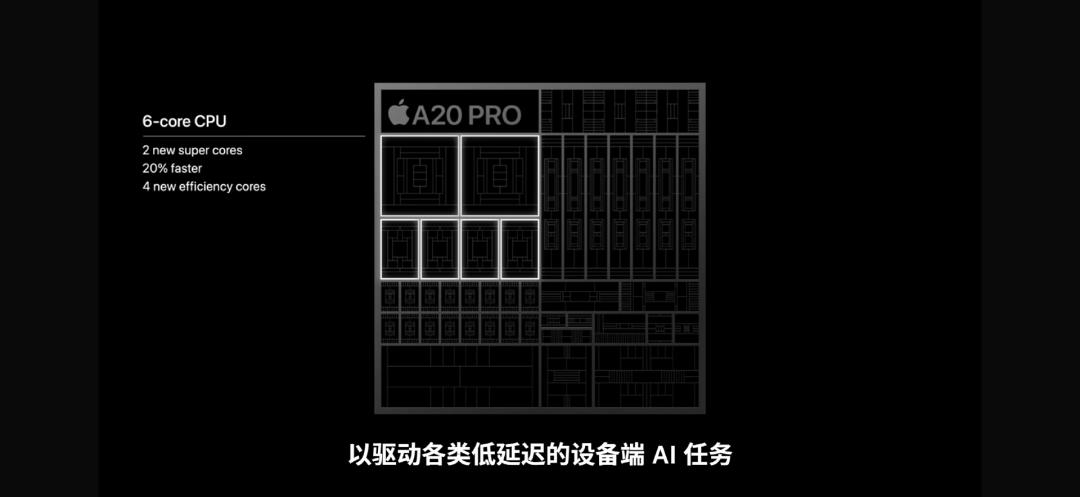
Image from Apple's launch event
In terms of performance, the iPhone 18 Pro series fully adopts the A20 Pro processor with 2nm process, which provides a more powerful computing power foundation for end-side AI operations, and is equipped with a new generation of VC vapor chamber heat dissipation design to improve power consumption and enhance performance. Apple officially claims that compared with iPhone 17 Pro, the overall performance of iPhone 18 Pro has increased by 70%.
The A20 Pro chip is equipped with a 6-core CPU, consisting of 2 super cores and 4 energy efficiency cores, of which the 2 performance cores are 20% faster than the previous generation; the new GPU is designed with 7 cores, with a maximum performance improvement of 40%. For AI tasks, the neural engine of A20 Pro has been upgraded to 32 cores. Apple also added a new generation of neural accelerator, which doubles the speed of 8-bit floating-point operations. The chip memory bandwidth has also been increased by 50% to support on-device models and more complex inference tasks.
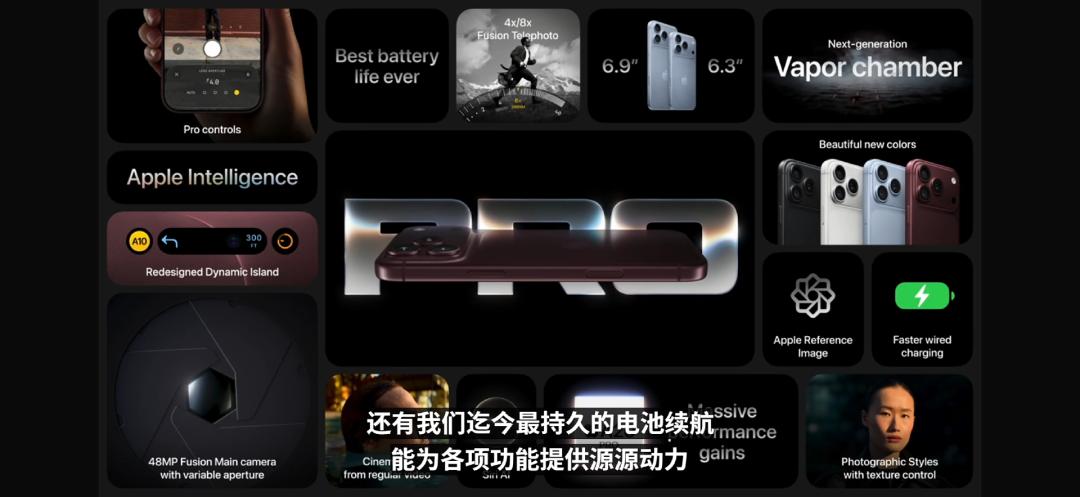
Image from Apple's launch event