Samsung mocks Apple's foldable display products as a typical case of the pot calling the kettle black, and the real top player that pushes the industry forward amid cutthroat competition does not even bother to play the same game as the two of them.
As soon as Apple's foldable phone was released, it was taunted by Samsung again.
Right after Apple launched its first foldable iPhone Duo, Samsung's official US account posted a series of tweets to mock it directly: "Let us know when you're done reheating our leftovers", "Is this a sequel to The Sims?", "Exact copy, no innovation at all"......
Every line reeks of superiority — the product I've been playing with for seven years is only just being served on your table now.
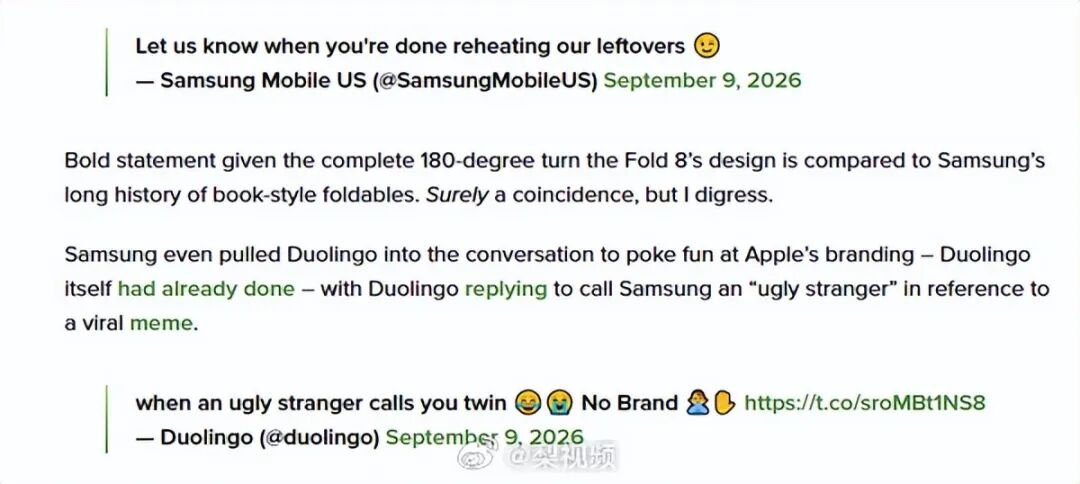
Many people followed the hype, saying that Apple has exhausted its talents, and can't even copy the foldable screen design properly.
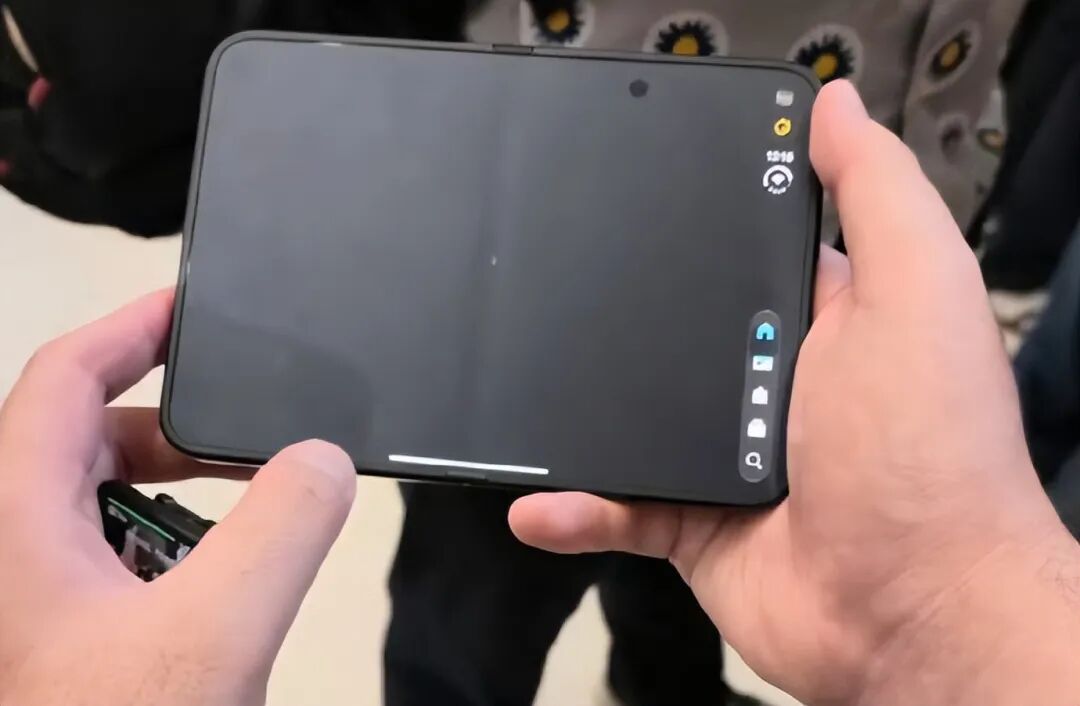
But to be honest, this back-and-forth spat is just for fun. When it comes to real foldable screen technology, Samsung and Apple combined are no match for domestic Chinese manufacturers.
One is a pioneer resting on its laurels, the other is a transfer student arriving seven years late. Essentially it's just the second last laughing at the last. The Chinese players who have pushed foldable screens to the extreme are not even in the same league as them.
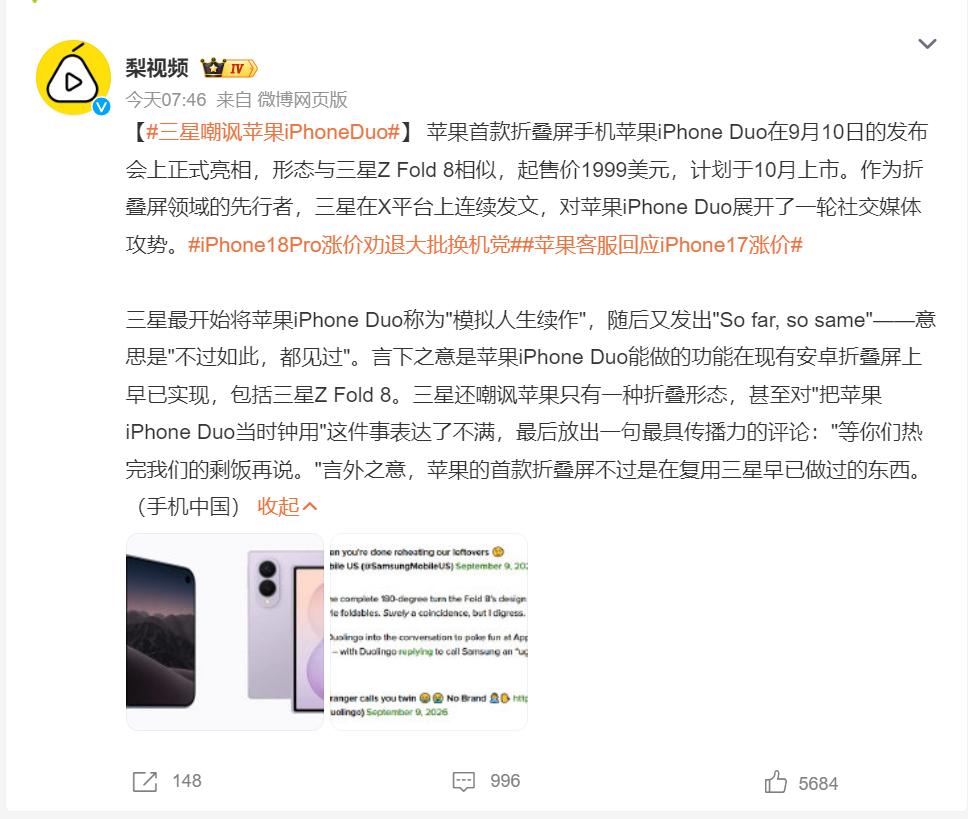
This foldable phone that Apple fans have waited 8 years for hit the trending list over its crease problem
Apple's latest foldable smartphone has made Apple fans wait for 8 years, but it hit the trending search list due to the crease issue.
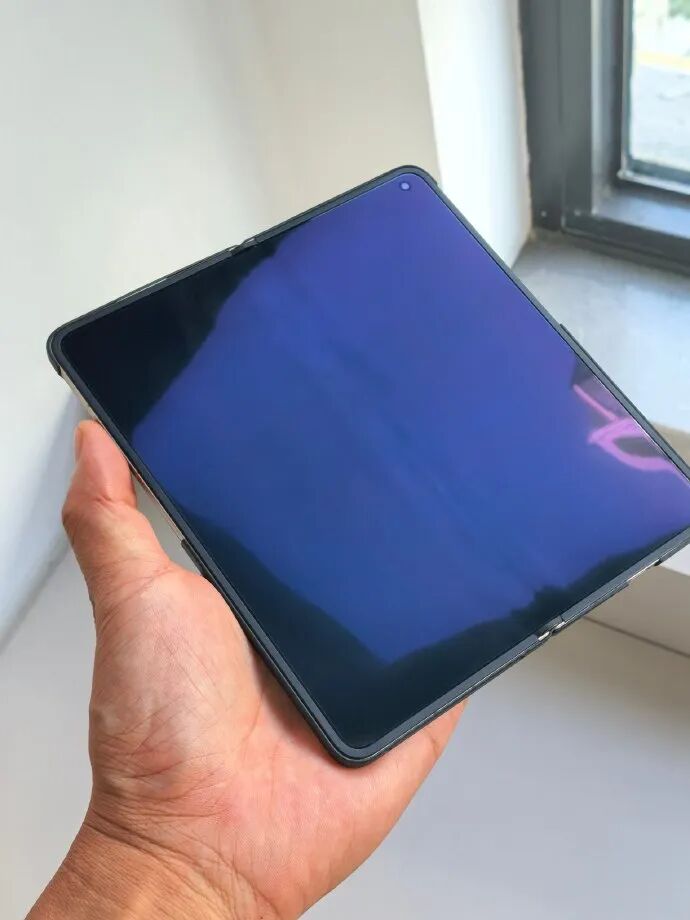
Apple has been emphasizing "nano-texture process" and "optical transparent adhesive for stress dispersion" in the past, but it never dared to claim "zero crease", only saying it "reduces the visibility of creases". The content posted by online bloggers are all shot at carefully selected angles with the screen on, so of course no crease can be seen.
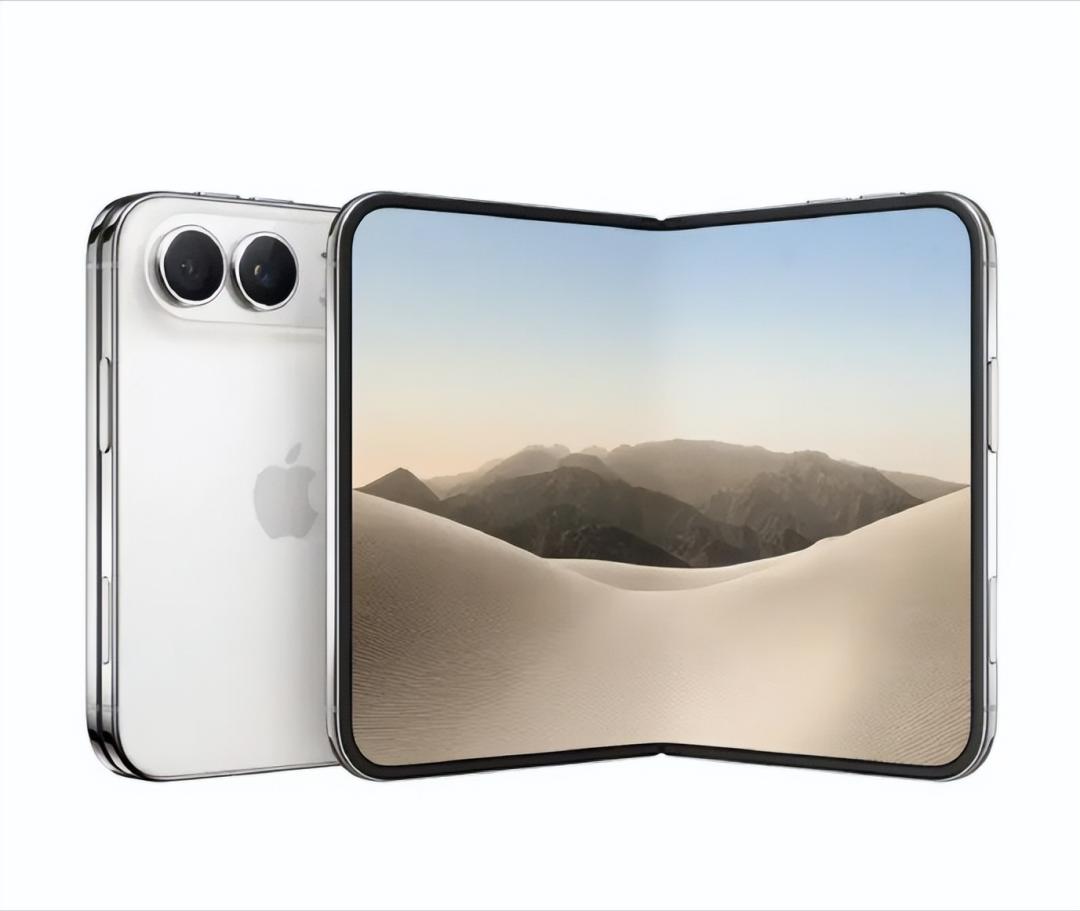
It even uses a frosted screen for better visual effect, which greatly reduces the clarity, but the crease is still fully exposed when the screen is off. The actual measured crease depth is about 0.15 millimeters, that is 150 microns.
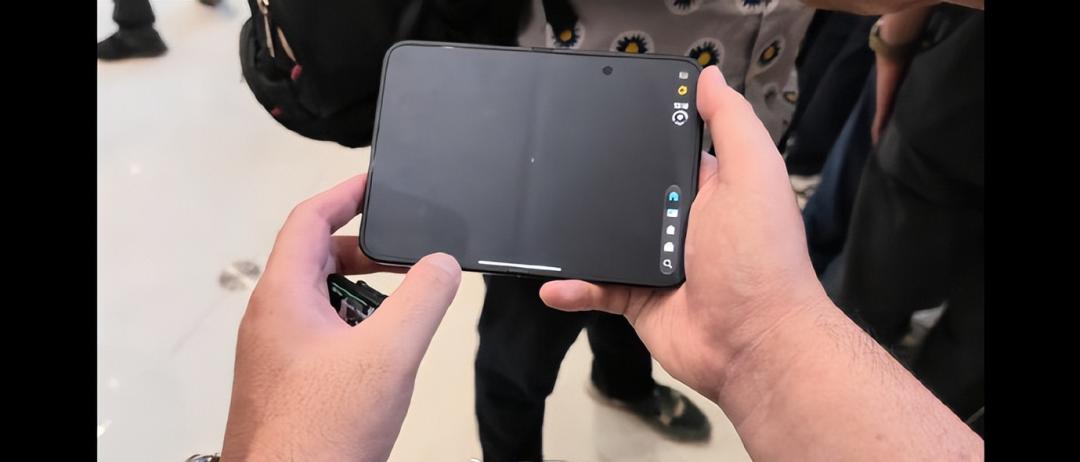
What does this mean? Last year, OPPO Find N5 had already reduced the crease to 101 microns, while the latest models of vivo and Samsung are around 135 microns. After 8 years of development, Apple only delivered a result at the mid-tier level of the industry.
Not to mention the Xuanwu Waterdrop Hinge of Huawei Mate X6, which directly reduces the crease to 0.01 millimeters, with a depth no more than 5 microns after 400,000 folds. It is not in the same dimension as Apple at all.
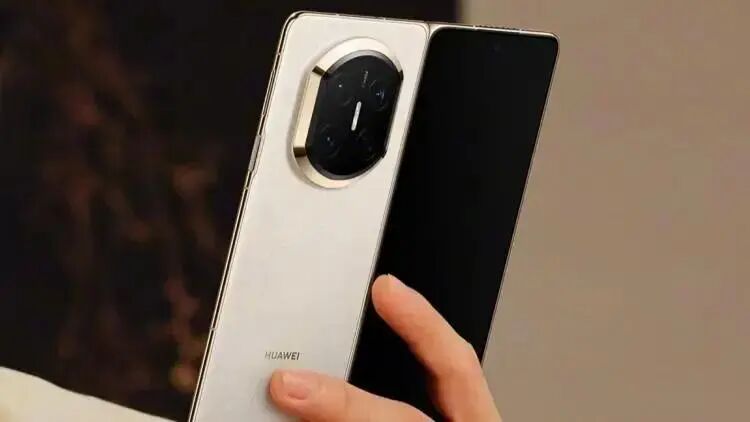
It should be noted that for consumers buying foldable phones, the crease problem is the core pain point that prevents them from placing orders.
Many people, upon seeing the crease, will associate it with the service life of the phone and the screen experience problems caused by frequent folding. It is one of the core pain points of foldable screens, but obviously, Apple has not met consumers' expectations on this core pain point.
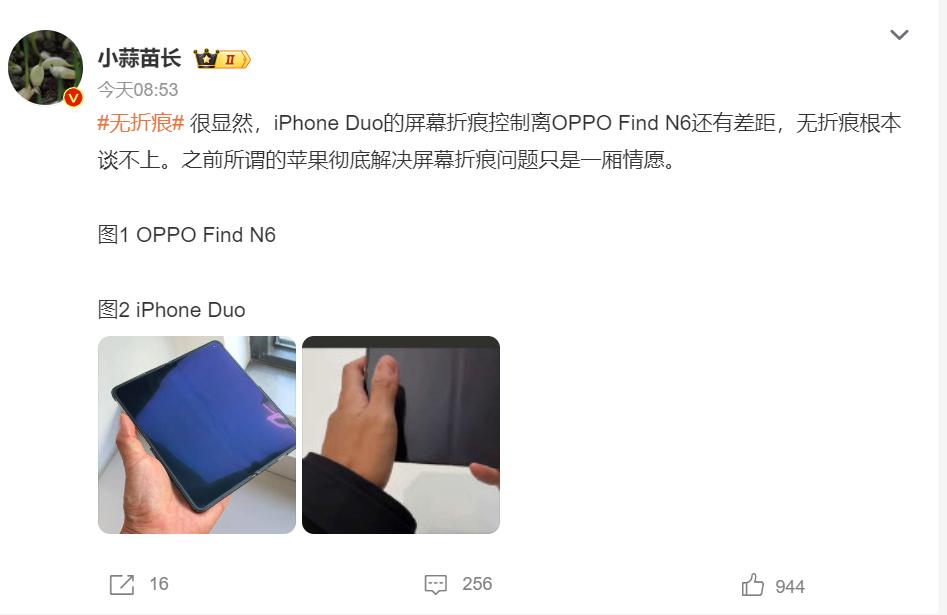
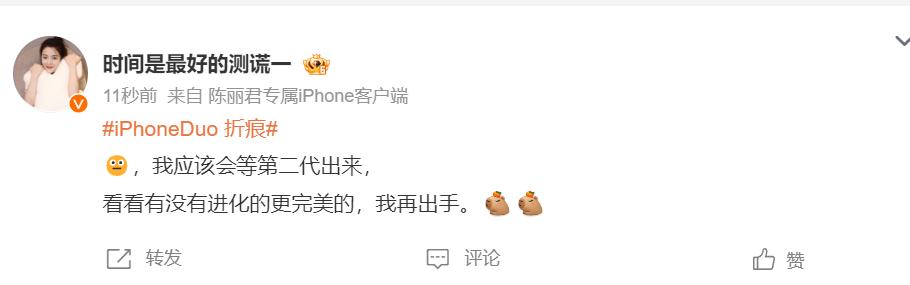
The extremely deep crease of Apple's foldable phone was also beyond the expectation of industry insiders. While some consumers think it is acceptable, many others would rather wait for the second generation product.
Some industry insiders pointed out bluntly that the crease control of iPhone Duo still lags behind OPPO Find N6, and zero crease is out of the question. The previous claim that Apple had completely solved the screen crease problem was just wishful thinking.
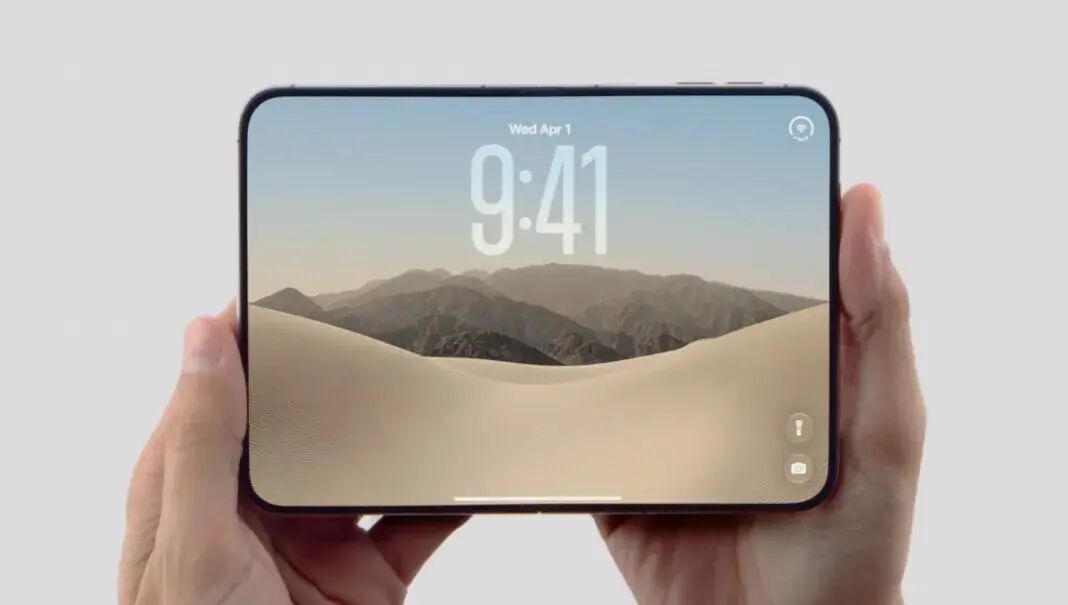
Looking at thickness and weight, iPhone Duo is 5.2mm thick when unfolded and weighs 254g, and the launch event even boasted it as "the thinnest iPhone in history".
But Honor Magic V6 is only 4mm thick when unfolded, Samsung Z Fold8 also reaches 4.5mm and 201g. Apple's model is 53g heavier than Samsung's, which is almost like carrying an egg in your pocket.
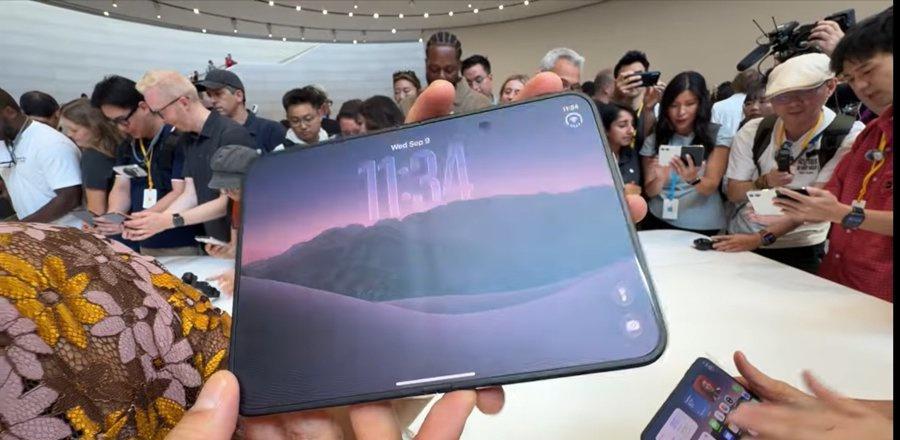
When the Android camp was competing for slim and light designs years ago, Apple was making incremental improvements; now that Apple finally enters the market, the Android camp has already moved on to the next track.
There is even less innovation in form and features. The book-style horizontal inner fold, multi-angle hovering, and split-screen multi-tasking on large screens were all mastered by Samsung on its first foldable phone back in 2019.
Chinese domestic manufacturers have made various breakthroughs in forms: Huawei has the tri-fold Mate XT, which unfolds into a tablet and folds into a phone; Honor and Xiaomi have small vertical foldables that are easy to carry in pockets; OPPO and vivo have fully explored hovering, outer fold, and inner fold technologies.
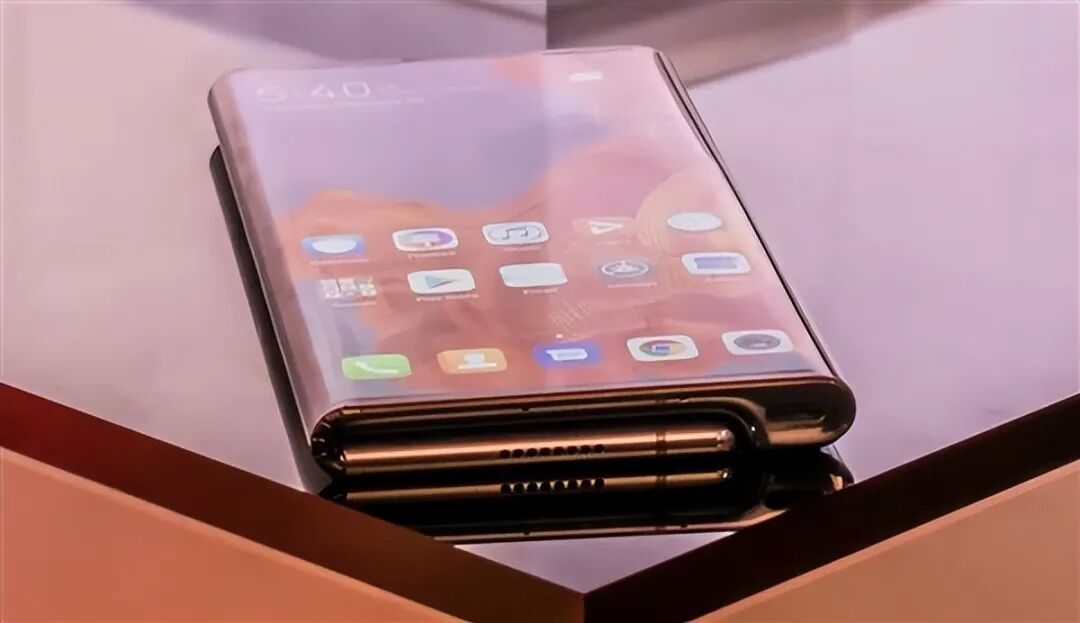
Apple's first product adopts the most basic inner fold solution, and does not even dare to touch form innovation. It is not unfair to say it is "eating leftovers", but these leftovers are no longer fresh for Samsung itself long ago.
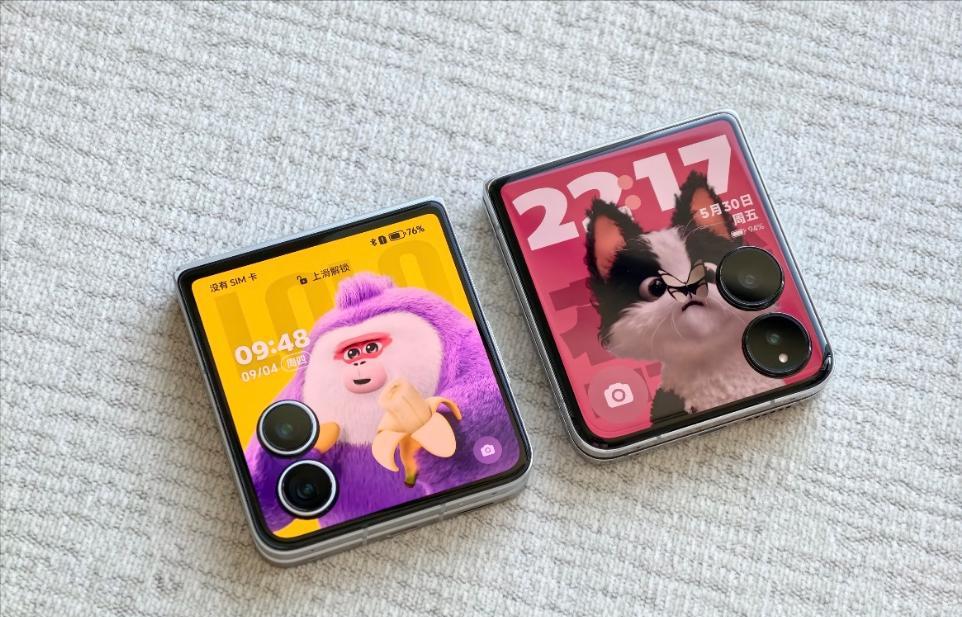
The pot calling the kettle black: the real top competitor doesn't even play their game
Many people think Samsung is the originator of foldable screens and its technology must be the best in the world. This would be true five years ago, but today, it just means they haven't experienced the fierce competition from top Chinese domestic manufacturers.
The hinge is the core of a foldable screen. Samsung's precision hinge has been a benchmark for many years, until Huawei developed the Xuanwu Waterdrop Hinge with a 5-arc-arm structure, with tolerance controlled within 0.01mm. It not only achieves shallower creases, but also realizes stable hovering at any angle.
Honor's Luban steel structure hinge and Xiaomi's keel hinge each have their own unique strengths, their durability and flatness are no worse than Samsung's, or even better.
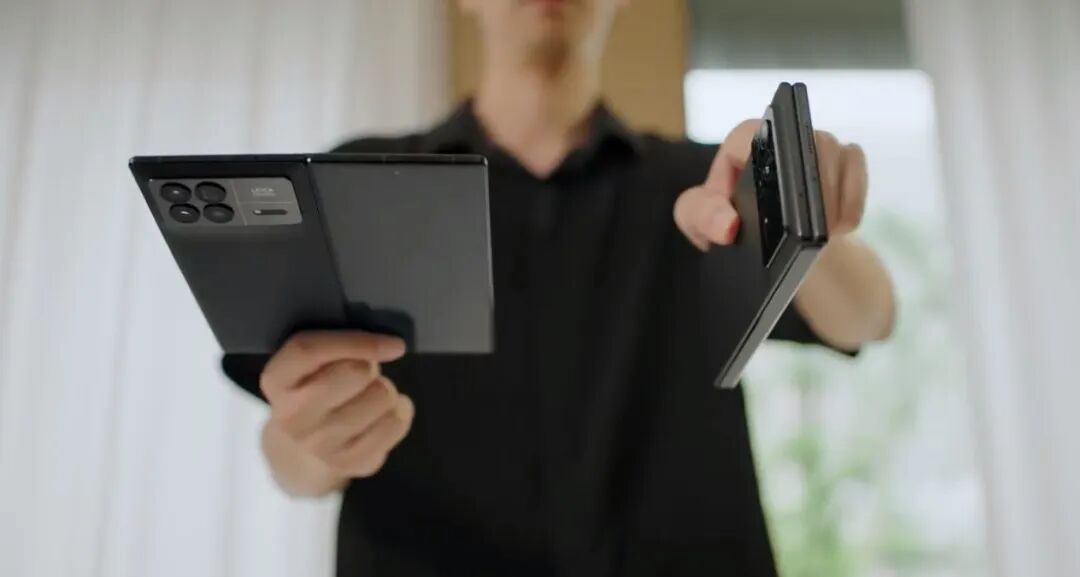
Samsung Z Fold8 still cannot stay stable when released, while domestic flagship phones can already hover firmly at 90 degrees. It's not that Samsung can't do it, but it never expected that Chinese domestic manufacturers would refine the usage scenarios to such an extent.
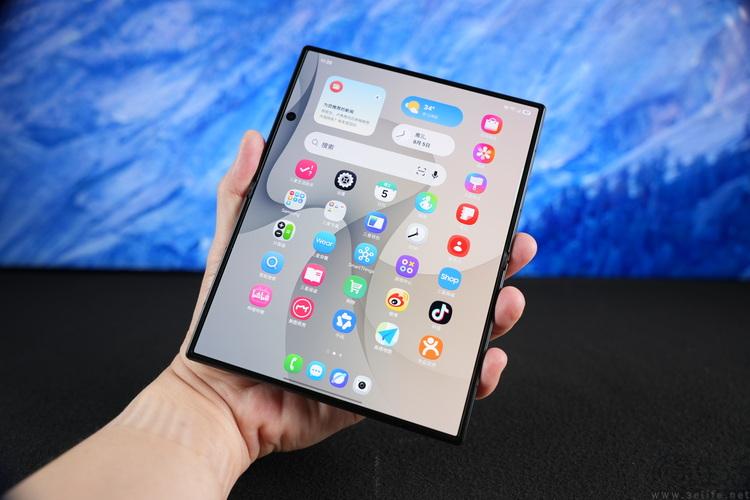
Market share further illustrates this point. Samsung still ranks first in the global market with a 38% share, but it is declining from its peak of 40%; Huawei follows closely with 22%, and Honor, Xiaomi and OPPO together account for another 33.6%, making the total share of Chinese camp directly surpass Samsung's.
The domestic Chinese market is even more exaggerated: Huawei alone takes 60%, Honor 21%, and Samsung is not even counted in the others category.
To put it bluntly, Samsung's advantage in foldable screens only remains as the first-mover inertia in overseas markets. In terms of technology iteration speed, product form innovation, and price competitiveness, it has long been left behind by Chinese domestic manufacturers.
What's more ironic is the price. The 256GB version of iPhone Duo sells for 15999 yuan, and Samsung Z Fold8 also costs 13000 to 14000 yuan. For domestic flagships with the same configuration, the starting price of Xiaomi MIX Fold4 is as low as 10999 yuan, and the main models of Honor and OPPO are also around 10000 yuan, thousands of yuan cheaper than Apple's.
In the past, foldable phones were "high-end luxury goods", but Chinese domestic manufacturers have turned them into "high-end consumer goods" through fierce competition. They have lowered the price while improving the technology, which is the real industry promoter.
Therefore, this drama of Samsung taunting Apple looks lively, but is actually very narrow-minded. It's like two repeaters comparing their scores: one got 60 points, the other got 55, and the 60-point one is laughing so hard that it can't straighten up, but they don't know the top students in the front row of the classroom are already learning postgraduate courses.
The foldable screen track is no longer a two-man show between Samsung and Apple. From hinge technology to crease control, from form innovation to price reduction, Chinese domestic manufacturers have raised the competition dimension by several levels.
Samsung, resting on its 7-year-old laurels, taunts latecomers, while Apple enters the market 7 years late to cash in on its brand loyalty. The two are arguing fiercely, but it is the domestic players who push technology to the extreme and drive prices to the bottom that will determine the future of foldable screens.
When Huawei brings the tri-fold technology down to the 10000-yuan price range, and Honor makes 4mm-thick foldables available for mid-range phones, that will be the time when foldable screens are truly popularized.
As for the spat between Samsung and Apple, just take it for fun — after all, it's quite humorous that two people who are not at the top of the trend are teasing each other for not being trendy enough.