The hotter AI gets, the more necessary it is to answer a question: Who does the prosperity ultimately belong to?
What is certain is that AI is exerting an impact on the real world, yet it remains uncertain whether such impact is substitutive and stock-based, or creative and incremental; whether it is inclusive for all or only benefits a small minority. These are all key issues to observe in the AI economy. At the 2026 Inclusion · Bund Conference, a number of economists and entrepreneurs held discussions around AI and economic growth, productivity, employment and demand. The new AI economy has already begun, but there is still no standard answer as to where it will ultimately head.
AI is becoming a real and non-negligible force in global economic growth.
Four years ago, it was still a novel "toy" capable of writing poems and answering questions; today, it has penetrated into enterprise production, labor markets, capital investment and even the daily consumption life of ordinary people, evolving from a technical variable into an economic reality that affects everyone.
But a more difficult question is emerging: where will this force ultimately lead the economy?
At the 2026 Inclusion · Bund Conference, this became a topic repeatedly discussed by many economists and entrepreneurs.
Huang Yiping, Dean of the National School of Development at Peking University, believes that the ultimate impact of AI on the economy is far from being conclusive. On the one hand, AI is expected to significantly improve total factor productivity; on the other hand, technological progress will change the employment structure and income distribution at the same time, which may also affect consumption and aggregate demand, and even transform the familiar paradigm of economic growth in the past.
He reminded that to understand the impact of AI on the economy, we should not only focus on the technology itself, but also observe how the technology actually integrates into the economic system.
Liu Yuanchun, President of Shanghai University of Finance and Economics, pointed out: "The new form of the AI economy has taken shape, but AI economics has not really started yet."
Past economics research was often built on relatively stable production functions, enterprise organizations and technological changes. But AI may simultaneously transform labor, capital, knowledge production and even decision-making methods. When the technological paradigm itself is changing rapidly, relying solely on historical data and traditional models to extrapolate into the future is no longer sufficient.
As a result, a set of issues that seemed to have had answers have become pending again: when will the micro efficiency improvements brought by AI be translated into macro productivity? Can the capabilities formed by huge capital investment be accessed by tens of thousands of ordinary enterprises? When production becomes increasingly easy, who will generate sufficient demand?
The new AI economy has already started, but what it will eventually look like can still be shaped by our choices.
01
Centralized or Inclusive?
Over the past year, infrastructure construction, as well as the financial markets and industrial upstream and downstream sectors driven by it, have been the most intuitive way for AI to enter the real economy.
Calculations based on different calibers show that the proportion of AI infrastructure investment in GDP in China and the United States has approached or exceeded 1%. Computing power, chips, storage, power and data centers have become scarce resources, and the capital market has also fluctuated sharply accordingly. According to the statistical caliber at the beginning of 2025, the scale of China's AI core industry has exceeded 1 trillion RMB, and optimistic estimates show that it will approach 2 trillion in 2026.
This boom first manifests as a huge capital expenditure cycle.
Miao Yanliang, Chief Economist of China International Capital Corporation, pointed out that the technology diffusion speed of this round of AI revolution far exceeds that of previous ones. It took the Internet and personal computers about 30 years to reach a high penetration rate, while large language models only took a few years to reach a penetration rate close to 50%. The faster the diffusion, the more concentrated the demand for upstream resources, and the more obvious the short-term bottlenecks. In the last round of information technology revolution, a 50% rise in memory prices was very significant, while in this round of AI revolution, memory prices once rose by more than 600% at their peak.
However, in contrast to the vigorous capital expenditure, the productivity improvement brought by AI has not yet appeared in the macro data with the same clarity.
"Although many people use AI, we all feel that it has improved productivity, but it has not yet been reflected in the macro data," said Miao Yanliang.
This reveals the most critical gap in the new AI economy: investing money in chips, models and computer rooms can generate investment, orders and market value; individual users can also save time by using AI. But only when these capabilities enter factories, shops, hospitals and ordinary enterprises, change production processes, and create new products and services, can local efficiency improvements be aggregated into social productivity growth.
Han Xinyi, CEO of Ant Group, believes that the AI economy cannot only rely on capital investment, and AI applications cannot stop at improving efficiency on the existing stock.
He drew an analogy with the electrification process. After the emergence of electricity, what really promoted the economic leap was not the power plants themselves, but the penetration of electrification into factories, transportation, communications and households, which in turn created new products, services and lifestyles. The same is true for AI. Enterprises must move from cost reduction and efficiency improvement to value creation, use AI to create more supply, and stimulate more demand.
As the capabilities of models gradually converge, the competition of large models is shifting to "scenarios". Both OpenAI and Anthropic are trying to cooperate with industry customers, and embed models into specific businesses through engineers and solutions. Only by entering real scenarios and completing verification can models be replicated on a large scale.
For example, an enterprise that produces fans for textile workshops can install sensors on traditional equipment and connect it to an industrial large model, so that the equipment can automatically adjust the air volume according to real-time working conditions, shortening the maintenance cycle by 40%. This kind of change is not as sensational as the release of a new model, but it is closer to the way AI becomes an economic variable.
The problem is that from manufacturing, healthcare, finance to consumption, every industry has a large amount of know-how that requires the cooperation of vertical data, production processes and professional knowledge. A large number of real economic activities in China take place in small and medium-sized enterprises, not leading technology companies. Many small and medium-sized enterprises neither have the ability to train models, nor have the technical personnel to transform their business processes.
If the usage threshold cannot be lowered, the more powerful AI becomes, the greater the efficiency gap between leading enterprises and ordinary enterprises may become.
Therefore, the first step of the new AI economy is not just to create more powerful models, but to make the capabilities formed by capital expenditure go out of the AI industry chain, enter all walks of life, and make AI affordable and accessible for small and medium-sized enterprises. Only in this way can the productivity dividend spread from a few enterprises to the whole society.
02
Substitution or Inclusion?
When AI truly enters scenarios and starts to improve efficiency, a more thorny problem emerges: who will benefit from the efficiency improvement?
A statement from the Digital Economy Lab of Stanford University proposes that if AI is mainly used to replace labor, reduce employment and concentrate wealth, the technology may create huge productivity growth, but it will not necessarily bring widespread prosperity.
Miao Yanliang pointed out that this round of AI may have a stronger substitution effect than previous technological revolutions. AI does not necessarily eliminate entire occupations directly, but it can take over more and more tasks originally completed by labor, thus reducing the proportion of labor income in total income.
The impact of this matter goes far beyond employment itself. The marginal propensity to consume of capital owners is usually lower than that of ordinary workers. If more income flows from labor to capital, the efficiency of the production side increases rapidly, while the purchasing power on the consumption side may grow more slowly.
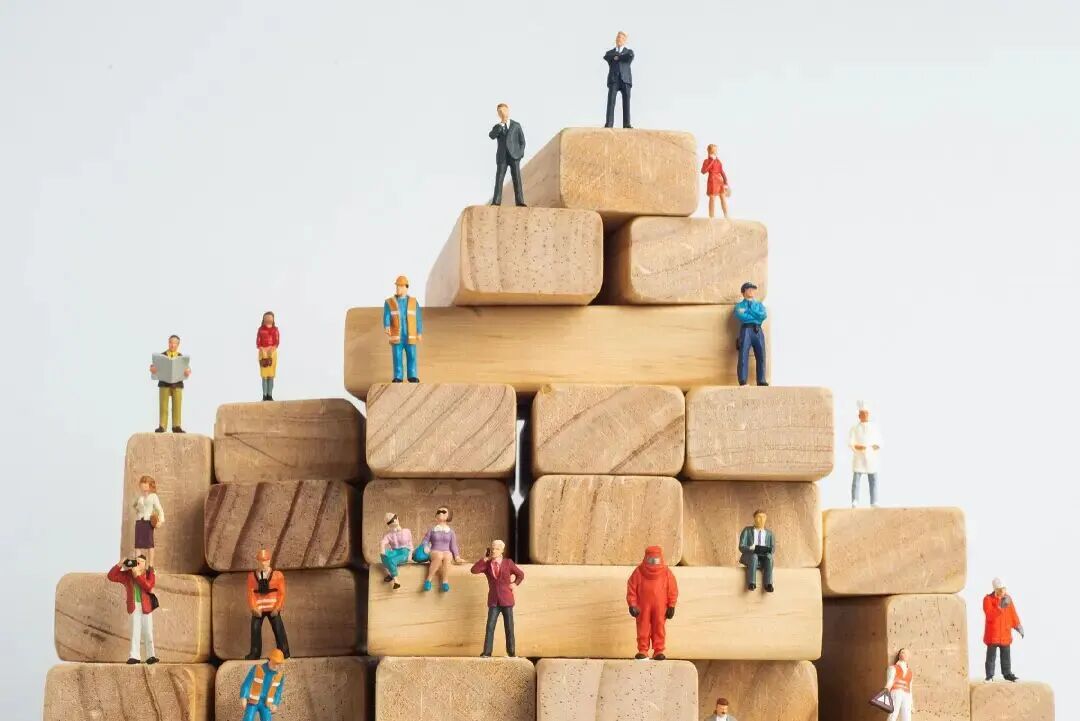
Eventually, a contradictory situation may arise: AI makes the whole society "better at producing", but does not necessarily make the whole society "more capable of consuming".
Miao Yanliang therefore judges that in the longer term, AI may bring stronger disinflationary pressure: productivity improvement expands supply, while the decline in the share of labor income and the concentration of income to capital may curb aggregate demand. When demand cannot absorb the expansion of supply, prices may continue to face downward pressure.
This is consistent with the judgments of experts such as Huang Yiping. What determines the ultimate economic effect of AI is not only how much efficiency it improves, but also who the efficiency dividends will eventually flow to.
Therefore, "inclusion" is not an equity issue to be dealt with after the completion of technological development, but an issue related to the sustainable growth of the AI economy.
Han Xinyi believes that compared with simply using AI to replace labor, a more sustainable path is to improve the ability of workers and small and medium-sized enterprises to participate in new value creation and share growth dividends. On the one hand, enterprises need to transform complex models into low-cost, easy-to-use products; on the other hand, it is necessary to improve people's capabilities through education and vocational training, so as to give full play to judgment and creativity in human-machine collaboration. At the same time, it is also necessary to improve the social security system to help workers affected by the impact re-enter the economic cycle.
Workers are also consumers at the same time. A sum of labor cost saved by an enterprise today may also become a sum of income and consumption reduced by a family tomorrow. If production efficiency continues to improve, and there are more and more new products and services, but the number of people who have the ability to buy them does not increase synchronously, the supply created by AI will eventually face demand constraints.
Therefore, whether AI is more used to "replace people" or "empower people" not only determines how wealth is distributed, but also may determine how large a market this technological revolution can ultimately create.
03
What Kind of New AI Economy Do We Need?
This issue is particularly important for China.
At the end of 2025, the number of employed people nationwide exceeded 720 million, and the total number of migrant workers exceeded 300 million. A large number of people's jobs and income come from traditional industries such as manufacturing, trade, logistics and catering, as well as from a huge number of small and medium-sized enterprises. This determines that China's new AI economy cannot only grow around a few technology enterprises.
China certainly needs better and more cost-effective large models, investment in computing power infrastructure, and needs to give full play to the advantages of the energy, manufacturing system and application scenarios. But at the same time, we also need a more inclusive new AI economy: let AI enter more real scenarios, allow small and medium-sized enterprises to participate, and enable ordinary workers not only to be the objects of technological substitution, but also to have the opportunity to share productivity dividends.
Xing Ziqiang, Chief Economist of Morgan Stanley China, believes that AI and future embodied intelligence will further enhance supply capacity and penetrate into factories, manufacturing and service industries. But in an environment of "strong supply and weak demand", "the most precious resource is still people". He proposed that in the future, we should turn more to "people-oriented", including supporting residents' demand for service consumption and childcare, and further improving the social security of groups such as migrant workers in the medium and long term.
Recent policies have already released signals in this direction. In August 2025, the State Council issued the Opinions on Deeply Implementing the "Artificial Intelligence +" Action, proposing to guide innovation resources to tilt towards directions with great employment creation potential; the Implementation Opinions on the Special Action of "Artificial Intelligence + Manufacturing" issued by eight departments including the Ministry of Industry and Information Technology also proposed to support the intelligent transformation of small and medium-sized enterprises and reduce the cost of using AI for enterprises.
But inclusiveness is not the whole answer. Jiang Xiaojuan, a professor at the University of Chinese Academy of Social Sciences, pointed out that AI is pushing Chinese enterprises to move from the stage of "domestic first, then overseas" to the stage of "born to be global".
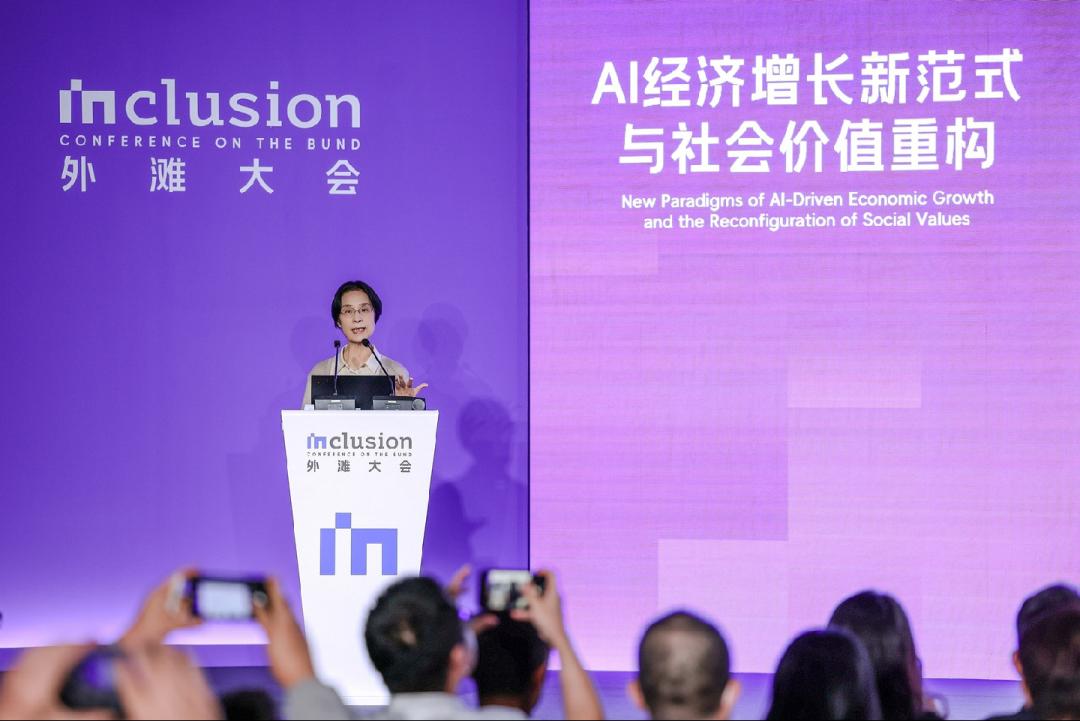
In the past, enterprises often completed product verification and scaling in the domestic market first, and then entered the overseas market. But models, data and digital products can be reused at very low marginal cost, and the Internet also reduces the cost of cross-regional services. An AI product may face global users from the very beginning of its birth.
AI may even re-deconstruct the global industrial chain. Taking AI drug research as an example, AI significantly accelerates target discovery and molecular design, but clinical trials still need to follow the original cycle. When the innovation capacity at the front end of the industrial chain explodes rapidly and the capacity at the back end cannot expand synchronously, a new global division of labor may emerge.
Similar logic also applies to industrial vertical models. China has complete industrial categories, a huge customer base and rich industrial data, which gives it the conditions to train professional models. However, some segmented models may not get sufficient returns only relying on the domestic market. "The models we train must be used globally, so that their business models can be profitable," said Jiang Xiaojuan.
This adds another dimension to the new AI economy: on the one hand, it needs to go deeper into manufacturing, consumption, healthcare and service industries to allow more small and medium-sized enterprises and workers to participate; on the other hand, it also needs to expand outward to let the new technologies, products and services developed in China find markets around the world.
What Liu Yuanchun said that "AI economics has not really started yet" shows that we are still at the starting point: the AI economy has already taken place, but there is still no standard answer as to how it will change growth, employment, distribution and the global industrial system.
This article is from the WeChat Official Account "The Economic Observer", author: Zhang Miao, authorized by 36Kr to release.