Apple has made the iPhone foldable and conveniently submitted its long-overdue AI answer sheet.
With a budget of 15999 yuan, would you consider buying a foldable phone from Apple, Xiaomi, or Huawei?
With the release of Apple's new products, the answer is not necessarily easier to figure out.
In the early hours of September 10 Beijing time, Apple held its autumn launch event, rolling out the iPhone 18 Pro series, AirPods 5, Apple Watch Series 12 and Apple Watch Ultra 4, as well as the real "one more thing" — the iPhone Duo foldable phone.
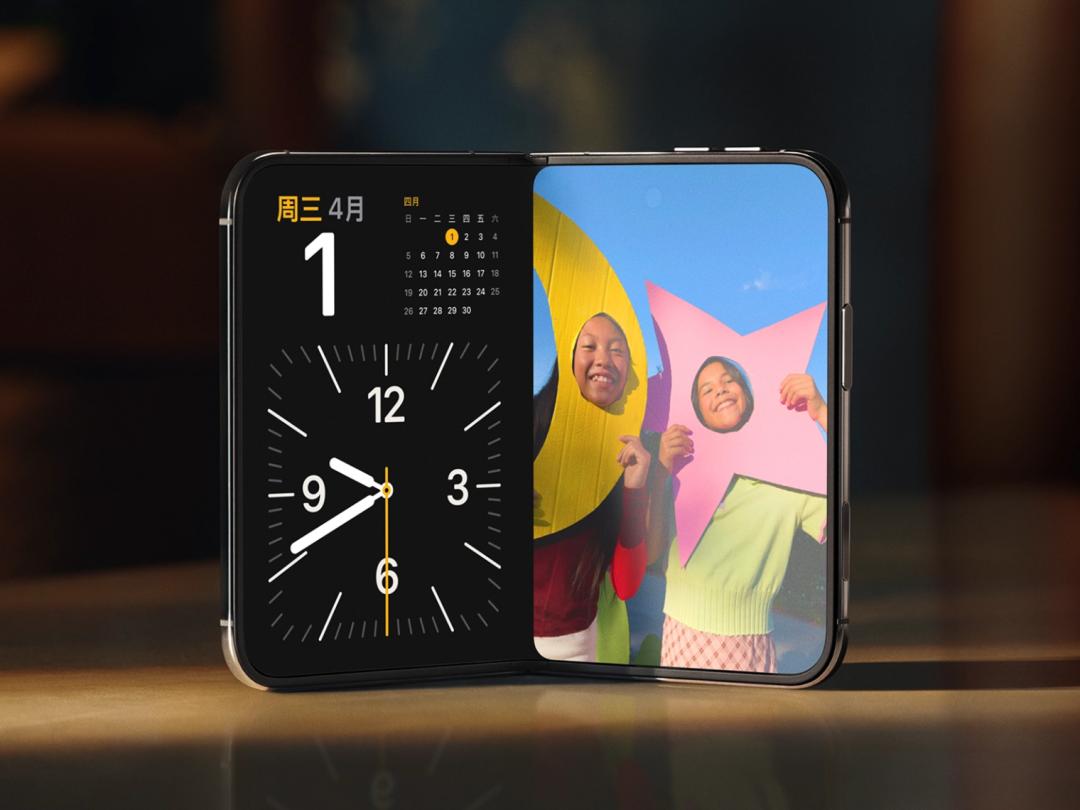
That's right, Apple's foldable phone is not named Fold, Flex, Ultra or anything similar, it's really called Duo, Duo, Duo, Duo — the strategic cooperation with Pinduoduo is confirmed (just kidding).
In the past few years, Apple's launch events have been made into exquisitely produced product films, and this time is no exception. Tim Cook first made a cameo as an "extra" in the opening short film, then waved to the camera and passed the spotlight to John Ternus. The familiar "Good morning" is gone. Ternus, wearing a wine-red long-sleeve top in the same color as the new iPhone, took over Apple's microphone with a simple "Hello".
Let's first review this product lineup to see if it meets your expectations, and quickly answer the questions that everyone cares about:
The foldable phone is called iPhone Duo. When unfolded, it has two proportionally enlarged screens. The biggest surprise is not the crease, but the brand-new side interaction design, and it even "breaks the convention" by adding support for Apple Pencil.
The 18 Pro series has quite notable upgrades, but the key points introduced on site are still the brand-new Siri, variable aperture camera, and the 256G base model is priced 1000 yuan higher.
In addition to more accurate health monitoring and more complete fitness suggestions, Apple Watch can now also "eavesdrop" and memorize sounds for you; AirPods 5 is not the rumored version with a camera, but active noise cancellation is extended to lower-tier models, and the version with noise cancellation is cheaper than the previous generation.
Apple Intelligence already supports Simplified Chinese, but the first beta version of the standalone new Siri AI app only supports English, and Chinese is not on the supported list. Siri can already access the camera and call more than 300,000 apps, but users in Chinese mainland cannot use it for the time being.
In fact, with the "assist" of Tata Electronics, Apple's supplier in India, there seemed to be few secrets left to keep for this Apple launch event.
The only two suspense points Ternus could finally retain seemed to be: how does Apple define its own foldable phone, and how much dare it price it?
But Ternus obviously did not intend to only answer these two questions.
Shortly after the opening, Ternus did not talk about parameters first, but gave the iPhone a new positioning: smart personal hub.
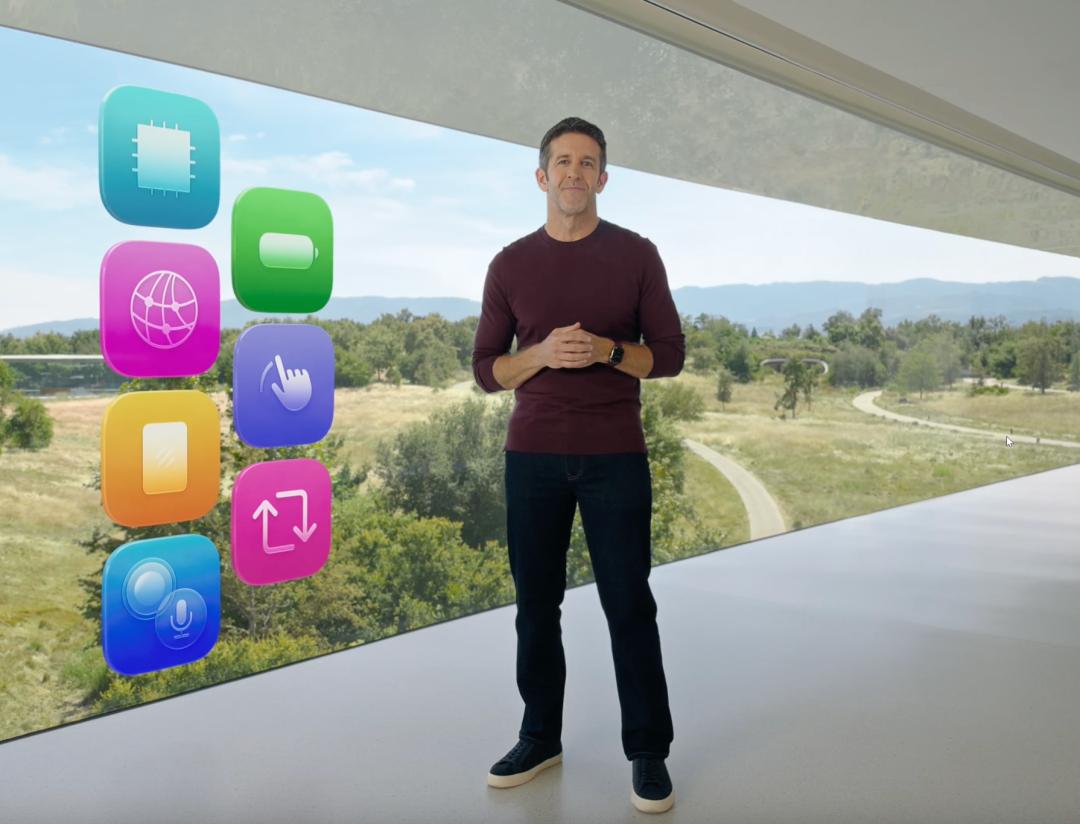
The answer given at the launch event is also very straightforward: Duo is responsible for unfolding the screen, and Siri is responsible for letting the iPhone truly operate on behalf of users. One answers the new hardware form, and the other complements Apple's AI experience that was two years late.
A
Let's start with the biggest highlight of this event, the foldable phone.
To be honest, I have to complain first about Apple's increasingly compromised exterior design.
The edge of the iPhone Duo uses a large rounded corner transition, but due to the nature of the foldable phone, the left and right sides are asymmetric when folded. After unfolding, the system will treat the inner screen as two proportional iPhone screens to organize content.
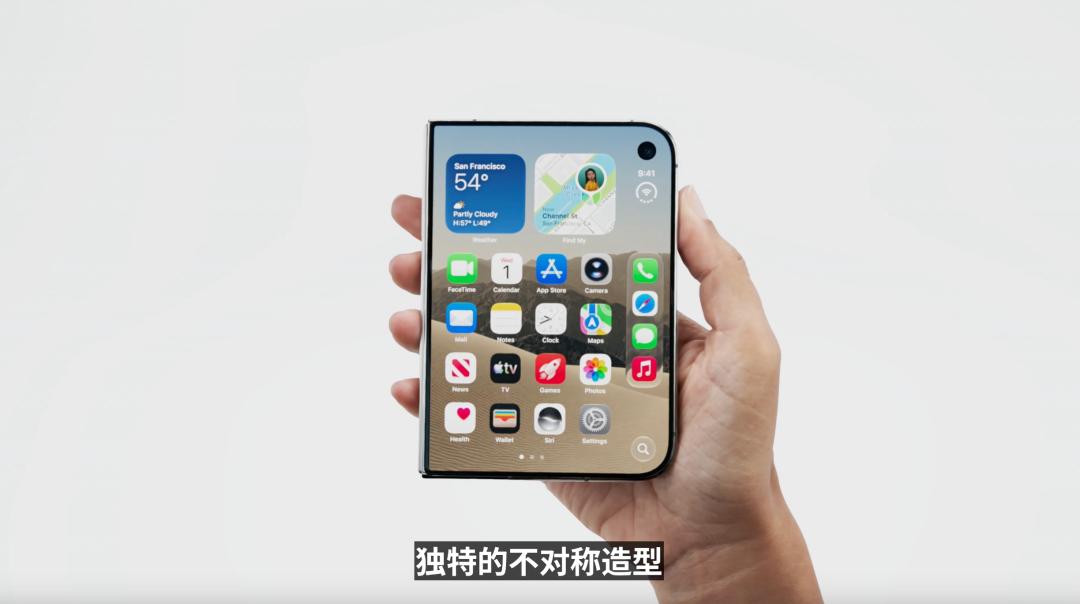
It is asymmetric when folded, and suddenly symmetric when unfolded, which really looks a bit awkward.
Since Huawei Pura X popularized the wide foldable form, more and more manufacturers have followed up. But no one is clear about what problems the wide foldable form has actually solved. Some emphasize one-handed grip, some emphasize reading experience, and in the end it is easy to become a small tablet.
Apple did not break away from the tablet idea either, but Ternus is very smart. He did not directly answer "Why did Apple make foldable phones until today", but changed the question to: How to put a larger screen in your pocket?
The direction he gave is more specific: the outer screen continues to be responsible for the daily operations of an iPhone, and when unfolded, it is like opening a book, allowing two proportional screens to work side by side.
According to Ternus, the larger screen can be used to watch content, browse photos, play games, and also carry Siri AI and Apple Intelligence. But this device must still be able to fit in a pocket and be held in the hand.
What Apple did is to fold it, redesign the software interaction of iOS, and make the unfolded experience as close to iPad as possible.
In short, Apple moved the commonly used controls to the side of the screen, leaving the middle area completely for content. At the same time, it readjusted the app layout to allow content to spread naturally from the outer screen to the inner screen.
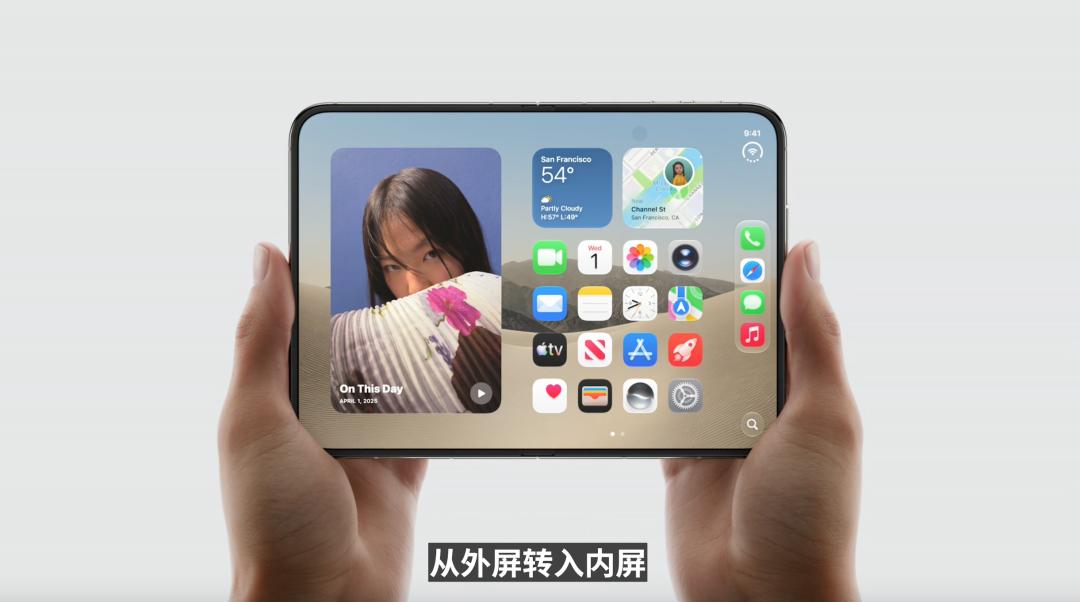
The Dock on the home screen is arranged vertically, and the status bar is retracted to the corner of the screen. No matter how the phone rotates, the commonly used buttons will stay near the thumb, so you don't have to stretch your fingers to find them everywhere on the 7.6-inch screen.
The inner and outer screens also adopt the same display ratio. The content you are viewing when the phone is closed will be naturally enlarged and rearranged after unfolding, without simple and crude stretching, and no large black borders will be left on both sides.
Another word Apple emphasized at the launch event is "continuity".
For example, open an app on the outer screen, and after unfolding the phone, the content will gradually fill the inner screen like refocusing; when you need multi-tasking, you can open two apps at the same time, or open two windows of the same app side by side.
When you fold the phone halfway, iOS will actively avoid the middle area that is not convenient to click, move the video to the upper part, and place the controls on the lower part. When placed on the desktop, even without charging, it can enter the standby display and become a clock, photo frame or weather panel.
Even Apple Pencil is here. Now you can write, draw and annotate documents directly on the inner and outer screens of iPhone Duo.
Apple went around in a big circle and finally made a foldable iPad mini that can make phone calls. However, the 5.4-inch outer screen is indeed on the small side today, it seems that Apple still can't forget the mini series.
After talking about the software, let's look at the hardware engineering innovation that Apple calls "only Apple can achieve".
The first one is naturally the hinge.
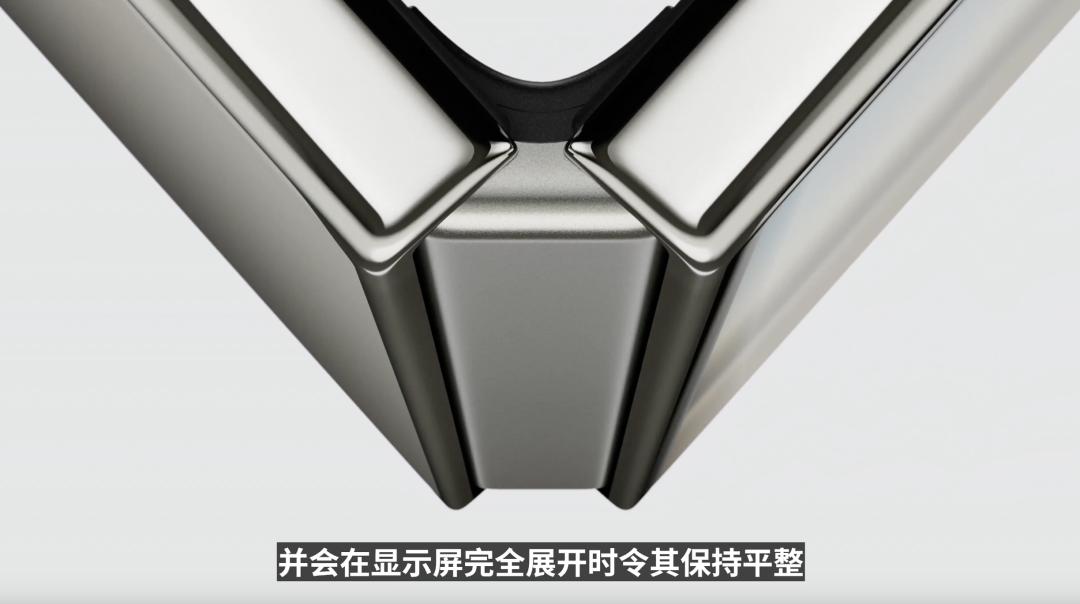
The hinge of the iPhone Duo is composed of more than 100 precision parts, adopting a variable torque design that provides different resistance at different angles. When the phone is fully unfolded, the middle support structure will hold the screen; when closed, the built-in magnets will suck the two sides tightly together.
Therefore, the iPhone Duo can not only be fully flattened, but also stay at different angles. Apple's official website directly summarizes it as "foldable, standable, placeable".
Apple did not say that it completely eliminated the crease, what it did is to let users forget the crease as much as possible.
The custom nano-texture on the surface of the inner screen is responsible for reducing reflections and reducing the visual presence of the crease; the ten-layer composite structure below uses high-strength glass, viscoelastic glue, titanium metal bottom plate and carbon fiber support, so that the screen can slide against each other like a book page when bent, without deforming easily.
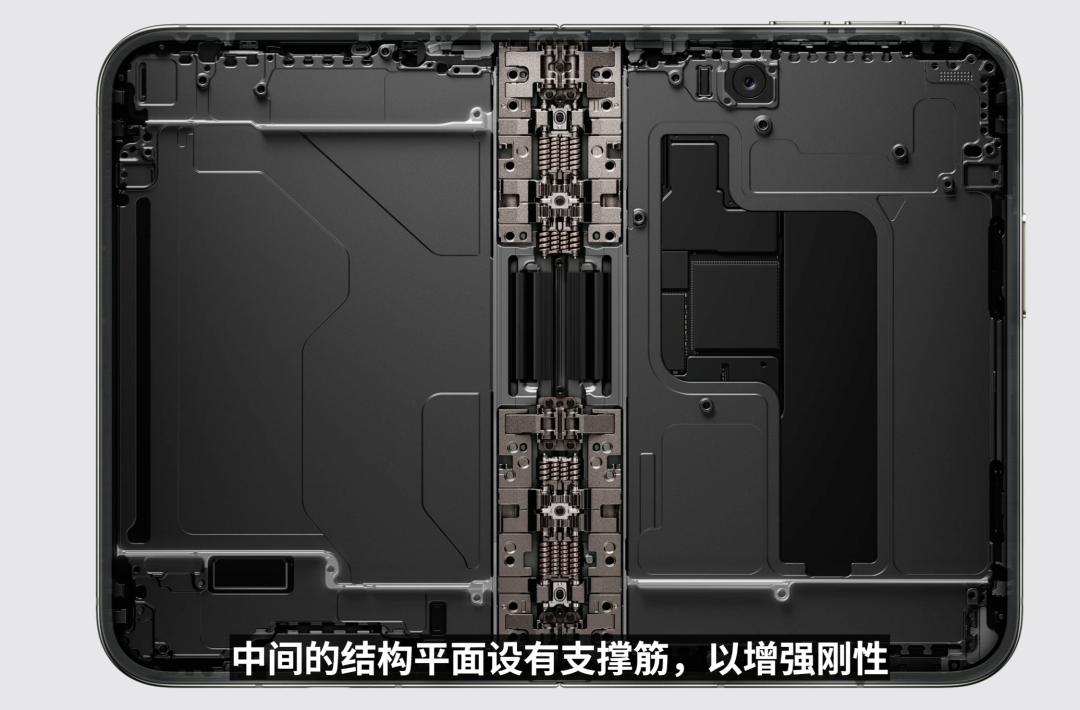
During assembly, the AI algorithm will match the most suitable body for each set of hinges. Confocal laser will also scan the screen unit by unit, and use up to 25 layers of micron-level materials to fill the remaining undulations.
Apple has also made many trade-offs for this folding structure.
In order to make the body thinner, Face ID is canceled, and Touch ID returns to the side power button. The iPhone Duo only retains two 48-megapixel rear cameras, no telephoto lens, and no variable aperture on the 18 Pro.
Fortunately, the folding structure does add several new ways to take photos.
The phone can be placed on the desktop in a half-folded state, without a bracket, to shoot time-lapse videos, make video calls or take group photos. Users can also use the rear main camera to take selfies and view the framing through the outer screen.
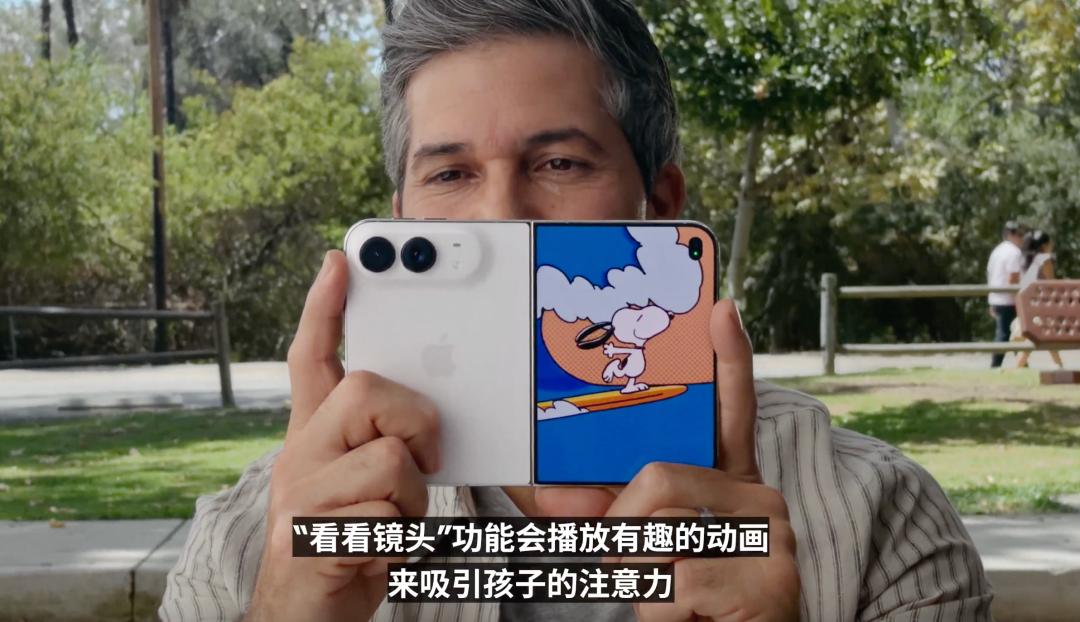
Duo Preview will display the real-time picture on the outer screen, allowing the person being photographed to adjust their pose by themselves. Kid Cue will play animations to attract children's attention to the camera.
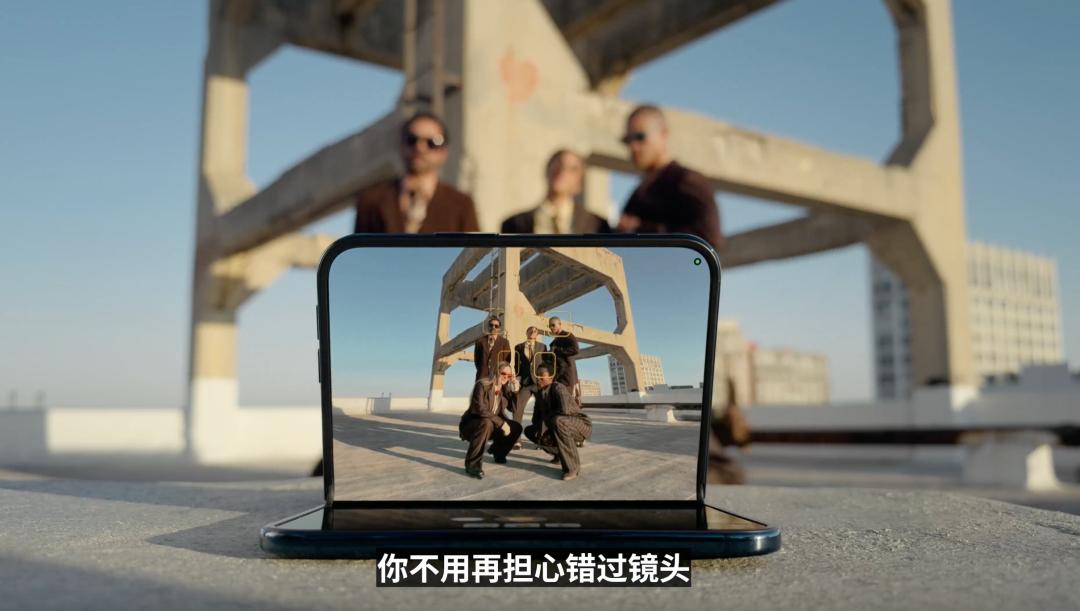
Smart Take is more like a temporary photographer. After the phone is placed on the table, the on-device model will observe the picture and automatically press the shutter when everyone stands still and looks at the camera. People taking photos finally don't have to start the countdown and rush into the group photo.
Duo FaceTime puts video calls on two screens. People around can join the call directly through the outer screen, and the front and rear cameras can also transmit pictures at the same time, so that the other party can see you as well as what is happening in front of you.
Of course, these features are not new to people who have used domestic foldable phones.
B
Compared with foldable phones, most people will still consider the Pro series when they really want to change their phones.
First of all, what everyone cares about, the 18 Pro series has indeed increased in price.
The 256GB version of iPhone 18 Pro and iPhone 18 Pro Max have a starting price of 9999 yuan and 10999 yuan in Chinese mainland respectively, which is 1000 yuan more expensive than the previous generation.
This price increase is not only for new products. The iPhone 17 standard version, which has been on sale for a year, has also been re-labeled, with the starting price rising by 800 yuan to 6799 yuan.
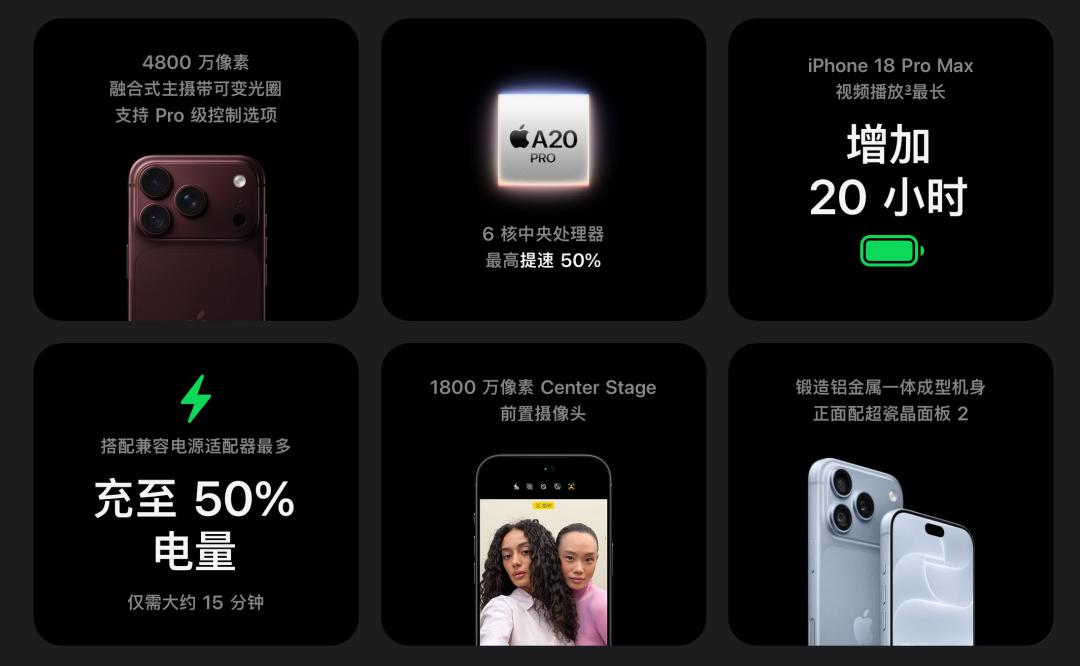
It seems that in the face of the general price increase of memory chips and components, Apple really can't hold on anymore.
At last year's launch event, Apple Watch took up a large part of the session, which was more or less confusing. This year's order is much more normal. iPhone, AirPods and Apple Watch appeared one after another, and the 18 Pro also returned to the first half of the event.
However, the way Apple introduces the 18 Pro has changed.
In the past, when launching a new iPhone, the chip, camera and materials would each have a long introduction. This year, Apple Intelligence has become the key word connecting hardware updates.
Why the chip is faster, why the heat dissipation is larger, why the memory bandwidth is increased, all lead to the same answer: running larger AI models on the phone.
Therefore, the first major feature introduced in detail is the previously delayed Siri AI.
Siri can now extract personal context from emails, messages and calendars, understand the content on the screen and in the camera, and perform operations in more than 300,000 apps.
At the launch site, Siri can take a picture of an event poster, write the time and location into the calendar at one time, draft an email in Outlook, and search for homework in Notability.
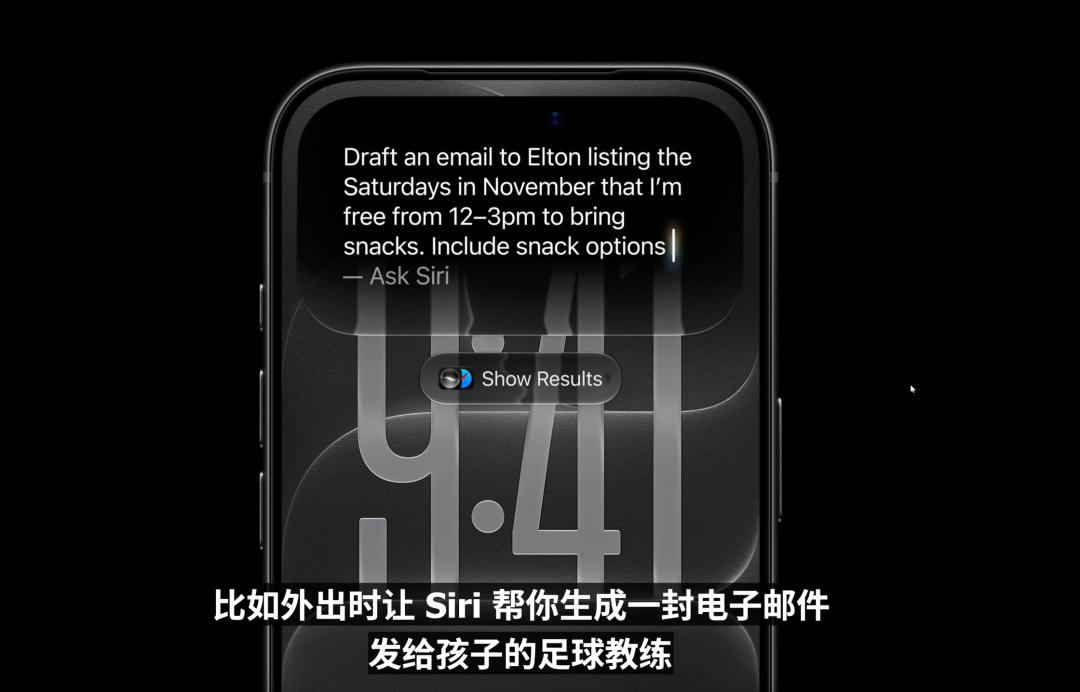
Apple also made a standalone app for Siri and integrated it directly into the camera. Past conversations can be synced across devices via iCloud.
But for now, we can only watch the demo. Apple Intelligence already supports Simplified Chinese, but the first beta version of the new Siri AI only supports English