First Hands-on of iPhone Duo at its debut: the only foldable screen handset worth 20,000 yuan
With the magnetic voice of Apple's new CEO John Ternus, we finally welcome "the most anticipated mobile phone in the world in 2026" — iPhone Duo.

Photo | Apple
As arguably the most leaked, most frequently covered and most capricious tech product over the past few years, the configuration, form factor and all functions of iPhone Duo are largely identical to what we have imagined:
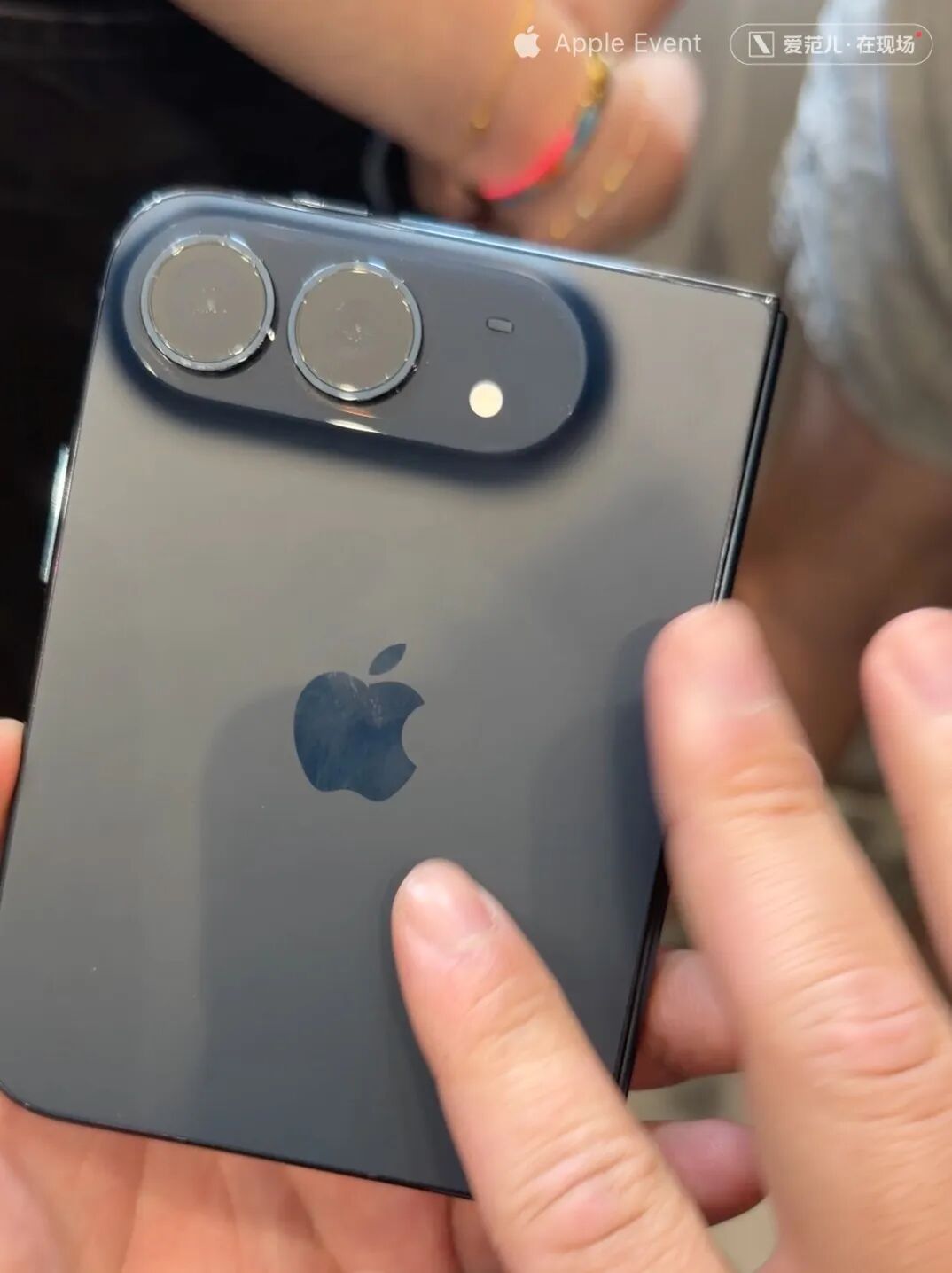
Titanium frame, body with large rounded corners, horizontal dual cameras on the lens plateau, body ratio that looks like a passport when folded and similar to an iPad mini when unfolded...
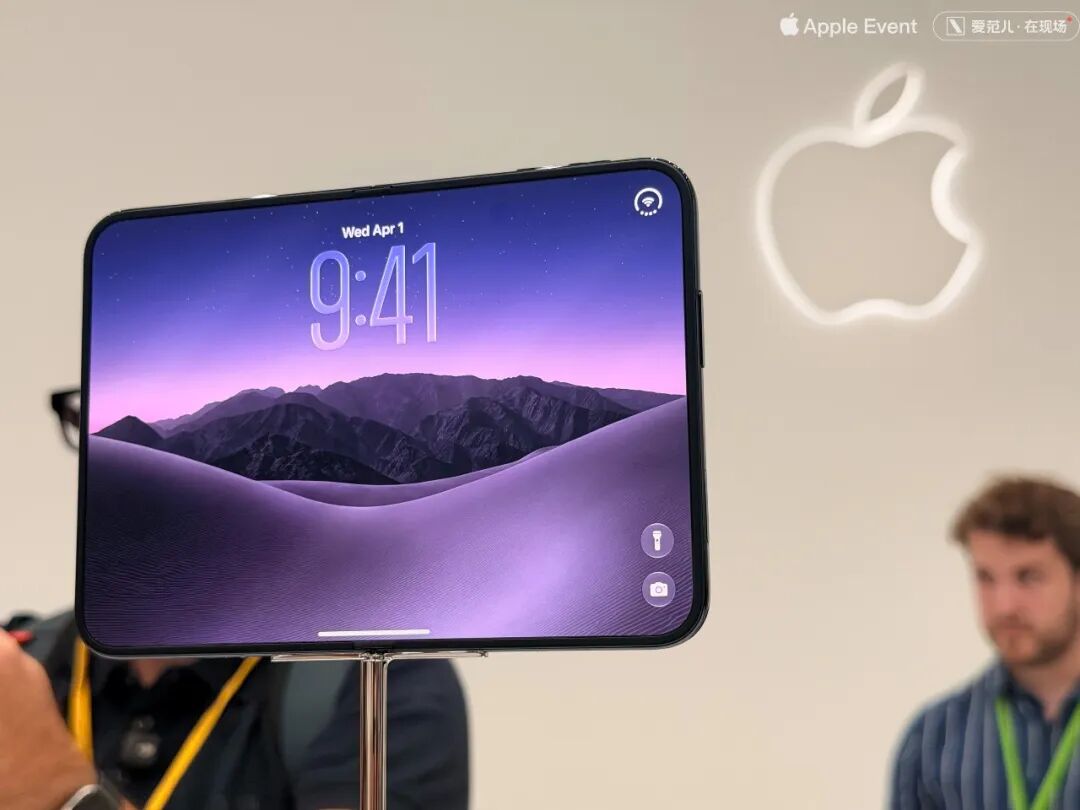
Even the body color inherits the plain color palette of iPhone Air, with only two calm options: "Starlight White" and "Night Sky Blue".
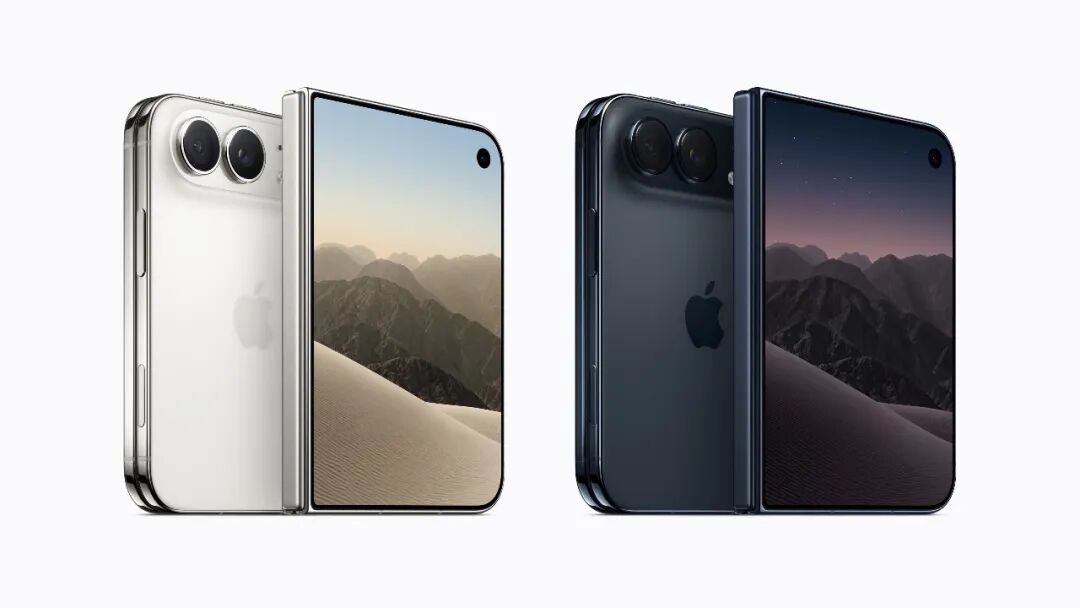
Photo | Apple
Despite numerous controversies before its launch, after we actually watched the demo video of iPhone Duo, we can still make this evaluation:
iPhone Duo has indeed reinvented the foldable screen at a special level.
The Peak of Foldable Screens
As the highly anticipated highlight, what we focus on the most is certainly the form factor of iPhone Duo.
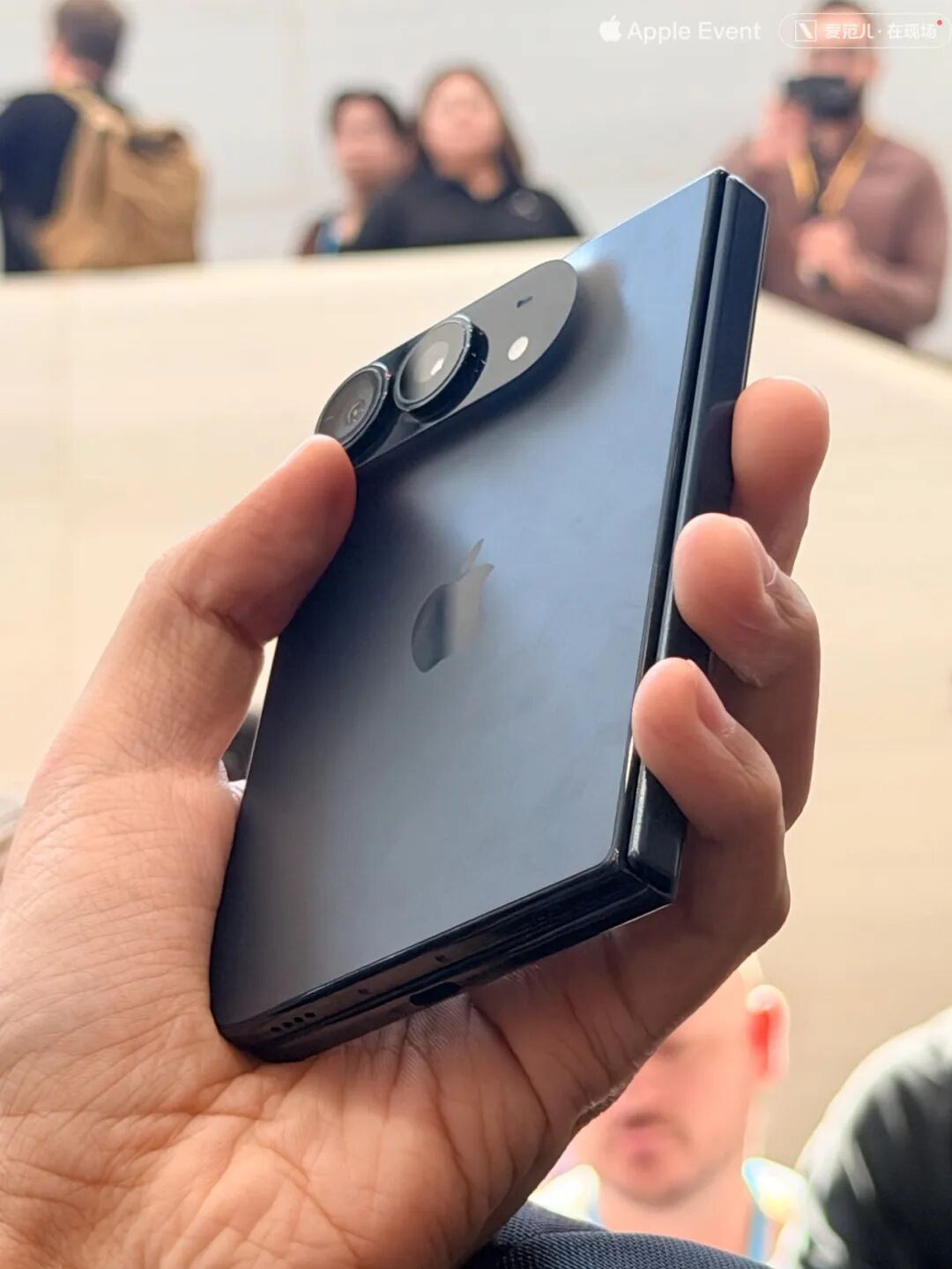
The iPhone Duo consists of a 5.4-inch outer screen and a 7.6-inch inner screen. As the body adopts the large rounded corner design consistent with previous iPhones, its outer screen is an asymmetrical D-shaped screen:
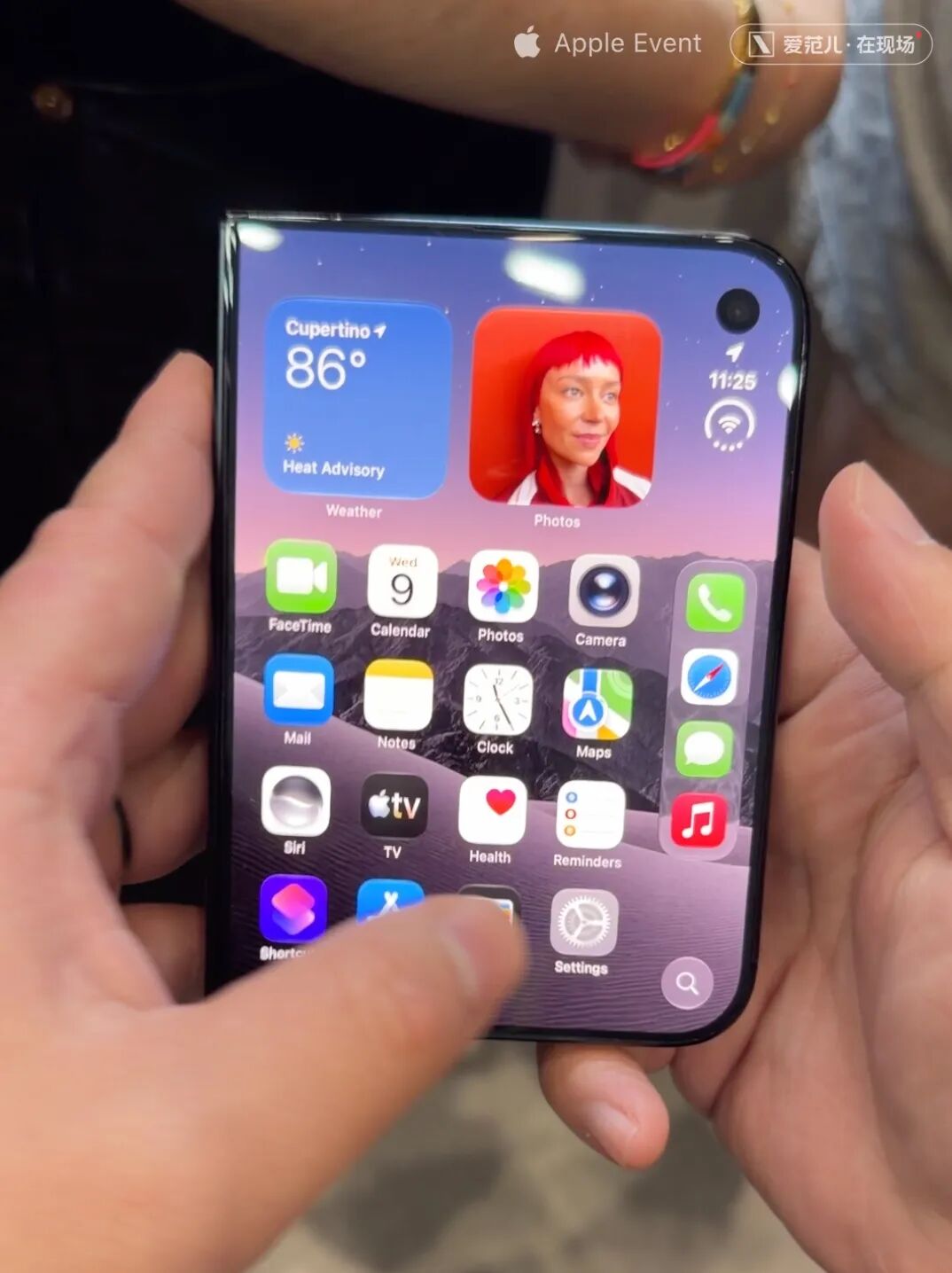
And this 7.6-inch inner screen, in terms of technical strength, is almost the undisputed peak of foldable screens —
Because Apple did not stubbornly stick to the "traditional routes" such as thickening UTG and hinge filling, but directly applied the nano-texture glass from the flagship display Studio Display XDR to the inner screen.
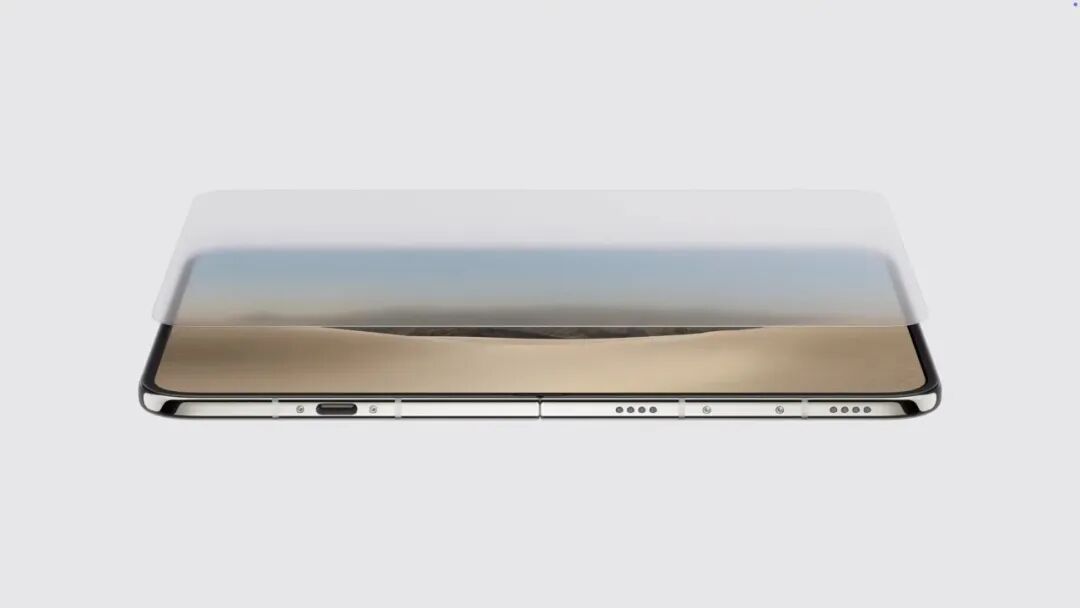
Photo | Apple
In addition, a customized optical adhesive is used on the inner layer of the screen, allowing limited sliding between the layers of the OLED display.
The combination of nano-texture and layered screen sliding not only makes the iPhone Duo's screen durable, but also almost completely eliminates creases visually.
As for how this design slows down the accumulation of screen creases, we still need to observe its actual performance in long-term use, rather than blindly believing in advertisements. Welcome to follow the in-depth review from ifanr later.
In addition, both the inner and outer screens support 1-120Hz ProMotion, Always-On Display, 3000 nits peak brightness, and more.
It is obvious that seven years after the foldable screen was launched, iPhone Duo has finally found a screen that meets Apple's standards.
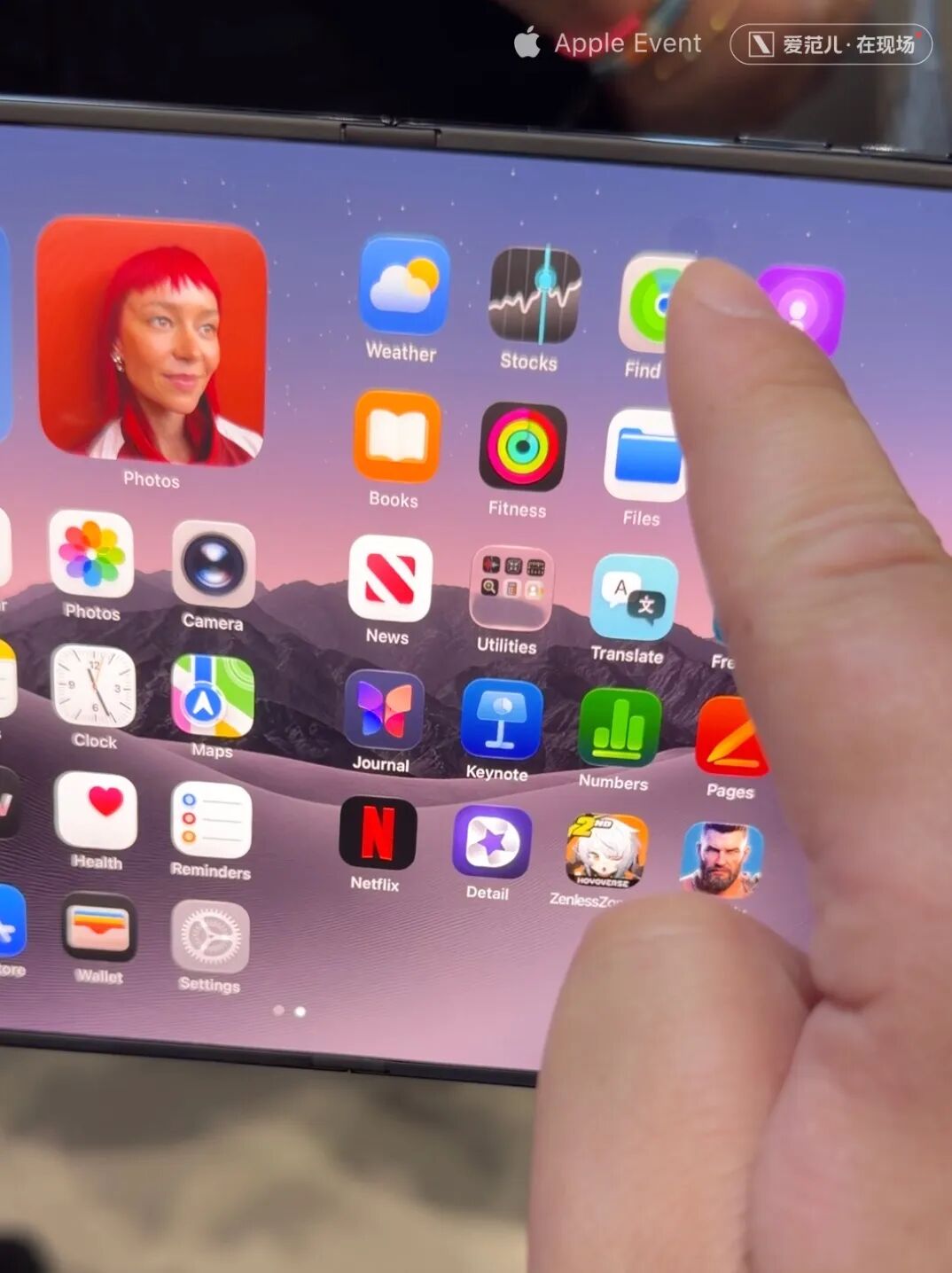
What's even more surprising is that while Samsung has given up on under-display cameras, the inner screen of iPhone Duo is equipped with a hidden under-display camera, which solves the problem of immersive large-screen viewing experience in a very "John Ternus" way:

Photo | Apple
According to the official website introduction, the aperture of this inner screen camera is f/1.8, and the maximum video recording specification is only 1080P 60fps.
Although the screen viewing experience we experienced at the site is immersive enough, it will inevitably affect the camera image quality.
Interestingly, according to the launch event introduction, iPhone Duo will be updated later this year to support the Apple Pencil with USB-C interface, and both the inner and outer screens are supported.
Leaving Cook aside, Steve Jobs might have had some complaints about this back then —
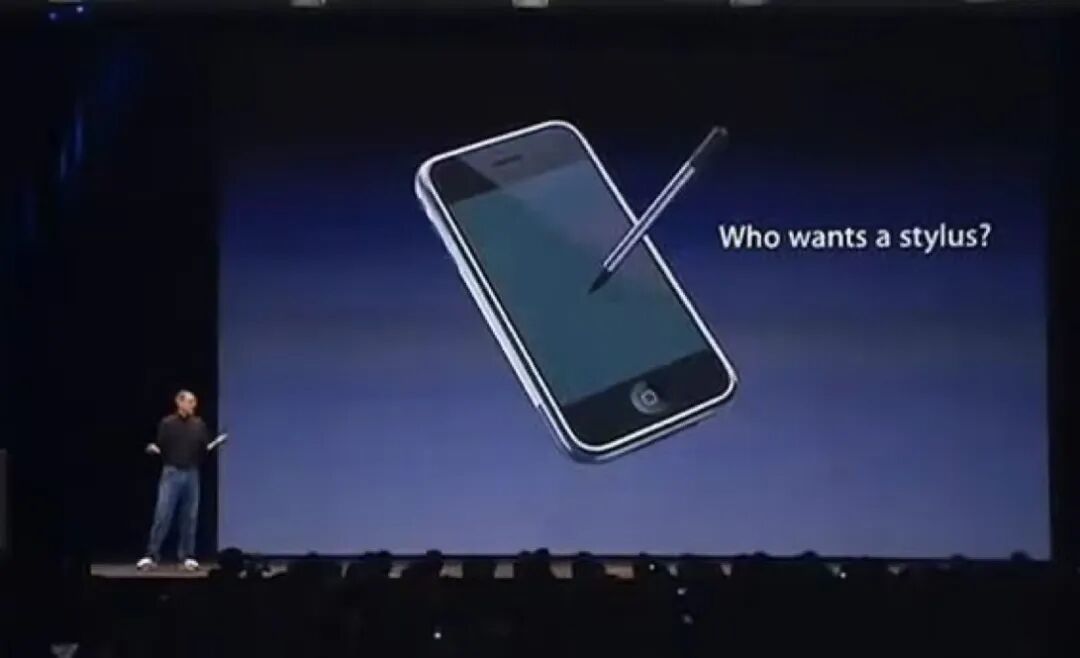
(Of course, Jobs' words don't have to be taken literally as doctrines. After all, when he handed over the baton to Cook, the old man also said: Don't do what I said, do the right thing.)
Back to iPhone Duo. In terms of screen sharpness, the 7.6-inch inner screen of this foldable phone has a resolution of 2670×1878, with an equivalent PPI of 430, and an aspect ratio of about 1:1.42, which is the 1:√2 that "remains unchanged no matter how you fold":
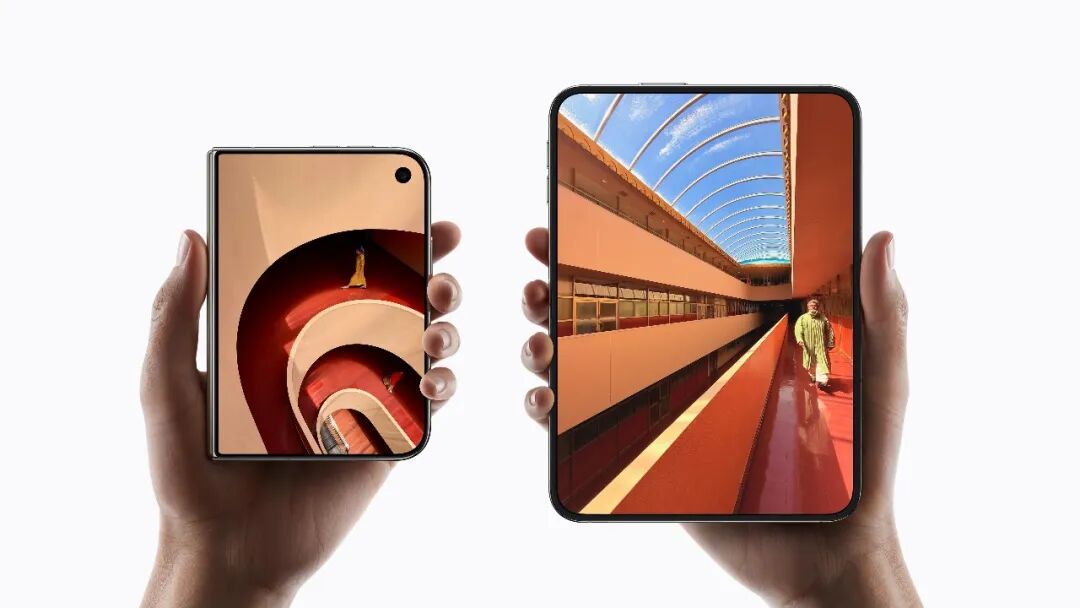
Photo | Apple
The resolution of the D-shaped outer screen is 1398×2034, and the equivalent PPI on the 5.4-inch screen is about 460 — this is a rare case in recent years where Apple has inconsistent values on a specific parameter.
In terms of materials, the outer screen of iPhone Duo uses the latest second-generation Ceramic Shield glass, and also has the anti-reflection coating that has become the standard for iPhones, while the back panel still uses the first-generation Ceramic Shield glass.
True Hardware and Software Integration
What excites us even more is how iPhone Duo handles the suddenly widened iOS.
It is no exaggeration to say that even the user with the most foldable screen experience in the ifanr editorial department exclaimed repeatedly after watching today's demo video: "Reinvent the foldable screen!"
(Editor's note: Actually, what I heard in the war room for this launch event coverage was continuous exclamations.)
After all, in terms of form factor, iPhone Duo is still a conventional "wide-screen foldable phone". How to make good use of the horizontal space of the screen greatly affects the user experience.
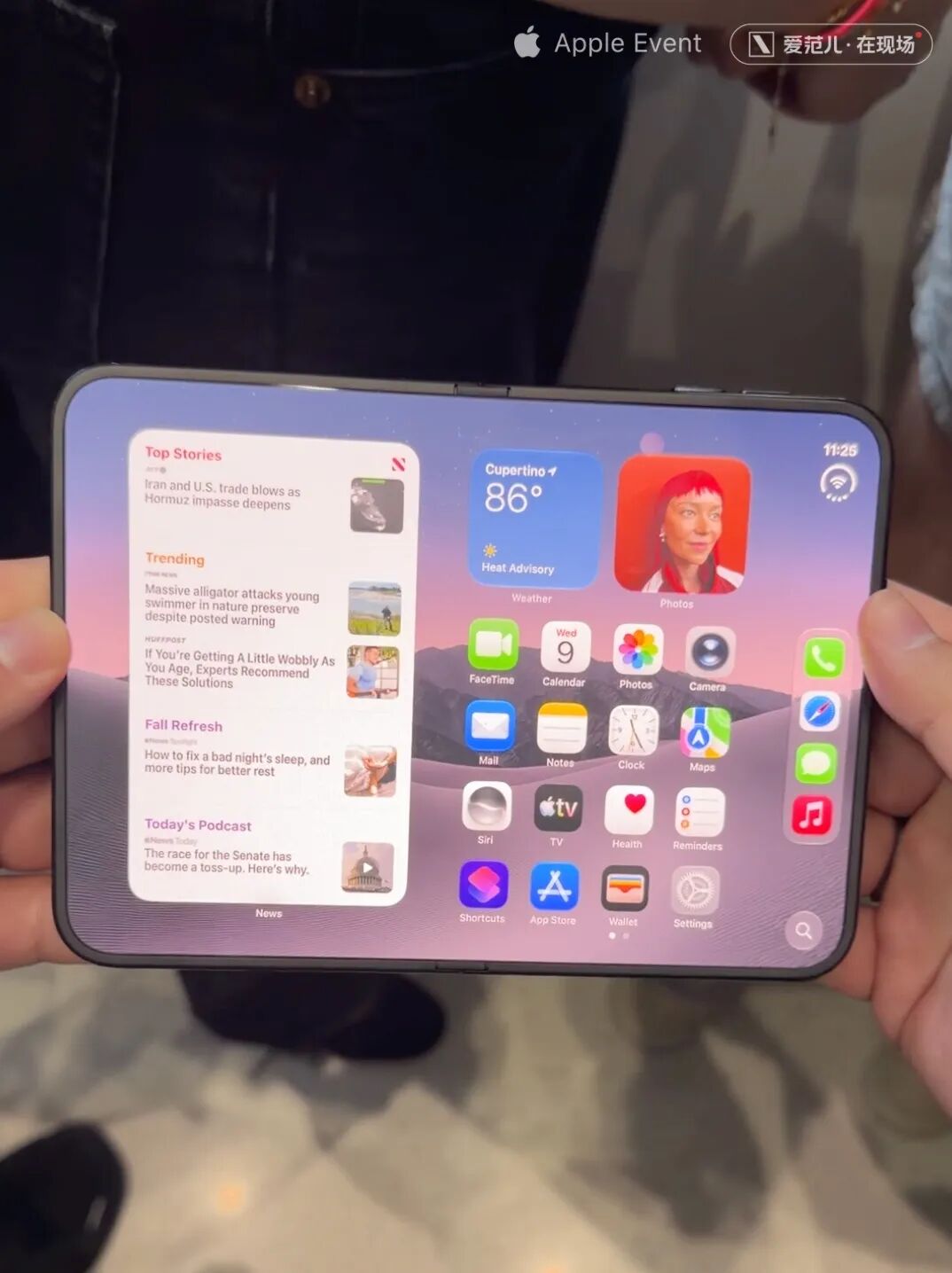
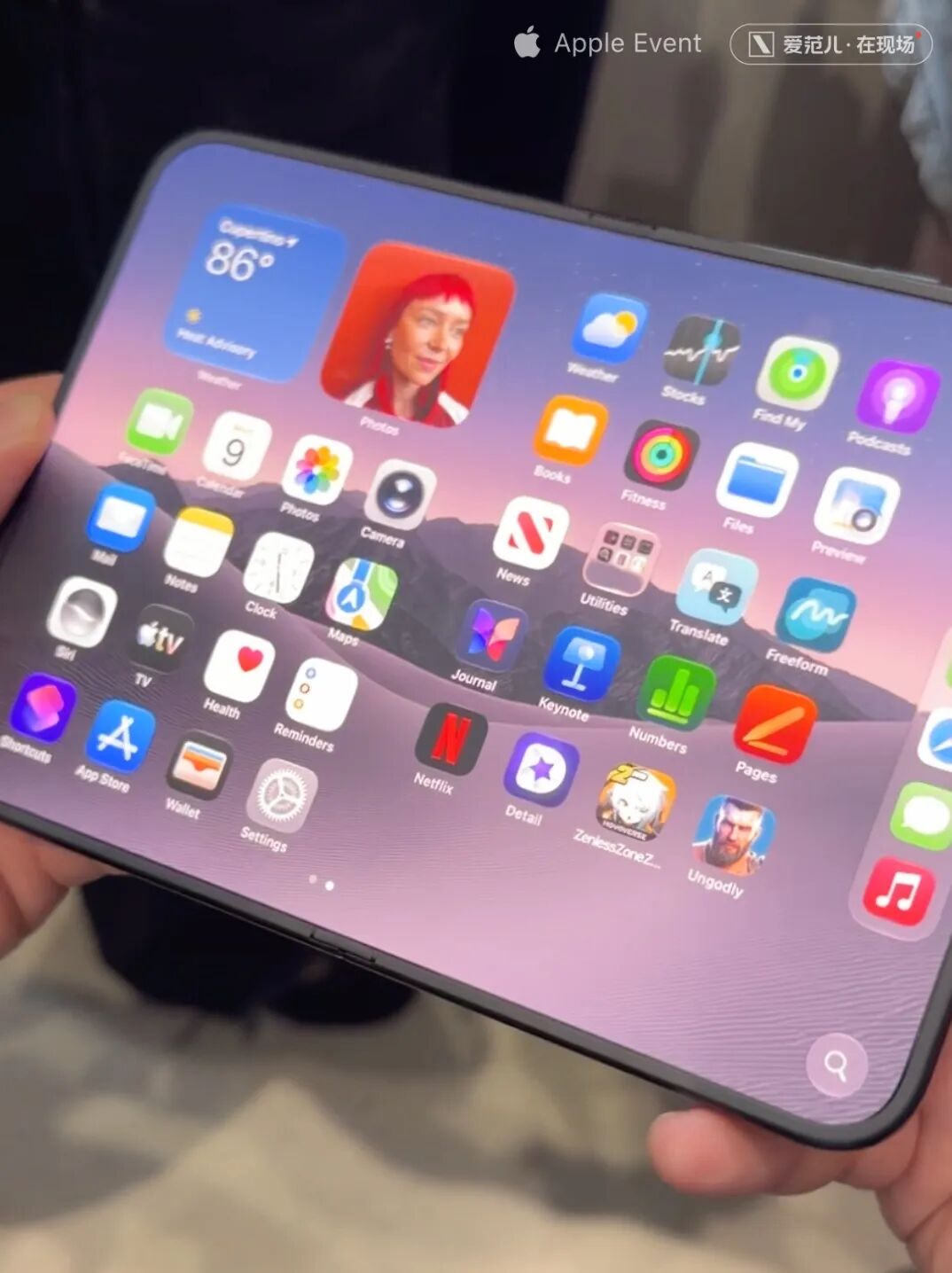
And Apple has adopted a solution that no manufacturer has ever tried so far — placing the dock bar, software top bar and toolbar, and even the status bar icons vertically on the right side of the screen:
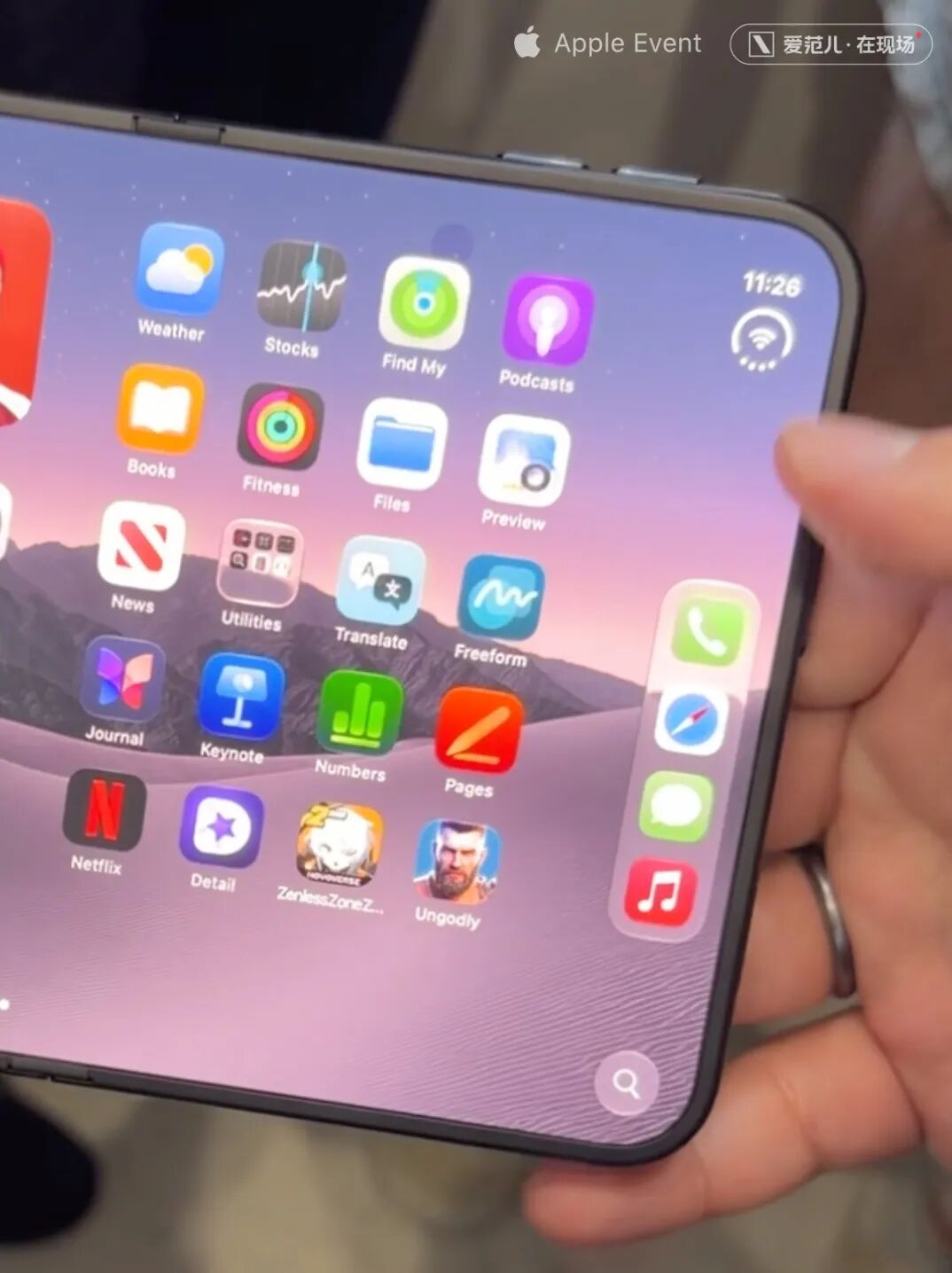
In this way, in the wide screen with limited height, iPhone Duo leaves a rectangular area with a ratio close to that of traditional bar phones as much as possible to display the main content, which is not only conducive to app adaptation, but also provides a solution for one-handed operation.
This design is very friendly to the tiger's mouth and wrist.
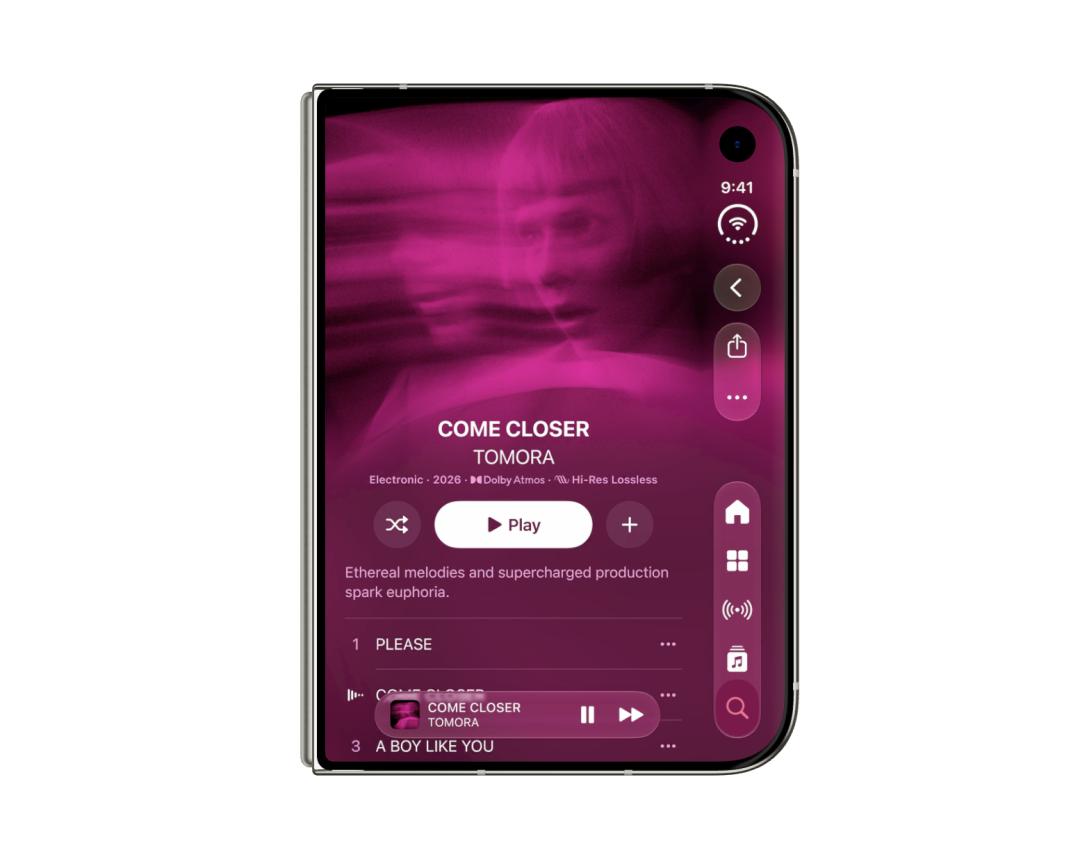
Photo | Apple
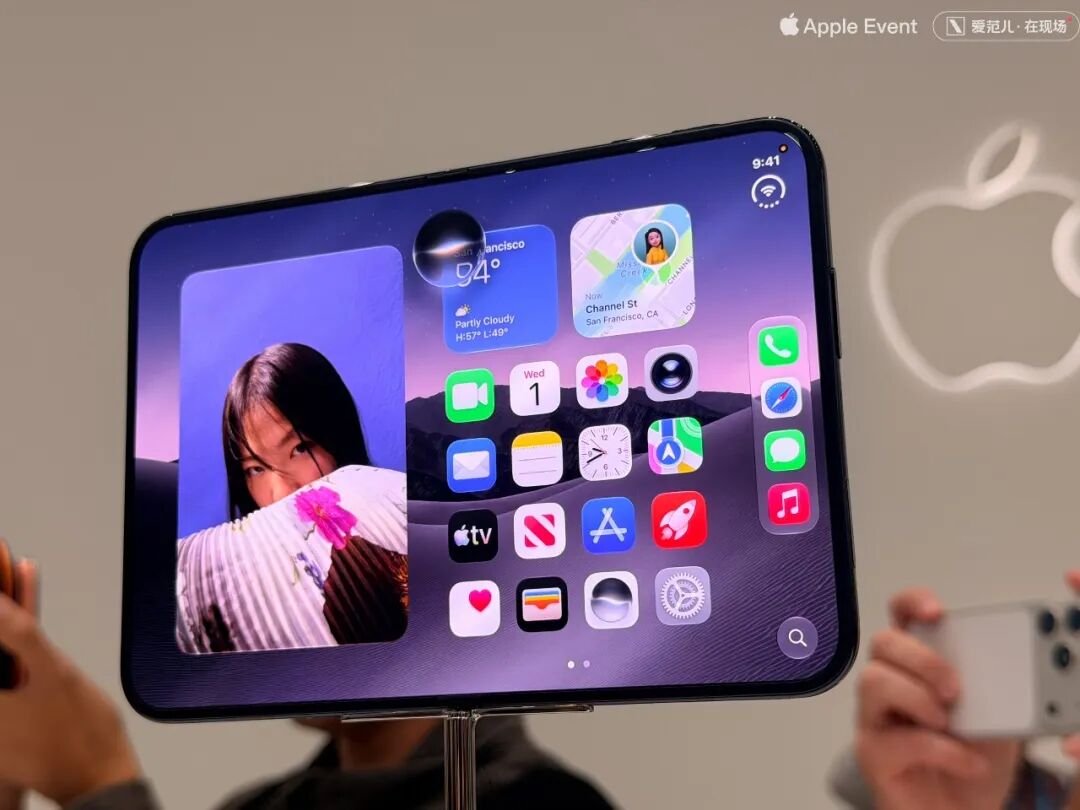
In addition, iOS 27 has also made special adaptations for the inner screen of iPhone Duo. In Apple's own words: "A completely reconstructed yet familiar iOS experience."
After unfolding the inner screen of iPhone Duo, the entire left half of the screen will be occupied by the "Today View" composed of widgets, and the home icons, status bar and dock bar remain on the right screen, the most convenient position for operation.
This layout idea is a bit like iPad and Mac — Apple's major hardware product lines have always been a family, and this is especially true this time.
For third-party apps, as long as they adapt to the new variable-spacing toolbar of iOS 27 as required in the previous WWDC, iPhone Duo will automatically move the content that originally occupied the top and bottom of the screen to the right side of the screen, leaving the most complete display space.
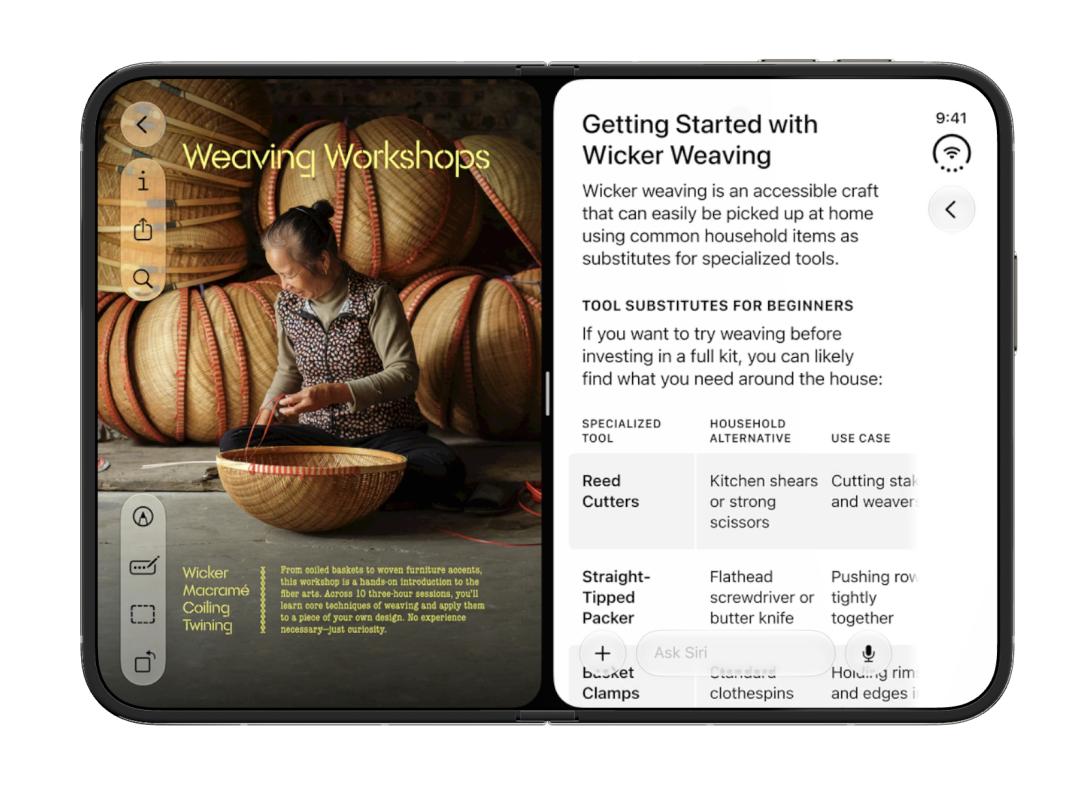
Photo | Apple
But for split-screen, iPhone Duo's strategy seems a bit conservative — Apple officially only says it can open two apps at the same time, plus PiP (picture in picture) it is barely three, which seems less interesting compared to the dazzling split-screen gameplay of domestic foldable phones.
A more direct example: Apple, which first proposed "Stage Manager", did not implement this multi-tasking idea in iPhone Duo like its Android counterparts, which is really a pity!
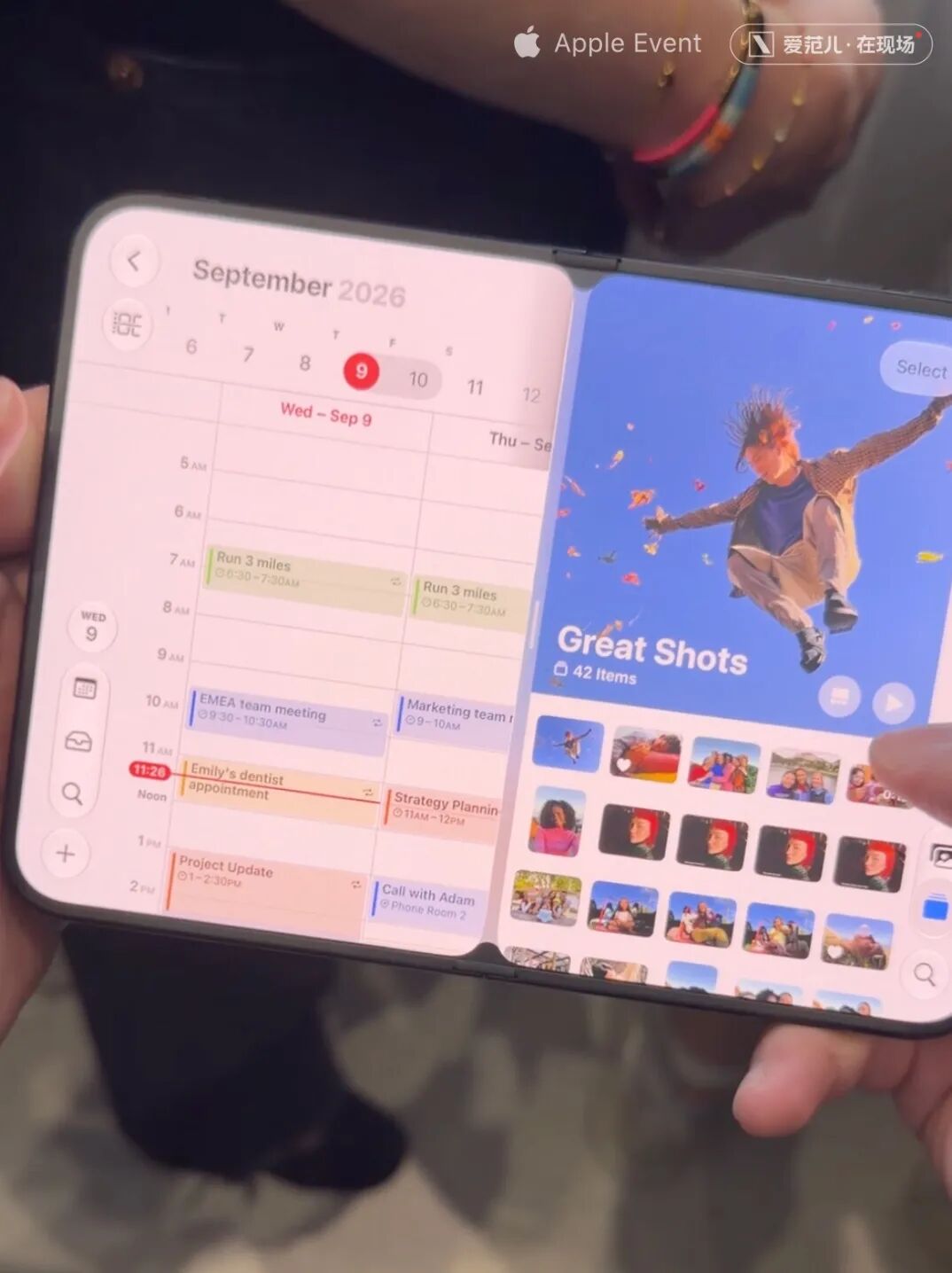
Fortunately, the foldable screen has made many iOS functions