Everything You Need to Know About the New Hard Tech Trends at IFA 2026: These 10 Questions Are Far More Specific Than "AI Implementation"
From September 4 to 8, IFA 2026 (Berlin International Consumer Electronics Show) was held in Berlin, Germany, and the event has now officially concluded. As one of the world's three major consumer electronics exhibitions, this year's IFA gathered more than 1,900 exhibitors from 49 countries and regions, and is expected to attract over 220,000 visitors from all over the globe.
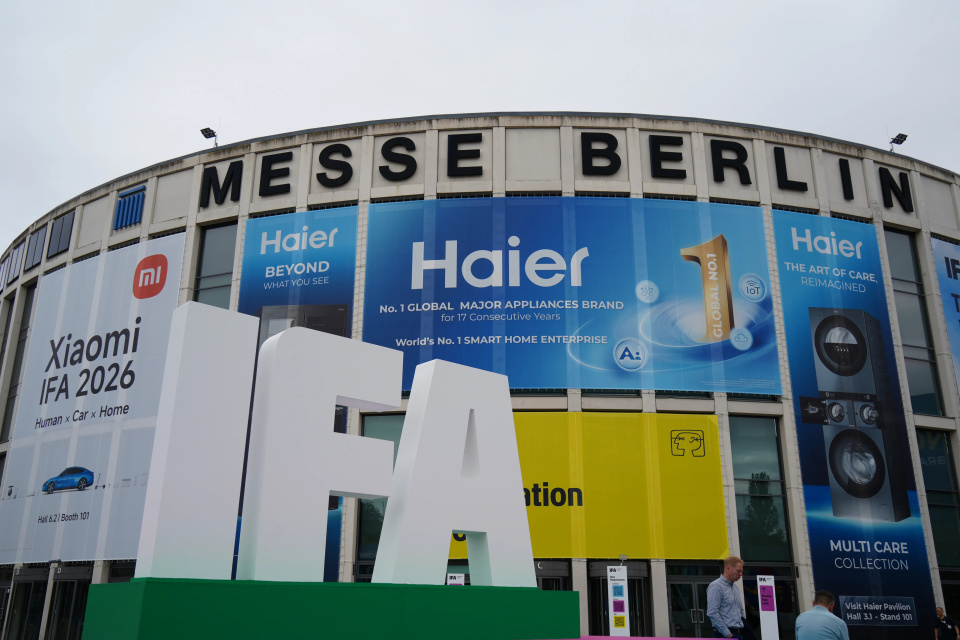
While Chinese manufacturers still make up a large share of exhibitors, the debut of Xiaomi's Human-Car-Home ecosystem, plus the participation of a large number of robotics companies and consumer electronics brands, has made this edition of IFA exceptionally lively. You can find home appliances and technologies that have been iterated and updated for hundreds of years, as well as cutting-edge technologies that have emerged and risen rapidly in recent years, such as Physical AI, embodied intelligence, and whole-home AI highlighted at this year's show.
Source: Lei Tech
Some people describe IFA as a "tech hypermarket", which is accurate from the positioning of global consumer electronics exhibitions: CES, as the first exhibition at the start of each year, showcases future concepts with a large proportion of "visionary ideas". In contrast, IFA displays the actual landing achievements of manufacturers, most of which are mass-produced products available for purchase, or products that are about to launch crowdfunding. Many of the conceptual new products we saw at CES 2026 now appear in mature product forms at IFA 2026.
Every member of the Lei Tech IFA reporting team walked 20,000 steps per day in Berlin, and all team members accumulated more than 500,000 steps in total during the exhibition. We all stayed until the venue closed, making us one of the reporting teams that remained on site for the longest time. Given the massive volume of IFA coverage from Lei Tech, we now present a review and summary of this IFA report in the Q&A format, which is also our traditional feature for CES/AWE/IFA coverage. If you do not have time to browse more than 80 IFA-related reports from Lei Tech (you can reply "IFA" on Lei Tech's official channel to get all the in-depth content for free), reading this article will give you a quick overview of IFA 2026, as well as the latest trends in AI home appliances, robotics, consumer electronics, Physical AI, and Chinese enterprises' global expansion.
Q1. What new trends in the home appliance industry has IFA26 presented?
It is too simplistic to say "there are more AI applications and more Chinese brands".
The first trend is that whole-home intelligence is moving to the Agent stage, where practicality outweighs gimmicky features.
Home appliance manufacturers are readjusting the relationship between different products. In the past, refrigerators, TVs, mobile phones and cars, although all serving the same user, operated independently of each other and could hardly generate linkage effects. At this year's IFA, manufacturers hope to answer one question with the whole-home AI ecosystem: how to make products naturally integrate into people's daily lives.
At last year's IFA, manufacturers including LG, Midea, Haier, TCL, and Hisense all showcased similar whole-home ecosystems. The difference this year is that the intelligent ecosystem now has deeper AI involvement, which is no longer limited to voice control, but features intelligent agents that can take over tasks and participate in execution.
The first change is the arrival of Agents in the home: in the past, users were still the busiest party when using smart home appliances, as most manufacturers only expanded control methods to mobile apps or voice commands, and users still needed to set the operation logic for home appliances manually.
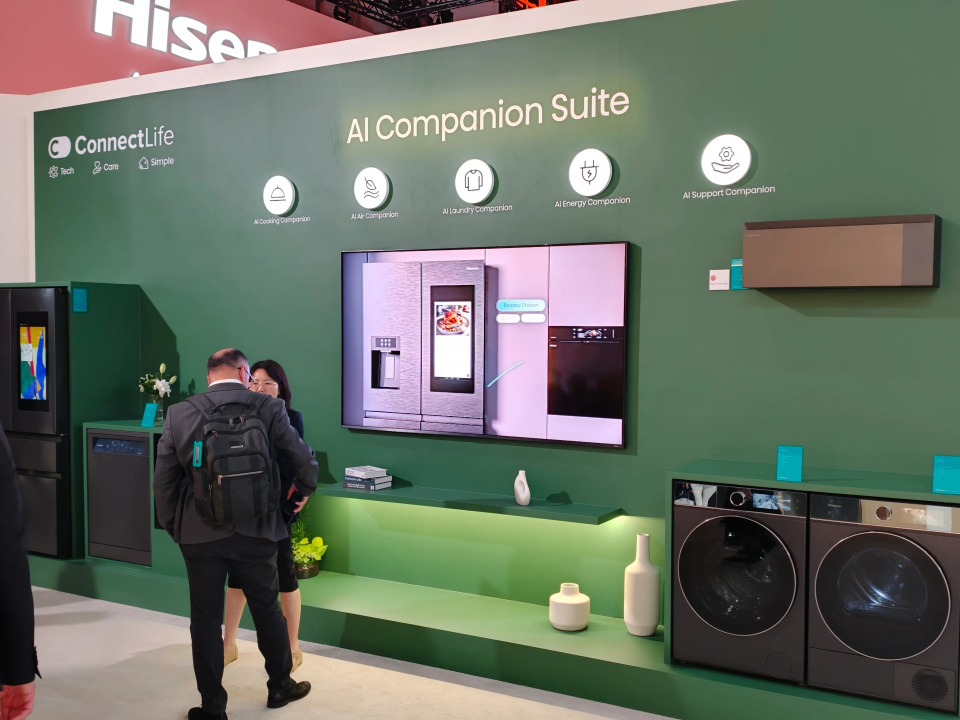
This year, the new logic becomes: users express their needs, the system understands the environment, and then arranges devices to execute corresponding actions. Therefore, Hisense has set four standards for AI home appliances: having perception capabilities, having a "brain", being able to communicate, and being able to execute tasks. In plain language, this means home appliances can think autonomously and operate on their own. The ConnectLife AIoT cloud platform released by Hisense at this IFA is a typical case, which focuses on whole-home device control, multi-modal perception and five scenario-based AI agents, covering core scenarios such as kitchen, laundry, and air management.
Source: Lei Tech, photographed at Hisense's IFA booth
TCL brought the upgraded NXTHOME whole-home ecosystem, stating that smart home should not complicate people's lives. Handling trivial matters well and returning time to the people and things that truly matter is where the value of technology lies.
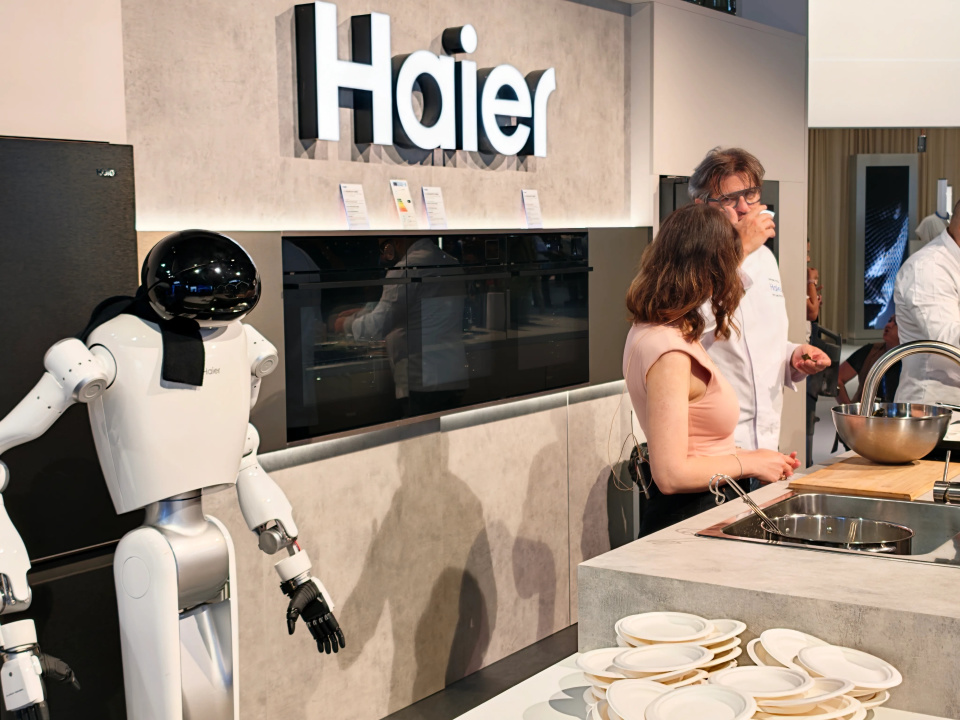
Haier, the global giant in white goods, takes building a "smart home scenario" as its mission. It added the words "Smart Home" to its brand name long ago to strengthen the layout of whole-home intelligence. This time, Haier showcased a huge themed pavilion following the hOn ecosystem route: refrigerators, washing machines, and air conditioners are connected as a whole, each single product can actively perceive and provide services, and they work together to deliver a natural and smooth whole-home experience. In the future, you only need to state your needs, or even say nothing, and AI will decide which lights and curtains to turn off, and which air conditioners to adjust based on time, ambient temperature and humidity, and the activity of people in the house.
(Source: Lei Tech IFA reporting team, shot on site)
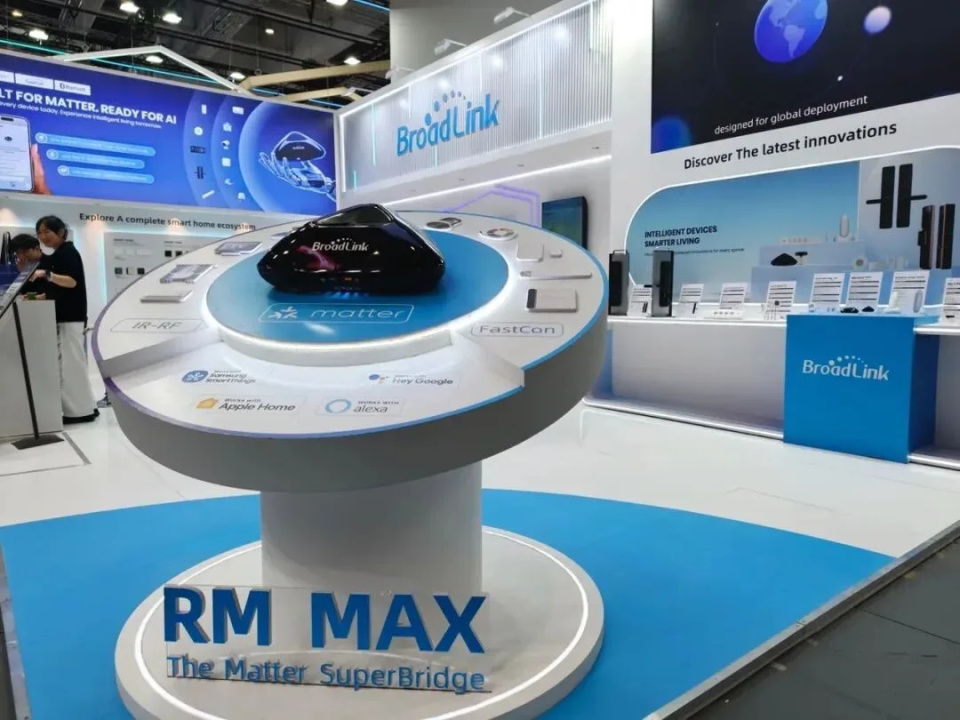
Some people may ask: If I want to use AI home appliances, do I need to replace all my existing home appliances with new ones? BroadLink provided a solution at IFA: the AIsight AI Hub and RM MAX Super Bridge, which solve the problems of demand understanding and device connection respectively. The bridge can connect compatible infrared, radio frequency home appliances and FastCon devices to mainstream smart home ecosystems, giving old home appliances the chance to become "AI-enabled home appliances". This solution does not look fancy, but it is very practical, because most families will not replace all their home appliances just to experience AI. A product that can accept old devices and is compatible with different devices will obviously be more easily adopted by users.
Source: Lei Tech
So as the saying goes: whole-home AI does not need "gimmicks", it only needs "practicality". Whoever can better solve users' real pain points will take the lead.
The second trend is that robots are trying to enter households, exploring the possibility of becoming the next category of home appliances. The number of exhibitors in the IFA Next pavilion, which showcases future technologies such as robots, has expanded from about 260 last year to around 300 this year. The official description calls it "the largest humanoid robot exhibition ever".
Unitree, Agibot, and Mojo-AI are participating in the exhibition for the second time, while new players such as Fourier Intelligence, Pivot Robotics, Hanmo Robotics, and Digerobot have also appeared. IFA even specially arranged a "Robots on the Runway" event, allowing humanoid robots to walk the runway directly on stage, alongside the RoboCup robot football match. Founded in 1924, IFA started with radio products, and its core focus has been home appliances for 100 years, later adding consumer electronics. Its current emphasis on robotics reflects the trend of accelerated implementation and popularization of robots.
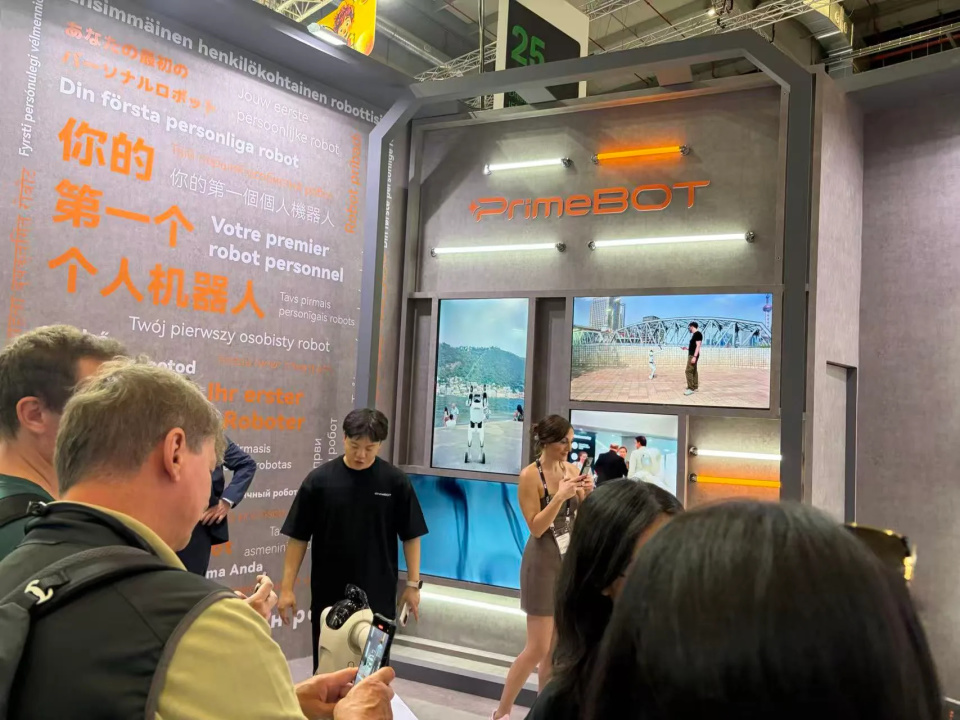
(Source: Lei Tech IFA reporting team, shot on site)
The third trend is that home appliance manufacturers are no longer only making home appliances, but starting to expand into the consumer electronics field. For example, Hisense's display business has extended to personal devices such as monitors, AI glasses, and Bluetooth headsets. TCL also brought mobile phones, tablets and smart glasses, all under its main brand instead of sub-brands.
The fourth trend is that the "Human-Car-Home" ecosystem has finally made its debut. The "Human-Car-Home" concept has been widely demonstrated at AWE, and at IFA, "vehicles" have also become a new element. Xiaomi brought its full "Human-Car-Home ecosystem" for the first time, showcasing complete vehicles including the Xiaomi SU7 Ultra and the Xiaomi Vision Gran Turismo concept car, and put up a huge "Human·Car·Home" advertisement outdoors. In addition, Xpeng and Volkswagen also showcased complete vehicles. This does not mean that cars will become "home appliances", but that in the AIoT era, cars have become an extension of the smart home ecosystem, working together with "people" (consumer electronics and robots) and "home" to serve users' lives. With the accelerated intelligentization of automobiles, other home appliance manufacturers may soon start to lay out the "Human-Car-Home" track and strengthen cooperation with automotive OEMs.
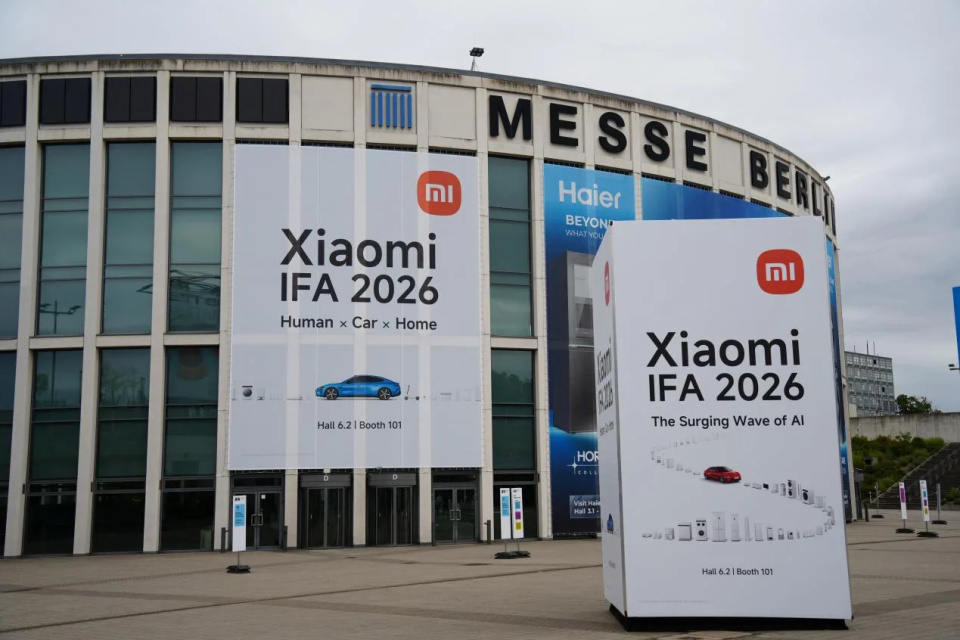
Source: Lei Tech
At the entire IFA, the number of Chinese exhibitors has increased significantly, and the scale of their booths has also changed a lot. Giants including Haier, Hisense, Xiaomi, TCL, Midea, and Dreame have all secured pavilions of over 3,000 square meters, while Japanese and Korean brands such as Samsung, LG, and Sony appear relatively marginalized. In addition to home appliances, Chinese brands have also dominated the tracks of smart cleaning, smart imaging, and robotics, with larger booth areas and higher popularity. Most of the most popular booths this year belong to Chinese brands, which reflects two trends:
1. Global expansion has become the consensus of more and more Chinese enterprises. The domestic market is highly competitive, and the global market is the broader ocean of opportunities;
2. Chinese hard technology brands are becoming the new "rule makers" in the global market, and the size of booths and audience popularity are the direct reflection of their strength.
Q2. Which AI home appliance products are impressive?
AI home appliances are the absolute core of IFA, with the largest number of participating brands and exhibits, many of which have left a deep impression on our team.
Haier Seeker multi-compartment precision storage refrigerator supports AI food recognition, which can plan the storage method for ingredients, and provide users with recipe services based on the ingredient list and storage time. It also uses voice prompts + built-in lights to indicate the location of relevant ingredients, so you no longer need to rummage through the fridge. When cooking, it can also plan recipes based on the existing ingredients in the refrigerator, and even link the steam oven to preheat in advance. When you are shopping at the market, you can remotely check the inventory status, so you will never buy too much or miss any ingredients.
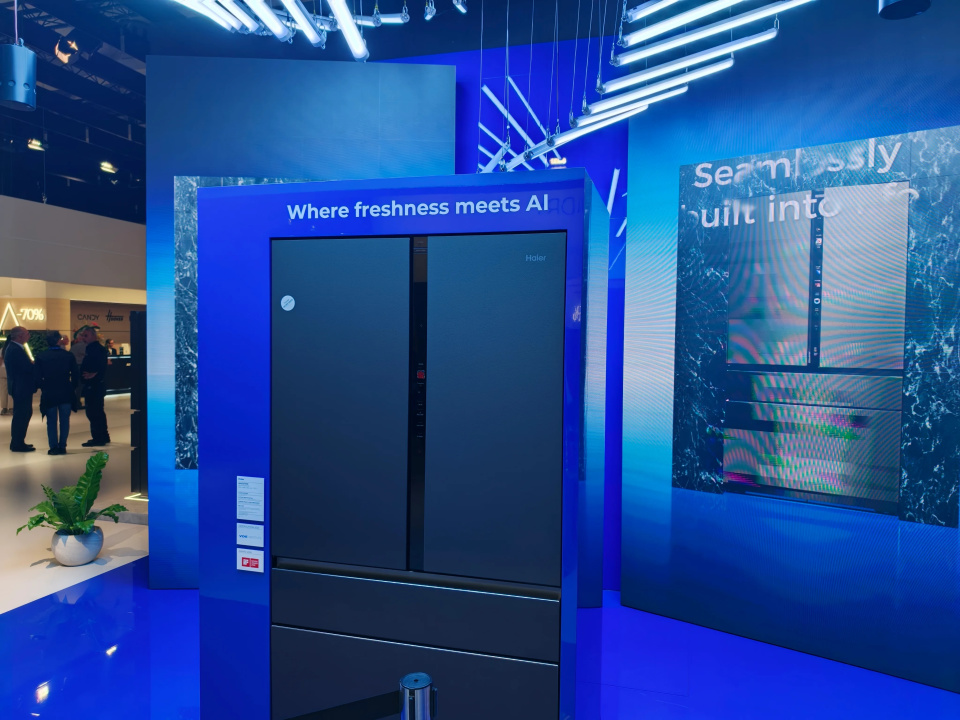
(Source: Lei Tech IFA reporting team, shot on site)
TCL dual-magnet fresh-keeping AI refrigerator also has built-in AI food recognition functions, and can adjust the temperature of the storage area according to the type of ingredients to achieve the best fresh-keeping effect. AI is no longer only used for interaction and service provision, but deeply integrated into the core functions of home appliances such as fresh-keeping, which is another core point of how AI changes the home appliance experience.
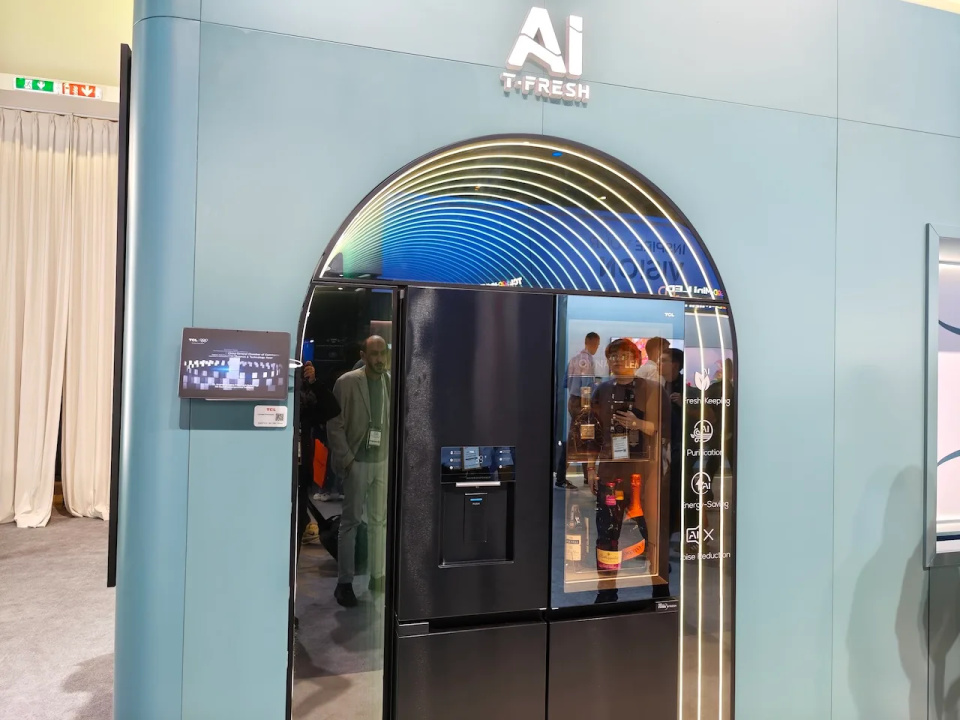
(Source: Lei Tech IFA reporting team, shot on site)
Hisense AI Companion Refrigerator has taken AI fresh-keeping to the extreme. The new generation of vacuum fresh-keeping technology has multiplied the fresh-keeping effect of ingredients. Meat bought a few days ago is still fresh when taken out of the refrigerator compartment. It can also intelligently recommend recipes based on the ingredients you take out, and automatically adjust the corresponding cooking appliances to the appropriate mode after the recipe is confirmed. You only need to process the ingredients and start cooking directly without extra settings.
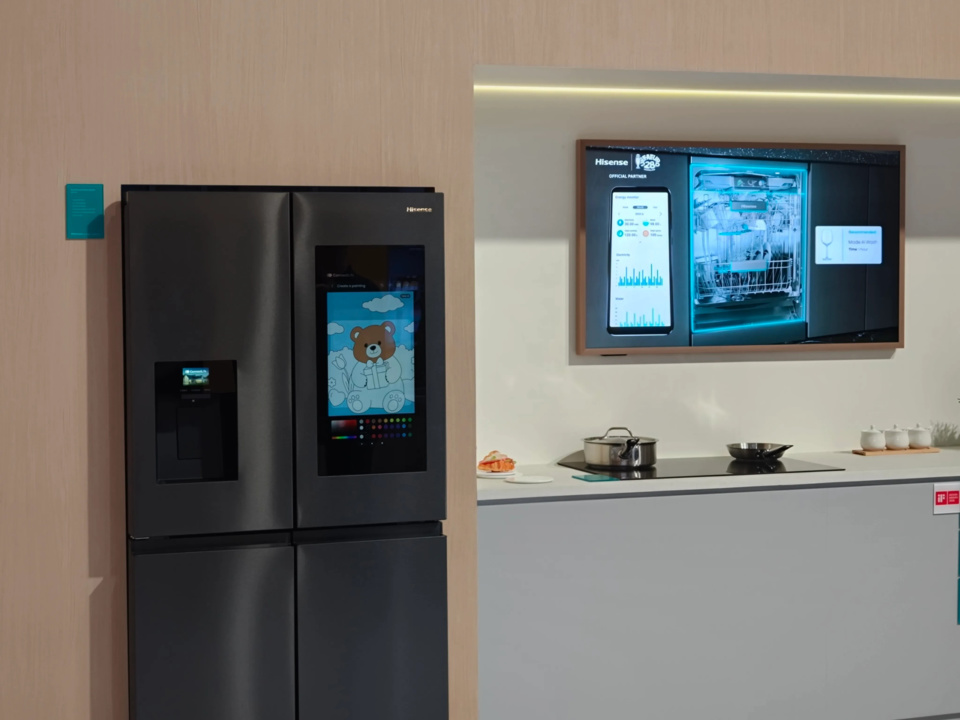
(Source: Lei Tech IFA reporting team, shot on site)
Changhong AI human-sensing air conditioner is equipped with a built-in millimeter-wave radar and AI system, which can automatically adjust the air supply angle and distance according to the position of people on site. This function is very practical for families with elderly people, as no matter where they sit, they will not be directly blown by the air conditioner wind. You can also set the "wind follows the person" mode, so the air conditioner wind will move along with you all the time.
