36Kr Exclusive | Raymuse Technology Secures Tens of Millions of RMB in Financing, and AI Companionship May Have Another Possibility?
By | Guopu
36Kr learned that on September 9, 2026, Hangzhou Leimeng Technology, an AI robot R&D company, announced the completion of a multi-million-yuan angel round of financing at the site of the Inclusion Bund Summit. This round of financing is jointly led by Trends Media Group and Hongyi Asset Management Group.
Among them, the lead investor Trends Media Group was founded in 1993, with its brands covering multiple fields including clothing and jewelry. This investment marks their first layout in the AI robot track. On September 25, bibo, the AI trendy toy under Leimeng, will participate in the 2026 Harper's Bazaar Night as the "Exclusive Pilot of Happy Planet". At that time, the two sides will also carry out co-creation around subsequent designer cooperation, limited-edition products and content experiences.
The other lead investor, Hongyi Asset Management Group, mainly focuses on investments in the technology sector, covering fields such as embodied intelligence, dexterous hands, multimodal large models, and quantum computing. Its representative investment projects include Step Star, Beijing Humanoid Robot Innovation Center, Lingxin Qiaoshou, and Turing Quantum. Unlike Trends Media, they value Leimeng Technology's scientific research capabilities and technical potential more.
With the completion of this round of financing, Leimeng Technology's layout path in the AI robot market has been basically clarified. On the one hand, Trends Media can not only provide funds for Leimeng Technology, but also own resources such as fashion IP and celebrities, with quite rich industrial resources and cross-border paths. On the other hand, Hongyi Asset Management's layout in the embodied intelligence industry chain can also form synergy with Leimeng Technology's R&D to launch more cutting-edge technical designs. In other words, they hope to build bibo into a cutting-edge product that combines technology and fashion.
Leimeng Technology was founded in January 2025, with a total of 30 core team members, who are mainly from leading Internet companies such as Alibaba, Tencent and ByteDance.
Among them, the founder Martin (Wang Shouchang) has worked at Alibaba for 15 years, and has participated in the definition and design of products such as AliWangwang, Alipay and Banma Intelligent Mobility. Before founding Leimeng, the cumulative sales of smart products such as tech trendy toys he launched have exceeded 1.5 million units so far. Based on this experience, he has accumulated resources in brand cooperation, e-commerce merchants and influencers.
At present, the company's core product bibo has been officially launched in June 2026, with a price of 1499 yuan. bibo is a non-verbal emotional robot in the form of trendy toys, with a height of 15.5 cm and a weight of 330 grams, which is basically the size that an adult can hold with one hand.
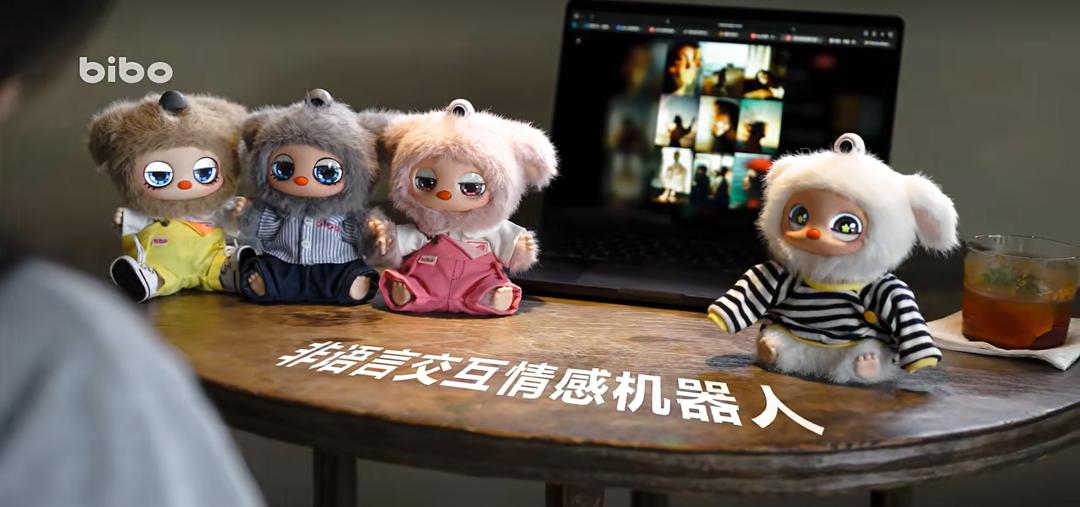
bibo promotional PV
Different from most AI toys on the market, bibo is more like an "AI emotional robot with a trendy toy appearance". It adopts an embodied intelligent architecture, with both ornamental and mechanical functional attributes. The product is equipped with 5 categories of sensors, a camera with high mobility freedom, and a multimodal sensor array.
On this basis, the company has also independently developed an emotional brain and a multimodal feedback mechanism, so that bibo can continuously learn based on what the user sees and hears, and give immediate behavioral feedback according to the user's actual emotional changes.
Leimeng Technology said that most of the AI products emerging on the market last year are plush appearances with large language model dialogue functions, which have not broken away from the framework of toys or pure language chat. After adopting the embodied intelligent architecture, bibo can bring users an epoch-making interactive experience.
For example, in the tennis scenario, bibo can be used as a companion tool for tennis enthusiasts, hung on the tennis bag as a decoration, and record the user's wonderful moments on the sidelines. Even bibo will adjust the output tone of the photos according to the user's current emotional changes — when the user is happy, the overall color of the photo will be more warm, and when the user is sad, bibo will adjust the tone to be more quiet and cool.
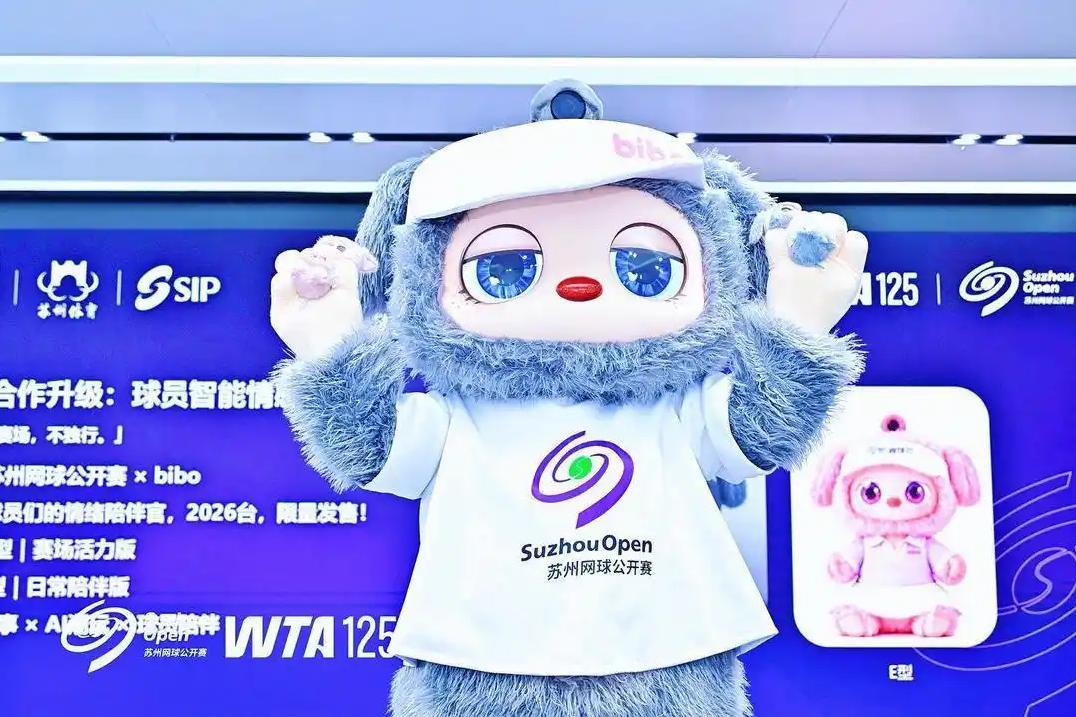
bibo cooperates with tennis matches
"Consumers don't pay attention to the technical details behind the product, but the changes that technology brings to life. And emotion is precisely the starting point of all demands."
In fact, in the earliest conception, Leimeng Technology once focused the product on the "functional" level of the robot.
They once made a robot that can move in the home environment and complete a variety of tasks, but with the completion of the prototype development, they found that this type of robot cannot really achieve market landing at present. For example, the behavior logic often involves multiple technical links, such as body structure, battery, chip, algorithm and so on, and the cost of implementation is too high. The price of such robots is generally in the range of tens of thousands of yuan, which is difficult to be widely promoted among mass consumer groups.
Therefore, Leimeng Technology finally gave up the most expensive motion joint part, even the flexible arm technology that had been designed was directly abandoned, and all R&D resources were concentrated on the emotional brain.
Leimeng Technology said that focusing technology on the emotional route is mainly based on two major judgments. First, since the end of 2024, a number of technology companies have successively extended to multimodal models, and the overall maturity of this technology in the market is increasing. Second, the application scenarios in the emotional field do not put forward too high requirements for the model accuracy of robots, which allows higher fault tolerance at the actual design level.
Further, products in the form of trendy toys on the market also basically conform to the appearance of such robots.
On the one hand, brands such as Pop Mart have verified the universality and potential of trendy toy appearances in the mass market. At the same time, the form of trendy toys has now become the core reference idea for image design of many companies, which can more efficiently realize the interaction between IP and consumers. On the other hand, there is no widely covered solution for such products at the functional level, and bibo can just make up for the demand in this aspect.
In January this year, bibo made its global debut at CES 2026 in the United States, and then successively participated in the Tokyo Toy Show in Japan and the IFA Exhibition in Germany. Up to now, it has entered 16 countries and regions around the world.
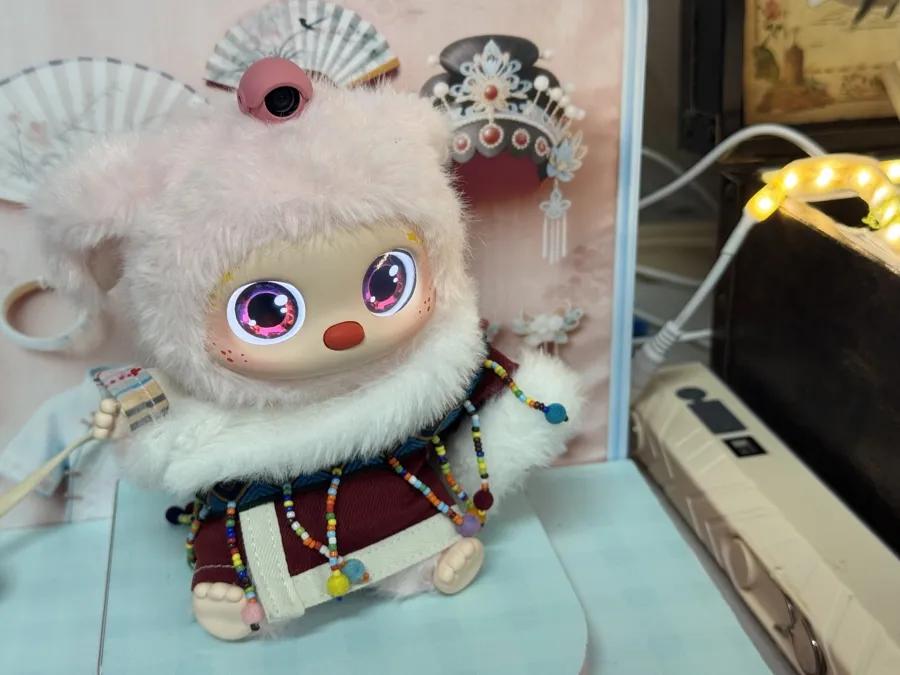
bibo
According to official data, after the sale, the first batch of bibo was quickly sold out, the average daily interaction times of users exceeded 60, and the average daily accompanying time of active users exceeded 120 minutes.
In addition, Leimeng Technology also released the company's three future layout directions at the scene: global channel expansion, bibo peripheral product development and supply chain stocking, IP cooperation and derivative development.
The company has completed the layout on platforms such as Tmall, JD.com and Xiaohongshu, and expanded offline channels with East China as the core. The first offline experience store has settled in Hangzhou Wenshan Digital Block. Subsequently, they also plan to promote bibo to the markets of Japan, Southeast Asia and the United States. The company said that in the future, it will also open up the hardware interface and software platform of bibo, allowing developers and users to create new functions and interaction methods for bibo.
To this day, the AI companion robot track has entered a stage of rapid expansion. According to the "2026 AI Companion Robot Industry Observation Report", the market size of China's companion robot industry was about 79.6 billion yuan in 2024, and it is expected to move towards the range of 110 billion yuan to 140 billion yuan by the end of 2026. At CES 2026, there were more than 30 exhibitors of AI companion enterprises, of which at least 20 were Chinese manufacturers.
With such a booming popularity, the AI companion robot may usher in an unprecedented market outbreak period next year.
This article was first published on 36Kr Games.