Throwing away the remote control is the ultimate challenge for embodied intelligence.
Careful viewers may notice that whether it is racing, obstacle course, high jump, weightlifting or long jump, there are always one or two operators standing behind the robots, holding remote controllers in their hands to issue instructions to the robots.
At last year's Robot Marathon, almost all robots required people to follow behind and run with remote controllers, and even three engineers were needed to "run alongside" each robot, which was once criticized as a "remote control car competition".
The real existence of "manual remote control" will break the perfect filter brought by the impressive demos of robotics companies, and also allow people to see more of the real situation of China's embodied robots.
However, if we equate robots entirely with remote control toys just because of this — as many people joke or comment on the internet — it is obviously an oversimplified understanding of the robotics industry.
After understanding the "remote control" controversy surrounding robots, people can gain more insight into embodied intelligence.
01
Evolution
Competitive events are an important platform to promote the progress of AI technology.
Whether it is AlphaGo that competed against Ke Jie, or the DARPA Autonomous Driving Challenge hosted by the U.S. Defense Advanced Research Projects Agency (DARPA), artificial intelligence and intelligent driving have played a vital role.
Domestic robotics sports events also have similar effects. Such large-scale events can not only generate trending topics and attract numerous manufacturers at home and abroad to participate, but also verify the performance, algorithm, battery life and other capabilities of robots in extreme environments.
Taking the Robot Half Marathon as an example, 20 humanoid robot teams competed in the first edition, but only 6 teams finally finished the race. "Tiangong Ultra" won the championship with a time of 2 hours and 40 minutes. This result was not excellent, and "Tiangong Ultra" also needed a pacemaker, as well as an engineer carrying a "battery" to escort it.
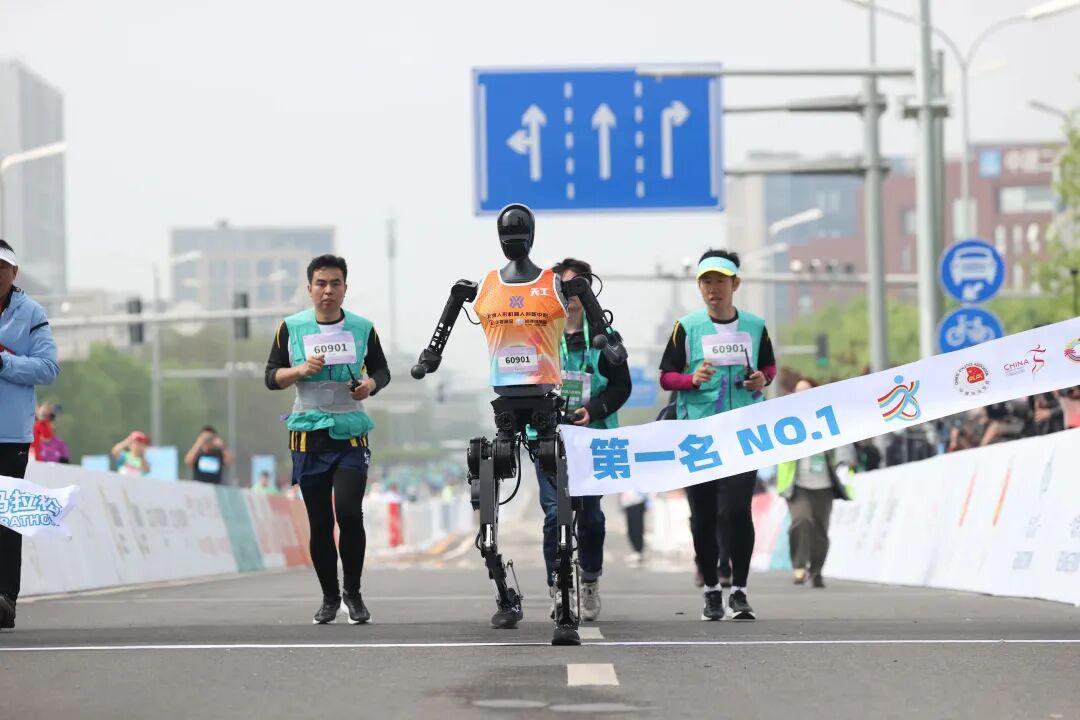
At the first Robot Half Marathon, Tiangong won the championship.
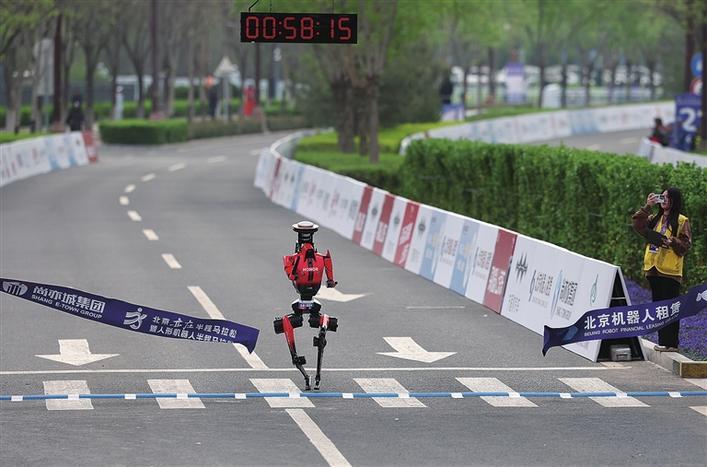
At the second marathon, the autonomous humanoid robot contestant "Lightning" from the Honor Monkey King team crossed the finish line during the competition.
In this year's second Robot Half Marathon, the event was divided into autonomous navigation teams and remote control teams. The scores of the two groups were calculated with weighting coefficients of 1.0 and 1.2 respectively, and ranked uniformly.
In the end, the remote-controlled robot "Lightning" from the Honor Jueying Chitu team crossed the finish line first with a time of 48 minutes and 19 seconds, but due to the 1.2x weighting rule, its corresponding result was "extended". The autonomous navigation robot "Lightning" from the Honor Monkey King team then won the championship with a net time of 50 minutes and 26 seconds.
This result not only shortened by nearly 1 hour and 50 minutes compared with the champion of the previous edition, but also broke the human half-marathon record of 57 minutes and 20 seconds.
In this year's Robot Half Marathon, 40% of the robots ran autonomously with autonomous navigation, and the top three teams (Monkey King Team, Thunder Lightning Team, and Spark Fire Team) all finished the race completely by their robots' autonomous operation.
The 1.2x weighted duration set in the competition rules is designed to encourage participating teams to use truly autonomous robots.
In the remote control group, turning, avoiding pits and bypassing obstacles are all operated by humans, and the robot is only responsible for execution, so it is faster; in the autonomous navigation group, the robot needs to independently identify ramps, curves and potholes, plan routes by itself and avoid obstacles.
There is no doubt that autonomous robots are the final outcome the industry hopes to see.
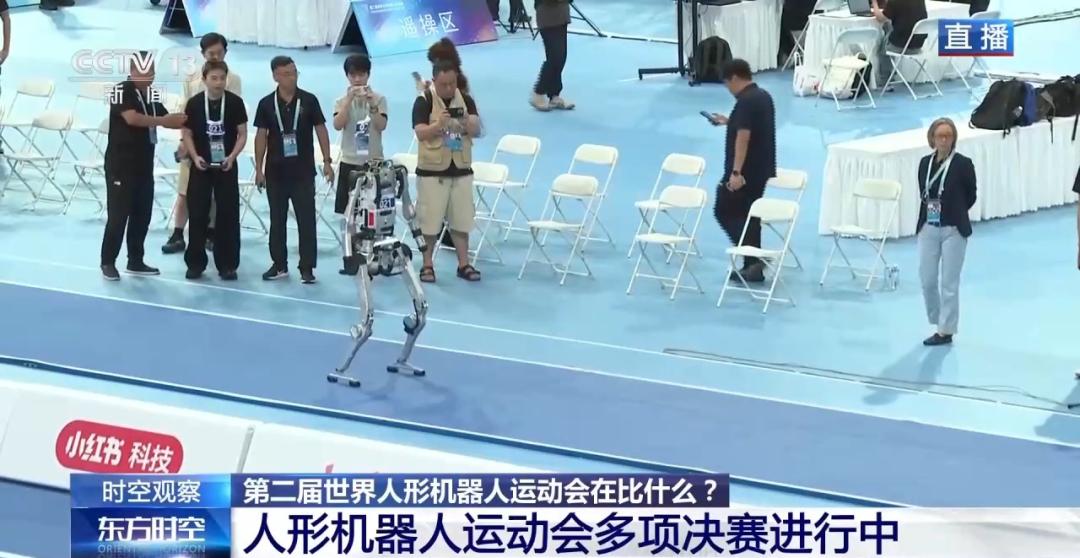
Similarly, at the second World Humanoid Robot Games, 23 of the 30 competitive events explicitly require "full autonomy", while last year, most events allowed participants to choose one of the three modes: "remote control, semi-autonomous, full autonomous".
Behind the changes is the progress of industrial technology. Over the past year, the biggest progress of humanoid robots has focused on perception and positioning. Last year, robots relied on cameras to identify tracks and were prone to straying into wrong lanes; this year, participating teams installed LiDAR on the robot's head, built a 3D map of the "Ice Ribbon" venue before the competition, and achieved centimeter-level global positioning through the matching of radar and map to help the robots finish the race autonomously.
The 100-meter obstacle course and 400-meter obstacle course are very difficult, so remote control is allowed, but the final result will be multiplied by a 1.2 duration weighting, or participants can sign up for the full autonomous group with a coefficient of 1.0.
Judging from these two high-profile robot competitions, the role of "remote control" has been reduced, and the autonomous capability of robots has been improving at a speed visible to the naked eye.
02
Transition
Although robots have evolved at an accelerated pace over the past year, those robots that participate in competitions autonomously also need operators to send start commands via remote control.
Even in the 400-meter obstacle course using remote control, since hurdling and turning involve real-time judgment of unknown space, once the robot is interfered with in a complex environment, it may shut down immediately and "freeze to think".
This is also the biggest contrast of the Robot Games — the robots can outperform humans on the score sheet, but the real landing of products cannot be synchronized quickly.
However, all robotics enterprises and practitioners will tell the public that remote-controlled robots are not equal to remote control toys.
Traditional remote control cars have buttons on the handle for forward, backward, left, right, turn and other functions. What actions the toy car can take depends entirely on the skill of the operator. It has no autonomous "intelligence", cannot avoid obstacles, and cannot take the initiative to think.
In contrast, humanoid robots are not "marionettes". First of all, no matter how fast human hands and reactions are, it is impossible to operate dozens of instantaneous actions at the millimeter level at the same time.
Secondly, engineers only send high-level commands such as moving forward, switching modes, and specifying targets via remote control. As for how to step legs, adjust the center of gravity, and cross obstacles, all of these are completed by the robot autonomously.
The operator is equivalent to "the head coach who arranges tactics". As for how to play the ball specifically, the players have to think and make decisions autonomously.
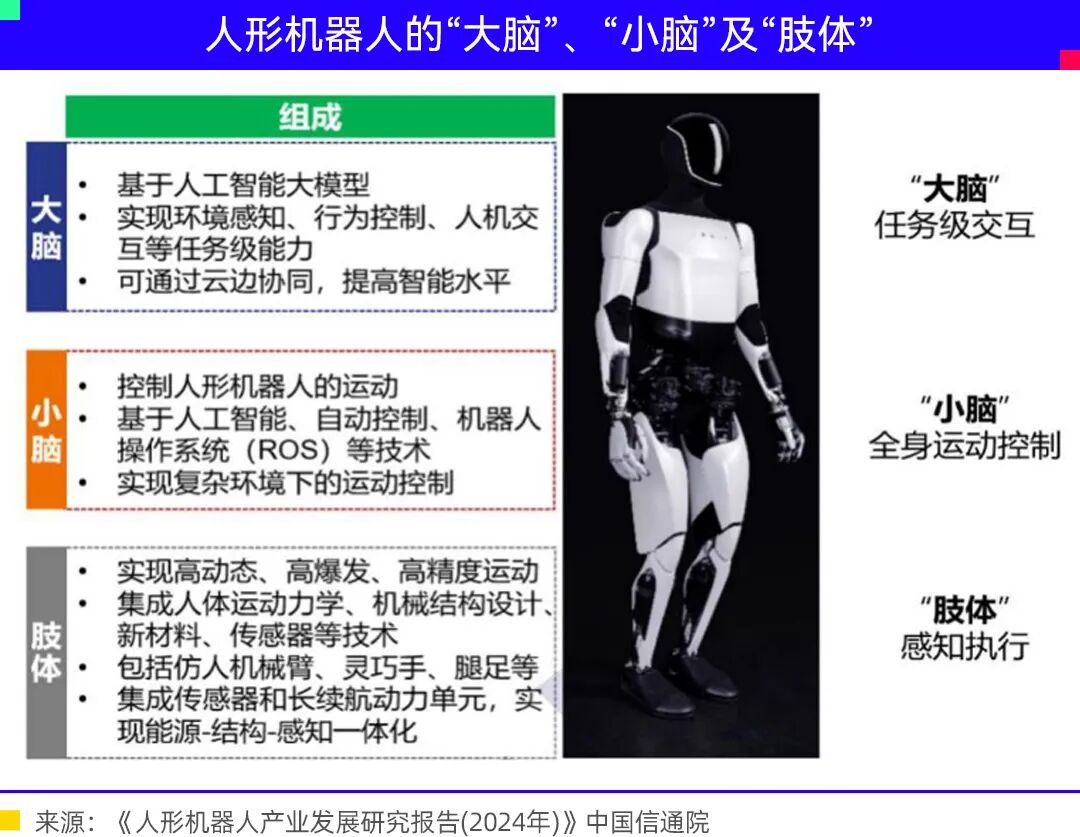
The remote control operation of humanoid robots is essentially assigning tasks at the "task level". The operator plays the role of "brain commander", deciding where to go and what actions to take, and will not participate in the specific motion execution.
At present, humanoid robots cannot completely get rid of remote control. Even many robots that claim to be autonomous do not already understand the physical world as well as humans, but rely on pre-set action scripts. Once encountering unexpected events and complex environments, the task failure rate will rise visibly.
Remote-controlled robots are not "large toys" by any means, nor are they "industrial scams", but it is an indisputable fact that robots are still in the primary stage of the industry, and their core bottleneck is the lack of generalization capability as mentioned by Wang Xingxing.
He Xiaopeng divided the intelligence level of humanoid robots into five levels from L1 to L5 in the way of autonomous driving, and this view has been widely cited in the industry.
Now the humanoid robots on the market are basically at the early stage of L2. To enter the real commercialization stage, they must reach the capability of L3, that is, the hands, feet, mouth, eyes and brain can be fully integrated. Entering 2026, robots are ushering in a key node for mass production (L3).
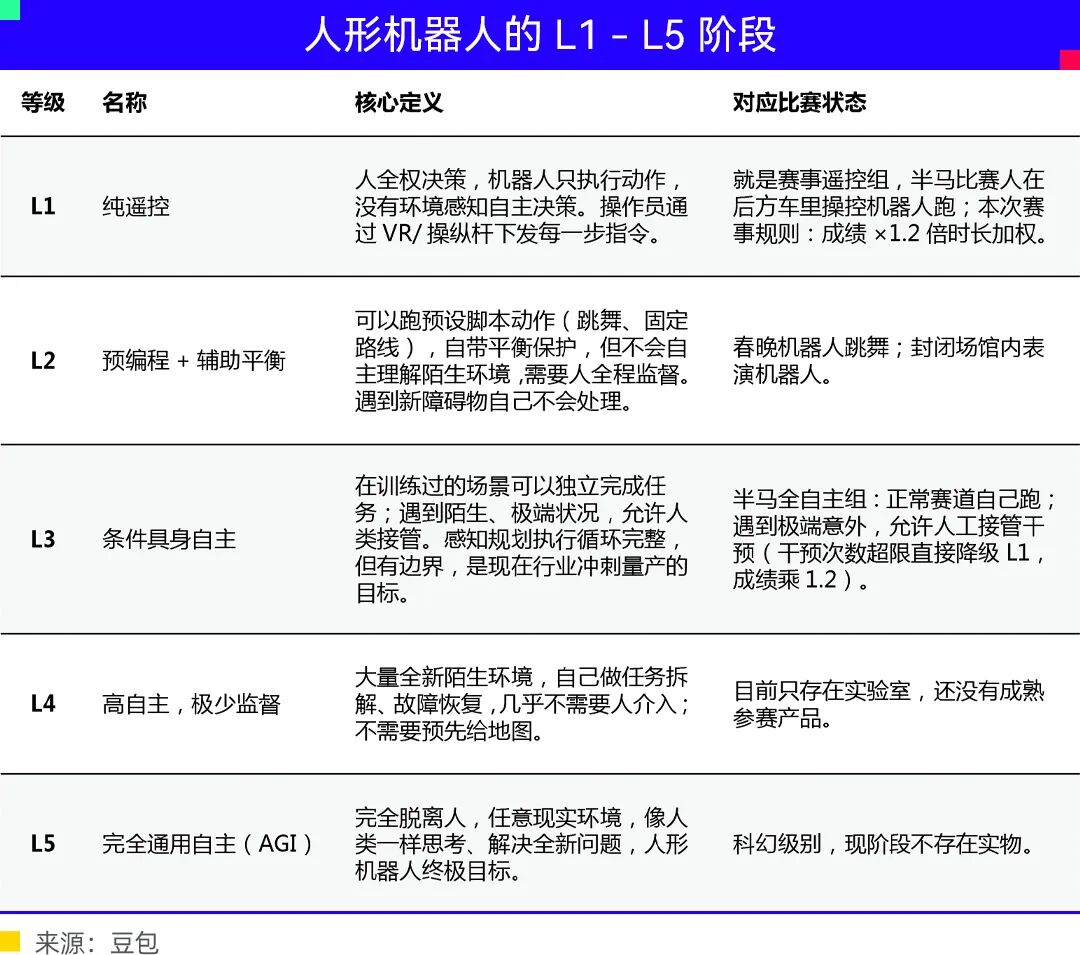
Some self-media shared that after contacting a Unitree Robotics employee to learn about the product, they were told that the 99,900-yuan G1 standard version does not support secondary development, can only be used for display and as a toy, is essentially still remote-controlled, and is at the L1-L2 stage.
The G1 EDU version, which is truly oriented to scientific research, universities and developers, is priced at 200,000 to 400,000 yuan. If you want to have a complete solution, the customized development cost is extremely expensive.
Compared with AI applications such as DeepSeek and Doubao that have begun to popularize, humanoid robots are still in the primary school stage. In order to ensure safety, avoid unexpected situations, or handle complex tasks, remote control is indispensable.
The remote controller in the operator's hand does not need to be avoided at all. It is precisely the only way for robots to move towards true autonomy, and it is a transitional product for the improvement of robot intelligence level.
03
Final Outcome
Whether using a remote controller, or operating mechs through sensory nerve perception and brain-computer interface like in the movie *Pacific Rim*, these are not the final outcome of robots.
Autonomous intelligence is the ultimate form of industrial development, and getting rid of the remote controller is the "coming-of-age ceremony" for embodied intelligence.
As mentioned above, current embodied intelligence is stuck at the key node from L2 to L3, and the biggest bottleneck is the lack of generalization capability. Most robots have a task success rate close to 100% after sufficient training in fixed scenarios, but once they enter a new environment, the success rate drops significantly.
Wang Xingxing put forward the "double 80%" standard: when the robot is brought into 80% of unfamiliar scenarios, it can successfully complete about 80% of the tasks through voice or text commands. At that time, embodied intelligence will truly reach the critical point of generalization and industrial explosion.
He believes that "if things go well, robots will reach the ChatGPT moment in 2 to 3 years, and if things go slowly, it will take 5 to 10 years."
On this evolutionary path, there are three clear development nodes.
The first is the process from needing an operator to the operator eventually exiting the scene.
The L1 stage requires the operator to fully control every action, and the transition from L2 to L3 means the operator issues task commands and the robot completes the execution; imitation learning control is the stage from L3 to L4, where the operator demonstrates once and the robot can execute independently after learning; L4 to L5 is the ultimate form, where people only need to give commands, such as saying "bring the water here", and the robot will complete all the details autonomously.
The current main bottleneck is the gap between upper-level intention understanding and lower-level motion execution. The ability of the underlying large model to directly drive dozens of joints to complete a complex action in coordination is the most needed technological breakthrough direction in the next 3 to 5 years.
The second is that a data-driven autonomous learning loop is being formed.
Remote control is not an auxiliary means, but an infrastructure that supports the evolution of autonomous capabilities. Every manual operation is actually generating training data in the real world, and every piece of data is feeding the evolution of the robot's brain.
When the data flywheel starts to rotate, the autonomous capability of robots will see a linear leap. This Robot Games has accumulated 2500 hours of real-scene operation data, corresponding to 12 application scenarios, 44 operations and more than 100 skills respectively. These valuable real-machine data will become the key "nutrient" for the next round of embodied large model training.
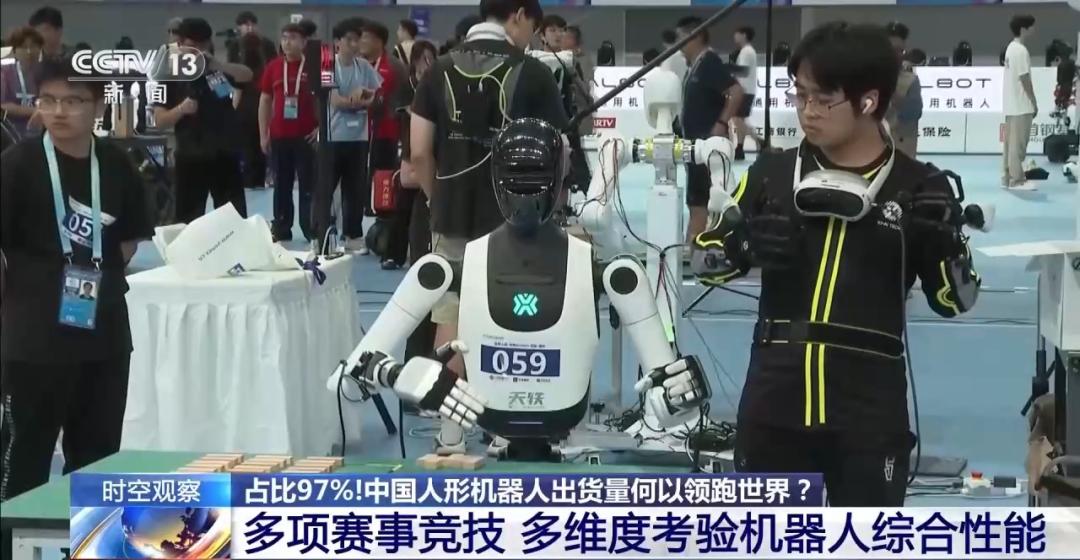
The Tiangong Omni in this Games adopted a special arm-swinging action, which was called the "shy robot" by netizens. The R&D team introduced that the "face-covering and shy" gesture was neither set by engineers nor remotely controlled, but a gait learned by the robot through autonomous training.
This indirectly confirms the possibility that robots can truly carry out self-learning and evolution.
The third is that standardized evaluation cognitive concepts are beginning to take shape.
The evaluation system of "de-remote operation" advocated by the Games is pushing this concept to the public. Next year's third Games will further expand scenario-based competitions. In the future, "whether it is fully autonomous" will most likely become a rigid scoring indicator, and at that time, manufacturers that only know how to show perfect demos will be "disenchanted" by the audience.
This will also directly push the robotics industry from the technology verification stage to commercial implementation.
Getting rid of the remote controller is not just an extra bonus point, but the only way for embodied intelligence to move towards industrialization. Although it still takes a lot of time to truly go through this path.
04
Closing Remarks
In 1988, Moravec wrote a masterpiece that enlightened later generations, *Mind Children*, in which he put forward such a view: tasks that are difficult for humans (such as logical reasoning and playing chess) are easy for AI to solve; while physical actions that are very simple for humans (such as walking and grasping objects) are extremely difficult for AI.
This problem was later summarized by the industry as the "Moravec's Paradox". It is easy for robots to reason and solve problems, but it is extremely difficult for them to perceive the physical world like a baby.
Understanding "remote control" means understanding the core problem of the current robotics industry. The hardware (the robot's body) was actually ready as early as more than a decade ago, and it has only been optimized since then. The real bottleneck restricting development is the robot's brain.
The day when the generalization problem is completely solved, the remote controller will be completely reduced to history.