60 yuan per session, young people leave right after trying it, why do the elderly keep making repeated visits? The "silver economy" code of the AI massage robot
People start to grow old from their bodies.
The soreness, pain and stiffness accumulated over decades of toil are like old debts. In the past, they relied on the hands of therapists in physical therapy parlors, but it was really hard to find a suitable skilled therapist — otherwise, they would feel even more painful after a massage session.
Until new machines appeared in community service centers. No reservation required, no need to take off clothes, no picky about therapists. Just lie down, the robotic arm will automatically locate the sore and stiff parts, with constant, moderate pressure. When you stand up after the session, your whole body feels relaxed.
The AI massage (physical therapy) robot, a product that was more of a concept just one or two years ago, is unexpectedly becoming a favorite among the elderly at a fast speed.
PART 01
Machines on Duty: Massage Robots Take the Lead in Commercial Deployment
In August this year, Xinhua News Agency released the full-media report *New Smart Digital Life | AI Robots "Start Work": Smart Elderly Care Supports a Happy "Golden Years"*, covering the smart elderly care model in Wuhan.
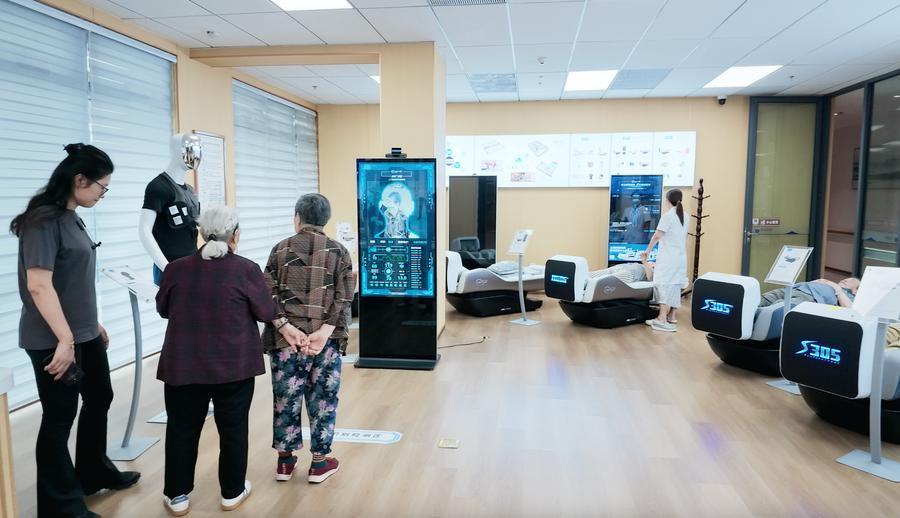
Elderly Zhang Huimin suffers from mild cognitive impairment and takes medicine all year round. She has recently had waist and leg pain, insomnia, constipation and other health issues.
"The intelligent physical therapy bed has a built-in AI analysis function. After the basic health information is entered in advance, the system will develop an exclusive physical therapy plan." The treatment course is set to 15 days as a cycle. If she sticks to it, it can help Grandma Zhang relieve pain, stimulate intestinal peristalsis and improve sleep quality.
Caregivers said that this physical therapy bed has a built-in AI program, equipped with more than a dozen preset physical therapy modes, which can intelligently control the vibration massage time according to the physical condition of the elderly. The headrest of the physical therapy bed is equipped with solid-conducted light music, which not only helps the elderly relax, but also does not disturb others.
Source: Xinhua News Agency
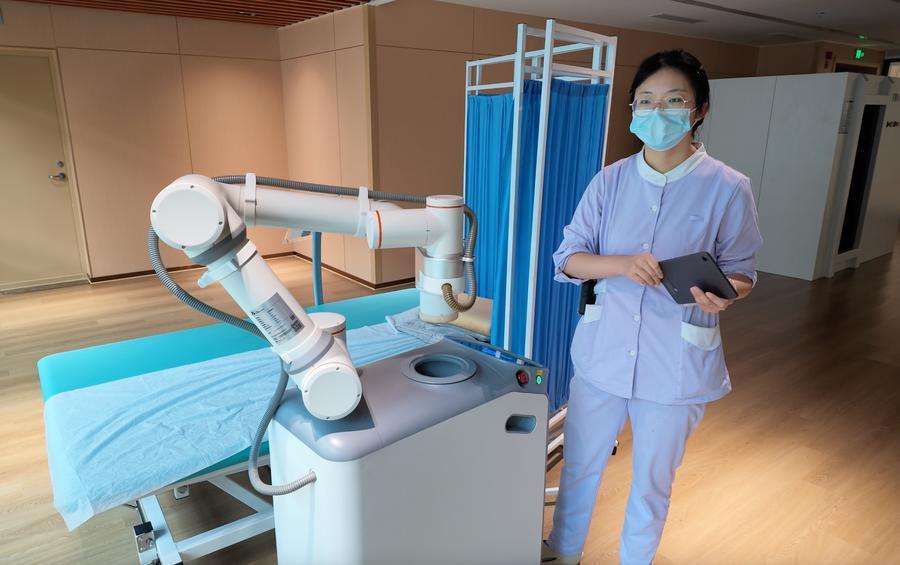
Not only the AI physical therapy bed with massage functions, but also moxibustion robots have been deployed and used in elderly care centers in Wuchang District.
The robotic arm of the AI moxibustion robot keeps a distance of about 3 cm from the elderly person's knee, with a red dot irradiating on one side of the elderly's knee. A few minutes later, as the robotic arm moves, the red dot shifts to the other knee.
"This moxibustion robot is equipped with a complete map of human acupoints, it can automatically locate acupoints to perform moxibustion therapy according to the body shape of the elderly. Moreover, it can sense the movement of the elderly's body, adjust and control the distance by itself, and use a remote control to precisely control the temperature, which completely eliminates the scalding risk of traditional moxibustion." said Shi Yajun, director of the rehabilitation center.
Source: Xinhua News Agency
The boom of massage robots being put into use is not limited to communities.
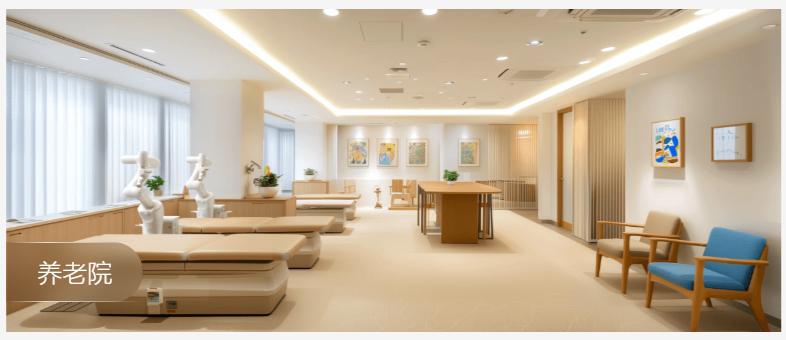
Hangzhou Yee Future, a massage robot company incubated from NetEase Fuxi and operating independently only in July 2025, announced at the end of May this year that it had completed tens of millions of yuan in Series A financing, co-invested by Cowin Capital, Ushan Capital and Runmiao Fund under Hangzhou Capital, with angel shareholder NetEase continuing to provide resource support.
Source: NetEase Fuxi
In February and April 2026, Yee Future successively launched two new products, R2 and R2s, and received orders of nearly 40 million yuan in the first quarter. Its self-developed 3-second acupoint recognition algorithm uses a 3D depth camera to build an exclusive human body model for each person, then uses a 6-axis collaborative robotic arm and active force control technology to accurately replicate the massage techniques of experienced therapists, turning massage from a skill based on feel to a process based on algorithms.
Xiangyu Medical also stated that it has formed a complete product matrix planning at present. The AI physical therapy robot series covers massage robots, shock wave robots, upper limb multi-dimensional rehabilitation training robots, transcranial magnetic robots, moxibustion robots, electromagnetic physical therapy robots, radio frequency physical therapy robots and other products, and 5-6 models are expected to obtain certification and be released successively in 2026.
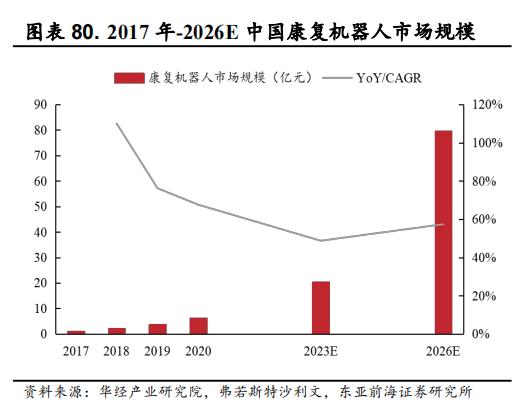
Data from Frost & Sullivan shows that from 2023 to 2026, the market size of China's rehabilitation robots is expected to grow from 2.04 billion yuan to 7.95 billion yuan, with an average annual compound growth rate of 57.5%. The AI massage and physical therapy robot is a fast-growing segmented track in the field of rehabilitation robots.
Source: East Asia Qianhai Securities
PART 02
Young People Show Little Interest, While the Elderly Are Deeply Attached
The AI massage robot track targets the massage and physical therapy scenario, enabling rapid market deployment, but its specific consumer scenarios show obvious differences from the consumption patterns of previous technology products.
In 2025, a reporter experienced robot massage at an AI robot massage store on the East Third Ring Road of Beijing. The 45-minute session cost less than 60 yuan after using a coupon. For this robot massage experience, the reporter said she would not repurchase. Finally, she said, "In terms of acceptance of robots, elders seem to be more open than me, a post-2000s generation."
The low-price drainage strategy of 60 yuan was originally intended to attract young people, but unexpectedly, the elderly ended up being the regular customers.
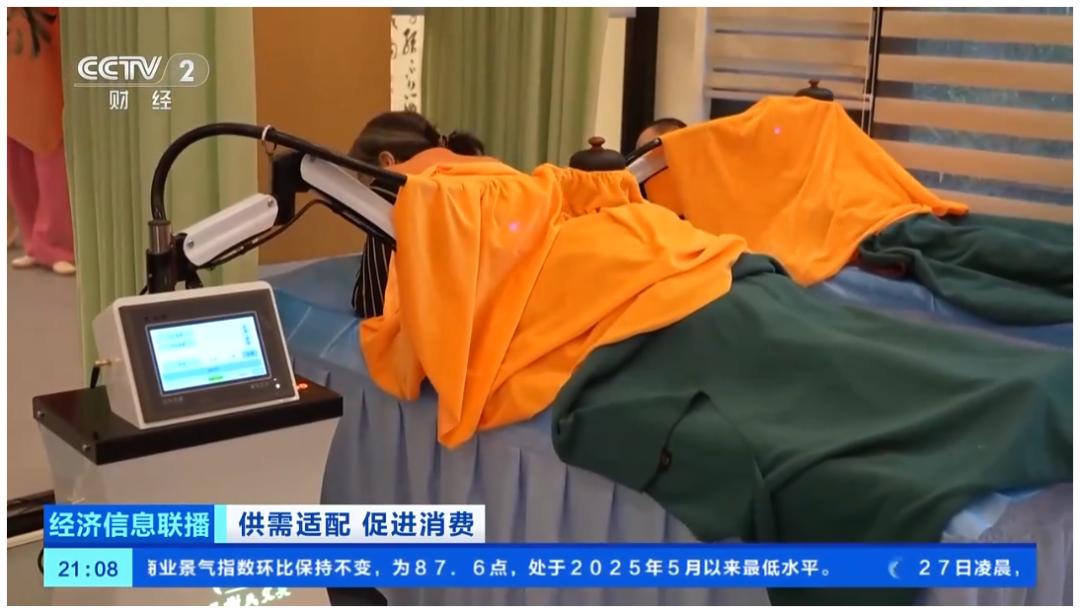
In January this year, CCTV Economic News Broadcast reported *"Silver Economy" Consumption Upgrade, Massage Robots, Emotional Companion Robots and Other Products Are Popular*. The report said that a large number of elderly people visited the elderly care service center, the moxibustion robot achieved fixed-distance moxibustion through infrared temperature measurement; the massage robot applied precise force on the acupoints on the back of the elderly.
Among many "regular visitors", 65-year-old Uncle Chen is the most active. His decades-old waist and leg problems have found a new way to get relief here.
Source: CCTV News
On one side, young people leave after trying once, on the other side, the elderly actively come for sessions. Why is there such a big difference?
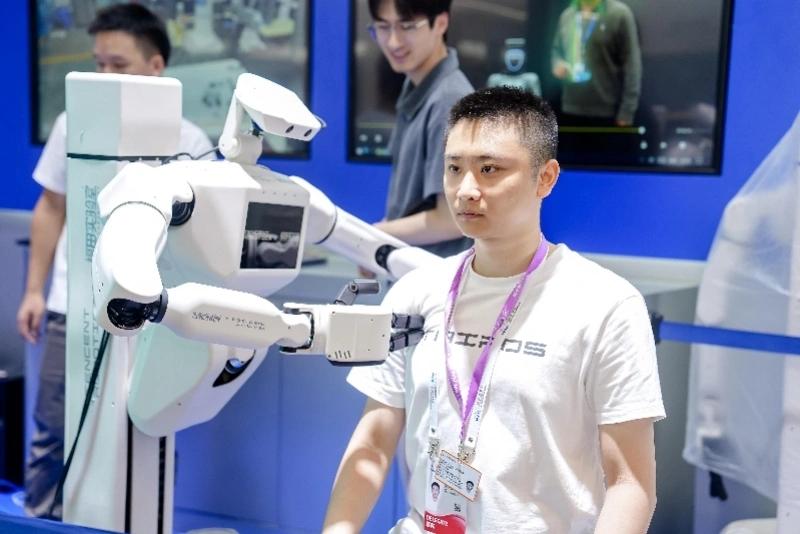
For the elderly, robots are more accurate and the force is easier to control. At the 2026 World Artificial Intelligence Conference held this year, Tencent released a number of foundation models, and also brought the new generation of demonstration robot "Xiaoliu". This robot acted as a "masseur" to give massages to the audience at the booth, attracting a large number of people to queue up.
Source: *Southern Metropolis Daily*
Zhang Zhengyou, Tencent's Chief Scientist, introduced that the company integrates the professional experience of TCM doctors with self-developed tactile, force and visual perception systems, collects massage techniques and force application data, and replicates TCM massage capabilities based on reinforcement learning. The robot can perceive individual physical differences, automatically adjust the massage force, apply greater force for people with tight muscles, and reduce the force for people with low tolerance.
At the same time, the scenarios where AI massage robots are placed also increase the stickiness and sense of belonging for elderly users.
At present, a large number of AI massage robots and physical therapy robots are placed in community centers and other places. The elderly may not come to the service center specifically for the robot, but for the elderly who retire at home, "where to go" is very important, and may even be the most important thing in their day.
For these elderly people, the robot massage in the service center is a reason to go out, and the lively social atmosphere is their real rigid demand, which further improves the acceptance of massage robots among the elderly.
From a deeper perspective, this can also alleviate the problem of severe labor shortage in the health care industry. It is difficult for elderly care institutions to recruit and retain employees, and the long-term shortage of professional physical therapists has become the norm in the industry, making robots a realistic choice for many institutions. It is difficult for communities to be equipped with a sufficient number of physical therapists, while the elderly have high-frequency and diverse health care needs, so queuing for a favorite physical therapist has become a common situation.
AI massage robots are changing this situation: several familiar elderly people lie down side by side, chatting while receiving massage. The elderly do not have to wait for a long time, and the pressure on physical therapists is also reduced, both sides are freed from the original dilemma.
Back to the AI massage robot track itself, it is still in a state of mismatched supply and demand. The strategies such as low-price drainage and marketing packages are still designed around young customer groups.
The elderly group who use the products every day and have a deeper understanding of them are largely ignored. Some people overlook the value of elderly care scenarios for technology products. Zhang Zhengyou said, "If we optimize the tactile, force and visual large models under the elderly care scenario, these capabilities will be more than enough for application in industrial scenarios."
PART 03
A $4.7 Billion Market, Who Will Share the Cake
According to data from the IIM Internet Industry Research Institute, the global market size of AI physical therapy robots reached about 4.73 billion US dollars (about 32 billion yuan) in 2025, with a compound annual growth rate of over 34.6% compared to 2020.
The Chinese market performs particularly prominently. The market size exceeded 1.28 billion US dollars in 2025, accounting for 27.1% of the global share, and is expected to jump to 3.85 billion US dollars by 2030. NetEase Fuxi has a bolder prediction, that the global market will exceed 30 billion US dollars by 2030.
The cumulative number of patent applications related to AI physical therapy robots worldwide exceeded 21,000 in 2025, of which Chinese applicants accounted for 42%, becoming the core driving force of technological innovation.
Medical institutions (including rehabilitation centers and rehabilitation departments of general hospitals) are still the main customer group, contributing about 68% of global demand; The penetration rate of home and community health care scenarios is rising rapidly. The demand size of the home end reached 980 million US dollars in 2025, a year-on-year increase of 53.1%, showing huge C-end market potential.
The current market size of AI massage robots and physical therapy robots is large enough, but how to make profits? Leading enterprises have given different answers.
B-end Leasing + Revenue Sharing Per Session
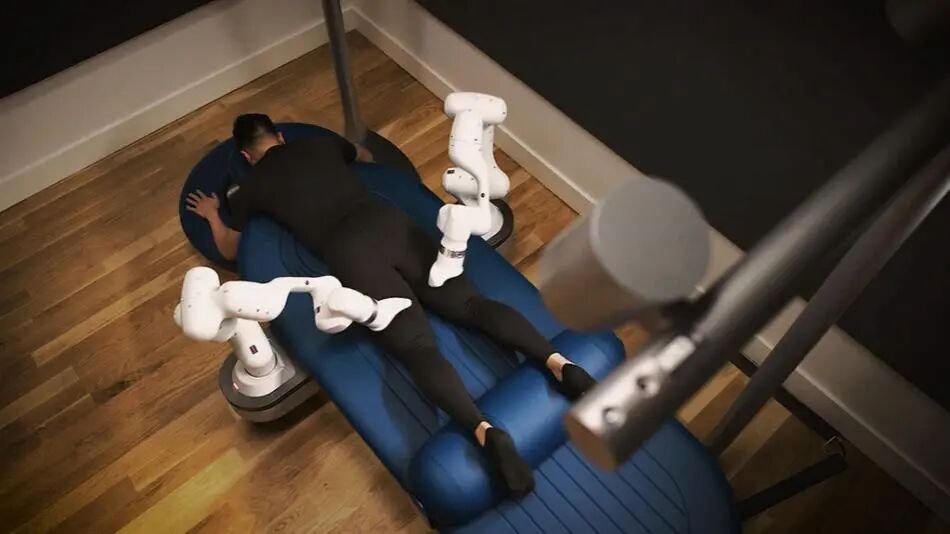
Aescape from the United States is a company in the AI massage robot track that has received multiple rounds of financing, it received 30 million US dollars and 83 million US dollars of financing in November 2022 and March 2025 respectively. Its business model is very clear, it leases AI massage robots to gyms and hotels, corporate customers pay 5500 US dollars per month for the equipment, and an additional 5 US dollars is charged for each massage session used by guests, and the two parties share the revenue.
Relying on this model, it has entered high-end channels such as Equinox fitness clubs and Four Seasons Hotels. It does not do C-end retail, does not sell equipment, only focuses on "robots entering stores and revenue sharing per session". At present, in addition to high-end hotels and gyms, Aescape is also planning to enter more rehabilitation centers.
Source: Aescape
Directly Operated Stores + Cost Reduction by Robots
Xiuyu has opened nearly 1000 directly operated stores in more than 40 cities across China, it is the earliest physical therapy robot player in China. It signed an order for 10,000 robots with AUBO in 2022, which was the largest single model collaborative robot order in the world at that time. At present, these robots have been widely used for massage and physical therapy in Xiuyu stores.
The logic of Xiuyu is not to make money by robots, but to save costs by robots. At present, 70% of the services are completed by robots, the number of employees required for one store has dropped from 10 in the past to 2-3; the labor cost has dropped from 50% in the past to 33%, which further improves the service efficiency and quality of stores.
