Arm Unveils CSS for Mobile 2, Where GPU Takes Center Stage
I visited Arm Everywhere China in Shanghai today, where Arm launched a new generation of AI-native computing platform. To be honest, the release of such a chip computing platform is extremely technically intensive, which really tests my ability to absorb and understand the content. I will try my best to write it in plain language so that everyone can easily follow it.
A year ago, the highlight of the Arm Unlocked Shanghai event was Lumex CSS, Arm's first-generation computing subsystem for mobile phones. It integrates CPU, GPU, system interconnection and software into a complete platform delivered to chip manufacturers, instead of providing separate individual IP cores.
Today, Arm released its second-generation mobile terminal computing subsystem (CSS for Mobile 2), the successor of last year's Lumex.
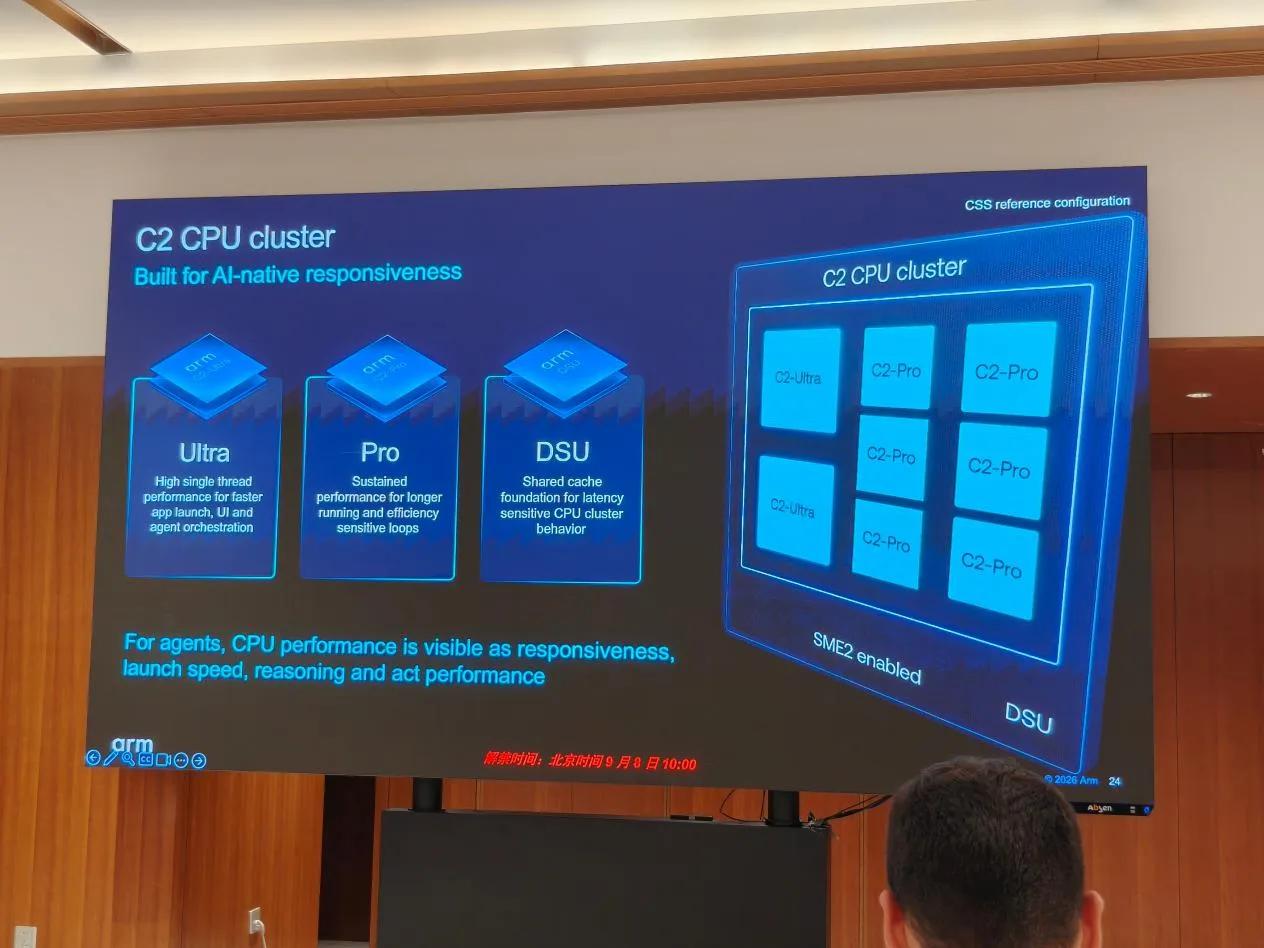
If you only look at the spec sheet, this is a standard annual upgrade, with 15% higher single-threaded CPU performance and up to 24% higher baseline GPU performance.
However, after attending the full-day event, I am increasingly certain of one thing: the GPU is the real highlight Arm wants to showcase this year.
From IP to Lumex to CSS for Mobile 2, Arm Takes a Step Forward
Lumex has been renamed CSS for Mobile 2 this year. Some people may wonder why the name was changed, and we specifically asked Arm about this. The rename is a deliberate move to simplify the naming system: "CSS for Mobile" conveys a clear meaning that it is a platform targeting the mobile field. In contrast, CSS for PC was also previously released at COMPUTEX, so users can immediately see which product category each platform targets.
Behind the name change lies a step forward for Arm in its delivery model. As mentioned earlier, Arm used to deliver individual IP cores that chip manufacturers would combine on their own. Starting from Lumex, or even from Arm CSS for Client, Arm has added a new option on the basis of IP authorization: pre-integrating CPU, GPU, system interconnection, physical implementation and software toolchain into a complete platform for chip manufacturers.
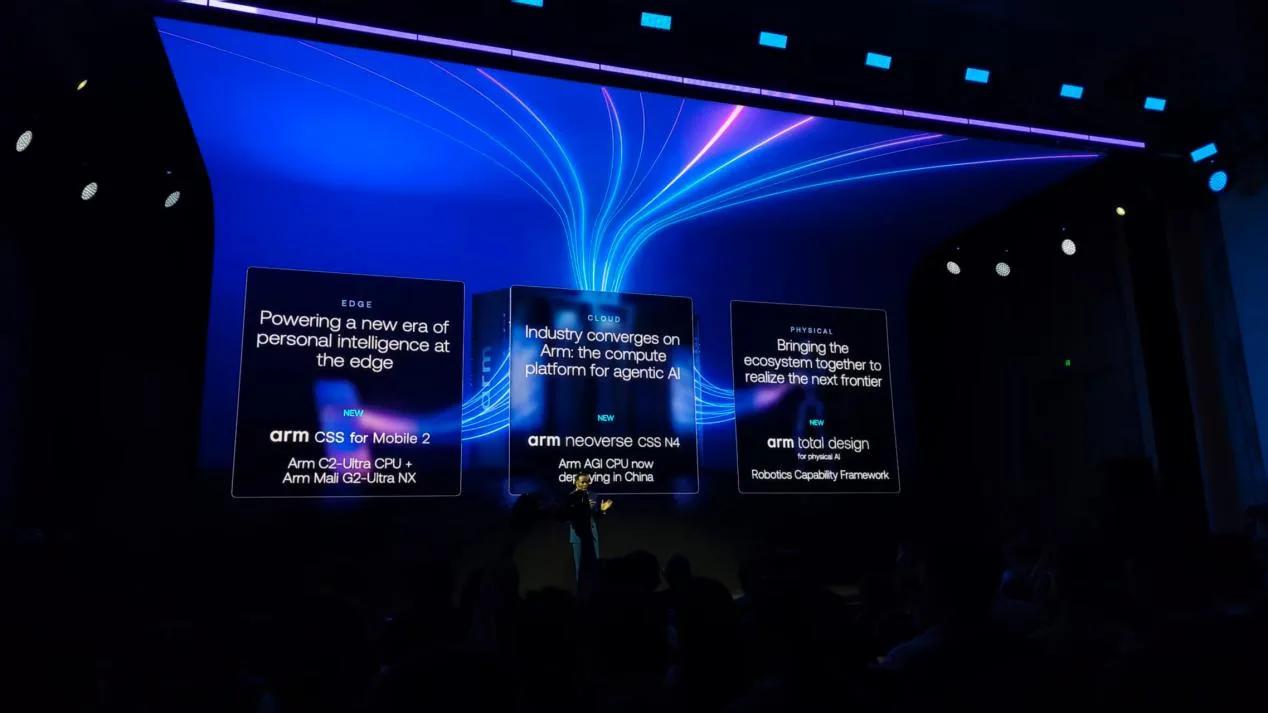
It is worth special note that this is not tied selling. Partners can adopt the full CSS platform, select a single component from it, or combine it with self-developed or third-party IP to make flexible collocations according to product positioning, performance goals and market demands.
You can understand that CSS provides a system-level optimized reference solution, and customers hold full control over whether to use it and to what extent.
The three core components of CSS for Mobile 2 are the C2 CPU cluster, Mali G2-Ultra NX GPU and SI L2 system interconnection. The design of all three components revolves around one core concept: Agents.
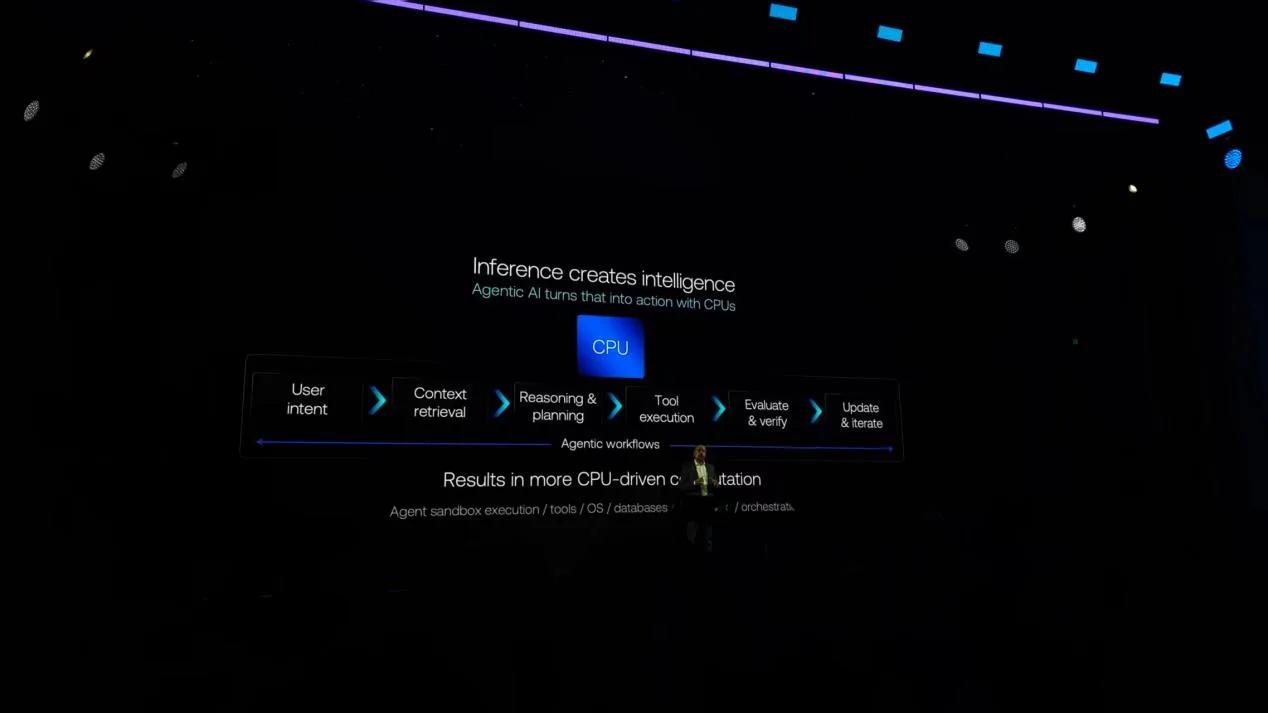
Arm believes that AI on mobile phones is evolving from Q&A assistants to agents that can complete tasks autonomously, and the workflow of an agent can be split into four steps:
The first step is perception: to hear what the user is saying and understand their intention;
The second step is memory: to retrieve contextual information such as calendars, photos and preferences;
The third step is reasoning: to plan the next move based on known information and generate structured instructions;
The fourth step is action: to call the corresponding App or service to get the task done.
Of course, there is an orchestration layer running throughout the whole process to schedule which computing resource each step should run on. The CPU acts as the orchestration and scheduling center of this system, and the C2 CPU cluster integrates dual SME2 engines specially built for running lightweight AI tasks.
According to Arm's official statement, lightweight models usually refer to those with a parameter scale of 2 billion to 3 billion, such as Gemma-2B and Tencent Hunyuan HY-1.8B-2Bit. Models of this scale running on CPU have lower latency than NPU, and boast excellent cross-platform compatibility.
In terms of specific parameters, the performance for the latest AI models has been increased by up to 1.7 times, speech-to-text latency has been reduced by 40%, and single-threaded performance has been increased by 15%. These improvements cover all links of the agent workflow: for example, faster speech processing cuts the initial interaction latency, faster memory retrieval allows agents to call context information quickly, and faster reasoning speed ensures more timely decision-making.
It is worth mentioning that almost all flagship smartphones currently on the market, including the vivo X300 series, OPPO Find X9 series, Samsung S26 series and iPhone, have adopted the SME2 technology, which means Arm's AI capabilities on the CPU side have achieved large-scale commercial deployment.
After Mobile GPU Hits the Performance Bottleneck
After talking about the CPU, let's move to this year's highlight: the GPU.
Current mobile game graphics are getting increasingly complex, with high resolution, high frame rate, open world and ray tracing all adding to the GPU workload. However, mobile phones have a fixed power budget and limited heat dissipation space, so the growth of GPU performance cannot keep up with the growth of game complexity. This is a common bottleneck that all mobile GPU manufacturers have to face.
Arm's solution is the Mali G2-Ultra NX, where "NX" in the name stands for Neural Accelerators.
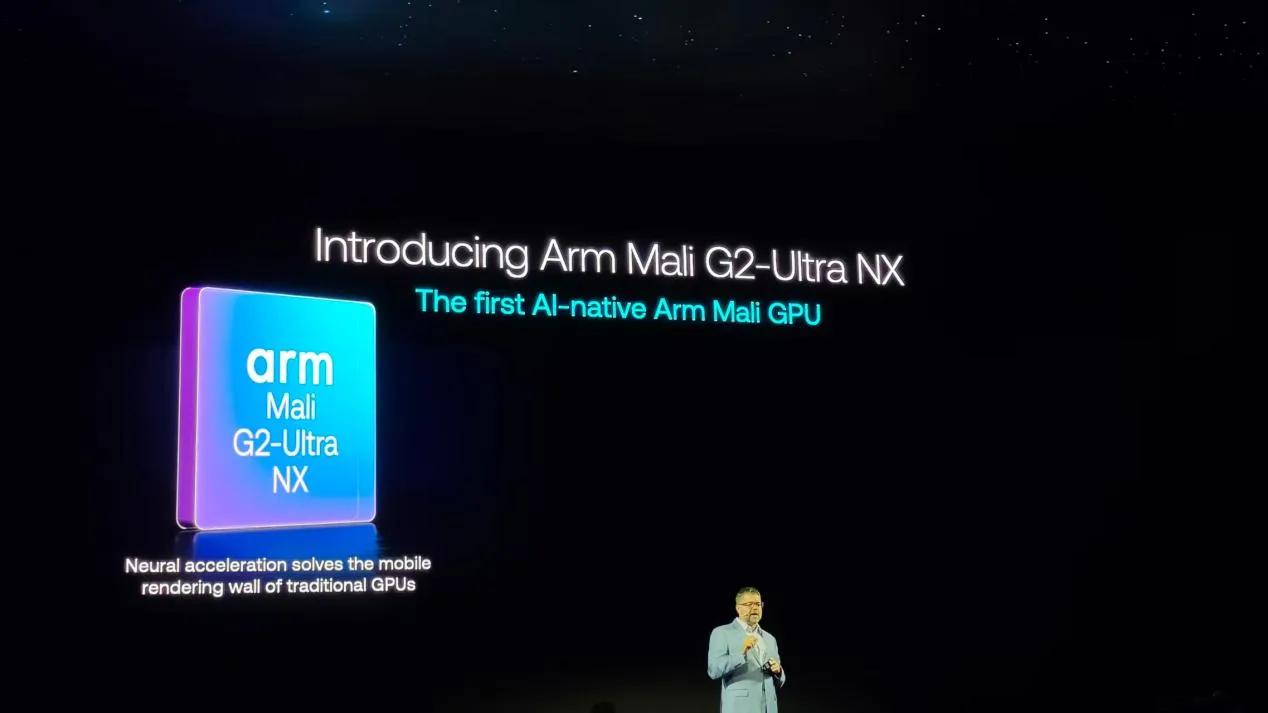
From this we can see that Arm has made a different choice from many other manufacturers: instead of placing the AI accelerator as an independent NPU next to the GPU, it directly integrates the accelerator into the shader core.
The advantage of this design is that data does not need to be transferred back and forth between the GPU and NPU, neural graphics tasks and rendering tasks can run in parallel, sharing the GPU's memory system and cache, leading to lower latency and higher efficiency. Besides, this part of the accelerator takes up very little area, supports power gating, and can be completely powered off when not in use to save energy.
This is similar to two people building Lego together: if one stays in the living room and the other in the bedroom, the bricks need to be passed back and forth, leading to very low efficiency. But if two people sit at the same table and share one brick box, they can see each other's progress at any time and cooperate much faster.
Based on the NX accelerator, Arm has launched three neural graphics technologies:
Neural Super Sampling (NSS): The GPU first renders low-resolution frames, then uses neural networks to reconstruct them into high-resolution ones, increasing FPS by up to 2 times and reducing external memory traffic by 50%.
Neural Frame Rate Upscaling (NFRU): It generates AI intermediate frames between two original frames, supporting sustained 120 FPS gaming and reducing DRAM traffic by 33%.
Neural Super Sampling and Denoising (NSSD): It combines super sampling and denoising, specially designed for complex ray tracing scenarios, to improve resolution and remove noise at the same time on low-sampling ray tracing frames.
At this point, people can't help but ask: what is the difference between this and NVIDIA's DLSS?
Arm is very candid and admits that the underlying scenarios to be achieved are indeed highly similar, including super sampling, frame generation and denoising. But mobile devices have to redesign the entire system under the constraints of power consumption and heat dissipation, so Arm's model is smaller and more power-efficient, and it is fully open for mobile phone manufacturers to modify and customize according to their own product needs after verification. At present, Arm is cooperating with Tencent Games to explore next-generation technologies such as neural dynamic global illumination.
In short, no matter how much hardware you stack on mobile devices, the absolute graphics quality can never catch up with desktop GPUs, but I think Arm's direction is correct: using AI to supplement graphics within the single-digit power budget for mobile performance output is indeed a viable "roundabout" solution.
Apart from AI, Traditional Graphics Rendering Still Has Solid Strength
After talking so much about AI, it's better to actually run the tests to see the real effect.
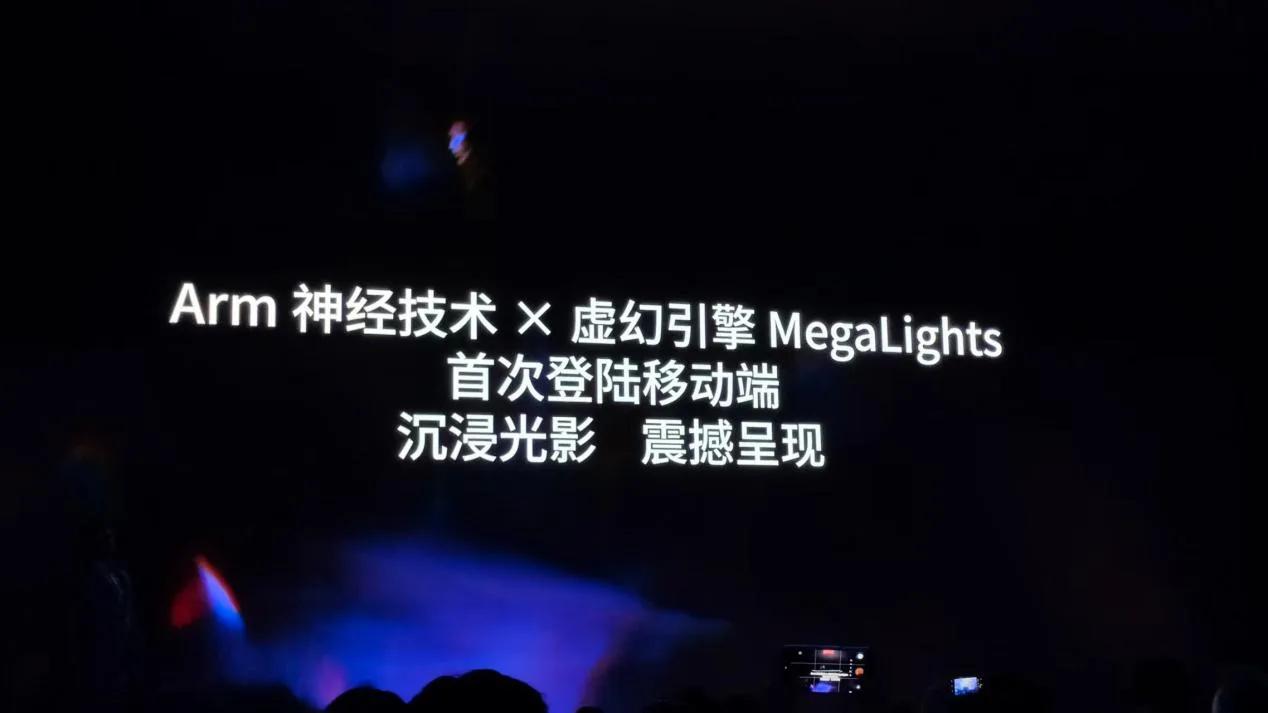
At Arm Everywhere China, Arm demonstrated a demo called *Light Rebirth* co-developed with Sumo Digital based on Unreal Engine 5.5. It supports MegaLights, with up to 1400 dynamic light sources in the scene. All lighting and shadows are calculated in real time via ray tracing without pre-baking, and the actual effect is extremely stunning.
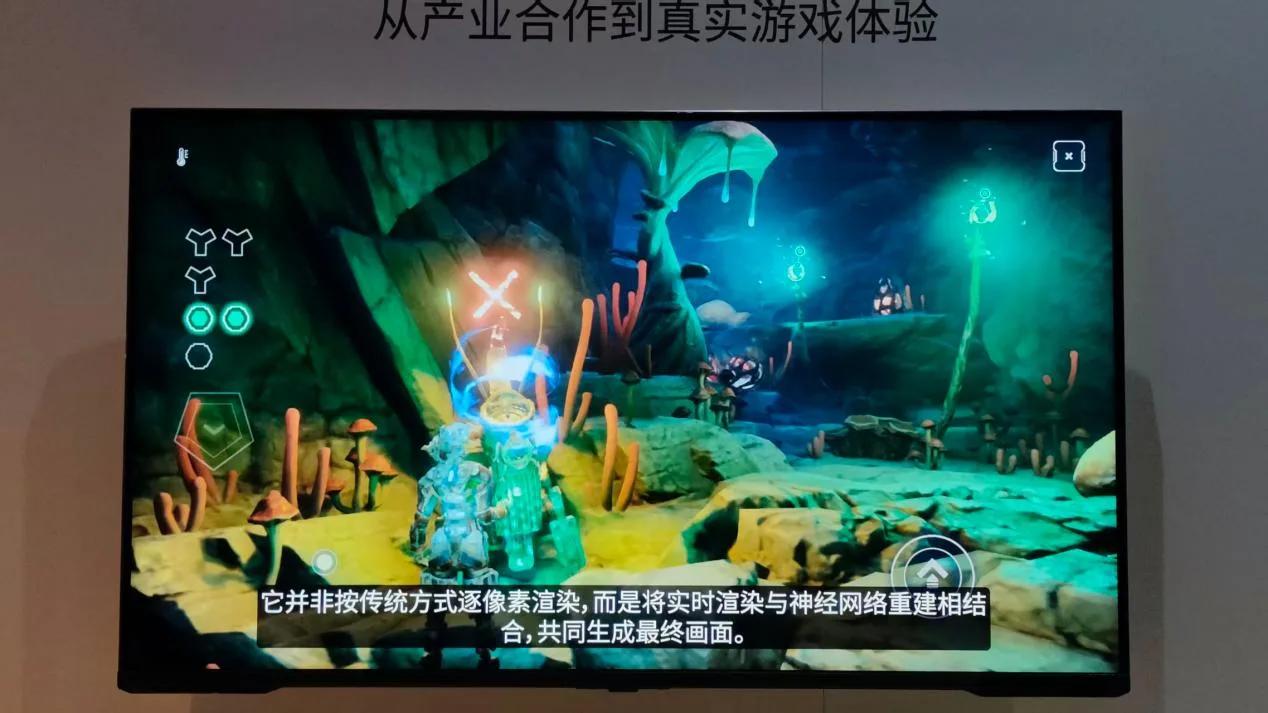
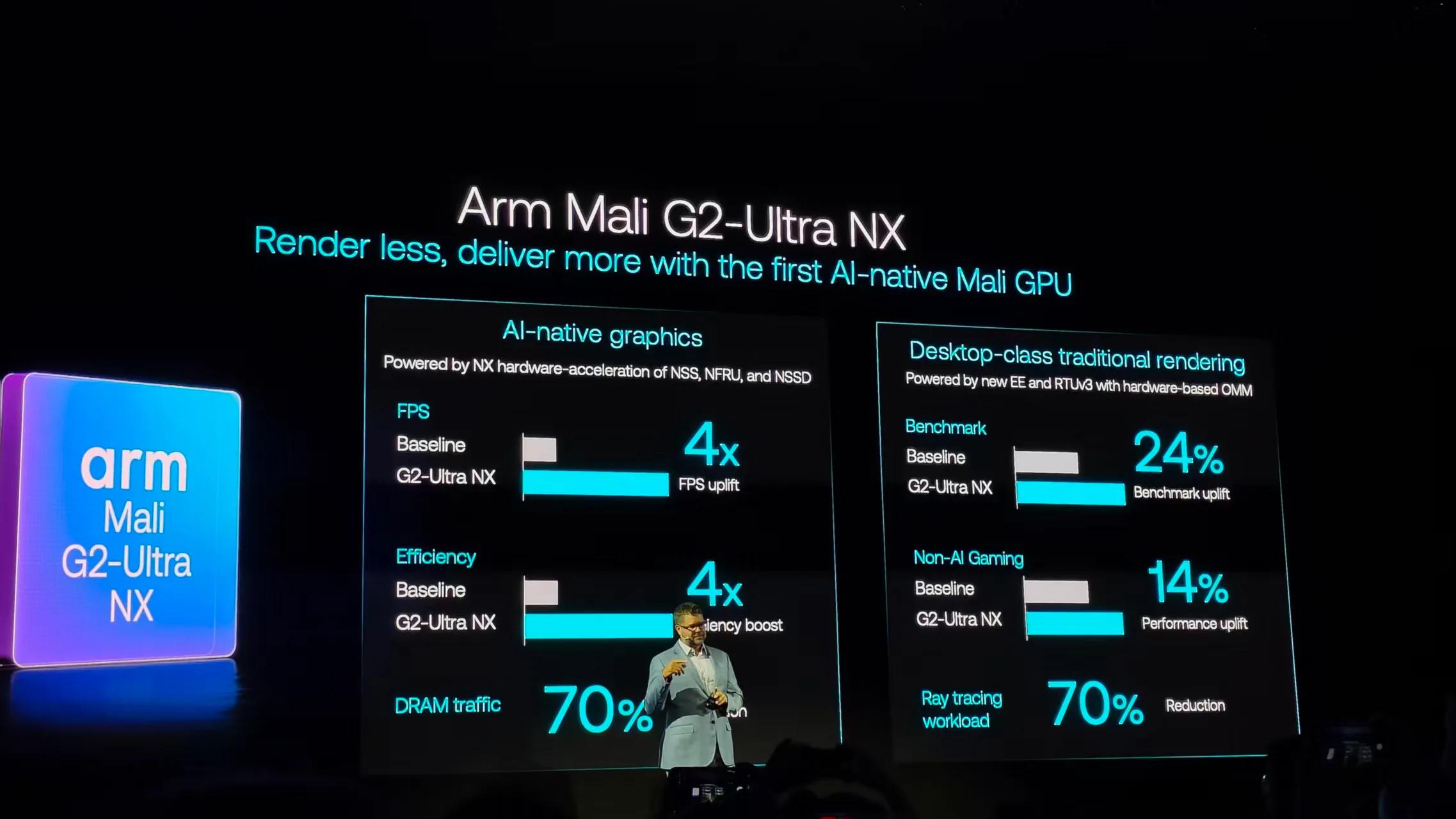
For reference, the demo originally only ran at 15 FPS, but it can run at a sustained 60 FPS on the Mali G2-Ultra NX platform, which is equivalent to a maximum 4x increase in frame rate, while DRAM traffic is reduced by up to 70%.
If you think the G2-Ultra NX only relies on AI, you are underestimating it. This generation of GPU also has real improvements in traditional rendering, mainly including two key upgrades.
One is the brand new execution engine, which is the largest instruction set architecture upgrade in the Mali seven-generation product line. The number of registers per warp is doubled compared to the previous generation, supporting dynamic register allocation.
When facing increasingly complex shader programs such as UE5 Nanite and Lumen, the doubled registers can effectively reduce the overflow to memory, allowing large shaders to run more efficiently.
The other is the third-generation ray tracing unit, which adopts a more compact ray-triangle data structure, reducing DRAM traffic in ray tracing benchmarks by 13%. At the same time, the hardware supports Opacity Micro-Maps (OMM), which can efficiently process transparent geometries such as vegetation and fabrics. In the demo, the frame rate was increased by 30% and the ray tracing load was reduced by 70%.
With the hardware capabilities in place, whether developers can use these features conveniently is the key, and Arm has done a lot of groundwork in this area.
For the developer ecosystem, Arm has launched the Arm Neural Graphics Development Kit, and the NSS and NFRU models are now available on Hugging Face and GitHub.
Cooperation progress with major domestic manufacturers is also very fast: Tencent Magic Dawn and Unity China Tuanjie Engine have integrated the technologies; NetEase *Where Winds Meet* will launch the NSS version this year, and Tencent *Arena Breakout: Infinite* and Papergames' *Infinity Nikki* are also in the process of integration. In addition, according to official information from Xiaomi, the Xuanjie O3 also uses the G2-Ultra NX.
As the saying goes, AI is not a silver bullet, and neural graphics is more like a tool. It is ultimately up to developers to decide which scenarios to use it in and to what extent.
Closing Remarks
After the full-day event, there are two observations I would like to share with you.
First, neural graphics on mobile devices has indeed reached a usable stage. There are already mature models, plugins, demos, clear integration timelines and a list of domestic manufacturers adapting the technologies, all of which are signals that the technology is moving from concept to real implementation. Of course, the final effect still depends on the mass-produced devices and actual games, but at least I think the path is clear now, no longer just a concept drawn on PPT.
The second point is some thinking about the CSS platform model. Arm is integrating CPU, GPU, interconnection and software more and more deeply, so where will the differentiation of various end products come from?
In response to this question, Arm also told Lei Technology that the platform sets the lower limit of basic capabilities, ensuring that every chip adopting CSS can achieve excellent performance, energy efficiency and compatibility. Differentiation is left to partners to realize on the platform: core count, frequency, process node, and hybrid integration of self-developed IP are all determined by manufacturers themselves.
This means Arm's platformization is not intended to turn manufacturers into OEM factories, but to take the repetitive "reinventing the wheel" work onto itself, allowing manufacturers to focus their energy on areas that can truly reflect their differentiation.
The above is all I saw and heard at Arm Everywhere China. As for whether Arm's model can succeed, we will get the answer when the mass-produced devices hit the market.
This article is from "Lei Technology", and is authorized for release by 36Kr.