AI audio hardware has taken IFA by storm, sound has become a new entry point for AI hardware, and Chinese brands have emerged as the main force.
On September 4, 2026, IFA 2026 (Berlin International Consumer Electronics Show, Germany) officially opened in Berlin, Germany. As one of the world's three major consumer electronics exhibitions, the theme of this IFA is "The Future is Now". More than 1,900 exhibitors from 49 countries and regions are expected to attract 220,000 visitors from over 140 countries. The "Leitech IFA26 Reporting Team" dispatched by Leitech (ID: Leitech) is conducting on-site, multi-dimensional and first-hand coverage of IFA2026 in Berlin.
When the official organizer of the exhibition is emphasizing Physical AI, AI has naturally become a ubiquitous and essential element at this year's IFA. What is particularly worth noting among all sectors is the "audio" track. When the Leitech exhibition tour team just arrived at the subway station near Messe Berlin, they came across an outdoor advertisement for PLAUD, the leading AI recording brand, for its Recording Card product. This year, the integration of AI and audio hardware has clearly become a core branch of AI hardware, and AI audio hardware has shown a flourishing trend at this IFA: some are recording devices, while others are TWS earbuds equipped with AI functions.

(Source: On-site shot by Leitech IFA Reporting Team)
AI Audio Hardware Has Become a Core Category of AI Hardware
There is a large variety of AI audio hardware on display at this year's IFA, but different brands have different entry points: some aim to reshape the form of recording devices, some focus on segmented application scenarios, and others adopt self-developed chips.
1. Plaud: Turn AI Voice Recorder into Earbuds
Plaud is one of the earliest brands that reaped dividends in the AI voice recorder track. It has built a solid reputation in overseas markets since its Note series, and its NotePin, a clip-on recorder that can be used by simply clipping it to the collar, is very popular among users.
At Plaud's IFA booth this time, the spotlight has shifted from voice recorders to its newly released earbud product, the Plaud One. Positioned as an "AI Meeting Minutes Earbud", it can be worn around the clock, record meetings and conversations, transcribe them into text, and then allow AI to draft emails and PPT outlines based on the content.
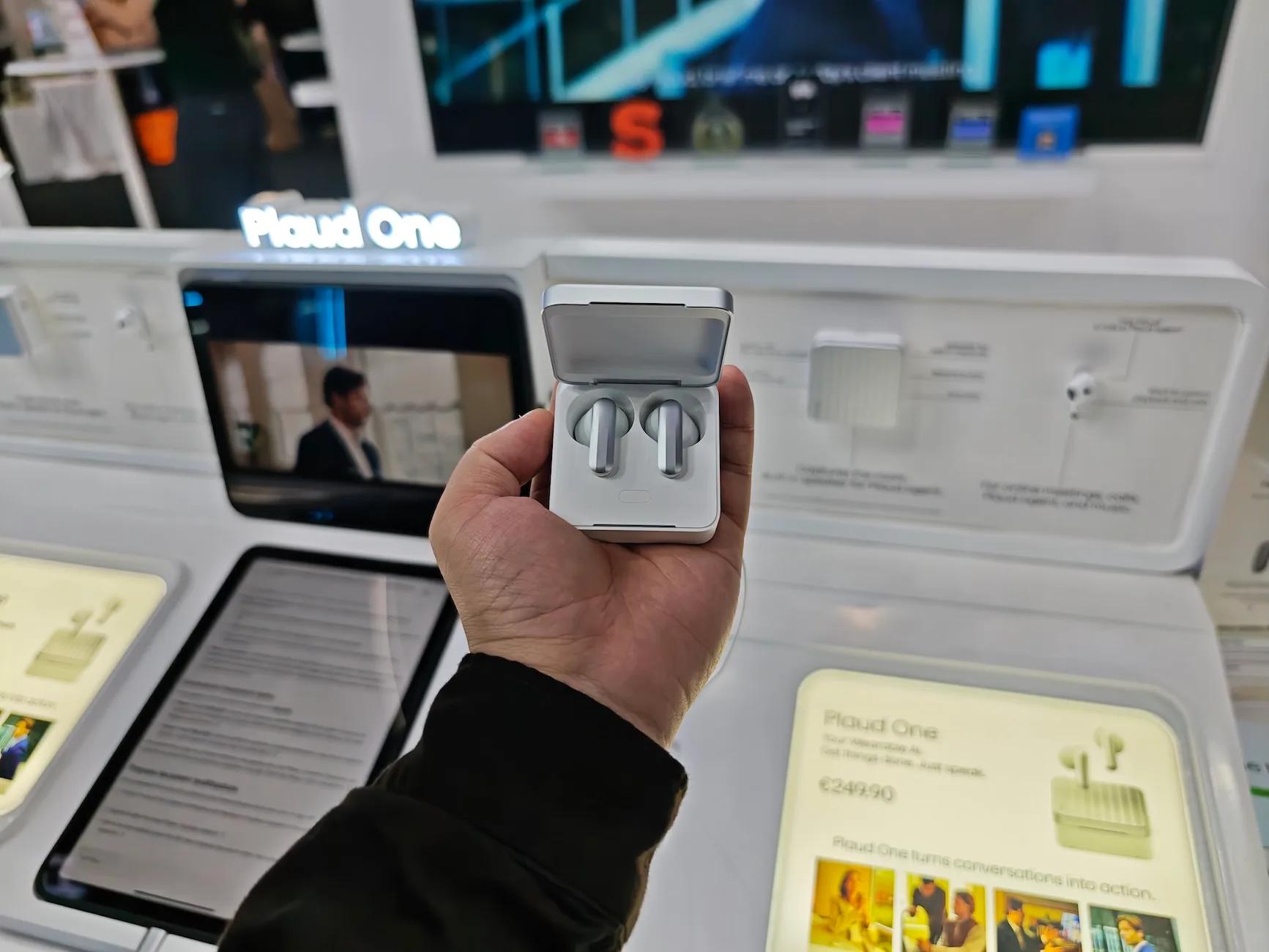
Source: On-site shot by Leitech IFA Reporting Team
According to official introduction, the product sold out within one day after its pre-sale in the US at the end of August. In addition, Plaud will roll out OTA updates later to bring more powerful AI functions to the device.
We found that a major feature of this earbud is the built-in eSIM, which greatly enhances its independence. When in use, it can access cloud AI capabilities and search for information at any time via cellular network, so it does not rely on mobile phones as heavily as traditional AI earbuds.
2. Timekettle: Integrate Simultaneous Interpretation into Calls and Videos
Timekettle, a long-term partner of Leitech, is the pioneer and leading player in the AI translation earbud sector. This time it launched the W4 Plus at IFA, an enhanced version of the W4 that is positioned closer to its previous high-end Pro series. The core function of the W4 series is real-time simultaneous interpretation, and the W4 Plus supports online translation for 52 languages and offline translation for 13 languages. Its upgrades focus on scenario coverage: in addition to face-to-face conversations, it can also perform real-time translation for phone calls and foreign language videos, without requiring users to take out their mobile phones at any time.
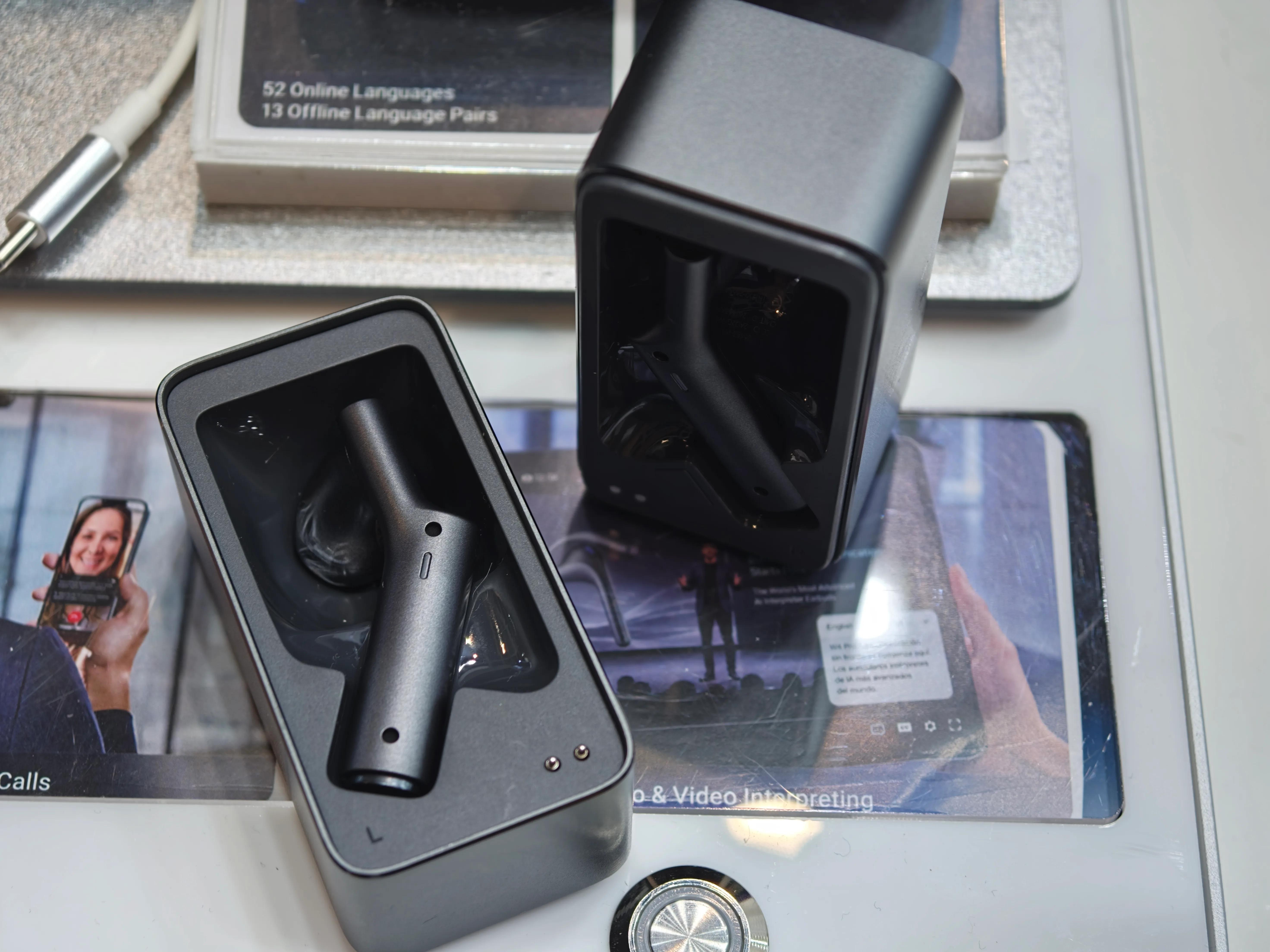
(Source: On-site shot by Leitech IFA Reporting Team)
On the hardware side, its sound pickup system has also been improved, and its AI functions have been upgraded this time: after a conversation, it can summarize the content into notes in real time, record and organize call content, and it is also equipped with a dedicated industry corpus mode to deliver more accurate translation of technical terms in professional scenarios.
In terms of pricing, the basic version of the W4 Plus is priced at $299, and full access to all AI functions requires a $14.99 monthly subscription. The product went on sale on the official website and Amazon on September 6, so visitors who are interested in it can place an order immediately.
3. Boya: Three AI Recording Hardware Products with Exquisite Design Details
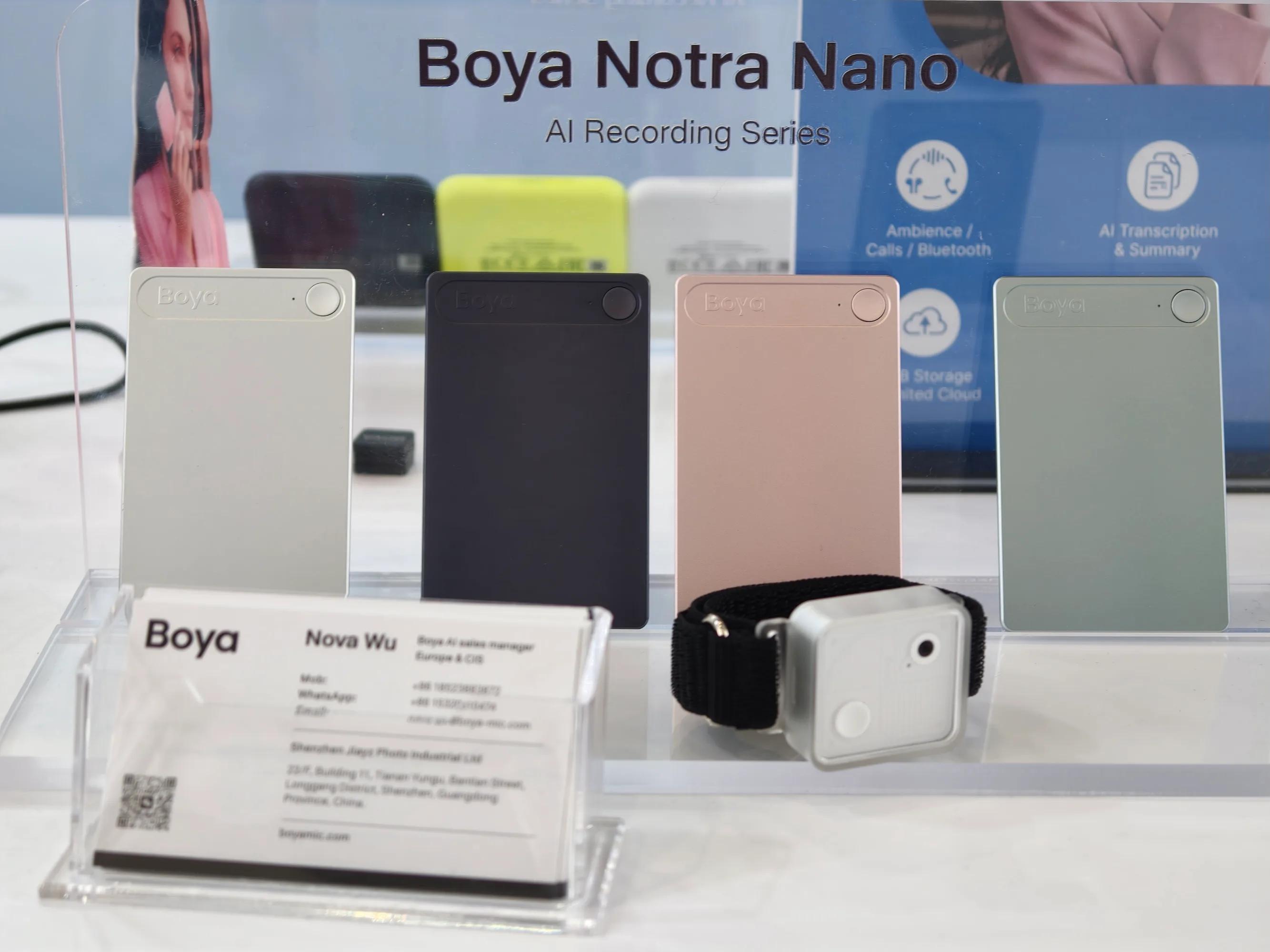
This time, Boya has brought three AI recording hardware products. The newly released Neo, with a square colorful body, is targeted at students and interviewers, and supports transcription for more than 140 languages.
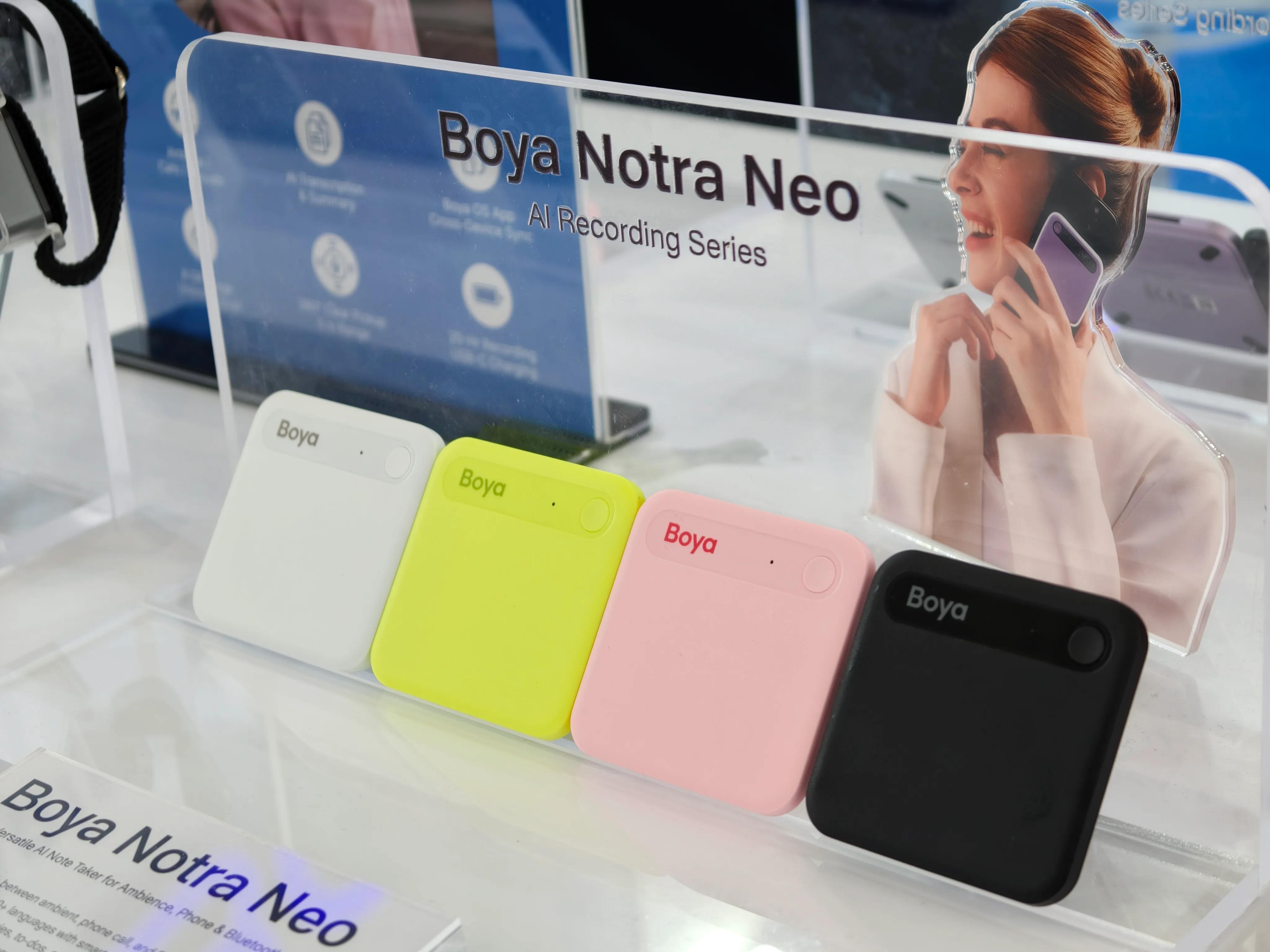
(Source: On-site shot by Leitech IFA Reporting Team)
The extra-small Nano, a black and white square device with a strap, can be worn on the wrist or hung around the neck. Since it is not attached to mobile phones, it does not have an upward bone conduction microphone, but uses a multi-microphone array to pick up surrounding sounds. It is designed for portable scenarios, and the wrist mode is especially suitable for scenarios such as attending classes or conducting interviews where users cannot free their hands to take out the device.
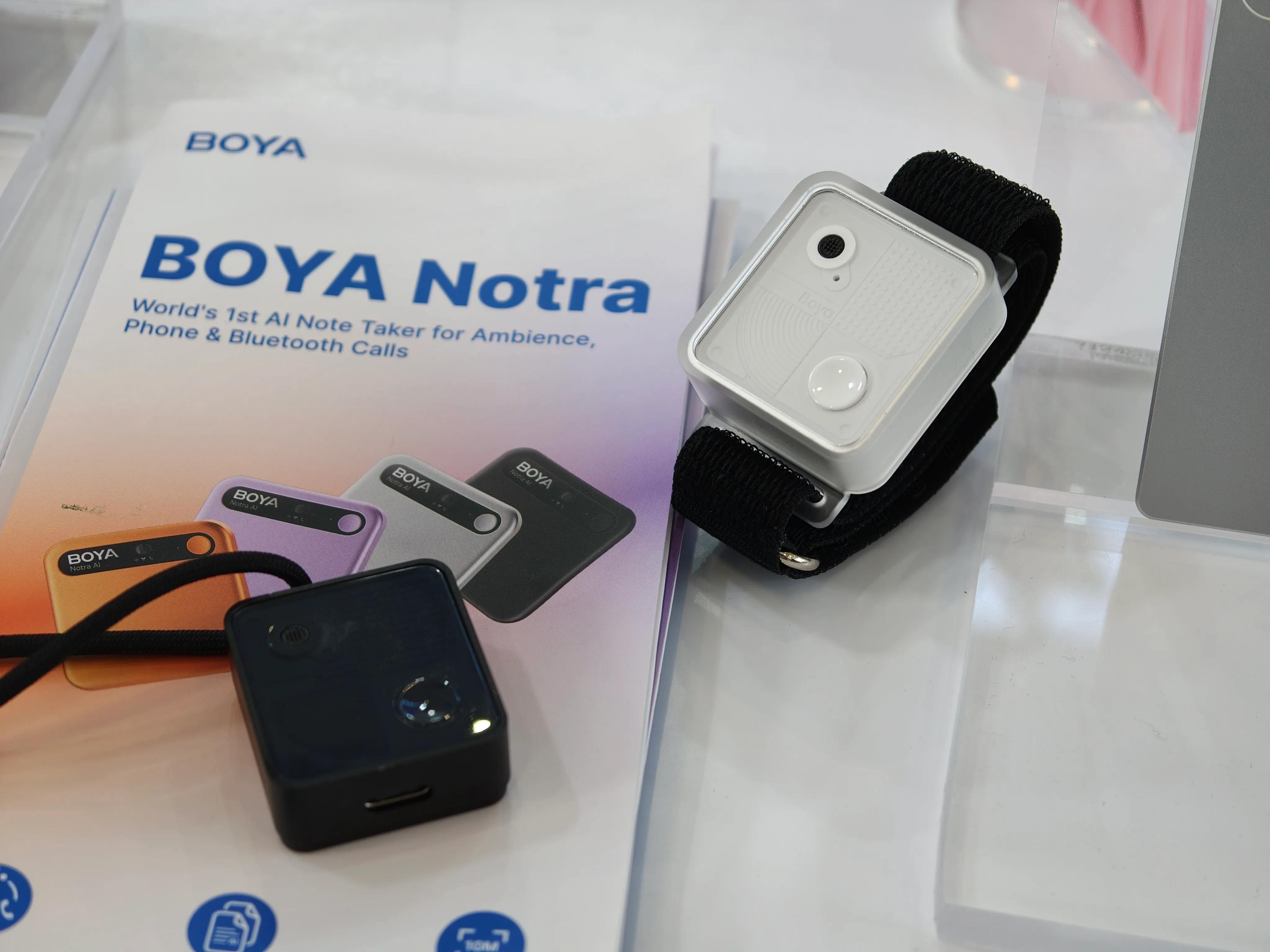
(Source: On-site shot by Leitech IFA Reporting Team)
The Air is a thin, long card that can be easily slipped into a pocket. In terms of charging, the Neo and Nano both support direct USB-C charging, while the Air uses a magnetic charging design. In addition, the Neo has a built-in magnet, so it can be directly attached to the back of a mobile phone, unlike some other recording cards that require an additional magnetic leather case.
(Source: On-site shot by Leitech IFA Reporting Team)
The three products have completely different forms, all featuring thoughtful design and adapted for different segmented scenarios. For users, no matter what kind of recording needs they have, they can find a suitable product from this lineup.
4. viaim: Bring the Conference Room into Earbuds and Speakers
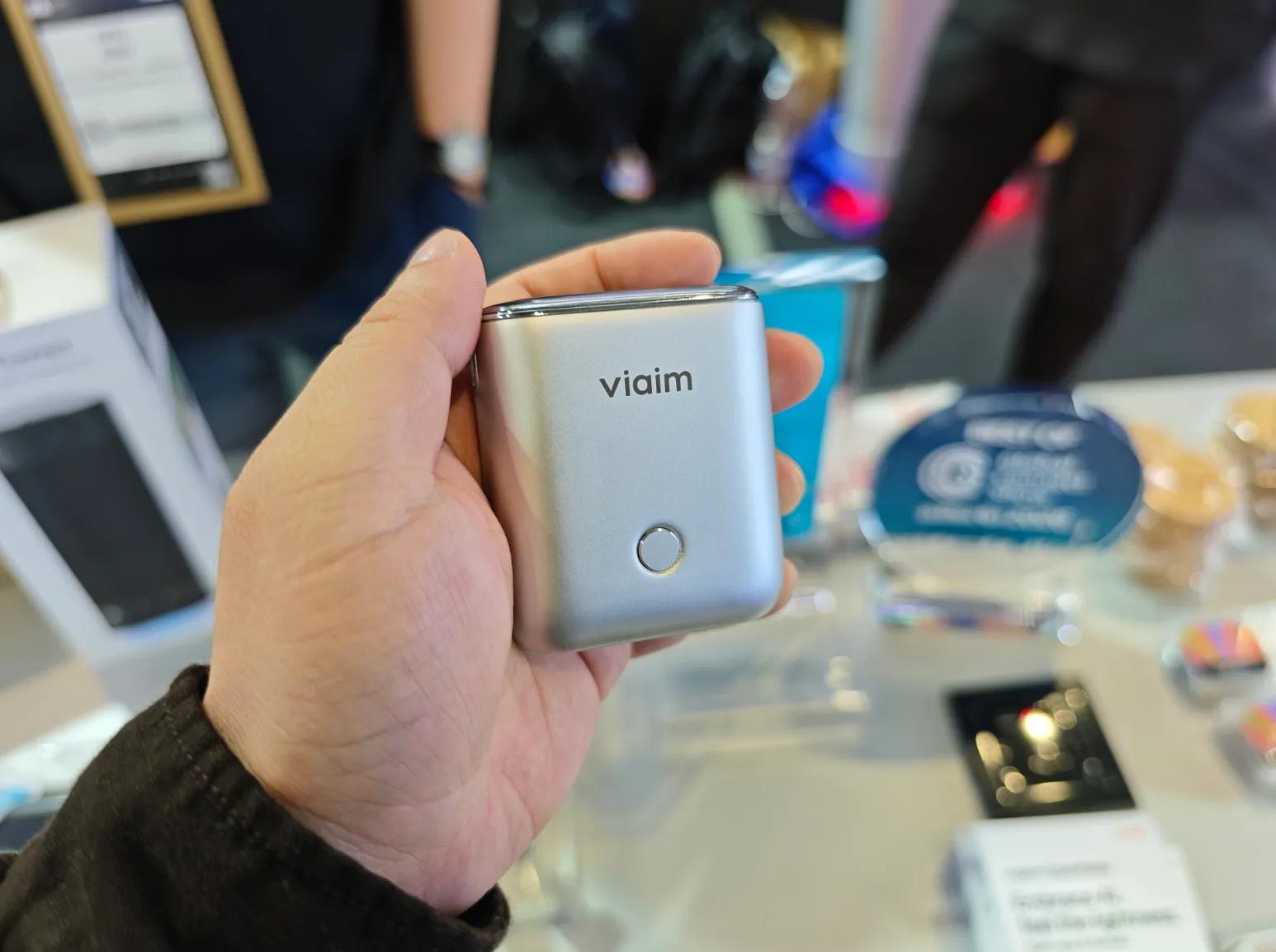
viaim is a brand of iFlytek Smart dedicated to the overseas market, and domestic users are more familiar with the iFlytek Conference Earbud technology behind it. This time it has brought two new products. One is a pop-up design conference recording earbud, which solves a very practical pain point: conference earbuds need to be easy to store in daily use, while also being able to be worn immediately when an impromptu meeting starts, and the pop-up structure meets both requirements at the same time.
(Source: On-site shot by Leitech IFA Reporting Team)
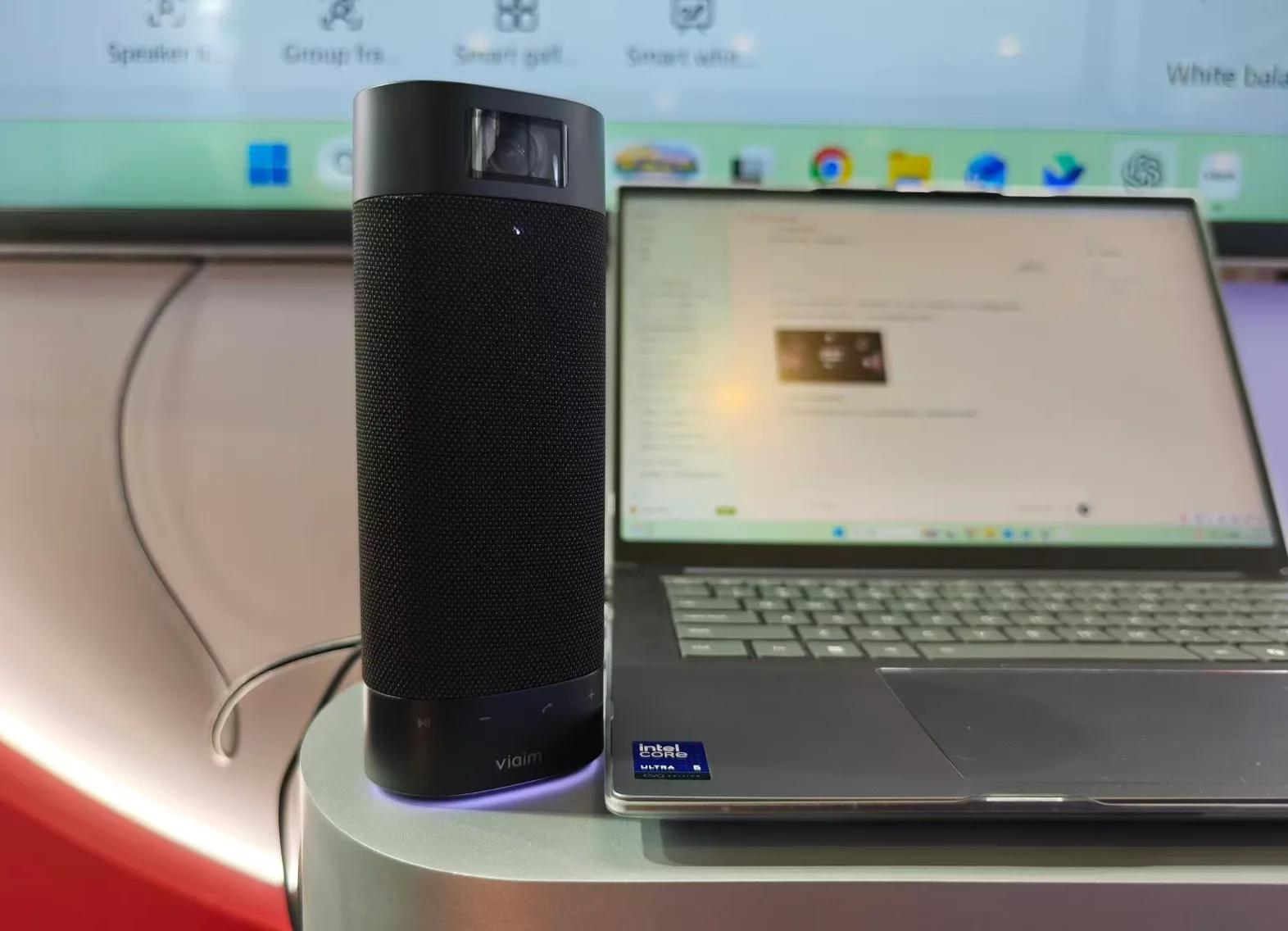
The other product is a speaker specially designed for video conferences, with a built-in camera that can be directly used as the main lens for video calls. Equipped with four omnidirectional microphones and high-power speakers, it supports instant meeting hosting, and the whole meeting content can be transcribed later via supporting PC software.
(Source: On-site shot by Leitech IFA Reporting Team)
5. iFlytek: The Thinnest E-Ink Tablet Ever, Perfect for Taking Notes in Meetings
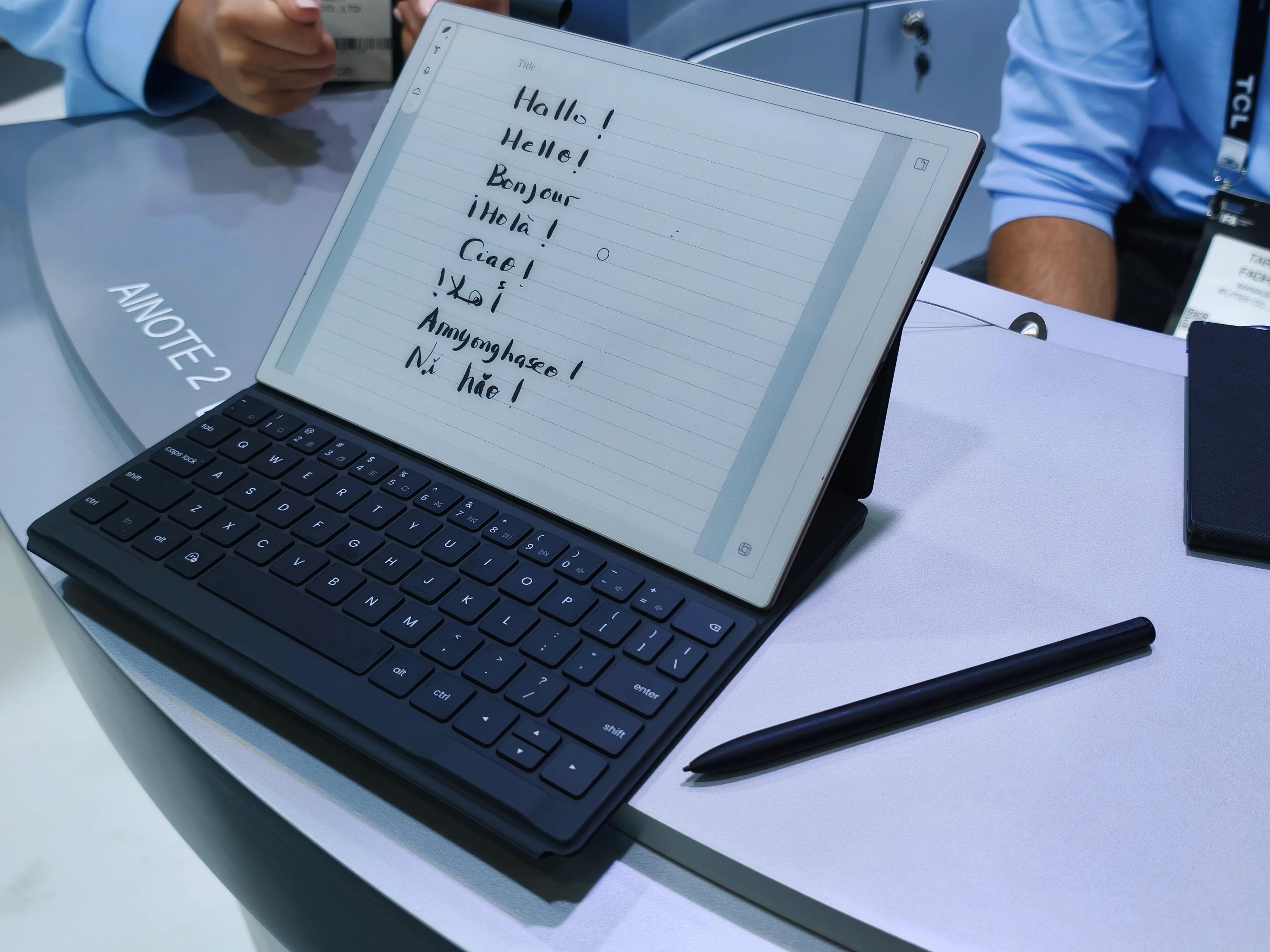
The product iFlytek brought to Berlin this time is the AINOTE 2 Cicada Wing E-Ink Tablet, the world's thinnest e-ink tablet, which focuses on integrating meeting recording and speech transcription into the e-ink device. This tablet supports offline real-time transcription: when placed on the table during a meeting, it can convert speech into text in real time, and users can directly circle and annotate on the transcribed text with a stylus, after which AI can sort the meeting content into to-do items.
(Source: On-site shot by Leitech IFA Reporting Team)
Compared with the recording apps on mobile phones, the e-ink screen has no notification interruptions and will not cause eye fatigue after long-time reading. Compared with traditional voice recorders, it has an additional readable and writable screen, so users can annotate and organize the transcribed content on the spot.
This tablet has already been launched in the Chinese market before. This time it was brought to Berlin with iFlytek to allow overseas users to experience it. iFlytek's product logic is very clear: the value of AI audio is not limited to earbuds and voice recorders, and it can be embedded as a capability in any scenario that requires "listening and note-taking".
6. Anker: Self-developed THUS Chip, AI Earbuds Support Simultaneous Listening and Note-taking
The AeroClip 2 Pro released by Anker this time is an open-style ear clip earbud that focuses on AI note-taking function, which can record important content while listening. Its core is Anker's self-developed THUS chip, whose stronger computing power allows AI functions to run directly on the earbud without relying on mobile phones.
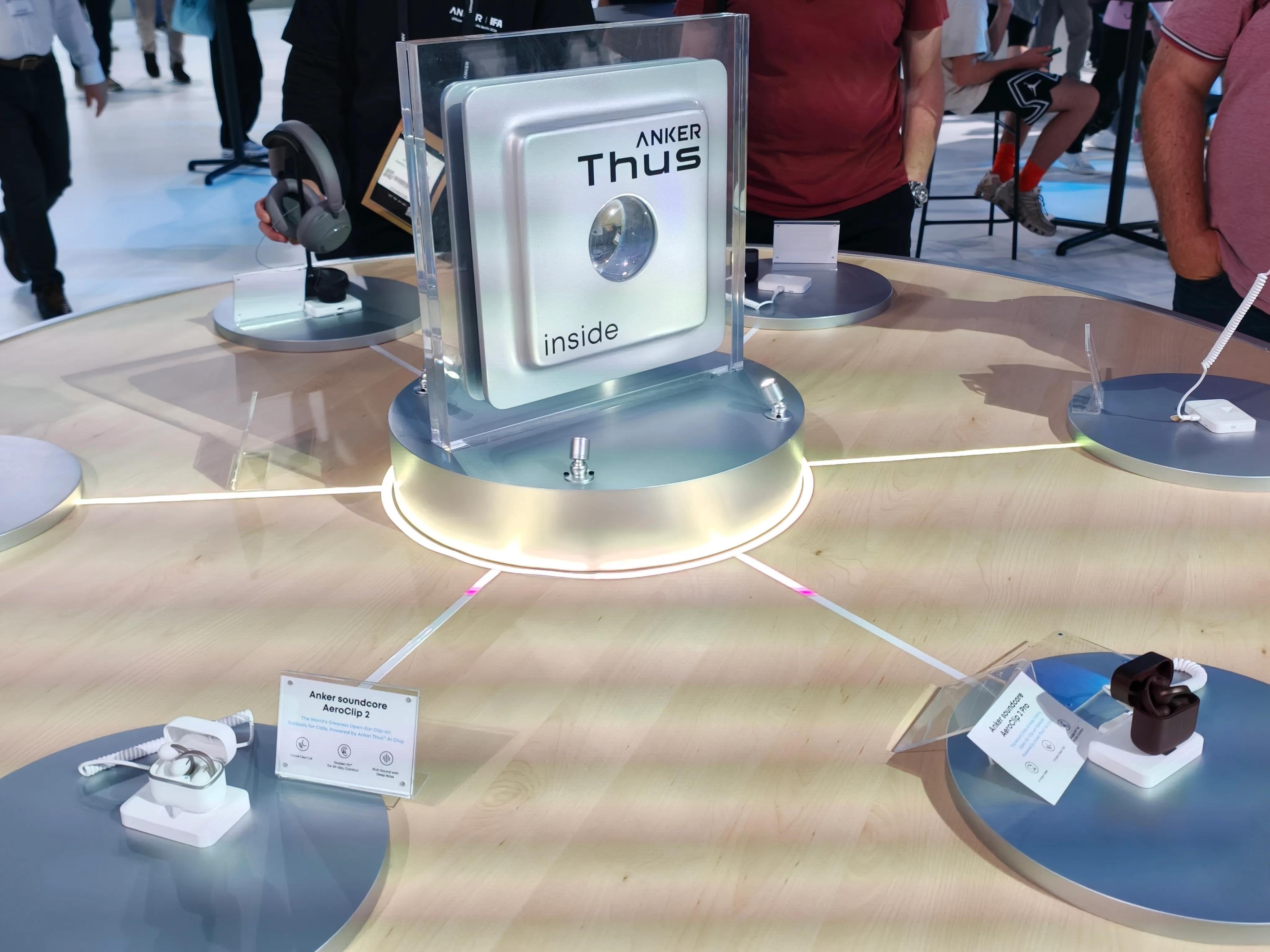
(Source: On-site shot by Leitech IFA Reporting Team)
On-device processing also has an implicit advantage: voice data does not need to be uploaded to the cloud, which guarantees privacy protection and faster response speed. The ear clip design is comfortable to wear, so it can be worn for a long time during commuting, working out and office hours, extending AI note-taking from meeting rooms to daily life scenarios.
Open-style earbuds have a long-standing problem: the sound pickup during calls is easily disturbed by ambient noise, and the AeroClip 2 Pro is specially equipped with a noise reduction call mode to solve this pain point. After all, the prerequisite for AI note-taking is to pick up human voices clearly, and poor sound pickup will make all subsequent functions useless. Anker also revealed that the THUS chip will be installed in more audio products in the future, including over-ear earbuds and TWS earbuds. The competition in the AI audio sector has entered the stage of competing for chips and computing power.
Recording Has Become a Key Entry Point for AI Hardware
The AI recording hardware products at this IFA cover different scenarios and have different selling points, and their common feature is that voice is becoming a new entry point for AI hardware.
To a large extent, AI manufacturers develop audio hardware based on mature on-device AI technology. Devices such as earbuds and voice recorders are naturally bound to voice scenarios. Before the maturity of large language models, transcription and translation were their only AI functions, and the performance was not satisfactory.
Now, models with relatively low computing power requirements and small parameter sizes can also complete tasks such as recording transcription and translation well. With the further upgrade of on-device models and dedicated chips, AI can fully support functions such as recording summary and integration with office scenarios, greatly expanding the application scenarios of AI audio hardware.
Taking earbuds as an example, after being AI-enabled, they may be the most accessible and lowest-cost AI hardware option for consumers. A large number of brands have entered this track, leading to extremely fierce market competition. We believe that the market path for this type of AI audio hardware should be to attract office workers first, and then gradually penetrate into the mass consumer market.
It is worth noting that in the AI audio hardware sector, Chinese manufacturers are once again the main force, and brands including Plaud, Boya, Timekettle, viaim, iFlytek and Anker are actively expanding into overseas markets.
For ordinary consumers, these changes will most likely be implemented in very specific ways, for example, people no longer need to take notes manually during meetings, as AI will sort out all key points for them. The experience improvement brought by technological progress to users is very prominent here, which is also the core concept of the IFA exhibition.
This article is from "Leitech", authorized for