Wang Naiyan, head of Xiaomi's L3 division, has resigned, and his next career move is to launch an embodied intelligence startup.
The sharpest AI minds always flow to the most challenging battlefields, as expected.
Exclusive report from QbitAI / AutoAI Reference: Dr. Wang Naiyan has officially left Xiaomi Auto on September 7.
His next stop is embodied intelligence.
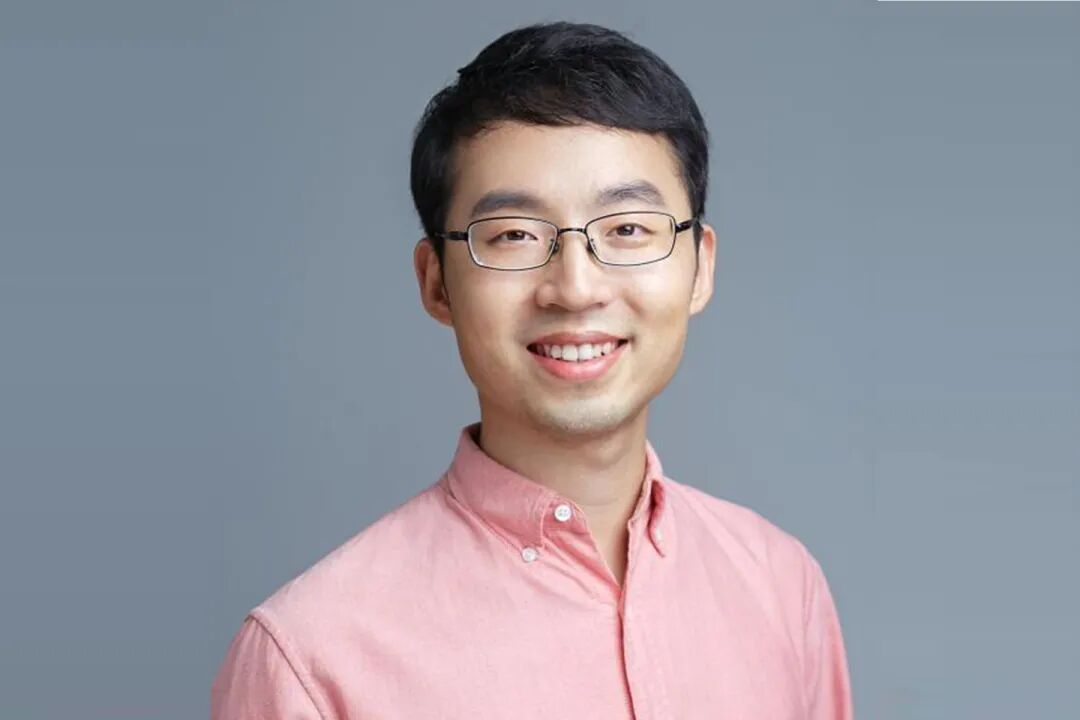
Shifting from autonomous driving to embodied intelligence, from teaching vehicles to perceive roads to teaching robots to understand the world — this seems like a track switch, but for Wang Naiyan, it is the continuation of the same core problem carried on different physical carriers, as well as the phased summary and realization of his over ten years of entrepreneurship and thinking:
How exactly should AI make decisions in the real physical world?
This time, Wang Naiyan is starting to put his own cognition into practice from the underlying architecture level.
Wang Naiyan leaves Xiaomi to devote himself to embodied intelligence
September 7 marks the official launch date of Xiaomi's first extended-range electric vehicle, which is also the starting point for Xiaomi to step out of its "comfort zone" and prove its systematic capability as an "automaker" with more complete vehicle categories, wider price ranges, diversified energy forms and other dimensions.
As learned by QbitAI / AutoAI Reference, September 7 is also Wang Naiyan's last day at Xiaomi Auto.
That means, just like Lei Jun, Wang Naiyan stepped out of the "comfort zone" of the autonomous driving business on the very same day, and began to verify his AI cognition, industry experience, and ability to continuously create new value in broader physical world tasks —
His new company focuses on the direction of embodied intelligence brain, which refers to the core perception, decision-making and planning capabilities of robots.
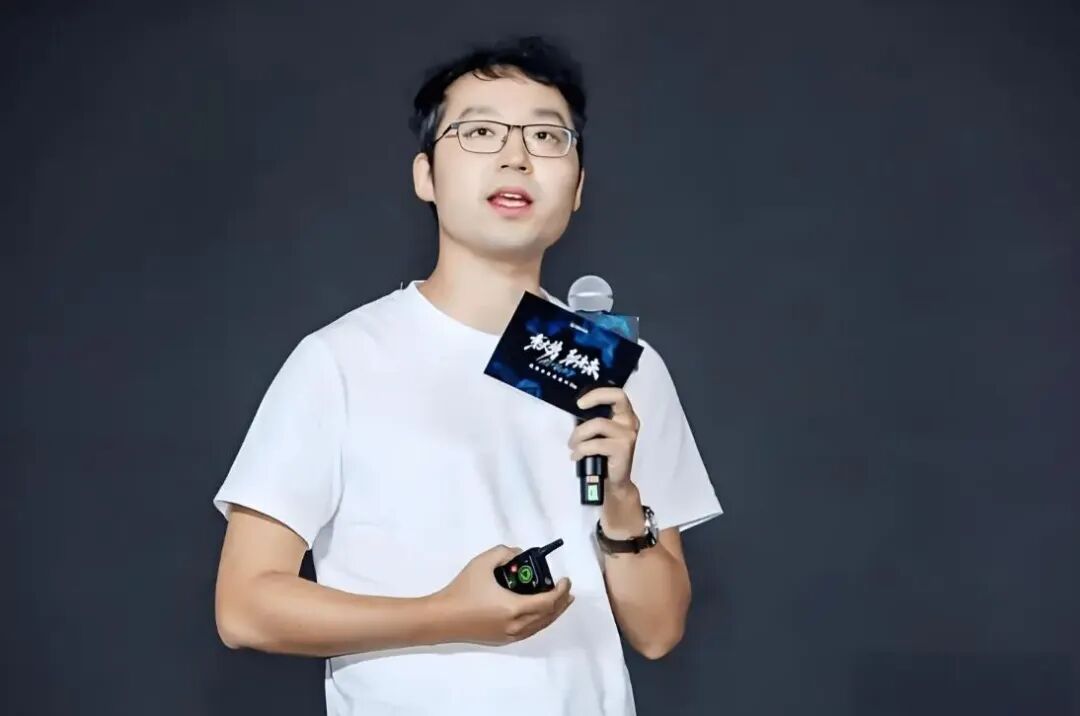
Meanwhile, the possibility of self-developing robot ontologies is not ruled out.
On the team side, we have learned that Wang Naiyan is building a lean founding team whose core members include many of his former colleagues from TuSimple.
This team has gone through the entire 0-to-1 entrepreneurship process with him, and has withstood long-term tests in complex industrial scenarios, with extremely low running-in cost and proven strong combat effectiveness.
The capital market has responded rapidly. It is reported that multiple top-tier funds have shown strong interest and are in intensive contact with Wang Naiyan's team.
Embodied intelligence is not only a hot track, but also one of the most certain long-term directions in the current AI field. Players like Wang Naiyan who have both academic influence, industrial implementation experience and complete entrepreneurship resume are exactly the targets chased by capitals.
Who is Wang Naiyan
Wang Naiyan has a very rare label: he has always stood right at the crest of every key node of the AI wave.
In 2013, when deep learning had just proven its effectiveness in the field of image recognition, Wang Naiyan, who was still pursuing his doctorate at the Hong Kong University of Science and Technology, applied deep learning to target tracking — making him the world's first researcher to apply deep learning to target tracking. During the same period, he participated in the development of MXNet as a core developer.
This framework later became one of the world's three major deep learning frameworks, as famous as TensorFlow and PyTorch. In the era when the deep learning framework field was still a barren land, this group of pioneers who wrote framework-level codes are comparable to Prometheus in significance.
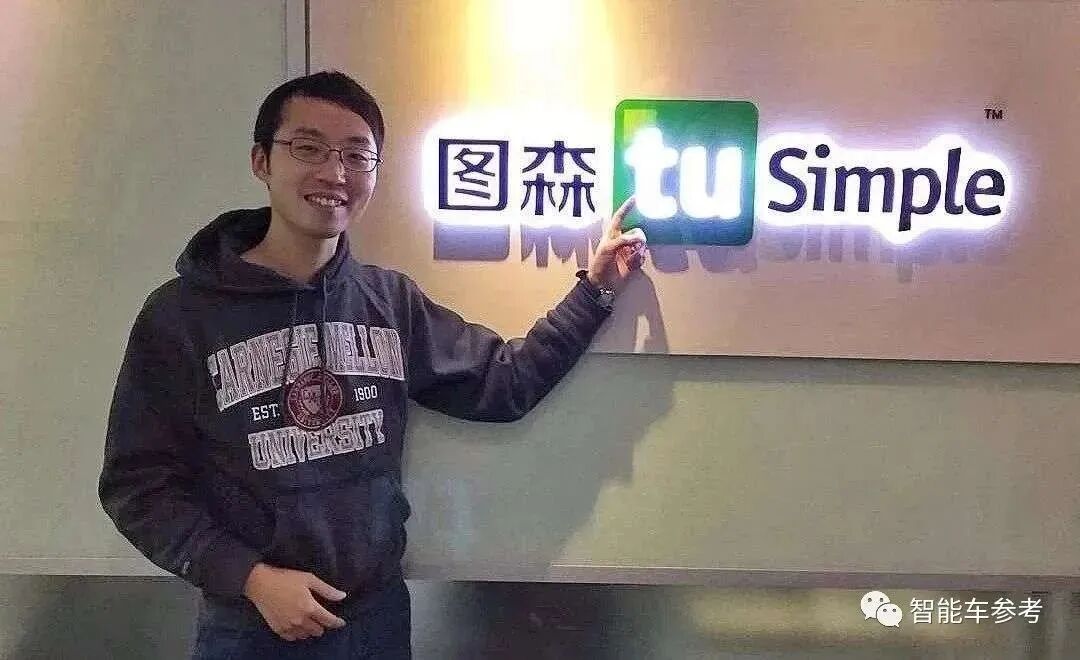
But what truly shaped him is his 9-year career at TuSimple that followed.
Right after graduating with his doctorate in 2015, Wang Naiyan joined TuSimple as co-founder and chief scientist, focusing on L4-level autonomous driving trucks. His first task was to build TuSimple's algorithm team in China from scratch.
Today's AI talent market is mature, full of experienced engineers and ready-to-use open-source tools. But 2015 was a totally different story. There was almost no deep learning talent available, the engineering of frameworks had just started, and there was not even a complete systematic autonomous driving R&D process on the market — all these "infrastructures", including how to define problems, how to organize data, how to evaluate models, and how to run algorithms on the in-vehicle embedded systems, needed to be built completely from the ground up.
Wang Naiyan not only achieved this, but also did it very efficiently.
In September 2016, TuSimple was just one year old. The deep learning perception algorithm independently developed by Wang Naiyan's team won 10 world firsts on KITTI and Cityscapes, the two most authoritative global autonomous driving datasets, in one go.
A Chinese startup that had been established for only one year topped the ranking of the world's most difficult autonomous driving evaluation — this almost set a record at that time.
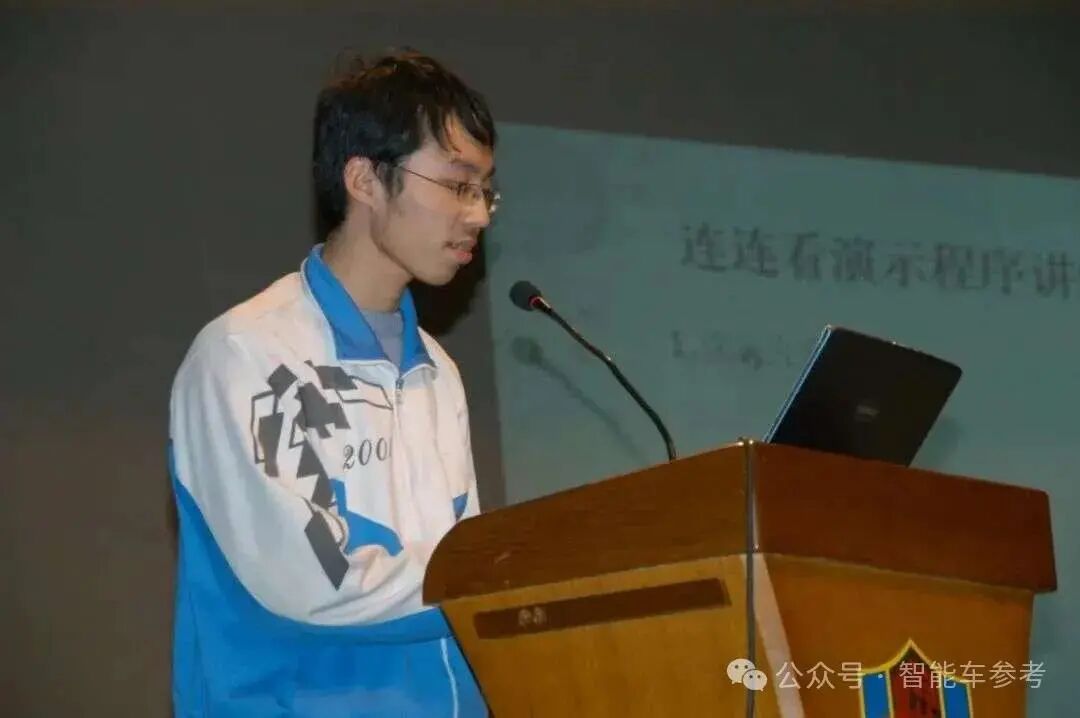
During his 9 years at TuSimple, Wang Naiyan successively did two completely different things. The first was leading the team to complete the R&D of the L4-level full-stack autonomous driving system — pursuing the technological limit.
The second was leading the implementation of L2+/L3-level mass production solutions in the later stage, launching intelligent driving products such as "Eco-Pilot" — controlling the cost to a commercially viable level, and making the reliability high enough to be delivered to fleets.
This is the pursuit of product reliability and controllable cost.
Two completely different capabilities: one is the scientist mindset that pursues the boundary of technology, the other is the engineer mindset that pursues stability and replicability.
In May 2024, Wang Naiyan joined Xiaomi Auto as the L3 technical lead. In Xiaomi's intelligent driving team of over 1,800 people, he was listed as one of the four core members alongside Ye Hangjun, Chen Guang and Chen Long, responsible for the reliability of the intelligent driving system.
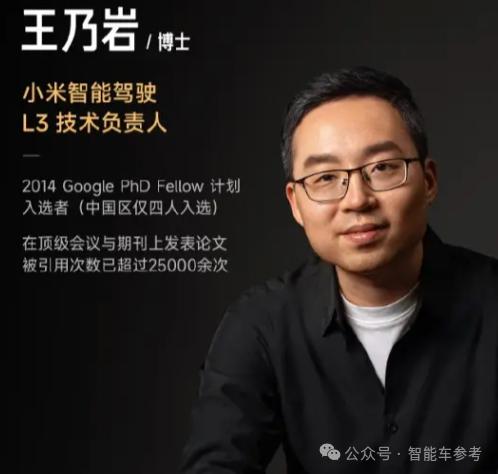
The core capabilities required by this position — system-level safety guarantee, engineered quality control, and the complete link from laboratory to mass production — are exactly the experience he accumulated when developing mass production solutions at TuSimple.
In other words, what Lei Jun valued back then was not only his strength of "being able to publish papers", but more importantly, his capability of "making vehicles run on roads safely".
And this man handed in his resignation on September 7, and turned around to step into the embodied intelligence track.
How exactly does Wang Naiyan's embodied intelligence brain work?
The embodied intelligence brain is the main focus direction of Wang Naiyan's new company.
But the industry still has no answer on how to build the "embodied intelligence brain" properly.
Since 2023, VLA (Vision-Language-Action Model) has been widely regarded as the default solution for the embodied intelligence brain — it integrates vision, language and action into the same end-to-end model, so that robots can learn the next action from human demonstrations. Almost all top-tier companies are equipped with VLA or its variants.
But by 2026, this standard answer has been publicly challenged.
The core shortcoming of VLA is that it skips physical environment modeling and causal reasoning, and completely relies on labeled data to fit action mappings. When facing unfamiliar untrained scenarios or completely new objects, its generalization capability degrades significantly.
At the same time, another technical route WAM (World-Action Model) is on the rise. It adopts a deduction-first architecture of "pre-simulate first, then execute action": it predicts the change of world state after action execution first, then reversely derives the optimal control instruction. It has stronger long-term task planning capability, but its limitations are also prominent: its semantic understanding capability is far weaker than VLA, and frame-by-frame pre-simulation of physical state requires huge computing power overhead.
So the industry is now in a state of "multiple routes coexisting, no one knows what the final outcome will be".
The root cause why the technical route cannot converge for a long time lies in data. There is still no consensus on the standard of embodied data — every company has different requirements for the data format, included modalities and accuracy level.
Data iteration and model iteration are highly coupled, you do not know what kind of data to collect for which route, after all, you are not sure which route will win in the end — this is a classic chicken-or-egg deadlock.
And the unique feature of Wang Naiyan's technical thinking and practice is that he may have found a way to bypass this deadlock.
The last paper DriveZero published by Wang Naiyan when he was at Xiaomi, which we have analyzed in detail just now, has already laid a foreshadowing for his next step in technical ideas.
This paper proposes a "decoupling-distillation" training paradigm: separate "decision-making" from "perception", train the decision-making part with reinforcement learning in the simulation environment, let the perception part learn from the foundation model through distillation, and finally merge the two parts together.
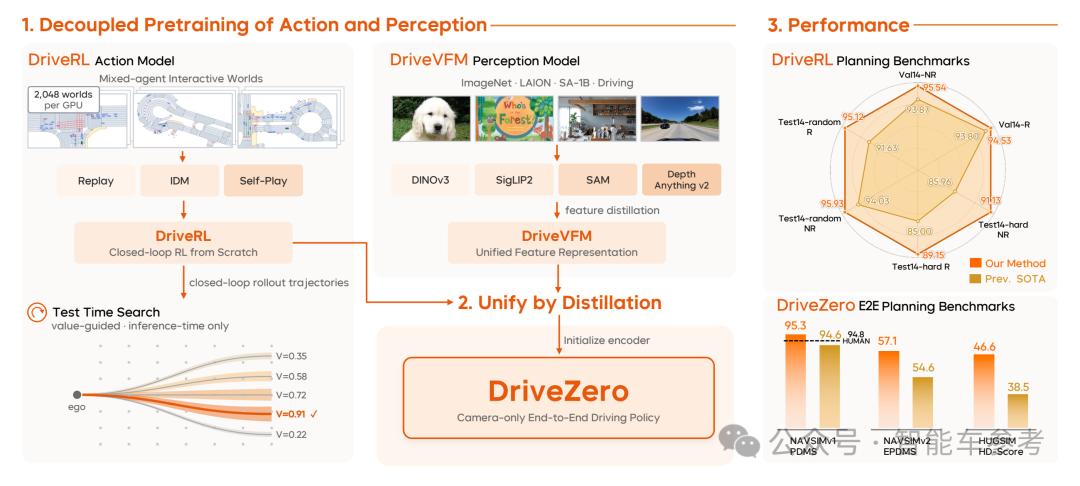
The value of this methodology goes far beyond autonomous driving — any intelligent agent that needs to act in the physical world faces the same dilemma: the cost of trial and error in the real environment is too high, while the strategies learned in the simulation are difficult to migrate to real perception inputs.
DriveZero exactly demonstrates a feasible path to solve this core contradiction.
Wang Naiyan once expressed a viewpoint in an interview: "A model trained only with autonomous driving data can never perfectly solve autonomous driving problems".
Embodied intelligence is actually facing the same problem: robots cannot only learn "how to move", they have to understand "what the world is like" first.
And the matter of "understanding the world" is currently mostly attributed to data problems.
But Wang Naiyan put forward new thinking: the cognitive problem is essentially a brand new representation learning method — if "understanding the world" and "taking actions" are two separate things, why have we been tying them together with a black-box model all the time?
The answer to this question lies in his new company.
This article is from the WeChat official account "AutoAI Reference" (ID: AI4Auto), written by Jia Haonan, published with authorization from 36Kr.