The trillion-GDP city with the smallest population sees young people come and go.
Benefiting from the boom of the new energy industry in recent years, Changzhou joined the "1-trillion-yuan GDP club" in 2023. However, Changzhou has a permanent resident population of only over 5 million, making it the city with the smallest population and relatively small land area among the 29 trillion-yuan GDP cities at present.
This manufacturing city with a not-large population size features dense industries and numerous enterprises, gathering nearly 200,000 college students. Official data shows that since 2024, Changzhou has further relaxed its household registration policy to ensure that eligible people residing in the city on a regular basis can "settle down in the city as they wish".
In recent years, the number of graduates from universities in Changzhou who stay in the city for employment with social insurance contributions has increased, reaching around 7,000, but the retention rate in Changzhou is only about 30%.
Compared with Suzhou and Nanjing in the same province, this figure is not high. If we look at the population trend of Changzhou in recent years, although it is still in a population growth channel, the average annual growth is about 10,000, with a relatively slow growth rate.
The question naturally arises. Changzhou is not short of industries, nor is it short of young people. Why is it still difficult to retain them?
01
"High-density" Trillion-yuan GDP City
Among the 29 trillion-yuan GDP cities, Changzhou is particularly special.
By the end of 2025, the permanent resident population of Changzhou was 5.4154 million, the smallest among all trillion-yuan GDP cities. Compared with Yantai, the trillion-yuan GDP city with the second smallest permanent resident population, there is a gap of more than 1.5 million people.
In addition, the total registered population of Changzhou is 3.8948 million. The difference between the permanent resident population and the registered population is about 1.52 million, the floating population accounts for nearly 30% of the permanent resident population, indicating strong population mobility.
However, the small population and high GDP also mean that Changzhou has a high per capita GDP. In 2025, the city's GDP reached 1.11587 trillion yuan, up 5.2% year on year, with a per capita GDP of about 207,000 yuan, making it one of the 11 cities in China with a per capita GDP exceeding 200,000 yuan.
This "high density" of Changzhou is inseparable from the city's profound industrial tradition.
At the beginning of the reform and opening up, Changzhou was a small city in southern Jiangsu with a large population but limited land and insufficient resources, and it rose rapidly relying on the manufacturing industry. Changzhou put forward the idea of "putting on a grand show on a small table", organizing specialized division of labor around products, and forming multiple "one-stop" industrial collaboration modes for products such as corduroy and tractors. "Small and medium-sized cities learn from Changzhou" once became a national phenomenon.
The "one-stop" industrial collaboration mode is actually similar to the industrial chain commonly referred to today. Changzhou's industrial organization capability has continued to this day. At present, it has 37 of the 41 major industrial categories, 186 of the 207 medium industrial categories, and 591 of the 666 minor industrial categories. The complete range of industrial sectors and close upstream and downstream collaboration have also become an important feature of Changzhou's manufacturing industry.
In recent years, Changzhou has further released this industrial advantage in the new energy sector. In 2025, the city's new energy industry scale exceeded 1 trillion yuan, the output of new energy complete vehicles reached 818,000 units, and the integrity rate of the power battery industrial chain reached 97%, forming an industrial ecology covering power generation, energy storage, transmission, application and internet of vehicles.
In 2019, BYD entered Changzhou with a total investment of about 20 billion yuan; the first-phase complete vehicle production base was put into operation in 2022, and the second-phase core components base was put into operation in 2025.
With the settlement of leading enterprises, the upstream and downstream industrial chains have further gathered.
In the first half of this year, the output value of Changzhou's new energy manufacturing industry increased by 8.7%, of which the output value of power and energy storage batteries increased by 36%, and the output value of new power equipment increased by 10.9%; industries including electronics, machinery, and biomedicine also maintained growth. Changzhou proposed that during the 15th Five-Year Plan period, it will continue to adhere to the strategy of building the city through industry and strengthening the city through manufacturing, and push the total industrial scale to 3 trillion yuan.
At the same time, Changzhou is entering a new stage of development.
Although Changzhou's GDP still maintained a 5.2% growth in 2025, its fixed asset investment fell by 19.0% year on year, of which industrial investment fell by 5.1%, service industry investment fell by 32.4%, and real estate development investment fell by 41.1%. In the first half of this year, the city's fixed asset investment fell by 12.9% year on year again, of which industrial investment fell by 7.1%, and service industry investment fell by 20.3%.
In addition, in the whole of last year and the first half of this year, the growth rate of Changzhou's tertiary industry exceeded that of the secondary industry. The decline in fixed asset investment and the growth of the tertiary industry may mean that Changzhou's growth model formed by investment and manufacturing expansion is changing.
Industry remains the biggest advantage of this city. As industries such as new energy, electronic information and biomedicine extend to higher value-added links, Changzhou's demand for talents has shifted from the previous dense labor force to young professional talents.
How to retain nearly 200,000 college students in the city has become a problem that this trillion-yuan GDP city must face in the next stage.
02
Nearly 200,000 College Students: How to Retain Them?
When the new semester starts in September, Changzhou Vocational University of Information Technology welcomed its first batch of college students after being upgraded to a university. In June this year, with the approval of the Ministry of Education and the Jiangsu Provincial People's Government, it was upgraded from Changzhou Vocational College of Information Technology and officially entered the ranks of vocational undergraduate education.
Up to now, Changzhou has 4 undergraduate colleges and universities, including Changzhou University, Changzhou Institute of Technology and Jiangsu University of Technology.
Changzhou is not a "university town" in the traditional sense, but it has a considerable number of young people. At present, there are 12 regular universities in the city, with nearly 200,000 graduate students, undergraduates and junior college students on campus.
But among these young people, how many will take Changzhou as their first workplace city?
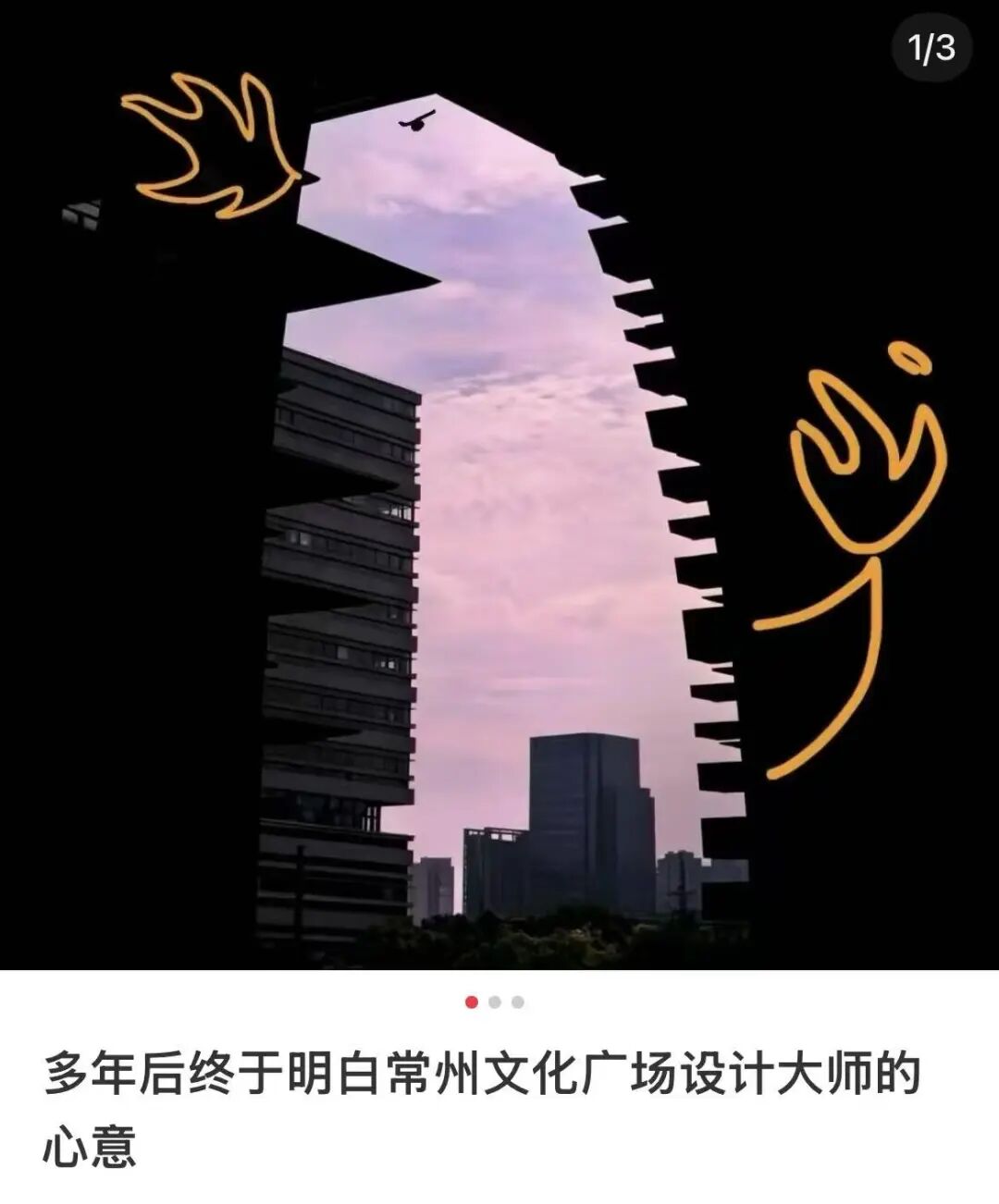
The "dinosaur" at Changzhou Cultural Square has recently gone viral online (Source: online screenshot)
In terms of the retention rate in Changzhou, there is still obvious room for improvement. In 2024, 6,410 graduates from universities in Changzhou stayed in the city for employment with social insurance contributions, with a retention rate close to 30%; in 2025, this number increased to 6,743, and in 2026 it reached 7,610, up 12.84% year on year.
That is to say, the number of college graduates retained by Changzhou is increasing, but if we compare it with other cities in the Yangtze River Delta, "nearly 30%" is still not a particularly competitive figure.
Compared with Suzhou, according to the official data released in 2023, Suzhou has about 300,000 college students on campus, and it is estimated that there will be more than 40,000 college graduates of Suzhou origin in that year, and the estimated retention rate of graduates from universities in Suzhou reached 50%.
Nanjing, as an important national science and education center, has richer college student resources, with the number of college students on campus exceeding one million, ranking among the top in China for a long time. Nanjing's human resources and social security department disclosed in 2023 that since 2018, the retention rate of graduates from universities in Nanjing has increased from about 20% before to around one third.
Since 2025, Nanjing has implemented the three-year "Ning Gathers Talents" action plan, which plans to attract 400,000 college graduates from 2025 to 2027, and provide full-cycle support from enrollment to employment.
However, it should be noted that indicators such as "retention rate in Changzhou" and "retention rate in Nanjing" are statistically calculated by each city independently, and there may be differences in statistical calibers.
In comparison, although Changzhou does not have top-level university resources or large city size, its advantage lies in its clear industrial structure. Industries such as new energy, equipment manufacturing, electronic information and biomedicine provide relatively clear employment directions for college students. It can also be seen from the 4 undergraduate colleges that universities in Changzhou are mainly science and engineering-oriented, with close connection between industry and education.
Therefore, in recent years, Changzhou has begun to move forward the work of "retaining talents". "Youth Staying in Changzhou" is the main project promoted by Changzhou in recent years. In 2026, Changzhou provided 5,819 employment trainee positions for young people, attracting 5,371 young people to participate; the city held 11 large-scale campus recruitment activities, with 2,287 enterprises participating and providing nearly 50,000 positions.
For a city that does not have an advantage in the number of universities, this is actually an effort to build a connection between college students and local industries.
But recruiting a college student and retaining a college student are still two different things.
In the process of competing for young people, cities no longer only compete in the number of jobs.
This article is from the WeChat official account "Du Cheng Ji Studio", author: WANG Chenting, published with authorization from 36Kr.