This hospital in Xizang failed to open, and after being drastically renovated and converted into a hotel, it became extremely popular with all rooms fully booked.
The stock renovation in the hospitality industry has long been trapped in the vicious cycle of involution.
"Hard decoration renovation and soft furnishing replacement" has become a familiar routine that has long caused aesthetic fatigue.
But recently, in Saga County, Tibet, at an altitude of 4,600 meters, a medical oxygen hotel converted from an idle hospital has broken out of the traditional competition logic and become a huge hit.
The skyrocketing popularity of this hotel does not rely on internet-famous decoration or luxurious interiors, but focuses on the most inconspicuous point to make efforts.
The hotel was formerly an unused hospital with a 93% concentration medical oxygen supply capacity. The hotel has turned it into a signature product, selling for 550 yuan per night in the local county, the price is more than double that of its peers, and there are very few rooms left.
The way it became popular is also quite dramatic: it was complained about because its decoration was too similar to a hospital, but unexpectedly became a hit. Netizens commented: It is full of a strong sense of security.
What exactly did this store do right?
01
93% Medical Oxygen Direct Supply: Why Did This Hotel Become Popular?
Saga County, Shigatse City, Tibet, with an altitude of more than 4,600 meters, has recently seen the rise of a popular hotel called "Meili Medical Oxygen Hotel".
As an economy hotel located in the remote county of Tibet, its daily price is 550 yuan per room per night, twice the price of conventional local hotels. Even so, there are almost no vacant rooms left.
The hotel's popularity stems from its upgrading and renovation. The private hospital originally planned to open has been vacant for a long time due to qualification approval issues, and after being converted into a hotel, it unexpectedly became a phenomenal hit.
Both its design style and oxygen supply strength leave a deep impression on people.
When you walk into the lobby, the first thing you see is the front desk converted from a nurse station, you can still smell a faint scent of disinfectant in the corridor, and traces of the original call button can still be seen by the bedside.
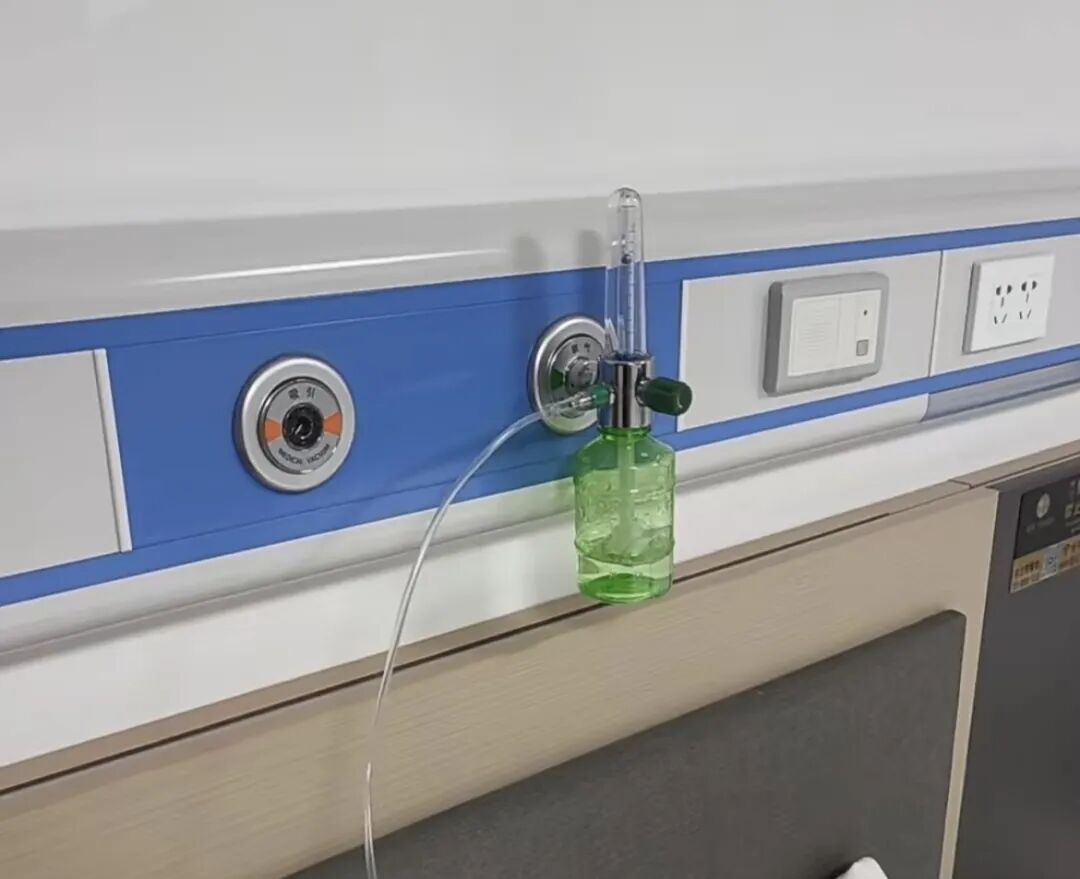
Traces of the call button at the hotel bedside and the oxygen supply system | Image source: Dxy.cn
Some people may feel uncomfortable with the contrast between the hotel and the hospital, and it was even complained about in the early stage of opening due to the "suspicion of being converted from a hospital". But as the incident fermented, netizens' attitudes reversed. In the comment sections of relevant reports on this hotel, many people said that the sense of security is overwhelming.
The reason is that the hotel provides not only the hospital-style decoration, but also its core competitiveness — oxygen.
Each guest room is connected with a medical oxygen supply pipeline, and the oxygen concentration is stably maintained at 93%.
If you have traveled at high altitudes and experienced altitude sickness, you must fully understand this peace of mind: compared with the diffused oxygen supply of ordinary oxygen-providing hotels, the "medical oxygen hotel" directly builds the oxygen supply system as an infrastructure, with pre-buried pipelines throughout the building for 24-hour direct supply.
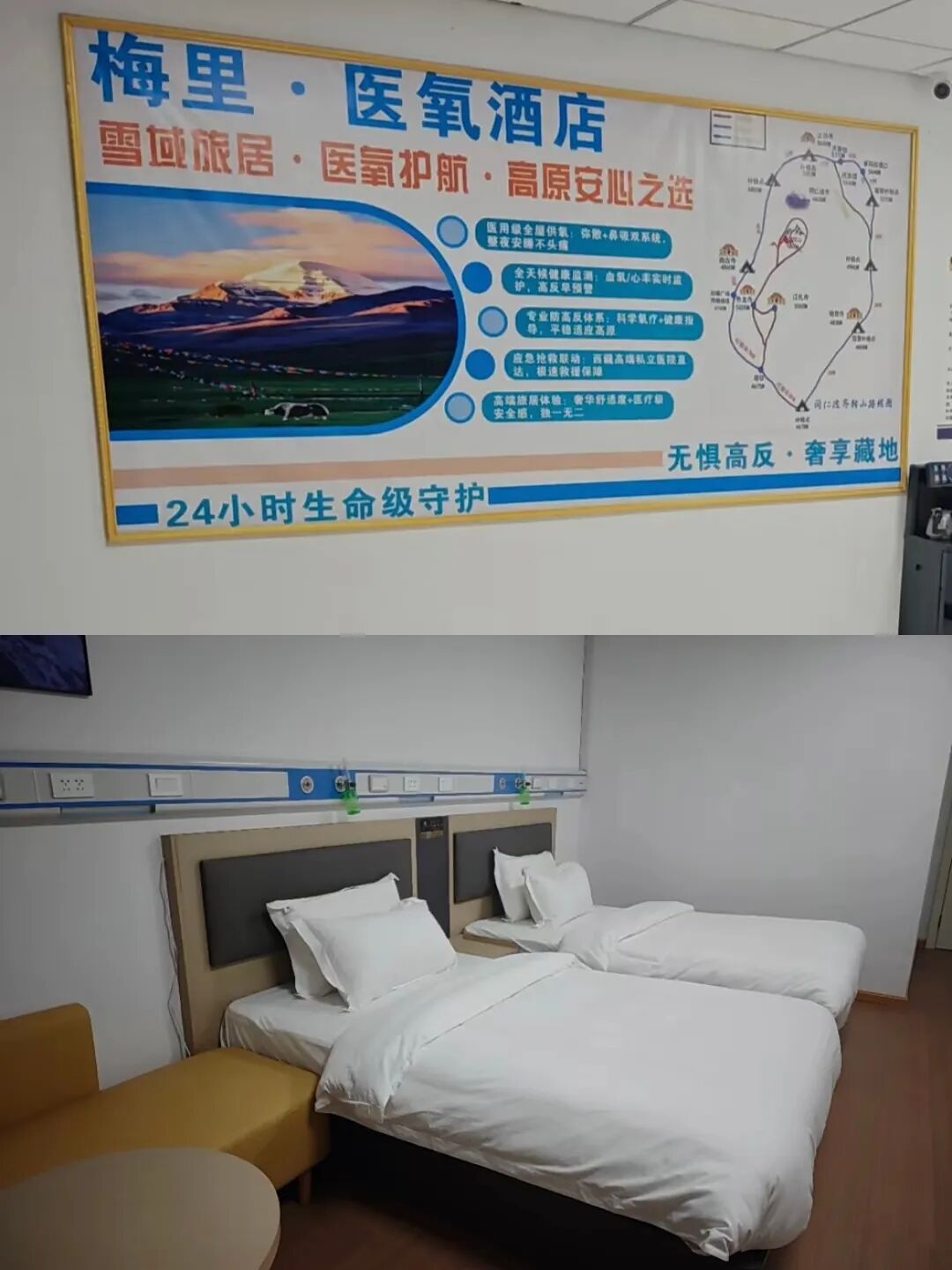
Hotel introduction and interior view | Image source: Dxy.cn
For a hotel, this is not a service upgrade, but a reconstruction of products.
"Sense of security" has been productized for the first time, becoming the main driving force for consumers to place orders.
Saga County is located at a key node of the Ngari Ring Road, with an altitude of over 4,000 meters, which is a necessary overnight stop for many self-driving tourists. At this time, a room that can ensure 93% oxygen concentration has become a rigid demand.
02
Multiple Coincidences Overlay: Why Is This Hotel Difficult to Replicate?
From OTA platforms, we can see that with the popularity of this hotel, some ordinary local hotels and homestays are also taking "oxygen supply", "humidification" and other functions as their featured selling points for promotion.
But in fact, this booming stock renovation business can be used as an idea to meet customer demands for featured needs under a few specific conditions, but it is difficult to become a large-scale business. Its formation is too accidental, and it has two professional advantages.
The first advantage is that this hospital is an idle and professional hospital property, which provides a non-replicable hardware barrier that beats the chaotic oxygen supply situation of local hotels.
The building of Meili Medical Oxygen Hotel was built by the hospital but failed to get the qualification approval, so the whole building was left vacant. The building itself was constructed in accordance with medical standards, and its structure, fire protection and oxygen supply pipelines all meet relevant requirements.
If you start from scratch to renovate and upgrade an old hospital, you will face great pressure in terms of building ownership issues, renovation costs and other aspects.
In May this year, the Central Health Center of Chunwan Town, Yangchun City, Yangjiang City, Guangdong Province, was funded by Yangchun Moyang Cultural Tourism Group to renovate 7 buildings with a total area of more than 10,000 square meters on the original site of the old Chunwan Health Center into a mid-to-high-end rural health tourism hotel. The project requires 50 million yuan of funds for multiple upgrades including structural reinforcement, internal and external decoration renovation, electromechanical system update, and landscape construction.
This is a very high investment threshold, not to mention various compliance safety renovation structural standards.
More importantly, the medical oxygen and hospital-related background have raised the professional threshold for this hotel.
Many plateau hotels are equipped with oxygen supply facilities, or use this as a promotion selling point. But in actual use, phenomena such as substandard actual oxygen supply concentration and inadequate equipment maintenance occur frequently. Many netizens with plateau travel experience said that in high-altitude areas, real medical oxygen is more reliable than the diffused oxygen supply of ordinary hotels.
Under the "bad money drives out good money" situation, hotels that can truly achieve 93% medical oxygen concentration provide customers with a sense of certainty, greatly alleviating demand anxiety.
In the chaotic market, compliance has become the reason for customers to choose.
The second advantage is that the person in charge of the hotel is a professional operator, who accurately grasps the oxygen demand of high-altitude tourists and builds a perfect oxygen supply capacity.
Saga County, with an altitude of more than 4,600 meters, is a severe disaster area for altitude sickness among tourists entering Tibet. Oxygen supply here is not a value-added service, but a rigid survival demand.
The "Guidelines for Elderly-friendly and Hypoxia-friendly Services for Plateau Tourism" issued by the Tourism Development Department of Tibet Autonomous Region specially lists practical checklists: key points for fire protection renovation, pressure test standards for oxygen supply systems, templates of tourist notification letters, etc., which always have a set of professional operation details for oxygen supply services.
According to the introduction, Ms. Xiao, the person in charge of the hotel, experienced the pain of altitude sickness when she traveled to Tibet with her child, and deeply understood the importance of real oxygen supply. Therefore, when cooperating with the hospital, she did not simply "rent a house to open a hotel", but knew where the value of the medical oxygen supply system lies and how to use it.
By seizing the rigid demand under the local core environmental background, through keen user awareness and professional support, the current state of this hotel has been created.
Considering the above factors, the completion of this hotel can hardly become a pre-planned project, but only a precise supply-demand matching based on existing resources under extreme conditions.
For hotel practitioners, as a niche asset revitalization sample, the precise supply under extreme conditions brings inspiration to stock renovation.
03
The Truth of Stock Renovation: Stop Trying to "Reskin" Old Buildings Simply
Although it cannot be copied directly, it is undeniable that this hotel provides a new idea of shifting from incremental expansion to stock operation.
When the renovation of stock properties has become a new topic in the industry, adaptive development based on existing properties to meet new demands has become a new trend.
According to data from Horwath HTL, the year-on-year growth rate of hotel brand replacement and renovation projects in China reached 67% in the past two years. In the next ten years, the stock of renovated hotel rooms in first- and second-tier cities is expected to reach 886,000, and a large number of opportunities come from idle or inefficient commercial office properties.
Stock renovation is more than just "renovating and changing the signboard". The inspiration brought by Meili Medical Oxygen Hotel is to tap the "hidden attributes" of stock properties.
The old sugar mill perfectly leverages its architectural features, combines local tourism value, and transforms into a Michelin one-star restaurant.
In Yangshuo, Guilin, a hotel converted from a local old sugar mill was awarded the title of "Michelin One-Key Hotel" in 2025.
This hotel fully combines the old facilities of the sugar mill with the current trendy cultural consumption experience. For example, the squeezing workshop is converted into the 1969 Bar, the refining workshop is converted into the main restaurant, and the sugarcane collection wharf is converted into a swimming pool adjacent to the Li River. Customers can feel the cultural integration of the old and new all the time during their stay.
This is an immersive experience value created for customers by giving full play to local tourism popularity, leveraging environmental advantages, attracting attention with novel designs, and taking unique culture as the carrier.
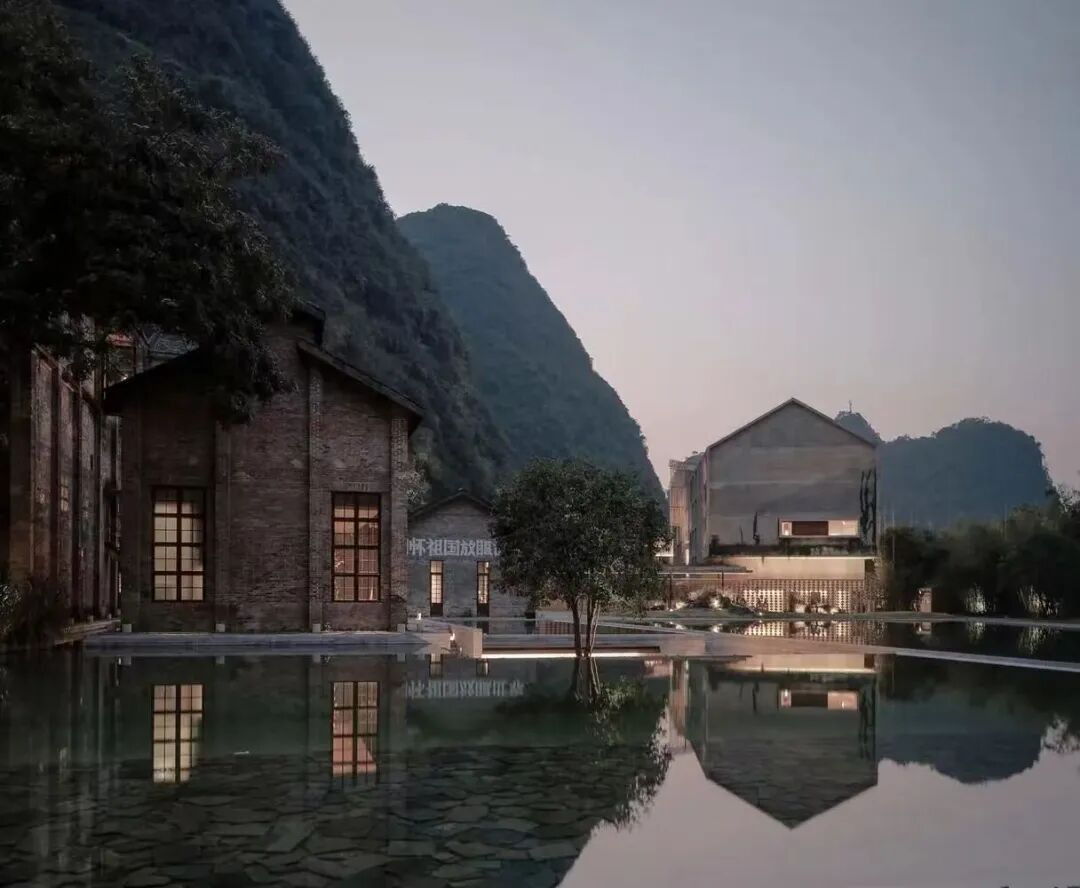
Image source: Gezhenting Consulting
Chain hotels "speed up" the transformation of old office buildings and commercial spaces to effectively reduce costs.
Garner Hotel, a new brand under InterContinental Hotels Group, focuses on "brand conversion friendliness", fully adjusts the renovation plan according to property conditions and budget, and does not rigidly apply a unified standard.
For example, Garner Hotel Beijing 798 Art District was converted from the original CitiGO Hotel. From contact to trial operation, it took less than 2 months, the total renovation investment was about 800,000 yuan, and the renovation cost per room was about 8,000 yuan. It inherits the original hardware and design, only updates key links such as brand logos, IT systems and soft furnishings, retains the original characteristics while unifying the brand tone.
The renovation of old office buildings and commercial spaces is carried out according to this idea, which greatly reduces capital and time costs and reduces operational pressure.
Retired green-skinned trains are transformed into themed guest rooms, allowing guests to check in quickly without leaving the station, bringing an excellent experience of sightseeing and accommodation.
In August, the Holiday Inn Changbaishan Train at the foot of Changbaishan officially opened. The guest rooms of this hotel are converted from 18 retired green-skinned carriages, with diverse themed rooms including Republican style, European style, Korean ethnic style and so on. It retains nostalgic luggage racks and old-style windows, while the bedding and bathroom are upgraded to modern standards.
The park also has a train-themed restaurant, a railway culture corridor, a forest train garden, volcanic geothermal hot spring pools and other facilities. The accommodation is very convenient: guests can check in and store their luggage at Changbaishan Railway Station right after getting off the train.
It can be said that it not only makes full use of the resources of old carriages and gives play to the attractiveness of the train-themed scene, but also realizes the integrated accommodation experience of sightseeing and living.
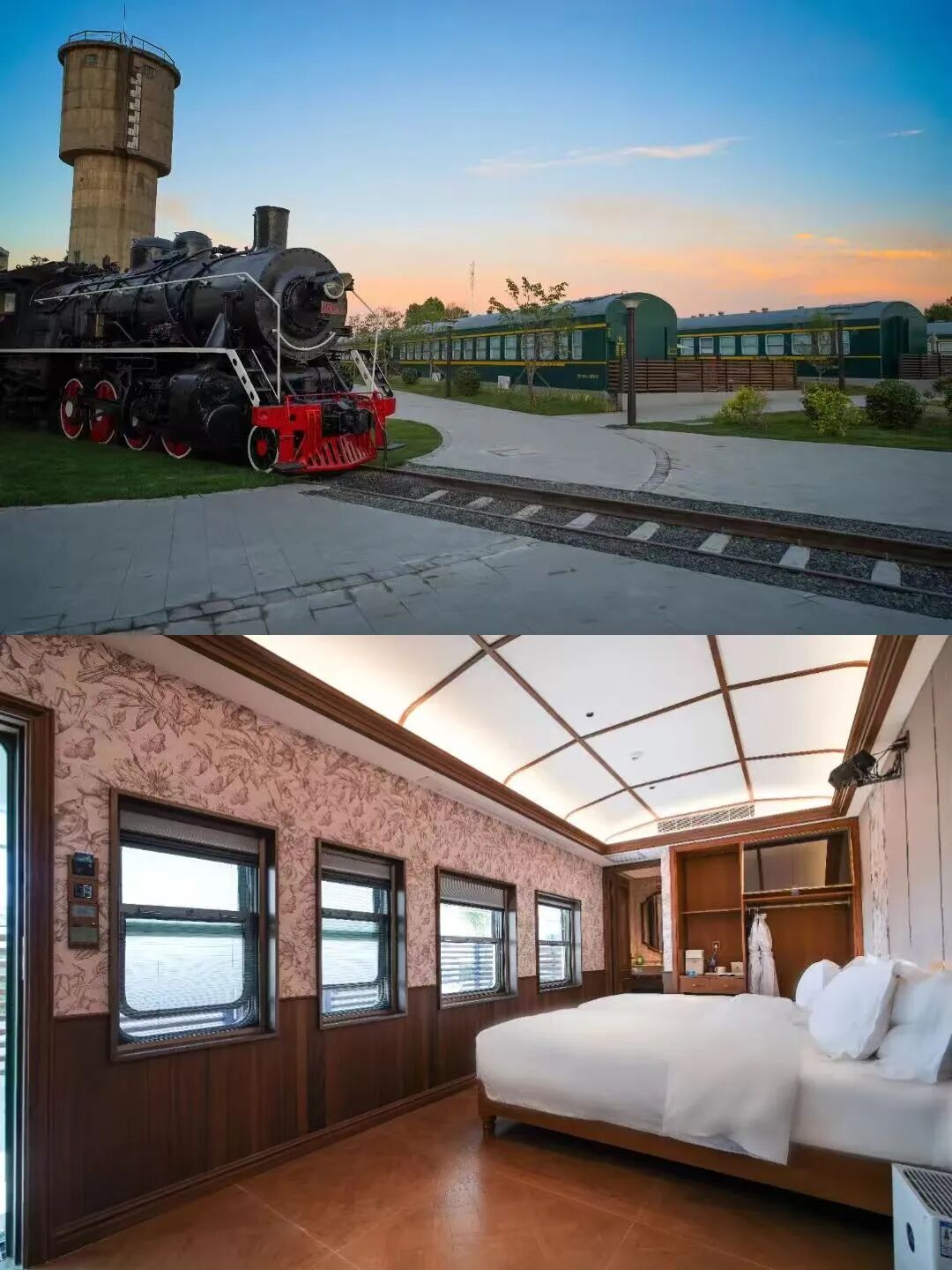
Image source: Shenyang Railway Cultural Tourism
Abandoned factories, warehouses, cultural blocks, office buildings that need to be renovated, vacant but valuable hospitals, transportation stations... As the pace of real estate development slows down, exploring suitable usage scenarios for hotels and renovating and reconstructing old environment projects not only provides new ideas for the development of the hotel industry, but also opens up new space for imagination.
The second half of hotel stock renovation will definitely not be the shallow iteration of "appearance renovation", but will enter the precise competition of "function adaptation, pain point solving and value reconstruction".
What is scarce is not old buildings, and the key is not new scenes. The focus of stock renovation has shifted to the exploration and utilization of the unique conditions of properties, combining hotel renovation demands with the local environment of old properties, finding customer demand points, and accurately matching the demands in the new stage, so as to achieve real "skyrocketing popularity".
This article is from the WeChat official account "Hotel Management Finance", written by Qian Li, and authorized for release by 36Kr.