Just now, GPT-6 Astra has taken the top spot.
The flames of the AGI battle have not yet died down, and the next competition has already kicked off!
As soon as GPT-6 Astra was unveiled, it completely swept all major leaderboards, with no other model able to stand up to it.
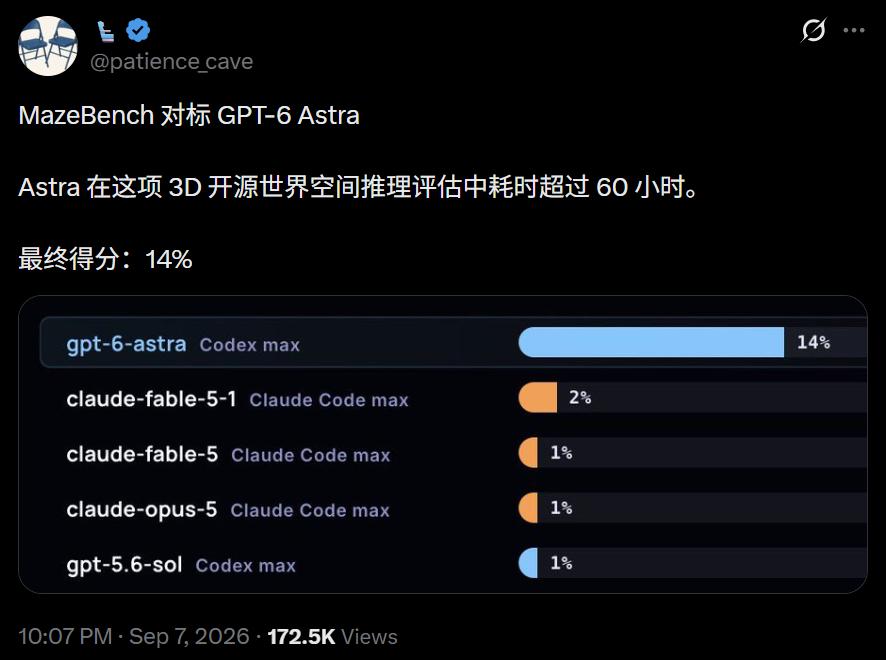
Just today, the latest 3D spatial reasoning benchmark MazeBench released its results, Astra ran for more than 60 hours to score 14% and took first place again.
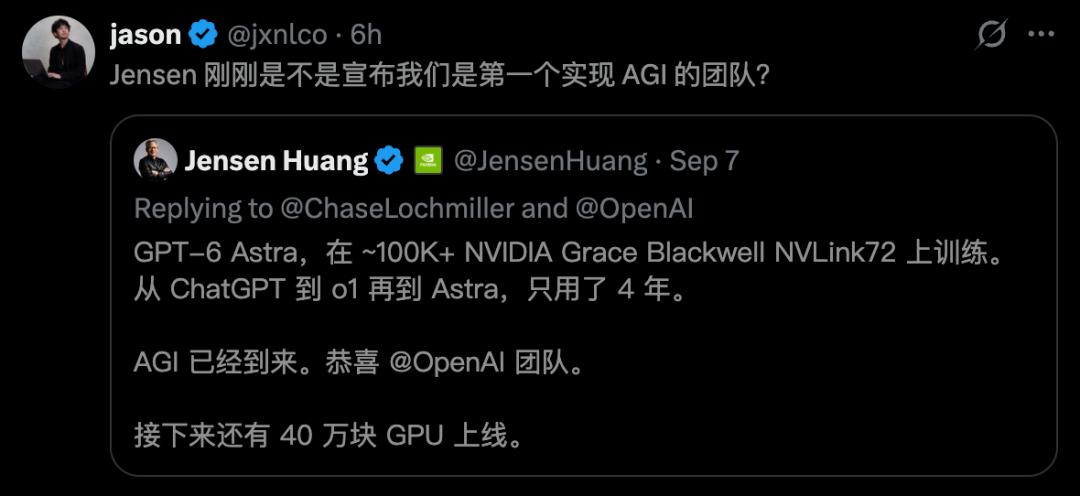
After all, Jensen Huang personally took the stage to certify that OpenAI is the world's first team that has achieved AGI.
Nowadays, before everyone has recovered from the shock brought by GPT-6 Astra, a large wave of new use cases is emerging —
Building cell models, designing components from a video, identifying sounds from spectrograms...
This is only a "monster" trained with 100,000 GPUs. If 400,000 GPUs are put into training, it is unimaginable how powerful the next generation GPT will be.
GPT-6 Dominates Spatial Reasoning Leaderboards
Hit the Highest Score of 14%
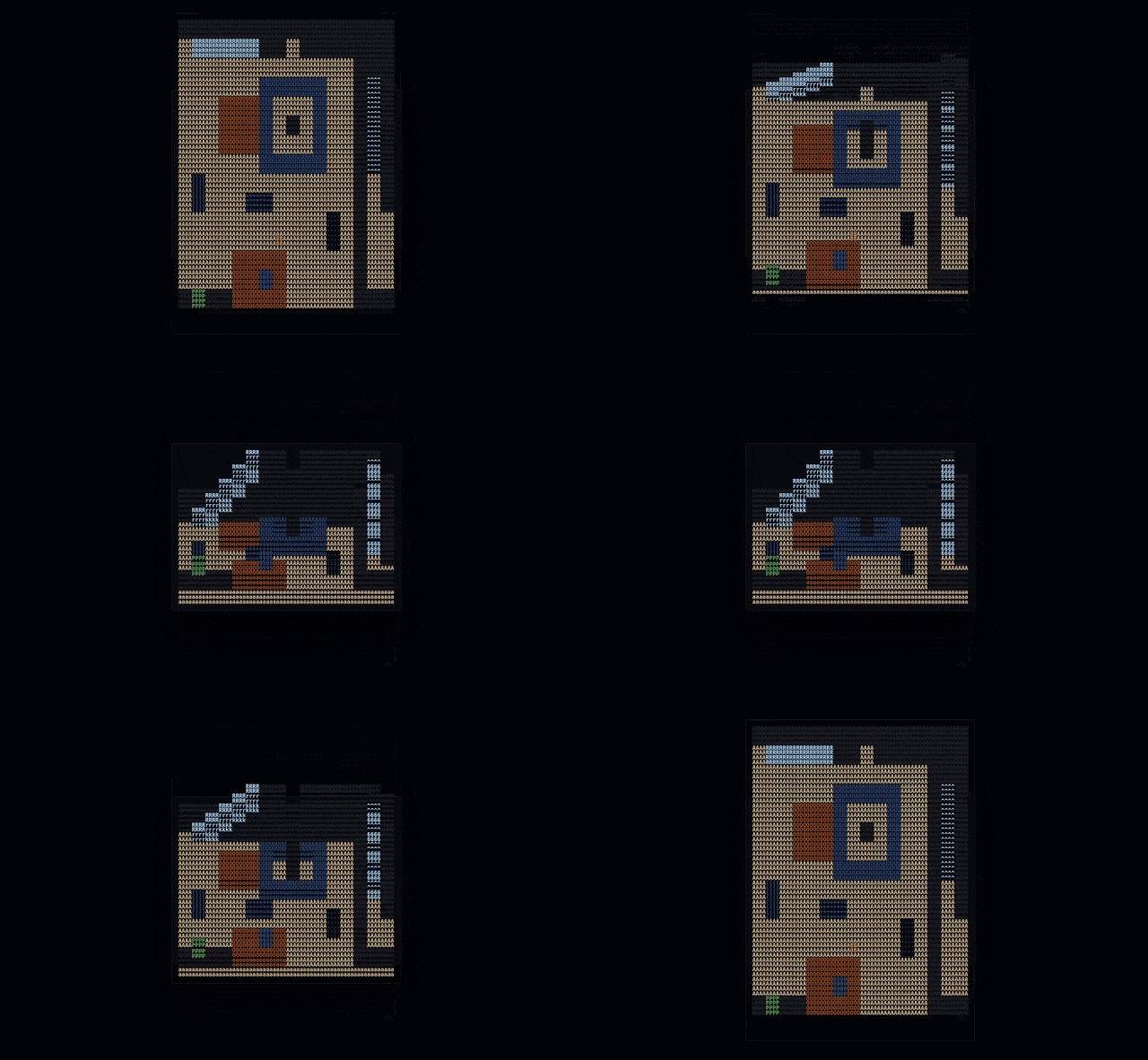
The MazeBench test is a 3D world created by Jonathan Pappas and David Pappas at the end of July.
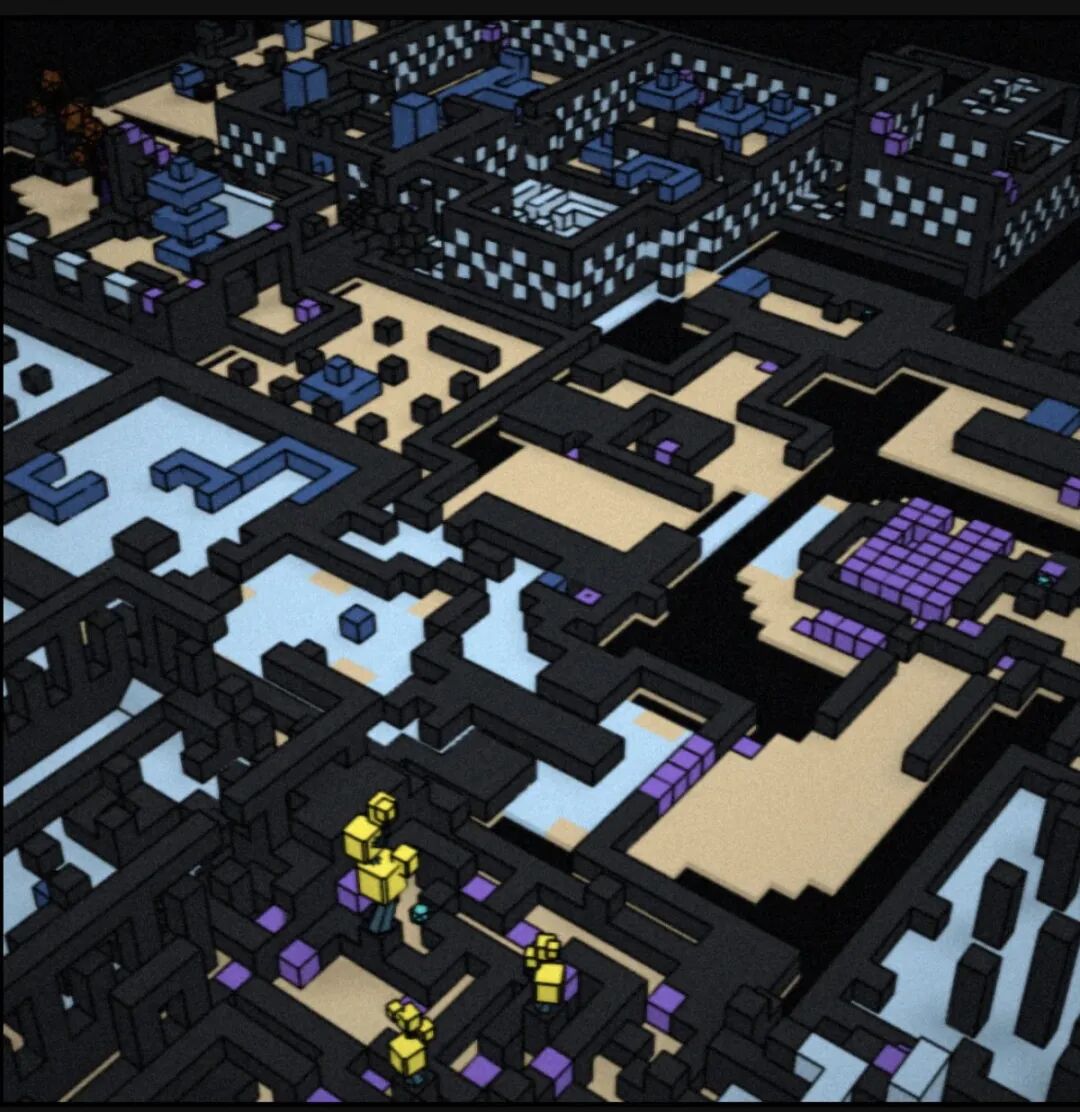
Overlooking the world of MazeBench, the little yellow figure is the agent
It has more than 200 rooms in total, with 100 gems hidden inside, 1 point for each gem, and a full score of 100.
The rooms are full of box-pushing puzzles, plus elevator blocks, openable and closable walls, and slippery ice surfaces. If you fall into the abyss, you can only undo, reset, or teleport back to the rooms you have been to.

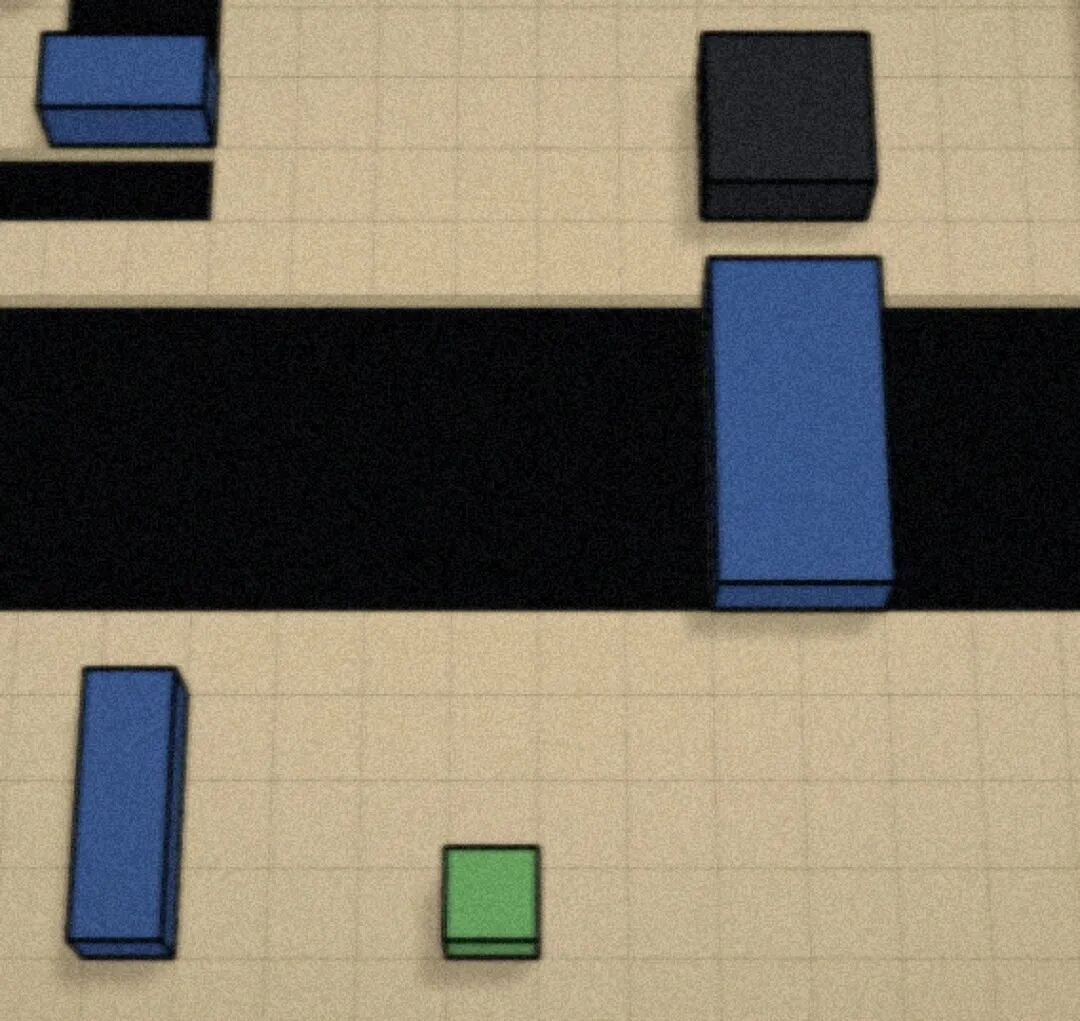
Green is the player, blue is the box
For example, in this level, you have to push the blue box into the black abyss to build a bridge before you can walk across.
The camera can rotate up, down, left and right, viewing the same scene from 20 different angles.
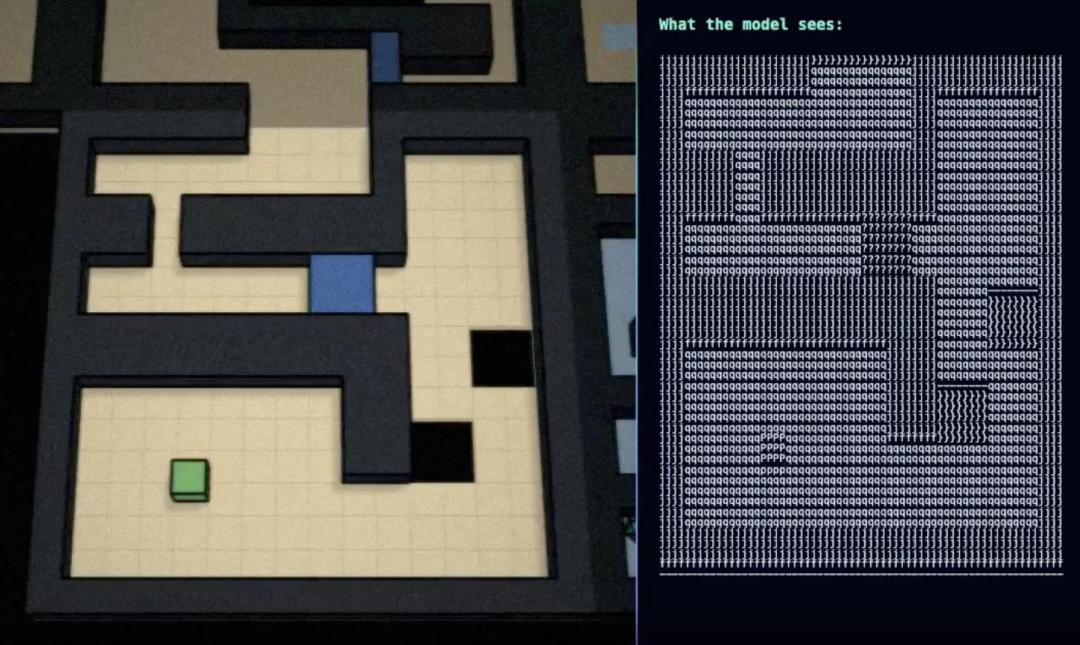
Left: 3D perspective; Right: the text actually seen by the model
The gems are hidden in places like this.

The model only gets 11 actions through MCP: 4 movements, 4 camera rotations, plus undo, reset, and teleportation.
The difficulty is that a single problem usually requires planning more than 100 steps. And it is a real 3D world, the same wall looks completely different when viewed from top to bottom and from the side.
As a result, when it was first released at the end of July, even the best agents could not get out of the first few levels.
At that time, GPT-5.6 Sol with Python enabled scored 13%, Fable 5 scored 11%, and Opus 5 scored 9%. Without Python enabled, none of them could reach 1%.
Then Astra came. Without enabling Python, it directly scored 14%.
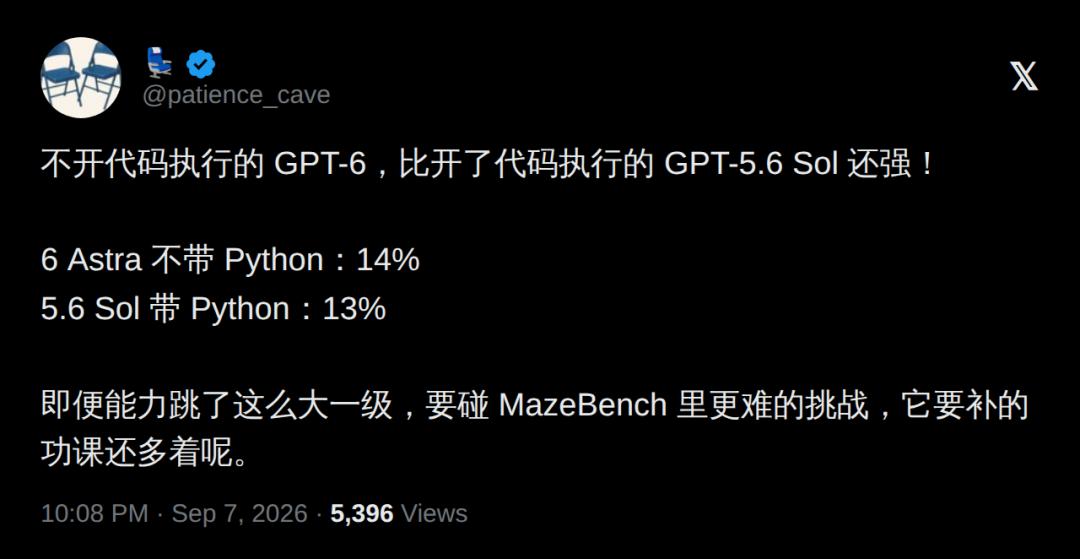
It can be said that in terms of 3D spatial reasoning, GPT-6 Astra is not in the same league as all previous agents.
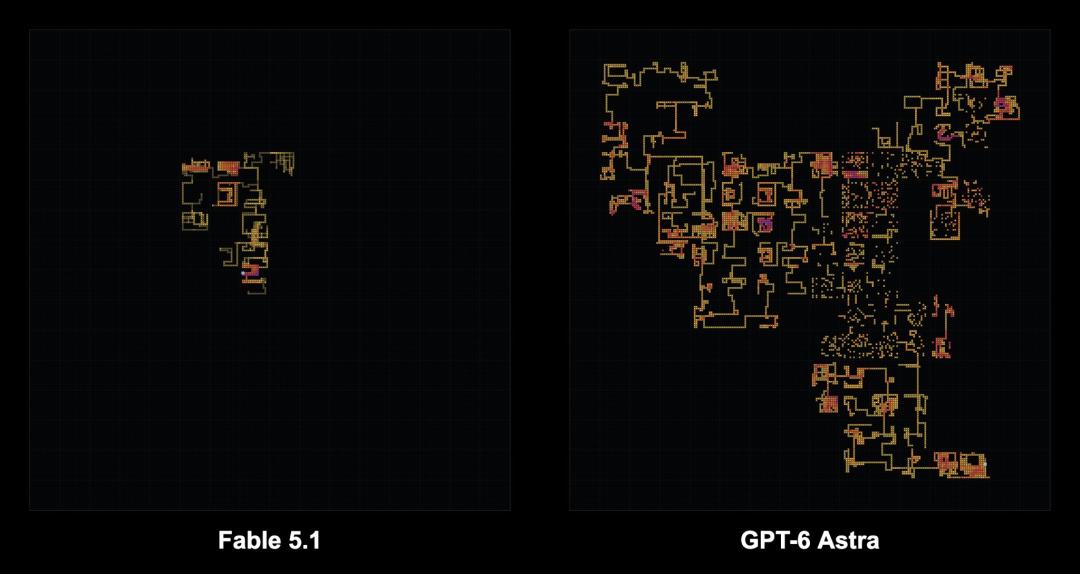
The image below shows its exploration heat map compared with Fable 5.1. Fable 5.1 only wandered around a small circle in the corner and then stopped, while Astra almost explored the entire map.
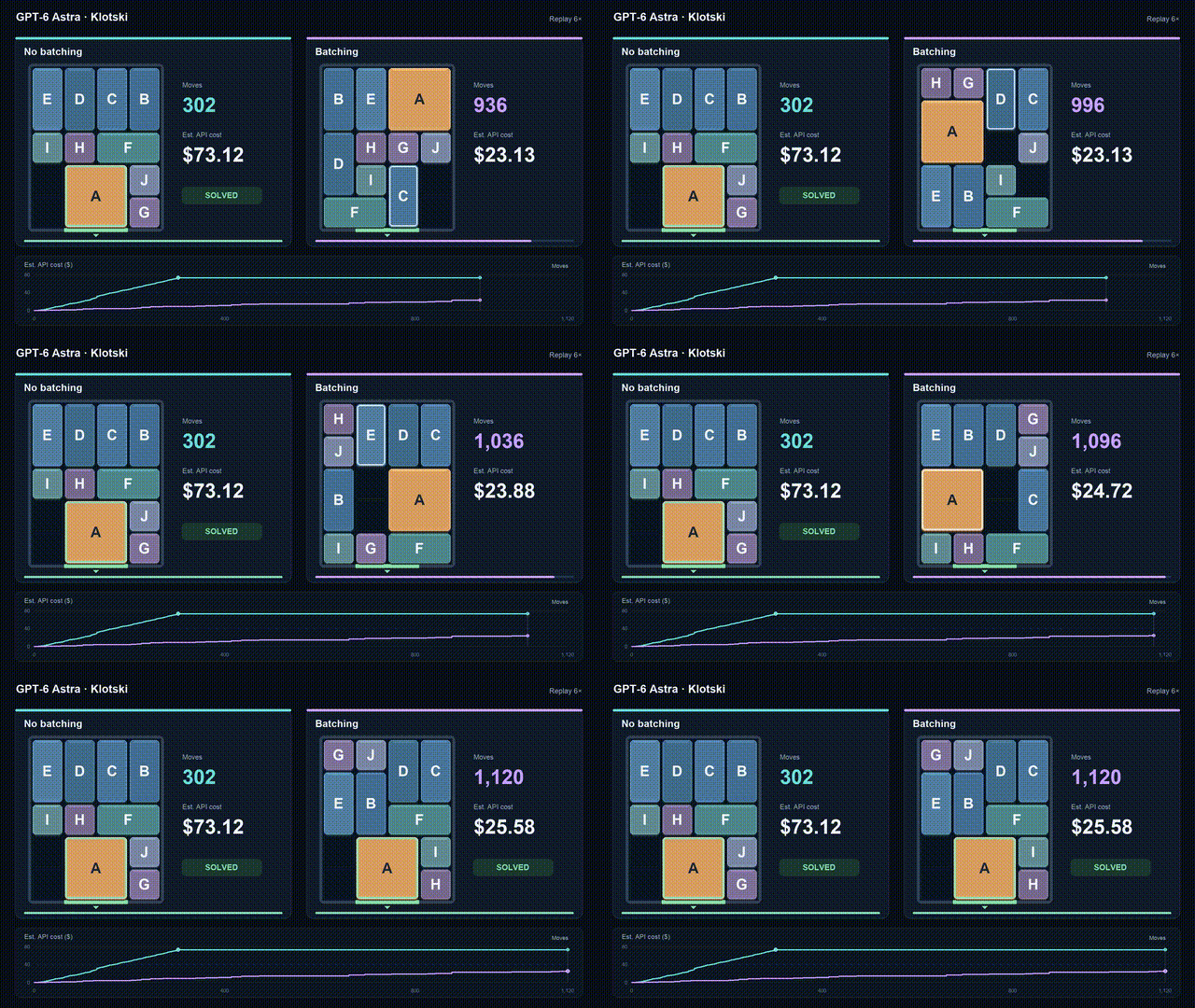
To save tokens, the test team asked GPT-6 to adopt a "batch action" mode, instead of returning a result after each single step.
As a result, it can look 10 to 20 steps ahead each time, directly cutting the originally required 3 billion tokens to 350 million.
In the Klotski test, this batch mode reduced Astra's cost by two-thirds, but at the cost of extending the thinking time by 60%.
However, Astra still has a long way to go to truly conquer the hard parts of MazeBench.
It has already reached 99.9% on ARC-AGI 3, but on MazeBench, even the strongest AI has only picked up 14 gems.
This is because Astra has a partial bias in 3D spatial understanding.
It tends to view levels from a top-down perspective, so walls that can only be seen from the 3D perspective are directly treated by it as non-existent invisible walls.
It can pass the novice tutorial levels, but once it encounters 3D puzzles with more than three layers of stacked blocks, it will be completely stuck.
Apart from benchmark testing, developers all over the network have handed over real practical tasks to GPT-6 Astra, creating a large wave of new amazing use cases.
The Brand New "Usage Methods" of Astra
Are Extremely Powerful
Just this morning, OpenAI CEO Greg shared several stunning demos of GPT-6 Astra in a row.
None of them are just for showing off skills, they are all cases of "Astra being used to solve real-world problems".
It Solves the Problem of Hair Clogging in Shower Drains
A tech expert Daniel Griesser said bluntly, "Yesterday, I truly felt what AGI is!"
What he asked GPT-6 Astra to do is actually very down-to-earth.
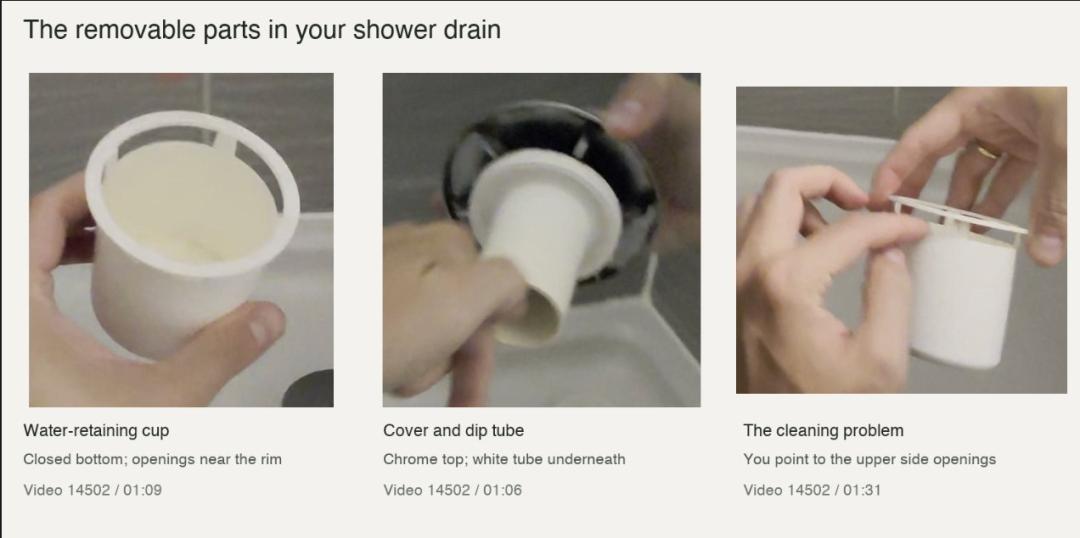
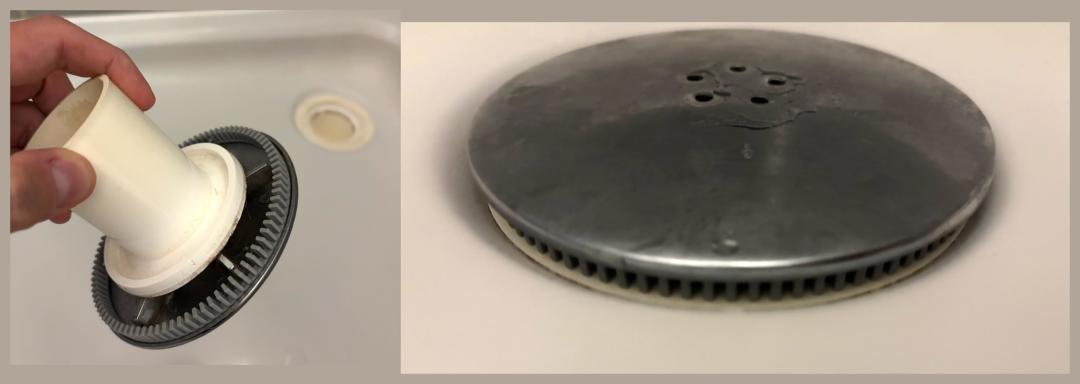
Daniel recorded a 4-minute video complaining that the bathroom drain is always clogged with hair, which is too disgusting to clean up.
He used a digital caliper to measure the parts in front of the camera, then sent the video to Astra Ultra: figure out a solution for me.
The operations Astra performed next are absolutely amazing. It disassembled the video, matched every frame of the measurement action perfectly while listening to his voice description.
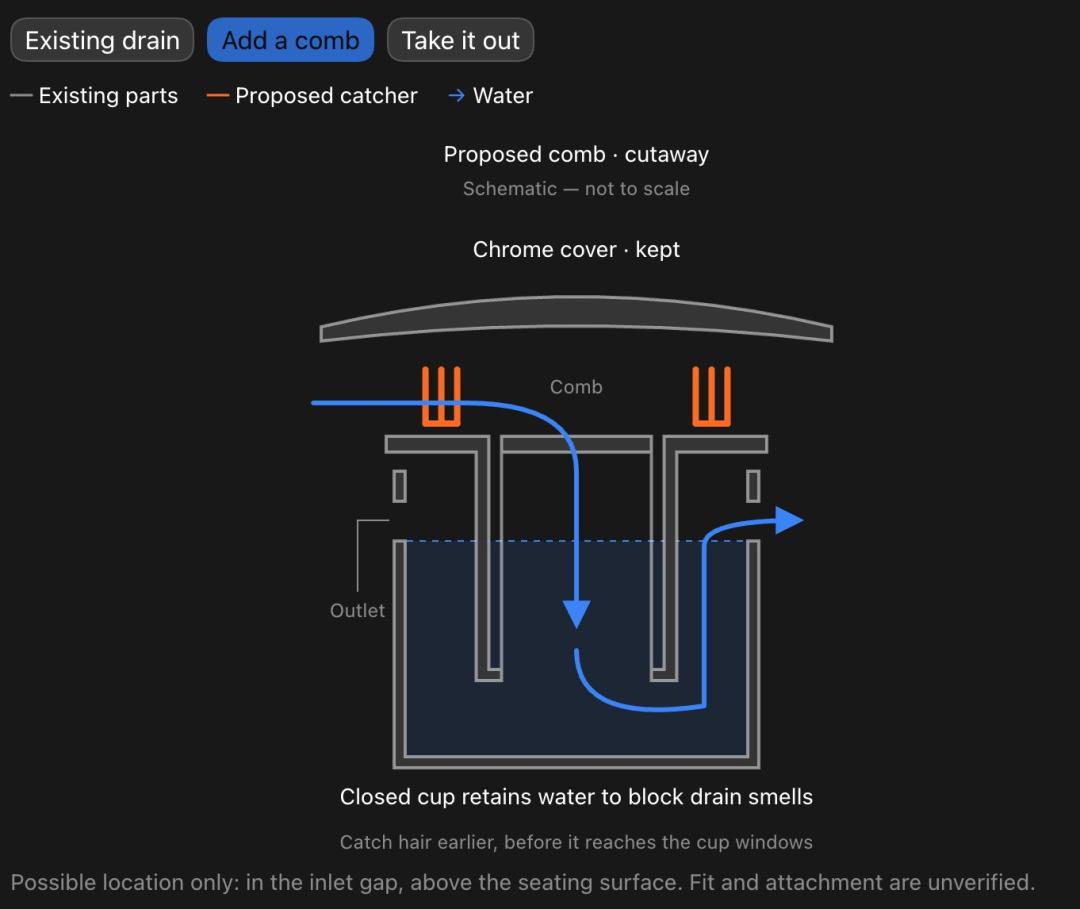
In the end, it not only gave a design scheme that can easily clean the hair, but also first presented an interactive sketch for Daniel to confirm.

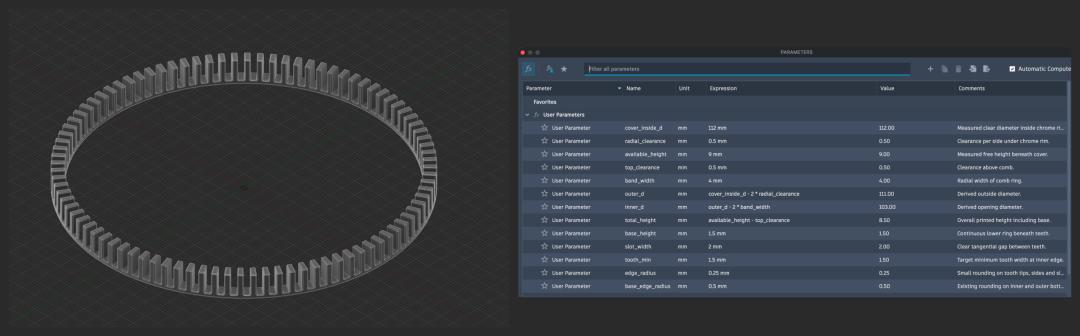
After confirming the sketch, Daniel directly instructed Astra to use "computer use" to take over the computer, open Fusion 360 and draw the part by itself.
He just sat by and watched, seeing the AI build the part step by step, which is fully parametric modeling.
By the way, he even learned a few hidden tips of Fusion from the process.
After the modeling was completed, he casually said "add a chamfer", then sent the file to the 3D printer. After printing, he put it on the drain, and it fit perfectly on the first try!
Daniel said about this, "Although this is not cutting-edge high technology, it does solve a big trouble."
The most critical point is that it is much faster than drawing it manually by himself.
One-click Simulation for 3D Molecular Interaction
Developer Andrew Aiginin also shouted after using it, "GPT-6 Astra is unbelievably powerful."
The day before, he just asked Astra to build a cell model, and the next day he asked it to explain how Ozempic works.
One hour later, Astra delivered an interactive molecular journey: 11 chapters, from GLP-1 receptor binding, cAMP signal amplification, all the way to the emergence of insulin.
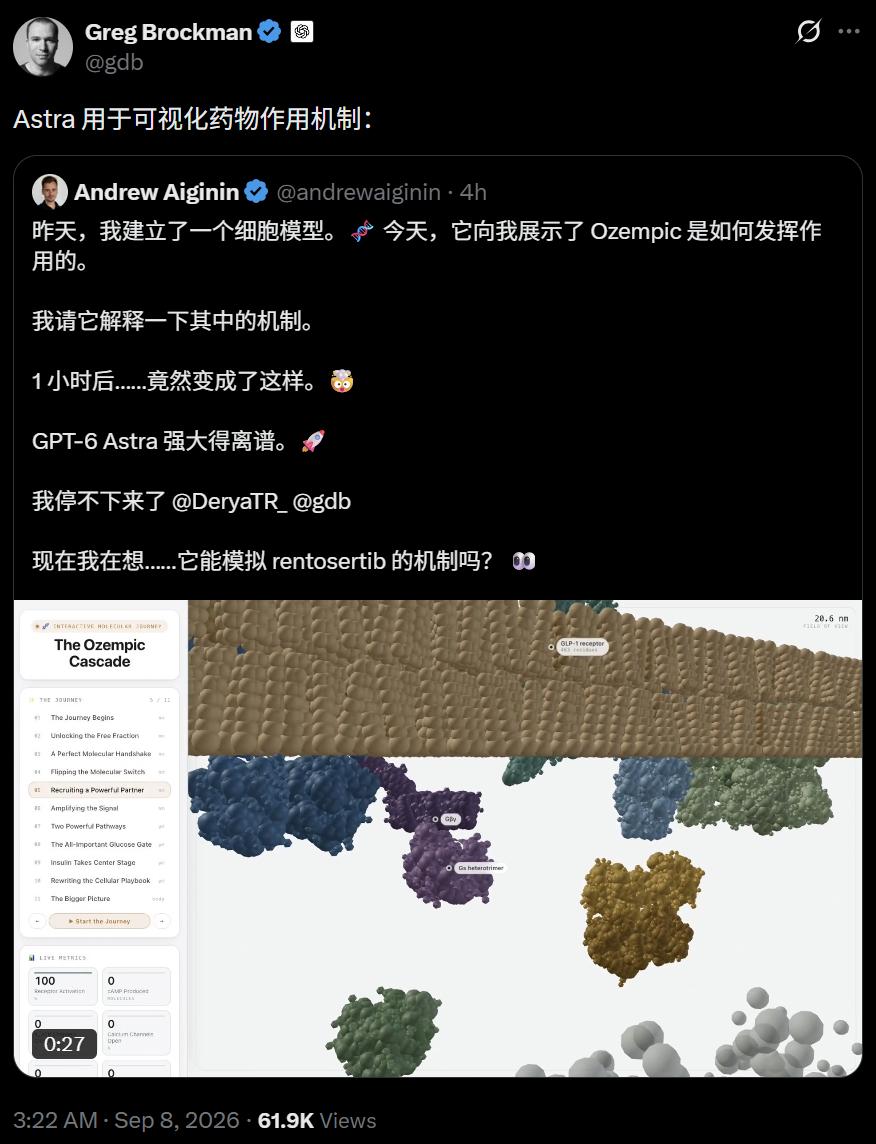
In the video, the right side is a 3D molecular model that can be rotated and scaled at will, and the left side can also display the number of activated receptors in real time, the interactive experience is perfect.
Recognize Sound from a Single Spectrogram
What's even more amazing is that GPT-6 Astra can even "guess the sound from the image".
Netizen Max did a very special test, he sent Astra a Mel spectrogram without providing any audio, and asked it directly —
Try to "listen" to it, what kind of sound is this?
