Priced at 19,999 yuan, the Mate XT 2 is released, equipped with the most powerful Kirin chip in history, and preinstalled with HarmonyOS 7.
Two years ago, when Huawei launched its first tri-fold smartphone, the most widely discussed question across the entire mobile industry was: Do consumers really need a phone that folds three times?
The answer two years later has become increasingly clear, at least for Huawei.
On the afternoon of September 7, while the team from Leikeji was busy exploring the exhibition at the IFA frontline, Huawei officially held the HarmonyOS 7 | HUAWEI Mate XT 2 and Full-Scenario New Product Launch Event. Leikeji was invited to attend, witnessing the debut of the second-generation tri-fold smartphone Mate XT 2 Ultimate Design, as well as the official release of HarmonyOS 7.
Of course, a new model that everyone had already seen and paid close attention to was also officially unveiled, the HUAWEI Pura X View, a "wide straight-screen" phone with a screen aspect ratio of 16:9.5.
As early as the launch event in August, Huawei had already announced its design and core specifications: a 7000mAh battery packed into a 6.68mm-thick body, paired with a 6.39-inch OLED front display that has a bezel width of only 1.05mm on all four sides, achieving a 96.1% screen-to-body ratio.
Compared to these specifications, the more interesting highlight is its "wide straight-screen" design. Backed by HarmonyOS' ecosystem adaptation for gaming, video, office work and other scenarios, the Pura X View delivers a new straight-screen phone experience through a larger horizontal display area. For more details, you can refer to Leikeji's in-depth experience review of the Pura X View.
At the launch event, Huawei finally announced the pricing of the Pura X View: starting from 5999 yuan, and it will go on sale officially on September 9.
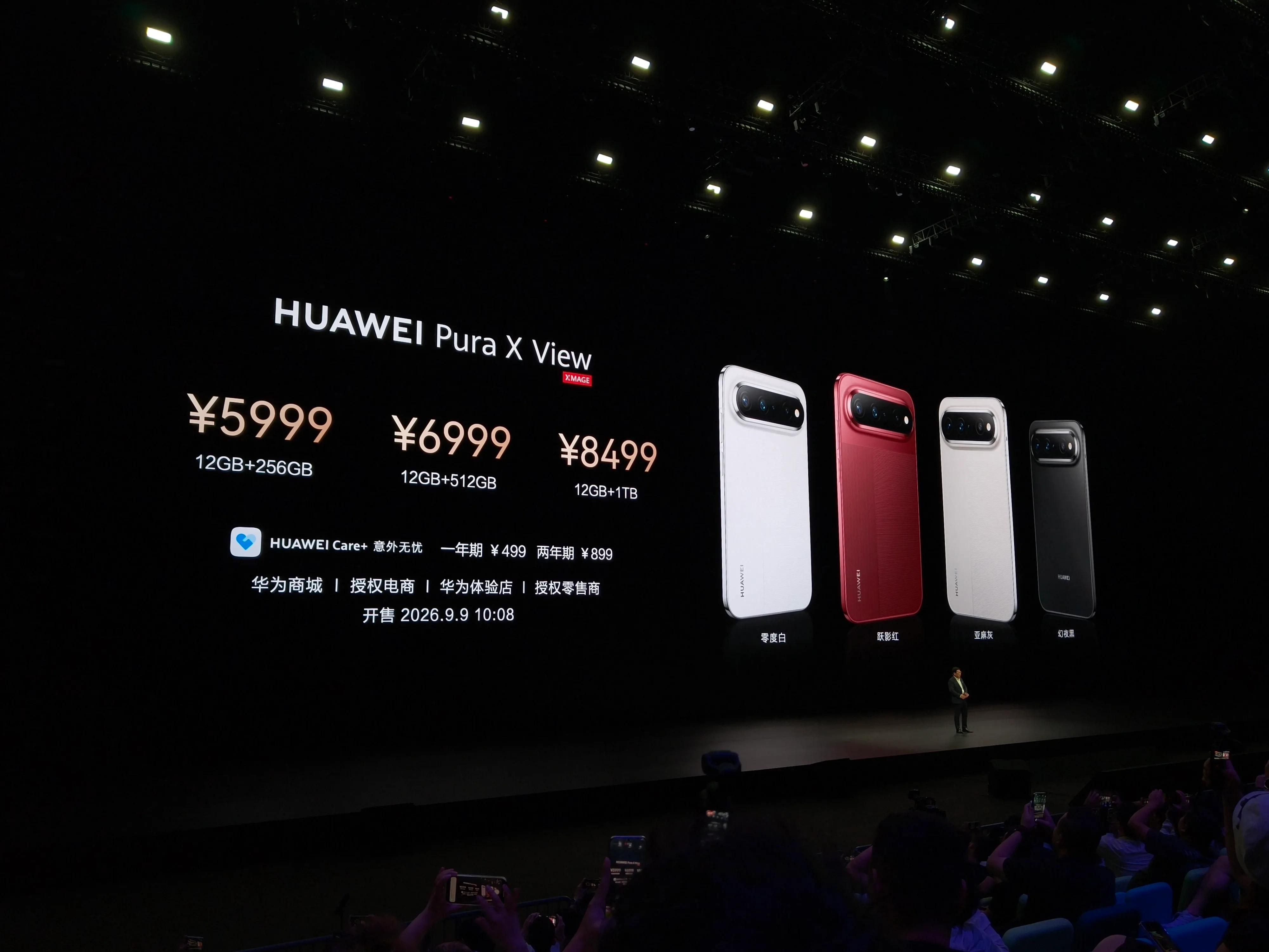
Image source: Leikeji
However, the most important protagonist at this event is still our new generation tri-fold flagship, the Mate XT 2.
The New Generation Tri-Fold Redefines the Folding Mechanism First
In September 2024, Huawei released the first-generation Mate XT Ultimate Design, bringing the tri-fold smartphone to the consumer market for the very first time. The Mate XTs launched a year later mainly upgraded its performance, imaging and software experience. For the Mate XT 2, Huawei finally made major overhauls to the tri-fold form factor itself.
The most intuitive change lies in the folding method.
The previous two generations of Mate XT adopted a Z-shaped folding design, with one continuous flexible display that folds twice, and part of the screen directly serves as the phone's outer display when fully folded. The Mate XT 2 switches to what Huawei calls the "Spread-Wing Tri-Fold":
Both the left and right sides fold inward to form a more symmetrical structure, while an additional independent outer display is added.
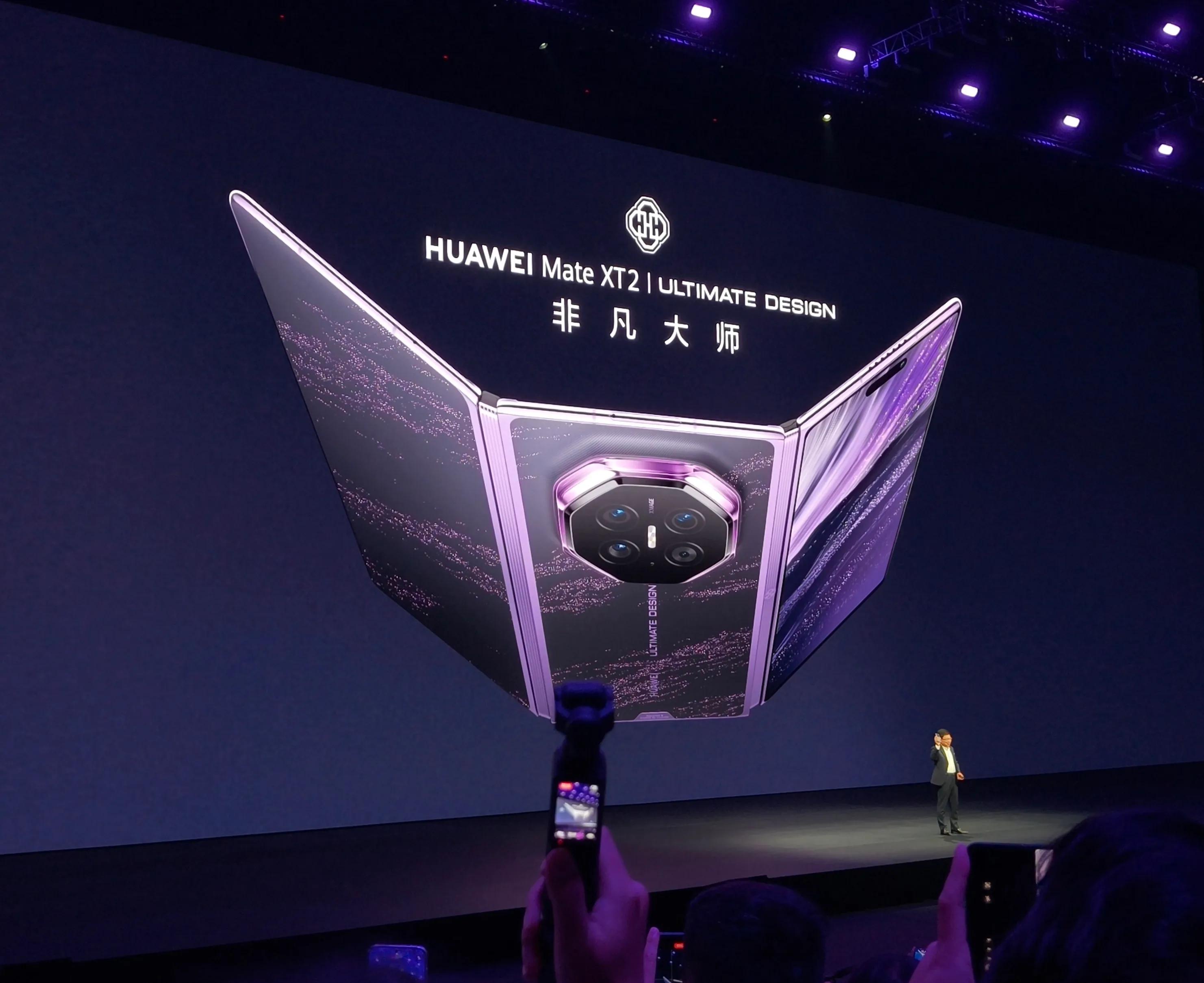
Image source: Leikeji
The trade-off is obvious. Adding an extra display puts higher requirements on the overall body thickness, weight, internal space and power consumption. But on the other side of the coin, that expensive and fragile large flexible display no longer needs to be exposed all the time.
To achieve this, Huawei redesigned the entire device architecture, hinge and screen structure. When fully unfolded, the thinnest part of the Mate XT 2's single side is still only 3.5mm. Huawei claims it remains "the thinnest and largest-sized foldable smartphone in the industry" to date.
The new central symmetrical design also changes the way people use tri-fold phones.
The previous Z-shaped structure meant the functions of the three sections were not fully symmetrical, while the Mate XT 2 is more like two wings that unfold from the center to the left and right sides. Richard Yu previously stated that this design enables more even weight distribution of the whole device, and delivers a more comfortable grip when unfolded.
Of course, the real challenge of tri-fold smartphones has never been limited to the folding mechanism. Two hinges, ultra-thin flexible displays, large-sized body, plus the newly added independent outer display, every extra structural component brings more reliability and engineering challenges. Huawei also emphasized the improved durability of the outer display, inner display and the new hinge system at this event.
Hardware-Level Privacy Protection, Use Your Phone Without Worry
Another interesting upgrade is the hardware-level privacy protection feature.
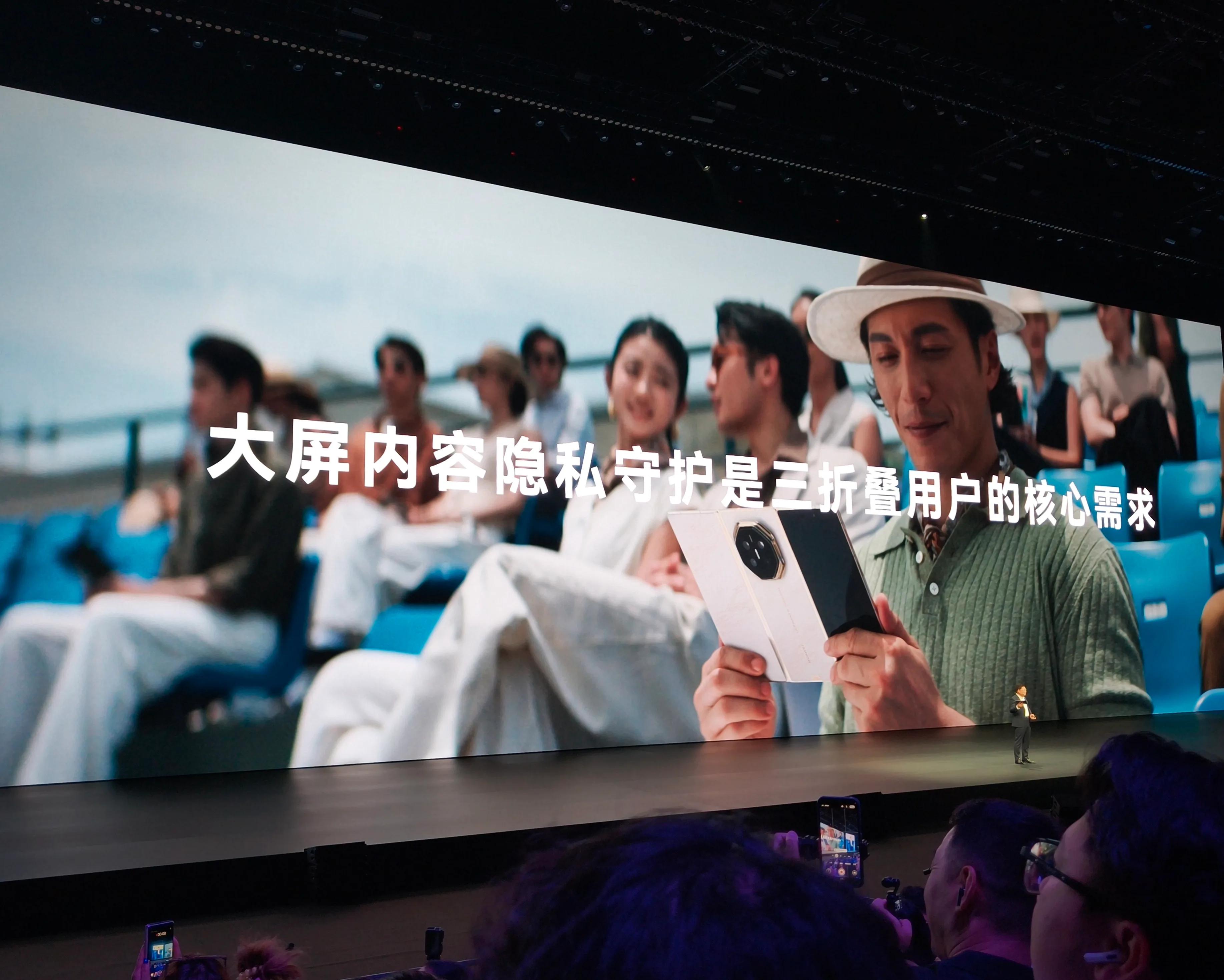
Image source: Leikeji
According to Richard Yu, this feature is the pain point and core demand from users of the previous generation tri-fold Mate XT. Therefore, the Mate XT 2 brings hardware-level privacy protection to the large tri-fold display for the first time, and users can turn it on by double-tapping the outer display. The biggest selling point of tri-fold phones is that you can unfold a large screen close to a tablet at any time, but in public scenarios such as high-speed trains, airports and coffee shops, the large display also means more content is exposed to people around you.
Different from Samsung's previous anti-peeping screen solution, the top-tier version of the Mate XT 2 adopts a dual-pixel solution that delivers zero loss in display quality under the privacy protection mode. As this solution is relatively costly, it is only available on the top-tier model for now.
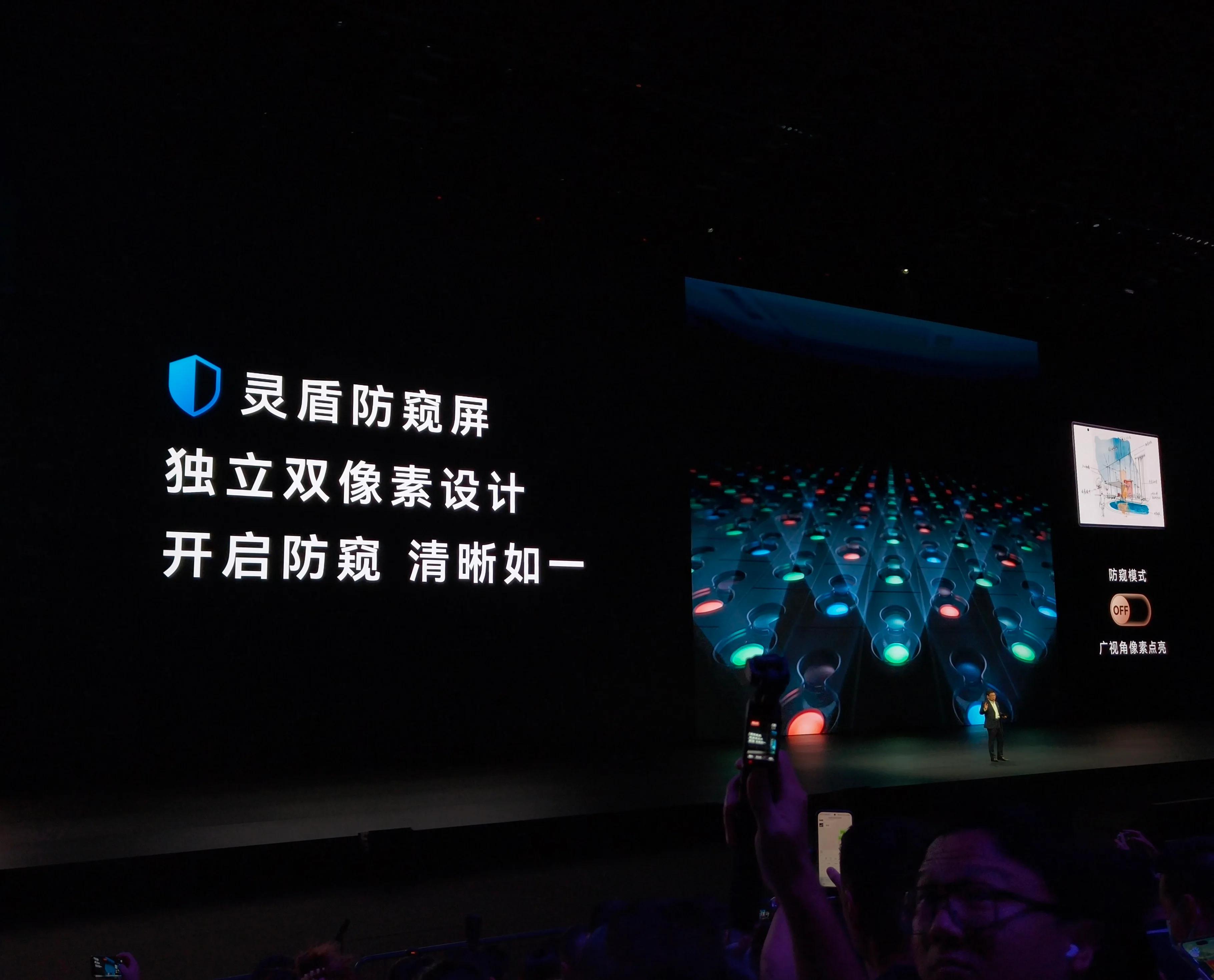
Image source: Leikeji
First Equipped with the "Tao Law" Chip, Performance Increased by 42%
At the same time, the Mate XT 2 is also the first model to carry the Kirin 9050 Pro chip, which delivers a 42% performance improvement compared to the Mate XTs, with the Lingsi CPU achieving a 24% increase in single-core peak performance and a 52% increase in multi-core concurrent performance.
It is worth noting that the Kirin 9050 Pro adopts a brand new CPU architecture design, with a 4-cluster configuration consisting of a super core, performance big core, energy efficiency big core and small core. Richard Yu also revealed that there is actually an even smaller micro core to meet the system demands under the screen-off state.
In terms of pricing, the Mate XT 2 starts at 19999 yuan, and the top-tier version is priced at 24999 yuan.
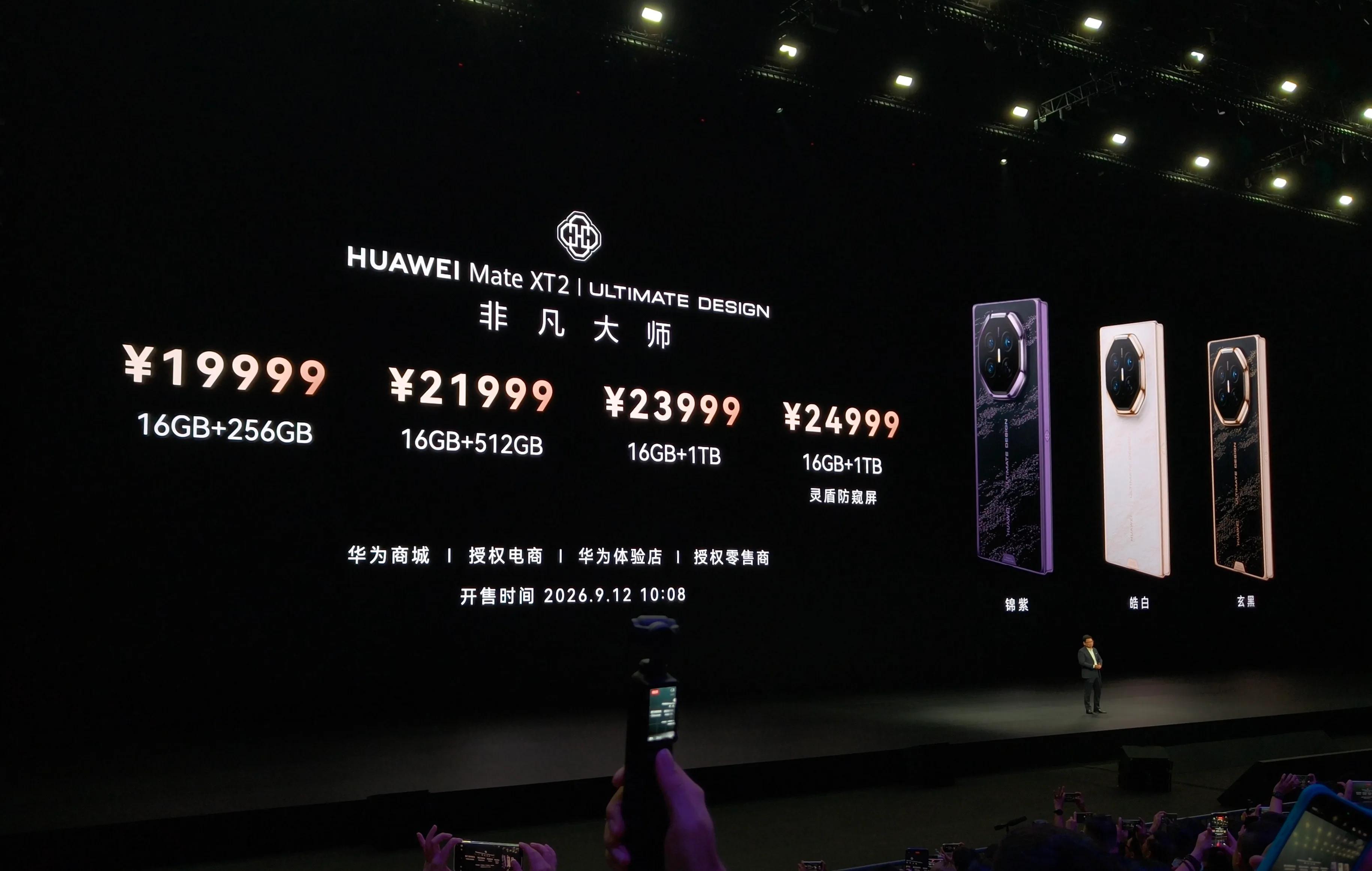
Image source: Leikeji
First to Launch HarmonyOS 7, Taking Shape of an "Agent Phone"
The Mate XT 2 has another identity: one of the first flagship devices to be equipped with HarmonyOS 7.
In fact, at the Huawei Developer Conference in June this year, Huawei already launched the HarmonyOS 7 developer beta, and announced the general development direction of this generation of system. After nearly three months of testing, HarmonyOS 7 is now officially released to consumers today.
The most important keyword of this generation of HarmonyOS is "Agent". HarmonyOS Intelligence is fully evolving towards the Agent architecture, and the HarmonyOS Intelligent Agent framework has been upgraded to version 2.0. Simply put, the AI built into the system is no longer limited to answering questions and generating content, but moves towards understanding user intent and invoking system and application capabilities to complete tasks.
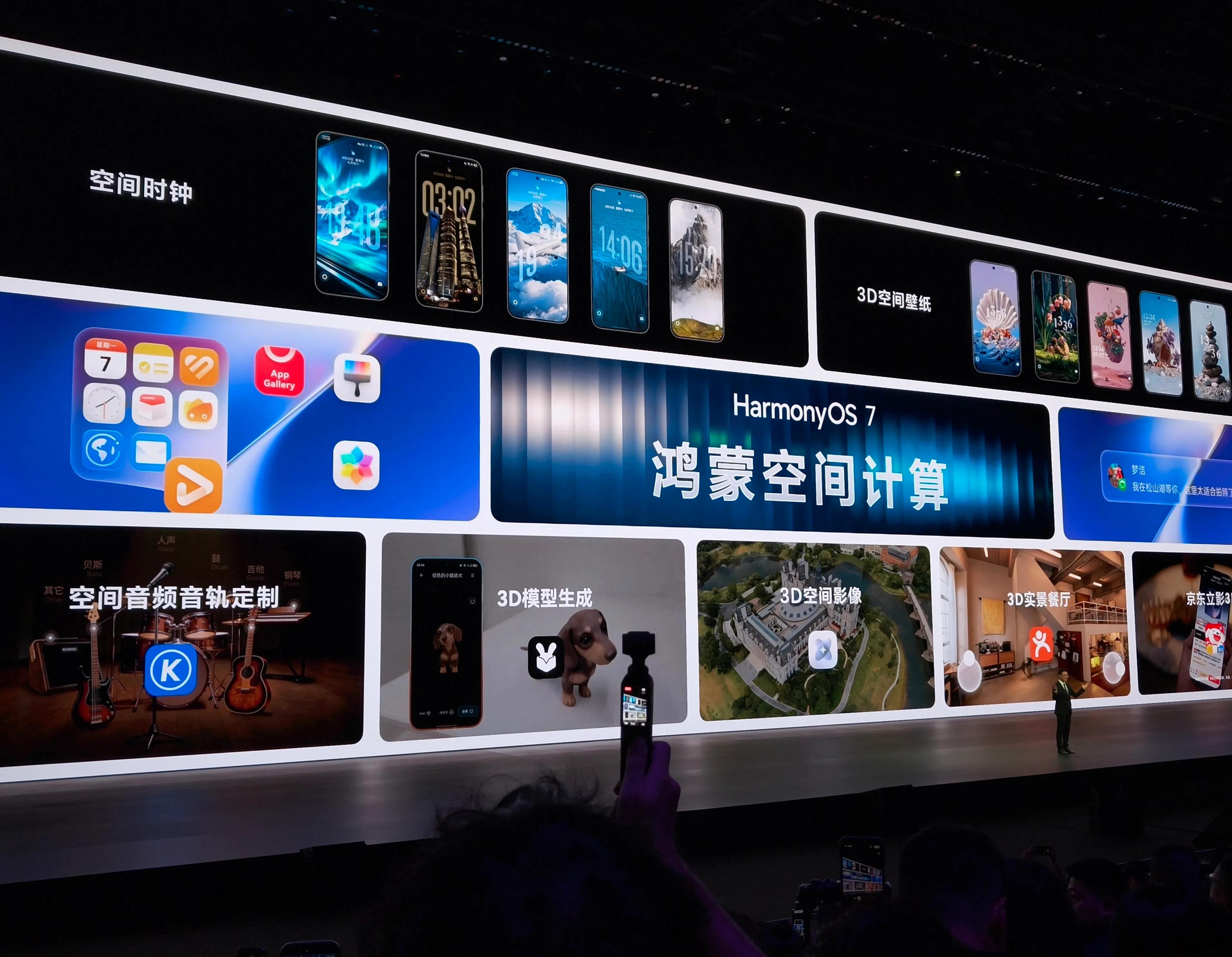
Image source: Leikeji
Behind this feature, the entire operating system needs to be upgraded synchronously.
In the past, the AI assistant on smartphones was more like an independent entry: users wake it up, state their demands, and the assistant then finds solutions. What Agent aims to achieve is to go deep into system permissions, application services and device capabilities, and directly complete cross-application and cross-device tasks at the right time.
HarmonyOS happens to have a unique advantage -- starting from smartphones, it integrates mobile phones, tablets, PCs, watches, TVs and more IoT devices into the same distributed system.
"Connection" has always been a core focus of HarmonyOS. HarmonyOS 7 further upgrades the HarmonyOS Galaxy Interconnection architecture at the underlying level, to achieve smoother cross-device and cross-ecosystem connections. The Ark Engine is also equipped with a large performance model for the first time, and the HarmonyOS Shield security system continues to strengthen its proactive security capabilities.
Meanwhile, the list of devices eligible for HarmonyOS 7 upgrade has also been announced. Some models will receive the public beta upgrade starting from today (September 7), while the rest of the models will have to wait until October.
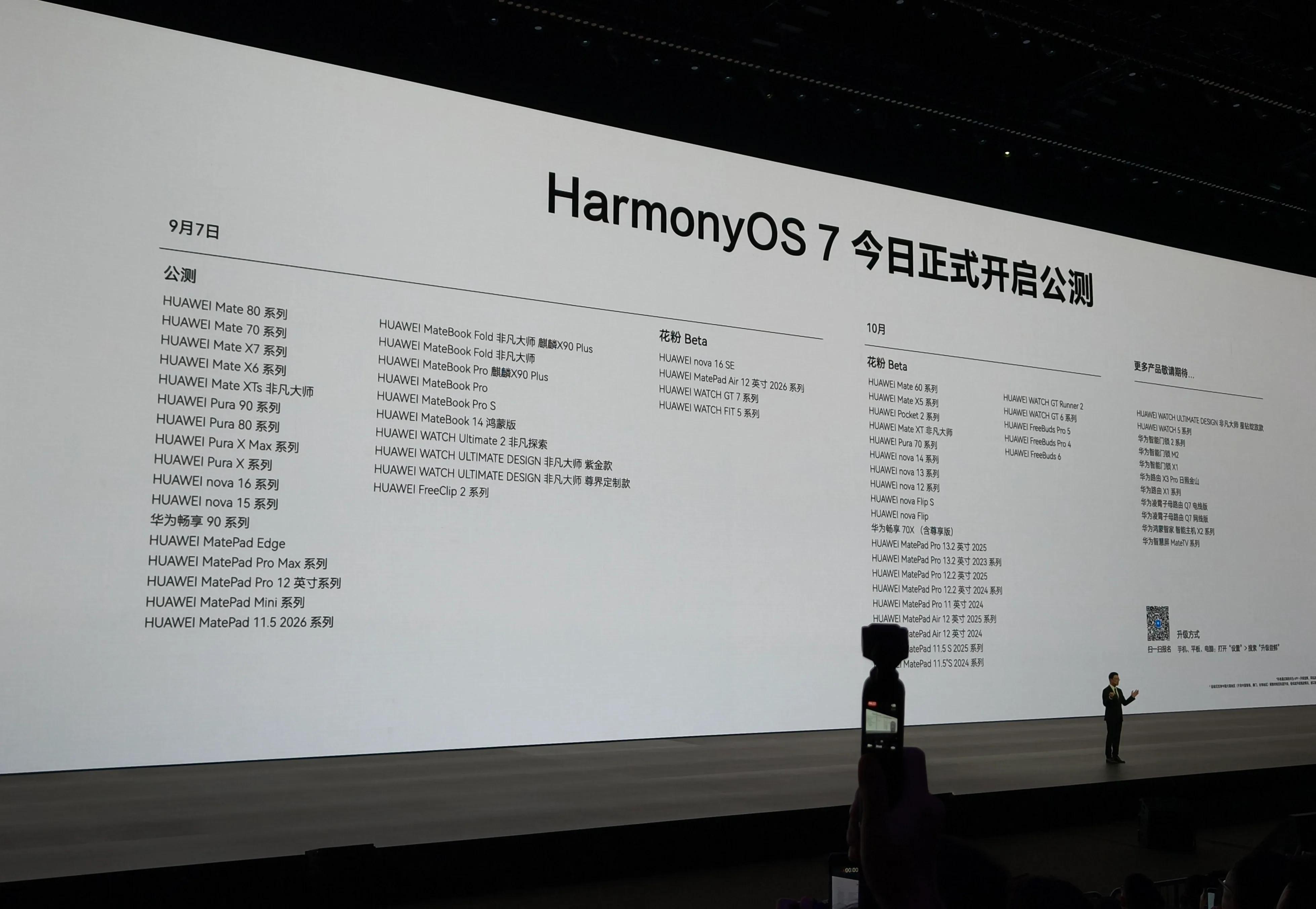
Image source: Leikeji
It is worth noting that when HarmonyOS 7 is officially released, HarmonyOS has passed a very critical scale milestone.
As of August 20 this year, the number of HarmonyOS 6 & 7 connected terminal devices has exceeded 85 million, including HarmonyOS-powered smartphones, tablets and PCs. Compared with the 66 million figure announced at the developer conference in June this year, the number has increased by more than 19 million in just two months.
For an operating system that breaks away from the Android app ecosystem and builds a native application ecosystem from scratch, device scale has always been one of the most realistic challenges. User scale determines developers' willingness to invest, and the richness of applications in turn determines whether consumers are willing to switch to the new system.
The 85 million device base means this positive cycle is gaining increasingly strong momentum. After the basic applications are gradually completed, HarmonyOS is also continuously building exclusive experiences that other operating systems can hardly replicate. Special devices like the Mate XT 2 serve as a very good test field for this.
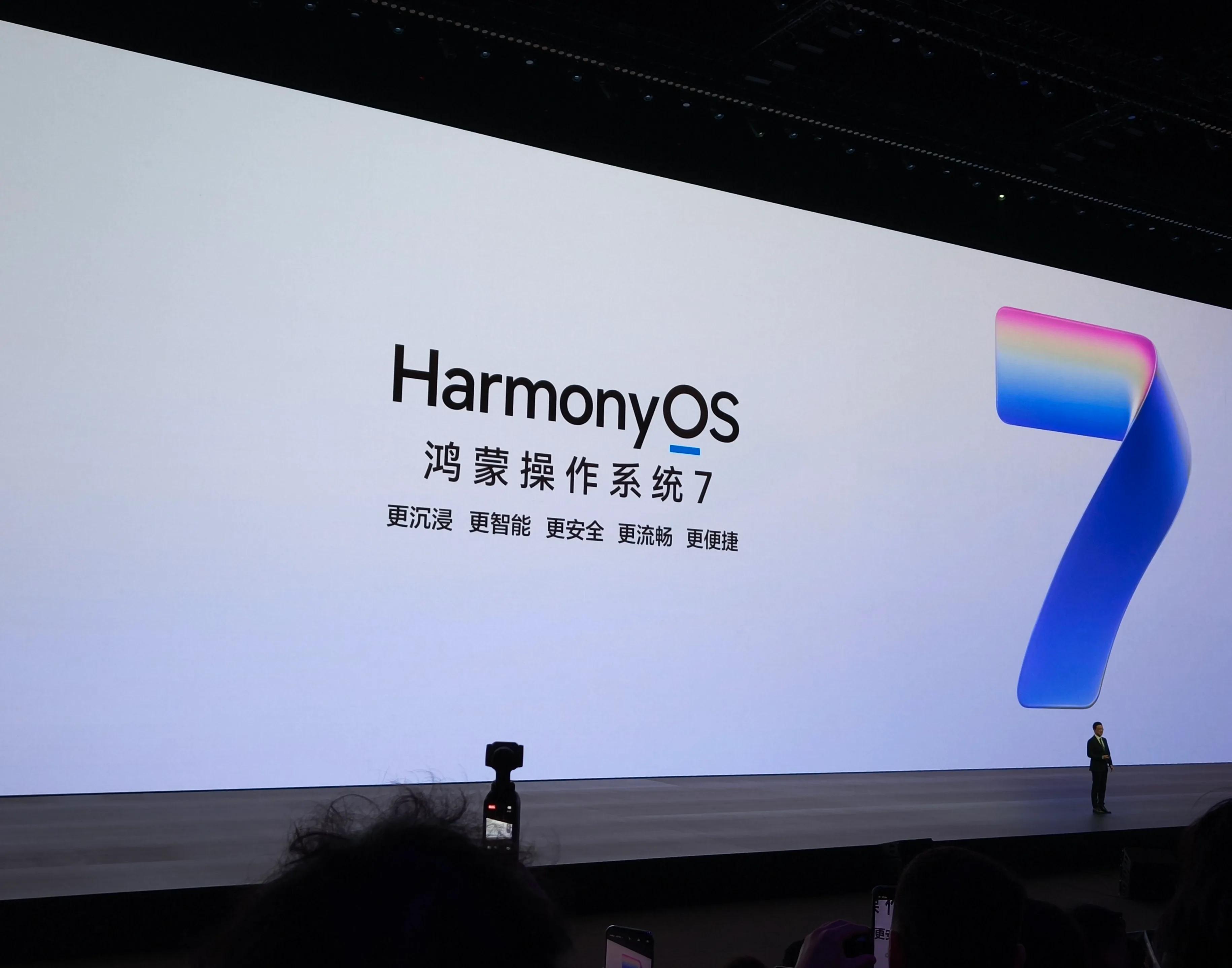
Image source: Leikeji
A large display close to a tablet when unfolded can run more windows at the same time, and supports more complex interaction scenarios than ordinary smartphones. However, if the tri-fold phone only stretches the existing mobile apps to a larger size, the high hardware cost can hardly bring corresponding value to users.
It can be said that HarmonyOS is the core factor that truly determines the "tri-fold" experience of the Mate XT 2.
Beyond Smartphones, Huawei Continues to Expand Its Full-Scenario Product Lineup
In addition to the Pura X View, Mate XT 2 and HarmonyOS 7, this launch event is still a typical Huawei full-scenario new product launch.
The WATCH 6 was previously unveiled in overseas markets, and this event mainly announced its pricing and availability information for the Chinese mainland market. The WATCH 6 Pro comes with a ceramic version, and further strengthens its sports health monitoring and smart capabilities.
The Chinese mainland version of the HUAWEI WATCH 6 series is priced starting from 2799 yuan, and will go on sale officially on September 23.
In terms of tablets, Huawei also launched the new generation MatePad Air, which is equipped with the new OLED Cloud-Clear Soft Display and supports the M-Pencil Pro, focusing on delivering a lightweight experience for office work and creative scenarios.
For audio products, Huawei launched the FreeBuds 7 Yuezhang. The new product abandons the distinctive semi-in-ear design adopted in previous generations and returns to the conventional "pea sprout" shape. Each earbud weighs only about 4.3g, and the product focuses on upgrading its active noise cancellation capability. For semi-in-ear earphones, how to strike a balance between open wearing comfort and noise cancellation performance remains the most noteworthy challenge for this type of product.
The new generation MatePad Air starts at 4499 yuan and will go on sale on September 12; the FreeBuds 7 Yuezhang earphones are priced at 999 yuan and are available for purchase starting today. In addition, Huawei also launched a new Snow White color option for the WATCH Ultimate 2 Exploration smartwatch, which is priced at 6999 yuan.
Closing Notes
Frankly speaking, before the launch of the Mate XT tri-fold series and Pura X foldable series, the form factor of foldable smartphones had become somewhat "solidified".
But it is probably the confidence and exploration capability brought by HarmonyOS that enables Huawei not only to have creative ideas, but also the ability to change the "tide direction" of the foldable phone industry, leading more and more manufacturers to follow its path. What's more, the Pura X View is even bringing the "wide viewing experience" to straight-screen smartphones.
As for the new generation tri-fold phone, Huawei changed the folding structure from the previous Z-shaped design to the spread-wing tri-fold design. The starting price of 19999 yuan determines that it is still a product targeted at high-end smartphone users, as well as a showcase of Huawei's top-tier technology.