From chips to new cars, these details of Xiaomi's launch event are worth paying attention to.
In May 2025, when Xiaomi launched its Xuanjie O1 chip, it arrived in a manner almost akin to a "sudden strike". Moreover, its debut device, the Xiaomi 15S Pro, though branded as a "commemorative edition", largely adopted the design scheme of the Xiaomi 15 Pro, and was not positioned as the top-tier flagship product in its product line.
Why did Xiaomi adopt such a strategy back then? Looking back now, it may have been partially out of a desire for stability, or an attempt to lower the price threshold for its first self-developed flagship mobile chip to encourage more users to give it a try.
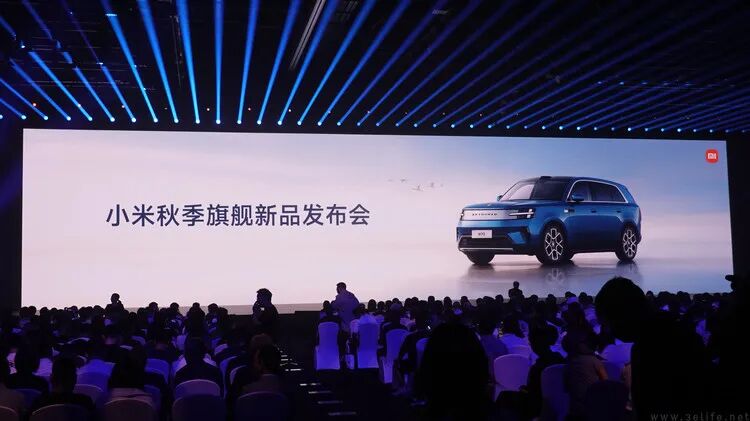
But by September 2026, when Xiaomi once again released a product matrix centered on self-developed flagship mobile chips along with a large number of new products, it presented a completely different style.
Mid-foldable phone debuts with Xuanjie O3, Xiaomi clearly shows full confidence
Regarding the Xuanjie O3 processor equipped on the newly released Xiaomi 18 Fold and Xiaomi Pad 9 Pro Max, our team at 3eLife has previously analyzed it in the article "Three Xuanjie Chips Unveiled Together, Xiaomi Redefines the Boundary of AI Ecosystem".
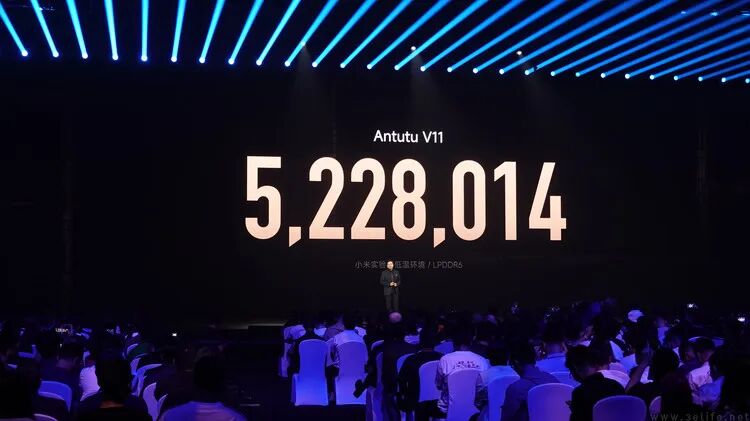
But at that time, since the specific mass-produced devices had not been announced, we did not know what its actual performance would be like.
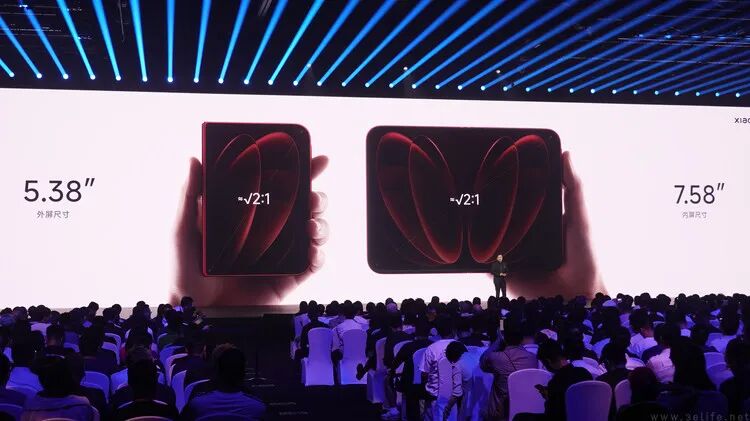
Surprisingly, Xiaomi chose a mid-foldable device as the debut mobile platform for the Xuanjie O3. This once made us a little worried, because based on past experience, foldable smartphones generally have conservative performance output, let alone a mid-foldable device with a thickness of only about 5mm and a size roughly equal to that of a passport.
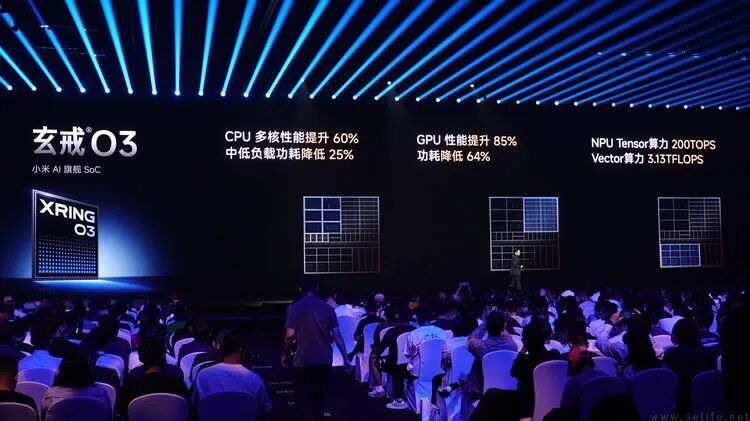
Why did Xiaomi use such a phone to debut the Xuanjie O3? On the one hand, this actually poses a "dual challenge" to the performance and energy efficiency of the Xuanjie O3. Xiaomi is using this method to openly declare that the Xuanjie O3 does not require the built-in cooling fan found in traditional performance-focused devices, and can achieve even stronger performance than the latter.
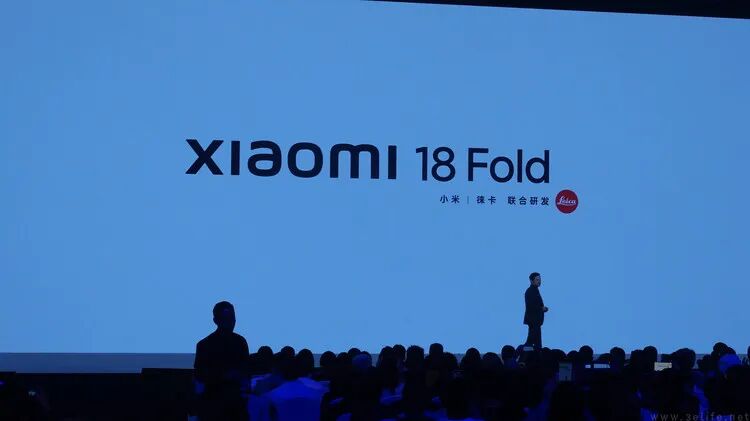
On the other hand, this model is named Xiaomi 18 Fold instead of Xiaomi MIX Fold 5, which may indicate that Xiaomi's foldable smartphone iteration speed will be faster in the future. At the same time, current leaks have shown that other models in the upcoming Xiaomi 18 series will most likely be equipped with new flagship SoCs from Qualcomm and MediaTek.
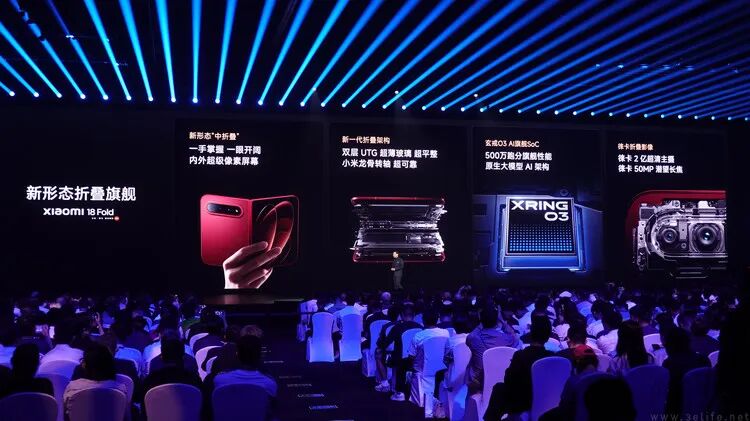
On this basis, Xiaomi equipping the highest-positioned model in the same product series with the self-developed Xuanjie O3 chip conveys a straightforward attitude: full confidence in its self-developed chip, so much so that it dares to compete head-to-head with the top flagship chips of the same period. This is obviously more convincing than simply claiming to be "leading".
You might think it's just a mobile processor, but Xiaomi may have already set its sights on the PC sector
In addition to using the Xuanjie O3 on its new flagship smartphones, Xiaomi also used this self-developed processor to build a new large-screen flagship tablet, the Xiaomi Pad 9 Pro Max.
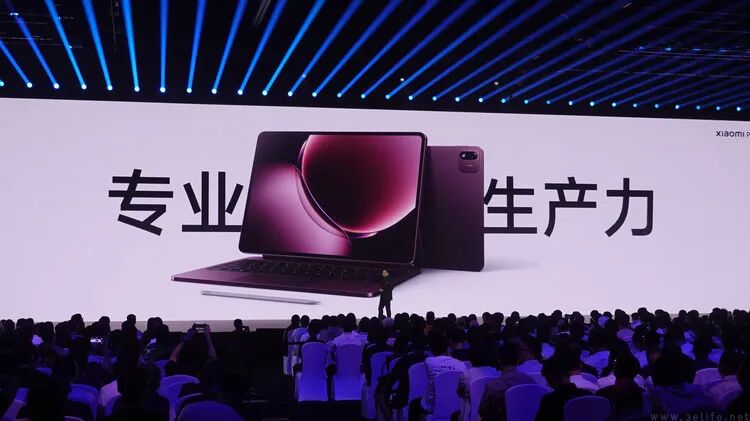
We have also identified several key points about this flagship tablet.
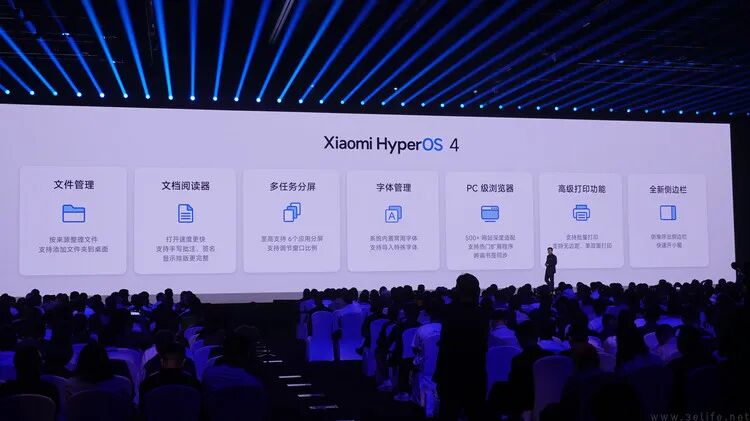
First, it is equipped with a "PC Engine" that can directly run some Linux PC software, supports full-featured office work, CAD editing, video editing and other productivity scenarios, breaking the limitation of traditional Android tablets that "lack dedicated software".
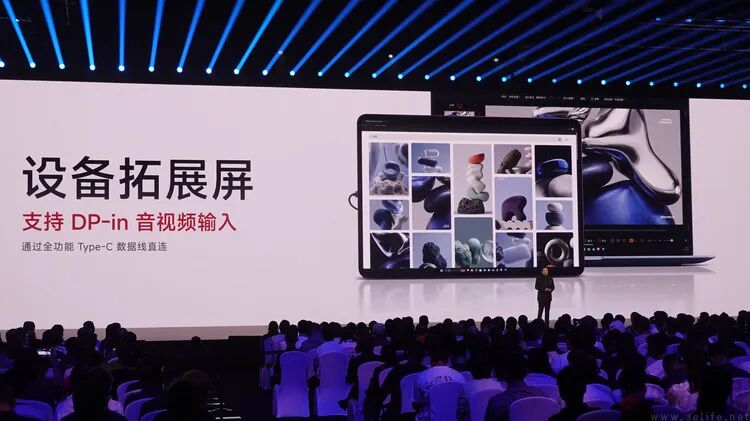
Second, it supports the DP in protocol, which can receive video signals through a full-featured USB Type-C cable, and can be used as a portable display to connect to PCs, smartphones, game consoles and other devices. This makes its compatible ecosystem far exceed the upper limit of the wireless projection capability of other tablets, and it also avoids the problems of resolution reduction and frame latency that come with wireless projection.
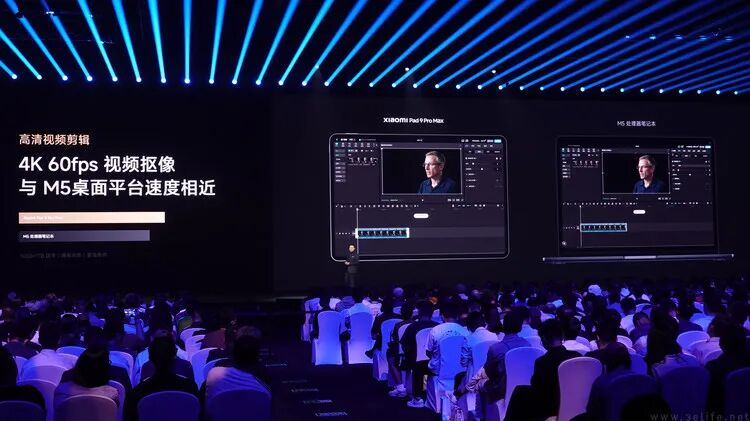
Moreover, in the performance comparison session of this launch event, the competitors Xiaomi selected for it are no longer other tablets using mobile SoCs, but laptops powered by PC processors directly. The test results show that the performance of the Xuanjie O3 on a large-size tablet is not much different from Apple's M5.
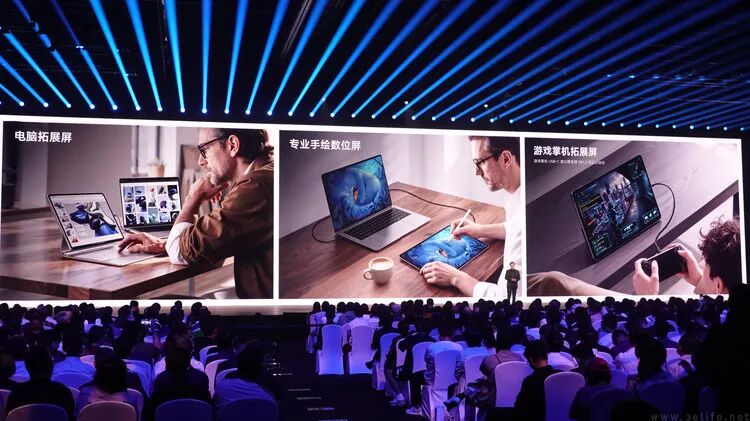
Finally, the Xiaomi Pad 9 Pro Max supports a rather expensive floating keyboard accessory, and is also compatible with peripherals that are usually only used for professional drawing and 3D modeling. This means that Xiaomi's "productivity adaptation" work for this tablet is no longer limited to running a few dedicated software programs. Instead, it is genuinely trying to meet the needs of professional users, and truly believes that its self-developed flagship chip can endow this tablet with PC-level productivity attributes.
Then the question arises: is it possible for Xiaomi to further expand the "PC software adaptation" work of the Xuanjie O3, and when can we see a "computer" based on the Xuanjie solution? Perhaps it is only a matter of time.
Several details of the four new Pengcheng vehicles are well worth paying attention to
In addition to the brand-new self-developed processors, new flagship smartphones and tablets, Xiaomi also officially launched the Pengcheng N70 Pro, Pengcheng N70 Max, Pengcheng N90 Max, and Pengcheng N90 Max Explorer Edition at today's event.

In fact, our team at 3eLife has previously experienced the Pengcheng N70 Max and Pengcheng N90 Max in advance. The former can basically be regarded as the "essence version" of the latter. Within its slightly smaller body, it still retains the oversized space, luxurious chassis configuration, and the home-focused "refrigerator, color TV, and big sofa" setup.
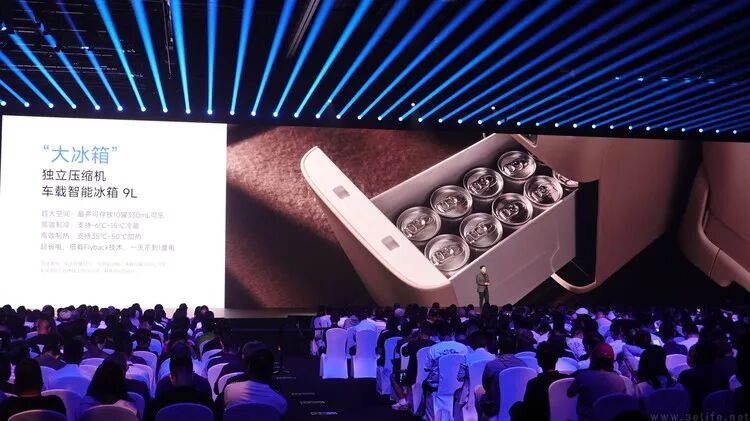
But if you compare the Pengcheng N70 series with the range-extended SUVs currently on the market, you will find some very interesting details. For example, its refrigerator, color TV, and air conditioner all technically inherit technologies from Xiaomi's home appliance division.
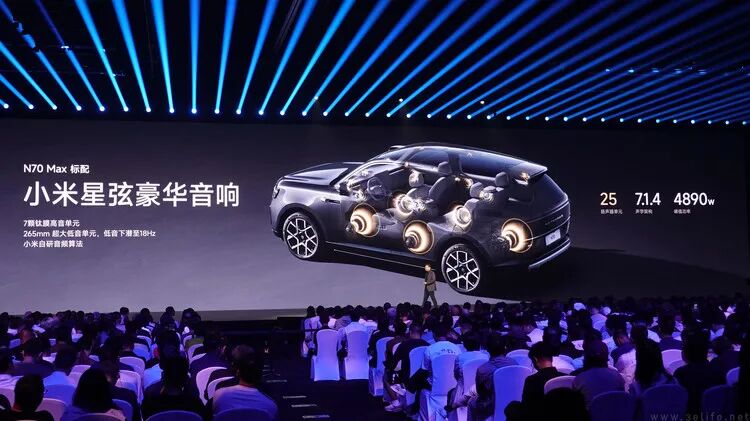
For another example, the Pengcheng N70 series is top-of-the-line equipped with a 25-speaker, 7.1.4 panoramic sound audio system. This Xiaomi Star String audio system, from the speaker layout to the sound effect calibration, is entirely developed by Xiaomi itself, and it does not claim to have any "co-branding" or "joint tuning" with well-known audio brands.
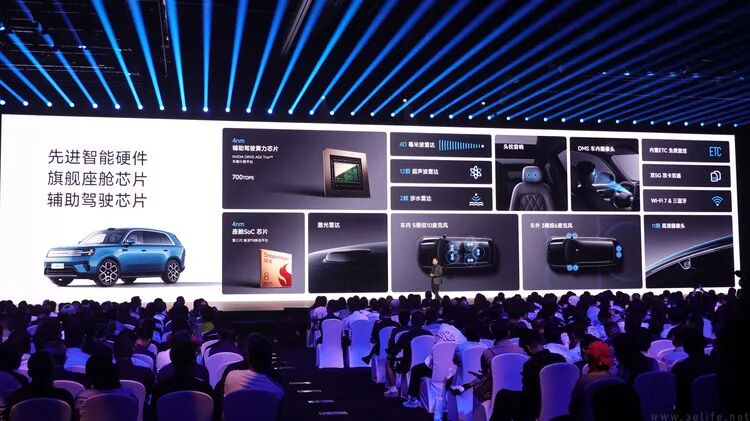
This not only reflects Xiaomi's consistent practice of applying cost-effectiveness to the most critical links, but also allows the outside world to see that its internal technical system is no longer a collection of separate teams and individual product categories working independently. Instead, it has achieved internal integration that many manufacturers in the past could only dream of.

In contrast, although the Pengcheng N90 Max Explorer Edition is destined not to be a high-volume model, it shows us another side of Xiaomi's automotive manufacturing. Its existence fully demonstrates that Xiaomi no longer needs to keep a close eye on sales figures, and has more leeway to create new cars for the sake of dreams and fun, even to mass-produce and launch them on the market. This is often the opportunity for many great designs to be born.
From single-dimensional leadership to all-round breakthrough, Xiaomi has entered a new era
Looking back at the iteration track of the Xuanjie chips, from the cautious trial and lower price threshold in the O1 stage, to the bold showdown and direct confrontation with competitors in the O3 era, the strategic change in just over a year is backed by the accumulated strength from Xiaomi's long-term deep cultivation of technology.
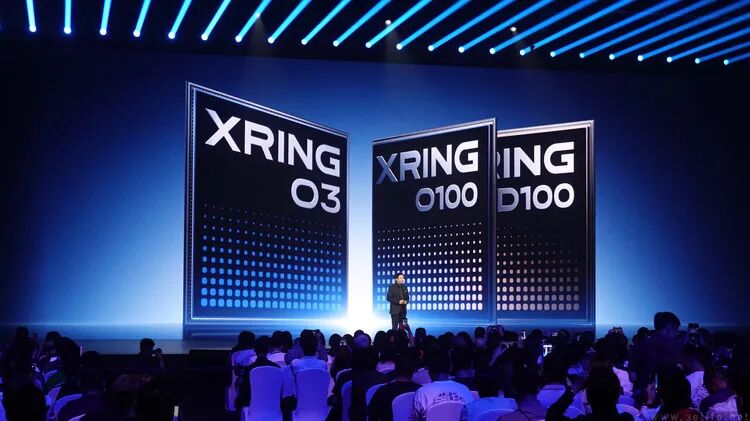
Self-developed chips are never a shortcut that can be achieved overnight, but a protracted war that requires long-term investment and continuous polishing. Xiaomi has abandoned the opportunistic approach, and step by step made up for its shortcomings in chip performance, energy