Jensen Huang placed a $3 billion bet on Murati, driving the valuation up to $40 billion, and the funds went full circle and were ultimately used to purchase NVIDIA's chips.
This time, Jensen Huang has extended the reach of AI infrastructure deep into the model layer.
In the past week alone, NVIDIA has dropped two game-changing blockbuster deals back to back.
Right after signing an acquisition agreement with Hugging Face, the world's largest hub for open-source models, news broke that it is preparing to deliver a massive check of nearly 3 billion USD to Mira Murati, the most high-profile former CTO of OpenAI in Silicon Valley.
Huang is betting big on Thinking Machines Lab, the startup founded by Murati.
The pre-money valuation has directly soared to at least 40 billion USD, with a planned fundraising of 5 to 6 billion USD, and NVIDIA alone is likely to cover roughly half of the total amount.
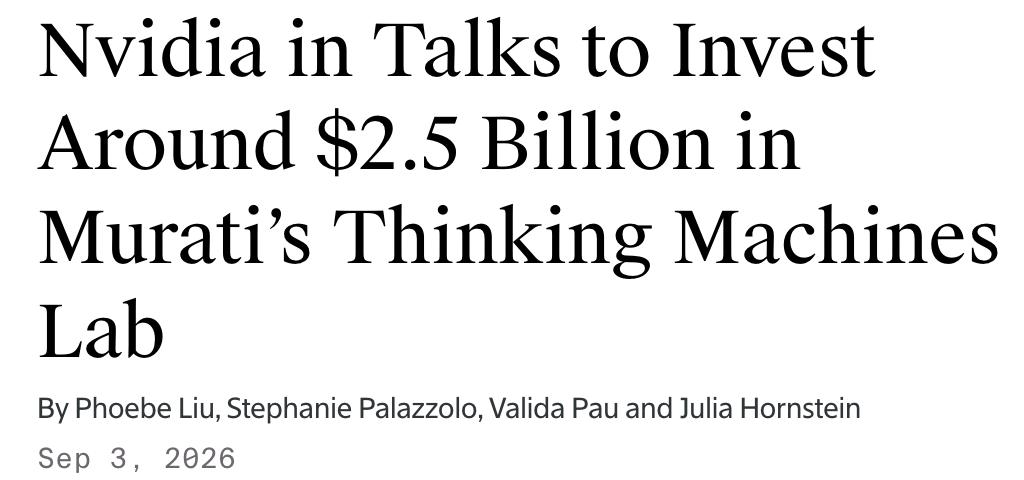
This is not NVIDIA's first investment in the company, but a continuous increase in its stake.
Looking back at the growth rate of Thinking Machines Lab, it is almost like it's been playing with cheat codes.
In its last funding round in July 2025, it secured one of the largest seed rounds in history:
A 2 billion USD seed round, with a post-money valuation of 12 billion USD.
Just 14 months later, the pre-money valuation has directly hit 40 billion USD, more than tripling.
If this 5 to 6 billion USD fundraising is fully completed smoothly, the post-money valuation will approach 45 to 46 billion USD.
Even more aggressive moves are yet to come.
Against such a staggering valuation, the annualized revenue of this company has just exceeded 100 million USD.
A 40 billion USD valuation corresponds to a price-to-revenue ratio of roughly 400x.
What makes a company founded only 19 months ago, which has already lost several of its co-founders, so attractive that NVIDIA is willing to willingly shell out another 2.5 to 3 billion USD?
Two Years After Leaving OpenAI, Murati Has Locked In A 40 Billion USD Valuation
Murati took only 14 months to push the company's valuation from 12 billion USD to 40 billion USD.
In September 2024, Murati announced her resignation from OpenAI. At that time, she was the CTO, and also served as the interim CEO during the days when Sam Altman was ousted by the board.
About 5 months later, Thinking Machines Lab was officially launched.
The founding team is almost a contact list of former OpenAI staff: its co-founders include a host of industry leaders such as Lilian Weng, John Schulman, Barret Zoph, Luke Metz, etc.
In July 2025, the 2 billion USD seed round capital was received.
The round was led by a16z, with participation from Accel, NVIDIA, AMD, and Jane Street. At that time, Murati did not even have a decent finished product, and the investors placed their bets entirely on her personal reputation and capability.
Soon after, the product was launched and delivered satisfying results.
In October 2025, the first product Tinker went online, and was fully opened to the public in December.
It is not a standalone model, but a fine-tuning platform: developers can upload their own data to the platform, adjust open-weight models to fit their own needs, and pay according to the amount of computing power they consume.
Shortly after that, an even bigger move was announced.
On March 10, 2026, Thinking Machines and NVIDIA officially announced a multi-year strategic cooperation: they will deploy at least 1GW of Vera Rubin systems, while NVIDIA also completed a major undisclosed investment in the company.
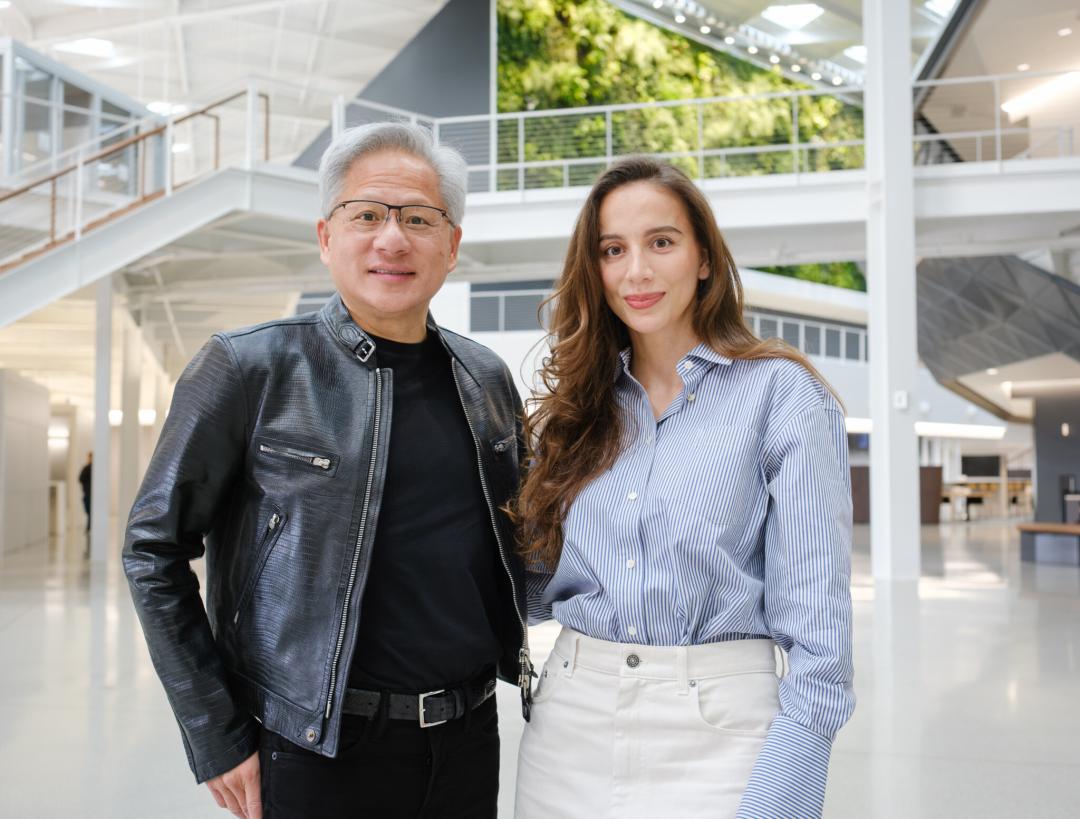
Jensen Huang (left) and Mira Murati (right). The two sides announced the 1GW-level Vera Rubin cooperation on March 10, 2026, and NVIDIA completed an undisclosed investment at the same time.
Four months later, on July 15, 2026, they launched their first in-house flagship model, Inkling:
It has a total of 975 billion parameters, 41 billion activated parameters, a maximum context length of 1 million tokens, supports input of text, image and audio, and its full weights are fully open to the public.
Then came the ongoing negotiation for this 5 to 6 billion USD financing round.
The reason for raising such a large amount of capital is the aforementioned 1GW-level cooperation.
1GW represents the cutting-edge lab-level computing power. The chips, networks, power supply and data centers are all configured at the gigawatt level, and every single item costs an astronomical sum.
The financing scale has expanded 5 to 6 times from the initially rumored 1 billion USD to the current 5 to 6 billion USD, to support the ambition of building this 1GW-level computing power infrastructure.
Then where will this sum of money come from?
In the previous round, NVIDIA was only one of the many participating investors, and the lead investor was a16z.
In this round, the lead investor is replaced by Accel, while NVIDIA is expected to take up roughly half of the total investment, evolving from a follow-on investor to the largest capital contributor.
Thus, the familiar scenario appears again: NVIDIA is not only the largest investor in this round, but also the supplier of the 1GW systems.
A large proportion of the money that flows into Thinking Machines' accounts will most likely circle back and turn into new orders for NVIDIA.
Investment, procurement and revenue form a closed loop on the same company.
The direction is clear enough.
NVIDIA is no longer satisfied with supplying chips to well-established labs such as OpenAI and Anthropic. It has started to bind the next generation of cutting-edge players with equity stakes in advance.
There is another easily overlooked sentence in the March announcement: the two parties will jointly design training and inference systems tailored for NVIDIA's architecture.
This means that all future models of Thinking Machines will be natively built on top of the Vera Rubin system at the underlying level.
Murati's Roadmap: Not Chasing The No.1 Model
Looking at Murati's 19-month layout, you will find that she has been avoiding head-on competition with OpenAI and Anthropic to see who builds a more powerful model.
She even directly admitted in the official Inkling release blog post that:
Inkling is not the most powerful model available at present, no matter in the open-source or closed-source category.

The business model of Thinking Machines was determined the day Tinker was launched: it sells the capability of "turning general models into your own dedicated models".
Enterprises can bring their own data and business scenarios to train, fine-tune and run inference on its platform, and the company charges them based on their computing power consumption.
In Murati's own words: the goal is to build AI that people can shape and make their own.
This statement puts Thinking Machines on a completely different development path from OpenAI and Anthropic.
The latter two are competing to build the most powerful general-purpose closed-source models, while the company positions itself at a lower layer: instead of chasing the top model, it builds the infrastructure that helps everyone customize their own dedicated models.
Isn't this exactly the AI infrastructure that Jensen Huang has talked about on many occasions?
The AI factory, AI infrastructure and Token economy that NVIDIA has been promoting for two years all point to this kind of business where every new customer brings additional computing power consumption.
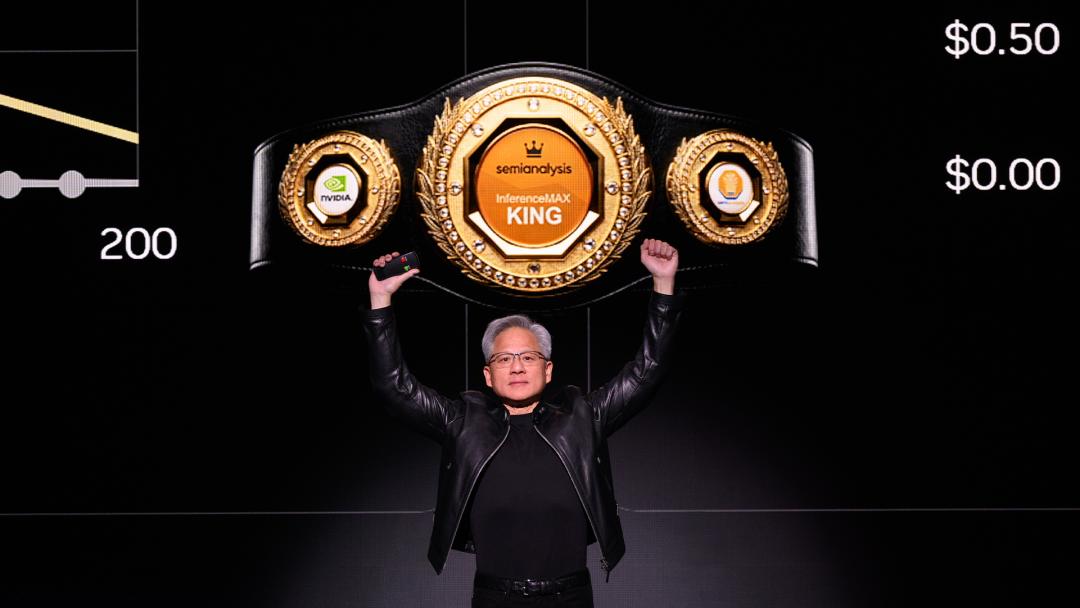
At the GTC 2026 keynote speech on March 16, Jensen Huang stated that computing power demand has "increased by 1 million times", and the company's total revenue from 2025 to 2027 will reach at least 1 trillion USD.
Once you understand this logic, it is easy to see why NVIDIA is willing to invest such a huge sum of money.
Stacked With Hugging Face, NVIDIA Holds Two Strong Cards In Hand
This is not the only major move NVIDIA has made this month.
On September 3, NVIDIA officially announced that it has signed an agreement to acquire Hugging Face for 129.303 billion USD.

Put the two deals together:
Hugging Face controls the distribution entrance of open models and the developer community; Thinking Machines owns cutting-edge models, fine-tuning platforms and a top-tier research team.
One end is the user entrance, the other end is the model. NVIDIA has placed bets on both ends of the open-weight model track.
The total value of the two deals is close to 160 billion USD, and they are announced only a few days apart.
The full weights of Inkling are hosted on Hugging Face, and a dedicated NVFP4 version optimized for NVIDIA Blackwell chips is also provided.
Developers can download Inkling from Hugging Face, customize it to their own needs on Tinker, and then run it on the Vera Rubin system.
The entrance, model, fine-tuning platform and chips are all integrated into one single ecosystem.
This is exactly what NVIDIA wants: by locking in model companies through capital investment in advance, it also locks in their future computing power demand.
References:
https://techcrunch.com/tag/thinking-machines-lab/
https://www.theinformation.com/articles/thinking-machines-lab-talks-raise-billions-roughly-40-billion-valuation
https://thinkingmachines.ai/news/introducing-inkling/
https://blogs.nvidia.com/blog/nvidia-thinking-machines-lab/
This article is from the WeChat Official Account "New Zhiyuan", author: ASI Revelation; editor: Yuan Yu, published with authorization from 36Kr.