No longer follow, but define: The "DeepSeek Moment" of China's household ventilators
At 2 a.m., a user who brought home a household ventilator for the first time is woken up by a sudden surge in airflow. Hours earlier, he was still struggling with professional parameters; the next day after waking up, he would have to face a string of nighttime data that he might not be able to understand.
As more and more household ventilator devices enter ordinary families, whether they can be used smoothly and continuously has become an unavoidable industry issue.
Especially in China, compared with the relatively mature out-of-hospital follow-up system in Europe and the United States, in the past, users would often fall into a "no guidance" gap after returning home with medical advice from hospitals.
For household ventilators that require long-term consistent use, failing to operate the device well and sleeping poorly on the first night is not just a bad experience. It may further push users from "not knowing how to use it" to "not wanting to use it", making long-term health management impossible to truly start.
Therefore, the market is increasingly expecting household ventilators to be like smart home appliances, which can not only maintain the medical bottom line of "accuracy and effectiveness", but also have a low threshold for out-of-the-box use, and even actively understand the body's state.
The intervention of AI is becoming a key variable to bridge this gap and drive the industry to transform.
On September 3, 2026, BMC launched its new AI flagship E6 series. This product integrates AI into the entire process of users improving sleep quality: from quick start with parameter matching assistance on the first night, to predicting respiratory events and making dynamic responses and interpreting sleep data every night, and to continuous optimization based on long-term actual usage.
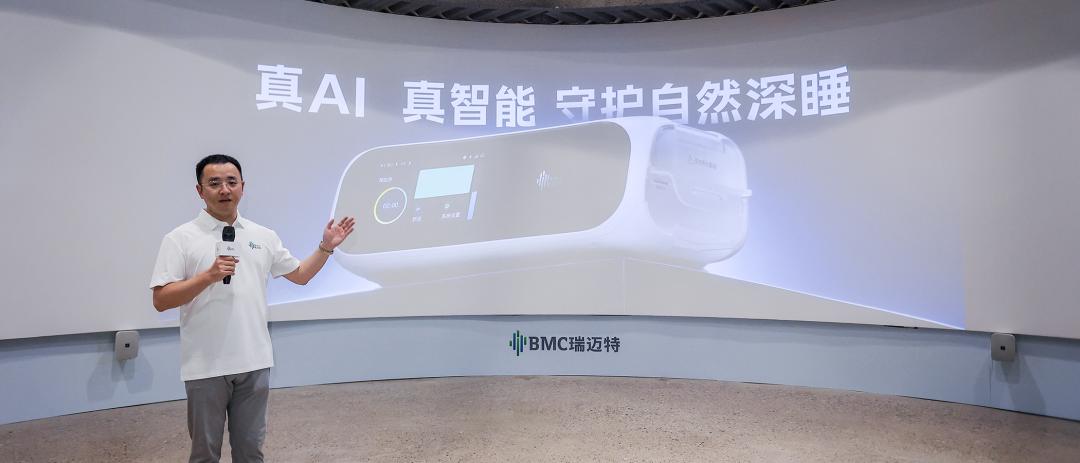
This means that BMC is promoting the development of household ventilators from "users learning to adapt to the machine" to "the machine actively learning to adapt to users".
From a broader industry perspective, this also reflects the evolutionary trend of China's medical device competition mode, which has shifted from "making good products" to participating in defining "what the next generation of products should look like".
01
Product paradigm shift: How is "full-cycle AI protection" realized?
How smart should a household ventilator be?
If you look at the real process of an ordinary user using a household ventilator, the answer lies not in how many functions it has, but in whether it can cross three consecutive experience thresholds.
When using it for the first time, whether the user is willing to continue using it; after adapting to it every night, whether the machine can be as "invisible" as possible while providing treatment; and after several months or even longer, whether the device can keep up with changes in the body's state.
These three thresholds are exactly where the experience of household ventilators is most likely to break in the past.
The first breakpoint is the "language gap" between professional medical devices and ordinary users.
For people who are exposed to ventilators for the first time, professional parameters themselves constitute a threshold. In the traditional usage logic, users often need to understand the machine first and then adapt to it. But for a device that needs to be worn every night, if users give up on the first night because they cannot adjust the device, cannot wear it properly or sleep poorly, subsequent management will be impossible to talk about.
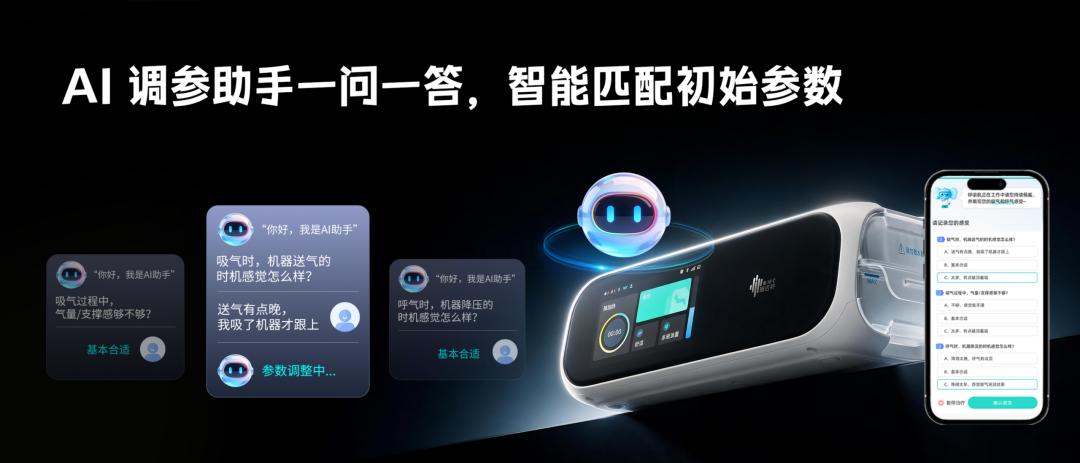
The E6 first tries to move this part of professionalism into the machine. When the device is turned on, users can enter the AI parameter adjustment assistant by "tapping" with their mobile phone NFC. The parameter setting that originally required users to understand professional concepts is transformed into a chat-like question-and-answer process. Users do not need to learn the machine language first. They only need to feedback their actual feelings such as "whether the airflow is too strong" and "whether there is a sense of suffocation", and the system can assist in finding a more suitable initial setting for individuals. For old users who are used to the traditional professional interface, the E6 still retains the corresponding adjustment entry.
After actually falling asleep, the problem changes from "can you use it" to "can you fall asleep".
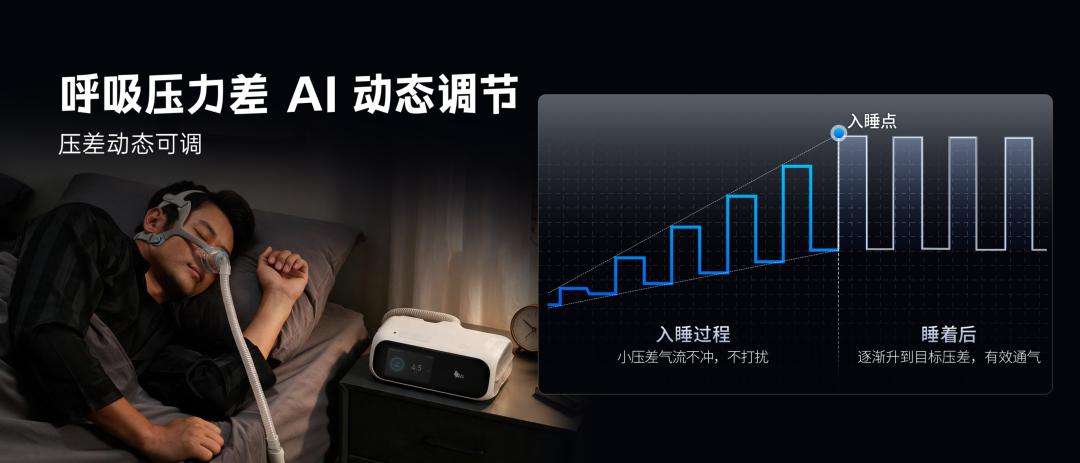
The IntelliBreath Trace 6.0 advanced AI intelligent prediction algorithm continuously identifies the user's respiratory state and makes dynamic responses according to potential respiratory events. At the same time, the E6 introduces the fully automatic dynamic pressure difference function AutoPS: in the past, a relatively fixed pressure support was usually set between the inspiratory pressure and expiratory pressure of bi-level ventilators, while the E6 dynamically changes the pressure difference according to different respiratory events and ventilation states, and is no longer "fixed once set". Combined with the gentle sleep scheme, the machine tries to solve two mutually restrictive problems in the past at the same time - to keep the airway open and minimize the user's sense of confrontation during exhalation.
The next morning, whether the first use is smooth also depends on whether users can understand the results. AI sleep quality monitoring and AI report interpretation convert complex nighttime data into more intuitive information. It is disclosed that compared with the PSG (polysomnography) gold standard, the E6 has a recognition accuracy of up to 75.1% for N3 stage (deep sleep stage).
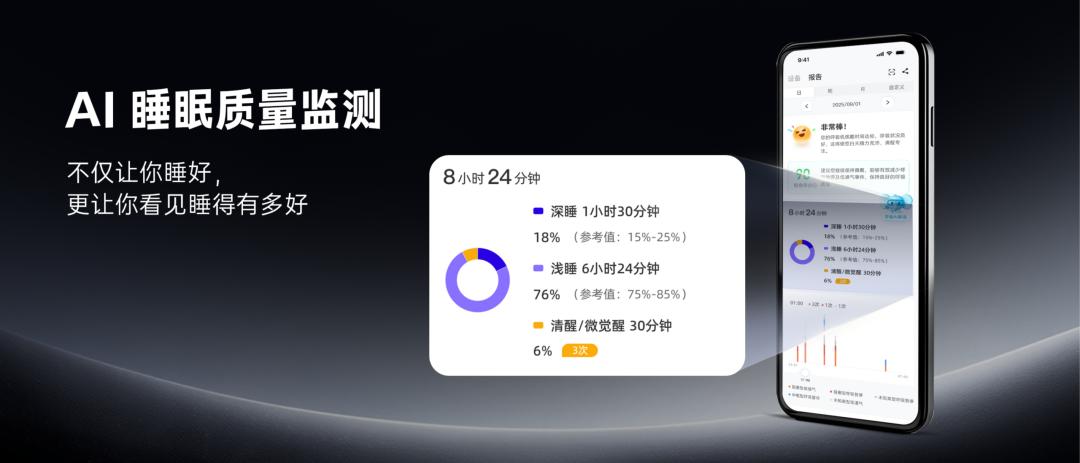
For novices, this means that they do not need to become "half professionals" first, and can quickly know how well they slept that night and how the device worked. Therefore, the first threshold for household ventilators has changed from "learning the machine first" to "letting the machine help users complete the first adaptation".
At the press conference, the E6 user shared a specific scenario. Mantou Niuniu, a tech blogger who participated in the E6 external test, mentioned that in the past, one of the biggest troubles when configuring ventilators for the elders in the family was that there were too many parameters and the settings were complicated. It was not easy to persuade the elders to use it, but they would easily give up because it was "too troublesome"; while the E6 can be set up in a chat-like way after tapping the device with a mobile phone, leaving "few opportunities for them to find excuses".
This actually points to more than just interaction design, but an underestimated problem that household medical devices have long faced: reducing the resistance of first use is the first step to improve long-term compliance.
But crossing the first night is only the beginning. The second real difficult threshold for household ventilators is how to maintain compliance in day-to-day use.
Because users are not ultimately experiencing a machine, but sleeping. Even if the device is accurate enough for treatment, as long as the pressure change is too abrupt, the sound is too obvious, or long-term wearing brings discomfort such as dryness and condensation, the machine itself may become a new source of interference for sleep. For household ventilators, "accurate and effective" and "as non-inductive as possible" are not two separable goals.
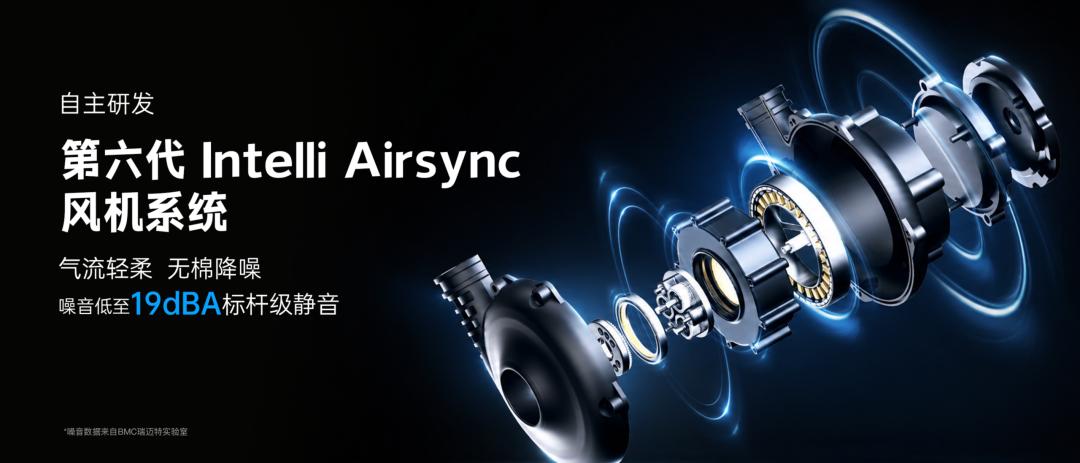
The E6's solution at this stage is to let hardware, algorithms and comfort adjustment work together. The new self-developed 6th-generation dynamic response fan system enables pressure output to follow users' respiratory changes faster and more delicately; combined with the "cotton-free noise reduction" physical s imulated sheng structure, the overall operating noise of the machine is as low as 19dB, which minimizes the impact of device sound on nighttime sleep.
During the process of falling asleep, AI dynamic pressure difference (AutoPS) will dynamically adjust the difference between inspiratory pressure and expiratory pressure according to different respiratory events and ventilation states, so as to minimize unnecessary pressure intervention and exhalation confrontation while ensuring ventilation support; combined with automatic delayed pressure rise and two major scene upgrades, the interference caused by pressure changes is further reduced. The AI dynamic temperature and humidity system 6.0 continuously adjusts temperature and humidity to improve discomfort such as dryness and condensation that may occur during long-term wearing.
In addition to these comfort capabilities, the IntelliBreath Trace 6.0 advanced AI intelligent prediction algorithm continues to assume the bottom line of "accuracy and effectiveness". Based on the labeling of sleep data of more than 540 million nights from about 3 million users around the world, the system can identify potential respiratory events in advance and dynamically adjust the pressure.
Eventually, users will feel that the pressure is more stable, the machine is quieter, the temperature and humidity are more comfortable, and they are less disturbed by the device itself throughout the night.
This is also a word repeatedly mentioned by users at the press conference - "non-inductive". Wan Fangzhong, who participated in the external test, used to experience the situation of "using for two months and stopping for two months" due to discomfort caused by temperature, humidity and fixed pressure when using ventilators before; Dapeng said that compared with the previous generation of products, the sound emitted by the E6 made him feel that "the machine is as if it does not exist".
Individual experience certainly cannot replace clinical data, but it perfectly explains why comfort, in addition to "accurate treatment", is also a hard indicator in the household ventilator category.
For devices that need to be worn continuously every night, the real intelligence may be hidden in this kind of experience with "no obvious sense of existence".
When the usage time extends from a few days to several months or even longer, the industry will encounter the third threshold: the human body state is not fixed.
Weight loss, schedule changes, and increased stress can all affect sleep and breathing conditions. Parameters that were suitable a few months ago may not always be applicable. Under the traditional fixed parameter mode, such changes often require users to realize the problem first and then seek help from doctors or professionals, which easily leads to new breaks in long-term management.
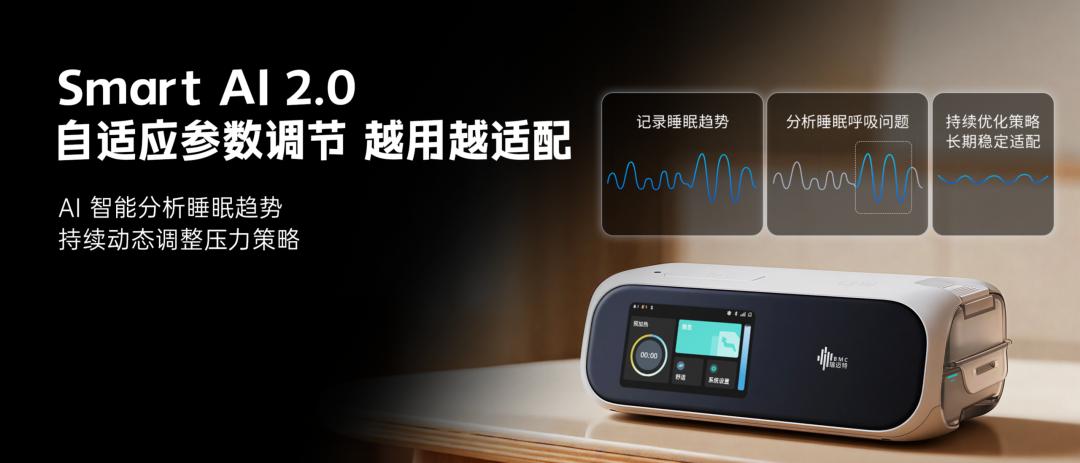
The E6 is equipped with Smart AI 2.0, which extends the AI learning cycle from "this night" to the continuous use process. The system can continuously learn and dynamically optimize pressure parameters according to the actual usage of users in the past 3 nights.
At the same time, the E6 adds the industry's first all-night low oxygen load assessment and monitoring, extending the focus from a single respiratory event to the all-night hypoxia situation and long-term health risk trends. Users can also view the report by "tapping" with NFC every day, and understand their sleep and breathing changes with the help of AI report interpretation.
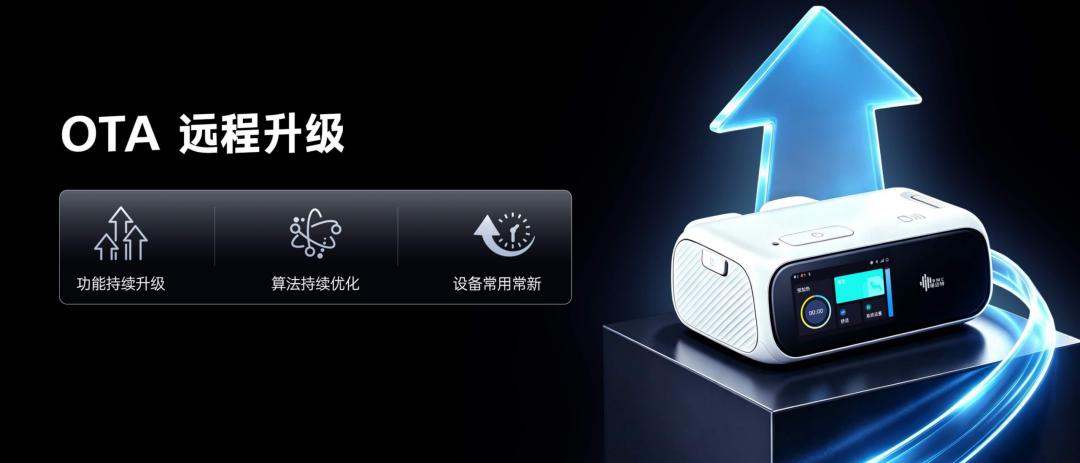
When these data are further imported into the health manager cloud platform that has been running for more than ten years, the information of a single night is no longer isolated data, but can be precipitated as continuous health records to support multi-dimensional long-term health management. With cloud remote upgrade, device capabilities can also be continuously updated during use, achieving "getting newer the more you use it".
Looking back at these three stages, we will find that there is an obvious change in the product competition of household ventilators, that is, AI begins to extend the learning ability of devices to the complete cycle of "first adaptation - every night use - long-term changes".
On the first night, the key is to lower the professional threshold to make users willing to continue using it; every night, the key is to minimize the disturbance of the machine to sleep while ensuring accurate treatment; in the long run, the device should continue to adapt to physical changes, and precipitate scattered nighttime data into understandable and manageable health records.
This also reflects the true meaning of "full-cycle AI intelligent protection", which is to fill the three links that are most likely to break in the real usage chain of household ventilators.
On the one hand, the device is increasingly able to actively adapt to changes in people, allowing users to "sleep more and more comfortably"; on the other hand, more and more complete data helps users understand their long-term health status, making a ventilator gradually extend from a simple nighttime treatment device to an entry point for long-term respiratory health management.
When the machine starts to continuously learn around the user's usage cycle, the household ventilator begins to have a product form that is closer to a long-term health partner.
02
Continuously leading the industry: What do Chinese brands rely on to gain right of speech?
The medical device industry has a completely different feature from consumer electronics: a new product can complete iteration within one year, but the ability to support new products to truly enter medical scenarios often takes ten years or even longer.
After AI enters medical devices, this point is even more obvious.
Because what determines the final effect of a set of algorithms, in addition to the model itself, also includes whether there is enough real data behind the algorithm, whether it can cooperate efficiently with underlying hardware such as fans, whether the product has passed the real market test, and whether it can cross the thresholds of medical supervision and clinical verification.
From this perspective, the E6 is not a flagship product that appears out of nowhere.
The first is the market verification brought by scale.
According to data from Frost & Sullivan, in 2025, BMC's domestic household ventilator sales reached 190,000 units, with a market share of 26.8%, ranking first in the Chinese market; global sales reached 548,000 units, ranking second in the world, and it is also the only Chinese enterprise among the top five global sales brands.
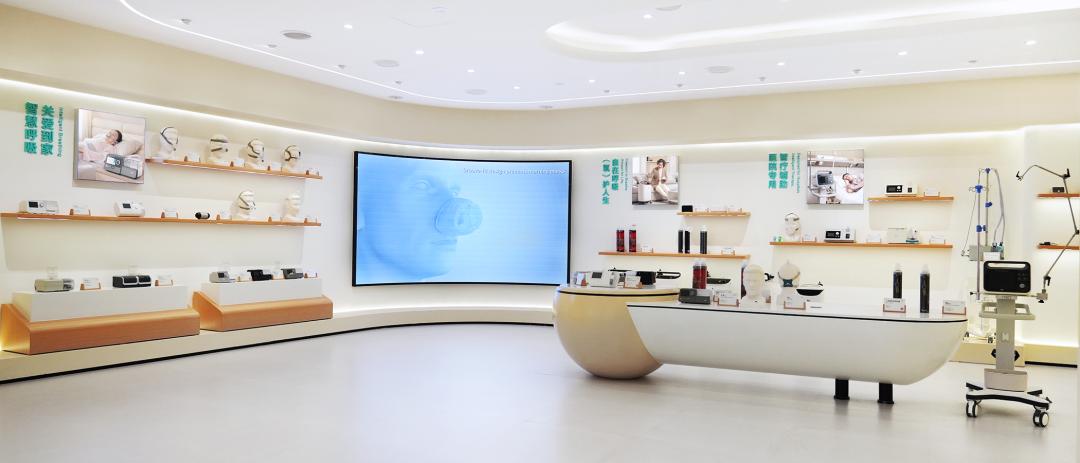
For medical devices, the significance of scale is not just sales volume. Bmc