GPT-6 is not only available with Astra, the internal test results of Sol have been exposed, and its speed is 6 times faster.
GPT-6 isn't just equipped with Astra!
Astra was released just a few days ago, GPT-6 Sol has been exposed to be in internal beta testing.
Its performance is also very impressive, the single test speed is 6 times that of Astra.
Let's make a bold guess: Are Terra and Luna also on the way?
And on the very same day, OpenAI just released a set of internal data publicly:
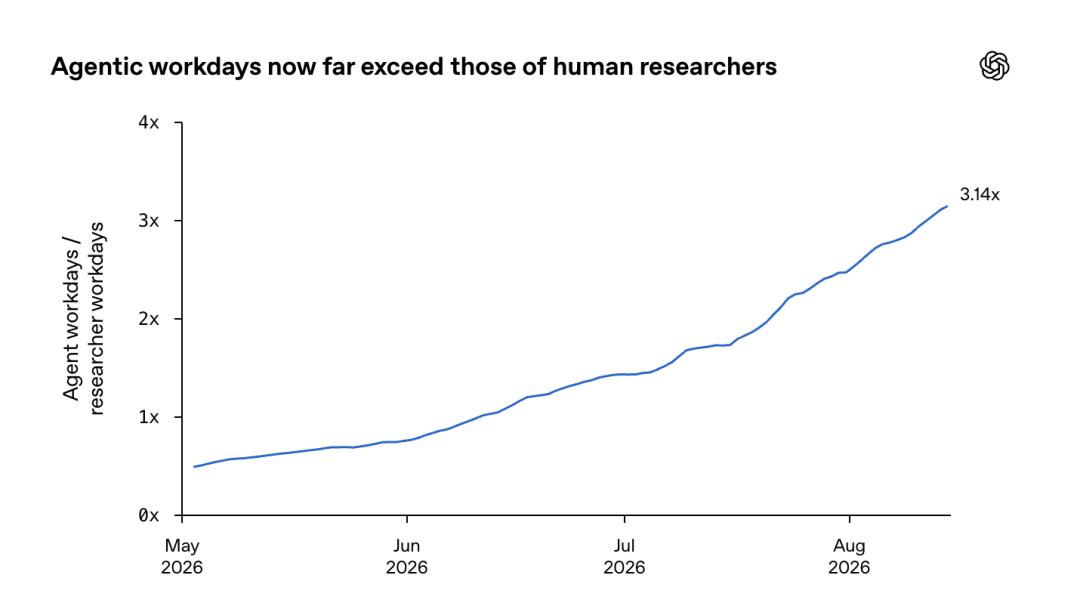
As of now, converted to an 8-hour workday, every OpenAI researcher works one day, there are more than 3 Agent working days running in parallel at the same time.
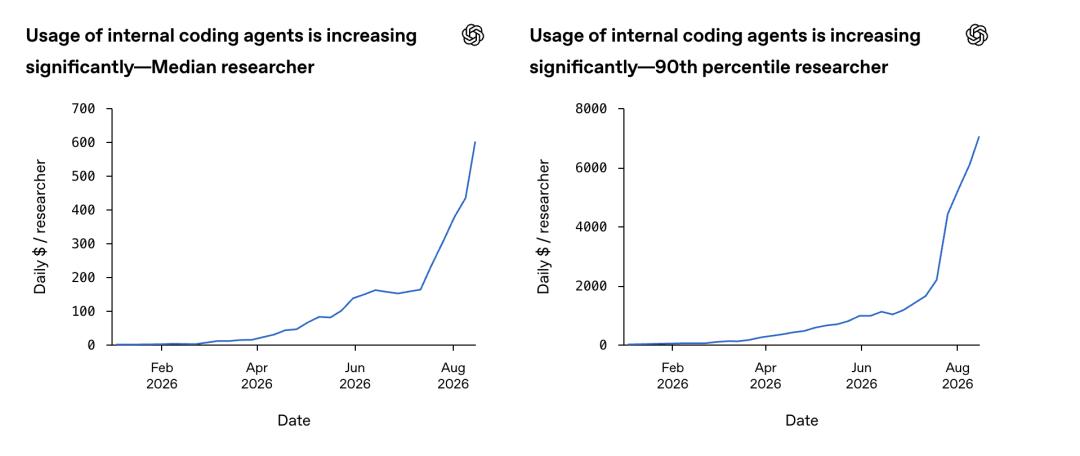
Calculated at API prices, the median daily Agent inference resource usage of OpenAI researchers has exceeded 600 US dollars.
OpenAI also announced that it has implemented "Automated Research Intern":
These Agents can, under human guidance, complete some tasks that originally took researchers several days to finish.
Even Jensen Huang said: AGI has arrived!
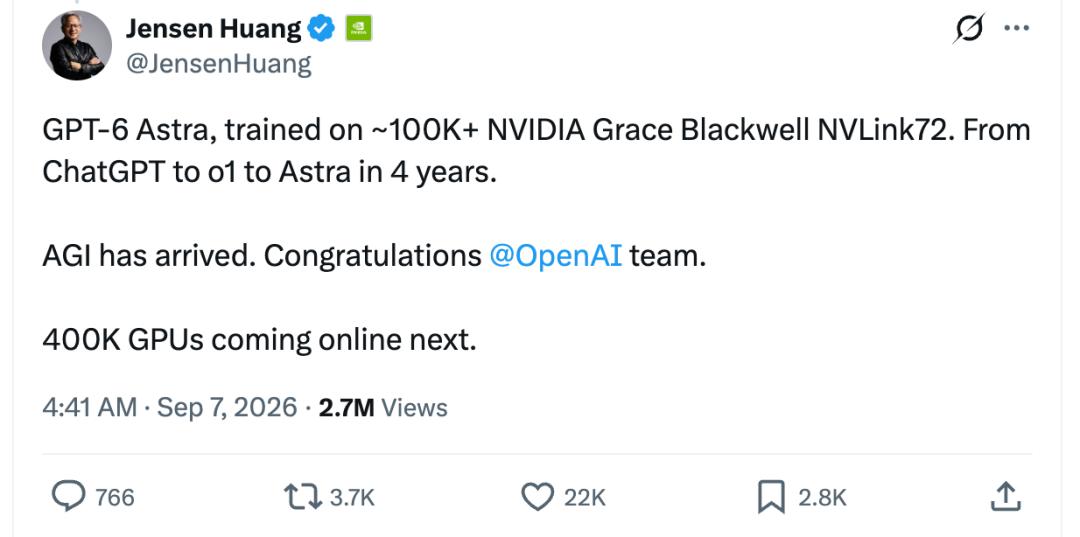
He revealed that Astra is trained with about 100,000 sets of NVIDIA Grace Blackwell NVLink72, and another 400,000 sets of GPUs will be launched soon.
It seems that this time it is not just OpenAI bragging unilaterally~
GPT-6 Sol Exposed to Start Internal Beta Testing
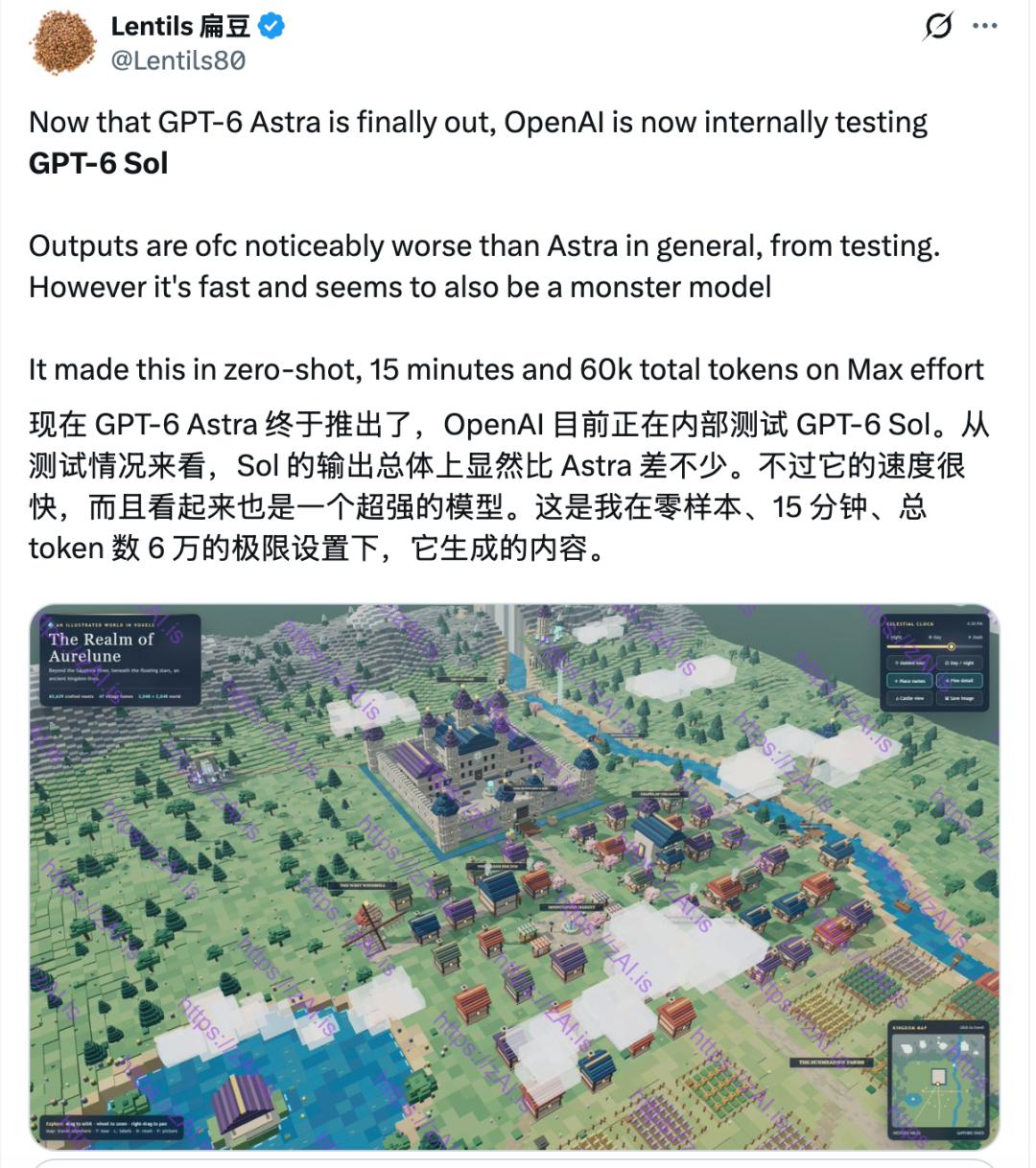
Netizen Lentils broke the news that OpenAI is internally testing GPT-6 Sol.
He stated that Sol's overall output capability is significantly weaker than the newly released Astra, but it is faster and still belongs to the "monster-level" model.
How fast is it? The single test speed is about 6 times that of Astra.
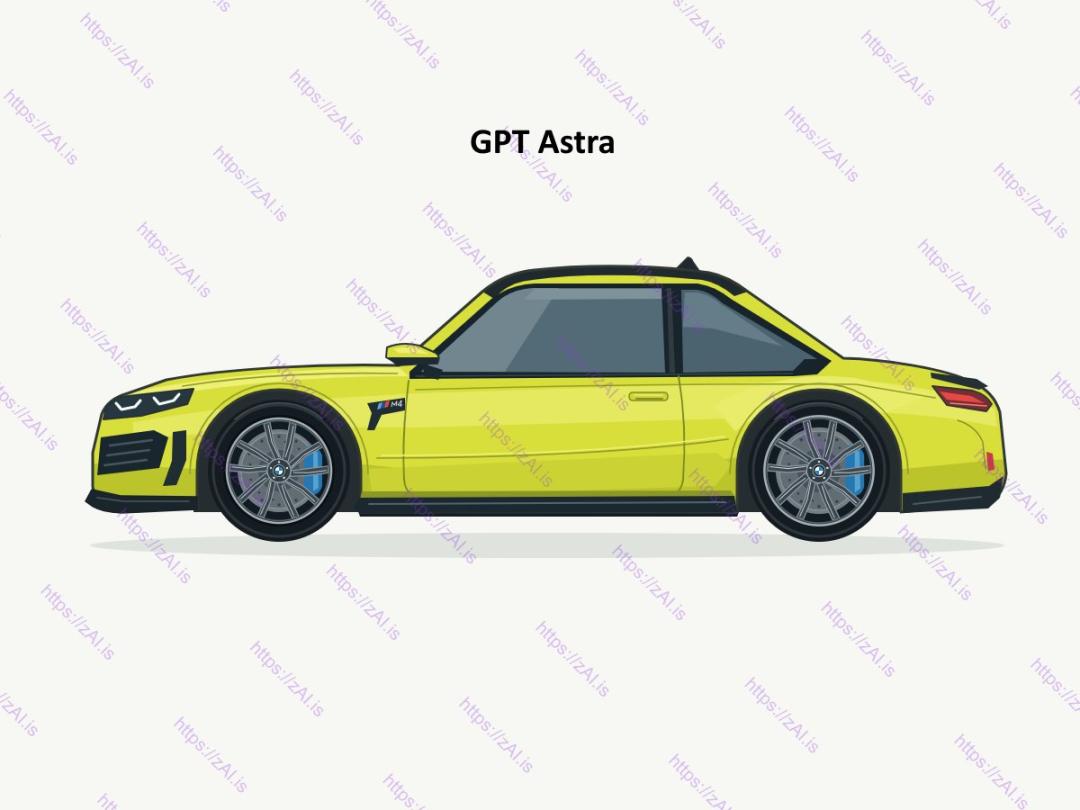
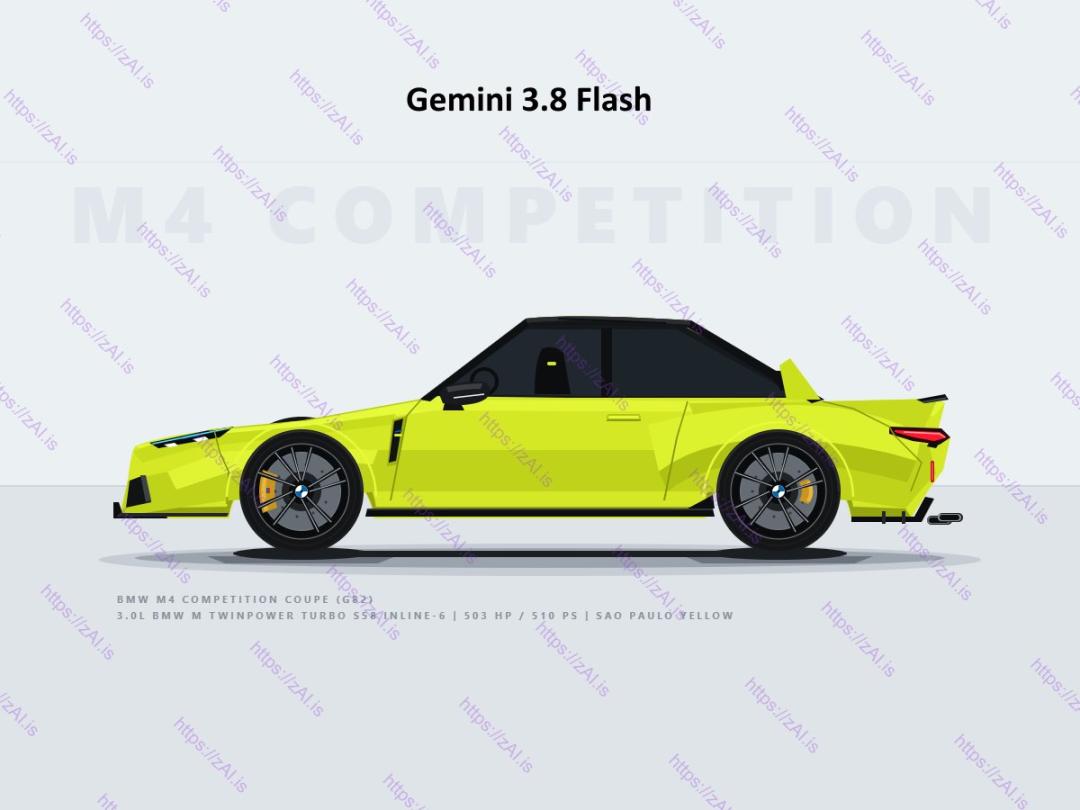
Netizen lyra gave the same task to different models for testing: ask the model to generate an SVG image of a BMW M4 Competition.
Among them, GPT-6 Sol uses the Max gear, zero-shot generation, takes about 3 minutes, and outputs about 28,000 Tokens.

GPT-6 Astra uses the Max gear, outputs about 25,000 Tokens, and takes about 19 minutes.
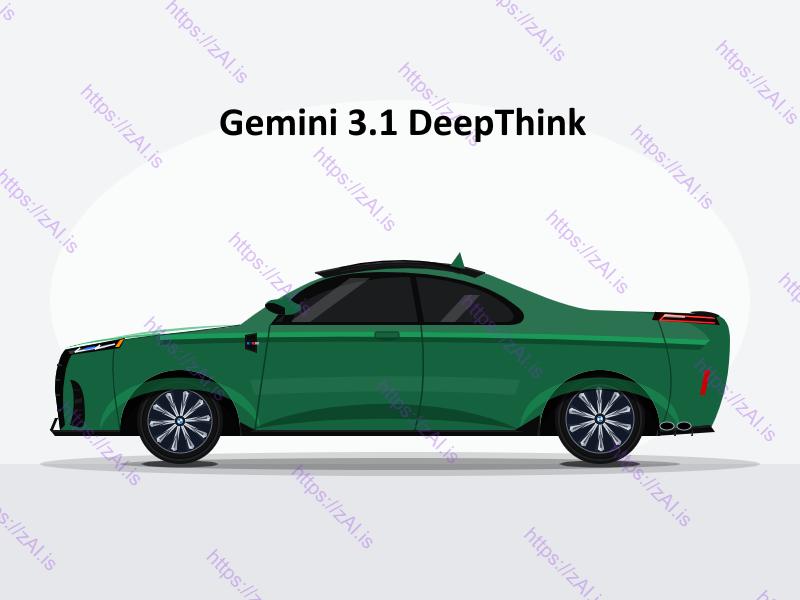
Gemini 3.1 DeepThink turns on the High gear, shows an output of about 3300 Tokens, but the inference process consumes about 458,000 Tokens and takes about 29 minutes.
Gemini 3.8 Flash also turns on the High gear, outputs about 19,000 Tokens, and only takes about 42 seconds.
In contrast, Sol's performance is the most impressive: its output scale is close to that of Astra, but the single test speed is about 6 times that of Astra — the time taken is only about one-sixth of the latter.
In addition, netizen Lentils also demonstrated a pixel-style sandbox world prototype called "The Realm of Aurellune".
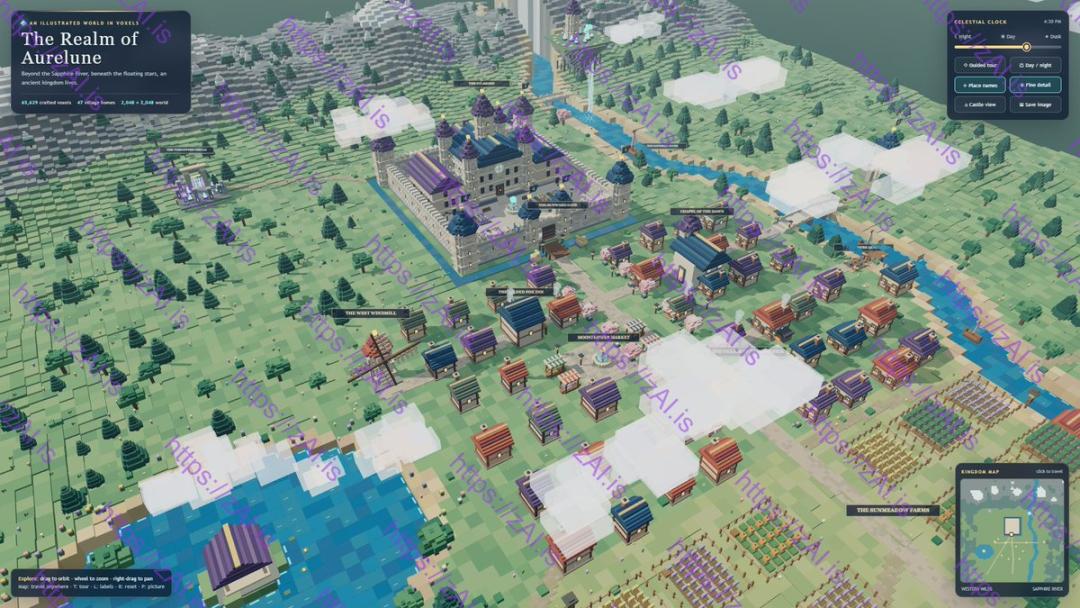
GPT-6 Sol generated towns, farmlands, rivers, castles and thumbnail maps in one go, and also equipped with control panels for day and night switching, place name placement, detail adjustment, etc. The whole is more like a simulation management game that has taken initial shape.
This is the effect generated by zero-shot, Max inference gear, 15 minutes, and a total cost of 60,000 tokens.
It can be speculated at present that Astra leans towards deep reasoning of the highest difficulty, while Sol may lean towards speed, throughput and large-scale Agent invocation.
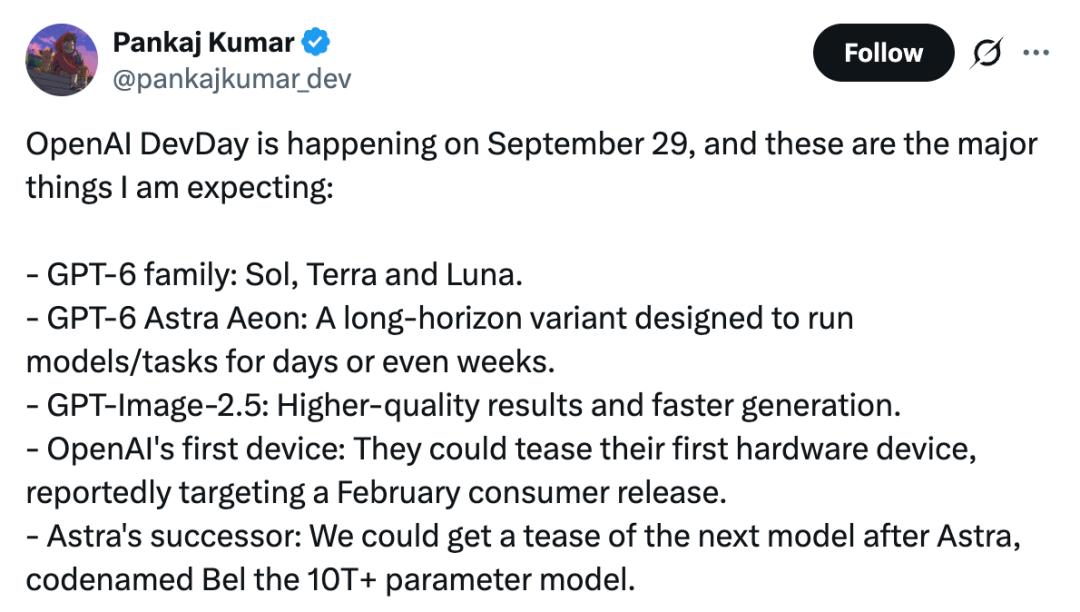
As for the release time of Sol, netizen Pankaj Kumar said that it may be officially released at the OpenAI Developer Conference on September 29.
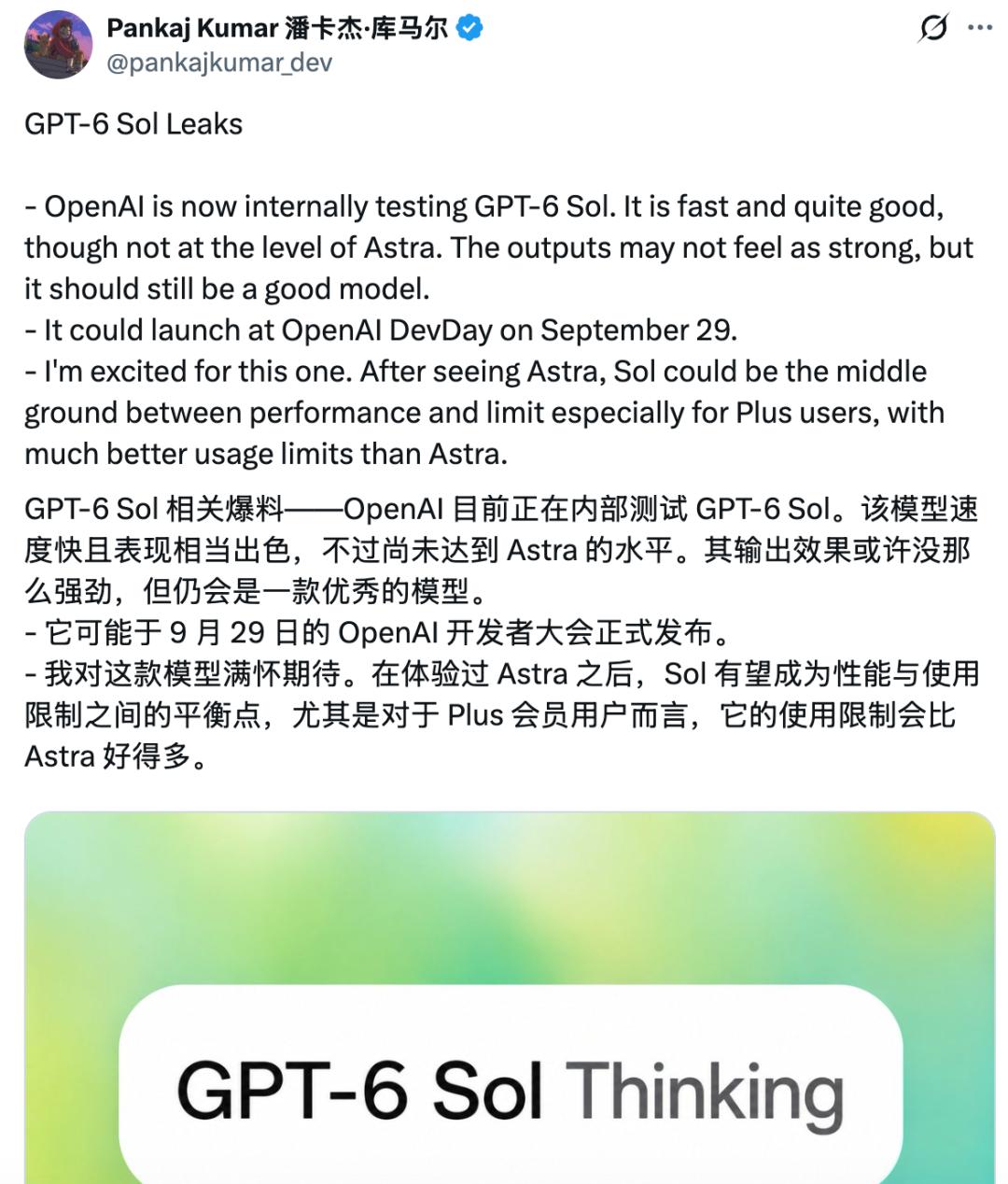
It is also not excluded that GPT-6 Terra, Luna and GPT-Image 2.5 will appear together.
OpenAI Researchers Go to Work with 3 Agent Interns Per Capita
On the very same day, OpenAI also showed off a set of very interesting internal data — to what extent AI models have accelerated scientific research in its own laboratory.
As of mid-August this year, for every 8 hours a researcher works, there is a task volume of about 3.1 Agent working days running in parallel behind it.
Wow, one person brings three interns who never sleep~
As for the cost, calculated at API prices, the median daily Agent inference resource consumption of researchers has exceeded 600 US dollars.
It is almost the daily salary of a junior engineer.
What are these Agents doing specifically?
Writing research code, writing infrastructure code, building training environments, running evaluation experiments, troubleshooting tools and environment faults, analyzing experimental results, monitoring training tasks... they can even help sort out and communicate research conclusions.
Basically, except for deciding what to research, it can do all the other work.
One of the most intuitive changes is that in the past, when the experimental environment crashed, researchers had to call people in the internal channel; now Agents are more and more capable of handling such things, and the amount of manual question answering has dropped directly.
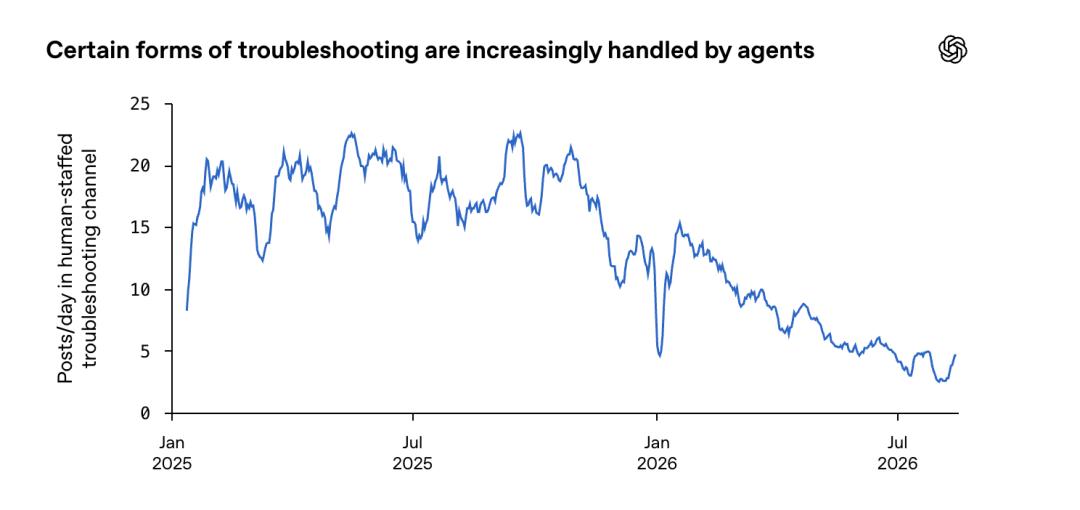
Some other teams have even cancelled the fixed technical question answering time directly, freeing up people to improve the system itself.
Based on these data, OpenAI officially announced that it has achieved the goal of "Automated AI Research Intern".
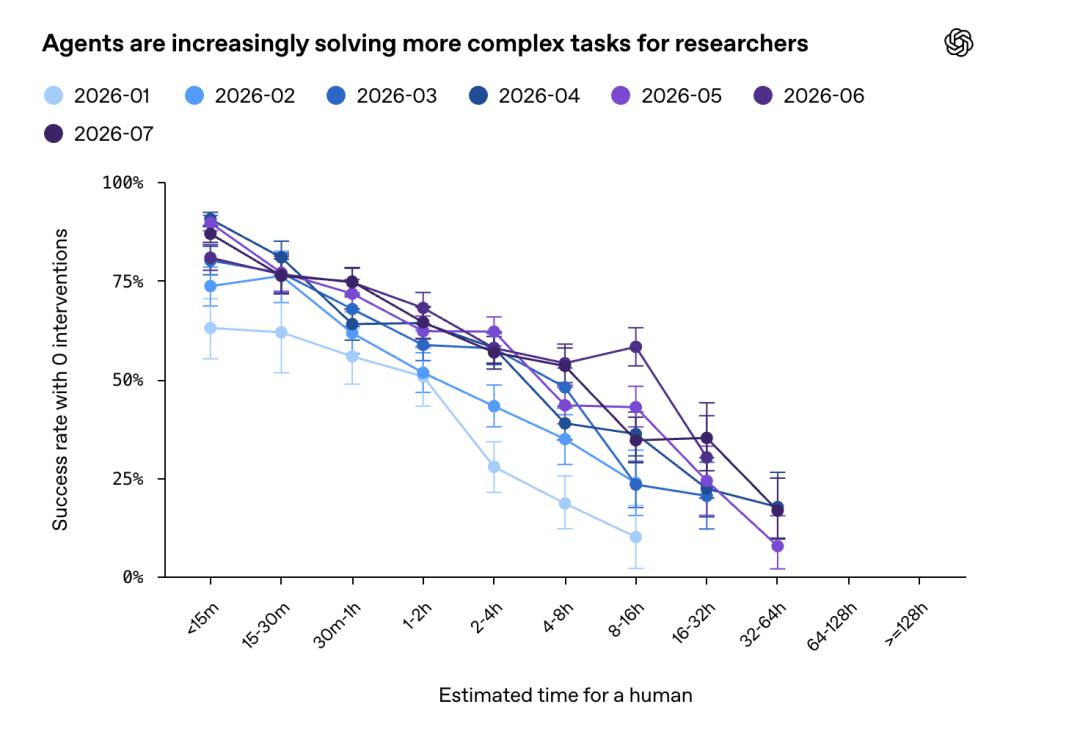
The "intern" here, to be precise, is a workable R&D node: under human guidance, it can independently complete well-defined research tasks, some of which originally took skilled researchers several days to finish.
The effect is also immediate, and the code output and number of experiments of researchers are both on the rise.
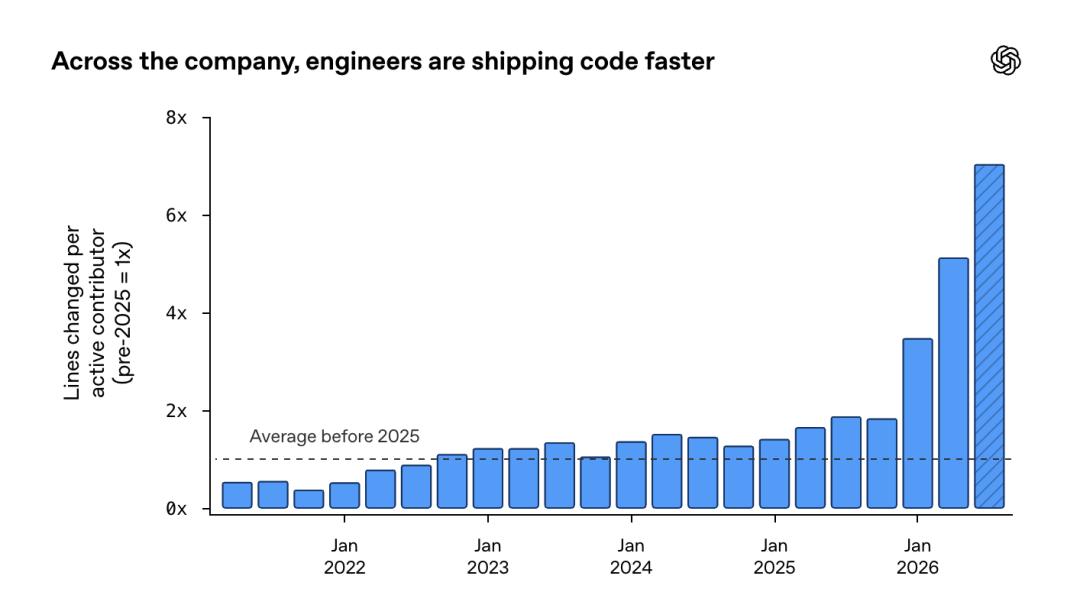
In August 2026, the per capita number of experiments hit a new high since statistics began in January 2025, and the tasks taken over by Agents are becoming more and more complex and the cycles are getting longer and longer.
The author of this article, Kevin Liu, also put this matter in a larger context.
He believes that recursive self-improvement is likely to be one of the most important factors driving the leap of AI capabilities in the next few years.
To put it bluntly, AI builds AI, and the faster it builds.
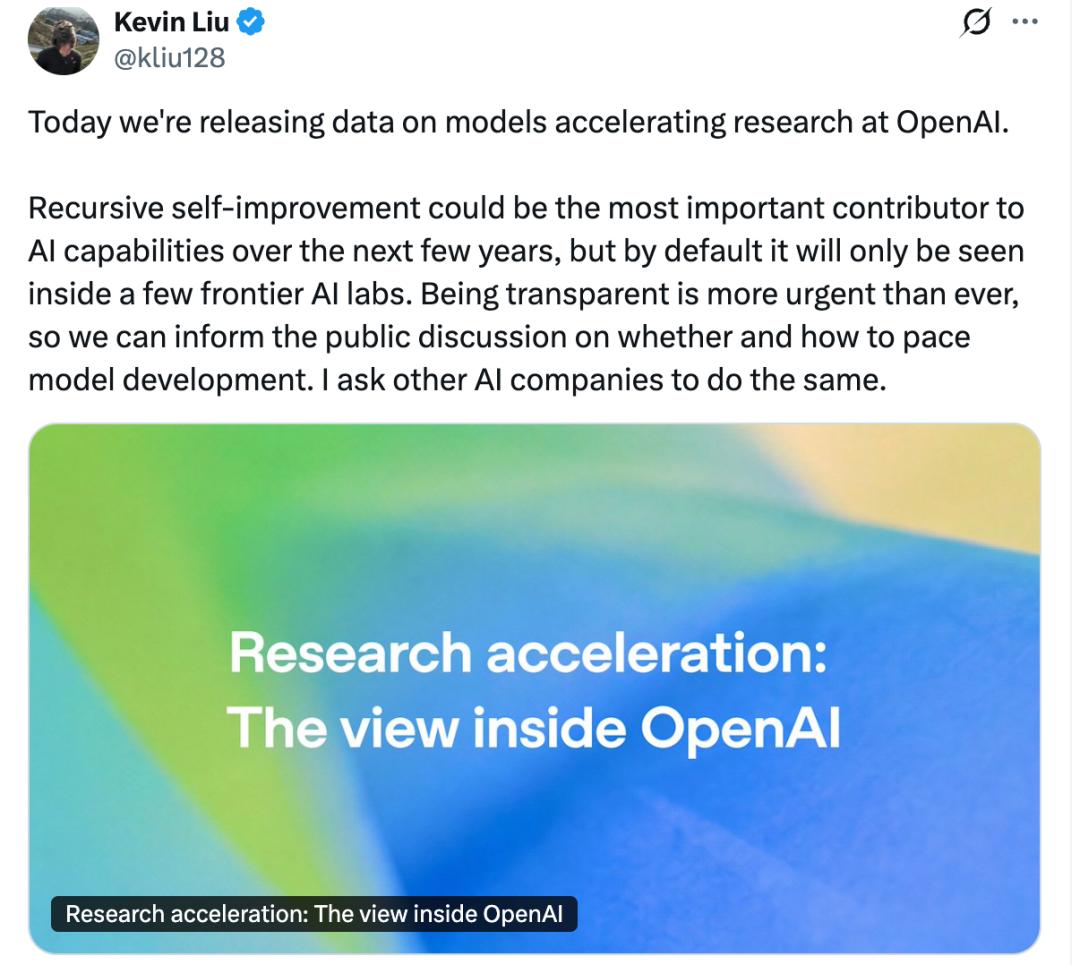
But the problem is that according to the current development trend, this capability will by default only appear inside a few cutting-edge AI laboratories, and the outside world can hardly see what step it has progressed to.
Therefore, Liu believes that transparent disclosure is more urgent than ever. How fast the model is getting stronger and whether the R&D pace should be slowed down cannot only be decided by several companies behind closed doors.
He also called on other AI companies: they should also disclose similar data.
However, AI R&D has indeed become faster, but it is not yet fast enough to achieve full self-driving.
OpenAI data shows that for tasks that originally took 4 to 8 hours, in more than half of the successful cases in the past six months, humans had to intervene at least once. As for high-level research planning, it is almost never handed over to Agents.
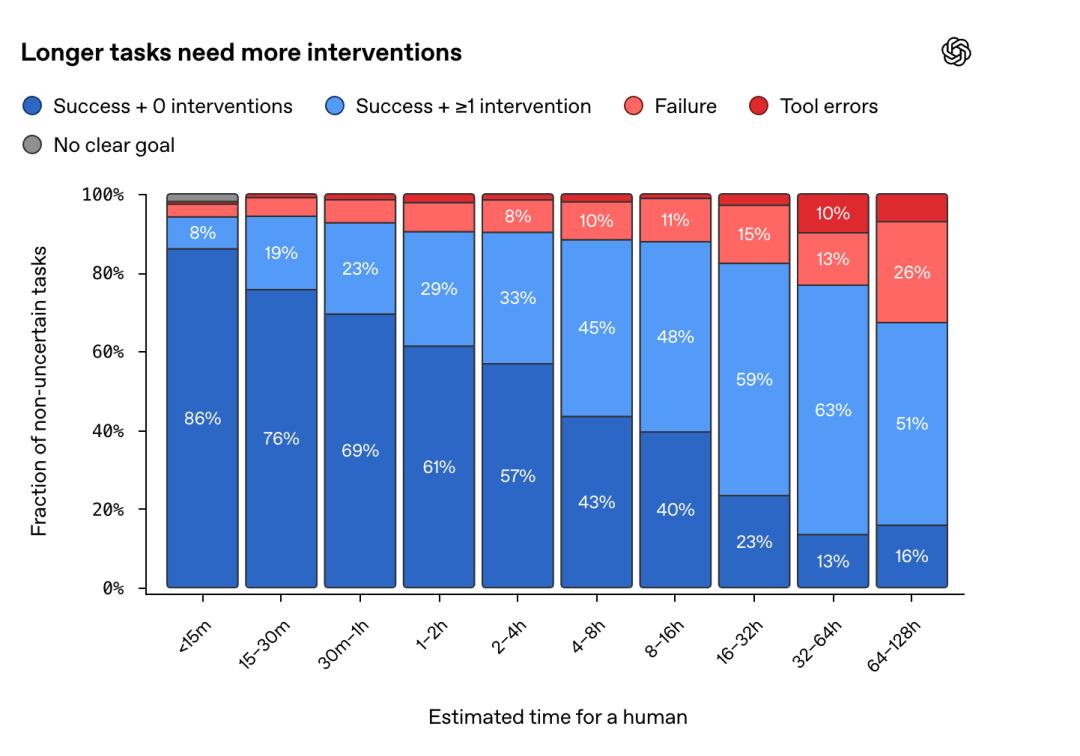
Researchers are still responsible for deciding what to research, which results are worth pursuing, and when to expand training, suspend experiments or deploy models.
OpenAI's next goal is also set: to achieve "Automated AI Researcher" before March 2028.
Compared with "interns" who can only take on clear tasks, "researchers" have to be able to take on more open research goals and independently promote longer-cycle projects — which is equivalent to changing from an executor to an independent person in charge.
If GPT-6 Sol is already in internal testing,