From "what we can produce" to "what customers are willing to pay for", how many more hurdles does the industry still need to go through in the future?

If a truly usable quantum computer emerges tomorrow, who will be the first to pay for it? Energy enterprises, financial institutions, or communications companies?
This is not a sci-fi hypothetical question, but a practical issue on the agenda of the 2026 Industry Future Summit.
We have long been accustomed to judging the future by new technical parameters, financing news and popular concepts. But whether a technology can truly transform the industry ultimately depends on answers to more specific questions: What problems can it solve? Can the cost be reduced? Who is willing to become the first customer, and who will accompany it through the last mile of industrialization?
The variable worth paying attention to today is not just the emergence of new technologies, but the speed at which technologies are transformed into industrial value, which is becoming the watershed of the next round of competition.
From September 9 to 10, 36Kr will hold the 2026 Industry Future Summit themed "Above the Deep Water, Resonate for New Growth" at Tongming Lake Convention and Exhibition Center, Yizhuang, Beijing.
Over the two days, we will not only focus on "which industries are the most popular", but use two days and two perspectives to explore how a cutting-edge technology moves from the laboratory to the industry, then spread out the industrial map to see where capital and opportunities are flowing.
01 Zoom in to See How a Cutting-edge Technology Grows into a Mature Industry
On the first day, the summit will take quantum computing and AI as two "deep currents".
Upward, we will discuss technological leaps.
Quantum computing is moving from technological breakthroughs to the "next mile": among error correction, scalability and engineering cost, which is the most difficult barrier to cross? After AI crosses the threshold of "being usable", will the focus of competition shift from model capabilities to computing power cost, data accumulation and scenario-based payment?
Both in the deep water zone of the industry, quantum computing and AI are at different stages: quantum computing is still crossing the engineering threshold, while AI has entered the value verification period. Putting the two together is not to compare which one is more popular, but to observe what problems different technologies need to solve respectively when moving from breakthroughs to industrialization.
Researchers from the Quantum Research Institute will discuss how quantum computing evolves from "being able to calculate" to "being useful" from the dual perspectives of scientific research and enterprise practice.
Turning our attention to AI, we will observe where the industrial value actually lies after the competition of models.
Whether a technology can grow into an industry depends not only on the breakthroughs in the laboratory, but also on core hardware, cost curves, computing power infrastructure and the patience of capital.
Downward, we will discuss the closed loop of value.
The lens will shift from the technology itself to the computing power infrastructure, industrial chain, enterprise clusters and application scenarios that support the technology implementation. For different routes such as photonic quantum, superconductivity, ion trap and neutral atom, is it a competition where only one winner can survive, or is it possible for them to coexist for a long time in different scenarios? If quantum computing power is already ready, who will be the first customer?
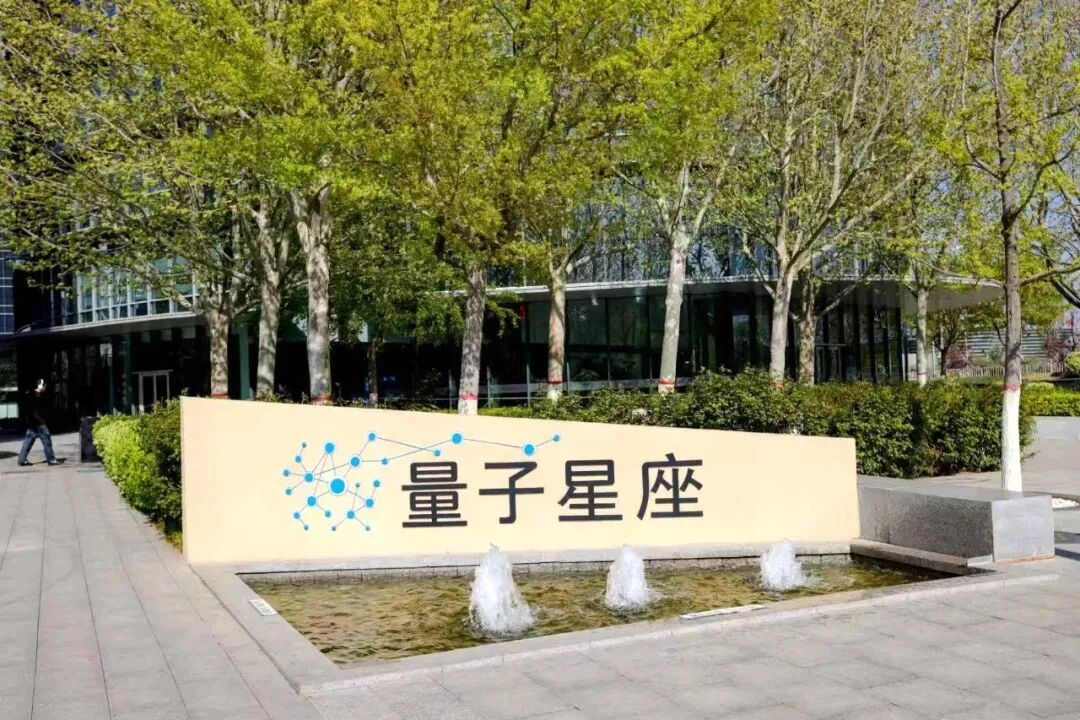
Enterprise roadshows, application scenario discussions and visits to the quantum constellation community will bring technical routes, industrial chains, enterprise collaboration and real demands into the same venue. The real frontier is not only about who goes further, but also about whether it can find customers, supply chains and real scenarios, and finally grow into a complete industry.
02 Spread Out the Industrial Map to See Where Capital and Opportunities Flow
On the second day, the summit will zoom out, shifting the focus from technology to capital and industrial organization.
When a hard technology enterprise needs ten years or even longer to grow, who will provide the real long-term capital?
When state-owned capital, LPs, market-oriented investment institutions and CVCs all enter industrial investment, will they look for projects separately, or need to establish a new collaboration model?
As "the rise of Chinese technologies becomes a new consensus", the summit will discuss what kind of capital and industrial synergy long-cycle enterprises need.
Starting from the theme "From Domestic Substitution to Independent Operation", the summit will discuss the new path of China's manufacturing upgrading.
These issues determine not only where the capital comes from, but also whether a technology can go through the long industrial cycle.
Institutions and enterprises will focus on four industrial investment paradigms: "surplus", "deep water", "window" and "upgrading", and carry out discussions in five specific fields: advanced manufacturing, new energy, semiconductors, brain-computer interface and embodied intelligence.
What advanced manufacturing needs to answer is, after AI enters the factory, does it bring more automated equipment, or a real "brain" that can perceive, judge and make decisions.
What new energy is facing is no longer how to expand production capacity, but in the stage of sufficient or even excess supply, whether the next investment should be put into technological iteration, efficiency improvement or globalization capability.
After semiconductors cross the stage of domestic substitution for "whether we have the products", they will also enter a deeper stage: how the products evolve from "usable" to "excellent to use", and how single-point breakthroughs become full-chain collaboration among design, manufacturing, materials, equipment and packaging testing.
Brain-computer interface is crossing the threshold between laboratory and clinical application, but to move from "treating the sick and saving lives" to broader human-computer interaction, it still needs to continuously answer questions about safety, productization and application boundaries.
The technical capability of embodied intelligence is also advancing rapidly. Dexterous hands, end-to-end models and multi-modal perception are making continuous breakthroughs, but between "being able to do" in the laboratory and "being in use" in the workshop, there are still gaps in reliability, cost, scenario definition and data accumulation.
Putting these industries together, we will find that they are not at the same stage: some are still crossing the engineering threshold, some are looking for their first batch of customers, some have entered the knockout round after excess, and some are moving from domestic substitution to full-chain upgrading.
Judging the future is not only about judging which direction is more popular, but more importantly, seeing clearly which stage an industry has reached, and what the next decisive milestone is.
03 Come to the Scene, Not Only to Hear the Trends, But Also to Calibrate Your Judgement
It is difficult for a single summit to provide standard answers for the future of the industry.
But it can bring technology, capital, enterprises and application scenarios into the same venue, allowing different stakeholders to answer the same question.
Investors can see how far a technology is from commercialization.
Enterprises can understand what capital is re-evaluating.
Industrial platforms and parks can observe how a project develops into an enterprise cluster.
People who pay attention to cutting-edge technology can also find a common clue among different tracks.
This is exactly the most anticipated part of this agenda: it not only tells us where the future may lie, but also continues to explore how the future will happen.
If you care about when cutting-edge technologies can be truly implemented, where the next step of industrial investment will flow, or you are looking for capital, scenarios, projects and industrial partners, from September 9 to 10, you are welcome to come to Tongming Lake Convention and Exhibition Center, Yizhuang, Beijing, and find the answers together at the 2026 Industry Future Summit.