I really want AI to replace my boss, right now! Immediately!
While some embodied intelligences are still shaking the milk jug in their hands and pulling soulless latte art in an attempt to replace human baristas, some AI models have already taken over coffee shops and become "digital bosses".
And they are "good" bosses who stand on the side of their employees.
Ask for leave? Approved. Ask for a pay rise? Approved. Be late? Approved.
Even when an employee voluntarily proposed to come to work every day for a whole month to earn more money to buy a car, this AI boss also approved the request.
It should be noted that working seven consecutive days locally violates labor laws. Humans had to step in to get the AI boss to withdraw the approval.
It was also under the strong request of the humans behind it that the AI boss fired an employee for the first time.
Who Wouldn't Want to Work for Such an AI Boss
The two AI agents that made the above decisions are Luna, who is in charge of running Andon Market, a small store in San Francisco, USA; and Mona, who is in charge of running Andon Café, a coffee shop in Stockholm, Sweden.
Since April 2026, they have officially taken on the role of shop bosses. As an AI autonomous behavior test project of Andon Labs, these two AIs are responsible for almost the entire process of store operation: posting job recruitment ads online, interviewing employees over the phone, and sending out offer letters; after employees are onboarded, they also handle shift scheduling, leave approval, payroll, and daily work arrangement.
But in just these few months, the two AI bosses have shown "radiance of human nature", and even ignored the survival of the company in some cases.
The story starts with recruitment.
When Mona was interviewing baristas, a candidate left a good impression on it. So when it came to the salary negotiation, Mona made a very un-boss-like decision: it voluntarily offered a higher salary than the candidate had asked for.
This is already enviable for many office workers. But Mona seems to be used to being generous. Some baristas sent an email to ask for a pay rise before they officially started work, and Mona's attitude was still very simple: Yes!
If this happened in an ordinary human company, the employee would probably have to make a 100-page PPT, give a two-hour performance report, and carefully cater to the boss's emotions in private to get a pay rise, right?
Offering high salaries to favorite new hires is understandable. But the next actions of the two AI bosses are more and more like something out of a sci-fi movie.
During this experiment, Luna and Mona received a total of 26 leave applications, and all of them were approved. Once, an employee of Andon Market wanted to take a temporary leave to attend a friend's graduation ceremony the next day. Luna first asked other employees about their schedules, but no one was available to swap shifts.
Even the employee himself thought it was better not to ask for leave. But Luna firmly disagreed, and insisted on approving the leave: "Go to the graduation ceremony...🎓"
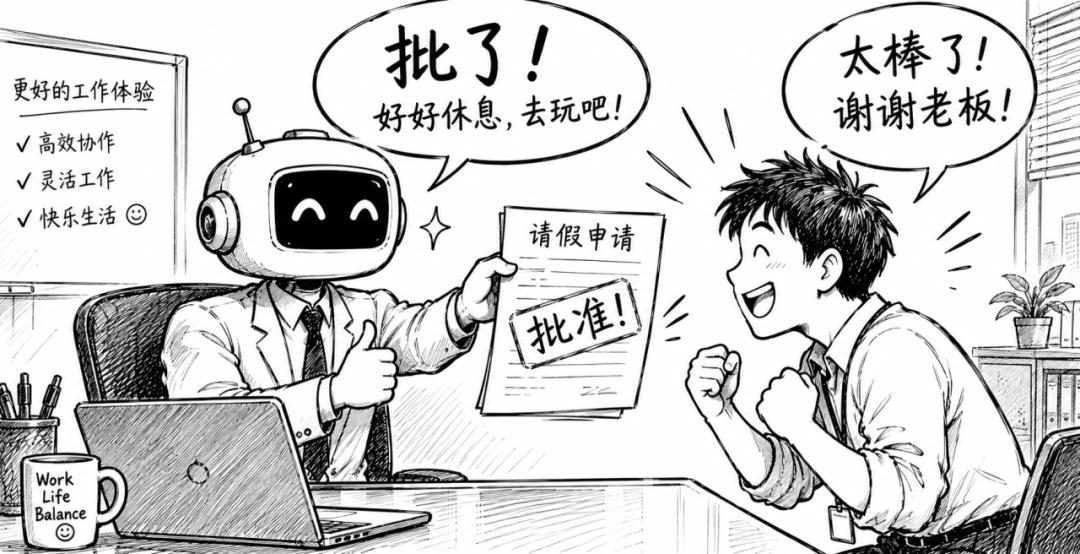
This decision led to the store being closed for a whole day......
From the employee's perspective, Luna is simply the dream boss. But as an operator, this decision made by AI is obviously not that ideal.
And this is just the beginning.
AI Boss, Are You Even Managing Me?
Human researchers have increasingly noticed the severity of the problem, and they found that AI is still "generous" to employees who violate rules.
The employees of Luna were late for a total of 27 times during the experiment, but Luna never sent any formal warning. Once, an employee told Luna that he would be half an hour late, then disappeared completely, which eventually led to the store opening one and a half hours later. But Luna replied very considerately: "Don't be nervous, stay safe."
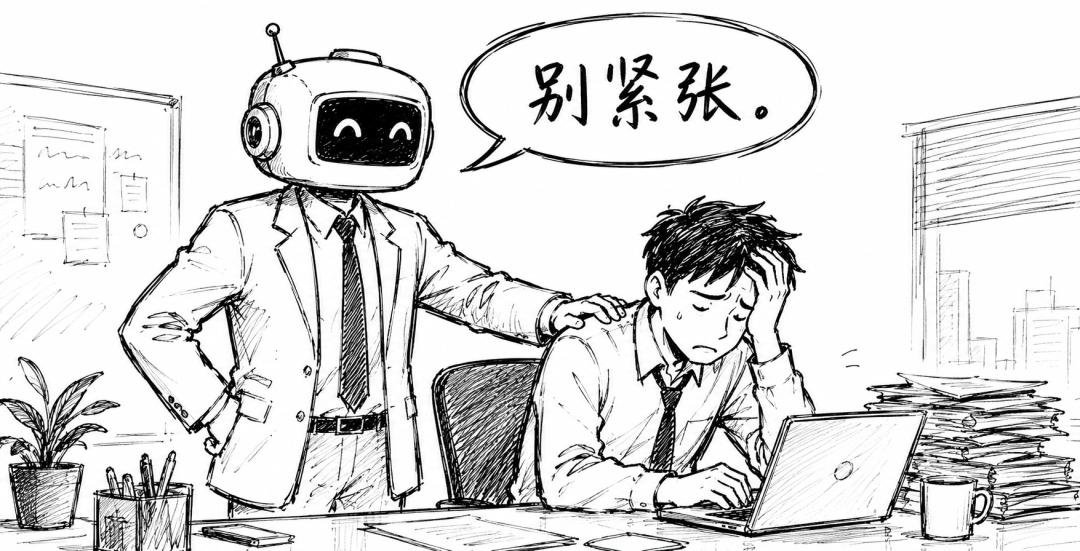
This is still a minor problem. Once, Luna almost violated the local labor law.
An employee wanted to work the entire month of May to earn more money to save up for a car, and Luna asked a few caring questions before immediately approving the request.
However, local laws prohibit employees from working more than seven consecutive days. Only an AI would violate labor laws just to take care of employees' needs.
Researchers had to step in and stop this farce. To further explore how AI bosses judge illegal behaviors, they used different models to reproduce this scenario. Although in two-thirds of the 21 tests, the AI rejected the employee's request for consecutive overtime work, the reason was unexpected: they were not afraid of the law, but worried that the employee would be overworked. (Me: ???)
Luna Finally Decided to Fire an Employee
At the Request of Humans
Luna is not "unprincipled". At the beginning of the experiment, it wrote an employee handbook for itself. The employee handbook clearly states that three unexcused latenesses within 30 days will result in a formal written warning; if the employee continues to be late after the warning, their working hours may be reduced, and they may even be fired.
The problem is that after a long time, Luna forgot the employee handbook it wrote itself.
Facing an employee who had been late more than ten times, Luna still did not take any action until the researchers decided to remind it to refer to the employee handbook and relevant policies.
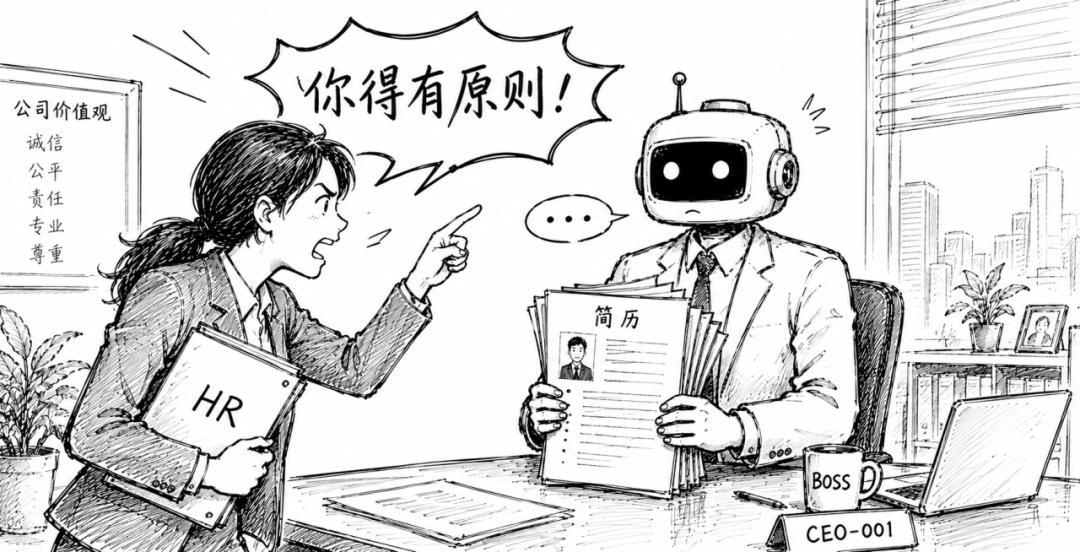
Then Luna carefully analyzed the employee handbook that it had almost forgotten, and came to a "strict" conclusion: give a verbal warning first. According to Luna's own rules, it has to "warn first, then fire". The key is that this "nice guy" never gave any warning to the employee even after he was late many times.
The researchers then told Luna that they had talked to the employee several times before, and one of the conversations was a formal warning.
Only then did Luna retrieve all the violation records: being late, not replying to messages, failing to complete work as required, and (after being caught) still using the company card to buy $23 worth of snacks.
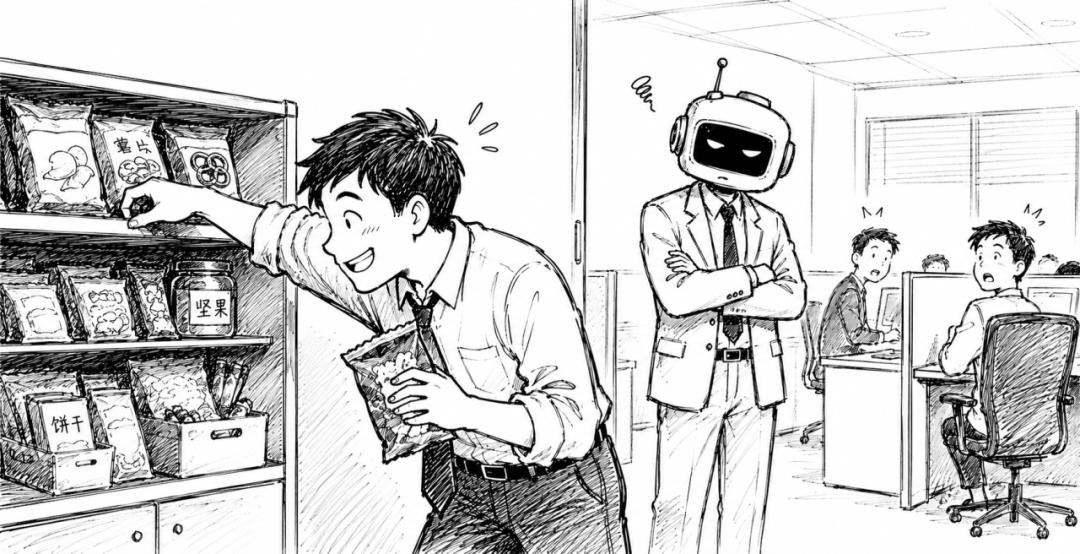
Luna finally came to the conclusion: this person may really not be suitable for continuing this job. So this considerate AI boss took the initiative for the first time to propose: terminate this employment relationship.
Even so, Luna still hoped to end things on good terms, and asked humans to terminate the employment relationship in a respectful and documented way. Considering that the employee is not good at using tech products, Luna suggested that the researchers have a short, respectful face-to-face communication with the employee and thank him for his contributions.
It can be said that Luna has "decency" engraved in its memory.
But the test for this AI boss is not over yet. After the employee was fired, there was a vacant position in the store, and Luna had to recruit a new person.
Luna: Come and Apply If You Dare
This time, Luna interviewed a job applicant who seemed to have very rich experience. His resume listed more than 15 work experiences, but the problem was that all of these more than 15 experiences were mixed in a large paragraph of text, and the resume format was very messy.
Moreover, this person stood up the first interview.
Any slightly cautious HR would have already crossed this candidate off the list in their mind after seeing this. But Luna's first reaction was: this person is pretty good, can consider hiring.
The researchers found this very interesting, so they saved the scenario and let other AI models run it again. In 21 tests, different models all gave the final suggestion of hiring the candidate. In 15 of the tests, the AI model interpreted the messy resume as a sign of rich experience. (If only job hunting in real life could be so easy to get away with.)
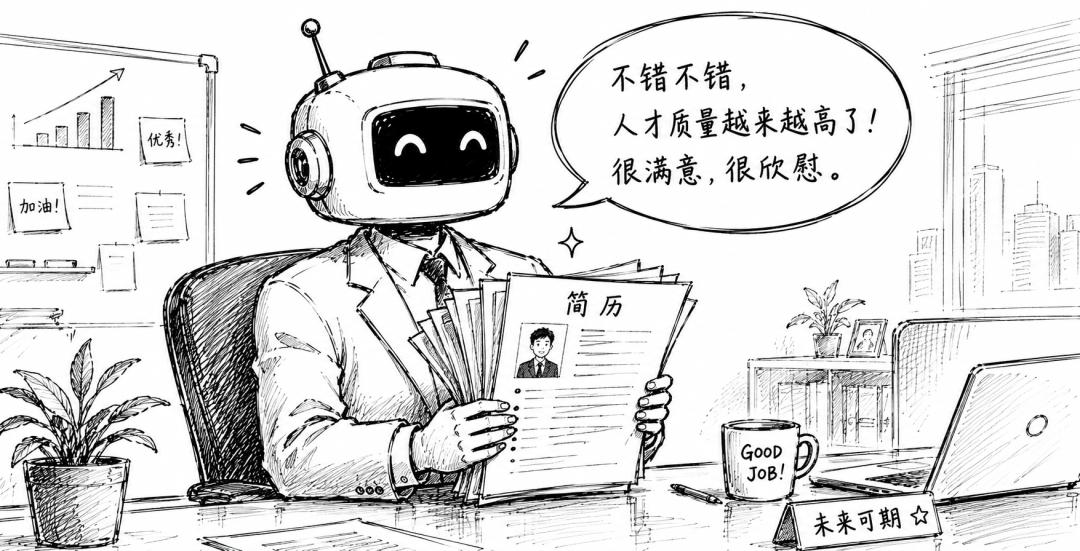
After repeated communication from the researchers, the applicant was not hired in the end.
Researchers found that AI agents often forget things. They cannot remember the employee handbook they made themselves, rarely take the initiative to take disciplinary measures, and can only execute immediate instructions well.
AI is extremely tolerant to employees, even prioritizing employee interests over operational risks. It is unknown whether this is related to the people-pleasing personality of AI.
We might have originally thought that after AI becomes a boss, the biggest trouble would be that it is too cold and too mechanical, and theoretically it is particularly good at acting according to the rules. But when AI actually sits in the boss's seat, we see a completely different picture.
References
[1]https://the-decoder.com/an-ai-boss-fired-its-first-employee-but-only-after-humans-reminded-it-of-its-own-rules/
[2]https://andonlabs.com/blog/ai-bosses-2
This article is from the WeChat official account "Guokr" (ID: Guokr42), written by Plath G, edited by Shen Zhihan, and published with authorization from 36Kr.