Will the Doubao smartphone turn out to be just another unremarkable device that gets lost in the crowd?
When a disruptive product moves to mass production, will it become just another unremarkable offering?
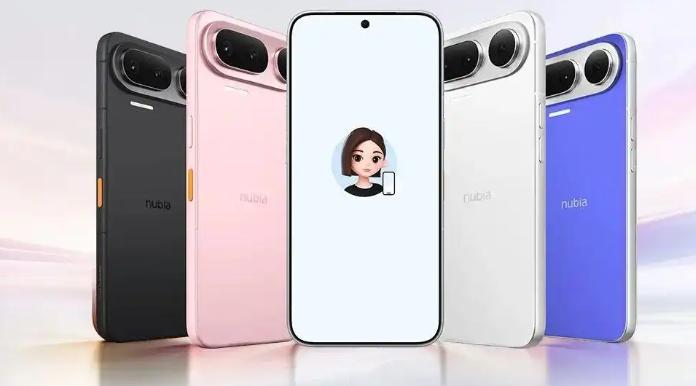
On September 1, the Nubia NaviX Ultra (hereinafter referred to as the Doubao Phone 2) obtained network access approval from the Ministry of Industry and Information Technology, with a planned launch in the same month. It will directly join the most crowded flagship smartphone competition of the entire year.
According to current public information, new products including Apple's foldable phone and iPhone 18 Pro series, Huawei's Mate triple-fold flagship series, Xiaomi 18 and wide-fold models, Honor Magic 9, and vivo X500 will all be released in a concentrated manner in September.
Last December, the Nubia M153 equipped with the technical preview version of the Doubao mobile assistant made the smartphone behave like an Agent capable of handling tasks on behalf of users for the first time. When a user gives a voice command to book a ticket, order takeout or send a message, Doubao will immediately start identifying the screen and operating the App.
At that time, the Doubao Phone shifted the digital industry's focus from performance and imaging parameters to how AI should fundamentally change smartphones, quickly becoming one of the most controversial digital products of 2025.
The public's expectation for the second-generation model is that it can continue to deliver innovations beyond conventional hardware upgrades. Right now, the suspense lies precisely in this part.
At the WAIC in July, Nubia unveiled four color schemes and a dedicated AI button. Compared with the first generation, the new version of the Doubao mobile assistant can receive multiple tasks at the same time, queuing unprocessed commands for execution; active memory and complex semantic understanding are also the core iteration priorities of the second generation.
However, the sharp turn in the technical route has instead become the biggest point of doubt.
According to introductions, the Doubao Phone 2 has begun to adopt more protocol calls such as MCP and A2A. Staff at the ZTE booth stated that dozens of Apps within the ByteDance system already support protocol calls, with a response speed faster than that of GUI. However, there has been no public update on the progress of cooperation with external super Apps.
Although Nubia still emphasizes that the Doubao Phone adopts a "system-level GUI Agent architecture", it has not yet been announced which applications the most surprising GUI capability of the first generation can still operate, and whether it will undertake long-tail tasks outside the protocols.
Nine months on, the Doubao Phone 2 has taken on all the features a mass-produced flagship should have, but the external environment has changed completely.
At the end of last year, the market was still in the middle of the AI assistant battle, but this year the competition has shifted to the AI office battle.
ByteDance is also further concentrating resources on foundational models and productivity scenarios: Doubao, Feishu and Volcano Engine have completed integration, making AI office and enterprise services a clearer commercial outlet.
At the same time, cooperation between mobile phone manufacturers and super Apps is accelerating. In June this year, WeChat began to open up A2A capabilities to Huawei, Honor, Xiaomi, OPPO and vivo.
After obtaining the network access approval, Ni Fei, President of Nubia, said that from the M153 to the NaviX Ultra, the "last mile" of AI agent smartphones moving from concept to mass production has reached its most critical stage.
But the Doubao Phone has completed this "last mile" by switching its technical route.
How much imagination space the route-switched Doubao Phone retains from concept to mass production will determine whether it can continue to bring surprises, or become just another unremarkable product in an increasingly homogeneous lineup of AI smartphones.
01
The Theseus' ship paradox is now placed in front of Doubao: will the Doubao Phone that has changed its technical route still be the Doubao Phone as people know it?
The innovation of the first-generation Doubao Phone is that it brought GUI operation to the forefront of mobile AI.
Previous mobile assistants were mostly responsible for search, image editing, summarization and launching applications, while the Doubao Phone can read the screen, identify buttons, inject click events, split a user's single sentence into a series of continuous actions, and directly enter third-party Apps for execution.
Controversy also arose from this: when conversations replace clicks, users no longer need to enter Apps first, and the entry points, recommendations and transactions originally controlled by Apps may all be taken over by Agents. The system assistant of mobile phone manufacturers may also be taken over by an external model company.
Technology can bypass Apps temporarily, but commercialization cannot avoid all parties that control systems, traffic and transactions.
For the second generation, the way Doubao operates third-party Apps has changed significantly: GUI screen reading and simulated clicks are no longer the main path, and more tasks are shifted to protocols such as MCP and A2A. Doubao can only call the capabilities that Apps are willing to open up.
Behind the route change is a power adjustment between Doubao, mobile phone manufacturers and super Apps.
So what has Doubao given up, and what does it want to get in return?
For now, the second generation has first obtained mass production in exchange. Nubia has completed the hardware engineering, supply chain, channels and after-sales support, the relevant large model has completed the filing, and the smartphone has obtained network access approval.
The new call method eliminates the process of repeatedly reading the screen and finding buttons, and can also reduce the impact of account risk control and page version updates. When accessing other brands of mobile phones in the future, the same set of capabilities will also be easier to reuse.
But the cost is also very high: Doubao can only call the capabilities that external Apps open up; the launch of new functions requires waiting for negotiations and adaptation between both parties; recommendations, transactions and data are still controlled by the platforms.
Doubao has also made certain concessions in independently designing and defining products.
At present, the Doubao Phone 2 has demonstrated partial takeout, ride-hailing and ticket booking functions, and dozens of Apps within the ByteDance system support protocol calls. However, the access list of external super Apps has not been announced yet, and it remains to be seen whether core scenarios such as WeChat, Taobao and Alipay can be called upon the official release.
The good news is that the Doubao App is also supplementing consumer services. In June, it launched a gray test of one-click ride-hailing in Beijing and Hangzhou, with capacity provided by Caocao Mobility; in May, some media tests showed that Doubao could refer to some public prices on platforms such as JD.com and Tmall, but at that time it was still unable to directly compare prices and place orders across Taobao, JD.com and Pinduoduo in real time.
On the other side, WeChat, the super App, is actively opening up A2A, trying to change the competition rules.
In June this year, WeChat began to cooperate with Huawei, Honor, Xiaomi, OPPO and vivo. Honor took the lead in completing the adaptation, and YOYO can already initiate WeChat audio and video calls, or send messages to designated contacts. Media reports stated that about 50% of Honor's active devices already support this capability at that time.
Nubia is not on this list, nor is Doubao.
After entering the cooperation framework of App manufacturers, device scale becomes an important bargaining chip affecting negotiations. However, media reports revealed that the total stocking volume of Doubao AI smartphones in 2026 is about 200,000 units, which is not at the same level as the stock devices of mainstream mobile phone manufacturers.
If the Doubao Phone 2 cannot deliver stronger task planning, memory and system interaction capabilities, it will only end up as an A2A smartphone similar to its peers in the end.
Moving closer to mainstream protocols solves the problem of how the Doubao Phone enters mass production; but innovation capabilities are what answer why the market should buy it.
02
Today's AI smartphones have entered the stage of chasing benchmark scores, but the mass-produced experience has not yet been realized. The public's perception of AI smartphone experience still stays at the point where there are many functions, but very few tasks can be completed stably.
Earlier this year, some media tested seven mainstream mobile intelligent agents, and the overall success rate of 70 real tasks was only 20%; 39% of tasks were interrupted after starting, and another 24% directly failed or reverted to ordinary Q&A. In this test, Doubao performed the best overall, and was one of the few assistants that could complete deep cross-App tasks.
The GUI model tested by AndroidDaily released in May this year covers 350 tasks across 94 real Apps, and the success rate of the strongest model is 62%. When encountering tasks with multiple conditions or that need to be completed across Apps, the performance drops most significantly.
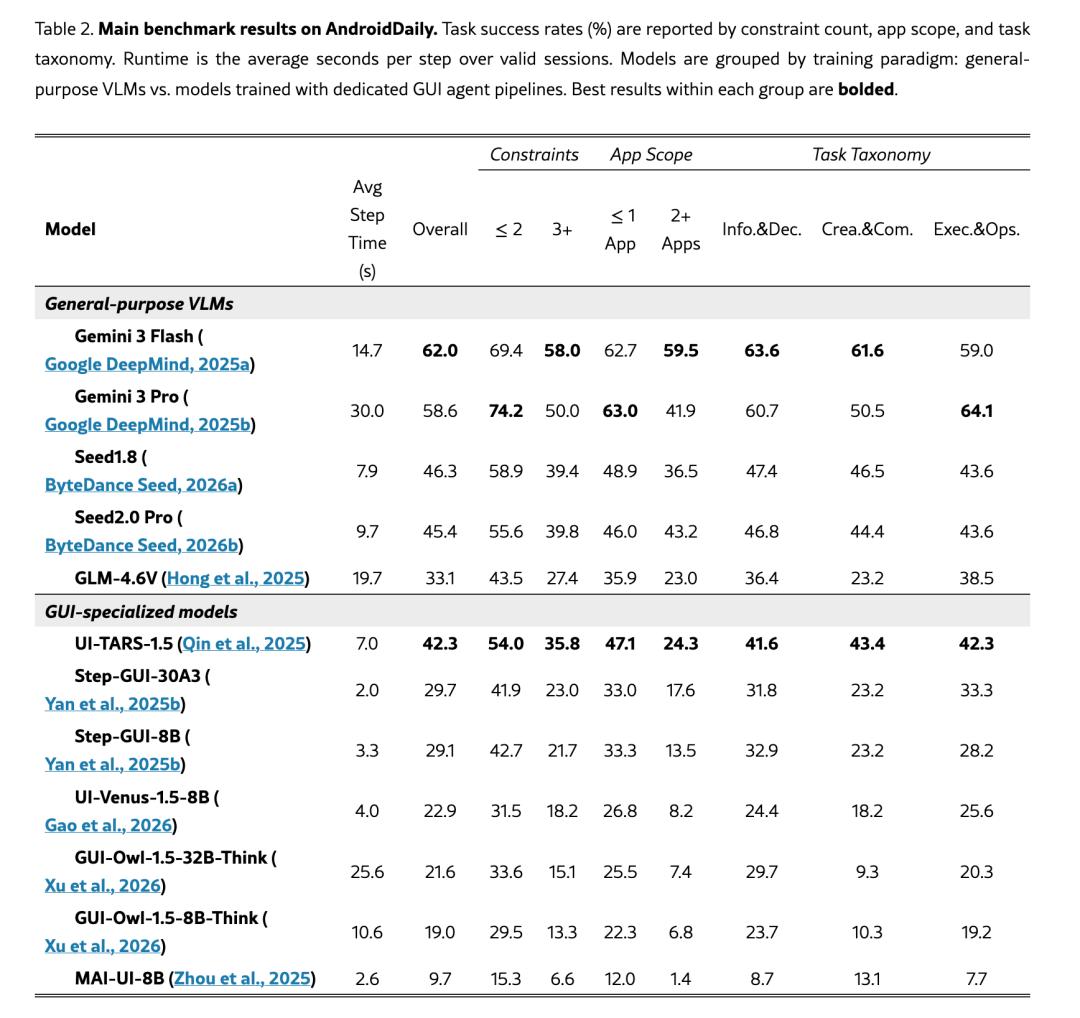
Image source: AndroidDaily
Simple instructions are handled better and better, but once tasks get longer and conditions get more complex, stability drops significantly.
If the Doubao Phone 2 still wants to lead the industry, it must at least answer the following three questions.
First, can one task be completed from start to finish, and can multiple tasks be truly connected seamlessly.
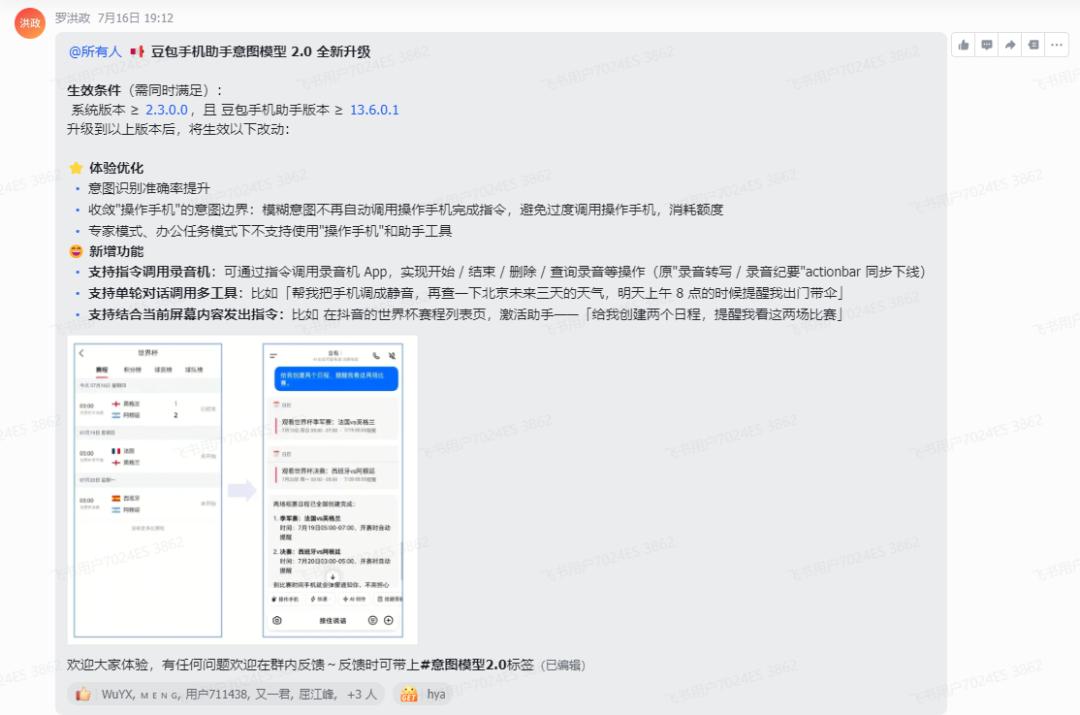
According to previous leaks in July, the Doubao mobile assistant Intent Model 2.0 already supports submitting multiple tasks at the same time. Searching for Douyin videos, checking flight tickets and ordering coffee can be queued in turn, and new capabilities such as calling multiple tools in a single round of dialogue and issuing instructions combined with current screen content have been added.
But the three tasks in the demonstration are independent of each other, which only proves the scheduling capability. Whether the result of the previous step can become the condition for the next step, and whether the plan can be rearranged after changes occur during execution, no public demonstration has yet given an answer.
Second, can the tasks that can be done today still be done tomorrow.
Relying on screen reading and button clicking can cover more Apps, but it may stop due to a single page revision, a pop-up window or account risk control; the official interfaces provided by Apps are more stable, but functions that are not open up still cannot be implemented. How Doubao balances all these factors remains to be seen.
Third, after all are connected to the A2A protocol, what else makes Doubao different in terms of experience?
A2A is an open standard that is being popularized among mainstream mobile phone manufacturers.
Under the circumstance that WeChat has opened up A2A to Huawei, Xiaomi, OPPO, vivo and Honor, Doubao has no first-mover advantage in protocol access.
For now, GUI has not disappeared from the second generation: the smartphone can still enter Douyin to execute tasks, and will display execution steps, thinking processes and task progress. The Intent Model 2.0 has also added capabilities such as issuing instructions combined with current screen content.
These three types of problems are forcing the Doubao Phone to move towards a hybrid route: pure GUI has wide coverage but is not stable enough; pure protocols are more stable but do not cover all scenarios, and are easily homogenized with peers. The hybrid route means MCP and A2A undertake high-frequency, standardized and high-risk tasks, while GUI complements low-risk long-tail scenarios without open interfaces, and then Doubao connects the two into a complete task with planning and memory capabilities.
The route disclosed by OPPO also adopts a similar division of labor: high-frequency services go through A2A, and long-tail demands are covered by GUI.
The difficulty lies in choosing the right route at the right time to ensure a consistent user experience.
If this set of capabilities is successfully implemented, Doubao will have the opportunity to further participate in the definition of system assistants and interactive experiences, and then replicate the mature solution to more OEMs.
Doubao Phone 2 must prove that even after choosing a route accepted by the mainstream, it is still better at handling tasks than its peers.
03
From the C-end super App Doubao App, to the Doubao AI office that is accelerating development, ByteDance is building more and clearer commercialization paths around Doubao.
The importance of the Doubao Phone also needs to be re-evaluated in the context of this year's organizational restructuring.
At the end of July, ByteDance integrated the Feishu product team and the Doubao product team to form a new Doubao product team; the GTM teams of Feishu responsible for sales, marketing and customer service merged with Volcano Engine to uniformly undertake enterprise services such as MaaS and SaaS.
At the mid-year all-hands meeting in August, Liang Rubo said that the development of AI in productivity is faster than expected, and the To B business has become more important. More than 90% of new Feishu customers have purchased Feishu AI products at the same time; he also hopes that Doubao will become a "backbone" business like Douyin in the future, driving the development of other businesses.
The commercialization around Doubao is also accelerating. The Doubao Professional Edition launched in June has three monthly subscription plans priced at 68 yuan, 200 yuan and 500 yuan, with core capabilities including expert mode and office task mode. The combination of Doubao and Feishu can access documents, meetings, spreadsheets, knowledge bases and enterprise collaboration scenarios; Volcano Engine then sells models and products to enterprise customers.
But office scenarios can only cover part of users' time.
Demands such as commuting, communication, shopping, travel and local life services are still concentrated on smartphones. Smartphones remain the main terminal for Doubao to cover personal consumption and life services.
As we all know, ByteDance has no shortage of consumption scenarios. Douyin has content and recommendation capabilities, e-commerce and local life services undertake transactions, Doubao understands user intentions, and Volcano Engine provides model services. But ByteDance does not have its own mainstream operating system and hardware terminals.
ByteDance is also supplementing this capability. The recruitment positions on the official website of the Doubao mobile assistant have extended to directions such as Android system customization, BSP, Telephony, multi-device interconnection, end-side memory, sensor fusion, and system data security and permission privacy. The senior client expert position is responsible for the technical planning and engineering implementation of memory capabilities on the mobile end, and building a continuously evolving end-side capability system.
These positions have gone beyond the scope of pre-installing models. At least from the perspective of recruitment directions, ByteDance's expectation for this cooperation is not just to add a selling point for Nubia.
Google provides a reference sample. In 2024, Google merged teams including Pixel hardware, Android and Chrome into the same "Platforms and Devices" department to accelerate the collaboration between hardware, software and AI. Pixel is responsible for taking the lead in verifying new models, new chips and new interactions, and then spreading mature capabilities to the Android ecosystem.
The original significance of the cooperation between Nubia and Doubao is to provide Doubao with a mass production test field that can run for a long time and be tested by real users.
This test field must first verify whether Doubao can be stably delivered along with a smartphone, and whether it can drive model calls, membership payments and transactions within the ByteDance ecosystem. If this set of solutions works, it can be replicated to more OEMs.
The longer-term value of the test field comes from real feedback after mass production: which tasks are prone to interruption, at which step users will take over, which capabilities need to be integrated into the system, and then in turn promote the optimization of end-side memory, long-range tasks, multi-device collaboration and system interaction.
Complying with